REVIEW · KYOTO
City cycle (no gear change)
Book on Viator →Operated by 京都レンタルサイクル · Bookable on Viator
Kyoto by bike sounds easy, and it can be. This self-guided city cycle is built for slow cruising past the old streets, with lots of time to pop into shops for Kyoto-style souvenirs and meals. I like that it’s based in central Kyoto with quick access from Shijo-Karasuma and Karasuma Oike, and I like the no-fuss idea of spending the day on a simple bike rather than hopping between taxis.
Here’s the catch: some recent feedback raises a serious concern about whether bikes are actually available at the meeting address. If you do book, I’d treat bike availability as your top check before you show up, because the value collapses if you arrive and there’s nothing to rent.
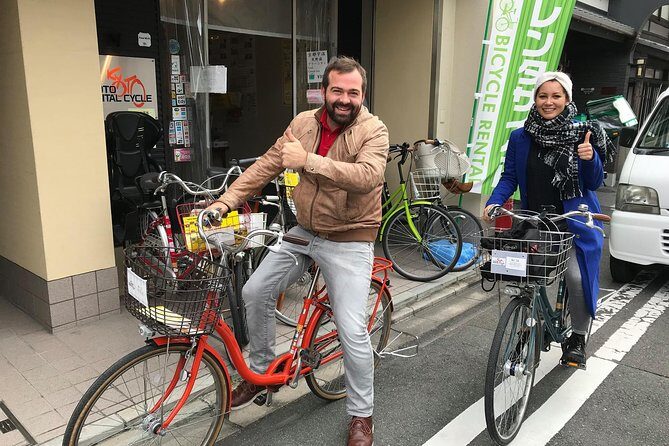
The ride runs about 8 hours and starts right at 352 Shimmachi Rokkakucho in Nakagyo Ward, so you’re not spending your whole day commuting. You’ll get a paper ticket, and you’ll also need a 3,000-yen cash security deposit per vehicle when you visit (refunded when you return).
In This Review
- Key things to know before you pedal off
- Central Kyoto starts fast: Shijo-Karasuma and Karasuma Oike convenience
- Quick practicality tip
- What no-gear cycling changes in Kyoto
- The upside of simplicity
- Your 8 hours: how to pace a self-guided Kyoto bike day
- Block 1: Settle in and get the rhythm (first 60–90 minutes)
- Block 2: Historic streets + souvenir browsing (next 2–3 hours)
- Block 3: Meal time without the stress (around mid-day)
- Block 4: Late-day round-up and return buffer (last 90–120 minutes)
- Money math: $7.12 looks great, but the deposit is real
- Why this matters for value
- The big red flag: verify bike availability at the address
- What I would do before showing up
- Where the “Kyoto feel” comes from while you ride
- How to make shopping and food stops actually work
- Weather and timing: the day is ride-first
- Timing smartness
- Service animals and who this suits best
- Should you book this Kyoto city cycle?
- FAQ
- FAQ
- How long is the Kyoto city cycle experience?
- Where do I meet for the rental?
- Is there a security deposit?
- What ticket do I receive?
- Do I get confirmation after booking?
- What is the cancellation policy if plans change?
- What happens if the weather is poor?
- Are service animals allowed?
Key things to know before you pedal off
- Central meeting point: 7 minutes on foot from Shijo Karasuma Station and 8 minutes from Karasuma Oike Station.
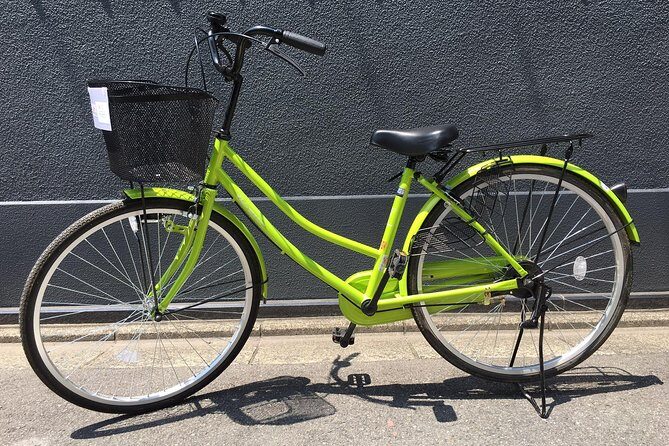
- No-gear bike: simple riding, fewer adjustments, and you plan your route with that in mind.
- About 8 hours: enough time to mix sightseeing with shopping and a relaxed meal stop.
- Cash deposit required: 3,000 yen per vehicle, held in cash at the shop, refunded after you return.
- Self-guided feel: you control your pace and stops while cycling through Kyoto’s historic streets.
- Weather matters: if poor weather cancels it, you’ll be offered another date or a full refund.
Central Kyoto starts fast: Shijo-Karasuma and Karasuma Oike convenience
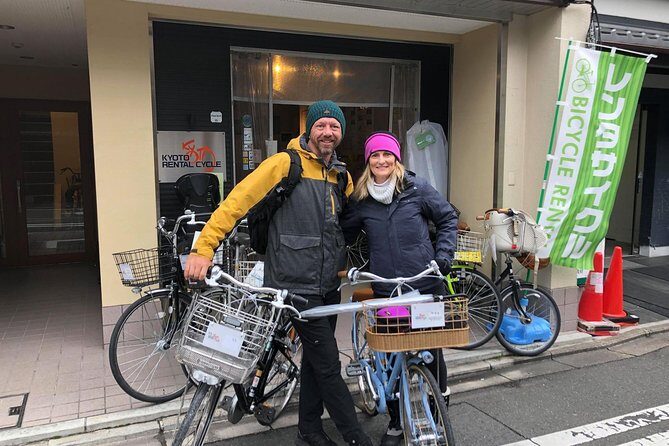
If your plan is to see Kyoto without burning time on transfers, this is set up the right way. The shop is in the center of town, and the location is walkable from Shijo Karasuma Station and Karasuma Oike Station. That matters because an 8-hour rental can either feel like a great day out—or like you’re constantly late and stressed.
You’ll meet at 352 Shimmachi Rokkakucho, Nakagyo Ward (Rokkakucho area). The nice part is that you can build your day around the bike, not around the transportation puzzle. It also means you can usually pair the cycling day with other nearby sightseeing plans without needing a long “get there first” block.
The value here is simple: cheap biking only works if you’re not spending more money and time getting to the bike. With this being central, you get the upside.
You can also read our reviews of more cycling tours in Kyoto


Quick practicality tip
When you arrive, don’t treat the shop address like a casual suggestion. I’d plan to show up a bit early so you have time to sort the deposit and get the bike without rushing.
What no-gear cycling changes in Kyoto
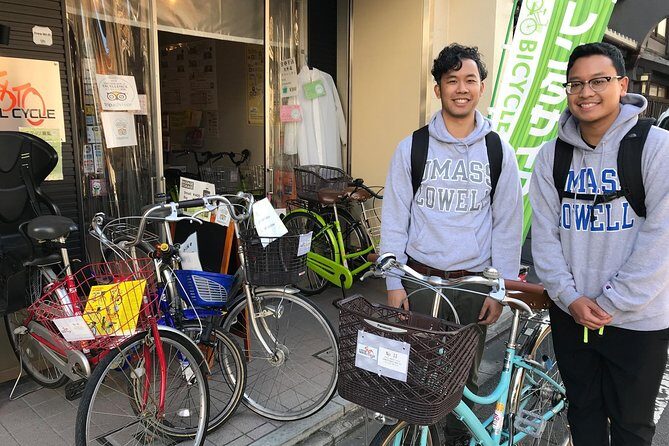
This is a city cycle with no gear change. That sounds small, but it affects how you enjoy the day.
A no-gear bike usually means:
- fewer things to adjust
- a steadier, simpler ride
- you’ll want routes that don’t force steep climbs
Kyoto has areas with gentle streets, but you can still run into hills depending on where you wander. So your best strategy is to think like a local: keep your “big work” areas in your first half of the day, and if you feel the bike working harder than expected, don’t grind through it—turn and choose flatter streets.
The upside of simplicity
If you’re not looking to train for a race, a no-gear bike is often more fun. You spend less time fiddling and more time looking around. And because you’re cycling through the historic cityscape, you’ll likely want slow speed and frequent pauses anyway.
Your 8 hours: how to pace a self-guided Kyoto bike day
This experience is designed as a self-guided “ride and explore” style day. There isn’t a stated, stop-by-stop guided route in what you’re given, so you should treat the day as flexible time you can shape.
Here’s a practical way to structure it so you actually enjoy all 8 hours:
You can also read our reviews of more city tours in Kyoto

Block 1: Settle in and get the rhythm (first 60–90 minutes)
Start by getting comfortable with:
- stopping and starting
- hand placement and braking feel
- navigating the central street grid
This is also when you should aim to make your first quick shopping pass or viewpoint pause, before fatigue sneaks in.
Block 2: Historic streets + souvenir browsing (next 2–3 hours)
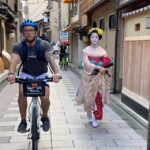
The experience idea is clear: you can sightsee through Kyoto’s historic cityscape while casually visiting shops. This is where the bike earns its keep. A taxi gets you there fast, but biking lets you slow down enough to browse.
Think of it like a rolling stroll. You’re not just moving between landmarks—you’re moving alongside the everyday Kyoto shopfronts that tourists often miss when they only do quick photo stops.
Block 3: Meal time without the stress (around mid-day)
The concept explicitly includes grabbing meals unique to Kyoto. Since you’re on a bike, you don’t have to choose a restaurant that’s perfectly timed to transit schedules. You can park, eat, and get back on the bike when you’re ready.
A good rule: if you’re going to stop for a sit-down meal, plan that as your longer break. Then you’ll have energy left for the rest of the ride.
Block 4: Late-day round-up and return buffer (last 90–120 minutes)
You end right back at the meeting point. Even if you’re feeling fine, give yourself a buffer to return smoothly. If you return late, you risk a bad ending even on a good day.
If you want an easy landing: treat the last part of your ride as a gentle loop back toward the start area, with fewer stops.
Money math: $7.12 looks great, but the deposit is real
The price is listed as $7.12 per person, and on average this is booked about 13 days in advance. That’s an eye-catching rate for something described as about 8 hours.
But here’s what you should pencil in:
- You’ll pay the listed amount up front.
- You’ll also need a 3,000-yen cash security deposit per vehicle at the shop.
- The deposit is refunded upon return.
Why this matters for value
The low price is only “real value” if the rental part actually works when you arrive. If bikes aren’t available, you don’t just lose convenience—you lose the whole reason to book, and a cheap listing can turn into a frustrating day.
So I’d treat this like any bargain rental:
- verify the shop is operating as a rental business now
- confirm you’ll actually receive a bike suited to your group
And since the deposit is cash, you’ll want yen ready so you’re not scrambling at check-in.
The big red flag: verify bike availability at the address
Two of the provided reviews are bluntly negative, and both point to the same type of problem: bike rental not happening at the meeting location, with claims that the business stopped years ago and the site became a different kind of shop.
I can’t “fix” that for you. What you can do is protect yourself before you commit your day.
What I would do before showing up
- Plan your arrival early enough to handle a last-minute snag.
- If you can, check directly that the place at 352 Shimmachi Rokkakucho is renting bikes on the date you booked.
- Have a backup plan for how you’ll pivot if bikes aren’t ready.
This matters because this experience’s entire value proposition is the bike. Everything else—the central location, the cruising vibe, the low rate—falls apart if you’re standing there without a bicycle.
Where the “Kyoto feel” comes from while you ride
Even without a formal route list, you’re still paying for a specific kind of experience: a bike ride through Kyoto’s historic streets with time to stop for shops and food.
That’s the heart of it. You’re not just ticking boxes. You’re moving through the city at human scale. Bikes also let you drift into side streets where you’d be less likely to end up on a tight walking itinerary.
How to make shopping and food stops actually work
Because you can stop at shops casually, plan your pauses like this:
- Make browsing stops short but frequent early on.
- If you find something you want, buy it while you’re still fresh; carrying it while cycling later is annoying.
- For meals, choose times when you’re not rushing toward your return.
This keeps your day from becoming a cycle of “I’m hungry” and “I’m late.”
Weather and timing: the day is ride-first
This experience is described as weather-dependent. You need good weather, and if it’s canceled due to poor weather, you’ll be offered another date or a full refund.
That’s sensible for a bike ride. It also means you should avoid locking in other tight plans that only work if you bike. If you’re building your week, keep a little slack.
Timing smartness
Since the ride is about 8 hours and you return to the meeting point, you should treat the booking as a real time block. Don’t stack a “must be somewhere else at a specific time” expectation right next to it unless you’re comfortable shifting.
Service animals and who this suits best
The experience allows service animals and notes that it’s near public transportation. It also says most travelers can participate.
That’s a broad fit signal, but the real question for you is riding comfort. With a no-gear bike, it’s best for:
- casual riders
- people who want a simple, relaxed city experience
- travelers who can handle slow biking in central streets
If you’re counting on a guided route with set stops and timing, you might feel the day is more “you plan your day” than “someone runs your itinerary.”
Should you book this Kyoto city cycle?
I’d say book only if you can confirm bike availability at the meeting address on your exact date. The concept is good—central Kyoto, about 8 hours, no-gear riding, time for shops and Kyoto meals—but the negative reports are specific enough to take seriously.
If you’re the type who enjoys planning your own route and you value flexibility, this could be a fun, low-cost way to see central Kyoto at street level. Just be ready with yen for the 3,000-yen cash deposit, and be weather-ready.
If you want a safer bet, you may prefer a rental option with stronger real-time confirmation. When bikes aren’t waiting, there’s nothing to ride, and that turns a cheap day into a wasted one.
FAQ
FAQ
How long is the Kyoto city cycle experience?
It runs for about 8 hours.
Where do I meet for the rental?
You meet at 352 Shimmachi Rokkakucho, Nakagyo Ward, Kyoto (Rokkakucho area). The ride ends back at the same meeting point.
Is there a security deposit?
Yes. A 3,000 yen deposit per vehicle is kept in cash when you visit and is refunded upon return.
What ticket do I receive?
You receive a paper ticket.
Do I get confirmation after booking?
Yes. Confirmation is received at the time of booking.
What is the cancellation policy if plans change?
You can cancel for free up to 24 hours in advance for a full refund.
What happens if the weather is poor?
The experience requires good weather. If it’s canceled due to poor weather, you’ll be offered a different date or a full refund.
Are service animals allowed?
Yes, service animals are allowed.