REVIEW · KYOTO
Guided Kyoto City Cherry Blossom One Day Private Tour
Book on Viator →Operated by Sato · Bookable on Viator
Kyoto in one day can feel like magic. I love that the tour includes hotel pickup and a private air-conditioned car, so you spend less time wrestling transit and more time walking the sites. I also like the on-board guide context that helps each stop click, not just check a box. One drawback to plan for: admission tickets are not included, so you’ll pay extra at several major temples and shrines.
This is a private, full-day route designed for momentum without feeling frantic. The pacing gives you about one hour per landmark, plus time to move between them, and you finish back at the starting point. It’s also built for comfort, with a child seat included and a mobile ticket option listed in the details.
In This Review
- Key highlights worth your attention
- Kyoto in 8 hours: what this private plan really buys you
- Pickup from Kyoto Station: starting the day with less stress
- Stop 1: Arashiyama Bamboo Forest (the Arashiyama Bamboo Grove)
- Stop 2: Kinkaku-ji Golden Pavilion and its never-simple rebuild story
- Stop 3: Kiyomizu-dera wooden stage and Pure Water Temple meaning
- Stop 4: Fushimi Inari Taisha torii tunnels for photos and the climb
- Stop 5: Gion district walking—machiya, teahouses, and daylight reality
- Stop 6: Nishiki Market, Kyoto’s Kitchen, for snacks and last-minute gifts
- Price and value for a $569 private Kyoto day
- How the guide can make or break the day
- What to pack so the day feels comfortable (not just full)
- Who should book this private Kyoto cherry blossom day?
- Should you book this Kyoto City Cherry Blossom One Day Private Tour?
- FAQ
- Where does the tour start and what time does it begin?
- How long is the guided tour?
- Is this a private tour?
- What transportation and pickup are included?
- Are temple and shrine admission tickets included?
- Is lunch included in the price?
- What’s the cancellation window for a full refund?
Key highlights worth your attention
- Private guide time means you can ask questions as you go, not guess from a guidebook.
- Pickup from Kyoto Station helps you start clean and calm at 8:00 am.
- Iconic Kyoto, tightly grouped: Arashiyama, Kinkaku-ji, Kiyomizu-dera, Fushimi Inari, Gion, and Nishiki.
- A plan built for photos: the route hits Kyoto’s most camera-friendly stops in a workable order.
- Wi‑Fi on the go: a hotspot is provided on board for maps and messaging.
- Food time without forcing it: lunch isn’t included, but you can still get good snack-and-stroll options.
Kyoto in 8 hours: what this private plan really buys you
Kyoto can overwhelm fast. Not because the city is hard to navigate in general, but because you’re faced with too many choices: shrines, temples, alleys, gardens, markets, and street scenes that all beg for a stop. This tour solves that problem by doing the heavy thinking for you.
You’re not just driving between famous points. Each stop is timed so you can actually look, take photos, and read the “why” behind what you see. That’s the real value of a private format: you get context while the sights are still in front of you, not later when your photos are already sorted into chaos.
The day is also practical. With air-conditioned private transport and toll taxes handled, you’re not paying extra surprises just to keep moving. And since it runs about 8 hours starting at 8:00 am, it’s built for a full first push into Kyoto’s highlights.
You can also read our reviews of more guided tours in Kyoto
Pickup from Kyoto Station: starting the day with less stress
The tour starts back at Kyoto Station (Higashishiokoji Kamadonocho, Shimogyo Ward, Kyoto 600-8216) at 8:00 am and returns you there at the end. For most people, that’s a big deal. Kyoto Station is a reliable anchor point, with lots of connections and clear access compared to trying to meet in some distant neighborhood.
You also get the comfort items that make a hot, walking-heavy day feel easier: an air-conditioned vehicle and private transportation, plus a child seat if you need it. There’s also a hotspot on board and a mobile ticket option listed, which can be handy when you’re juggling maps, ride updates, and photo sharing without burning your phone battery.
Tip: if you want the best photos, be ready for quick transitions. You’ll have short windows at each major site, so arrive thinking about what you want to capture: reflections at Kinkaku-ji, the torii tunnel lines at Fushimi Inari, or the wooden-stage perspective at Kiyomizu-dera.
Stop 1: Arashiyama Bamboo Forest (the Arashiyama Bamboo Grove)
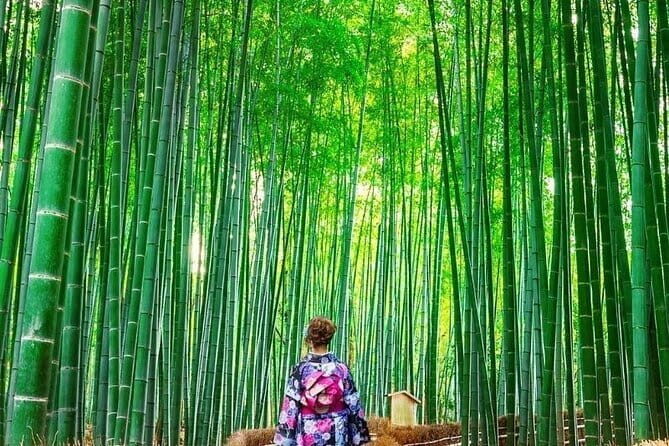
Your first big hit is the Arashiyama Bamboo Grove, in the Arashiyama area on Kyoto’s outskirts. This bamboo stretch is one of Japan’s most iconic natural sights, and the experience is exactly what the photos promise: tall bamboo stalks swaying in the wind, with a calm, almost dreamlike feel.
Historically, this area has been a destination since the Heian Period (794–1185), when nobles came to enjoy the setting. That matters because Arashiyama isn’t just a pretty path. It has a long reputation as a place where people slowed down and watched nature behave.
What to consider: Arashiyama is popular. You’ll likely deal with crowds on the walkway, and your one-hour stop means you have to choose your route quickly. I’d use that hour to do two things only: a slow walk for atmosphere, then a few deliberate photo angles before you lose your chance.
Stop 2: Kinkaku-ji Golden Pavilion and its never-simple rebuild story
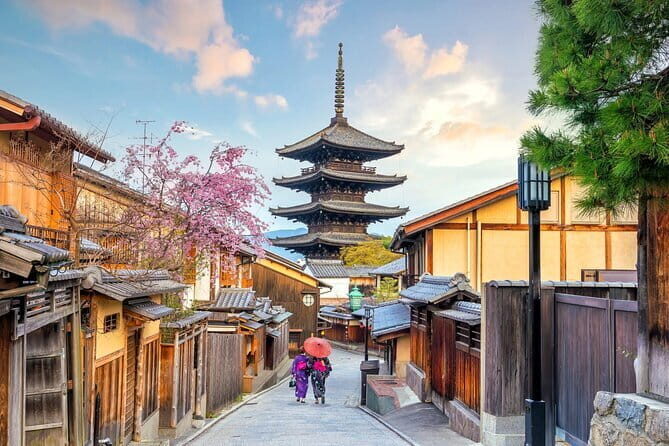
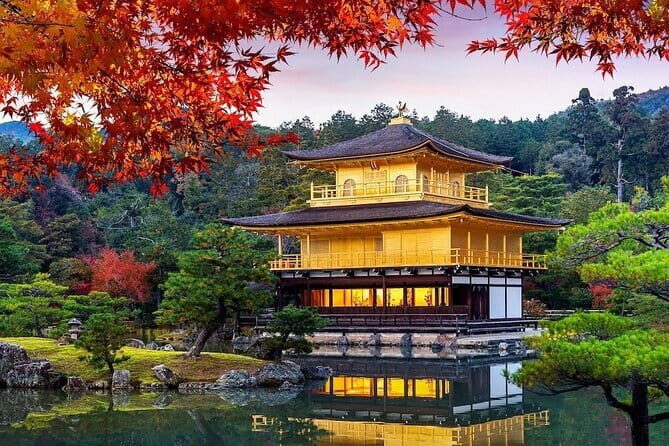
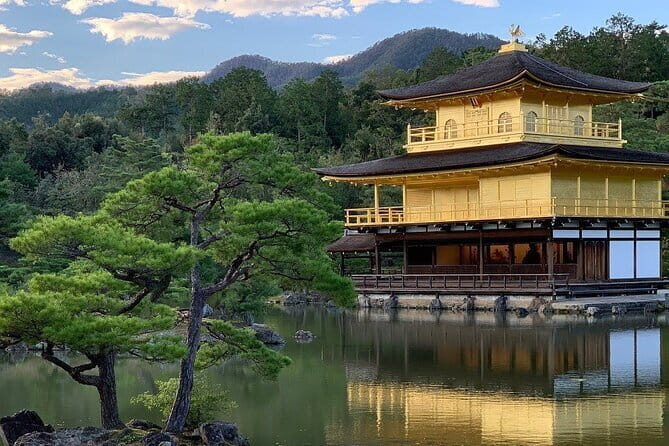
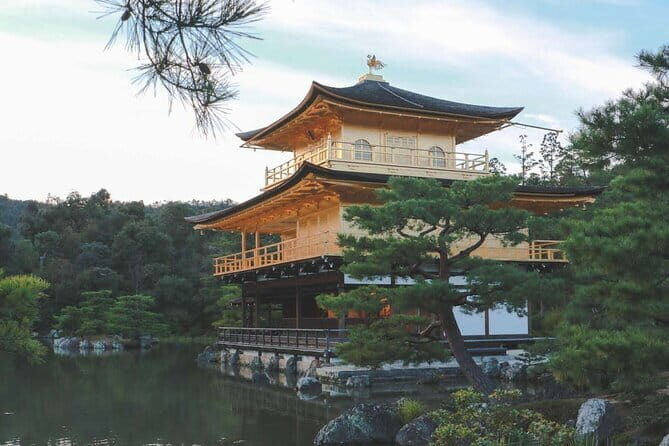
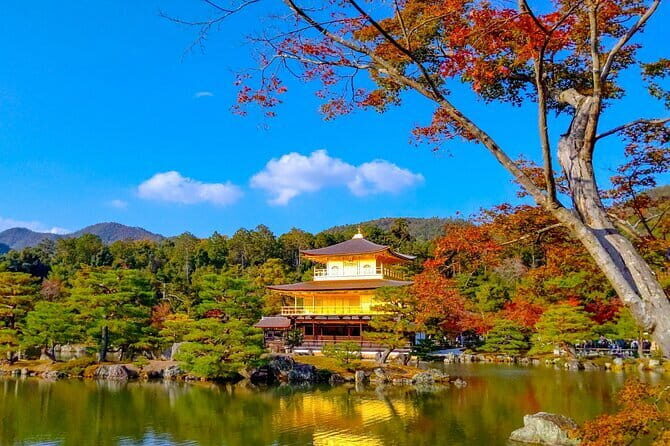
Next is Kinkaku-ji, also called the Golden Pavilion. Its official name is Rokuon-ji, and the headline feature is the top floors covered in gold leaf—a look that hits even if you’ve seen photos before.
Here’s the history that makes the gold make sense. The pavilion was originally built in 1397 as a retirement villa for shogun Ashikaga Yoshimitsu. After his death, it became a Zen temple. And like many famous structures in Japan, it has an unhappy chapter: it burned down multiple times. The current structure dates to 1955, rebuilt after a fire in 1950 set by a monk.
Why this stop is worth your hour: Kinkaku-ji doesn’t feel like a random landmark. It feels like a story that has survived setbacks. You’ll also get great photo opportunities from multiple viewpoints in the complex, especially where the pavilion lines up with water reflections.
One practical caution: there’s usually a lot of standing still for photos. Wear shoes you can stand in, because you’ll spend time waiting for your angle and for people to shift.
Stop 3: Kiyomizu-dera wooden stage and Pure Water Temple meaning
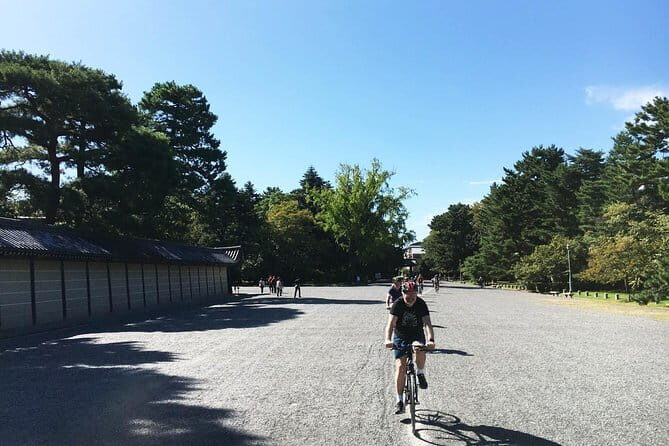
Kiyomizu-dera is one of Kyoto’s signature temples, known for its dramatic wooden stage and the way it sits over the hillside. It’s also old. The temple dates back to 778, making it one of Kyoto’s oldest.
The name matters here. Kiyomizu-dera translates to Pure Water Temple, tied to the Otowa Waterfall that runs through the grounds. That link gives you something tangible to look for beyond the main buildings: the waterfall and the water flow that gives the temple its name.
The temple has also had changes in its religious ties. It was associated with the Hosso sect until it became independent in 1965. That’s the kind of detail a guide can help you connect while you’re standing there—so the site doesn’t feel like an empty postcard.
What you might find challenging: Kiyomizu-dera is a walking-and-stairs kind of place, and the crowd level can be intense depending on the day. Your one-hour window is enough if you keep moving, rather than trying to “fully study” the site like a museum.
You can also read our reviews of more city tours in Kyoto


Stop 4: Fushimi Inari Taisha torii tunnels for photos and the climb
Then you shift from temple buildings to pure motion: Fushimi Inari Taisha, one of Japan’s best-known Shinto shrines. It’s dedicated to Inari, the Shinto god connected with rice, fertility, and agriculture.
The main show is the thousands of red torii gates, creating tunnel-like pathways as you move toward Mount Inari. It’s called Senbon Torii—and the idea behind it is specific: many torii gates were donated by individuals and businesses hoping for blessings and favor.
This is where a private setup really helps. Fushimi Inari can eat time because it’s easy to get pulled into “one more step” mode. With a guided one-hour block, you can aim for the portion that gives you the best tunnel effect without missing the rest of Kyoto.
Practical note: there’s a lot of walking, and the torii pathways can feel like an endless scroll of red. Wear something comfortable and plan to take breaks as needed. If you want photos with less clutter, look for spots where the tunnel lines pull your eye forward rather than where you’ll have to stand directly in the densest crowd.
Stop 5: Gion district walking—machiya, teahouses, and daylight reality
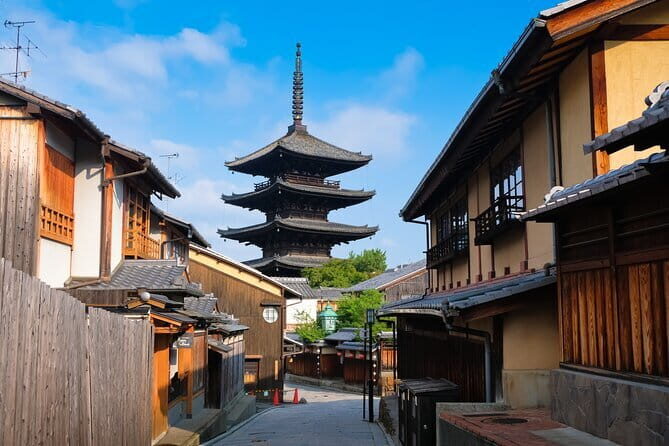
After the shrine, you transition into neighborhood atmosphere in Gion. This historic district is known for traditional machiya houses and teahouses, plus its association with geisha culture.
Gion works best if you approach it as a walkable stage rather than a single attraction. You’re looking for old street lines, wooden facades, and the way the district feels different from the bigger temple complexes.
One consideration: if you’re hoping for a specific encounter tied to geisha culture, that’s not something you can control. What you can control is how you experience the streets. Slow down. Look for the details in the architecture and the small side streets where machiya rows feel intact.
This stop is also a nice pace reset. Your feet have done a lot by now, so treat Gion as your chance to breathe, not your chance to max out your walking tally.
Stop 6: Nishiki Market, Kyoto’s Kitchen, for snacks and last-minute gifts
Your final major stop is Nishiki Market, often described as Kyoto’s Kitchen. The shopping street is narrow and about five blocks long, with over 100 shops and restaurants. It’s been a center for food and commerce for centuries.
Nishiki is ideal for the part of the day when you want to do something fun without committing to a long sit-down meal. You can sample small bites, pick up edible souvenirs, or grab gifts that are easy to pack and explain later.
The key is to remember lunch isn’t included. So either plan your lunch time with your guide’s input, or keep Nishiki as your meal plan. Some guides are especially good at suggesting a good lunch spot nearby and timing it so you don’t arrive hungry and rushed.
Practical tip: Nishiki’s narrow layout can make it crowded. Keep your phone accessible for quick photo moments, but also keep a firm grip on your shopping bag. A one-hour market stop can turn into a spontaneous shopping spree if you’re not careful.
Price and value for a $569 private Kyoto day
At $569 for roughly 8 hours, this tour is priced for people who want efficiency plus personal attention. The cost isn’t “cheap,” but it can be fair when you look at what you’re buying:
- Private transportation with an air-conditioned vehicle and toll taxes included
- Pickup from Kyoto Station
- A guide experience designed to help you understand what you’re seeing
- A schedule that fits multiple top Kyoto icons into one day without you researching buses and trains for hours
For value, it matters who you travel with. If you’re splitting the cost among a small group, the per-person price can feel much more reasonable than trying to do everything on your own while paying for taxis and private entrances separately.
Also note what is not included. Lunch and admission tickets are not included, so your total day cost should include those extras. Your best move is to budget for temple and shrine fees, plus a meal plan that doesn’t hijack your time.
How the guide can make or break the day
A big part of this experience is the human element. In the information you provided, I see repeated praise patterns around timing and practicality: on-time arrivals, clean cars, and smart choices about where to park. Guides named Malik, Sag, Imran Khan, and Hamza show up in that mix, with notes about help with photos and recommendations for lunch.
Even if you don’t get the exact same guide name, the service style is clear: your guide should work to keep the day moving and help you avoid time-wasters. When you’re on private time, you can use it like this:
- Ask for a quick photo plan at each stop so you’re not wandering for the perfect angle.
- Ask where to stand for the best views at Kinkaku-ji and how to handle Fushimi Inari crowds.
- Let the guide suggest lunch near your final market stop so your day stays on schedule.
Small effort from you, big payoff in how the day feels.
What to pack so the day feels comfortable (not just full)
You’ll be doing a full day that mixes iconic sights with walking: bamboo paths, temple grounds, shrine stairs and paths, then neighborhood streets and a market. Since admission tickets aren’t included, it’s smart to keep some cash or a card ready for entrances and small purchases.
My packing checklist for a day like this in Kyoto:
- Comfortable shoes with grip for uneven temple grounds
- Light layers (temples can feel cooler, markets can feel hot)
- A small day bag you can keep close in the market crowd
- Power bank for photos (you’ll have a hotspot on board, but your camera still needs juice)
- Water, since you’ll likely pass snack counters without stopping every time
One more practical move: decide in advance how you want to handle lunch. Either you eat before you reach Nishiki, or you treat Nishiki as the meal. Trying to solve lunch mid-chaos is how the day starts to feel stressful.
Who should book this private Kyoto cherry blossom day?
This tour fits best if you:
- Want to see major Kyoto highlights in one day without building a route yourself
- Prefer private guidance and the flexibility to ask questions on the spot
- Value a smooth start from Kyoto Station and a plan that returns you there
- Don’t want to spend your trip time on transit math
It may not be the best fit if you:
- Need wheelchair-friendly access (wheel chair is listed as not included in the details)
- Want lots of quiet, slow-paced wandering with minimal walking
About the cherry blossom angle: the tour is named as a cherry blossom experience, but the stops listed are landmark-heavy. If your dates matter for blossoms, you’ll want to confirm what your guide expects for the day you travel, since the actual blossom viewing depends on season and timing.
Should you book this Kyoto City Cherry Blossom One Day Private Tour?
Book it if you want a guided, efficient Kyoto day that hits the biggest icons—and you don’t want to spend your time planning. The private transport, pickup from Kyoto Station, and guide context can turn a crowded city into an organized experience with less stress.
Skip it or adjust expectations if you want fully included meals and entrances, or if you’re expecting a purely cherry-blossom-focused route. Since admission tickets and lunch aren’t included, your total cost and your day timing depend on what you choose at each stop.
My clear take: if you’re seeing Kyoto for the first time and you want to leave with your bearings, this kind of day is a smart use of time. You’ll get plenty of famous moments, but more importantly, you’ll understand what you’re looking at as you go.
FAQ
Where does the tour start and what time does it begin?
The tour starts at Kyoto Station at 8:00 am (meeting point listed as Higashishiokoji Kamadonocho, Shimogyo Ward, Kyoto 600-8216). The tour ends back at the meeting point.
How long is the guided tour?
The duration is listed as about 8 hours.
Is this a private tour?
Yes. It is a private tour/activity, meaning only your group participates.
What transportation and pickup are included?
You get an air-conditioned vehicle and private transportation, with toll taxes included. Pickup is offered on request.
Are temple and shrine admission tickets included?
No. Admission tickets are not included for the listed stops, and lunch is also not included.
Is lunch included in the price?
No. Lunch is not included.
What’s the cancellation window for a full refund?
You can cancel for a full refund up to 24 hours before the experience’s start time.