REVIEW · KYOTO
Discover the Secrets of Fushimi Inari and Gion with a Local Guide
Book on Viator →Operated by Sparrow Travel · Bookable on Viator
Kyoto in four hours can feel like magic. This half-day east-side walk mixes Gion, classic shrines, and the climb through Fushimi Inari in a way that stays organized without feeling rushed. What made it work for me was the small size and a guide who actually adjusted to the group.
I especially liked the stories tied to each place, like the way guide Tomoki connected Shinto and Zen ideas to what you see in front of you. I also liked the practical pacing: you get enough time to look closely at landmarks without getting swallowed by the long lines and stop-and-go crowds. The main thing to consider is that the day includes real walking, and Fushimi Inari’s torii path includes steps—if you want a totally relaxed pace, plan to take it slow there.
In This Review
- Key things to know before you go
- A tight 4-hour route that actually feels doable
- Gion first: get the atmosphere before it turns into a photo line
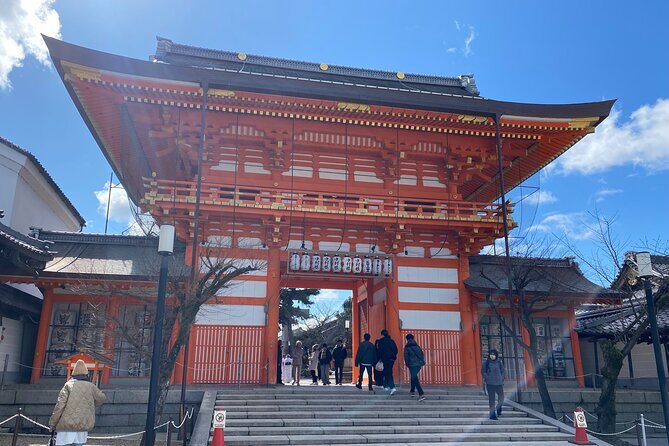
- Yasaka Shrine: the legend behind the gate you’ll see all day
- Kodai-ji: a Zen temple that changes the mood
- Yasaka Pagoda (Hōkan-ji): the landmark that feels close even when you’re moving
- Kiyomizu-dera: the best known temple, and why it earns the hype
- Fushimi Inari: plan for steps, and let the guide handle the flow
- Price and what’s included for your $78
- Logistics that make a difference: where you start and where you end
- Who this tour suits best
- A couple of practical tips so your day stays fun
- Should you book this Fushimi Inari and Gion tour?
- FAQ
- What is the duration of the tour?
- How much does the tour cost?
- What is included in the price?
- What is not included?
- Where does the tour start and end?
- How big is the group?
- Do you get a mobile ticket?
- Is transportation by train included?
- Is free cancellation available?
Key things to know before you go
- Max 8 travelers means you can hear your guide and keep your pace
- Local guide context ties Gion, Yasaka-area shrines, and temples to what you see
- Included admissions for Kodai-ji and Kiyomizu-dera save you time and hassle
- Free entry stops balance the day with big landmarks and less ticket cost
- End at Fushimi-Inari Station makes the finish easy for trains and onward plans
- Mobile ticket is part of how you’ll access the tour
A tight 4-hour route that actually feels doable
This is a half-day Kyoto plan built for people who want the main east-side highlights without spending the whole day in transit. You start near Minamiza Theater in Higashiyama, then work your way through Gion and the Yasaka/Kiyomizu area before finishing at Fushimi Inari.
The best part is that the schedule is packed but not chaotic. Each stop has its own rhythm—short enough that you don’t get bored, long enough that you can still absorb the vibe and photos don’t turn into a frantic checklist. And since the group tops out at 8, the guide can steer people around bottlenecks instead of everyone shuffling like a single file line.
Value-wise, the price is $78.04 per person, and that includes all guide costs plus admissions for two of the major sites. Transportation to Kyoto is not included, and you’ll also want to budget for snacks or meals since food and drinks are on you.
You can also read our reviews of more guided tours in Kyoto

Gion first: get the atmosphere before it turns into a photo line
You’ll begin in Gion, one of Kyoto’s best-known historic districts. Think traditional machiya houses, old streets, and the feel of an area that still reads as Kyoto rather than a theme park. Even with the famous name, the early start helps because you can see the street texture—the cobblestones, the traditional facades—before your brain gets overloaded by later landmark signage.
This stop also sets up the day’s theme: Kyoto isn’t only about temples and torii. It’s also about neighborhood space—where people lived and how the architecture reflects that. In the route I took, the guide framed Gion as a living part of Kyoto’s story rather than only a background for geisha-era photos. You’ll get enough time to look around without feeling rushed.
Practical note: Gion streets can be uneven underfoot. If you’re wearing slick shoes, you’ll feel it.
Yasaka Shrine: the legend behind the gate you’ll see all day
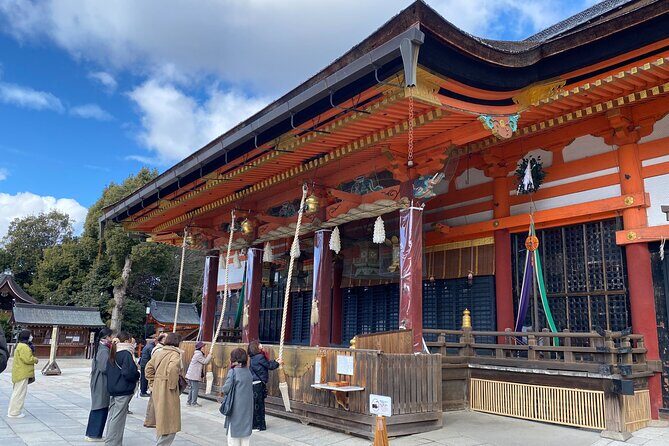
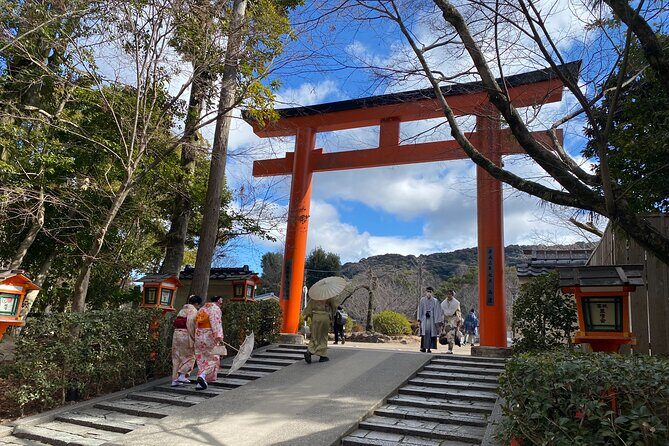
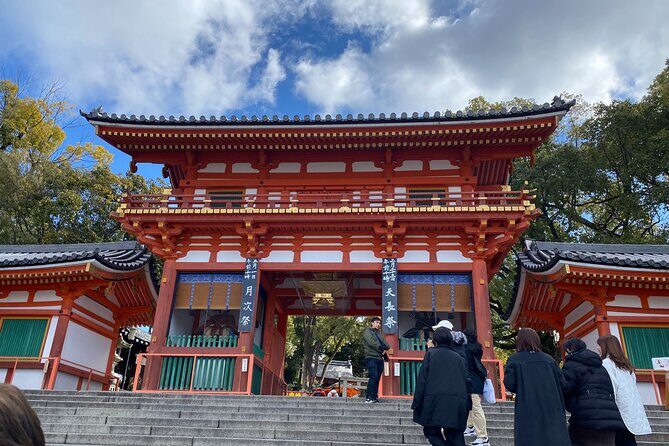
Next comes Yasaka Shrine, right at the eastern edge of Gion. This one has serious age and meaning. It’s dedicated to Susanoo-no-Mikoto, and the shrine dates back more than 1,350 years. That matters because the shrine isn’t just a pretty stop—it’s part of a long continuity of beliefs and community rituals.
Your time here is about 30 minutes, so it’s ideal for a slow walk through the approach area and a quick look at key features without turning the day into a sit-and-read museum. A good guide helps you notice what you would otherwise skip: how the shrine’s identity ties into the wider Higashiyama area and why it’s such a focal point for festivals and local devotion.
If you’re new to Shinto, this is a good primer. If you’re returning to Kyoto, it gives you a clearer sense of why this area keeps showing up in stories.
Kodai-ji: a Zen temple that changes the mood
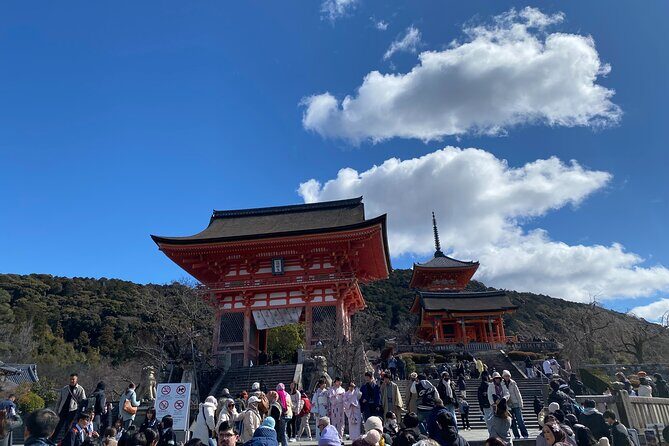
After the streets and shrine approach, you shift into Kodai-ji Temple, a Zen Buddhist site near Gion. Founded in 1606 by Toyotomi Hideyoshi’s wife, the temple was built to honor him, and that origin story adds weight to what you see once you’re inside the temple grounds.
This is one of the two temple admissions included in the tour, and it’s a smart inclusion because Kodai-ji is the kind of place where paying attention pays off. Even in a shorter visit window, you can feel the difference in atmosphere—less street energy, more space to slow down. I found the visit worked as a reset between the more crowded landmark areas.
What to watch for: don’t treat this as just a photo backdrop. Give yourself a few minutes to absorb how the temple frames the view and how the layout guides your movement.
Yasaka Pagoda (Hōkan-ji): the landmark that feels close even when you’re moving
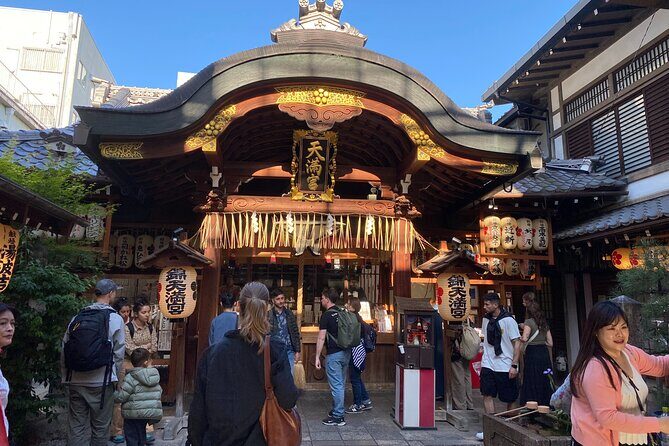
Next is Yasaka Pagoda, also known as Hōkan-ji Temple. This five-story pagoda is one of the most iconic silhouettes in the Higashiyama area. It’s famous for being originally built in the 6th century, which is a wild time jump when you’re walking in the modern streets outside.
Your stop here is about 30 minutes, and that’s the right amount if you want both a look at the structure and time to understand why it’s become such an anchor point in the area. In my case, Tomoki pointed out how the pagoda fits into the broader neighborhood geography—how you keep seeing it from nearby lanes even if you think you’re only “passing through.”
This segment is also a nice rhythm break. You’re not only marching from temple to temple. You’re also learning how Kyoto’s landmarks relate to the streets around them.



Kiyomizu-dera: the best known temple, and why it earns the hype
Then you hit Kiyomizu-dera, one of Kyoto’s most famous temples, perched on the slopes of Mount Otowa. It was founded in 778, and it’s widely known for its large wooden stage. The included admission here matters: Kiyomizu-dera is the kind of place where buying a ticket and entering efficiently can save you stress during a busy day.
Your visit is around 30 minutes. That’s short, but it’s enough to get the main views and understand the significance of the layout. If you focus on only one area, you’ll still come away with a strong sense of why Kiyomizu-dera stays on every Kyoto list.
Here’s my advice: use your guide to decide where to stand and what to look at first. Without that, it’s easy to wander and burn time, especially on a day that continues straight into Fushimi Inari.
Fushimi Inari: plan for steps, and let the guide handle the flow
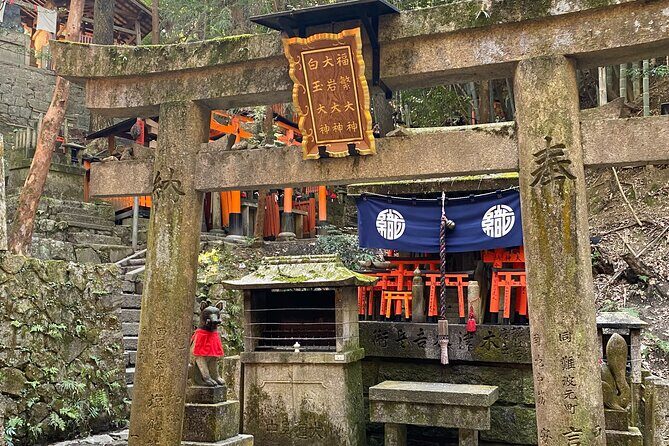
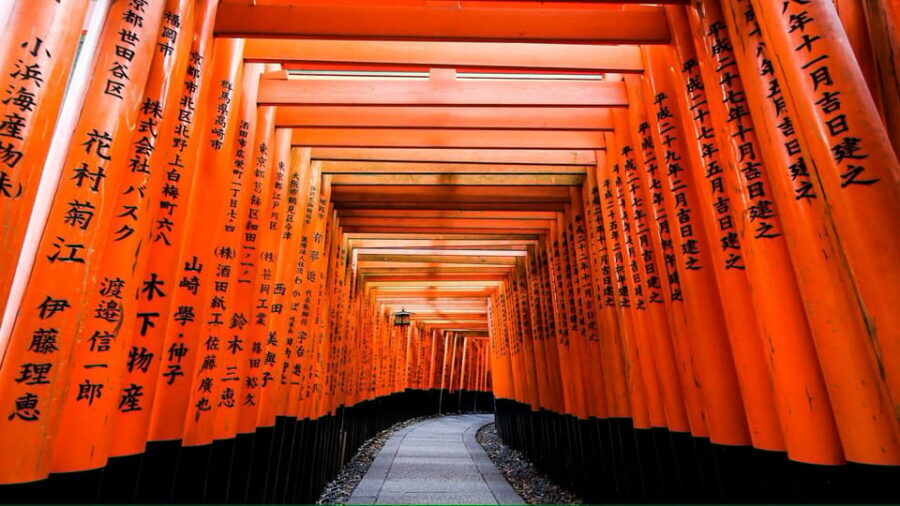
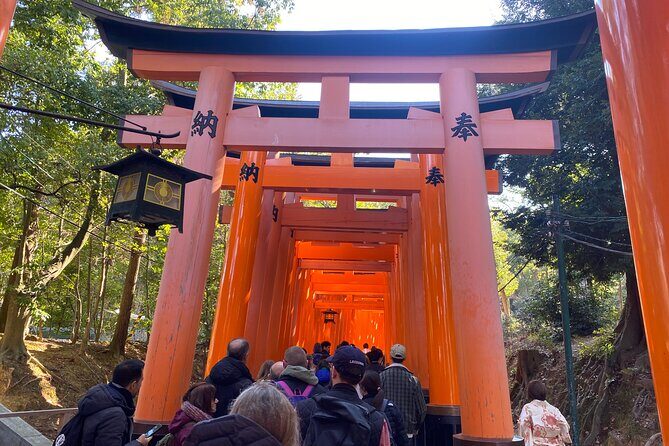
The finale is Fushimi Inari Taisha, the shrine famous worldwide for its thousands of red torii gates that create winding paths up Mount Inari. This stop is the heart of the day, and it’s also where energy management matters most.
You get about 1 hour here, and the entry is free. That’s useful because most people end up spending money on snacks and transport anyway, and this shrine is more about your route choices than ticket options.
What I liked most was how our guide helped shape the experience. With Tomoki, the talk wasn’t just history trivia—it was practical context that made the walk feel purposeful, not like a red-gate treadmill. You’ll learn what you’re looking at, and you’ll also get guidance on how to move so you’re not stuck in the densest lines at every turn.
Important consideration: the torii path involves steps and uneven ground as you go up. If you need frequent breaks, pick them early rather than waiting until you’re already tired. One hour gives you options, but it does require you to stay mindful with your body.
Price and what’s included for your $78
At $78.04 per person for about 4 hours, you’re paying for two things: a human guide and guided time at major sites. What’s covered includes:
- All guide costs and a personal guide
- Admission fees for Kodai-ji and Kiyomizu-dera
- Other highlighted shrines are listed with free entry during the visit
What’s not included:
- Train transportation to/from Kyoto (listed as ¥220 per person)
- Meals and drinks
So how do you judge the value? I see it like this: if you were doing this route on your own, you’d still need tickets for Kodai-ji and Kiyomizu-dera, plus you’d spend more time figuring out the best order and where to go within each complex. This tour turns that planning effort into actual walking with someone who knows the flow.
If you’re a first-time visitor to Kyoto’s east side, this is especially good value. It helps you get bearings fast and prevents the day from turning into a random collection of entrances and exits.
Logistics that make a difference: where you start and where you end
You’ll meet at Minamiza Theater (Kyoto, Higashiyama Ward), at the address listed as 京都市東山区四条大橋東詰, Nakanochō, Higashiyama Ward, Kyoto 605-0075. That’s in a convenient part of Higashiyama, and it sets you up to walk into Gion and the shrine-temple cluster.
The tour ends at Fushimi-Inari Station in Fushimi Ward (listed as Fukakusa Ichinotsubocho), and it’s described as an easy finish for trains. Ending at the station is a big deal because it keeps you from having to backtrack toward transit after you’ve climbed your way through torii gates.
Also, the tour uses a mobile ticket, so you’ll want to have your phone charged and ready.
Who this tour suits best
This is a strong fit for:
- First-time Kyoto visitors who want the east-side icons in one organized walk
- People who like explanations with their sightseeing, not just standing in front of signs
- Anyone who wants a manageable group size (max 8 travelers)
It’s also good for travelers who have limited time but don’t want a bus tour that drops them off for 10 minutes each.
If you’re someone who hates walking up steps, treat Fushimi Inari as the main challenge of the day. Consider comfortable shoes and plan a slower tempo there.
A couple of practical tips so your day stays fun
- Wear shoes you trust on stairs. Fushimi Inari will test them.
- Bring water even if the tour includes no meals. This kind of walking day adds up.
- Don’t plan a super tight schedule right after. Ending at Fushimi-Inari Station helps, but you may still want time to cool down.
- Use the guide for sequencing. With limited stop time, the right order matters more than squeezing in extra photos.
Should you book this Fushimi Inari and Gion tour?
Book it if you want a high-value half-day that covers Gion, Yasaka-area shrines and temples, and Fushimi Inari without you having to micromanage the logistics. The small group size and the guide-led context make it feel like you’re understanding Kyoto, not just passing through it.
Skip it or reconsider if you need very slow pacing or you’re concerned about stairs. This tour is designed for walkers, and Fushimi Inari is not a sit-and-watch stop.
FAQ
What is the duration of the tour?
The tour runs for approximately 4 hours.
How much does the tour cost?
The price is $78.04 per person.
What is included in the price?
The tour includes all guide costs, a personal guide, and admission fees for Kodai-ji and Kiyomizu-dera.
What is not included?
Train transportation (¥220 per person) and meals and drinks are not included.
Where does the tour start and end?
It starts at Minamiza Theater in Higashiyama and ends at Fushimi-Inari Station, which is a short walk from Fushimi Inari Shrine.
How big is the group?
The maximum group size is 8 travelers.
Do you get a mobile ticket?
Yes, a mobile ticket is listed as part of the tour features.
Is transportation by train included?
No. Train transportation is listed as ¥220 per person and is not included.
Is free cancellation available?
Yes. You can cancel up to 24 hours in advance for a full refund.