REVIEW · TOKYO
Explore Akihabara with Local Cosplayer Guide(s)!
Book on Viator →Operated by Cosplay9 · Bookable on Viator
Akihabara feels personal when a cosplayer leads. This private walking tour turns Tokyo pop culture into something you can actually navigate, with a guide in cosplay who explains what you’re seeing as you move through town.
I love the way the guide connects the stores to anime and games stories, not just product labels. I also like the human touch: short photo time with the cosplayer guide and the option to ask for a route that fits your interests.
One consideration: the whole experience is about 1 to 2 hours, so you’ll still want time afterward if your goal is serious shopping or hunting for one specific item.
In This Review
- Key highlights you’ll care about
- Why a cosplayer guide works in Akihabara
- Meeting at Akihabara Station Electric Town West Plaza (and staying oriented)
- Stop 1: Akihabara Radio Kaikan for anime merch shopping
- Stop 2: Akihabara GiGO game center for claw, rhythm, and fighting
- Stop 3: Super Potato for retro gaming nostalgia
- Stop 4: Kanda Shrine (Kanda Myojin) for an otaku-friendly ritual
- Price and value: what $97.73 buys you
- How to customize without losing the plot
- Pacing, photos, and arcade energy
- Who this Akihabara tour is best for
- Should you book Explore Akihabara with Local Cosplayer Guide(s)?
Key highlights you’ll care about

- Cosplayer guide energy, plus real explanations as you walk the streets of Akihabara
- Four contrasting stops (anime merch, arcades, retro games, and a shrine) in a tight loop
- Free admission tickets for each scheduled stop, so you’re not surprised by add-ons
- Photo time is built in so you’re not scrambling at the last minute
- Customizable route approach, with flexibility depending on what’s available
- Friendly pacing and conversation, including help for visitors who don’t speak Japanese
Why a cosplayer guide works in Akihabara
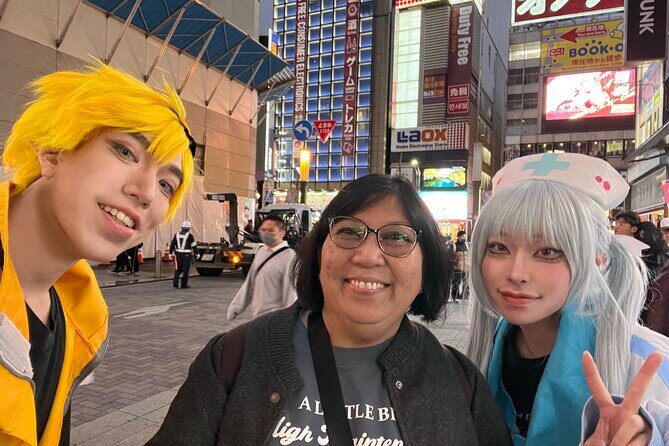
Akihabara can overwhelm you fast. One moment you’re staring at colorful character displays, and the next you’re trying to figure out what’s worth your time (or your yen). A cosplayer guide changes that dynamic in a practical way. Instead of you wandering and guessing, you get a person who can point, explain, and translate the vibe of the neighborhood into something you can use.
A big part of the fun is that you’re not just doing “an attractions list.” The tour is built around anime, games, and otaku culture, with the guide sharing context as you go. That matters because Akihabara isn’t one thing. It’s merchandise shopping, arcade culture, retro gaming, and shrine visits that show up in pop culture too. When the pieces click in order, the whole area starts to make sense.
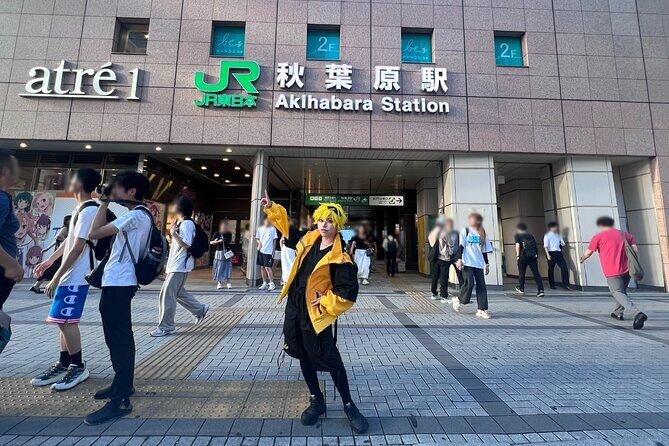
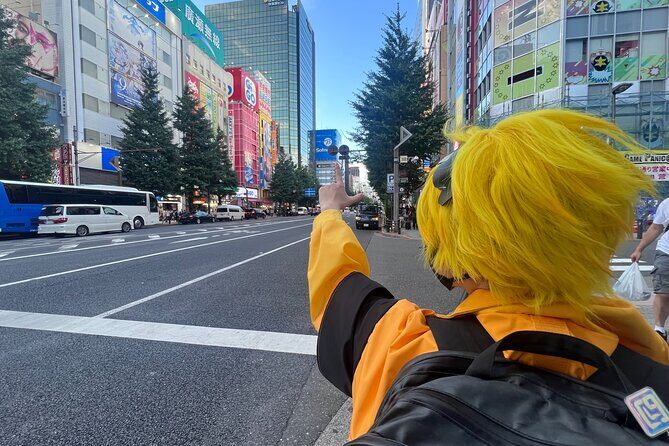
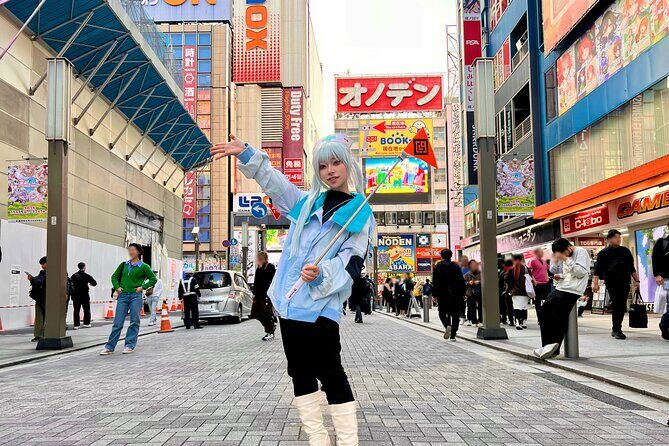
Also, there’s a social side. You can take casual photos with the guide during the tour, using your own camera. It’s a nice way to break the ice, especially if you’re traveling solo or you’re not sure how to start conversations in Japan. In photos, costumes also help you spot the guide quickly, which is useful on a first night in Tokyo.
You can also read our reviews of more guided tours in Tokyo



Meeting at Akihabara Station Electric Town West Plaza (and staying oriented)

You meet at Akihabara Station Electric Town West Plaza, in front of 1-chōme-17-18 Sotokanda, Chiyoda City, Tokyo 101-0021. The tour ends back at the same meeting point, so you don’t have to plan an end-of-walk transport puzzle.
This format is ideal if you like to get your bearings early. Akihabara has a lot of streets and crosswalks, and “where is everything?” can feel like a full-time job. A short guided walk that returns you to your starting point lets you keep your evening simple, especially if you’re mixing the tour with dinner plans later.
The tour is also private (only your group participates). That tends to make the guide more flexible with how fast you move and what you want to focus on. And because it’s a walking tour, you get to notice the details you’d otherwise miss when you’re just passing through.
Stop 1: Akihabara Radio Kaikan for anime merch shopping
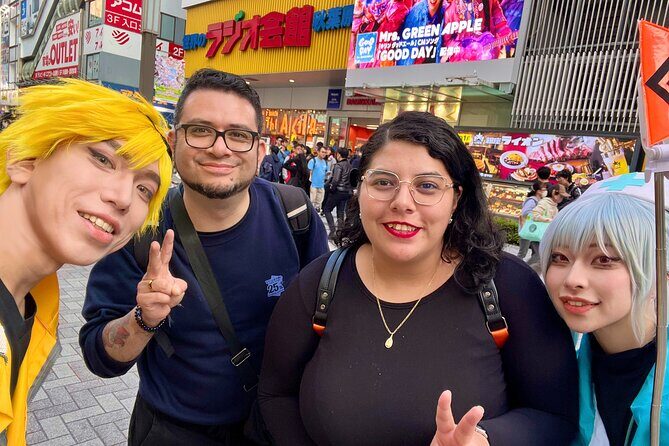
Your first stop is Akihabara Radio Kaikan, and it’s a smart opener. It’s one of the area’s most iconic buildings and even shows up in popular anime, so it sets the tone instantly. The time here is about 40 minutes, and admission is free.
What makes this stop special is how concentrated it is. You’re not just browsing one shop—you’re surrounded by multiple floors filled with anime merchandise and related retail. Expect the kind of stores where fans look for character goods, themed items, and all the extras that make a collection feel complete.
A practical way to use this time:
- Decide what you’re hunting for before you step inside (character goods, trading cards, specific series items).
- Use the guide as a map. Ask where people typically start when they want to find older or less obvious items.
- Keep a budget mindset. Akihabara merchandise can be tiny-ticket expensive, and it adds up quickly.
There’s also value in seeing how the building is laid out. It helps you understand the “shopping logic” of Akihabara, so the rest of your day doesn’t feel like total trial and error.
Potential drawback at this stop: if you’re hoping for deep specialty browsing, forty minutes can feel short. The tour is built to cover several worlds in one walk. If Radio Kaikan is your #1 priority, treat it as a launch pad, then plan a return visit afterward with longer shopping time.
Stop 2: Akihabara GiGO game center for claw, rhythm, and fighting

Next you head to Akihabara GiGO, a well-known game center that runs about 30 minutes with free entry. This is where the tour shifts from shopping to play, and it’s a great change of pace after merchandise browsing.
GiGO fits different comfort levels. You’ll see options like:
- claw machines
- rhythm games
- fighting games
A guide’s help is especially useful here if you’re new to arcades in Japan. Even if you’ve played similar games elsewhere, the systems, setups, and flow can be different. The guide can explain how to play and what you’re looking at so you spend less time figuring it out and more time having fun.
If you’re not sure what to try, pick based on your energy:
- Want something casual? Start with claw machines.
- Want coordination and music? Try rhythm games.
- Prefer competition? Watch or try fighting games, even briefly.
There’s also a cultural benefit. Game centers are a core part of Akihabara’s identity, and seeing how fans interact with machines tells you more about the neighborhood than any photo ever will.
Stop 3: Super Potato for retro gaming nostalgia
Your third stop is Super Potato, about 20 minutes, and admission is free. This is the retro gaming chapter of the day: classic consoles, vintage games, and arcade machines from earlier eras.
Why I like this stop for most visitors: it gives you a second lens on Akihabara. Yes, it’s anime and pop culture, but it’s also nostalgia and tech history in the form of playable artifacts. Even if you don’t buy anything, you’ll start to recognize how collectors think—what looks “complete,” what gets repaired, what fans seek.
For shoppers, this is often where people get excited because the finds can feel more specific and story-driven than generic merch. If you’re hoping to locate a game-related item you’ve been chasing, a guide can help you navigate what’s where and how to ask. One visitor even got help looking for a figure, which shows how supportive the guides can be when you have a particular target.
Quick practical tip: if you plan to buy retro items, go in with patience. Condition and availability matter, and those things can vary a lot from one moment to the next in shops like these.






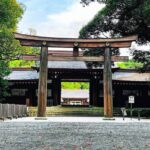
Stop 4: Kanda Shrine (Kanda Myojin) for an otaku-friendly ritual
After the arcade and retro stops, you’ll slow down at Kanda Shrine (Kanda Myojin), about 20 minutes with free entry. This is the part of the tour that surprises people—in a good way.
Kanda Myojin is a real shrine, and it has a connection to otaku culture because it appears in popular anime. The guide explains a proper way to pray, so you’re not just taking photos—you’re participating respectfully.
This stop adds something important for first-timers: balance. Akihabara can feel like pure consumer culture if you only look at the storefronts. A shrine visit reminds you that Japan’s traditions run alongside pop culture, not underneath it.
What to do here is simple:
- Follow the guide’s instructions.
- Take your cues from what people around you are doing.
- Keep your photos casual and respectful.
Even in a short stop, learning how to pray correctly makes you feel more grounded in the city. It’s a small time investment that improves the rest of your Tokyo day.
Price and value: what $97.73 buys you
At $97.73 per person, this isn’t a “cheap and random” walking tour. It’s priced like a guided experience—and the value depends on what you want from Akihabara.
Here’s what you’re paying for:
- a walking tour of about 1.5 to 2 hours
- a local cosplayer guide
- cultural insights tied to anime, games, and otaku culture
- short photo time with the guide
- free admission tickets for the scheduled stops
Since most stops are free to enter during the tour, your money mostly goes to the guide’s time and their ability to translate what you’re seeing. That’s where the experience can feel worth it. If you’re the type who gets more out of “someone shows me the right way” than “I browse and hope,” this fits well.
The private format matters too. If you’re traveling as a couple or a small group, splitting the guide’s attention can make the price feel more reasonable than a typical large-group tour.
One more practical note: the average booking timing is about 56 days in advance. That’s a sign this is popular enough that earlier planning helps, especially if you’re picking a specific day around your Tokyo schedule.
How to customize without losing the plot
The tour can be customized, and that’s one of the best features on paper. You can ask for what you want to focus on—anime items, retro games, arcade style play, or even shrine-related context. Just note that some requests may not be available.
To make customization actually work, you’ll get better results by being clear and specific. Instead of saying you like anime in general, try:
- a short list of series you’re chasing
- whether you prefer shopping vs. games
- if you want more retro focus or more merch focus
- if you care more about learning culture or about finding items
A few guide names you may encounter include Nico, Mune, Ann, Elijah, Ioannis, Zefi, and Kim. Those names show the mix of personalities you can get. Expect friendliness and plenty of conversation.
Also, don’t be surprised if the guide chats like a person, not a script. Visitors have described long conversations and helpful recommendations after the tour, including suggestions for places to eat like ramen or curry. That’s a real advantage when it’s your first night in Tokyo and you want dinner to be easy.
Pacing, photos, and arcade energy
The tour timing is tight but designed to stay fun. You’re moving across four distinct zones without spending the whole day stuck in one building.
Photo time is built in. That’s useful because cosplay photos can easily become awkward if you’re trying to ask at the wrong moment. During this tour, the guide gives you a short window to take casual shots with personal cameras. Keep it simple: one or two poses, then back to the walk.
Arcade time at GiGO is short too, but it’s enough to try a machine type and feel the atmosphere. If you want to spend longer playing, you’ll likely want to add extra time on your own afterward. The guide can also help you figure out what to try first.
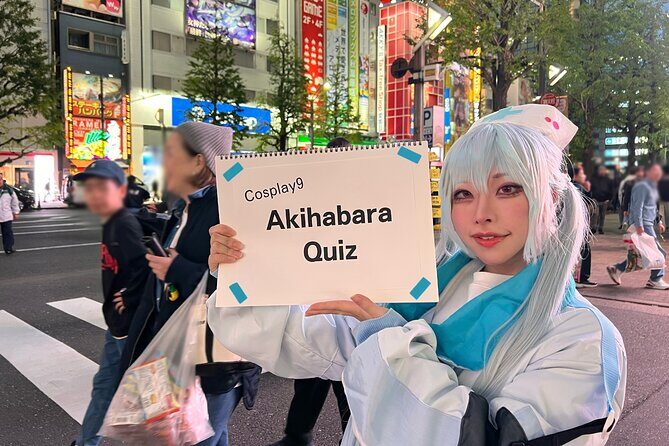
One more detail that can make the day feel lively: you might get small trivia or quiz-style fun during the experience. It depends on the guide and setup, but it’s a nice way to break the ice while you’re walking.
Who this Akihabara tour is best for
This is a good fit if:
- you want Akihabara context with your shopping and game time
- you enjoy cosplay culture and want a guide who treats the neighborhood like a story
- you like the mix of anime merch, arcades, retro gaming, and shrine etiquette
- you’re traveling with someone who wants a plan but also time to ask questions
It’s also helpful if you don’t speak Japanese. One visitor noted the guide was active and kind while helping them search for a figure, which suggests the guide effort goes beyond pointing and includes real support.
If you’re only interested in a self-guided shopping spree and you already know Akihabara well, this may feel like less of a bargain. You’ll still have fun, but you might not use the guide’s translation and context as much.
Should you book Explore Akihabara with Local Cosplayer Guide(s)?
Book it if you want Akihabara to feel friendly and understandable fast. The biggest wins are the cosplayer guide with cultural explanations, the smooth mix of stops, and the fact that entry for the main locations is free during the walk. For first-timers, it can turn confusion into momentum.
Skip it only if your priority is long, unstructured shopping time or you already have a confident plan for exactly what you want to buy and where to find it. In that case, you may get more value by building your own route.
If you’re on your first night in Tokyo, arriving curious but not sure how to sort it all, this tour is an efficient way to start. You’ll leave knowing what Akihabara is really about, not just what it looks like.