REVIEW · TOKYO
Explore the Local “Non-touristy” Side of Tokyo: Jujo and Akabane Walking Tour
Book on Viator →Operated by Trip Designer Inc. · Bookable on Viator
Tokyo’s quiet streets have stories. This small-group Jujo and Akabane walking tour takes you through old shopping areas and neighborhood life, with a local guide sharing what you’d otherwise miss. You’ll move at a human pace, see the texture of daily Tokyo, and get context for the places around shotengai corridors and local landmarks.
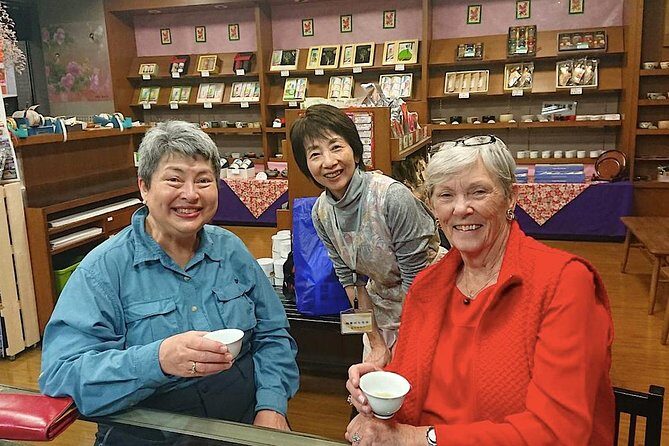
Two things I really like about this experience are the mix of everyday shopping-street energy and guided cultural context. First, Jujo Ginza is described as one of Tokyo’s best old shopping streets, with 500 shops and all the practical sights and smells of local errands. Second, the guide-led moments go beyond photo stops, with a recent highlight including tea tasting and learning about temple practices like offerings and prayers.
One consideration: food and drinks are not included, and you’ll be walking for about three hours from Jujo Station to Akabane Station, so plan on having a game plan for your own meal timing.
In This Review
- Key things to know before you go
- Why Jujo and Akabane Beat the Usual Tokyo Route
- Price and Logistics: What the $71.53 Buys You
- The Route in Motion: From Jujo Station to Akabane Station
- Stop 1: Jujo Ginza Shopping Arcade and the 500-Shop Reality
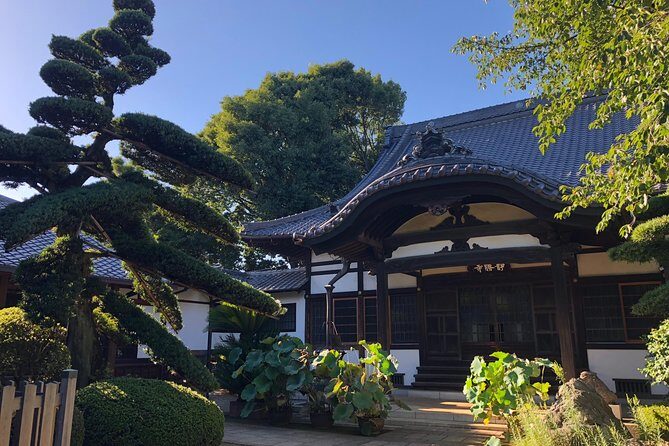
- Shimizuzaka Park: A Calm Reset in the Middle of Neighborhood Tokyo
- Inatsuki Castle Remains: Ota Dokan, a 15th-Century Connection
- Stop 4: Akabane Ichibangai (1番街) and the Izakaya Side of Tokyo
- Food, Tea, and Temple Moments: What the Guide Adds
- Who This Tour Is Best For
- Should You Book This Jujo and Akabane Walking Tour?
- FAQ
- How long is the Jujo and Akabane walking tour?
- What group size is this tour?
- How much does it cost?
- Where does the tour start and end?
- What stops are included?
- Is food or drinks included?
- Are admission tickets included for the stops?
- Is transportation included from your hotel?
Key things to know before you go
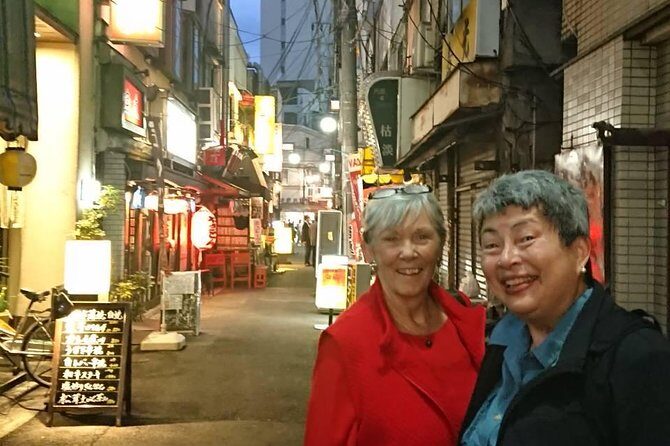
- Maximum eight people keeps the pace conversational, not crowded herding.
- Jujo Ginza covers an old-style shopping arcade with hundreds of shops and daily rhythm.
- Shimizuzaka Park gives a rare pause with local kid-friendly play space and a pond.
- Inatsuki Castle Remains ties the neighborhood to a 15th-century story linked to Ota Dokan.
- Akabane Ichibangai (1番街) is the izakaya side of Tokyo, with pubs and sake culture.
- You get a local guide plus local taxes, but you’ll handle food/drinks yourself.
Why Jujo and Akabane Beat the Usual Tokyo Route

Tokyo can feel like a highlight reel. Big temples, famous viewpoints, the same photos on loop. This tour is different because it puts you inside the parts of the city that keep working long after the day-trippers leave.
Jūjō (spelled Jūjō on the tour) and Akabane are both solid neighborhood areas in Kita City, which means you get daily life rather than staged sightseeing. The shopping streets you’ll visit are the kind locals actually use: for prepared foods, fresh groceries, clothes, and the little errands that fill a normal afternoon. You don’t just walk past storefronts. With a guide, you learn what you’re looking at and why it matters.
Also, the timing helps. The tour starts at 3:00 pm, which is late enough to have energy in the streets, but early enough that you still get daylight for the quieter stops. By the time you reach Akabane Ichibangai, the izakaya atmosphere is ready to kick in—pubs and izakayas are noted as being active already at noon, so you’re walking into a real social scene.
You can also read our reviews of more walking tours in Tokyo
Price and Logistics: What the $71.53 Buys You
At $71.53 per person for about three hours, this isn’t trying to compete with the cheapest city-walk deals. The value comes from three practical things you can feel during the tour:
- Small group size (up to eight)
Fewer people means questions get answered. The guide can stop when something is worth noticing, rather than moving everyone along like a train.
- Local guide + local taxes included
You’re paying for interpretation. That matters in Tokyo, where the signage and customs can feel obvious to locals and confusing to visitors.
- A route that connects two stations
The tour ends at Akabane Station, not back where you started. That can actually save you time later, especially if you’re continuing your evening on the same side of town.
What you should know upfront: food and drinks aren’t included, and there’s no hotel pickup/drop-off. You’ll need to reach the meeting point on your own and take care of your own meals. For me, that’s a fair trade if your goal is to see how people live, eat, and hang out.
You’ll also use a mobile ticket, and the tour is described as a private tour/activity with only your group participating. That’s a big deal if you want a low-friction experience with less randomness in group behavior.
The Route in Motion: From Jujo Station to Akabane Station
You’ll meet at Jūjō Station (Tokyo, Kita City, address listed on the tour) and finish at Akabane Station at the ticket gate. Expect the tour to be about three hours, paced for comfortable walking, with moderate physical fitness noted as the baseline.
Because the tour covers shopping streets plus a couple of short outdoor stops, it’s not the type of walk where you can show up in flip-flops and hope for the best. A good pair of walking shoes helps, especially since older shopping streets can have uneven pavement and the park/castle-remains segments may involve small level changes.
Also, since you’re ending in a different neighborhood than you started, it helps to think ahead about what comes next. Do you want dinner nearby? Are you heading to a different part of Tokyo after? Finishing at Akabane can be convenient if you planned around it.
Stop 1: Jujo Ginza Shopping Arcade and the 500-Shop Reality
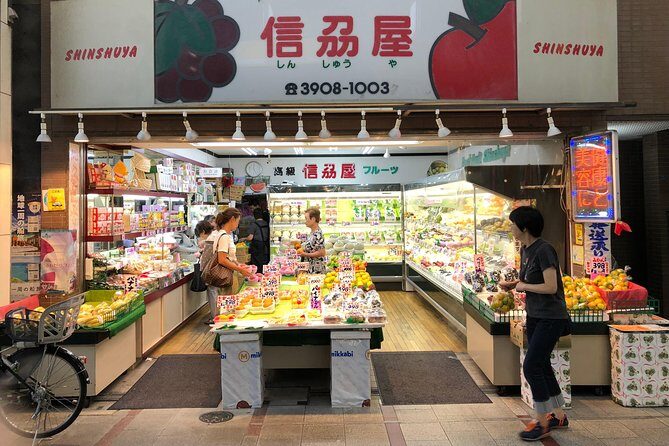
The tour begins at Jujo Ginza, a shopping arcade described as one of Tokyo’s best three old shopping streets. The headline detail is big: around 500 shops.
But the best part isn’t the number. It’s the feeling of walking through a place that’s built for daily use. This is where you see the practical side of Tokyo commerce: prepared foods, fresh produce, clothing, and all the small vendors that keep a neighborhood supplied.
What I like about starting here is that it gives you a baseline for the whole afternoon. Once you understand the rhythm of a shotengai—how vendors sit, how people browse, how the street functions—it gets easier to appreciate the later stops. The guide’s job becomes clearer too: you’ll learn what different shops sell, how locals choose what to buy, and what makes these streets historically important.
Drawback to keep in mind: shopping arcades are popular places to photograph, and that can make you stand still. The trick is to keep moving while you learn. Ask your guide questions in small pauses, not during long slowdowns that break the flow for everyone.
Shimizuzaka Park: A Calm Reset in the Middle of Neighborhood Tokyo
After the dense shopping-street atmosphere, you get a breather at Shimizuzaka Park. This stop is only about 20 minutes, but it’s the kind of pause that makes the tour feel balanced instead of nonstop.
The park is described as a quiet oasis surrounded by trees, used by neighborhood residents as a regional center. For kids, there’s also a roller-type slide with a total length of 52 meters, plus a square area and a pond.
Why this matters on a tour like this: it gives your brain a chance to absorb what you’ve just seen. Shopping streets are visual and sensory. Parks are where you can observe slower interactions: people lingering, parents supervising, and the way public spaces support everyday community.
If you’re traveling with motion sickness or just need a moment away from crowds, this is likely the segment that feels like a breather. It’s also a good moment to check your bearings for the next station area.






Inatsuki Castle Remains: Ota Dokan, a 15th-Century Connection
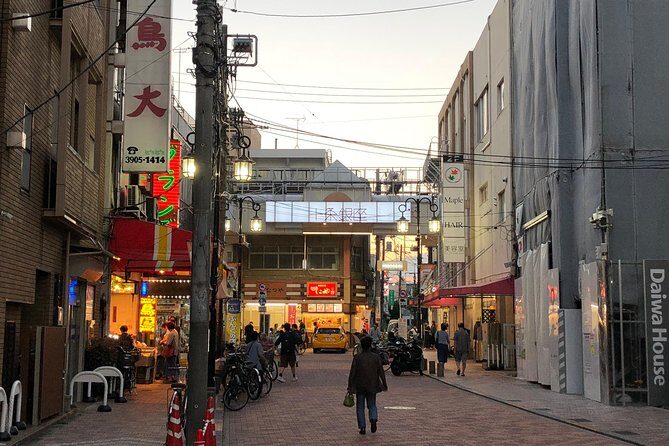
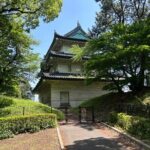
Next comes Inatsuke (Inatsuki) Castle Remains, a compact stop of about 15 minutes. The key detail here is that the ruins were created by Ota Dokan, a 15th-century warlord. The site is noted as being at an altitude of 21 meters above sea level, and there’s a statue linked to Ota Dokan.
The guide also provides context: Ota Dokan is known for building Edo castle, which is a major historical anchor for understanding Tokyo’s older layers.
This segment is short, but it gives meaning to the neighborhood. Instead of treating Tokyo as only modern concrete, you see how places like this carry forward older power structures and local geography. It also helps you appreciate why neighborhoods develop around practical routes and community centers.
One logistics note: admission for this stop is listed as not included. That means you may need to pay separately on-site, depending on the current setup. If you prefer to keep spending minimal, bring a little extra cash or a payment method that works smoothly in Japan.
Stop 4: Akabane Ichibangai (1番街) and the Izakaya Side of Tokyo
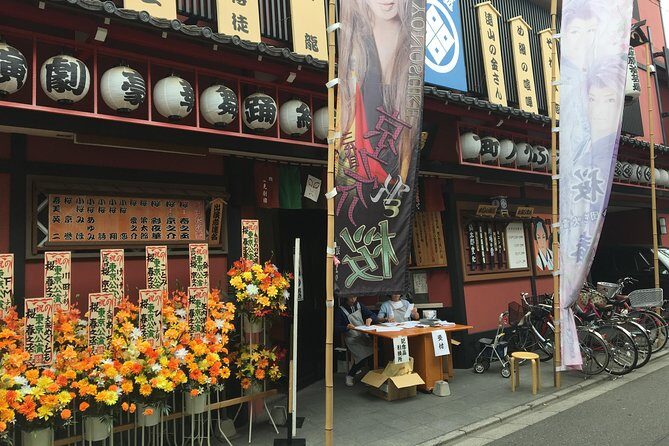
You finish at Akabane Station, but the walking finale is Akabane Ichibangai, specifically 1番街. This is the most social-feeling part of the route.
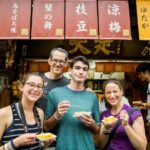
The description is clear: the street is occupied by several dozen pubs and izakayas, and many are open at noon. By mid-afternoon, you can see elderly men enjoying a cup of sake—small moments of routine that show you what this neighborhood scene really is.
This is where your guide’s interpretation really helps, because an izakaya street can look like just another row of doors from the outside. With context, you learn how these places function socially, what kinds of food and drinks are typical, and why the neighborhood bar scene is part of everyday life, not just nightlife for tourists.
Potential drawback: because izakaya streets are lively and crowded later in the day, this isn’t the stop for quiet contemplation. If you’re sensitive to noise, keep your expectations realistic and treat it as an energetic finish.
Food, Tea, and Temple Moments: What the Guide Adds
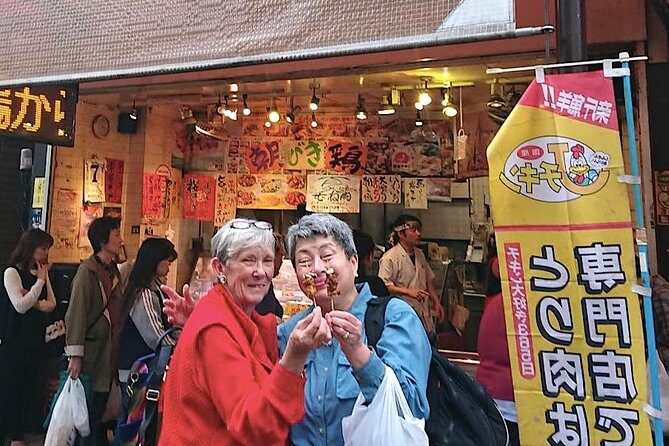
This tour’s main structure is built around street walking and neighborhood context. But the standout praise highlights something extra: food-focused information and small cultural lessons that make the walk feel personal.
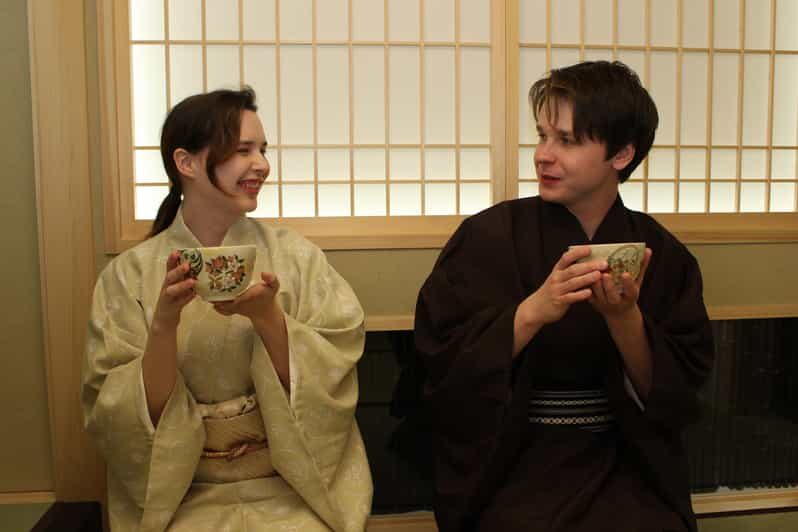
One recent highlight includes foodie information and tastes, plus tea tasting and a temple-related segment where you learn about offerings and prayers. Even if those exact moments vary slightly by timing and local conditions, the emphasis is consistent: your guide connects the sensory experience of Japan—food, tea, ritual—with the everyday geography you’re walking through.
That’s why this tour works as more than a walking tour. You’re not only moving through places. You’re learning how locals interpret and use them.
If you’re the type who likes to know why people do things a certain way—how a shop chooses what to sell, why certain streets matter, what a ritual signifies—this is your style of Tokyo.
Food note: food and drinks are not included. So treat the guide’s tastings and explanations as bonus moments rather than a full meal plan. Plan to grab dinner after the tour, ideally nearby Akabane so you’re not rushing across town.
Who This Tour Is Best For
I think this tour is ideal for you if you want Tokyo that feels lived-in, not just photographed. You’ll probably love it if you enjoy:
- walking in older shopping streets (shotengai) instead of only landmark zones
- small group travel where the guide can slow down when something is interesting
- light history that connects to the neighborhood rather than feeling like a classroom lecture
- social atmosphere with izakayas at the end of the walk
It’s less perfect if you need a checklist of famous Tokyo sites or you want a fully guided food tour where every bite is included. Here, you’re learning the food culture and local shopping habits, but you’ll pay for your own meals.
Should You Book This Jujo and Akabane Walking Tour?
If your goal is to see non-touristy Tokyo in a way that still feels organized and educational, I’d book it. The small group size, the historic shopping street focus, and the neighborhood-to-izakaya storyline make it feel coherent, not random.
I’d especially recommend it if you want value that’s not just about cost. At $71.53, you’re paying for a local guide who can explain what you’re seeing in Jujo and Akabane—500-shop arcade life, a park break, castle-ruins context, and an authentic izakaya street finish.
Skip it if you’re only interested in major attractions or if you strongly dislike walking. And do yourself a favor: wear good shoes and plan your meal timing, since food and drinks aren’t included.
FAQ
How long is the Jujo and Akabane walking tour?
It runs for about 3 hours.
What group size is this tour?
It’s a small-group tour with a maximum of eight people, and it’s described as private for your group.
How much does it cost?
The price is $71.53 per person.
Where does the tour start and end?
It starts at Jūjō Station and ends at Akabane Station (ticket gate).
What stops are included?
You’ll visit Jujo Ginza Shopping Arcade, Shimizuzaka Park, Inatsuki Castle Remains, and Akabane Ichibangai (1番街).
Is food or drinks included?
No. Food and drinks are not included.
Are admission tickets included for the stops?
Admission is free for Jujo Ginza Shopping Arcade and Shimizuzaka Park, while Inatsuki Castle Remains is listed as not included.
Is transportation included from your hotel?
No. There’s no hotel pickup and drop-off, and transportation to/from attractions is not included.