REVIEW · KYOTO
From Kyoto: Japanese Drum Taiko Workshop in Osaka
Book on GetYourGuide →Operated by EE tour · Bookable on GetYourGuide
One beat later, Japan feels closer. This Kyoto-to-Osaka Taiko workshop is fun and real because you learn Taiko basics hands-on, while also seeing a powerful pro performance and hearing how the drums fit everyday Japanese life. The main thing to watch is timing: the tour runs on a fixed train schedule, so you’ll need to be at the meeting point early.
I especially like the way the session stays beginner-friendly, even if your rhythm isn’t perfect yet, and I like the small-group size (up to 15), which makes it easier to actually play. You’ll meet your English guide at JR Kyoto Station, ride to the studio, do quick calligraphy with a Hachimaki, and end with a group piece plus a costume photo in Happi and Hachimaki—great for turning an afternoon into a memory.
In This Review
- Key things to know before you go
- From Kyoto Tower to a Taiko Studio: how the timing really works
- Getting to the right JR gate at Kyoto Station (the one that matters)
- History, calligraphy, and your Hachimaki wish
- The pro taiko demonstration that sets the bar
- Learning taiko basics with your instructor’s technique
- The finale: play together, then dress up for photos
- Price and value: why $112 makes sense for a 2.5–3 hour class
- Who this taiko workshop is perfect for (and who should skip)
- About the guides and how the session stays welcoming
- Should you book this Taiko workshop from Kyoto?
- FAQ
- Where do I meet the tour in Kyoto?
- How do I get there if I’m coming by subway?
- How long is the experience?
- What transportation is included?
- Is the tour in English?
- What are the age requirements?
- Is the group small?
- FAQ
- Can I join if I’m traveling alone?
- What should I do if I’m late to the meeting point?
- Can I get a refund if my plans change?
- Does the tour include the Hachimaki?
- What do I do at the end of the tour?
Key things to know before you go
- Meet at JR Kyoto Station’s Central Ticket Gate (not Shinkansen Central) so you don’t wander the wrong platform area
- Short train + quick private car ride gets you from Kyoto to the studio fast without a long commute
- Calligraphy on a Hachimaki gives the drumming lesson a personal, cultural touch
- A pro demo first so you understand how taiko energy should feel
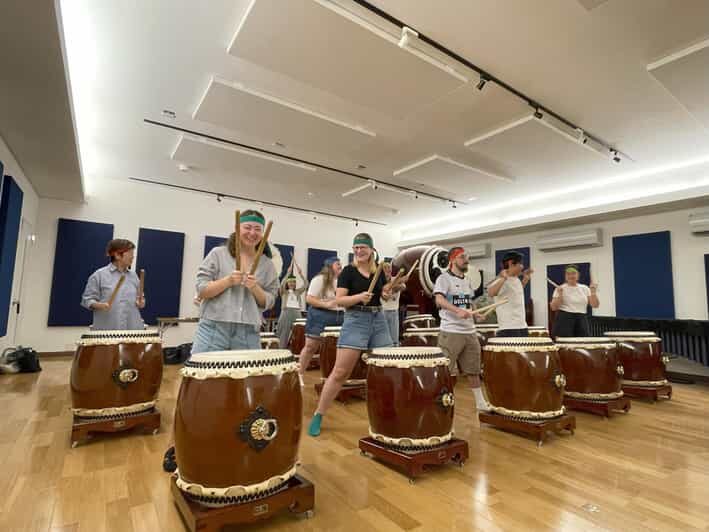
- You play a simple piece as a group—the finale is the payoff
- Costume photo at the end with Happi and Hachimaki
From Kyoto Tower to a Taiko Studio: how the timing really works
This experience is built around a smooth transfer. First, you meet at JR Kyoto Station, then you take a short train ride to Takatsuki Station. After that, you ride in the Taiko studio’s private car to the venue.
The whole tour is listed at 150 minutes, and in real life it lands around 2.5 to 3 hours including travel. That matters because taiko time goes by quickly once you start practicing. If you’re planning the rest of your day, I’d give yourself breathing room afterward rather than scheduling something right on the dot.
Also, the pace isn’t rushed, but the schedule is strict. You should arrive 15 minutes early. They can’t wait for late arrivals, and you can’t join after the start time. Kyoto Station is huge, and finding the right meeting spot takes longer than you think when you’re carrying a bag and scanning signs.
A few more Kyoto tours and experiences worth a look



Getting to the right JR gate at Kyoto Station (the one that matters)
Your meeting point is on the north side of JR Kyoto Station, where you can see Kyoto Tower. You’ll be at ground level near the Central Exit area, and your guide will be holding a sign for Taiko.
Here’s the key detail: use the Central Ticket Gate—not the Shinkansen Central Ticket Gate. If you take the wrong gate, you’ll end up in the wrong part of the station and you’ll lose time you don’t have.
Practical directions based on how you arrive:
- By JR: Exit through the Central Exit.
- By subway: Exit through Central 1 ticket gate, then take Exit 6 to ground level. Walk along the Kyoto Station building; Kyoto Tower will be on your right. The central ticket gate should be on your left.
- By taxi: The instructions you can show the driver are: 京都駅の北側のタクシーおりばにつけてください. (That means north side where Kyoto Tower is.)
One more useful note: taxis from Kyoto to the studio area aren’t recommended because the ride takes longer and tends to cost more. The train-to-car combo is the most efficient setup for this tour.
History, calligraphy, and your Hachimaki wish
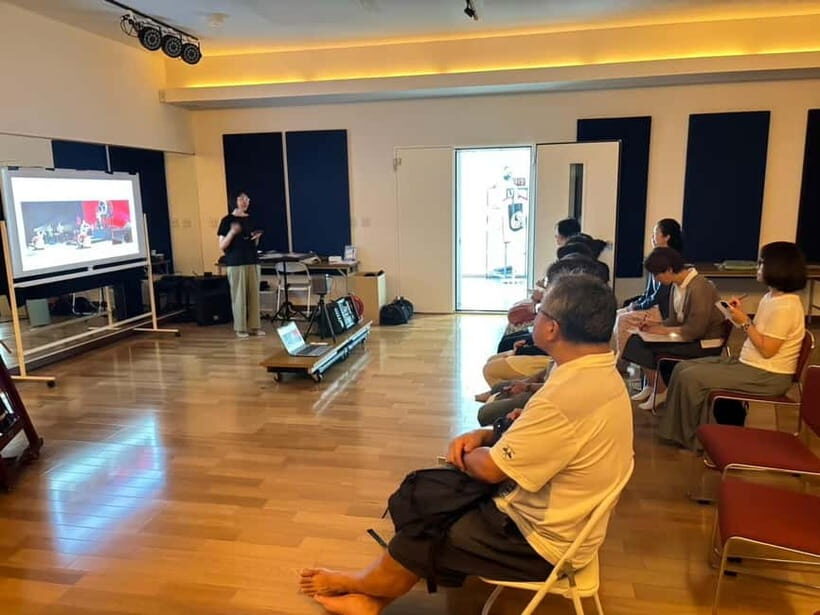
Before you touch a drum, you start with context. You’ll get a brief explanation of taiko’s history and why it matters in Japanese culture. This isn’t the kind of lecture that tries to impress you with dates. It’s meant to help you understand what you’re about to do—taiko isn’t just rhythm practice, it’s tied to community, ceremony, and performance.
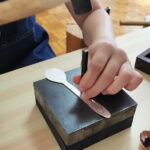
Then comes the hands-on cultural bit: you’ll try simple calligraphy and write your wishes on a Hachimaki, the traditional headband. It’s a small step, but it changes the energy of the afternoon. You’re not only learning to hit a drum; you’re also marking the experience in a very Japanese way.
If you like souvenirs, skip the idea of buying another trinket and focus on this. You’ll use what you make during the session and at the photo moment at the end.
The pro taiko demonstration that sets the bar
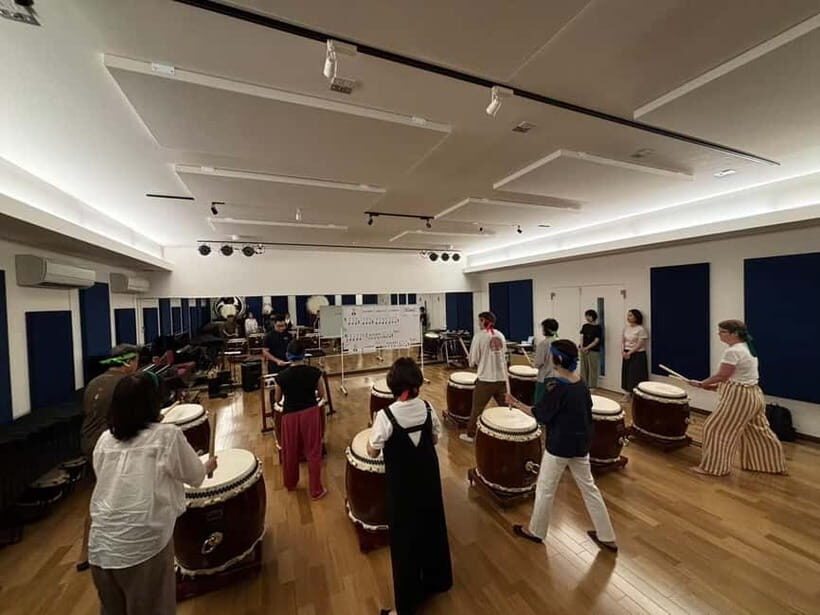
Next is the part that sells the experience: an amazing taiko performance by a professional player. Even if you’ve never played anything besides a rhythm game, the demo helps you understand the physical side—power, timing, and how the drummer uses the whole body.
Think of it as your first “lesson,” even before the formal instruction. You’ll start noticing things like:
- how quickly intensity can rise
- how silence and accents shape the rhythm
- how the drum sounds in a room versus a recording
The tour is English-guided, and the flow is built for people who don’t speak Japanese. You won’t be left guessing what’s happening.
From what I see in the experience structure, this demo is also a confidence-builder. You’re about to do something that looks intimidating, and seeing it done well first makes the learning part feel possible.
Learning taiko basics with your instructor’s technique
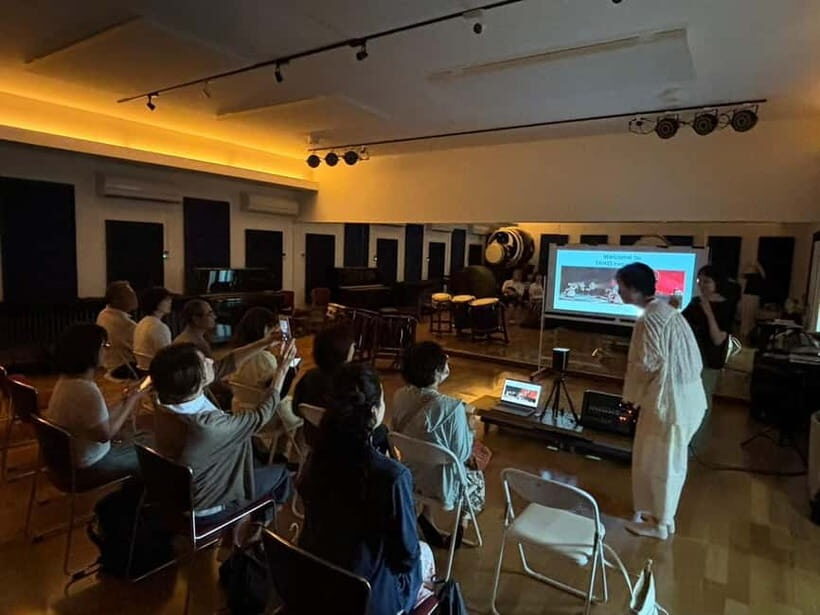
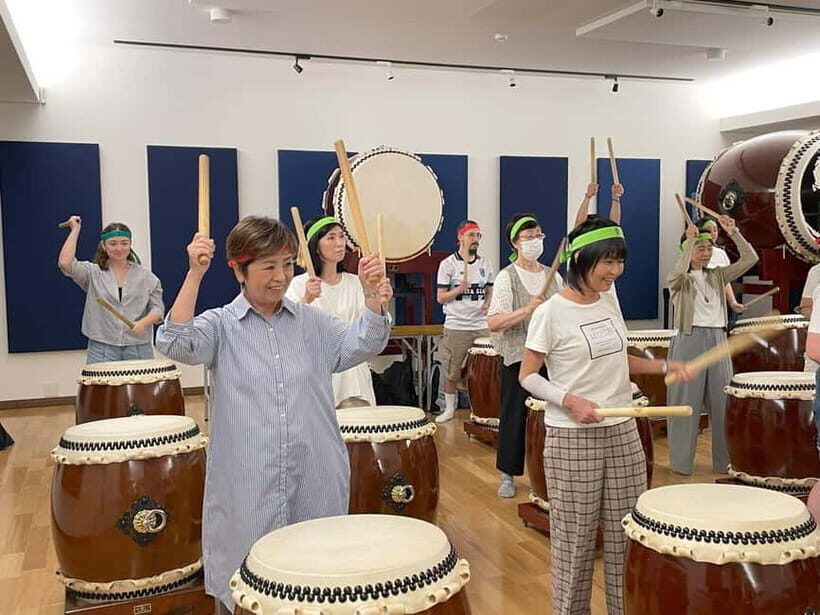
After the demonstration, a friendly instructor takes over and teaches the basic movements and techniques of taiko drumming. The teaching style matters here: they want you to play, not just watch.
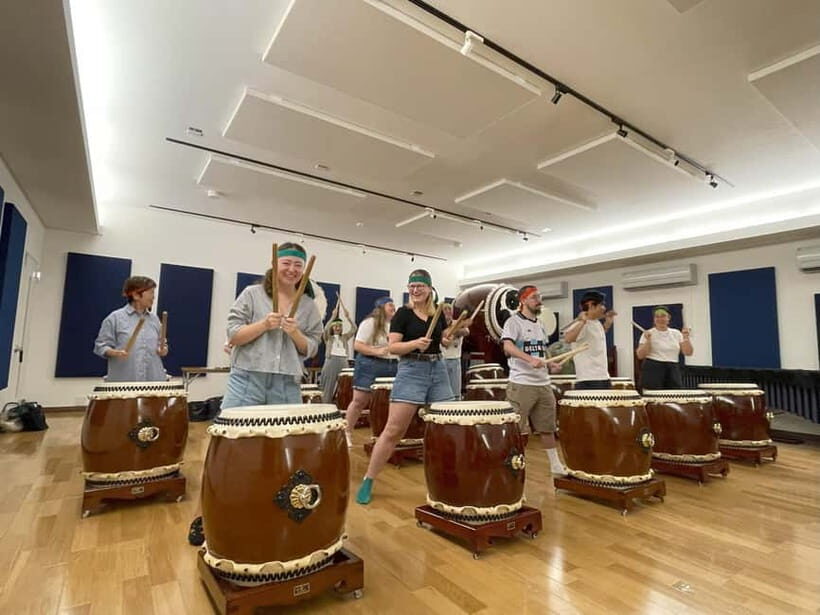
You’ll learn the foundational mechanics step by step, then move into practice. The goal is a short piece of music that you can actually perform with others by the end. That’s why the tour is interactive: most of the time isn’t spent listening to how it’s done. It’s spent drilling the parts you’ll need for the final.
And yes—playing taiko is harder than it looks. The drum is big, the sound is loud, and the timing has weight. But the setup is designed for non-musicians. You’ll get enough structure to keep going, and your group will play together even if the first attempts feel rough.
One extra detail that makes this tour feel “real” rather than scripted: some sessions use video support during the learning phase. That can help you correct posture and timing without getting lost in instructions.



The finale: play together, then dress up for photos
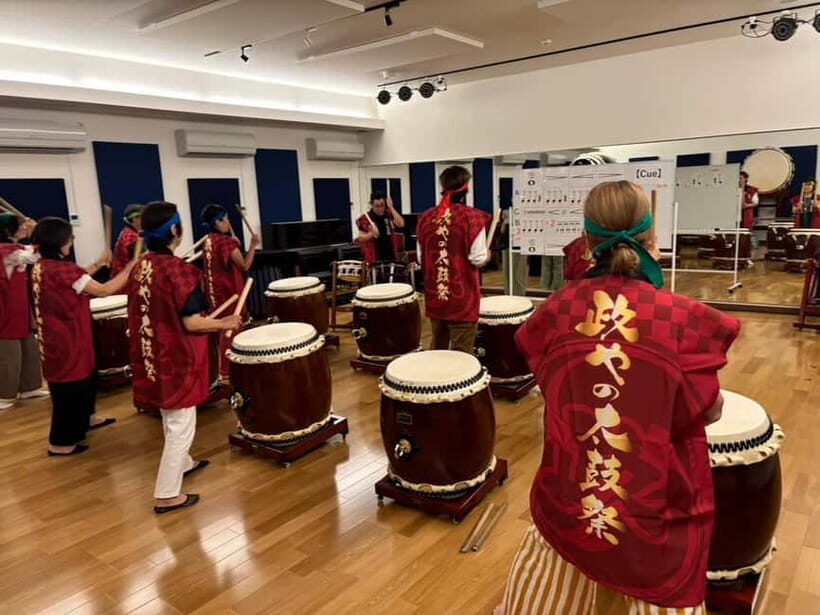
Finally, you put it all together. You’ll play a simple piece with your fellow participants. This is the moment that turns instruction into pride. You’ll feel the rhythm as a group, not just as individual hits.
The tour ends with a commemorative photo in traditional Japanese costume. You’ll wear a Happi and your Hachimaki, including the one you wrote with your calligraphy earlier. It’s a satisfying close because you get a visual record of the cultural part, not just the drumming part.
If you want a clean way to remember the day, this is it. You’ll leave Osaka with a photo that actually matches what you did.
Price and value: why $112 makes sense for a 2.5–3 hour class
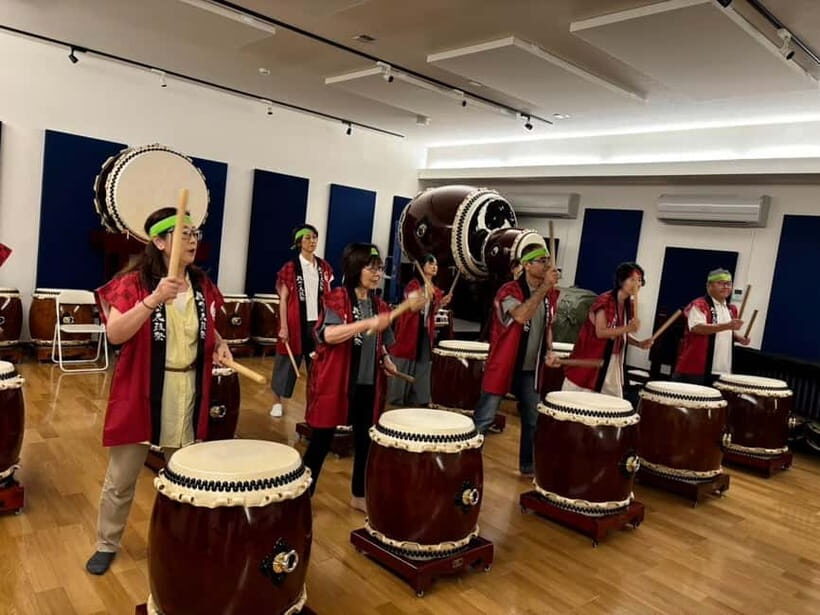
At $112 per person for about 150 minutes, this isn’t a cheap activity. But it also isn’t just “watching a show.” You’re getting:
- English guidance
- a cultural history introduction
- calligraphy and a Hachimaki
- a pro taiko performance
- hands-on instruction and equipment time
- JR one-way transport from Kyoto to Takatsuki
- a studio private car for the transfer
When you count the transportation and the fact that it’s a small group limited to 15 participants, the price starts to feel more reasonable. This isn’t a massive crowd event where you only get a moment at the drum. It’s structured so everyone plays as part of a learning arc.
Also, the tour has a strong overall rating: 4.7 based on 11 reviews. That usually signals that the experience is working for a wide range of visitors, not just people who already love Japanese performance arts.
Who this taiko workshop is perfect for (and who should skip)
This is a great pick if you:
- want an active cultural experience in Japan, not just another museum stop
- like learning through doing (even if you’re not musical)
- enjoy the idea of cultural elements like calligraphy and traditional dress
It’s also a good fit for families, with one important limitation: children under 7 can’t participate. If you’re traveling with kids above that age, the interactive nature can be a highlight because everyone gets a turn and the pacing stays friendly.
If you hate group activities where you must follow timing closely, or you’re the type who gets stressed by strict meeting points, you may find the Kyoto Station logistics a little tense. The tour is simple, but it does depend on you being early.
About the guides and how the session stays welcoming
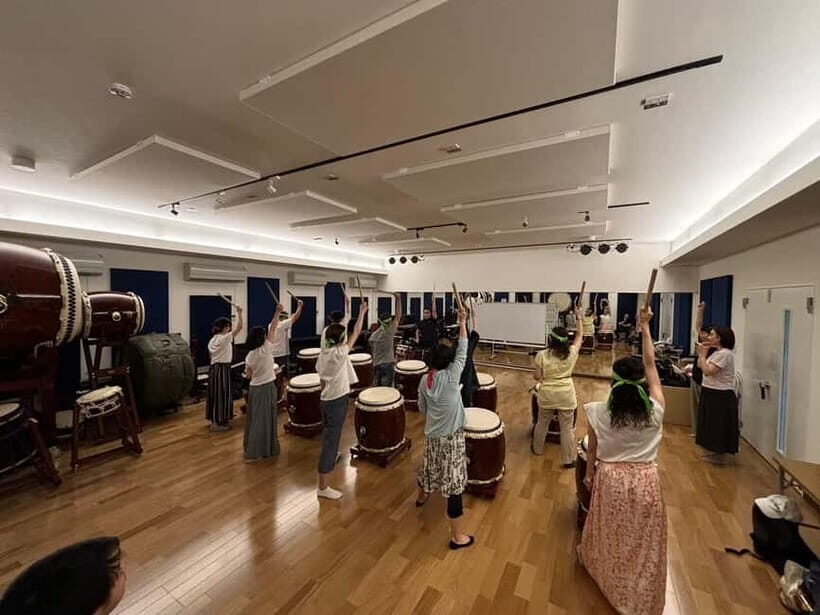
The tour runs with an English guide and an instructor, and the experience is set up to be clear for visitors who don’t speak Japanese. In the past, guides have included Michiko and Mie, and the instructor has been Yusuke.
What I like about this kind of team setup is that it typically keeps the whole flow steady: you’re not constantly translating for yourself, and you can focus on learning the drumming rather than figuring out what happens next.
Should you book this Taiko workshop from Kyoto?
If you want a hands-on cultural activity that ends with you actually playing, I’d book it. The tour’s value is in the combination: context (taiko history), creativity (calligraphy on a Hachimaki), skill building (basic technique), and payoff (group performance and costume photo).
I’d only hesitate if you can’t reliably arrive early at Kyoto Station or you prefer totally unstructured time. The schedule is fixed, and they won’t wait for late arrivals.
If your goal is a memorable, authentic Japan experience that feels personal—and not just something you observed—this is a solid choice.
FAQ
Where do I meet the tour in Kyoto?
Meet at the Central Ticket Gate of JR Kyoto Station (not the Shinkansen Central Ticket Gate). The guide will stand at the north side of the station where you can see Kyoto Tower, holding a sign for the Taiko experience.
How do I get there if I’m coming by subway?
Exit through Central 1 ticket gate, then take Exit 6 to ground level. Walk along the Kyoto Station building; Kyoto Tower should be on your right, and you’ll find the central ticket gate on your left.
How long is the experience?
The activity duration is listed as 150 minutes. The total time including travel is typically 2.5 to 3 hours, so plan time afterward.
What transportation is included?
Your tour includes a JR one-way ticket from Kyoto to Takatsuki Station, plus a private car to and from the studio.
Is the tour in English?
Yes. It’s a live tour guide in English.
What are the age requirements?
Children under 7 cannot participate.
Is the group small?
Yes. It’s limited to up to 15 participants.
FAQ
Can I join if I’m traveling alone?
Some days do not allow single-participant bookings. On those days, you may need to book and pay for two participants.
What should I do if I’m late to the meeting point?
Please arrive 15 minutes early. The tour follows a fixed train schedule, and they can’t wait for late arrivals. You also can’t join after the start time, and late arrivals aren’t eligible for refunds.
Can I get a refund if my plans change?
There is free cancellation up to 24 hours in advance for a full refund.
Does the tour include the Hachimaki?
Yes. You’ll receive a Japanese Hachimaki to wear, and you’ll write wishes during the calligraphy portion.
What do I do at the end of the tour?
You’ll participate in a group performance, then end with a commemorative photo wearing Happi and Hachimaki.