REVIEW · KYOTO
Private Art Sushi Roll Class in Kyoto
Book on Viator →Operated by SAKURA Experience Japanese Culture Nijo Home · Bookable on Viator
Edible art in Kyoto beats ordinary sushi classes. In Aya Ito’s private kazarimaki roll class at Sakura Experience Japanese Culture Nijo Home, you design a peach-flower pattern using plant-based pigments. I especially love the calm, clear English instruction from Aya and her husband Manabu Ito, and I also love that you take home a booklet and certification so you can recreate the look later. One thing to plan for: you need socks for the tatami room, and if you show up more than 15 minutes late, you can’t join.
This is a true at-home style experience, not a big classroom. You’ll get bottled water plus tea or coffee, all sushi ingredients, and a chance to wear traditional clothing (kimono for women, and other traditional garments for men and children). The whole session runs about 60 minutes, starting at 4:30 pm near public transportation.
In This Review
- Key things to know before you go
- Kyoto kazarimaki: what you’re actually making
- Meeting Aya and Manabu Ito at the Nijo Home
- The 4:30 pm timing and why logistics are part of the value
- Your private 60-minute itinerary: what happens step by step
- Step 1: Learn the concept, then start building
- Step 2: Work the colors and prep your edible design
- Step 3: Shape and roll with the pattern intact
- Step 4: Finish, slice, and see the result
- Traditional clothing, drinks, and the tone of the experience
- What’s included (and what that means for your budget)
- Food options: vegan and vegetarian paths
- Who should book this sushi art class
- Price and logistics: the trade-offs you should expect
- Should you book this private sushi roll art class?
- FAQ
- How long is the private art sushi roll class?
- What is included with the class fee?
- Is this a private class?
- Do I need socks for the experience?
- What if I arrive late?
- Are vegan or vegetarian options available?
Key things to know before you go
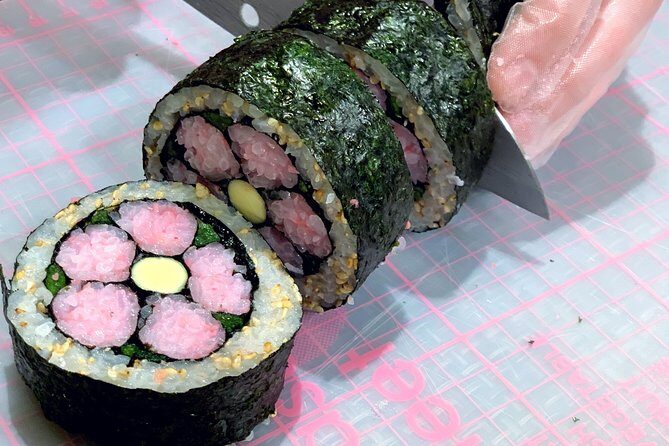
- Plant-based pigments create the design inside the roll (this is what makes kazarimaki different from standard sushi)
- Peach flower pattern training in about 60 minutes—fast, but still hands-on
- Private group class at Sakura Experience Japanese Culture Nijo Home—only your group participates
- Traditional clothing is part of the experience—not just a costume, it sets the tone
- You leave with a booklet and certification, so it feels like something you earned
- Socks are required for tatami and timing matters (15-minute cutoff)
Kyoto kazarimaki: what you’re actually making
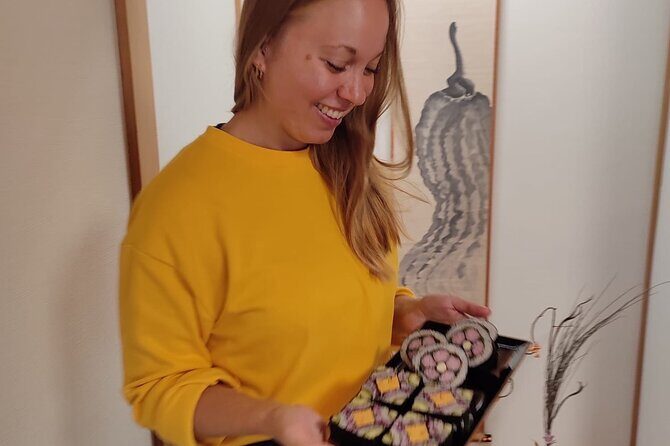
Most sushi classes teach you how to roll sushi. This one teaches you how to make a picture using food you can eat.
The star here is kazarimaki, the Japanese art of embedding designs inside a sushi roll. Instead of tossing colors on top, you use edible pigments extracted from plants to build patterns within the roll. The class focuses on a peach flower design, and the pace is set so you can produce a complete, Instagram-friendly roll in about an hour.
For me, the appeal is that it feels creative without being random. You’re not just copying a generic pattern. You’re learning a method: how to manage colors, how to shape the roll so the design stays visible, and how to finish cleanly so the whole slice looks intentional. Even if you’re a beginner, the steps are structured so you don’t feel lost.
You can also read our reviews of more private tours in Kyoto



Meeting Aya and Manabu Ito at the Nijo Home
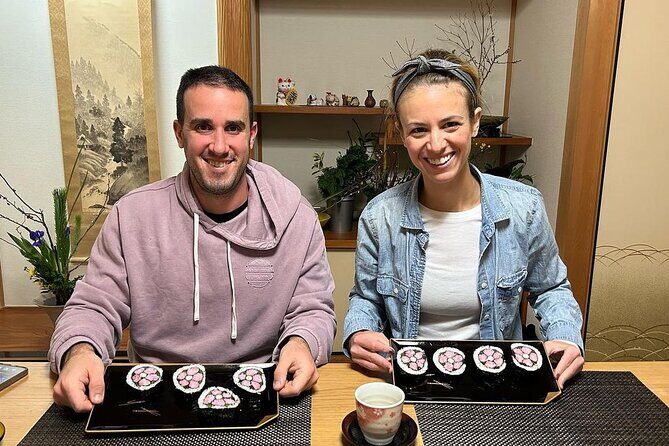
You meet at さくら日本文化体験 二条城教室 (Sakura Experience Japanese Culture Nijo Home) in Izumichō, Nakagyō Ward. It’s a home-style setup, and that matters. The vibe is more personal than a studio with cameras and a conveyor belt of students.
Aya Ito is the English-speaking instructor. Her husband, Manabu Ito, is also very much part of the flow—helping with setup and cleanup, and keeping things running smoothly while you focus on learning. That two-person rhythm is one reason the class doesn’t feel chaotic, even though you’re doing something that looks difficult.
If you like experiences where you can ask practical questions—texture, timing, which step matters most—you’ll appreciate the attention. And if you want a friendly, welcoming tone, this is that kind of session.
The 4:30 pm timing and why logistics are part of the value
The class starts at 4:30 pm. That’s smart in Kyoto. You can do your morning sightseeing, grab lunch, and then shift into something calmer in the late afternoon. It also means you’re not rushed between multiple activities the way you can be earlier in the day.
Two details are worth treating as non-negotiable:
- Socks are required to enter the tatami room. Bring socks with you, because you can’t slip in barefoot.
- If you arrive more than 15 minutes late, you will not be able to join.
Those rules might sound strict, but they actually support the experience. Kazarimaki is timing-sensitive. If the group misses the start, the lesson structure falls apart. So arriving on time protects your chance to finish the design properly.
Also note: this is a private class, so it’s only your group. That can make a big difference. You’re not trying to work while someone else’s questions are hijacking the room.
Your private 60-minute itinerary: what happens step by step
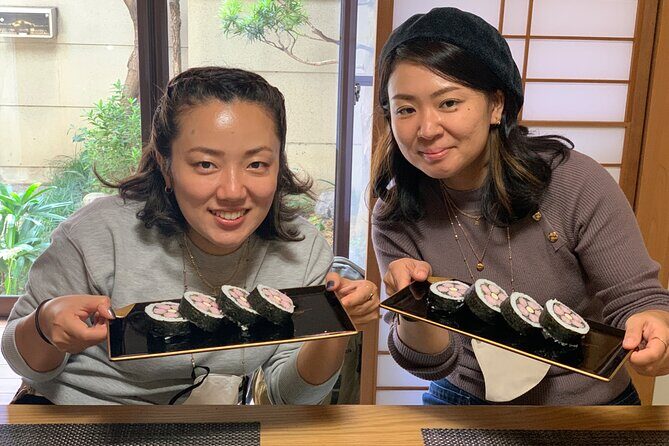
Even though the class is short, it’s broken into the right chunks so you’re never staring at ingredients without a plan.
Step 1: Learn the concept, then start building
Aya begins with the key idea behind kazarimaki: you’re creating a design within the roll using edible pigments. The instructor explains what you’re doing and why it works, so you’re not just following a recipe.
If you’ve never worked with sushi art before, this is where you’ll get your bearings fast. If you’ve made sushi at home, you’ll still find this helpful—because the design part changes how you handle layers and shaping.
A few more Kyoto tours and experiences worth a look

Step 2: Work the colors and prep your edible design
This is the part that turns “rolling sushi” into “making art.” You use traditional ingredients along with natural food colorings to build the peach flower pattern.
The goal is not chaos. You’ll get guidance on how to place and shape the colored components so the final roll shows the design when sliced. That’s the difference between a pretty idea and a roll that actually looks like the image.
Step 3: Shape and roll with the pattern intact
Now you roll. This is where technique matters: pressure, alignment, and how tightly you seal the roll. If the roll is sloppy, the pattern blurs. If it’s too tight in the wrong way, things can distort.
The instructors keep things patient and supportive. One helpful angle from past participants: the steps are often easy to follow, but the class works best if you’re comfortable with basic sushi rolling already. If you’re completely new, you can still do it, but you’ll want to go in ready to focus for the full hour.
Step 4: Finish, slice, and see the result
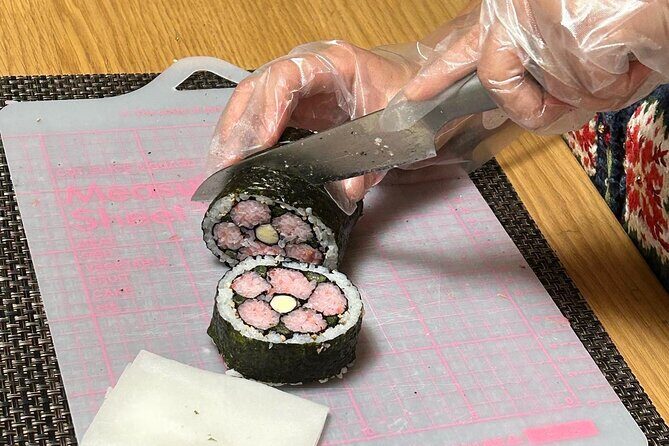
After shaping, you finish and view the pattern as intended. The payoff is immediate: when your peach flower design shows up in the cut slices, you’ll understand why kazarimaki has its own reputation.
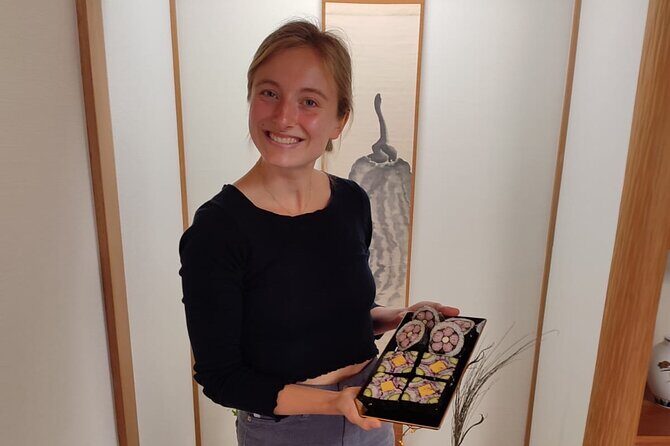
You’ll also get a booklet and a certification at the end. That changes the feeling of the class. It’s not just a one-time demo. It becomes something you can reference later.
Traditional clothing, drinks, and the tone of the experience
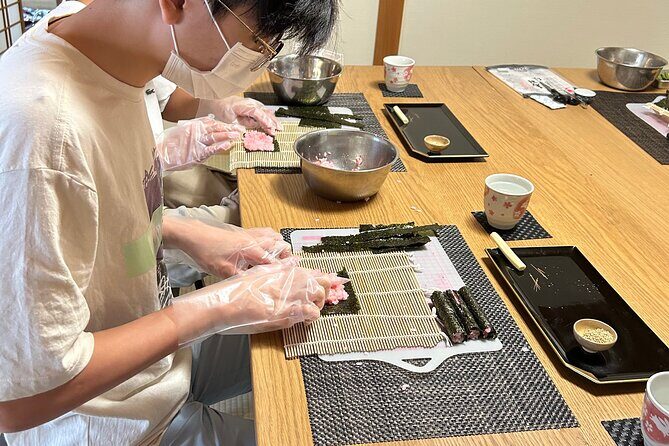
This class isn’t just about food technique. It’s about setting you into a Japanese ritual of sorts.
You’re provided traditional clothing:
- Kimono for women
- Other traditional garments for men and children
You’re not expected to be a fashion model. It’s simply part of the culture-focused experience, and it helps you slow down and pay attention. When you dress the part, the instructions land better.
You’ll also have bottled water plus tea or coffee. That’s a small thing, but it helps a lot when you’re concentrating for an hour.
If you’re traveling as a family, this kind of structured, hands-on class can work especially well. One family setup included teen girls and grandparents, and the experience still felt comfortable and welcoming—because the class is private and the pace can be supported.
What’s included (and what that means for your budget)
Let’s talk value. At $93.32 per person for about an hour, you’re paying for three things:
1) A private, English-speaking instructor
2) All sushi ingredients and tools needed to complete the roll art
3) A cultural add-on (traditional clothing) plus a take-home booklet and certification
In Kyoto, cooking experiences vary wildly. Some are group-focused and some are more “watch and sample.” This one sits in the middle: it’s hands-on art making, but it’s still compact and efficient.
Group discounts may be available, which can make the price feel more reasonable if you’re traveling with friends or multiple family members. And since it’s a private class, you don’t have to compete for attention.
One practical note: mobile ticket is provided. That reduces friction on arrival.
Food options: vegan and vegetarian paths
Sushi classes can be tricky if you have dietary needs. Here, the class offers vegan and vegetarian options. That means you can still participate fully in the design part without the experience becoming awkward.
You’ll want to confirm the option you need when booking, since the class includes all ingredients and the design process depends on what fillings you’re using. But the key point is that the class is designed with plant-forward flexibility in mind.
Who should book this sushi art class
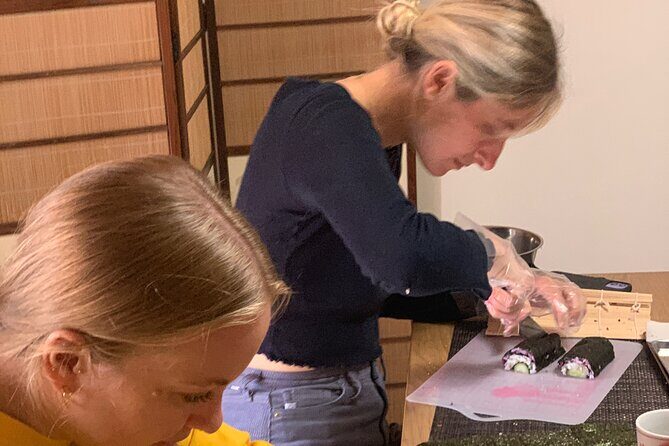
You’ll likely love this class if you:
- Want something more creative than basic sushi rolling
- Enjoy hands-on cooking and like clear step-by-step instruction
- Want a small, private Kyoto experience instead of a large group
- Like keeping souvenirs that connect to what you learned (the booklet and certification are real anchors)
It’s also great if your group includes mixed skill levels, because the instruction is structured and supportive.
You might consider something else (or go in with extra patience) if:
- You’re starting from zero with sushi rolling. You can still join, but you’ll probably appreciate the class more if you already understand basic sushi mechanics.
- You dislike rules about timing and socks. This class has them, and they’re enforced for a reason.
Price and logistics: the trade-offs you should expect
At $93.32 per person, the class isn’t cheap in the way street food is. But it’s not trying to be. You’re paying for private coaching, edible art materials, and a home-style cultural experience that you don’t replicate with a random grocery list.
Two trade-offs to accept:
- You’ll work within a strict 60-minute structure. That means you won’t have hours to experiment after finishing your roll.
- You must follow timing and socks rules to enter the tatami area.
If you’re okay with that—and you want a memorable, skill-based Kyoto activity—this price can feel fair.
Also keep in mind that the class is typically booked about 6 days in advance. If your Kyoto days are fixed, it’s smart to book earlier rather than later.
Should you book this private sushi roll art class?
If you want a Kyoto dinner memory that’s tied to a real skill, this class is a strong choice. The biggest draw is kazarimaki itself: learning how designs appear in the finished roll slices. Add in the clear English teaching by Aya Ito and the supportive role of Manabu Ito, plus the booklet and certification, and you end up with an experience that feels worth your time and money.
Book it if you’re excited by edible art, you can follow the sock-and-timing rules, and you’re ready to focus for an hour.
Skip it only if you’re looking for a casual, low-structure food tasting. This is making, not sampling.
FAQ
How long is the private art sushi roll class?
The class is about 1 hour.
What is included with the class fee?
You get bottled water and tea or coffee, all sushi ingredients, and instruction. You also receive a booklet and certification at the end.
Is this a private class?
Yes. It’s a private tour/activity, so only your group participates.
Do I need socks for the experience?
Yes. You need to bring socks to respect Japanese customs because the tatami room requires socks.
What if I arrive late?
If you arrive more than 15 minutes late, you will not be able to join the class.
Are vegan or vegetarian options available?
Yes. The class notes that vegan and vegetarian options are available.