REVIEW · TOKYO
From Tokyo: Mount Fuji Private Tour with a Driver/Guide
Book on GetYourGuide →Operated by YUMI TOURS(SMC-PRIVATE)LIMITED · Bookable on GetYourGuide
Fuji in one day can feel magical. This private trip is built around scenic drives and guided stops that help you see Mount Fuji from multiple angles, not just one viewpoint. I especially like the Lake Kawaguchi portion for those classic reflection-and-lake-photo moments, and I like how you’re not stuck racing between stations on your own.
For value, you should consider how much “real guiding” you want. Some experiences can feel more like a smooth driver route through popular sites than a deep explanation at each stop, so I’d suggest setting expectations early.
The good news: the day is customizable to your interests and physical abilities, with an English-speaking driver-guide in a modern, clean air-conditioned vehicle. If you want photos, quick cultural context, or slower time to wander, this format usually fits well.
In This Review
- Key Highlights You’ll Want to Plan Around
- A Private Fuji Day: Why This Format Works
- Pickup, Vehicle Comfort, and What’s Included in the Ride
- Mt. Fuji 5th Station: Your First Big Fuji Fix
- Chureito Pagoda: Classic Composition, Real-Time Guidance
- Oshino Hakkai: Village Charm with a Purpose
- Lake Kawaguchi: Where Fuji Looks Like It’s Floating
- Shrines: Spiritual Context Without the Lecture
- Oishi Park and Saiko Iyashi-no-Sato Nenba: Calm, Then Old Japan
- The Final Mount Fuji Moment: Use It for Your Style
- Price and Logistics: Getting Real Value from $451
- Who This Tour Suits Best (and Who Might Want a Different Plan)
- Should You Book This Mt. Fuji Private Tour?
- FAQ
- How long is the Mount Fuji private tour?
- What’s the group size and cost?
- What fees should I budget for?
- Is pickup and drop-off included?
- Do I need cash?
- What languages are available for the driver-guide?
Key Highlights You’ll Want to Plan Around
- Multiple Fuji viewpoints: 5th Station, Chureito Pagoda area, and later lakeside viewpoints
- Lake Kawaguchi time: built-in stops that focus on Fuji-and-lake scenery
- Oshino Hakkai: charming village atmosphere and traditional artisan vibes
- Shrines with spiritual context: stops at Fujiyoshida Sengen Shrine and Kitaguchi-hongu Fuji Sengen Shrine
- Easy group setup: private transport for up to 6, with pickup included from Tokyo-area lodging
- Helpful guide behavior: some guides are proactive with photo help and practical money-saving tips
A Private Fuji Day: Why This Format Works
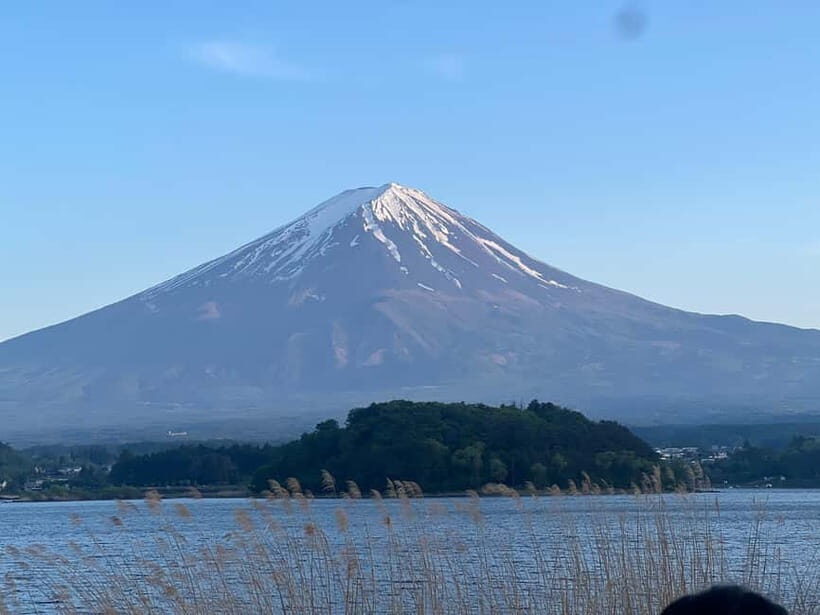
Trying to get to Mount Fuji from Tokyo on your own sounds simple until you hit the real world: schedules, transfers, and the problem of “what if the view is blocked.” A private tour fixes the biggest pain points fast. You get one vehicle, one route plan, and built-in guided timing around the stops that people actually come for.
What I like about this style is that it’s not only sightseeing. It’s also about pacing. You’re given clear blocks of guided time at each place, and you can usually nudge things based on what matters most to you. That matters when you’re visiting a place where the experience can change with the day’s conditions.
Also, this isn’t a huge group experience. With a private group setup (up to 6), you’re more likely to get practical help like photo angles, a quick explanation of what you’re looking at, and flexibility if someone needs a slower walk.
You can also read our reviews of more guided tours in Tokyo


Pickup, Vehicle Comfort, and What’s Included in the Ride
Your day starts with pickup in Tokyo, and the tour includes private transportation in a modern, clean air-conditioned vehicle. Highway tolls and fuel (petrol and gas) are covered, so the ride feels like one straightforward package instead of a stack of little add-ons.
The tour also includes an English-speaking driver-guide. The information provided lists multiple languages as available—English, Hindi, and Japanese—so if language support matters for you, you have options.
One more practical point: pickup and drop-off are included if your hotel or apartment isn’t listed. You just send your pickup location as a special requirement. That’s a small detail, but it can save you from the stress of figuring out a meeting point in a busy Tokyo area.
From the experience reports I saw, guides can range from highly talkative to more logistics-focused. That’s not “good” or “bad” automatically. It just means you’ll get the best result if you communicate what you want—photos, history context, geology explanations, or just smooth navigation between the photo spots.
Mt. Fuji 5th Station: Your First Big Fuji Fix
The tour’s first major Fuji stop is Mt. Fuji 5th Station, with 1.5 hours of guided time. This is where the day’s tone sets itself: you’re moving from urban base into a Fuji-focused experience, with the guide helping you connect what you’re seeing to the mountain’s role in Japanese culture.
A note in the tour description points to Subashiri 5th Station as part of the scenic route. Either way, the key value here is variety. You’re not just driving past views—you’re given real time to look, take photos, and understand what makes a “5th station” special compared to lower viewpoints.
Drawback to keep in mind: 1.5 hours can be enough for photos and a short explanation, but not enough if you want a long, slow trek. If your plan includes extra hiking time, you’ll likely want to adjust expectations early or ask for a timing shift.
Chureito Pagoda: Classic Composition, Real-Time Guidance
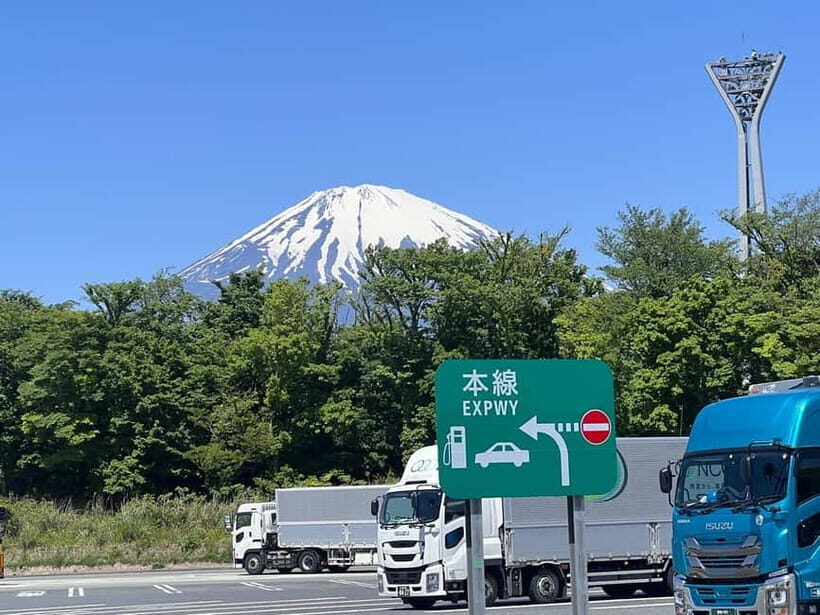
Next up is Chureito Pagoda, also with 1.5 hours guided. This stop is famous for a reason: it’s a composition that makes Fuji look postcard-perfect.
The useful part of having a guide here is not the photo itself—it’s knowing when to move, where to position, and how to frame the scene so you don’t spend time just wandering. In at least one experience report, the guide was proactive with photos for the group, which can be a big deal if you’re traveling with friends or family and don’t want to keep doing selfie gymnastics.
If you’re the type who wants more than photos, you should ask the guide what you’re seeing in cultural terms. The schedule here includes spiritual and cultural context elsewhere in the day, but Chureito is often a good place to set the mental map: how Fuji shows up in art, religion, and everyday Japanese landscape traditions.
Oshino Hakkai: Village Charm with a Purpose
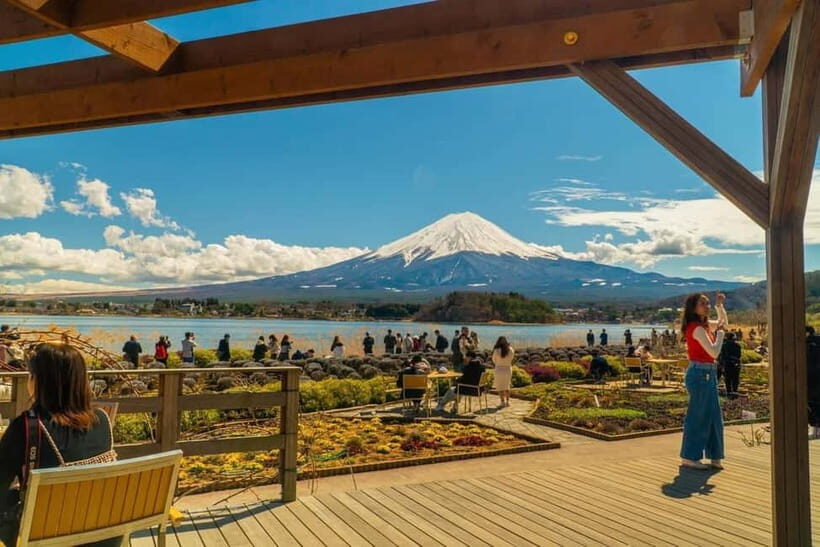
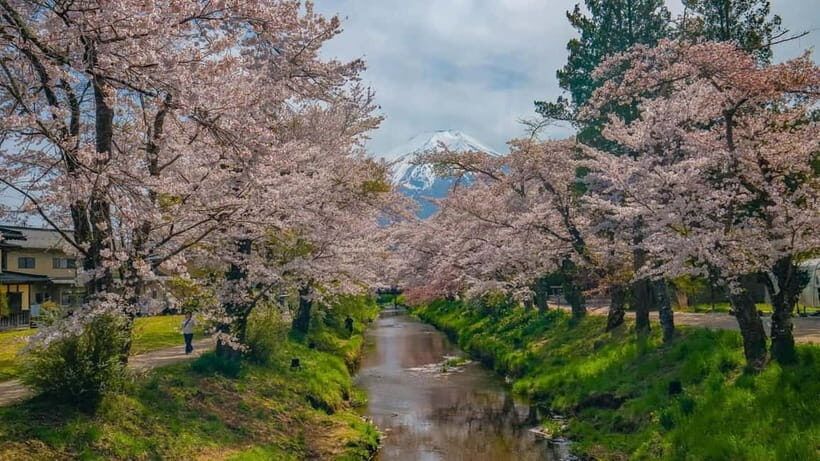
You then head to Oshino Hakkai for about 1 hour guided. This area is known for traditional village atmosphere, and the tour description emphasizes charming architecture and local artisans. What I like about this stop in a Fuji itinerary is that it pulls you away from pure scenery and into people-and-culture.
Think of Oshino Hakkai as your palate cleanser. After higher viewpoints and iconic photo structures, you get a place that feels more human-scale. It’s also a good spot to slow down and browse at the pace that fits you.
Possible drawback: because it’s a popular stop, crowds can be part of the package. A private guide helps here by keeping you from losing time. Even if your guide isn’t giving a long talk, they can still help you move efficiently while you soak up the details.
You can also read our reviews of more private tours in Tokyo


Lake Kawaguchi: Where Fuji Looks Like It’s Floating
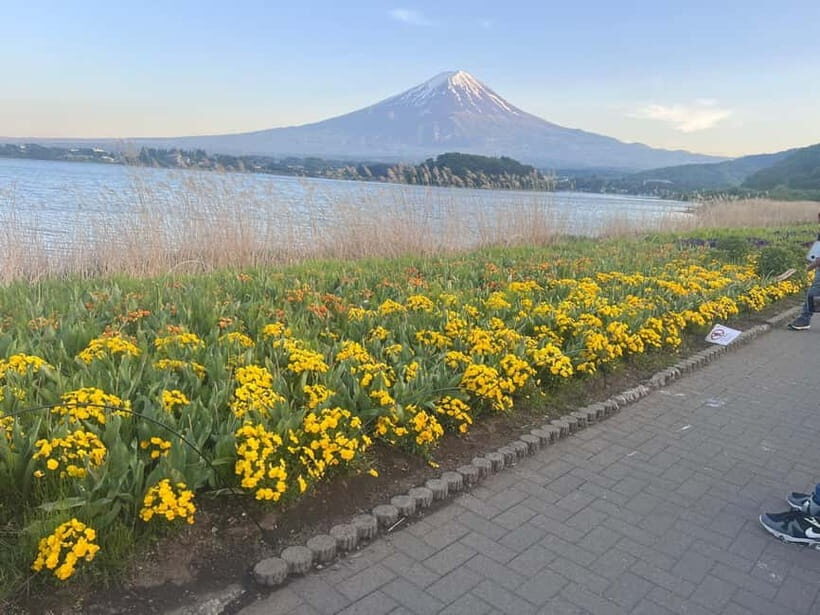
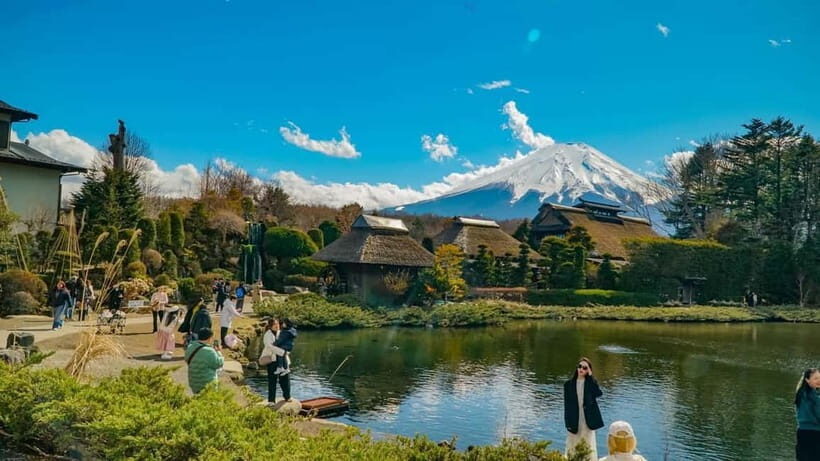
Then comes one of the main reasons people book a Fuji day trip: Lake Kawaguchi, scheduled for 1 hour guided. The tour highlights specifically call out picturesque lake views and Mount Fuji reflections.
This is where the tour’s value really shows. If you’re building your own day from Tokyo, you can end up with “driving time” replacing “scenery time.” Here, the itinerary is set up so you get a focused block aimed at Fuji-lake views.
There’s an important logistics point for your budget: the tour includes a guided visit, but admission fees are not included. The information provided lists an entry/admission fee for the lake Kawaguchi area (120¥). Also, the tour notes an MT Fuji entrance fee (2100¥ per group). Those costs can change the real per-person price, so it’s worth planning for them.
Guides can also help you avoid wasting the hour. In one experience report, a guide gave very practical advice about checking prices at lunch spots to avoid tourist-level markups. That same “helpful and practical” energy is the kind of thing that makes Lake Kawaguchi time feel smarter, not rushed.
Shrines: Spiritual Context Without the Lecture
You’ll visit Kitaguchi-hongu Fuji Sengen Shrine with 1.5 hours guided. Earlier in the tour framework, the schedule also points to shrine visits such as Fujiyoshida Sengen Shrine and Kitaguchi-hongu Fuji Sengen Shrine, emphasizing the spiritual significance of Mount Fuji.
This stop is valuable if you want your day to mean more than photos. Fuji isn’t just a mountain in Japan; it’s tied to belief and seasonal ritual. A guided explanation helps you notice details you might miss if you just treat the shrine as another scenic stop.
What to expect here: a more reflective pace than the pagoda-photo shuffle. If your guide is talkative, you can get a clearer sense of how spiritual practice and local tradition connect to the mountain. If your guide is quieter, you’ll still have structured time so you’re not rushed through.
Oishi Park and Saiko Iyashi-no-Sato Nenba: Calm, Then Old Japan
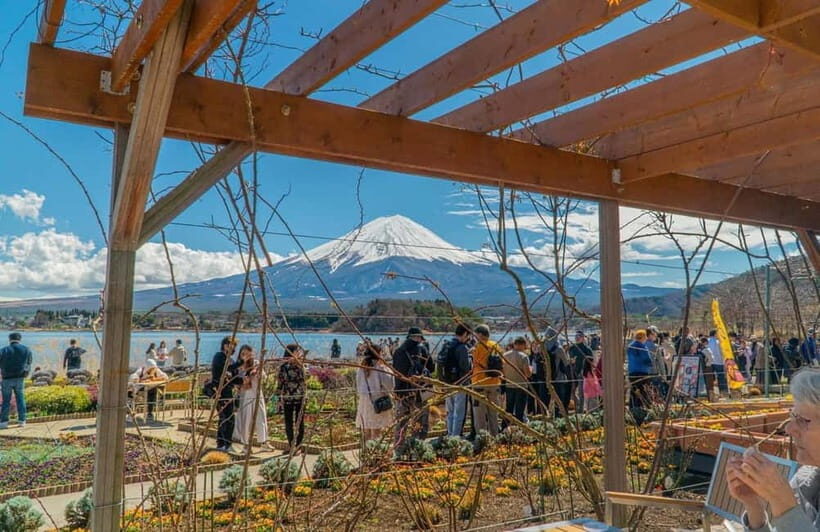
Next, the itinerary moves to Oishi Park for about 100 minutes guided. This is another lakeside viewpoint slot, so you’re getting time to compare angles and light, and to find a comfortable place to stand and watch. Even if you’re not a “big nature” person, parks like this usually help you see how Mount Fuji fits into daily life and local routines.
Then you’ll visit Saiko Iyashi-no-Sato Nenba for about 40 minutes guided. The name is long, but the idea is simple: it’s an area designed around traditional village-style architecture. This is a nice contrast after Oishi Park. One place gives you the lake view; the other gives you the cultural texture.
A timing note: 40 minutes can feel short if you like to browse slowly. It’s enough for a guided orientation and a quick walk around, but not enough for people who want to linger over every structure. If you’re the latter, ask your guide if you can trade time from one of the longer scenic stops.
The Final Mount Fuji Moment: Use It for Your Style
The last major stop is Mount Fuji itself with about 80 minutes guided. This is your closing act, and it’s where your preferences matter most.
If you love photos, ask the guide about where to stand for shots that match your group’s style. One experience report mentioned a guide taking photos for the group, which is the kind of small service that changes your final results.
If you want explanations, this is a good place to ask questions about what makes Fuji special—history, geology, ecology, and cultural importance are listed as things the guide may cover. Even a short Q&A can turn a scenic hour into something that sticks in your memory.
If you want more movement or less walking, this is also the time to negotiate gently. Since the tour is described as flexible based on physical abilities and interests, you should use the early part of the day to communicate what you want later.
Price and Logistics: Getting Real Value from $451
The price is $451 per group up to 6 for a 10-hour day. To judge value, I like to do one quick split math: if you have 4 people, you’re paying about $113 per person. With 6 people, it’s about $75 per person. That’s where private transport starts to become sensible compared with piecing together trains, buses, and taxis.
Here’s what you get for that money, based on what’s included:
- Air-conditioned private transportation
- Petrol and highway tolls
- English-speaking driver-guide
- Modern and clean vehicle
- Skip the ticket line
- Pickup included in Tokyo, plus drop-off
What you may still pay separately:
- MT Fuji entrance fee: 2100¥ per group
- Lake Kawaguchi entry/admission: 120¥
- Lunch (not included)
That’s why “bring cash” is mentioned. Even if you’re not paying every fee with cash, some vendors might not take cards. I’d treat cash as your insurance policy.
One more practical note: the group rating shows a range of satisfaction. One experience felt like the guide didn’t provide much guidance and the trip stayed mostly at popular spots. The fix is simple: before you leave Tokyo, tell your guide what you want from the explanations. If your priority is learning—ask for it. If your priority is photos and pacing—say so.
Who This Tour Suits Best (and Who Might Want a Different Plan)
This tour fits best if you want:
- A structured day with guided time at multiple stops
- A private setup for up to 6, so you can travel comfortably
- Fuji views from both viewpoint spots and a village-and-shrine angle
- Flexibility based on your interests and physical abilities
It might not be ideal if you want a very heavy, deep-dive style lecture all day. The format gives room for guidance, but the experience can shift depending on your driver-guide’s style.
It’s also a good choice for people who hate logistics. You’re essentially buying a moving plan with included transportation and stop timing. That’s a real vacation benefit.
Should You Book This Mt. Fuji Private Tour?
Book it if you’re traveling with a group and you want the day to run smoothly. The combination of private transport, multiple Fuji-focused viewpoints, and cultural stops like Oshino Hakkai and shrines is a strong match for a first or second Fuji trip from Tokyo.
Consider a second thought if you’re expecting lots of detailed commentary at every stop. In that case, message your priorities early. Ask your guide to spend time explaining what you’re seeing at the major photo points and shrines, not just driving you between them.
If you want the Fuji day to feel like more than a checklist, this private format usually delivers.
FAQ
How long is the Mount Fuji private tour?
The tour duration is 10 hours, starting with pickup in Tokyo and ending with arrival back in Tokyo.
What’s the group size and cost?
It’s a private group for up to 6 people. The price is $451 per group.
What fees should I budget for?
Lunch is not included. The information provided lists an MT Fuji entrance fee of 2100¥ per group and an entry/admission fee for Lake Kawaguchi of 120¥.
Is pickup and drop-off included?
Yes. Pickup and drop-off are included if your hotel or apartment is not listed as long as you send your pickup location in the special requirements.
Do I need cash?
You should bring cash. The tour notes that some vendors and attractions may not accept credit or debit cards.
What languages are available for the driver-guide?
The driver-guide is listed as English-speaking, and languages offered include English, Hindi, and Japanese.