REVIEW · KYOTO
Fukusa Shibori Class
Book on Viator →Operated by Kyoto Shibori Museum · Bookable on Viator
Patterned silk takes your hands for a walk. This 60- to 90-minute kasamaki and nuishime shibori class at the Kyoto Shibori Museum gives you a clear, practical way to learn the craft, plus time to see strong examples of the techniques on display.
I especially like that you’re not just watching. You wrap and stitch your own silk and use traditional tools and fabrics, guided by an instructor, so the results actually feel earned. Then you bring home a finished silk piece as a real memento.
One thing to consider: it’s a focused workshop with a set time window. If you’re hoping for a long, museum-only wandering session, this class is short by design, and you’ll still need to plan extra time if you want more gallery time.
In This Review
- Key highlights to know before you go
- Kyoto Shibori Museum: A Workshop With Visual Clues
- Kasamaki and Nuishime: What You’re Really Learning
- Kasamaki shibori (the wrapping method)
- Nuishime shibori (the line-and-pull method)
- Your Silk Piece: From Wrapping to Dyeing to Take-Home Keepsake
- Museum Time Isn’t Just Decoration
- Price, Time, and Group Size: Does It Feel Worth It?
- Who This Class Fits Best (and Who Might Want Something Else)
- Practical Tips for a Smooth Kyoto Shibori Class
- Bring the right mindset
- Use the mobile ticket
- Plan around Kyoto travel times
- Parking and bikes exist, but don’t count on lots of space
- Wear comfortable clothes
- Should You Book the Fukusa Shibori Class?
- FAQ
- How long is the Fukusa Shibori class?
- What techniques will I learn?
- What do I take home?
- Where does the class take place?
- What is the minimum age?
- Is free cancellation available?
Key highlights to know before you go
- Two shibori methods in one session: kasamaki and nuishime cloth-wrapping
- A museum-first approach: you see classic displays, not just a lab-style class
- Stitch, pull, wrap: you do the key steps that create the pattern effects
- Traditional tools and fabrics: you work with materials set up for this craft
- Take-home finish: you dye and end with a silk wrapping cloth you keep
- Small groups: maximum 15 travelers keeps it hands-on
Kyoto Shibori Museum: A Workshop With Visual Clues
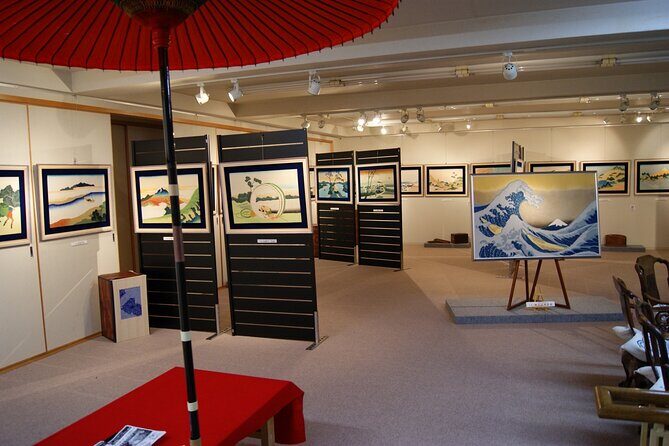
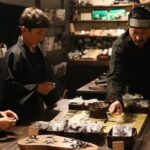
The biggest reason I like this experience is that it’s set up like a real craft visit, not a rushed “do-a-thing” stop. You start at the Kyoto Shibori Museum, where the room is already filled with examples and displays tied to shibori dyeing. That matters, because shibori is one of those arts where the pattern logic helps you understand what you’re doing.
You also get an organized rhythm: instruction, making, and dyeing, with the museum background acting like your reference point. In the classroom atmosphere, the staff and teaching structure help you get oriented quickly, and there’s even mention of an info video that supports the learning. If you learn best with a quick visual explanation before you start tying things up, you’ll probably appreciate that setup.
Another practical plus: this is designed to fit into Kyoto without turning your day into a logistics puzzle. The class runs about one hour to one and a half, and the activity ends back at the meeting point. That means it’s easier to pair with other Kyoto plans, especially if you’re already planning a museum or cultural stop.
A few more Kyoto tours and experiences worth a look

Kasamaki and Nuishime: What You’re Really Learning
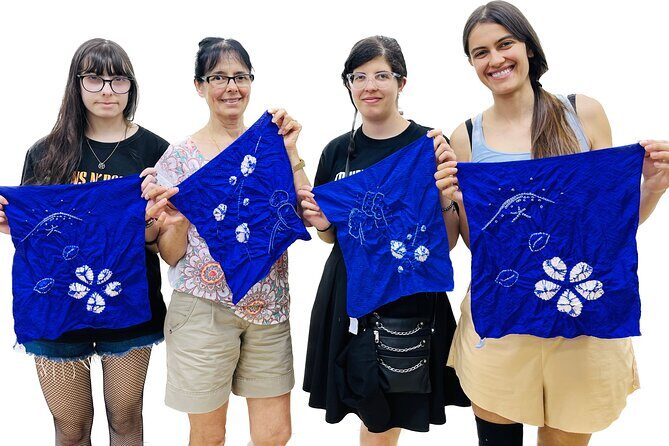
This class focuses on two specific shibori techniques: kasamaki and nuishime. That’s valuable because it gives you both variety and a clearer understanding of how different wrapping/stitching choices change the final look.
Here’s the practical breakdown of what you learn to do:
Kasamaki shibori (the wrapping method)
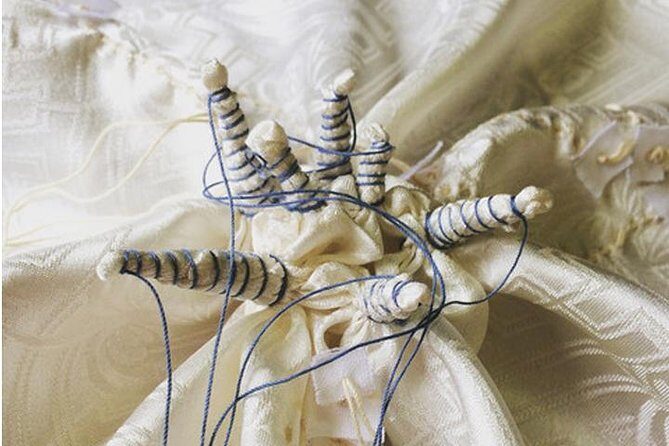
Kasamaki starts with stitching around the shape you want to create. Then you pull the thread tight. After that, you wrap the threads around a cone of fabric several times. This is the part where your hands do the “building” of the resist pattern before dyeing.
Nuishime shibori (the line-and-pull method)
Nuishime is built differently. Instead of circling a shape, you stitch along a line and then pull the thread tight. That creates tension along a line so the dye interacts in a controlled way.
Why this matters for you: if you want to try something at home later, learning both a wrapped form (kasamaki) and a stitched line (nuishime) gives you two different starting points. It’s not just a souvenir workshop. It’s craft knowledge you can replay.
And yes, the session is hands-on from beginning to end. You’re using shibori tools and fabrics set up for the process, so you’re not improvising with random materials.
Your Silk Piece: From Wrapping to Dyeing to Take-Home Keepsake
The end goal is straightforward and satisfying: you dye your own silk wrapping cloth and take it home.
You’ll work with a silk wrapping cloth sized 38cm x 38cm, using kasamaki and nuishime techniques. After the wrapping/stitching steps, the cloth goes through dyeing, and your class ends with a finished piece you can keep as a memento from Kyoto.
There’s a big difference between “craft class as entertainment” and “craft class as a result.” This one leans toward results. People seem to leave happy because they can point to an actual finished silk item, not just the experience of learning.
A nice touch in how the class is described: you’re also taught tricks to do the techniques at home. That doesn’t mean the class turns you into a full-time dyer in 90 minutes, but it does mean you’ll have a mental map for what to repeat and what to watch out for the next time you try this style.



Museum Time Isn’t Just Decoration
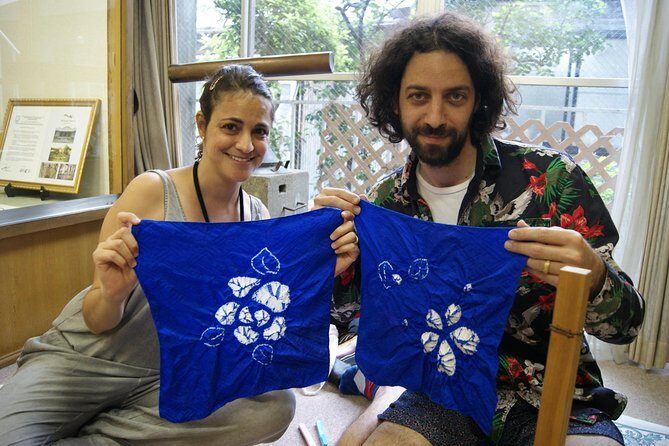
You’ll see “prime samples” of classic kasamaki and nuishime shibori dyeing in the museum shop area as part of the experience. That helps in two ways.
First, it gives you a context anchor. Instead of only understanding shibori as what your hands just created, you can compare your result to museum examples. Pattern logic starts making more sense when you see how other makers use the same techniques.
Second, it makes the experience feel more like Kyoto. This is not a generic arts-and-crafts stop. Kyoto has a strong identity around textiles and careful process work, and this class is built to support that feeling.
If you’re traveling with family, this part can also help. A hands-on activity is fun, but museum examples give kids and adults something to look at while they’re getting briefed. It can turn the class from pure “hands busy” into “hands busy plus understanding.”
Price, Time, and Group Size: Does It Feel Worth It?
At $71.67 per person, the cost is not the cheapest thing you can do in Kyoto. But it’s also not priced like a mass-produced activity. You’re paying for instruction plus materials plus dyeing, and you leave with a finished silk cloth you can keep.
Here’s the value math you should consider:
- You get a guided lesson focused on two techniques, not one
- You use traditional tools and fabrics provided for the workshop
- Your final product is a real dyed silk piece (38cm x 38cm)
- The museum setting gives you examples that connect technique to outcome
In time terms, plan for 60 to 90 minutes. That’s a comfortable length for a workshop in Kyoto because it’s short enough to stay flexible. You won’t spend half a day trapped in the making process, but you’ll have enough time to actually complete a wrapping and dyeing workflow.
Group size is capped at 15 travelers, which matters. Smaller groups generally mean less waiting and more direct help while you’re learning the stitching and wrapping steps.
Also, the class is commonly booked about 21 days in advance on average. If your Kyoto itinerary is fixed, don’t treat this as a “maybe” unless you’re okay with limited availability.
Who This Class Fits Best (and Who Might Want Something Else)
This is a strong fit if you:
- want a hands-on Kyoto craft with a practical outcome
- like textile arts and enjoy learning how techniques work
- want a take-home item that isn’t just a postcard souvenir
The minimum age is 8, and adult pricing applies to any age. So it’s designed to be family-friendly, but it’s still a process-based class where children need to manage focused steps.
You might skip it if:
- you prefer big, open-ended museum time over a timed workshop
- you’re not interested in stitching and wrapping steps at all
- you’re looking for a longer explanation-only experience rather than doing the work yourself
The small group setting helps everyone feel included, but the pace is still workshop pace. If you love hands-on work, this is a win. If you don’t, the class may feel like “too much doing.”
Practical Tips for a Smooth Kyoto Shibori Class
A few details can make your visit easier.
Bring the right mindset
This is a textile craft process. Expect to concentrate on small steps: stitching, pulling thread tight, wrapping around a cone, and then moving through dyeing as guided. You’re not going to finish this and instantly master every nuance, but you will leave with a meaningful piece and a clearer sense of the techniques.
Use the mobile ticket
Your ticket is mobile, so have it ready on your phone before you arrive. That helps keep the start smooth.
Plan around Kyoto travel times
The museum is near public transportation, which is helpful because Kyoto streets can slow you down when crowds hit. If you’re using transit, give yourself a little buffer so you can arrive calm.
Parking and bikes exist, but don’t count on lots of space
There are parking spots for two cars and bicycle parking available. If you’re driving, don’t assume you’ll have easy options—Kyoto can be tight.
Wear comfortable clothes
Nothing in the info screams “special dress code,” but this is a craft where you’re handling cloth and tools. Comfortable clothing helps you move without fuss.
Should You Book the Fukusa Shibori Class?
Yes, book it if you want a structured, hands-on Kyoto craft with a take-home result. The mix of kasamaki and nuishime techniques, plus the museum displays, gives you both making time and context. For the price, you’re not just paying for entertainment—you’re paying for instruction, materials, dyeing, and a finished silk wrapping cloth you can keep.
Skip it only if you’re looking for a longer museum visit or you strongly dislike stitch-and-wrap style activities. Otherwise, this is the kind of class that turns a Kyoto day into something you can touch later.
If you can, reserve in advance since it’s often booked around three weeks ahead. Then plan the rest of your day around this 1 to 1.5 hour window, and you’ll end up with a Kyoto souvenir that actually reflects process, not just packaging.
FAQ
How long is the Fukusa Shibori class?
It lasts about 60 to 90 minutes.
What techniques will I learn?
You’ll learn kasamaki and nuishime shibori methods and use them as part of the dyeing process.
What do I take home?
You’ll dye a silk wrapping cloth (38cm x 38cm) using the techniques and take that finished cloth home as a memento.
Where does the class take place?
The meeting point is Kyoto Shibori Museum, 135-5 Shikiamichō, Nakagyo Ward, Kyoto, 604-8261, Japan. The activity ends back at the meeting point.
What is the minimum age?
The minimum age is 8 years, and adult pricing applies to any age.
Is free cancellation available?
Yes. You can cancel up to 24 hours in advance for a full refund. If you cancel less than 24 hours before the start time, the amount paid is not refunded.