REVIEW · KYOTO
Full-Day Kyoto Walking Tour: Most Iconic Landmarks & Monkeys
Book on GetYourGuide →Operated by Japan Tour Adventure · Bookable on GetYourGuide
Kyoto hits hardest on foot. This full-day walk strings together Fushimi Inari and Kinkakuji plus the calm of Arashiyama, using public transit so you spend less time getting across town and more time seeing the real stuff.
I especially like how the day is built around iconic photo moments you can’t easily replicate alone: the vermilion torii photo at Inari, the bamboo grove stroll, and that Golden Pavilion reflection. I also like the human side of the tour: the guides (people I’ve learned names from include Tom, Agustin, and Rémi) are organized, multilingual, and good at turning crowded stops into manageable experiences, with lots of practical guidance and photo help.
The main drawback is simple: it’s a long, active day, and the Iwatayama Monkey Park climb is steep enough that you should think twice if you have knee or leg issues, heat sensitivity, or low stamina.
In This Review
- Key points
- Is This 8-Hour Kyoto Walk Worth Your Time?
- Meeting at Kitsunezo: Start Smart, Not Rushed
- Fushimi Inari Taisha: The Torii Walk for Real Photos
- The Train Jump to Arashiyama: Where the Day Loses Momentum (or Doesn’t)
- Arashiyama Bamboo Grove: Peace You Can Still Feel in a Crowd
- Nonomiya Shrine and Tenryuji: Zen Gardens Without the Guesswork
- Arashiyama Lunch Stop: Eat Fast, Then Enjoy the View
- Iwatayama Monkey Park: The Climb That Makes the Day Memorable
- Kinkakuji Golden Pavilion: Timing, Reflection, and the Walk Around
- Getting Back to Kyoto Station Without Chaos
- What the Tour Feels Like in Your Body
- Who Should Book This Kyoto Walking Tour (and Who Might Skip It)
- Guides, Small Group Size, and Why the Photos Matter
- Should You Book It?
- FAQ
- Where is the meeting point for the tour?
- What’s included in the tour price?
- Is transportation included?
- Is lunch included?
- How long is the tour and how strict is the timing?
- Is the Monkey Park hike difficult?
- What languages are available for the guide?
Key points
- Big three Kyoto zones in one day: Fushimi Inari → Arashiyama → Kinkakuji
- Photo-friendly stops with skip-the-line tickets where it counts
- Tenryuji + Bamboo Grove for Zen quiet after the crowds
- Iwatayama Monkey Park for wild macaques and city views
- Multilingual guides with strong organization and excellent humor (and photos)
Is This 8-Hour Kyoto Walk Worth Your Time?
If you’re trying to experience Kyoto’s “greatest hits” without doing a complicated shuffle of trains and timing charts, this is a strong option. You’ll cover three iconic areas in one day: Fushimi Inari, Arashiyama, and Kinkakuji (Golden Pavilion). The pacing is all about movement on foot, plus short train or tram hops to reduce the commute drag.
Price-wise, $96 is easiest to judge based on what’s included. You get an English/Japanese guide (with other languages available), plus entrance tickets for Tenryuji, Monkey Park, and Kinkakuji. You also get downloadable souvenir pictures from the provider’s private drive. Transportation and lunch are not included, so you should budget for those separately. But if you would’ve visited these sites anyway, the tour’s value comes from packaging the guide time and key temple admissions into one price, while keeping logistics simple.
This one is also built for realistic sightseeing. It’s not a bus-on-a-route tour. You’re walking, taking local transit, and using short breaks to reset. That means you’ll feel the city at walking speed, not just pass it through a window.
You can also read our reviews of more walking tours in Kyoto

Meeting at Kitsunezo: Start Smart, Not Rushed
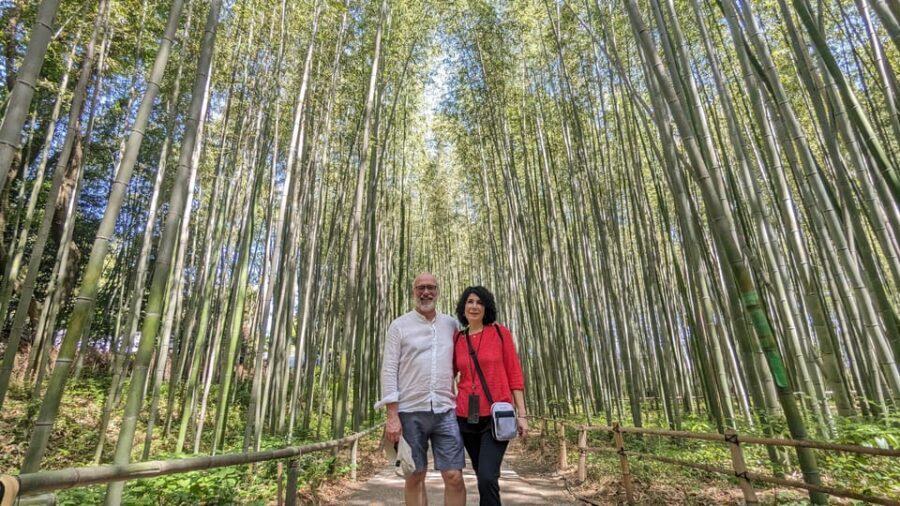
Your day begins at Kitsunezo, a fox statue just across the street from the JR Inari Station. It’s the kind of meeting point that matters: you’re starting close to the area you’ll visit first, which helps the whole day run on time.
Since this is a shared group format that can have up to around 10 people, you’ll want to arrive a bit early and settle your bearings. The tour must start on time, and late arrivals can mean you cannot join and won’t receive a refund. That’s not a small detail. With a walking-and-transit day, being even 10 minutes behind can cost you the best part of the route.
Bring comfortable shoes and comfortable clothes. The tour is approximately 8 hours and can run about 30 minutes earlier or later, so dressing for steady movement matters more than you think.
Fushimi Inari Taisha: The Torii Walk for Real Photos
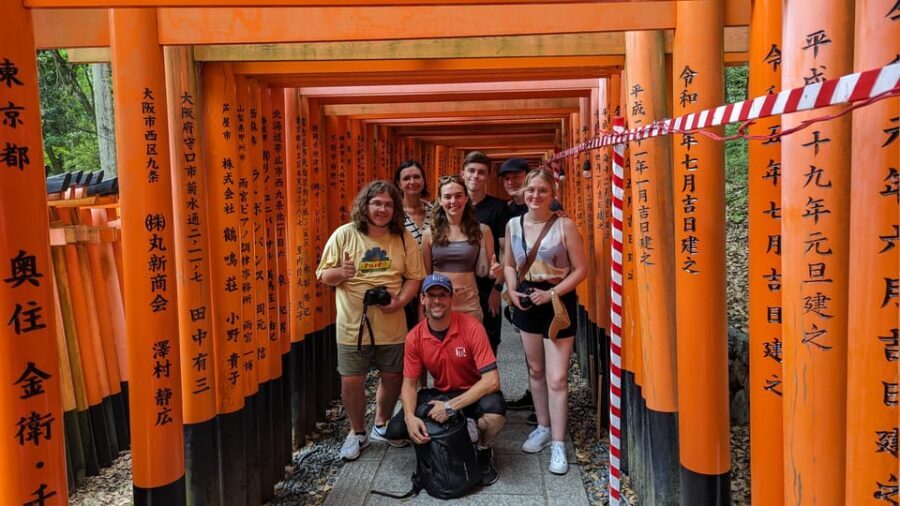
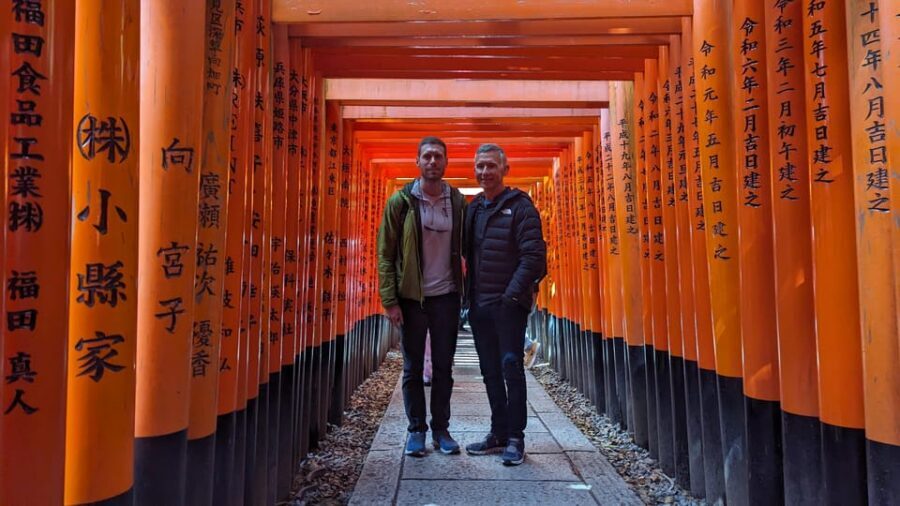
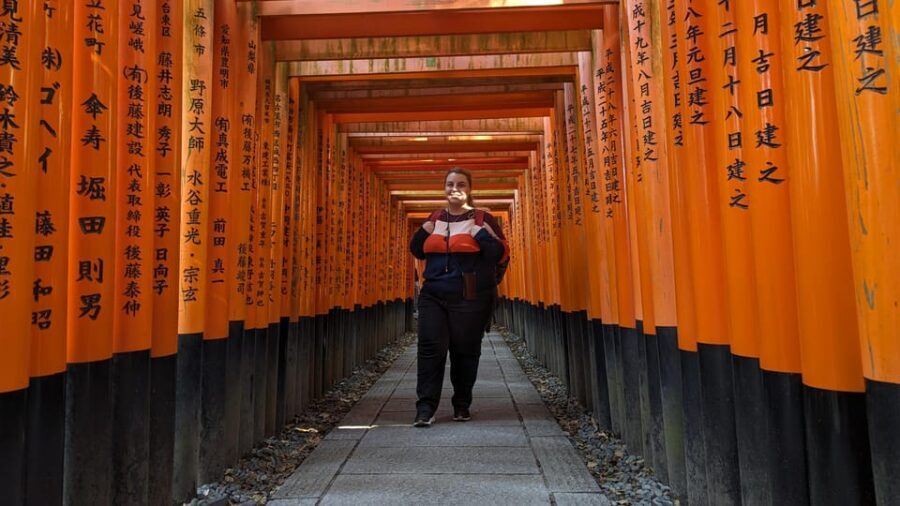
Fushimi Inari is one of Kyoto’s most famous spiritual sites, and the structure of the visit is the reason it works on a day tour. You’ll do a guided visit and photo stop at the torii gates—those thousands of vermilion pillars that climb Mount Inari.
Here’s what makes the experience worthwhile: the torii are not just a backdrop. They shape your walking rhythm. You’ll pause for photos, move through the gate tunnels, and learn what this shrine is about as a sacred place rather than a mere viewpoint.
Practical tip: plan for crowds. Even when it’s busy, you can still get great shots if you know where to stop and how to time your photos. A good guide makes that feel easy, and guides on this tour have been praised for taking strong photos and helping you look natural even in busy areas.
After the shrine time, you’ll move on by train, keeping the momentum going so you’re not stuck waiting around.
The Train Jump to Arashiyama: Where the Day Loses Momentum (or Doesn’t)
Once you leave Fushimi Inari, you take JR train connections toward Kyoto Station and then down to Saga-Arashiyama. The exact route is part of the advantage: you’re using public transit that locals actually use, not a long transfer by vehicle.
You’ll have a short break around the Saga-Arashiyama Station area before you start the walking portion. That matters because your body needs those small pauses. Think of it as a “reset button” before the quiet part of the day.
If you’re traveling with Suica or Icoca, it’ll make your transit smoother. Transportation isn’t included in the tour price, so you’ll want to have a transit card ready.
Arashiyama Bamboo Grove: Peace You Can Still Feel in a Crowd
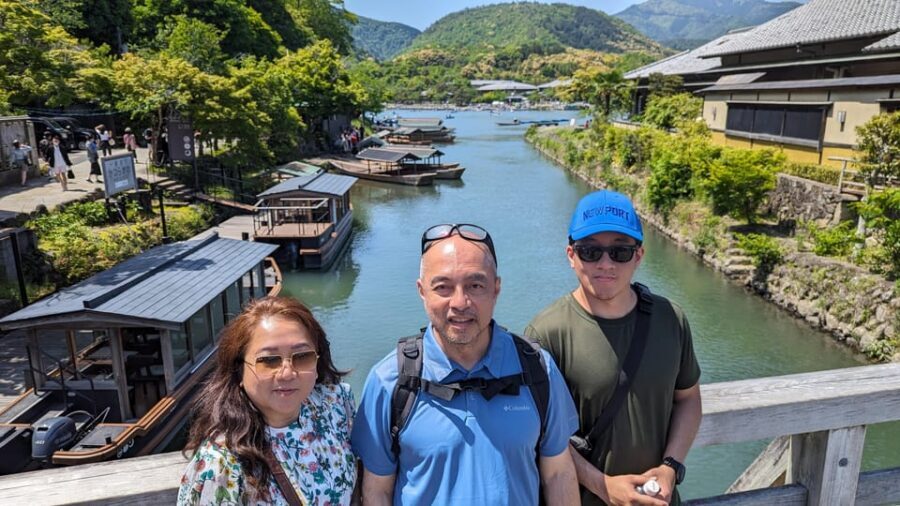
Then comes the Arashiyama Bamboo Forest, one of Japan’s most recognizable natural scenes. The tour doesn’t rush you through it. You’ll stroll at a leisurely pace with photo stops and guided context, plus free time.
What I like about this stop is that it’s easy to overhype bamboo. Yes, it’s famous. But it also works as a mental break from the louder areas of Kyoto. The bamboo grove feels like a reset: sound changes, foot traffic thickens and thins, and your brain naturally slows down to match.
You’ll also have a guided visit that helps you understand what you’re seeing beyond the postcard angle. And you get free time, which is key. Some people want photos. Others want quiet. This stop can serve both, as long as you give it a few minutes to settle you.
A few more Kyoto tours and experiences worth a look

Nonomiya Shrine and Tenryuji: Zen Gardens Without the Guesswork
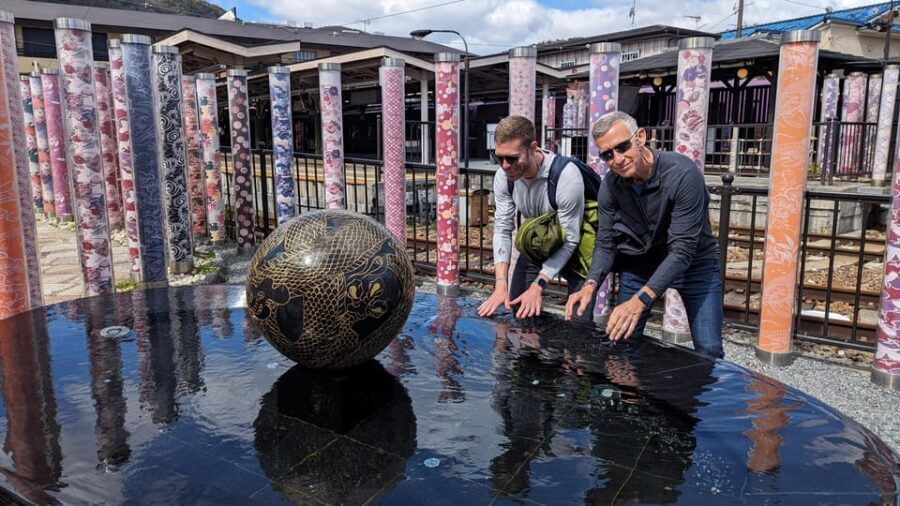
Not far from the bamboo grove is Nonomiya Shrine, a photo stop and short visit. It’s one of those “small pause” moments that can make the whole day feel more connected. It keeps the route from feeling like only highlights and checkpoints.
Next you’ll visit Tenryuji Temple, a UNESCO World Heritage Site and one of Kyoto’s most significant Zen temples. You’ll have guided sightseeing time here, and you’ll also get time on your own.
Tenryuji is special because it’s designed to be experienced slowly. The gardens and temple spaces are built around the idea that your viewpoint shifts as you walk, not that everything should be looked at from one fixed spot. That’s where a guided visit helps. You’ll know what to look for and why it matters, instead of guessing from signage.
This is also a ticketed stop with entrance included, which saves time and hassle when you’re already moving through several major locations.
Arashiyama Lunch Stop: Eat Fast, Then Enjoy the View
Arashiyama is a great place to eat because you’re surrounded by real life, not just curated tourist zones. You’ll have a lunch window and free time on the main street. Lunch is not included in the tour price.
You have two realistic options based on how the tour is structured:
- Eat on your own during the free time.
- If you prefer a guided lunch setup, the tour mentions a lunch option with table service and hot/cold choices, and it notes vegetarian availability for kids.
Keep your lunch approach simple. Don’t over-plan your meal like it’s a food marathon. This day is active, and you still have a steep hill climb later.
Iwatayama Monkey Park: The Climb That Makes the Day Memorable
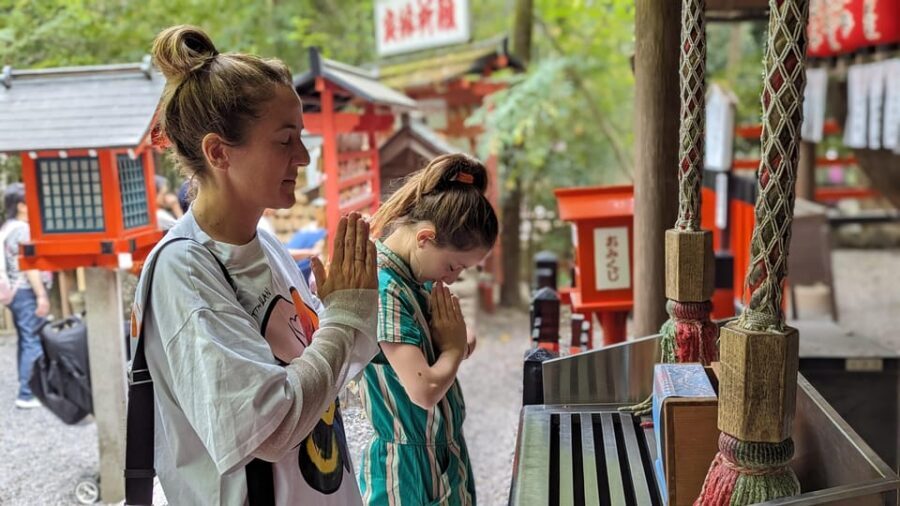
The climb to Iwatayama Monkey Park is short but not flat. You’ll hike up the hill from the bamboo grove area for a chance to see wild Japanese macaques and enjoy panoramic views of Kyoto.
The walk takes about 20 minutes for most people, but it can be longer depending on your physical condition. The tour also includes a note that this climb is not recommended for people with leg/knee injuries. That’s not just legal language—it matters because the route is steep.
If you’re comfortable with hills and you’re traveling with kids old enough to walk, this stop is often the highlight for the simple reason that it’s alive. Wild animals don’t care that you had a schedule. The moment-to-moment experience is what makes it worth it.
Also, the tour includes monkey park entrance, so you’re not negotiating tickets mid-day. At the top, you can feed the monkeys and take in the views.
Kinkakuji Golden Pavilion: Timing, Reflection, and the Walk Around
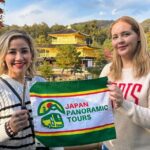
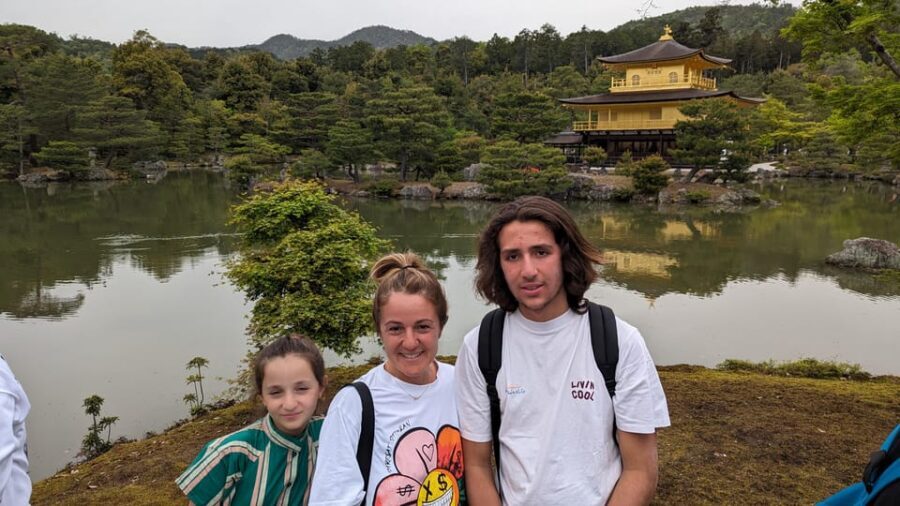
Finish strong with Kinkakuji, the Golden Pavilion. This Zen temple is famous for its top two floors covered in gold leaf, and for the way it sits beside a pond. The reflection can be striking, especially later in the day when light softens.
Your visit includes a guided/photo stop portion plus free time. You’ll also get time to walk the path around the pavilion to take in the surrounding temple grounds and changing scenes as you move.
This is one of those sites where doing it with a guide pays off. The crowd can be intense, and having someone point out where to stand helps you avoid the frustration of “everyone is lined up, and I’m not sure where my turn should be.”
Shopping is also part of the experience here, but don’t let it steal your attention. The best part is the pavilion and the atmosphere around it.
Getting Back to Kyoto Station Without Chaos
After Kinkakuji, you’ll head back toward Kyoto Station by bus. The goal is to wrap the day efficiently so you’re not stuck in transit for hours.
There’s also a short coffee/break stop earlier in the day, which is practical. You’ll be walking enough that a quick break keeps the energy from draining out of the group. Small stops like that prevent the day from turning into “just power through until the end.”
What the Tour Feels Like in Your Body
This tour is rated five stars by recent bookings, and one theme shows up clearly: the guides keep the day organized. That shows up most in how you handle transitions—when you walk, when you ride, and when you pause.
Still, it’s a walking tour. Public transit moves you between major areas, but you’re doing a lot of steps. If you’re the type who plans to rest only when the tour allows it, you’ll enjoy it. If you prefer long sit-down breaks every hour, you might feel the pace is too active.
Weather matters, too. Bamboo grove to monkey park to Kinkakuji can be a lot of exposure. Dress for warmth and stay hydrated with what you’re comfortable buying on your own.
Who Should Book This Kyoto Walking Tour (and Who Might Skip It)
This tour is a good fit if you:
- Want a one-day hit list of Kyoto’s biggest iconic landmarks
- Like walking and using local transit instead of being shuttled around
- Enjoy photo stops that make sense in crowded places
- Prefer a guided day with context, not just a checklist of sites
You might skip it if you:
- Have leg/knee problems and don’t want the Iwatayama hill climb
- Need very frequent breaks or wheelchair-level pacing (this is not described that way)
- Want a mostly seated itinerary
That monkey park note is the big decision-maker. Everything else is long-day stamina and crowd tolerance.
Guides, Small Group Size, and Why the Photos Matter
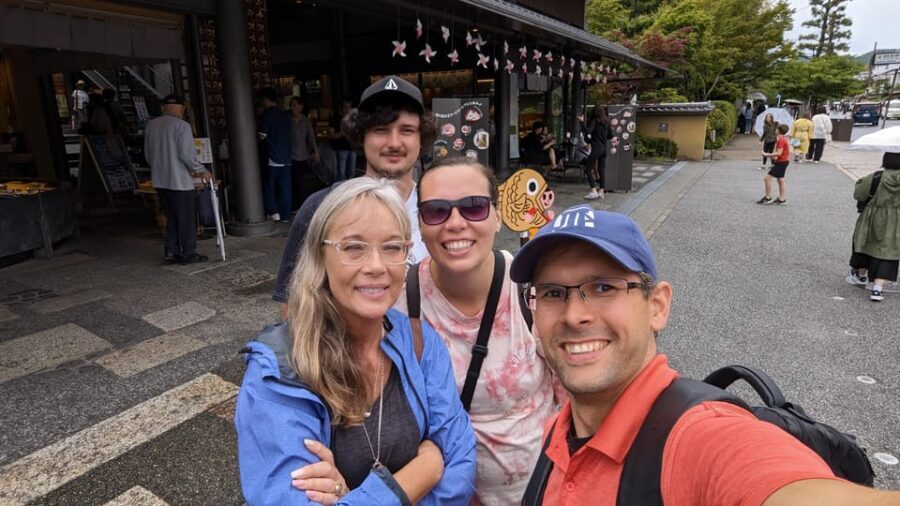
A standout from the experience is the guide quality. Guides like Tom, Agustin, and Rémi have been described as excellent at explaining Japan in a way that feels understandable, with humor and strong organization. Another practical advantage: the guides help you take photos that look like you had time to think about composition, even when the area is packed.
This matters because Kyoto is crowded at the big sights. A guide can help you get better angles, avoid wasting time, and keep the day from feeling chaotic. With a small group, you also have less “herding cats” energy than you might get on large-bus tours.
Should You Book It?
If your goal is to see Fushimi Inari, Arashiyama, Monkey Park, and Kinkakuji in one day without doing a complicated self-guided logistics puzzle, I’d book it. The included temple tickets, the line-skipping where noted, and the downloadable photos make it feel like a guided package rather than just a route.
If you’re debating based on effort, be honest about your legs. The hill to Monkey Park is the only part that comes with a clear “not for everyone” warning. If that’s a concern, you’ll probably enjoy the rest, but you might end up spending the day worried rather than relaxed.
For the right traveler, this is a day that delivers Kyoto’s main icons in a way that feels real: walking, transit, temples, animals, and the kind of photo chances you actually want to keep.
FAQ
Where is the meeting point for the tour?
You meet your guide in front of Kitsunezo, a fox statue just across the street from JR Inari Train Station.
What’s included in the tour price?
The tour includes an English/Japanese guide (other languages like French, Spanish, and German may be available), entrance tickets for Tenryuji Temple, Monkey Park, and Kinkakuji, plus downloadable souvenir pictures from a private drive.
Is transportation included?
No. You’ll use public transportation during the day, and you should plan to have a transit card like Suica or Icoca.
Is lunch included?
Lunch is not included in the tour price, and there’s no fixed lunch budget included. You’ll have free time for lunch in Arashiyama, and the tour mentions you can join your guide for a proper lunch option (not included in the price).
How long is the tour and how strict is the timing?
The tour is approximately 8 hours and can vary by about 30 minutes. You should arrive about 10 minutes early because the tour starts on time, and late guests cannot join.
Is the Monkey Park hike difficult?
The hike is about 20 minutes and described as a bit steep. It’s not recommended for people with leg/knee injuries, and depending on your condition it can take longer than 20 minutes.
What languages are available for the guide?
Languages listed include English, French, Spanish, and German (with English/Japanese noted as core options).