REVIEW · KYOTO
Gion and Fushimi Inari Shrine Kyoto Highlights with Government-Licensed Guide
Book on Viator →Operated by Japan Guide Agency · Bookable on Viator
Kyoto can feel like a maze at night. This tour strings together Gion, Pontocho, and Miyagawacho with a guided path, then adds major sights like Fushimi Inari and Kiyomizu-dera so your evening flows without guesswork. I love that you walk where cars can’t go, which makes the geisha-district streets feel real instead of just photo ops. I also like the guide’s take on geisha history and etiquette, including how people like maiko and geiko fit into today’s Kyoto. One consideration: it’s a walking tour for about 6 hours, so plan for steady movement and comfortable shoes.
What makes it especially good value is the structure. You get a licensed local English-speaking guide (max 10 people), a guided route that reduces wrong turns, and a plan that hits both iconic and quieter pockets in central Kyoto. You do still need to be flexible—temples and shrine areas can have their own pacing and crowd rhythms—so show up ready to walk, not just to sit and stare.
In This Review
- Key things to know before you go
- How this Gion and Fushimi Inari evening tour actually feels on the ground
- Entering Fushimi Inari Taisha: torii gates and a plan that saves your time
- Gion, Shirakawa Canal, Pontocho, and Miyagawacho: where Kyoto’s stories live
- What you’ll learn (and why it helps your photos)
- Yasaka Shrine and Tatsumi Daimyojin: short stops that add depth
- Kiyomizu-dera at the right moment: big views, clear context
- Kennin-ji Temple: a calmer pause near the action
- Price and logistics: does $154.37 feel fair?
- Who should book this tour (and who might want a different option)
- Should you book it?
- FAQ
- Is this tour a walking tour?
- How long is the experience?
- What is the group size?
- Is the tour guided in English?
- Are temple and shrine admissions included?
- Where is the meeting point?
- Can I get a full refund if I cancel?
Key things to know before you go
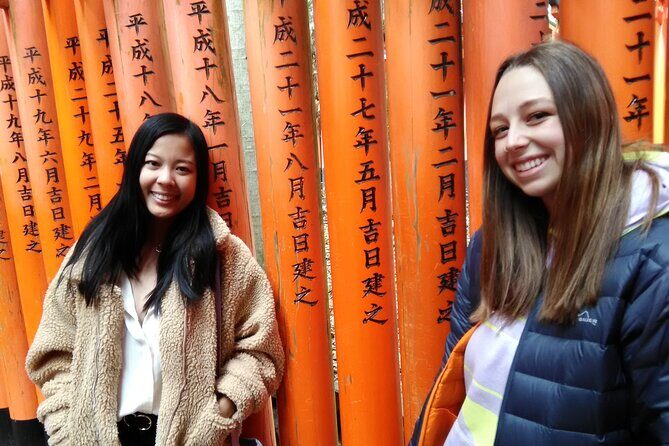
- Licensed English guide, max 10 people: small enough to hear the stories and stay together.
- A “best-of” evening route: Gion + Shirakawa Canal area plus Pontocho and Miyagawacho.
- Fushimi Inari first, then temples and backstreets: you see the torii side and the old-streets side in one loop.
- Some temple admissions are on you: Fushimi Inari and Yasaka Shrine are free, but Kiyomizu-dera and Kennin-ji are not included.
- Street-level navigation matters: narrow alleys and old lanes are exactly where a guide earns their keep.
How this Gion and Fushimi Inari evening tour actually feels on the ground

This is built for people who want Kyoto without playing map roulette. The walking format matters: you’ll be on foot through Gion’s narrow lanes and the Shirakawa Canal area, where the atmosphere changes from street to street. With a small group, you can pause without holding up a busload of people, and your guide can point out details that you’d usually miss while rushing to get photos.
Expect a mix of big, famous Kyoto anchors and the in-between spaces that make the anchors worth visiting. You’re not just checking boxes like a shopping list. You’re moving through the logic of the city: torii trails, shrine gates, then the geisha district streets that people still associate with traditional arts and seasonal Kyoto life.
You can also read our reviews of more guided tours in Kyoto

Entering Fushimi Inari Taisha: torii gates and a plan that saves your time
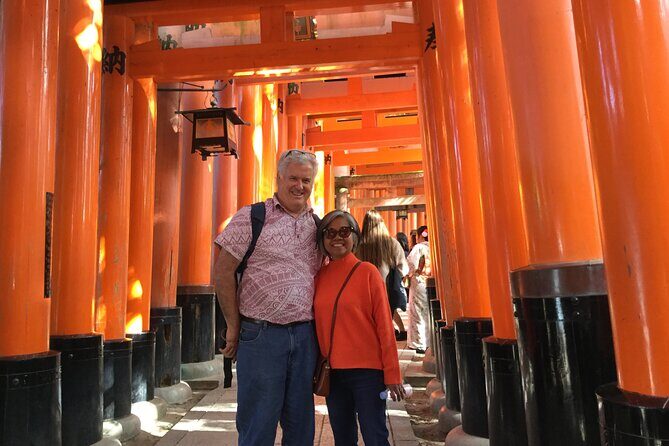
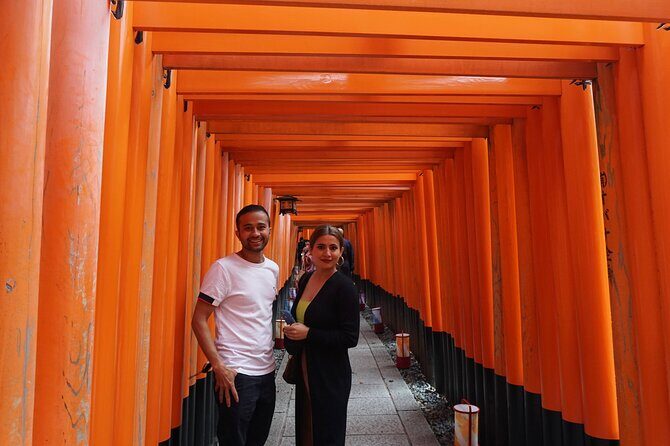
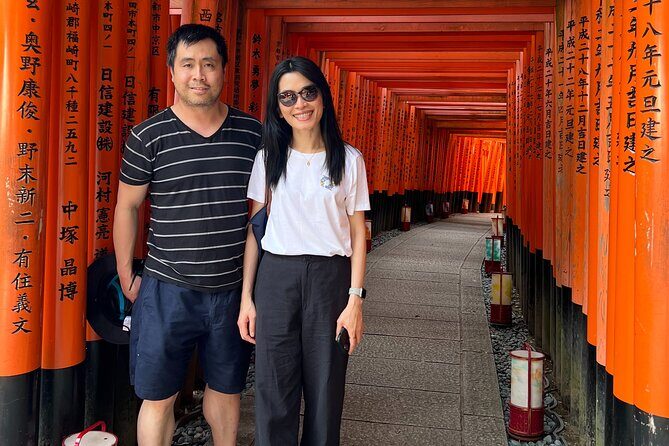
Your first stop is Fushimi Inari Taisha, famous for the thousands of vermilion torii gates. You’ll have about 1 hour, and admission is listed as free. The practical win here is timing and direction. Fushimi Inari can sprawl fast, and without guidance you might spend more time backtracking than exploring.
With a guide, you’ll get oriented quickly—where to start, what the gates actually mean in practice, and how the shrine fits into Kyoto’s larger spiritual geography. Even if you’ve seen photos before, the sheer rhythm of gate after gate hits differently when you’re walking it with a sense of why you’re going where you’re going.
If you’re the type who likes a brisk but meaningful pace, this is a strong opener.
Gion, Shirakawa Canal, Pontocho, and Miyagawacho: where Kyoto’s stories live
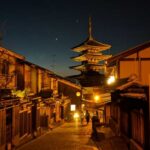
After Fushimi Inari, the tour leans into the part most people picture when they think Kyoto: Gion. The route includes Gion, the Shirakawa area along the canal, and also Pontocho and Miyagawacho as part of that one-evening sweep.
This section is the heart of the “don’t get lost” promise. Gion’s streets aren’t huge, but they branch in ways that confuse first-timers—especially when you’re trying to find your way by sight alone. A guide helps you move naturally through the best street patterns: the lanes that feel intimate, the viewpoints that make sense, and the spots where the canal-side atmosphere really lands.
What you’ll learn (and why it helps your photos)
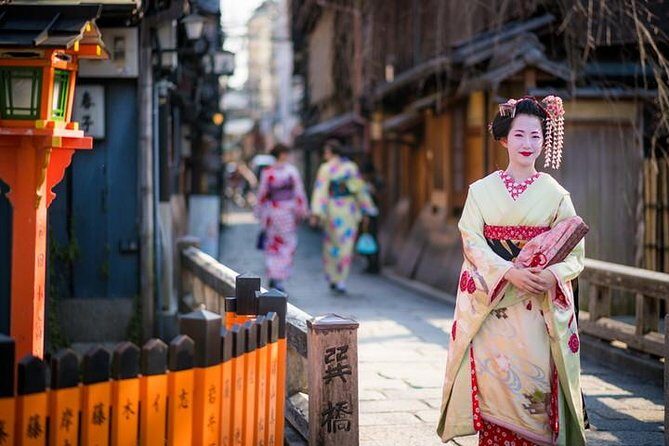
The tour highlights geisha culture and history, including distinctions people often mix up. One example from a recent group: the guide Mari san was praised for explaining the difference between maiko and geiko. That kind of context changes how you look at the streets. Instead of just searching for someone in traditional dress, you start noticing the systems around them—teahouses (ochaya), the rhythm of the district, and how tradition continues in modern Kyoto.
Important expectation check: you might see maiko or geiko, but it’s not guaranteed as part of the official tour promise. The real payoff is learning what you’re seeing so that even if you don’t spot performers, your walk still feels purposeful.
Yasaka Shrine and Tatsumi Daimyojin: short stops that add depth
You get Yasaka Shrine next, with about 10 minutes and free admission. It’s also known as Gion Shrine, and it sits right between the popular Gion area and Higashiyama-side streets. In a tour like this, the value of a short shrine stop is the contrast. You’re coming from the geisha district’s streets, then grounding your evening in a place that has been part of Kyoto’s spiritual map for centuries.
Then you’ll visit Tatsumi Daimyojin Shrine, also about 10 minutes and free. It’s located near the Shirakawa Canal area, in a zone closely associated with ochaya and geisha activity. Even with a brief visit, this kind of stop matters because it connects the stories: the district isn’t just scenery—it’s built around shrine life, seasons, and community spaces.




Kiyomizu-dera at the right moment: big views, clear context

Next up is Kiyomizu-dera Temple. You’ll have about 1 hour, and admission is listed as not included. Kiyomizu-dera can be intense—crowds, routes, stairs, and the pull to rush to the most famous viewpoints.
A guide helps in two ways:
- Order and pacing: you’re less likely to spend your hour walking in circles.
- Meaning over spotting: you get context for what makes this temple one of Kyoto’s best-known landmarks, not just one of its most photographed.
Practical tip: since admission isn’t included, check what you’ll need before you get there so the visit stays smooth. Plan for some time on your feet inside the grounds.
Kennin-ji Temple: a calmer pause near the action
The last temple stop is Kennin-ji. The tour lists about 1 minute for this stop, and admission is also listed as not included. That duration may sound tiny, but in this kind of guided route it often works like a quick arrival-and-orientation moment rather than a full standalone temple visit.
Even if your time there is short, Kennin-ji is close to major streets like Hanamikoji and Shijo, and its grounds are described as expansive and pleasant to walk. If you’re hoping for a long garden slow-walk, this may not fully satisfy that craving on this day. But it’s still a useful “Kyoto contrast” finish: big temple energy earlier, then a quieter, garden-leaning note near the city’s main flow.
Price and logistics: does $154.37 feel fair?
At $154.37 per person for about 6 hours, this isn’t a budget bargain. But it can still be good value if you care about guidance more than just access.
Here’s why the price can make sense:
- You’re paying for a licensed local English-speaking guide.
- You’re also paying for the time-saving route through multiple major areas instead of piecing together separate tickets and transit plans.
- The group size is capped at 10 travelers, which tends to keep the experience coherent.
Where you might feel the cost more:
- Some entries are not included (notably Kiyomizu-dera and Kennin-ji), so you’ll still pay temple admission on the day.
- It’s a walking plan, so if you’re expecting mostly short stops with lots of sitting, it may feel more active than you want.
If you’re traveling with friends or you hate wasting time at street corners, this sort of organized walking tour often pays off.
Who should book this tour (and who might want a different option)
This tour is best for you if:
- You want Gion plus Fushimi Inari plus a couple of key temples in one evening.
- You prefer walking routes over figuring out complicated lanes.
- You like explanations: shrine meaning, district history, and how traditional culture shows up in everyday Kyoto streets.
- You want a small-group experience with a guide who can keep you on track.
It might be less ideal if:
- You dislike walking for hours.
- You want a totally unhurried temple-garden day (this route gives you structured highlights, not a slow immersion day).
- You’re hoping for an admission-heavy itinerary where everything is included. Some temple costs are on you.
Should you book it?
I’d book it if your priority is a guided evening that connects Kyoto’s most iconic contrasts: the torii gates of Fushimi Inari, the atmosphere and stories of Gion and Shirakawa, and the temple landmarks like Kiyomizu-dera without turning your day into a self-guided puzzle.
Skip it (or consider a different format) if you’re trying to keep costs fully predictable or you want lots of seated downtime. For most first-timers, though, the combination of a licensed guide, a small group, and a route that covers major areas on foot is exactly the kind of planning that makes Kyoto feel easier and more real.
FAQ
Is this tour a walking tour?
Yes. It’s described as a walking tour, and the pickup/drop-off for this activity is on foot.
How long is the experience?
It’s approximately 6 hours.
What is the group size?
This tour has a maximum of 10 travelers.
Is the tour guided in English?
Yes. It includes a licensed local English-speaking guide.
Are temple and shrine admissions included?
Fushimi Inari Taisha and Yasaka Shrine are listed as free. Kiyomizu-dera Temple and Kennin-ji Temple are listed as not included.
Where is the meeting point?
The tour starts at Tatsumi-jinja Shrine (Tatsumi Dai-myojin) in Kyoto, Higashiyama Ward, Motoyoshichō (address provided in the listing details).
Can I get a full refund if I cancel?
Yes. You can cancel for a full refund up to 24 hours in advance.