REVIEW · KYOTO
Ikebana Floral Design Workshop in Kyoto
Book on Viator →Operated by HanaYou · Bookable on Viator
Flowers have rules, and you learn them fast. In Kyoto’s quiet HanaYou studio, you make a real Ikebana design with real seasonal flowers while someone who’s been doing this for years helps you shape what you want. I also love that the class is hands-on from minute one, not a lecture with a quick photo at the end.
The guiding force is founder Ryoko Arnwine, and you can choose instruction in English or Japanese. One thing to plan for: the studio is on the 2nd floor, and you’ll need to walk up stairs to get in.
After a cup of traditional tea and a small seasonal sweet, you’ll get set up for creating, then use a photo corner to capture your arrangement before you take fresh flowers back to your hotel.
Small-group Ikebana class (max 4) with founder Ryoko Arnwine
Choose English or Japanese guidance based on your preference
You take home fresh seasonal flowers, not just a keepsake photo
Traditional tea and a seasonal sweet included during the workshop
Photo corner setup helps you document your finished arrangement
Studio tools are provided for class use, including vase, scissors, and pins
In This Review
- Entering HanaYou’s Kyoto Ikebana Studio (and Finding Your Rhythm)
- What Happens in the 90 Minutes: Tea, Teaching, and Your Finished Arrangement
- English or Japanese Guidance with Ryoko Arnwine
- Balance and Meaning: Why This Class Feels Different from a Standard Craft
- The Part You’ll Actually Care About: Materials, Photo Corner, and Take-Home Flowers
- Price and Value: Is $97.73 Worth It in Kyoto?
- Studio Practicalities: Where to Meet, How to Get There, and What to Bring
- Should You Book HanaYou’s Ikebana Workshop?
- FAQ
- How long is the Ikebana Floral Design Workshop in Kyoto?
- Do I need any prior experience to take the workshop?
- Is instruction available in English or Japanese?
- Are the materials and flowers included?
- Where does the workshop meet, and when does it end?
- Is free cancellation available?
- Is the studio accessible without stairs?
Entering HanaYou’s Kyoto Ikebana Studio (and Finding Your Rhythm)
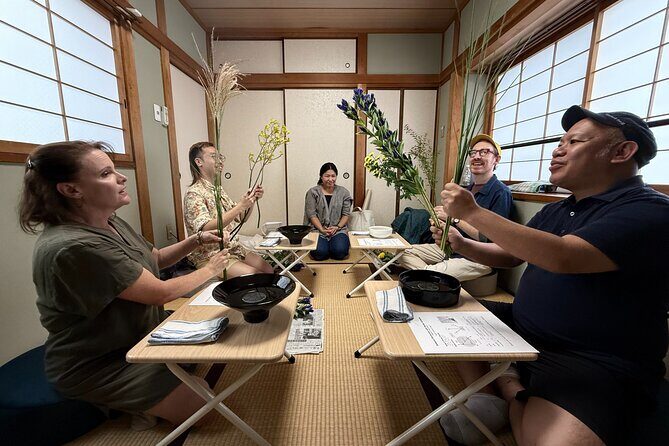
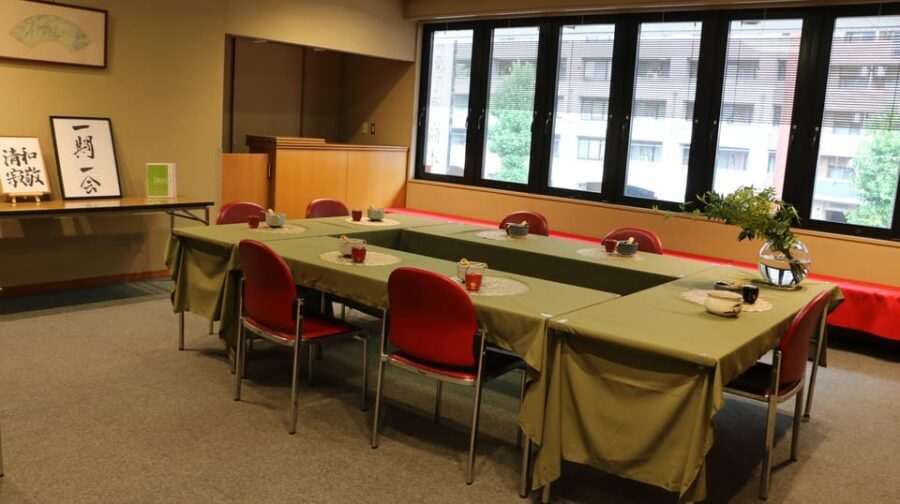
Kyoto has a lot of “look, but don’t touch” culture. This experience flips that. At HanaYou, you slow down and make something with your own hands. You’re in a calm studio space, and the pace feels designed for real people—first-timers included.
The basics are simple: this is an Ikebana floral design workshop in Kyoto where you create an arrangement and take it with you. The class runs about 90 minutes, and the group size tops out at 4 travelers, so you’re not shouting over chatter or waiting for attention. That matters, because Ikebana isn’t just about making something pretty. It’s about making choices—how high, how angled, how balanced—then learning why those choices work.
You’ll start at Kawaramachi Marutamachi Iseyacho, Kamigyo Ward, Kyoto (602-0873), near public transportation. That’s helpful: you don’t need a car or a complicated transfer just to do something special. Just remember the studio is on the 2nd floor, so be ready for stairs when you arrive.
If you like activities where you can leave with an actual object, this hits the sweet spot. You won’t just admire flowers in a shop window. You’ll carry yours back to your hotel.
What Happens in the 90 Minutes: Tea, Teaching, and Your Finished Arrangement
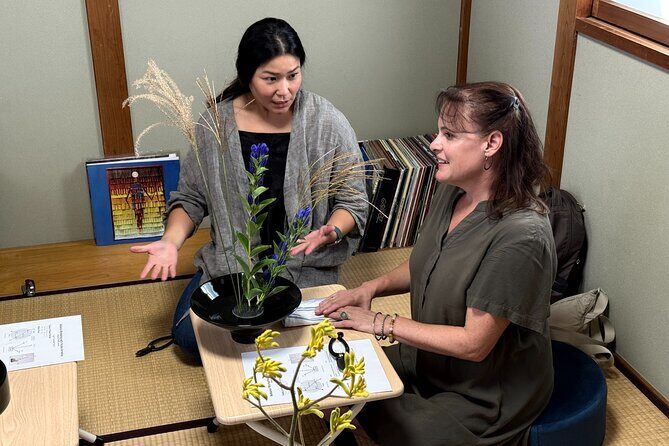
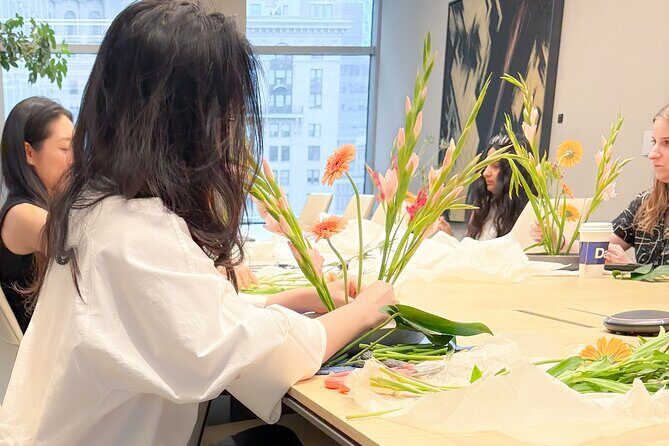
This workshop is built around doing. The instruction covers how to build your arrangement, how to handle the materials, and how to think about the composition. You don’t need prior experience—your job is to show up and follow along.
Here’s the practical flow you can expect in a session like this:
- You’ll meet at the studio location, then get brought into the class space.
- You’ll have traditional Japanese tea and a seasonal sweet before or during the start of the lesson, which helps you settle in and keeps the vibe unhurried.
- You’ll receive guidance in English or Japanese, depending on what you selected.
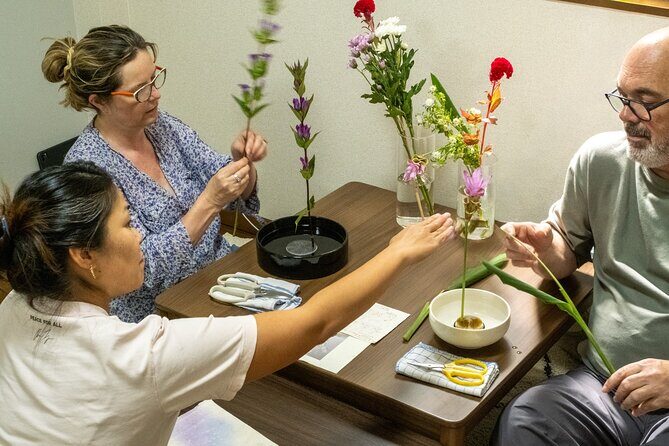
- You’ll use the studio setup—vase, scissors, pins, and other tools—to build your arrangement step by step.
- As you work, the instructor helps you make small adjustments so your piece feels balanced and intentional.
- You’ll also use a photo corner to take pictures of what you created.
- Finally, you’ll leave with fresh seasonal flowers that you can take back to your hotel.
The big value here is the teaching focus. The class isn’t just “put flowers in a container.” You’ll learn the thinking behind it—especially ideas like balance, harmony, and the meaning behind flower placement. That kind of explanation gives you more than a one-time craft lesson. It gives you a mental framework you can reuse later if you try Ikebana again.
And because the class is short—about 1 hour 30 minutes—it’s a manageable chunk of time even on a busy Kyoto day. You still get a real creative outcome, not a half-hour experience that leaves you wondering what happened.
A few more Kyoto tours and experiences worth a look

English or Japanese Guidance with Ryoko Arnwine
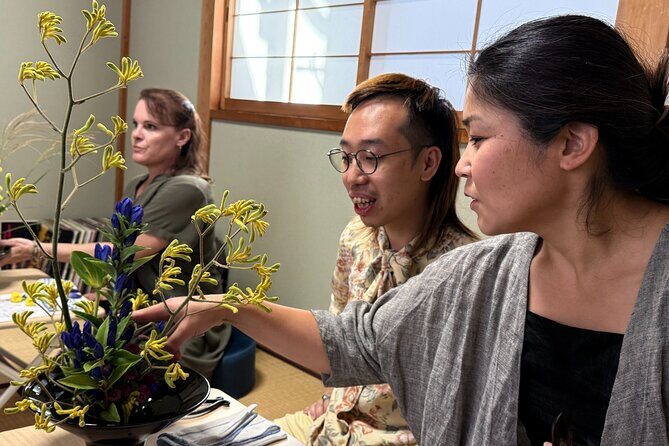
A workshop lives or dies by the instructor. Here, that’s Ryoko Arnwine, HanaYou’s founder. Having the founder guide you is a strong signal that the class is meant to be clear and welcoming, not just traditional for tradition’s sake.
What you’ll like: the teaching is described as patient and supportive, especially for beginners. If you’re the type who worries about messing up, you can relax. This format is built for first-timers who want to learn the basics and feel proud at the end.
Language choice also matters. You can get guidance in English or Japanese, and that changes how quickly you understand each step. Even if you know zero Japanese, you’re not stuck guessing while you hold stems in place. And if you prefer Japanese, you can follow along in that mode too.
There’s also a cultural layer to the class. In addition to technique, you’ll get historical and cultural perspectives connected to the way Ikebana is approached. That’s the difference between making a craft and understanding a craft.
When you leave, you’ll probably remember more than just what to do with flowers. You’ll carry the idea that arrangement is about relationships—between shapes, angles, and space.
Balance and Meaning: Why This Class Feels Different from a Standard Craft
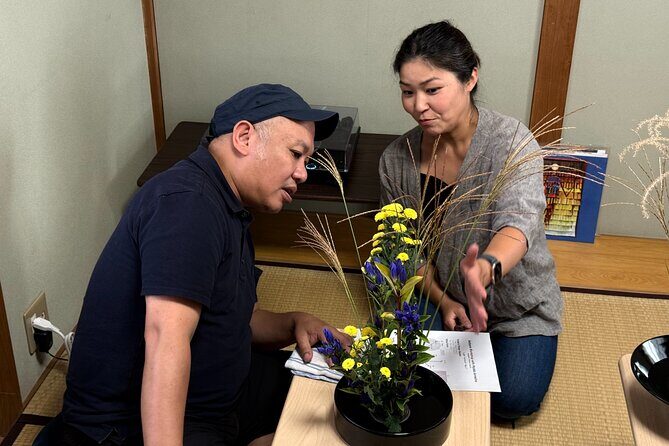
A lot of workshops teach you how. This one also helps you understand the why.
From what you’ll be taught during the session, you can expect a focus on:
- Balance in your arrangement
- Harmony between different elements
- The meaning behind where you place each part of the composition
Those three points sound abstract until you’re holding real stems and trying a placement. Then they become practical. You move a flower slightly, and suddenly it looks calmer or more purposeful. You adjust the angle, and it feels less random. The lesson guides you toward a design that looks like it belongs—like it was meant to be there.
That’s also why this is a good “first Ikebana” experience. The goal isn’t perfection. The goal is understanding enough to create something that communicates.
And there’s another quiet benefit: you slow down. In a city that can move fast, this gives you a space where attention goes where it should—into small choices, not crowds and checklists.
The Part You’ll Actually Care About: Materials, Photo Corner, and Take-Home Flowers
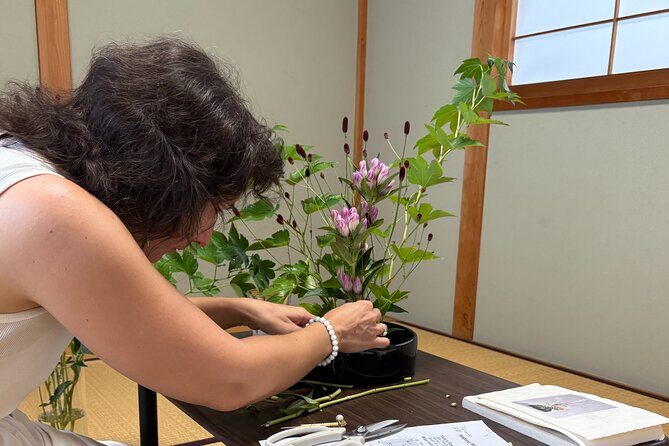
You’ll get materials provided, and the studio supplies include what you need for the class: vase, scissors, pins, and other tools. The key detail is that these items are for in-class use only. So don’t plan on bringing home tools. You’re bringing home the result.
The best part for most people: you leave with fresh seasonal flowers, so your workshop doesn’t end the moment you step out the door. You can take your arrangement back to your hotel and enjoy it as a real souvenir. In Kyoto, that’s a lot more meaningful than buying something factory-made that looks like it might last six months.
You also get access to a photo corner setup. That’s not just for selfies. It’s useful because flowers can be hard to photograph in hotel rooms with mixed light. A dedicated photo setup helps you get a decent picture while everything still looks fresh and arranged exactly as you made it.
And yes—there’s light refreshment: traditional Japanese tea and a seasonal sweet. It’s a small detail, but it adds warmth to the experience. It also keeps your energy steady during the building and adjusting phase of the class.
Price and Value: Is $97.73 Worth It in Kyoto?
At $97.73 per person for about 1 hour 30 minutes, you’re paying for more than “a fun activity.” You’re paying for:
- One-on-one-style attention in a small group (max 4)
- Instruction from Ryoko Arnwine
- Tools and materials provided during the class
- Traditional tea and a seasonal sweet
- A photo corner setup
- The included outcome: fresh seasonal flowers to take home
Compared to experiences where you leave with only a story (or only a postcard), the take-home flowers are a tangible payoff. That turns the workshop into something you can enjoy again after your class ends, which is where the value often shows up.
Could it be “too much” if you’re on a strict budget? Sure. But if you’re the type who likes hands-on culture—especially something tied to Kyoto’s artistic traditions—you’re not paying for an abstract event. You’re paying for a finished, personal product and the learning behind it.
Also note the planning reality: this gets booked an average of 46 days in advance. That suggests demand is steady, not random. If you want a slot that fits your schedule, pick a date sooner rather than later.




Studio Practicalities: Where to Meet, How to Get There, and What to Bring
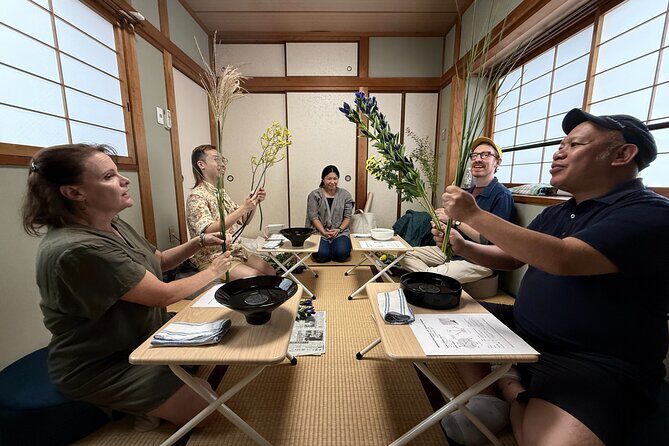
This is a straightforward workshop, but a few practical notes will help you avoid small stress.
Meeting point: Kawaramachi Marutamachi Iseyacho, Kamigyo Ward, Kyoto (602-0873). The activity ends back at the meeting point, so you’re not dealing with complicated transfers after class.
Getting there: It’s near public transportation, which is a big deal in Kyoto. You can likely combine it with nearby sightseeing days without building your day around transport.
Group size: Maximum of 4 travelers. That keeps things calm and lets the instructor see what you’re doing.
Stairs: You’ll need to walk up stairs to reach the studio on the 2nd floor. If stairs are a problem for you, plan accordingly.
What to bring: You don’t need to bring flower tools. The studio handles the class equipment. The practical things are more about you: wear comfortable shoes for stairs, and be ready to carry a fresh arrangement afterward.
And because it’s a mobile ticket, you’ll want your phone charged and ready when you arrive.
Should You Book HanaYou’s Ikebana Workshop?
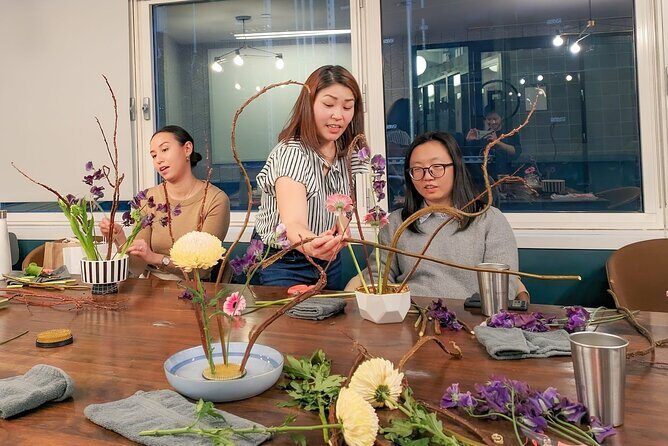
I’d book this if you want a Kyoto activity that feels personal, calm, and genuinely hands-on. It’s especially strong for beginners because you get clear guidance from Ryoko Arnwine, plus the teaching focuses on ideas like balance and harmony—not just where to stick stems.
Skip it only if you dislike working with real materials, or if stairs are a deal-breaker for you. Otherwise, it’s a smart choice when you want more than a photo. You’ll leave with a piece of Kyoto you can keep on your table.
If your travel style leans practical and you like doing instead of watching, this hits the right note.
FAQ
How long is the Ikebana Floral Design Workshop in Kyoto?
The class lasts about 1 hour 30 minutes (approximately).
Do I need any prior experience to take the workshop?
No. The workshop is designed so that you can participate without prior experience.
Is instruction available in English or Japanese?
Yes. Guidance is available in English or Japanese based on your preference.
Are the materials and flowers included?
Yes. You’ll be taught with fresh seasonal flowers, and you can take the flowers back to your hotel. Studio tools are provided for in-class use.
Where does the workshop meet, and when does it end?
The meeting point is Kawaramachi Marutamachi Iseyacho, Kamigyo Ward, Kyoto 602-0873, Japan, and the activity ends back at the meeting point.
Is free cancellation available?
Yes, free cancellation is available. You can cancel up to 24 hours in advance for a full refund.
Is the studio accessible without stairs?
No. You’ll need to walk up stairs to reach the studio on the 2nd floor.