REVIEW · TOKYO
Japanese Fan Painting Workshop ~ in a Tokyo Flower Shop
Book on Viator →Operated by Ruby · Bookable on Viator
Tokyo doesn’t usually feel quiet, until you step inside. This Japanese fan painting workshop trades street noise for art time in a flower-filled space.
I love that you can be as traditional or personal as you want, from cherry blossoms to your own designs. I also like how the instructor’s hands-on guidance helps even total beginners. The one thing to consider: it’s a small 2-hour session, so if you want a long, detailed art project, you may leave wanting more.
You’ll start by picking a fan shape, size, and color, then paint on a surface that isn’t flat. You’ll also get context on why fans mattered in Japanese culture and history, not just how to paint them. It’s a relaxed break from the usual Tokyo checklist—more thoughtful than rushed.
In This Review
- Key Things You’ll Notice Right Away
- Fan Painting in Tokyo: A Break From the Usual Plan
- Where You’ll Meet: Park House Chiyoda Kojimachi
- Inside the Flower Shop: Your Fan Canvas Awaits
- The Two-Hour Flow: What Happens During Your Session
- Traditional Motifs vs. Your Own Design
- The Hands-On Skill Help That Makes It Work
- A Small Group, a Social Yet Calm Vibe
- Price and Value: Is $60 Worth Two Hours of Art?
- Who Should Book This Fan Painting Workshop?
- A Few Practical Tips Before You Go
- Should You Book It?
- FAQ
- How long is the Japanese Fan Painting Workshop?
- What is the price per person?
- Where is the meeting point?
- Is there a mobile ticket?
- Does the workshop end back at the meeting point?
- How big is the group?
- Are traditional designs available, or can I do my own?
- Is the workshop beginner-friendly?
- Is it near public transportation?
- Is service animal access allowed?
- Can I cancel for a full refund?
Key Things You’ll Notice Right Away
- A calm flower shop setting: art time without Tokyo’s usual chaos
- Pick your fan canvas: multiple shapes, sizes, and colors to choose from
- Guidance from Ruby and the team: supportive help for beginners
- Traditional motifs plus your own ideas: cherry blossoms, koi, and scenic scenes
- Materials included: paint and brushes are provided so you can focus on creating
- Small group feel: up to 20 people, for a less crowded workshop
Fan Painting in Tokyo: A Break From the Usual Plan

If you’re shopping for an activity that feels different from temples, towers, and train rides, this fits the bill. Instead of spending your time moving from one landmark to the next, you’re making something. In Japan, fans aren’t just decorations—they’re part of daily life and cultural imagery, and the workshop explains that connection in plain language.
The shop setting matters. You’re in a flower-filled, tranquil environment, which changes the whole tone of the experience. I like workshops like this because they slow you down without feeling boring.
This also isn’t a strict, one-design-fits-all class. You can follow traditional motifs or go your own way. That balance is what makes it appealing for couples, friends, and solo travelers who don’t want to “perform” art, they just want to make art.
A few more Tokyo tours and experiences worth a look


Where You’ll Meet: Park House Chiyoda Kojimachi
You’ll meet at Park House Chiyoda Kojimachi in Kōjimachi (Tokyo, Chiyoda City). The exact street address given is 6-chōme46, and the activity ends back at the same meeting point.
Why this matters for your planning: it’s in central Tokyo territory, and the workshop is listed as near public transportation. That’s a big deal when you’re timing the rest of your day. You don’t want a creative activity that turns into a detour marathon.
Also, the experience uses a mobile ticket, so you’ll want your phone charged enough to pull it up when you arrive. Plan on arriving a little early. Two hours sounds simple, but you’ll want time to settle, choose your fan, and start without feeling rushed.
Inside the Flower Shop: Your Fan Canvas Awaits
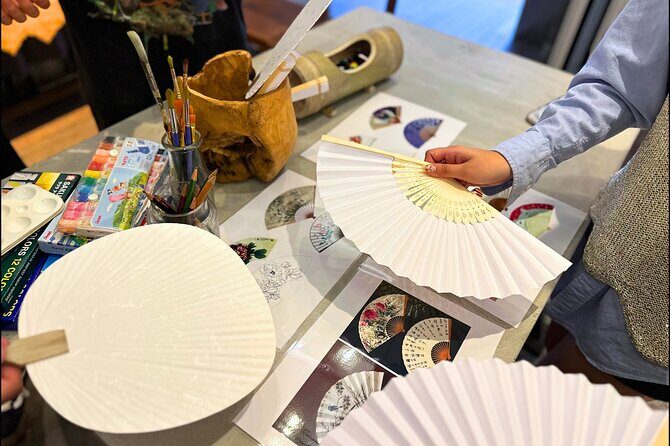
Once you arrive, you step into a space built for calm: flowers everywhere, creativity in the air, and a setup that makes it easy to focus. Each participant chooses from a selection of Japanese fans in different shapes, sizes, and colors. That choice is more than a nice extra—it affects how your painting looks and how comfortable the fan feels in your hands while you work.
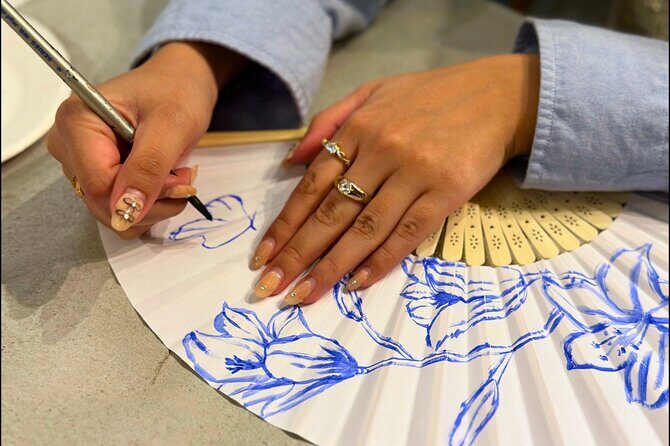
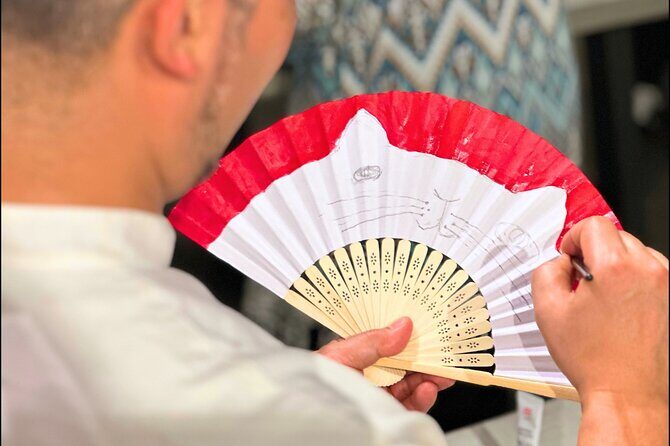
Then comes the practical part: you’re painting on a surface that behaves differently than flat paper. Fans curve and fold, so the workshop is designed to teach you how to make your brush marks work on an irregular surface.
You’ll also get the basic materials you need, including paints and delicate brushes. That’s one of the quiet value points here: you’re not spending time shopping for art supplies, and you’re not worrying about whether you bought the right kind of paint for a curved surface.
The Two-Hour Flow: What Happens During Your Session
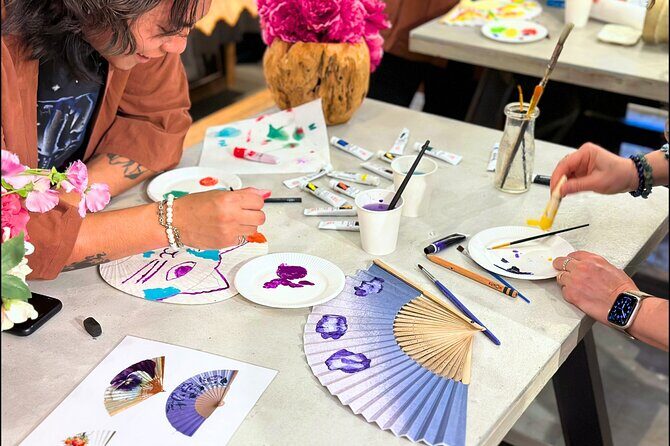
This is an approx. 2-hour workshop, which is a comfortable length for most people. You’ll usually get enough time to go from blank fan to a finished souvenir, without turning the class into a half-day project.
Here’s how the session feels in practice:
First, you choose your fan and get set up in the flower shop environment. Next, the instructor shares the background: what fan painting is, and why fans matter in Japanese culture and history. This part isn’t a long lecture—it’s there so your designs have meaning, not just decoration.
Then you move into painting. You’ll explore either classic motifs or your own creative idea. As you paint, the instructor offers tips that help you make shapes look clean and color transitions look intentional.
At the end, you’ll finish your piece. People usually take photos because your fan is both artwork and something you can actually use later (or at least display). It makes a nice “proof of learning” moment that’s easy to capture on your phone.
Traditional Motifs vs. Your Own Design
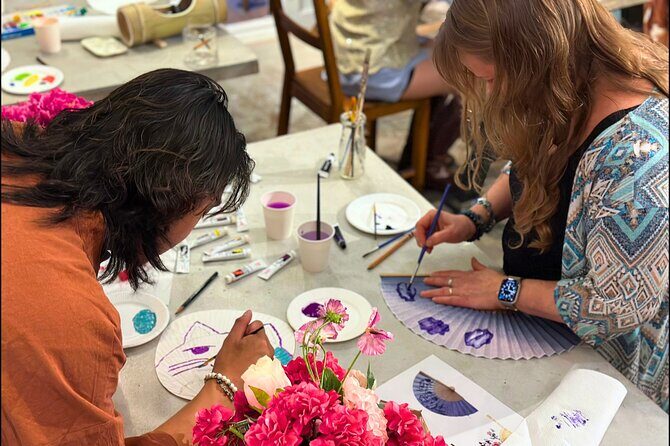
One of the best parts is having real options. You’re not locked into one template. The workshop highlights traditional motifs like:
- Cherry blossoms
- Koi fish
- Scenic scenes (described as scenic landscapes in the overview)
But you can also let your imagination take the wheel. If you’ve never painted before, that freedom still works because the instructor provides structure—how to handle paint, how to approach the fan’s shape, and what tends to look good.
If you enjoy personal expression, you’ll likely like that you can mix styles too. If you want something safer and more classic, you can lean on the offered motifs. Either way, you’re leaving with a souvenir that feels connected to your time in Tokyo rather than something bought off a shelf.




The Hands-On Skill Help That Makes It Work

What turns this from a fun craft into a genuinely satisfying class is the guidance on technique.
A key point from the experience description and the feedback: you learn tips for painting on an irregular surface. That’s huge, because curved objects are where beginners usually get frustrated. You’ll also get advice using acrylic and water-based paints. If you’ve only used paint on paper before, this is the moment you learn the practical adjustments.
The instruction style seems built for beginners. One of the strongest comments from recent participants is how patient and kind the teaching feels. If you’re worried you’ll slow the group down or mess up, you can relax. The pace is structured for people who are new to art.
Even if you’ve done some painting before, you may still appreciate the specific reminders about how to control brush strokes on a fan.
A Small Group, a Social Yet Calm Vibe
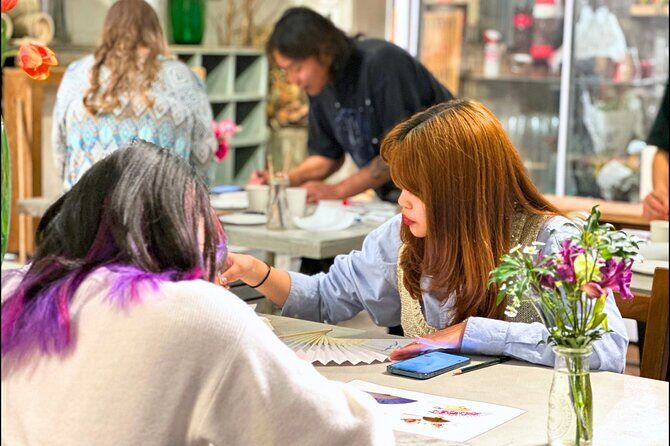
The workshop caps at 20 travelers, which keeps it from feeling like a crowded factory class. You can chat, meet like-minded people, and still keep the overall mood peaceful because the setting is already calm.
This is a good choice if you want conversation without the noise. Several people come as a couple or with a friend, and it works either way. Two people painting side-by-side often turns into a relaxing shared activity rather than awkward silence.
If you’re traveling solo, you’re still likely to find an easy social rhythm—especially because the room invites questions and the instructor is actively involved.
Price and Value: Is $60 Worth Two Hours of Art?
At $60 per person, this isn’t a “cheap and cheerful” workshop. It’s priced like an experience: time with an instructor, a curated setting, guided technique, and materials included.
Here’s how I think about the value:
- You’re paying for instruction (not just a DIY kit).
- You’re paying for a real art environment in a flower shop, not just a temporary table in a hallway.
- You’re getting a finished, usable souvenir that you made yourself.
- You’re also getting the cultural context—why fan painting exists and what the motifs connect to.
If you compare it to buying an expensive handmade item at a market, it can feel like a fair trade. You pay, you learn the basics, and you leave with something personal. And because the group is small, the guidance doesn’t feel purely transactional.
If you’re the kind of traveler who hates any structured activity, you might find it a bit “planned.” But if you enjoy creative tasks, the price starts to feel reasonable fast.
Who Should Book This Fan Painting Workshop?
This workshop fits best if you want a Tokyo experience that’s a little gentler and more human.
It’s a great match for:
- Beginners who want support and patience
- Couples looking for a shared activity beyond sightseeing
- People who like crafts but don’t want to guess about materials and technique
- Travelers who want a break from the city’s rush without giving up something memorable
It may be less ideal if:
- You want a major time investment or advanced art training
- You prefer activities that are primarily viewing and touring rather than making
A Few Practical Tips Before You Go
You’ll get the paints and brushes, so you don’t need to shop. Still, a little prep helps you enjoy the process more:
Wear clothes you don’t mind getting a tiny bit of paint on, just in case. Paint mishaps happen even in well-run workshops. Also, set expectations: you’re not trying to create museum-level art—you’re making something meaningful in a short session.
Finally, think about your motif decision before you start. If you already know you want cherry blossoms or koi, you’ll hit the fun part sooner. If you’re open-ended, that’s fine too. Just know the instructor will guide you toward designs that work with the fan’s shape.
Should You Book It?
I’d book this workshop if you want a small-group, beginner-friendly creative break in Tokyo. The flower shop environment is a real mental reset, and the combination of cultural context plus practical painting tips makes it more than a one-off craft.
If you’re excited by the idea of painting on something curved and functional—a real fan souvenir—this feels like a solid use of your time. And if you’re worried you’ll be judged for not being an artist, you can relax: the teaching approach is described as patient and kind, and you’ll get help as you go.
FAQ
How long is the Japanese Fan Painting Workshop?
The workshop lasts about 2 hours.
What is the price per person?
The price is $60.00 per person.
Where is the meeting point?
You meet at Park House Chiyoda Kojimachi, located at 6-chōme46, Kōjimachi, Chiyoda City, Tokyo 102-0083.
Is there a mobile ticket?
Yes, it includes a mobile ticket.
Does the workshop end back at the meeting point?
Yes, the activity ends back at the meeting point.
How big is the group?
The workshop has a maximum of 20 travelers.
Are traditional designs available, or can I do my own?
You can choose from traditional motifs like cherry blossoms and koi fish, or create your own design.
Is the workshop beginner-friendly?
Most travelers can participate, and the experience is guided with help for beginners.
Is it near public transportation?
Yes, it’s near public transportation.
Is service animal access allowed?
Yes, service animals are allowed.
Can I cancel for a full refund?
You can cancel up to 24 hours in advance for a full refund.
If you tell me your travel dates and whether you’re a beginner or already painted before, I can suggest how to plan this into your day in Tokyo.