REVIEW · KYOTO
Kyoto Arashiyama & Golden Pavilion One-Day Walking Tour
Book on Viator →Operated by KAMNAVI Tours · Bookable on Viator
Arashiyama and Kinkaku-ji in one day? That’s the appeal. This tour pairs a private tour setup with a guide who keeps first-time Kyoto from feeling like a maze. I like that it also strings together Golden Pavilion drama with Arashiyama’s calmer, greener side.
Here’s the one trade-off: you’ll pay extra on top of the $128.35 rate, since admission fees and public transport are not included. Plan around those costs, and the day feels efficient instead of stressful.
The route runs about 7 hours 30 minutes, starting at 8:00 am from Kyoto Station, and ending back at the same meeting point. With moderate walking (including a slightly steep path for the monkey area) and a not-stroller-friendly route, you’ll want good shoes and an easy pace.
In This Review
- Key highlights you’ll actually feel during the day
- A Kyoto day that starts at Kyoto Station and ends back there
- Monkey Park Iwatayama: the best early-morning wild-macaque stop
- Togetsukyo Bridge, Kameyama Park, and Bamboo Forest Street
- Tenryu-ji Temple: UNESCO garden time you’ll understand
- Kinkakuji Temple: the Golden Pavilion and why it’s instantly recognizable
- Price and logistics: what you pay for, what you pay extra
- Getting the most out of a private Kyoto walking tour
- Who should book this Kyoto one-day tour?
- Should you book this one-day Arashiyama and Golden Pavilion walk?
- FAQ
- How long is the Kyoto Arashiyama & Golden Pavilion one-day walking tour?
- What time does the tour start, and where is the meeting point?
- Is this tour private?
- What is included in the price?
- What additional costs should I budget for during the tour?
- Which stops are part of the itinerary?
- Are temple and park admission tickets included?
- Is the tour stroller accessible?
- What if weather is bad or I need to cancel?
Key highlights you’ll actually feel during the day
- Private-group pacing: You move as one group, so stops and timing are handled for you.
- Arashiyama classics in a tight loop: Monkey Park Iwatayama, Togetsukyo Bridge, bamboo, and major temples.
- Tenryu-ji’s UNESCO context: You get the reason behind the garden and the temple’s founding story.
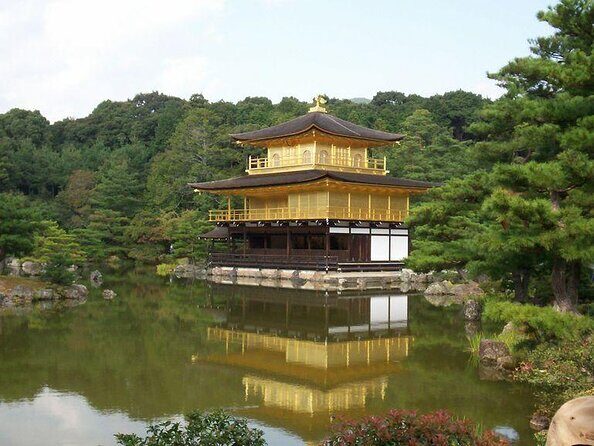
- Golden Pavilion with reflection views: Kinkaku-ji is the headline, with time set aside to see it properly.
- A guide who adjusts to mixed ages: I found this route particularly well-suited when your group ranges from teens to seniors.
A Kyoto day that starts at Kyoto Station and ends back there
If you’re short on time and Kyoto feels big, this one-day walk is a smart way to get your bearings. You start at Kyoto Station building 901 Higashishiokōjichō at 8:00 am, then spend the day working west into Arashiyama before finishing at Kinkaku-ji. The best part is that you’re not left figuring out transfers, where to stand for the right views, or how long each stop will realistically take.
This is designed for first-time visitors, mainly because the guide handles the story and the flow. You get history and cultural context at the places that matter, without having to research every sign in the moment. And since it’s a private tour, you’re less likely to feel pushed along by strangers or split up in crowds.
Timing matters here. The day is long enough to hit the highlights, but it’s still a walking itinerary, not a bus-and-see-everything-by-window situation. If you like Kyoto best when you’re moving through neighborhoods and getting small moments of scenery between major sights, you’ll enjoy this format.
Two practical notes before you commit:
- You’ll pay extra for admissions and transit (more on that in a moment).
- You should assume moderate walking. One stop includes a slightly steep climb, so comfortable shoes are non-negotiable.
You can also read our reviews of more walking tours in Kyoto



Monkey Park Iwatayama: the best early-morning wild-macaque stop
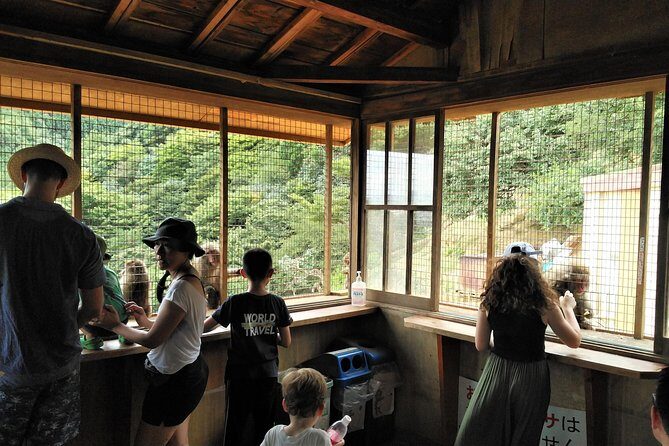
Your first stop is Monkey Park Iwatayama. It’s about a 15-minute walk from Saga Arashiyama Station, followed by a climb on a slightly steep mountain path. The payoff is a spot often described as a paradise for wild Japanese macaques, with about 120 monkeys in the area.
This stop is priced with an admission fee (not included), so consider it a “pay to play” moment. If you’re the type who loves seeing wildlife in its natural setting, this is one of the most memorable ways to start Arashiyama. You’re not just watching temples and photo lines—you’re watching animals, and the energy of the place changes minute by minute.
The practical side:
- Bring sunscreen and plan for sun exposure, especially earlier in the day.
- Wear shoes with grip for the path, since you’re on a climb and there’s plenty of foot traffic near viewpoints.
- Because the route involves walking uphill, keep your pace steady. A moderate fitness level is all you need, but don’t treat this like a casual stroll.
If your group includes teens and older adults, this is also a place where a good guide earns their keep. A strong guide can pace the group, offer context, and keep everyone together while you take in the view and the animals.
Togetsukyo Bridge, Kameyama Park, and Bamboo Forest Street
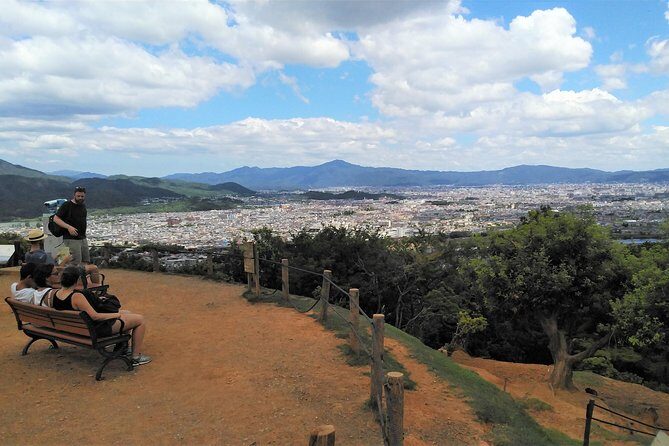
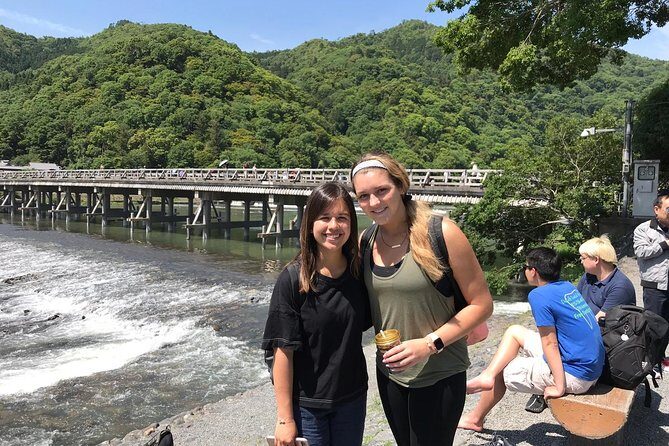
After monkeys, you shift into scenery mode. Next up is Togetsukyo Bridge. This is a free stop (no admission fee) and it’s timed at around 20 minutes. It’s one of Arashiyama’s signature views, and the setting has a long association with the elite class of Japan in the past. Even if you don’t know the full historical details, you’ll feel why this spot keeps drawing people: river views, a classic bridge silhouette, and a sense of pace that’s calmer than the city center.
Then you cross into Kameyama Park on the other side of Arashiyama. This is also free, and you’ll have about 30 minutes here. The main reason to go is the observatory view—steep cliffs and the river below. This stop gives you a breather. You’re not just taking photos; you’re getting a higher perspective that helps the Arashiyama valley make sense.
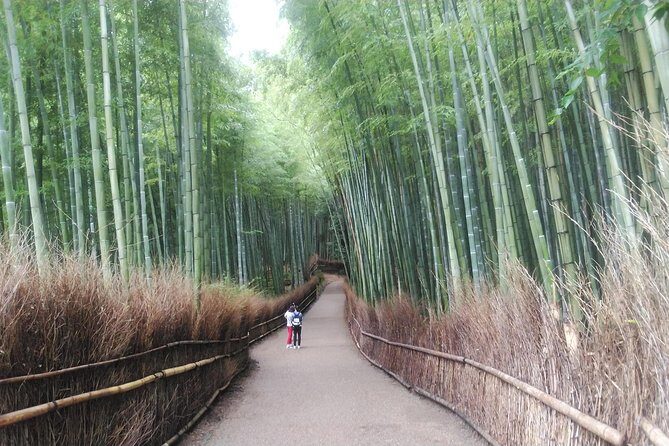
After that, it’s Bamboo Forest Street. Expect about 20 minutes of walking through the world-famous bamboo grove. The appeal is the serenity: sky-high green bamboo pillars, rustling in the wind, and that slightly magical feeling of being surrounded by something that feels both structured and wild. Even if you’ve seen bamboo images before, being inside the grove is different from looking at a screen.
The trade-off with bamboo is simple: timing and crowd energy. This tour gives you a set block of time so you can enjoy it without losing the whole morning waiting around. You’ll still want to move at walking pace, not park and stare for 30 minutes. But for a day plan, that’s actually a good thing.
Tenryu-ji Temple: UNESCO garden time you’ll understand
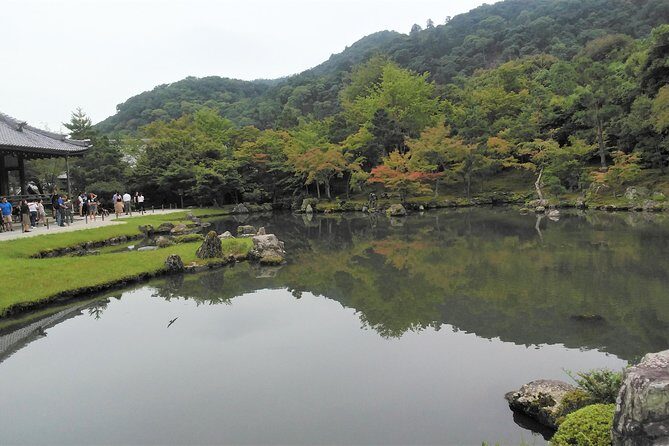
Tenryu-ji Temple is where the day turns more contemplative. You get about 30 minutes here, and admission is not included. This temple is registered as a UNESCO World Cultural Heritage Site, and the founding story is part of why it’s important: it was built by the shogun in 1339 to appease the late Emperor’s spirit.
That detail matters because it changes how you look at the garden. A garden in Japan isn’t just decoration. It’s meant to communicate meaning—memory, nature, and ritual reflection. With a guide in front of you, you’re more likely to catch those ideas instead of simply walking through.
What you can expect:
- Enough time to see the core areas without feeling rushed.
- Cultural context tied to why the temple exists in the first place.
- A slower tempo compared to bamboo and bridge stops.
This is also a good place for anyone who wants to balance “iconic Kyoto photo spots” with a deeper sense of why things are the way they are. If your group includes people who don’t usually care about temples, this is still a strong stop because the story connects directly to the garden setting.
Kinkakuji Temple: the Golden Pavilion and why it’s instantly recognizable
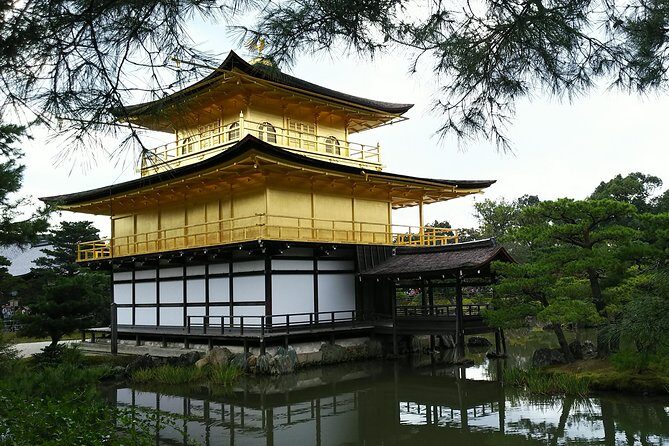
Then comes the headline: Kinkakuji, also called Kinkaku-ji Temple or the Golden Pavilion. This stop runs about 50 minutes, and admission is not included.
If you’re even lightly familiar with Kyoto, you’ve probably seen images of Kinkaku-ji. The iconic look is the point, and you’ll also get the chance to see the reflection effects that draw people in. The guide context helps too: the place is tied to Kyoto’s visual identity, not just its architecture.
There’s also a fun pop-culture footnote in the way the temple is presented. The admission ticket has appeared in a scene in the movie Bohemian Rhapsody. It’s the kind of detail you either love or ignore—but if you love these small connections, it makes the stop feel less like a strict “tourist checklist” moment.
Practical tips for enjoying this stop:
- Start mentally with the idea that this is the most famous destination on your route, so keep your expectations flexible.
- Use your 50 minutes to see it from the angles the space offers rather than spending all your time only in one spot.
- Bring patience for the fact that it’s popular. You’re not doing it on a quiet weekday morning hidden in a corner.
This is the moment where the day justifies itself. Arashiyama gets you the atmosphere, and Kinkaku-ji lands the iconic payoff.

Price and logistics: what you pay for, what you pay extra
The tour price is $128.35 per person. That covers the guide fare. Everything else is add-on.
Here’s what’s not included:
- Admission fees: ¥2,100 per person
- Public transportation fare: ¥1,200 per person
- Food & drink: not included
Is it good value? For a private walking day plan, yes—mainly because the guide saves you from the biggest time drains. You’re not guessing the route between Arashiyama and the temple zone. You’re not decoding which sites charge admission and how that fits into a timed schedule. And you’re not spending your morning asking strangers for directions.
The big reason to budget the extra fees up front: it’s easy to underestimate total costs when the day includes multiple paid attractions. By planning for the ¥2,100 admission and ¥1,200 transit, you avoid the end-of-day surprise feeling.
Also remember the tour requires good weather. If weather shuts things down, you should expect either a different date or a full refund. That’s a key detail in Kyoto, because rain can turn temple walking from pleasant to annoying fast.
Finally, this route is near public transportation, which matters. You’re starting at Kyoto Station, and you’re also using the transit network to reach the Arashiyama side. That makes the day easier to enjoy even if you arrive from another part of Japan that morning.
Getting the most out of a private Kyoto walking tour
A private tour is only “private” on paper unless the guide knows how to manage the real-world stuff: pacing, timing, and different energy levels in one group. The quality of the experience here really depends on the person leading you.
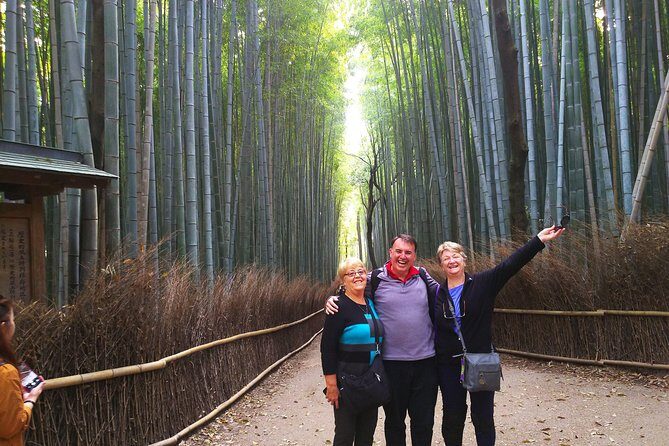
One guide highlighted in the feedback is Barbara, described as outstanding—historical and cultural highlights handled with a professional, friendly style. Another key takeaway: the tour works across ages. One group included people from 17 up to 70, and the guide was accommodating to that range. That tells me the route isn’t just for fit hikers. It’s designed for people who want structure and context without needing to be speed-walking athletes.
A few practical things you should do to match the pace:
- Wear supportive shoes. The monkey park route includes a climb, and you’ll walk between multiple stops.
- Use sun protection. There’s outdoor time before you get to temple shade.
- Bring water. Food isn’t included, so plan for breaks that suit you.
Accessibility notes are also important. The tour is described as accessible for those with limited eye sight and limited mobility, but it’s not stroller accessible. If you’re traveling with mobility aids or a stroller, this is worth checking in advance so you don’t get a painful surprise when walking paths get narrow or steep.
One small perk that sounds minor until you need it: animals or pets are allowed.
Who should book this Kyoto one-day tour?
Book this if:
- You want a single-day plan that hits Arashiyama and Kinkaku-ji without you doing logistics math.
- You’re a first-time Kyoto visitor and you like learning while you go.
- Your group includes mixed ages and you want a guide who can keep everyone on track.
- You enjoy a mix of nature, temples, and iconic visuals rather than only one theme.
Consider skipping (or choosing a different format) if:
- You hate paying extra on the spot. Admissions and transit are additional costs.
- You’re expecting minimal walking or a stroller-friendly route. This one is not set up for strollers.
- You want a totally slow, free-form day where you wander without a schedule. This is a guided, timed loop.
This tour is at its best when you treat it like a well-planned sampler. You’ll leave with Kyoto’s signature memories: bamboo calm, a monkey encounter, UNESCO temple context, and the Golden Pavilion’s iconic look.
Should you book this one-day Arashiyama and Golden Pavilion walk?
Yes, if your goal is efficiency with solid context. The route covers the Kyoto highlights that most people actually come to see, and a guide helps you understand what you’re looking at instead of just collecting photos. For $128.35, the “included guide fare” makes sense because it saves you from the mental load of planning a west-Kyoto day by yourself.
Just go in with your eyes open. You’ll pay extra for admissions and transport, and you’ll do a fair amount of walking, including a slightly steep climb at the start. If that fits your pace and budget, this is an easy yes for a confident one-day Kyoto experience.
FAQ
How long is the Kyoto Arashiyama & Golden Pavilion one-day walking tour?
The tour runs about 7 hours 30 minutes.
What time does the tour start, and where is the meeting point?
It starts at 8:00 am. The meeting point is Kyoto Station Building 901 Higashishiokōjichō, Shimogyo Ward, Kyoto.
Is this tour private?
Yes. It’s a private tour/activity, so only your group participates.
What is included in the price?
The included item is the guide fare.
What additional costs should I budget for during the tour?
Admission fees are ¥2,100 per person, and public transportation fare is ¥1,200 per person. Food and drink are not included.
Which stops are part of the itinerary?
You’ll visit Monkey Park Iwatayama, Togetsukyo Bridge, Kameyama Park, Bamboo Forest Street, Tenryu-ji Temple, and Kinkakuji Temple.
Are temple and park admission tickets included?
No. Admission tickets are not included for Monkey Park Iwatayama, Tenryu-ji Temple, and Kinkakuji Temple.
Is the tour stroller accessible?
No. It is not stroller accessible, though it is described as accessible for those with limited mobility.
What if weather is bad or I need to cancel?
The tour requires good weather. If it’s canceled due to poor weather, you’ll be offered a different date or a full refund. You can cancel for a full refund up to 24 hours in advance.