REVIEW · KYOTO
Kyoto: Descending Arashiyama (Private)
Book on Viator →Operated by An Design · Bookable on Viator
Arashiyama without the map stress. This private, small-group walking tour lets you move through Kyoto’s Arashiyama area with a guide who handles the order, the turns, and the stories so you can focus on the sights, not the route. You start at Togetsukyo Bridge, then work through temple grounds, tea, and Sagano Bamboo Grove.
I really like two things: first, the pace is built for seeing a lot without feeling rushed, with a small group of up to 7 people. Second, you get uncommon stops like Otagi Nenbutsu-ji, where you’ll spend real time with the 1,200 stone Buddhas, plus the memorial-stone atmosphere at Adashino Nembetsu-ji.
One consideration: you’ll need to plan for cash for admission tickets (5,000 yen per person), and lunch is not included. Also, it’s a walking day with moderate fitness required, and strollers can’t go inside the temple sites.
In This Review
- Key Points to Know Before You Go
- Why This Arashiyama Tour Feels Easier Than Doing It Alone
- Getting Oriented: Togetsukyo Bridge First
- Tenryu-ji Temple: Zen Gardens Without the Guesswork
- Otagi Nenbutsu-ji: The 1,200 Stone Buddhas Experience
- Ayuchaya Hiranoya: Tea and Sweets as a Reset
- Adashino Nembetsu-ji and Gio-ji: Memorial Stones and Mossy Quiet
- Okochi Sanso Garden and the Sagano Bamboo Grove Finale
- Price and Value: What $690 Covers (and What It Doesn’t)
- Logistics You’ll Feel: Meeting Point, Walking Pace, and Stroller Rules
- Who This Tour Suits Best (and Who Might Skip It)
- Should You Book This Arashiyama Private Tour?
- FAQ
- How long is the Kyoto Descending Arashiyama tour?
- What time does the tour start?
- Where do we meet for the tour?
- Is this a private tour?
- What is the group size limit?
- Are admission tickets included in the price?
- Is lunch included?
- What kind of ticket do I receive?
- Can I bring a stroller?
- What fitness level do I need?
- What if the weather is bad?
Key Points to Know Before You Go
- Guide-led route in Arashiyama so you don’t waste time figuring out where to go next
- Otagi Nenbutsu-ji’s 1,200 Buddha statues with time to look closely
- Adashino Nembetsu-ji’s 8,000+ memorial stones plus a short bamboo grove walk
- Tea break at Ayuchaya Hiranoya tied to the Edo period
- Sagano Bamboo Grove trail as the grand finale after quieter temple stops
- Private booking with a small cap (your group, and the day’s group is kept small)
Why This Arashiyama Tour Feels Easier Than Doing It Alone
Arashiyama can feel like a choose-your-own-adventure—only with crowds, confusing footpaths, and a lot of stops that are close on a map but farther on your feet. This tour is designed to take the planning off your shoulders. You start at Randen Arashiyama Station area, meet your guide, and then follow a logical downhill flow through the neighborhood.
The total time is about 7 hours 30 minutes, starting at 9:30 am. That timing matters. In the morning, the area is usually more manageable, and you’ll spend prime sight time at the big places before the day gets louder.
The group stays small, capped at 7 travelers, so questions don’t get lost in the shuffle. If you’ve ever tried to herd yourself through Arashiyama with a phone map while everyone else is also stopping for photos, you’ll appreciate how much smoother this feels.
You can also read our reviews of more private tours in Kyoto


Getting Oriented: Togetsukyo Bridge First
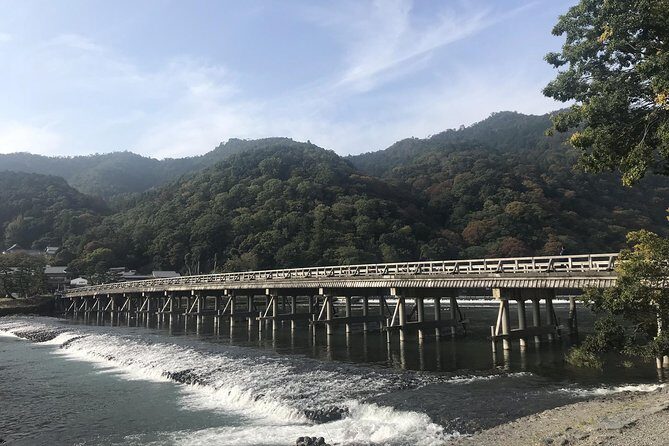
You begin at Togetsukyo Bridge, one of the iconic Kyoto views people recognize instantly from pictures. The good news: you don’t waste your morning sprinting for a “must-see.” You get a focused 20-minute start here with admission-free access.
What I like about starting at the bridge is what it does mentally. It gives you a reference point. You can look out over the river, understand which direction things spread, then continue on with a clearer sense of where you are.
Photo tip that doesn’t require special gear: take your first pictures quickly, then slow down. If you stay too long at the start, you might feel rushed later. This tour keeps you moving, and that helps you enjoy the day instead of clock-watching.
Tenryu-ji Temple: Zen Gardens Without the Guesswork
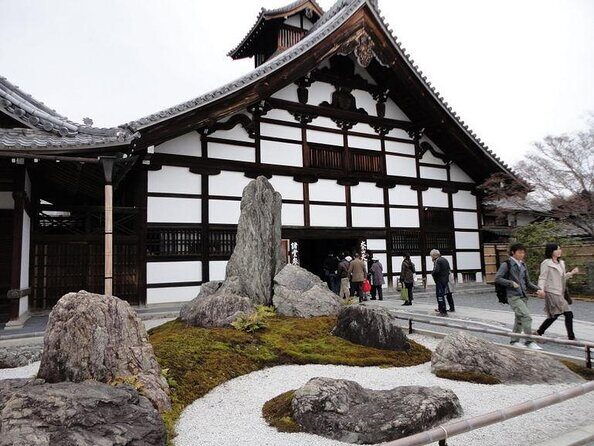
Next is Tenryu-ji Temple, one of the earlier Zen temples in Japan and famous for its Zen garden. The stop is about one hour, and entrance tickets are not included in the tour price.
This is a classic case where a guide earns their fee. A Zen garden isn’t always obvious if you’re just walking through looking for the big centerpiece. With a guide pointing out what to notice—lines, pacing, and how different vantage points change the feel—you’ll leave with a clearer sense of why people find it calming.
Practical note: keep your timing sensible at Tenryu-ji. You’ll want time to enter, look, and absorb. If you rush straight to the best-looking photo spot, you’ll miss the garden’s slower rhythm.
Otagi Nenbutsu-ji: The 1,200 Stone Buddhas Experience
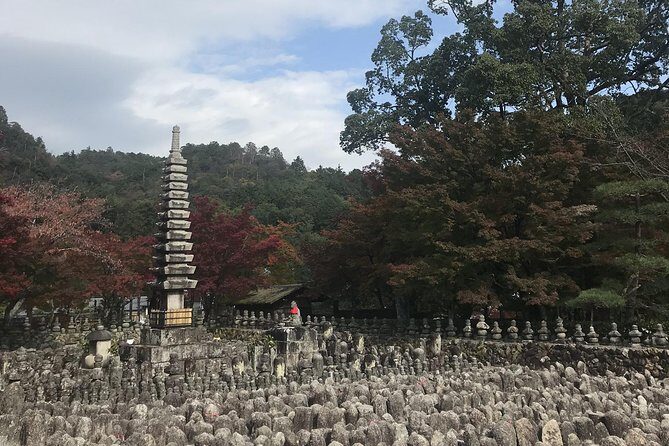
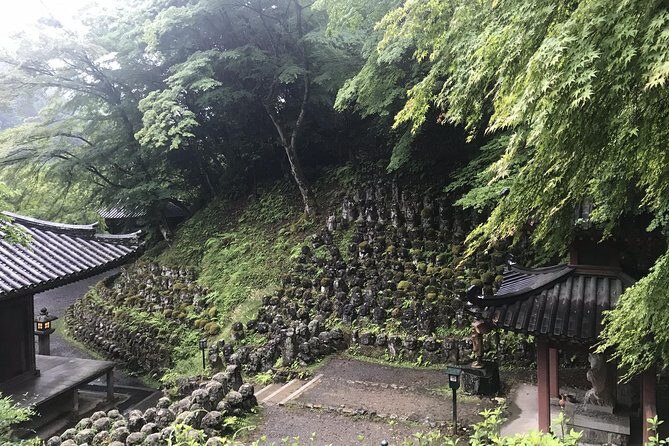
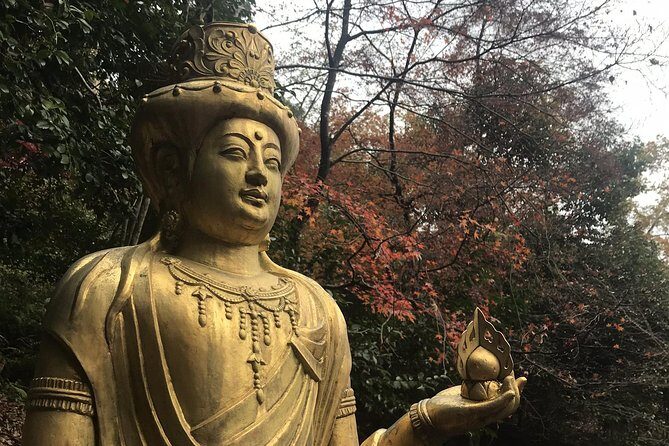
Then comes one of the most memorable parts of the day: Otagi Nenbutsu-ji Temple. Here, you walk the grounds with history going back to the Heian period, and you get time with the 1,200 stone Buddha statues.
This stop is about one hour, and the admission ticket is not included. The reason it stands out is scale. It’s not just one statue you photograph and move on. You spend time walking among many. The “wow” lands after a minute or two, when you realize how dense the scene is.
I like that the experience is built around looking, not sprinting. With the guide explaining what you’re seeing and where the statues fit into the temple’s long background, the stone figures stop being random decoration and start feeling like a coherent, human project.
If you’re the kind of person who enjoys detail—faces, postures, how the grounds are arranged—this is a perfect match.
Ayuchaya Hiranoya: Tea and Sweets as a Reset
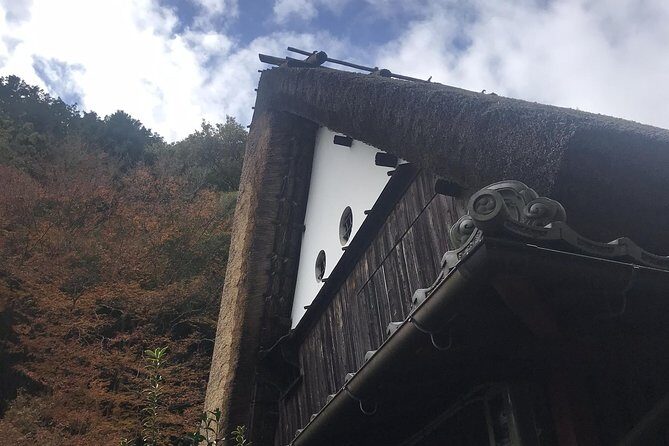
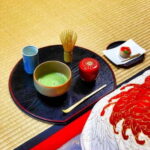
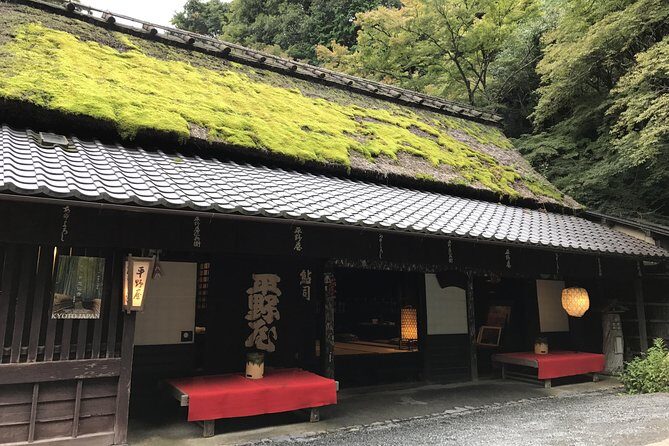
After temple time, you’ll head to Ayuchaya Hiranoya for tea and sweets. This place traces its roots to the Edo period, and the stop is about one hour.
Entrance here is included in the sense that you’re part of the guided visit, but the tour does not list it as a separate ticketed attraction—so you’ll treat it as a proper break rather than another paid entry. What you do pay attention to is the rhythm. You’ll have been walking, climbing a bit between grounds, and reading signs. This café stop gives you a chance to catch your breath and refill your energy before the later temple clusters.
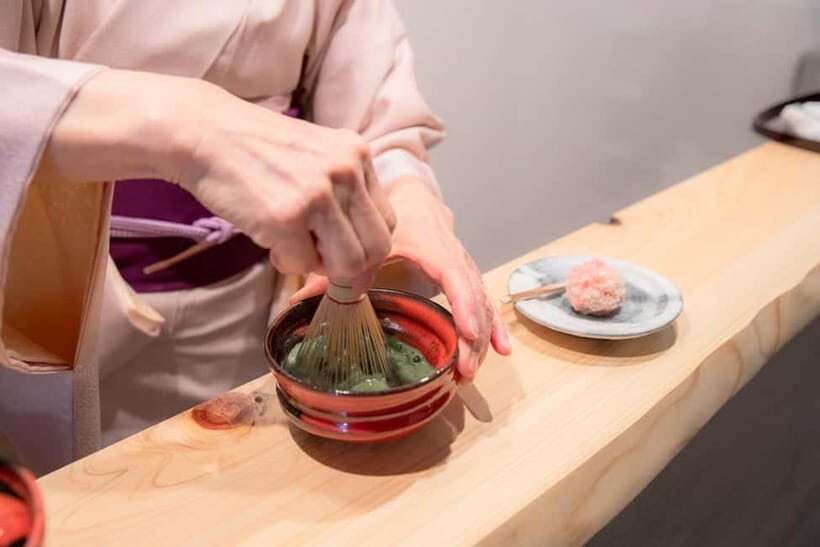
Also, tea and sweets are an honest way to taste Kyoto culture without turning your day into a food quest. You’re not forced into a long lunch. You get something sweet, you cool down, and you stay ready for the quieter, more atmospheric stops later.

Adashino Nembetsu-ji and Gio-ji: Memorial Stones and Mossy Quiet
Next up is Adashino Nembetsu-ji Temple. This one is small in footprint but big in atmosphere. You’ll see over 8,000 memorial stones collected from the surrounding mountains, plus you walk through a picturesque bamboo grove on the grounds. The stop is about one hour, with admission not included.
What makes Adashino work on a walking tour is tone. It’s not trying to be flashy. It’s built around memory and place. If you want Arashiyama to feel reflective instead of only scenic, this is where that happens.
Then you move to Gio-ji Temple for about 30 minutes. Gio-ji was once a nunnery founded by two ex-geisha, and you’ll walk through a moss garden surrounded by bamboo. Admission is not included here either.
This is the kind of stop you’ll appreciate more if you slow down. You’re in a shorter time block, but moss gardens reward patience. The guide’s job here is to keep you from skimming. You’ll get enough time to notice the texture and the way bamboo frames the garden.
If you’re hoping to see “temples” in the abstract, this tour might feel like just another set of photo stops. If you want temples with human stories—who founded them, what they became, how the grounds were designed—it’s a stronger match.
Okochi Sanso Garden and the Sagano Bamboo Grove Finale
The last big experience is Okochi Sanso Garden, where you spend about one hour. This is the sprawling estate of a well-known silent film actor. The views from here are described as some of the best in all of Arashiyama, and you’ll have time to appreciate the outlook rather than just stand at a viewpoint and rush off.
Entrance is not included. The practical value of this stop is that it changes the way you see Arashiyama. Earlier stops are about walking the grounds and staying close to the scenery. Here, you get height and perspective, so the whole area makes more sense in one sweep.
Finally, you end with the Bamboo Forest Trail at Sagano Bamboo Grove for about 30 minutes. Entrance tickets are not included. Yes, the bamboo is famous. But the best part of doing it as the closing act is you’re already emotionally set up for it by the quieter, less touristy temple sequence before it.
You’ll be able to enjoy the bamboo without treating it like an obstacle course. And if you’re sensitive to crowds, this timing helps.
Price and Value: What $690 Covers (and What It Doesn’t)
The price is $690 per group, and it’s set for up to 4 people. Duration is about 7 hours 30 minutes, and you get a professional guide service plus a mobile ticket.
What’s not included matters. You’ll need 5,000 yen cash per person for admission tickets. Lunch also isn’t included, and it’s capped at 1,500 yen per guest. That means the tour is built around covering the guiding and the route, while you budget for entries and one meal portion yourself.
So is $690 worth it? In my view, it works when you want more than “see bamboo, take photos, leave.” You’re paying for:
- a planned route that saves decision-making time,
- access to multiple temple experiences in a single day without bouncing around,
- and a guide who connects the garden and temple storytelling to what you actually see in front of you.
If you’re two or four people traveling together, the per-person cost drops quickly compared with booking separate tickets and trying to self-navigate every stop. If you’re a solo traveler on a tight budget, you might prefer a cheaper bus-and-walk plan. But if you care about the details—like understanding why Otagi Nenbutsu-ji feels so intense or why the moss garden at Gio-ji is special—this format pays you back.
Logistics You’ll Feel: Meeting Point, Walking Pace, and Stroller Rules
You meet at Randen Arashiyama Station Center, at 20-2 Tsukurimichi-cho. The tour ends back at the same meeting point. That matters because Arashiyama can be annoying to escape if you finish far from transit.
The tour is labeled for moderate physical fitness. You’ll be walking between multiple temple grounds and garden areas. You should wear comfortable shoes with good grip. If you’re thinking about sandals, don’t. Kyoto sidewalks and temple paths can be uneven, and you’ll want stability.
Strollers are available, but there’s a catch: they’re not allowed inside the temple sites. You can store them at each site’s reception desk. That means you and your group should be prepared for short, carry-and-go moments.
Also, the tour requires good weather. If conditions are poor, you’ll be offered a different date or a full refund. That’s a big deal in Kyoto, because plans are only fun when you’re comfortable.
Who This Tour Suits Best (and Who Might Skip It)
This tour is a strong fit if:
- you’re visiting Kyoto for the first time and don’t want to research every turn,
- you like temples and gardens that come with context, not just views,
- and you want a day that covers several high-impact places without feeling like a race.
It might be less ideal if:
- you hate walking for long stretches,
- you’re allergic to paying extra for tickets and want everything prepaid,
- or you prefer a fully independent schedule with no guide pacing.
Should You Book This Arashiyama Private Tour?
If your idea of a great Kyoto day is temples, bamboo, and a bit of off-the-beaten-path calm, then yes, I’d book this. The big win is the guide-led order: you get the famous highlights and the more unusual stops in a flow that actually makes sense on foot.
The only real reason to hesitate is budget and ticket handling. You’ll need cash for admission tickets and you’ll pay for lunch yourself (with a set spending cap). If that works for you, you’re set up for a memorable Arashiyama day that doesn’t feel like you’re just ticking boxes.
FAQ
How long is the Kyoto Descending Arashiyama tour?
It runs for about 7 hours 30 minutes.
What time does the tour start?
The start time is 9:30 am.
Where do we meet for the tour?
You meet at Randen Arashiyama Station Center, 20-2 Tsukurimichi-cho, right by the station area.
Is this a private tour?
Yes. Only your group participates.
What is the group size limit?
The tour is small-group and has a maximum of 7 travelers.
Are admission tickets included in the price?
No. Each guest needs to bring an additional 5,000 yen in cash for admission tickets.
Is lunch included?
Lunch is not included. The lunch cost should not exceed 1,500 yen per guest.
What kind of ticket do I receive?
The tour uses a mobile ticket.
Can I bring a stroller?
Strollers are available as you walk between sites, but strollers will not be allowed inside the sites. You can store them at the reception desk of each site.
What fitness level do I need?
The tour is listed as requiring moderate physical fitness.
What if the weather is bad?
This experience requires good weather. If it’s canceled due to poor weather, you’ll be offered a different date or a full refund.