REVIEW · KYOTO
Kyoto: Fushimi Inari Taisha Night Tour with Guide
Book on GetYourGuide →Operated by DeepExperience, Inc. · Bookable on GetYourGuide
Fushimi Inari at night feels like a secret Kyoto ritual. I love walking through the torii tunnel under dim light, where the shadows stretch across the gates, and I also love how the guide turns the place from photos into meaning with shrine history you can actually use to understand what you’re seeing.
One thing to plan for: it’s a night walk on uneven paths, so comfortable shoes matter and the route isn’t a good fit if you have mobility limitations.
In This Review
- Key things I’d circle before you go
- Why Fushimi Inari Taisha feels different after dark
- Meeting at Daily Yamazaki: the easiest start point in Kyoto
- The 2-hour walk: torii gates, shrine quiet, and guided context
- The views: where Kyoto’s lights meet the torii
- The guide makes it: enthusiasm, patience, and good conversation
- Photography rules and flashlight tips for a calmer shrine visit
- Price and value: is $49 for 2 hours worth it?
- Who this night tour suits best (and who should reconsider)
- What to bring so you’re comfortable on the night walk
- Should you book the Kyoto Fushimi Inari night tour with guide?
- FAQ
- Where is the meeting point for the Fushimi Inari Taisha night tour?
- How long is the tour?
- What is the tour price?
- Where does the tour finish?
- Is the tour private or shared?
- What languages are offered by the guide?
- Is flash photography allowed during the tour?
- What should I bring?
- Is transportation included?
- Is the tour suitable for people with mobility impairments?
Key things I’d circle before you go
- Find your guide fast: meet in front of Daily Yamazaki Fushimi Inari Taisha-mae store, with a yellow DeepExperience sign
- A calmer shrine experience: access to areas without the daytime crush
- A true 2-hour rhythm: timed, guided pacing that makes it easier to enjoy rather than rush
- Better photos with the rules: flashlight and camera are fine, but flash photography is not allowed
- Private group feel: it’s a private-group tour, so you’re not swallowed by a crowd
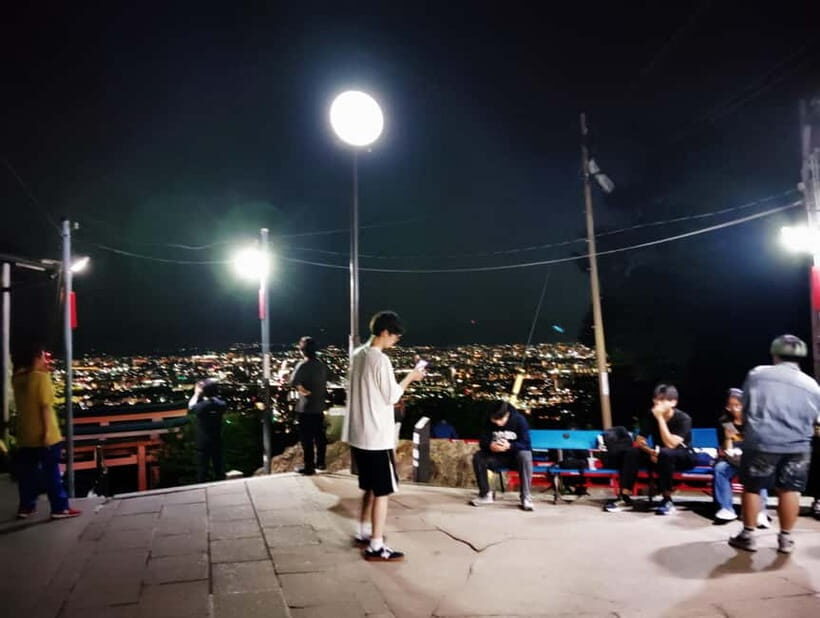
- Night views from the heights: Kyoto’s distant lights shimmer out from the mountaintop area
Why Fushimi Inari Taisha feels different after dark
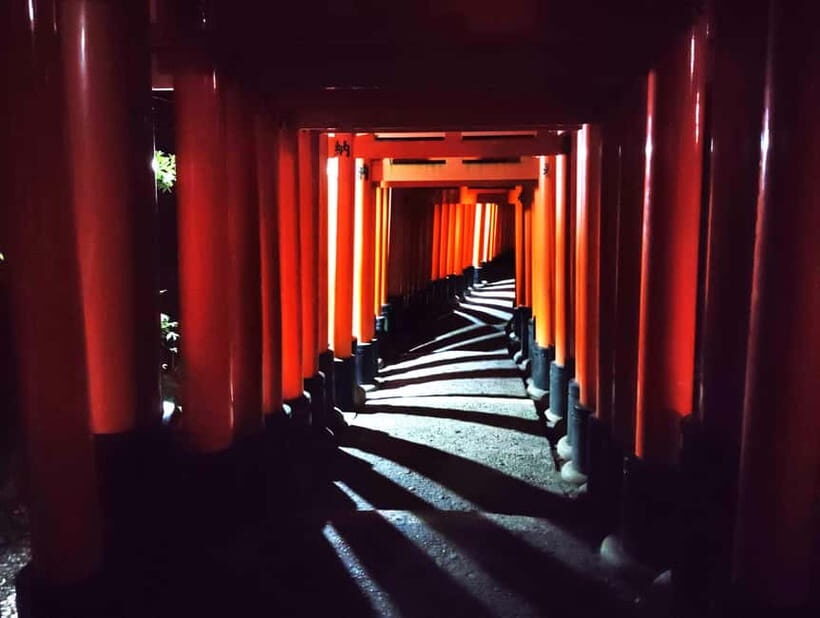
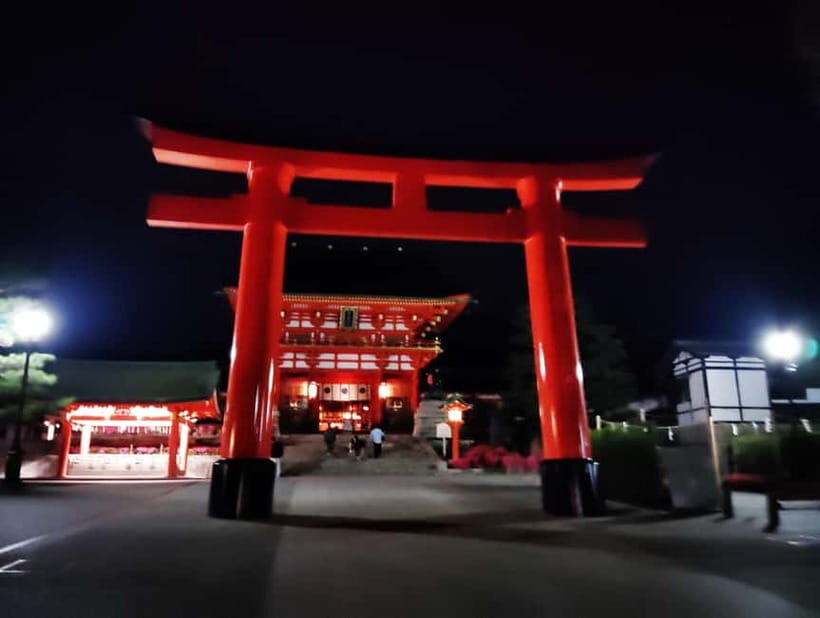
Daytime at Fushimi Inari Taisha is famous for a reason. But night changes the whole mood. The vermilion torii gates still stack up across the hillside, yet the lighting flattens the noise you get in daylight, so your eyes start noticing smaller details—stone textures, guardian forms, and the way the path bends into the trees.
What I really like about the night version is the quiet pacing. You’re not trying to squeeze past people, so you can slow down and follow the guide’s explanations without losing your place. That’s the difference between seeing the gates and actually feeling them.
Also, the air feels different once you’re deeper in the forest paths—colder, calmer, and more “inside” the shrine grounds. Even if you’ve been to Kyoto before, this one hits because it shifts your brain into temple mode: walk, listen, look closely, repeat.
You can also read our reviews of more guided tours in Kyoto

Meeting at Daily Yamazaki: the easiest start point in Kyoto
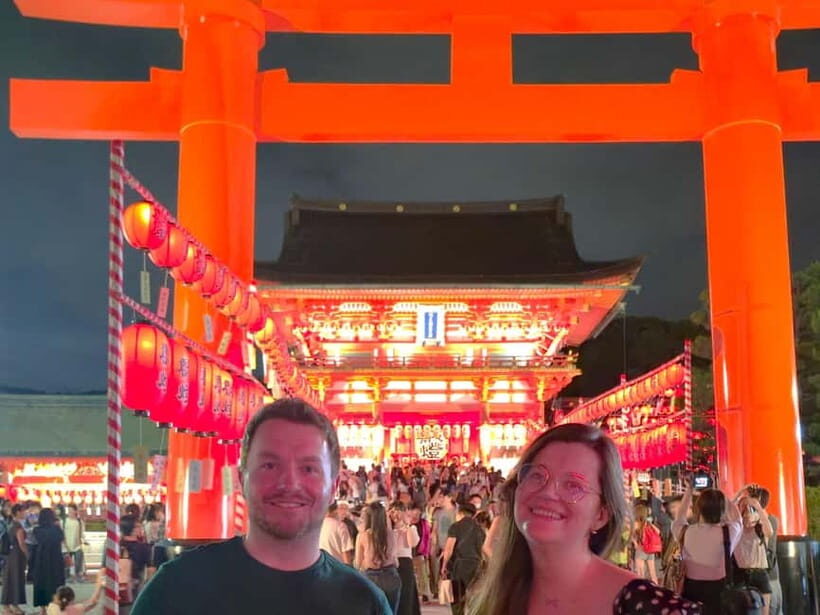
Your tour starts at a spot that’s easy to locate in the Fushimi Inari area: in front of Daily Yamazaki Fushimi Inari Taisha-mae store. Your guide will be waiting there holding a yellow sign panel that says DeepExperience, so you don’t have to guess which group to join.
I think that matters more than people realize. At popular Kyoto sites, half the “experience” can turn into logistics stress—figuring out where to meet, which exit to use, which direction the crowd is moving. Here, you get a clear landmark and a visible sign, which sets you up to enjoy the walk from minute one.
The tour is 2 hours, and it’s designed to be a walk with guidance, not a long bus-style transfer or a rushed checklist. You’ll also finish near Inari Station, so it’s practical for grabbing transit after your night wandering.
The 2-hour walk: torii gates, shrine quiet, and guided context
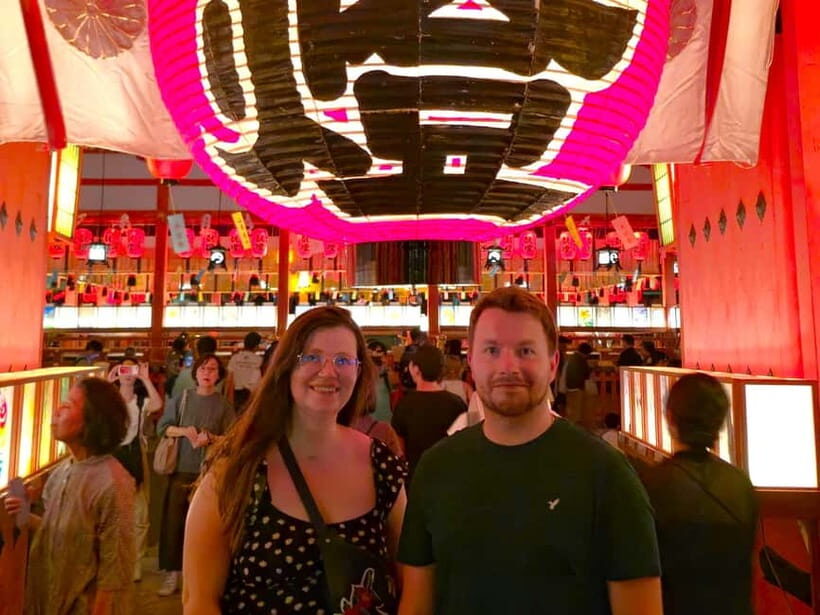
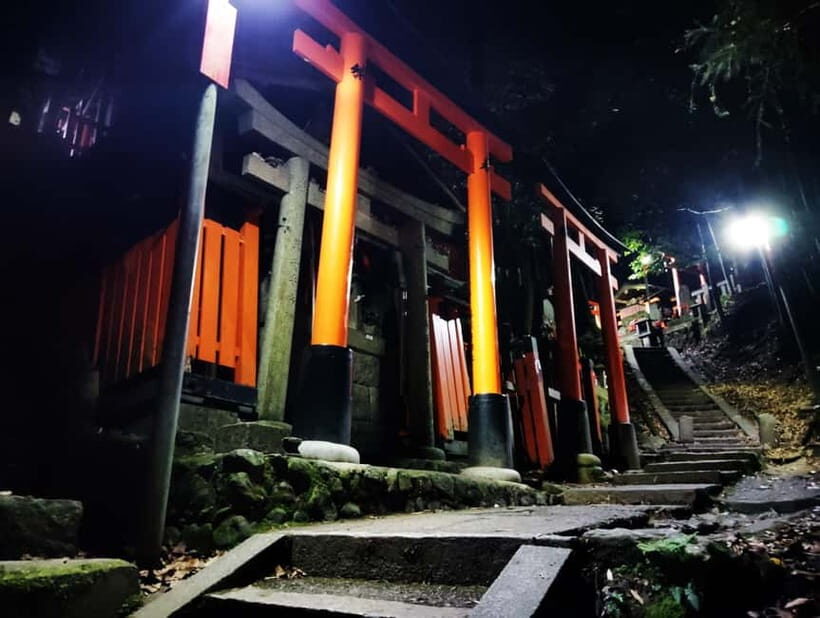
The core of this experience is a guided night walk through Fushimi Inari Taisha. You’ll begin at the shrine grounds and move along the torii-studded mountain paths. The big idea is simple: you get the famous torii tunnel effect, but with the shrine feeling more like a sacred walkway than a daytime photo set.
A good guide changes what you notice. Instead of thinking torii, torii, torii, you start connecting what you see to why it’s there—how the shrine fits into Kyoto’s spiritual world and what the site represents. The tour includes sightseeing and guided walking, and that guidance is what helps you understand the flow of the shrine rather than just following a string of gates.
You’ll also benefit from the tour’s focus on areas without crowds. That doesn’t mean the shrine is empty, but it does mean you’re more likely to experience pockets of stillness. Those are the moments that make the night special: you’re walking under the gates while the forest quiet settles around you, with fewer interruptions.
Possible drawback to keep in mind: if you’re sensitive to uneven ground or long stretches of standing and walking, plan carefully. The paths can be rough and dark, so you’ll want to pace yourself and use the guide’s timing rather than pushing ahead.
The views: where Kyoto’s lights meet the torii
At some point during the walk, the atmosphere shifts from “temple corridor” to “lookout moment.” From the mountaintop area, Kyoto’s distant lights appear like scattered points beneath you. It’s a simple view, but it lands well at night because it contrasts with the quiet motion of the shrine path.
I like this part because it gives you a mental reward. You’ve been walking under gates and through forest hush, and then you get a wider perspective—Kyoto as lights, shrine as silhouette. It turns the walk into more of a journey than just an attraction visit.
If you’re the kind of person who enjoys looking at cities from viewpoints, this is where you’ll feel the “worth it” click. You don’t need a huge hike or complicated route planning—just the right time of day and a guided path that keeps you moving comfortably.
The guide makes it: enthusiasm, patience, and good conversation
This tour is built around a live guide, and the guide quality really shows in the feedback you can expect. The overall vibe is energetic and accommodating, with guides who are happy to adjust when the group needs a slower pace.
In particular, one guide named Judah (also referenced as Juraj) stands out for being informative and open to conversation. That matters because Fushimi Inari can feel like a blur of red gates if you don’t have context. With a guide who talks through what you’re seeing—and is patient when you’re tired—you end up learning without it turning into a lecture.
I also love tours where the guide doesn’t just point and move on. Here, the tour is described as a guided walk that helps you enjoy the experience at your comfort level. That makes it easier to stay present, take pictures without frantic rushing, and ask questions while things are still quiet around you.
You can also read our reviews of more evening experiences in Kyoto




Photography rules and flashlight tips for a calmer shrine visit
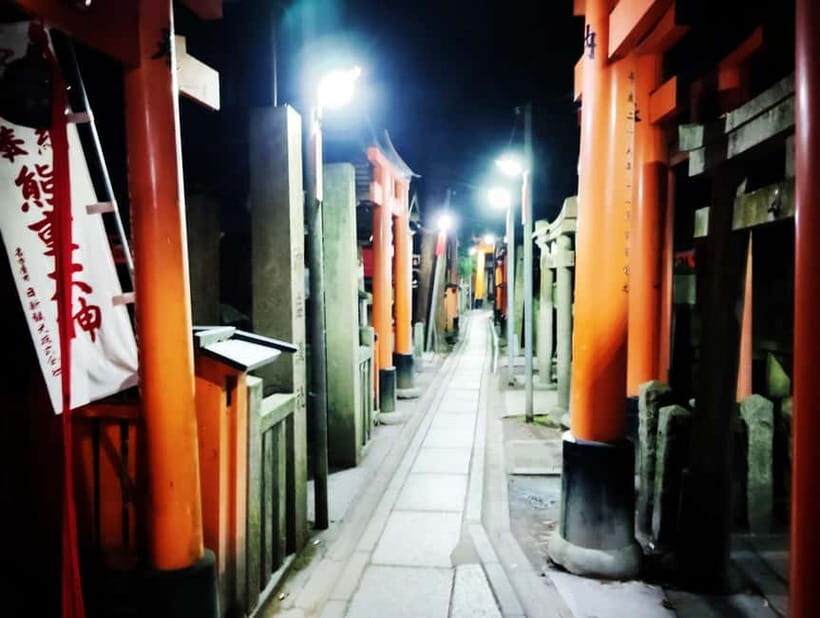
You’ll want a camera, but you’ll also want to follow the shrine’s photo etiquette. The tour notes that flash photography is not allowed, which is a good rule for keeping the atmosphere respectful and peaceful.
So how do you get usable night shots? Bring your camera and use whatever low-light settings you’re comfortable with. Also bring a flashlight, as the tour specifically recommends it. A flashlight helps you watch your footing on uneven ground and it can reduce the chance of stepping where you shouldn’t—especially when it’s dark and the path isn’t evenly lit.
One small but important mindset shift: plan to shoot fewer photos, but better ones. At night, you’ll get fewer “crowd-free angles,” and the best moments often come when you pause and let the gate shadows line up behind you. If you rush, you’ll miss that.
Price and value: is $49 for 2 hours worth it?
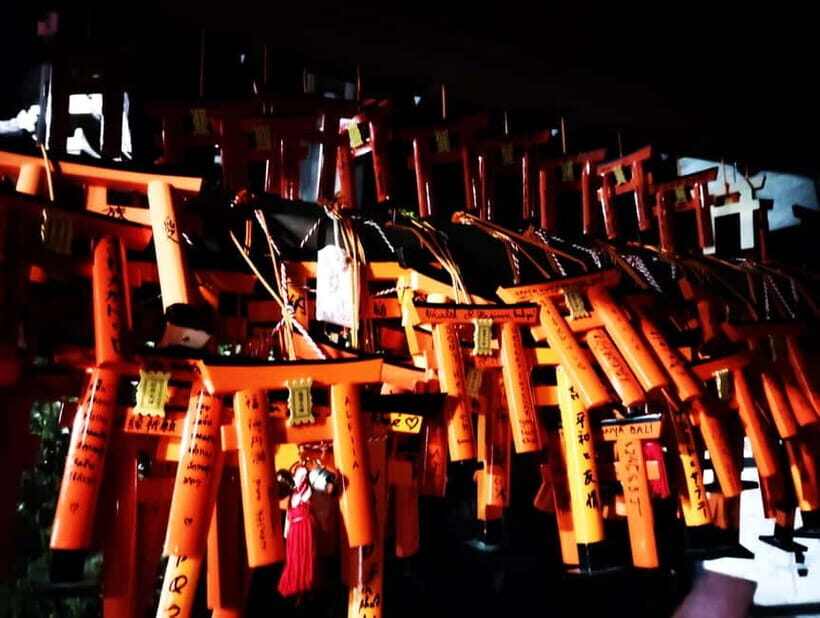
At $49 per person for a 2-hour guided night tour, you’re paying for three things: time, guidance, and a calmer environment. Nighttime access and guided interpretation cost money because it’s not just “show up and walk.” The tour is organized around a guided route, includes access to areas without daytime crowds, and offers English and Japanese support.
If you’ve been to popular Kyoto spots in the day, you know what crowded feels like. That can drain your energy and make it harder to learn anything. Here, the payoff is that you’re more likely to experience the shrine as a quiet place of worship and walk away with understanding—not just a collection of similar photos.
Also, it’s a private group format. Even if “private” doesn’t mean empty, it does tend to make the pacing more flexible. You’ll likely feel less like you’re being dragged with a mass of strangers and more like you’re sharing the night shrine with a small group and a guide.
Two costs you should plan for separately: transportation to and from the shrine and meals and drinks aren’t included. That’s normal, but it affects true value. If you’re already close to the Fushimi Inari area or you can budget for a short ride, the $49 makes more sense. If you’re coming from far away, add transit time and money so it doesn’t surprise you.
Who this night tour suits best (and who should reconsider)
This is a great fit if you want Kyoto’s iconic Fushimi Inari experience but prefer a calmer atmosphere. You’ll likely enjoy it if you:
- like walking at night when it’s cooler than daytime
- want guided context so the torii gates feel meaningful
- enjoy quieter sightseeing where you can slow down for photos
It’s less suitable if you need accessibility support. The tour specifically notes it’s not suitable for people with mobility impairments, likely because of uneven paths and night lighting.
It’s also not the best match if you hate walking. This is a walk tour, and the recommended flashlight plus comfortable shoes are there for a reason. The upside is that it’s only 2 hours, and guides have been described as patient with groups who need a slower pace.
What to bring so you’re comfortable on the night walk
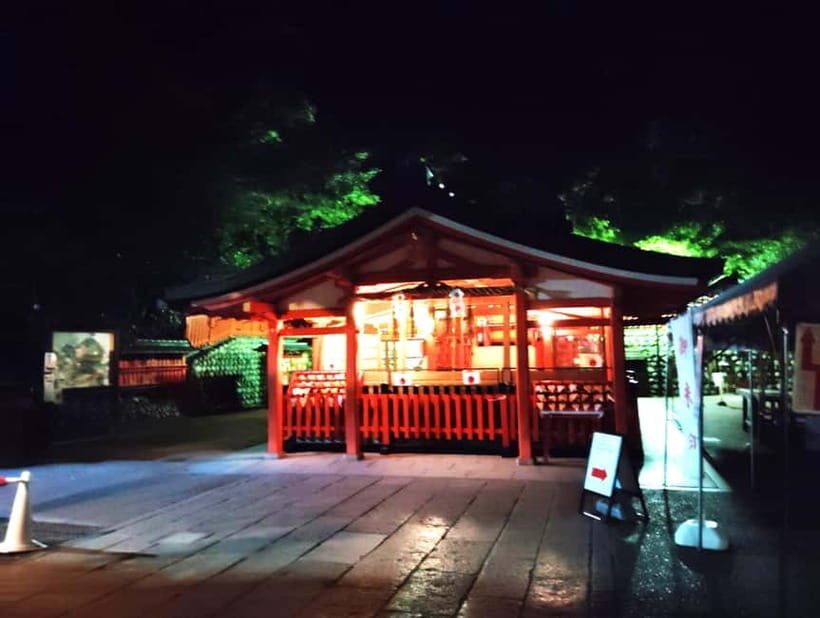
Bring a few practical items and you’ll enjoy the tour more:
- Comfortable shoes (uneven paths at night are no joke)
- Camera (but remember flash photography isn’t allowed)
- Weather-appropriate clothing (it’s at night, so plan for cooler conditions)
- Flashlight (helpful for footing and visibility)
If you’re the type who carries extra small comforts, consider adding a light layer you can adjust, and something to keep hands warm for holding your phone/camera. The tour itself doesn’t mention extras beyond the basics, but being comfortable helps you stay in the experience rather than thinking about your body.
Should you book the Kyoto Fushimi Inari night tour with guide?
I’d book this tour if you want the torii gates to feel quieter and more spiritual than the daytime version. The best reason is simple: guided context plus crowd-free moments at night. That combination makes it easier to enjoy the shrine as more than a photo stop.
If you’re traveling with someone who gets tired easily, you’ll likely appreciate the guide style described as accommodating and patient. If you’re a photographer, you’ll also enjoy the respectful approach since flash is not allowed, which keeps the whole place calmer.
But be honest with yourself about walking. If uneven, dark paths are a problem, choose another plan for Fushimi Inari. And if you’re only interested in a quick snapshot photo, you may find you could do it on your own—because the real value here is the guided night experience.
If your goal is to experience Kyoto’s most famous torii setting in a quieter mood, this is a solid pick.
FAQ
Where is the meeting point for the Fushimi Inari Taisha night tour?
You meet in front of Daily Yamazaki Fushimi Inari Taisha-mae store, where your guide will be holding a yellow sign panel that says DeepExperience.
How long is the tour?
The tour lasts 2 hours.
What is the tour price?
The price is $49 per person.
Where does the tour finish?
The tour finishes at Inari Station (稲荷駅).
Is the tour private or shared?
It’s a private group tour.
What languages are offered by the guide?
The live tour guide is available in English and Japanese.
Is flash photography allowed during the tour?
No. Flash photography is not allowed to preserve the tranquility of the shrine.
What should I bring?
Bring comfortable shoes, a camera, weather-appropriate clothing, and a flashlight.
Is transportation included?
No. Transportation to and from the shrine is not included.
Is the tour suitable for people with mobility impairments?
No. The tour is not suitable for people with mobility impairments.