REVIEW · KYOTO
Kyoto Imperial Palace and Nijo Castle Walking Tour
Book on Viator →Operated by KAMNAVI Tours · Bookable on Viator
Seven hours in Kyoto, guided end to end. You’ll cover the big ideas of the city in a practical loop: temple life, Kyoto’s food street energy, the shogun’s residence, and the imperial palace grounds. I love how the guide connects everyday beliefs and daily meals to the power struggles behind them, so it all feels personal, not like a worksheet. Higashi Hongan-ji and Nishiki Market alone make the day worth it.
I also love the built-in contrast: Nijo Castle shows the shogun’s world, while the Kyoto Imperial Palace highlights what life looked like after the capital shift in 1868. The one drawback to plan for is that it’s a lot of walking, and you’ll need to budget extra for ¥1,300 admission plus public transport on top of the tour price.
In This Review
- Quick hits before you go
- Starting Point: Kyoto Station to a full day loop
- Higashi Hongan-ji: Kyoto’s big Buddhist presence for common life
- Nishiki Market: Kyoto’s kitchen, plus a quick history angle
- Nijo Castle: Shogun residence in Kyoto, with admission extra
- Kyoto Imperial Palace: what it means (and what it doesn’t)
- Geisha-street atmosphere: the Kyoto flavor between major sites
- The guide factor: what makes this tour work
- Price and value: what the $111.03 really covers
- Walking reality: moderate fitness, lots of steps
- Weather matters: the tour needs good conditions
- Who this tour fits best (and who should skip it)
- Should you book the Kyoto Imperial Palace and Nijo Castle tour?
- FAQ
- What stops are included on the Kyoto Imperial Palace and Nijo Castle walking tour?
- How long is the tour, and when does it start?
- Where do we meet and where does the tour end?
- Is this tour private?
- Are admission tickets included?
- What is the cancellation policy?
Quick hits before you go
- Temple to palace in one day: You move from Buddhism and common-life belief, to the shogun’s rule, to the emperor’s long-term home base.
- Food time, not just photos: Nishiki Market gives you a focused window to snack, shop, and get your bearings.
- Guides with real presence: People have praised guides like Naoko, Chie, and Fuji for strong English and smart, kid-friendly explanations.
- Shogun-era details matter: Nijo Castle is framed as a Kyoto stopover built for shogun visits.
- A “don’t expect Versailles” reality check: The palace is historically important, but not staged like a European royal showpiece.
- Private group feel, still plenty of steps: It’s only your group, but it’s still a walking day with moderate fitness needed.
Starting Point: Kyoto Station to a full day loop
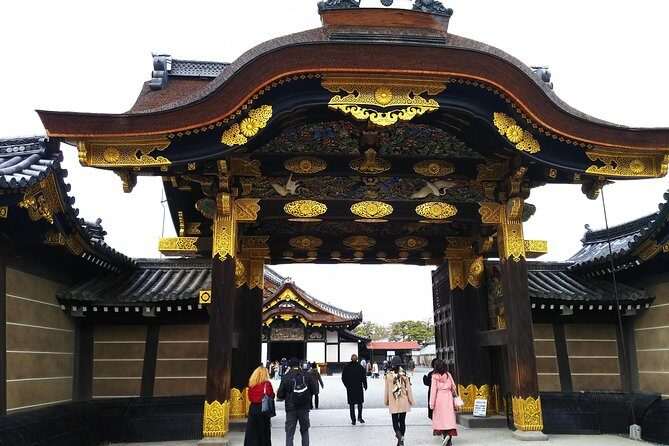
The day starts at Hotel Granvia Kyoto, by the JR Kyoto Station Central Entrance, with a 9:00 am start and the tour ending back at the same place. That matters more than it sounds: you’re not hunting for multiple meeting points or guessing how you’ll get back after you’re tired.
Also note the rhythm. The stated duration is about 7 hours, but the main sightseeing blocks add up to less time than that, so expect extra time for walking between stops, brief transitions, and a quick reset during the market.
If you’re coming from a hotel elsewhere in Kyoto, I’d treat this as your “home base” day. Build a little buffer into your morning so you don’t arrive stressed.
You can also read our reviews of more walking tours in Kyoto



Higashi Hongan-ji: Kyoto’s big Buddhist presence for common life
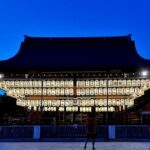
Your first stop is Higashi Hongan-ji Temple, and it’s scheduled for about 30 minutes with admission free. This is a strong opener because it grounds the day in faith and everyday culture rather than only power and architecture.
The tour frames Buddhism as the religion with the most believers in Japan, and highlights major sect traditions. In the guide’s description, Shingon Otani is cited with about 8 million believers—a reminder that these temples aren’t quiet stage sets. They connect to real communities.
What I like about this stop is the angle: you’re not just seeing a building. You’re being nudged to understand how beliefs shaped day-to-day thinking for ordinary people in Kyoto.
Practical tip: dress and behave respectfully here, even if you’re not “religious.” Think of it like walking into a working community space.
Nishiki Market: Kyoto’s kitchen, plus a quick history angle
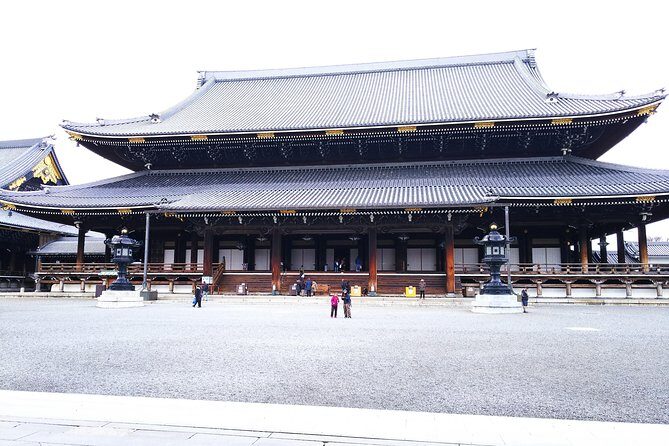
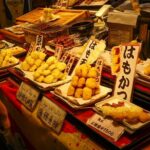
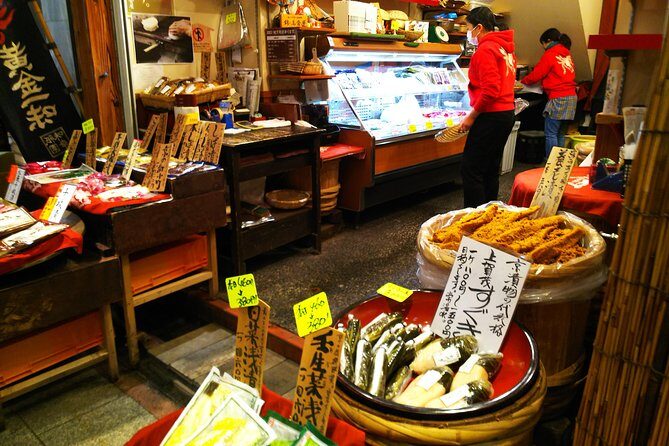
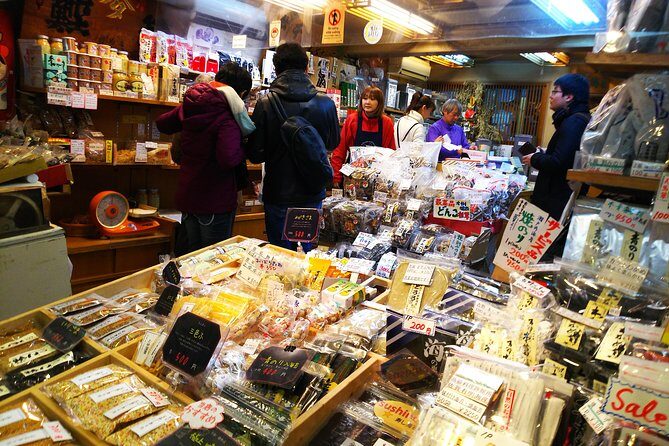
Next is Nishiki Market Shopping District, another 30-minute stop and free to enter. The tour calls it Kyoto’s kitchen, and it doesn’t only talk food—it also includes a neat explanation for why Kyoto’s water is famed: there’s said to be a large water reservoir underneath the district.
In a short visit, you’re not going to master the whole market. But you can do the smartest part: get a sense of the ingredients and snack culture that makes Kyoto taste like Kyoto. If you like trying small bites and figuring out what you want later, this is a great starter.
One thing to keep in mind: with only about half an hour, you’ll want a plan. If you wait to “browse until it feels right,” you may end the stop still hungry and shopping-fatigued. Decide what you want to sample, then use the rest of the time for gifts or one or two extras.
Nijo Castle: Shogun residence in Kyoto, with admission extra
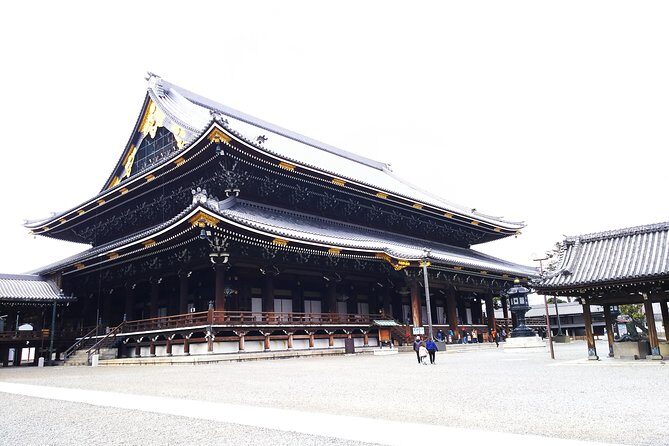
Nijo Castle is the shogun stop, about 1 hour on the schedule, and here you’ll pay admission because it’s listed as not included. The tour notes an admission fee of ¥1,300 per person, so budget that upfront.
The background is the key story. The tour explains that in 1603, the shogun relocated the shogunate to Edo (today’s Tokyo), and Nijo Castle became the base where the shogun stayed when visiting Kyoto. That context changes how you read the place: it’s not just a pretty castle. It’s a political “guest quarters” built for power traveling to the old capital.
The description also mentions more than 1,000 gorgeous painted elements inside—so you can expect lots of visual detail rather than just big blank walls. This is exactly the kind of stop where a guide helps. Without context, you might rush through. With context, you start noticing what the decoration is communicating.
Logistics note: this is indoors/in-structured-space time, so bring patience if it’s busy. Also, check your energy levels before you go in—this is one of the day’s most substantial blocks.
Kyoto Imperial Palace: what it means (and what it doesn’t)
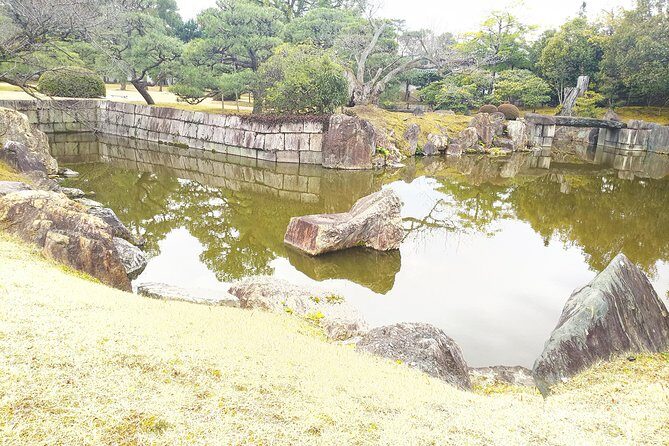
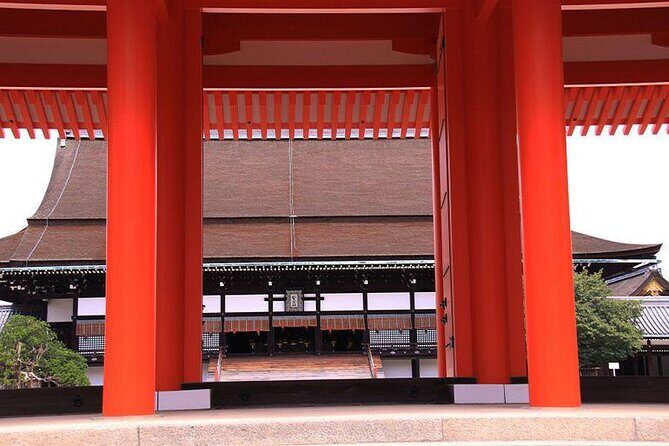
After Nijo Castle, you’ll head to the Kyoto Imperial Palace, scheduled for about 1 hour 15 minutes, with admission free. The tour explains that until the capital moved to Tokyo in 1868, the emperor’s family lived here.
If you’re expecting a European-style palace—full of flashy rooms and gold everywhere—prepare to shift your mindset. A guide’s note you’ll appreciate: the palace is very significant, but it’s not like a classic Western royal museum with furniture and spectacle. It’s more about the scale, layout, and historical role.
The best way to enjoy this stop is to let it be what it is: imperial space tied to Japan’s political evolution. Look for the contrast in atmosphere versus the shogun residence you just saw. The power dynamics feel different, even though both places connect to leadership and governance.



Geisha-street atmosphere: the Kyoto flavor between major sites
In the tour overview, you’re also set up to stroll through a geisha street area for atmosphere. It’s one of those Kyoto details you can’t get from guidebooks alone because it’s more about street feeling—walking pace, old building texture, and the sense that the city’s traditions still shape how people move.
Even if you only catch part of the area during a short day, it helps your brain glue everything together. Temples and castles can feel like “history.” A street moment turns it back into a living place.
Tip: if you’re photographing, keep it polite and brief. Street scenes change quickly, and you don’t want to be the bottleneck in a narrow lane.
The guide factor: what makes this tour work
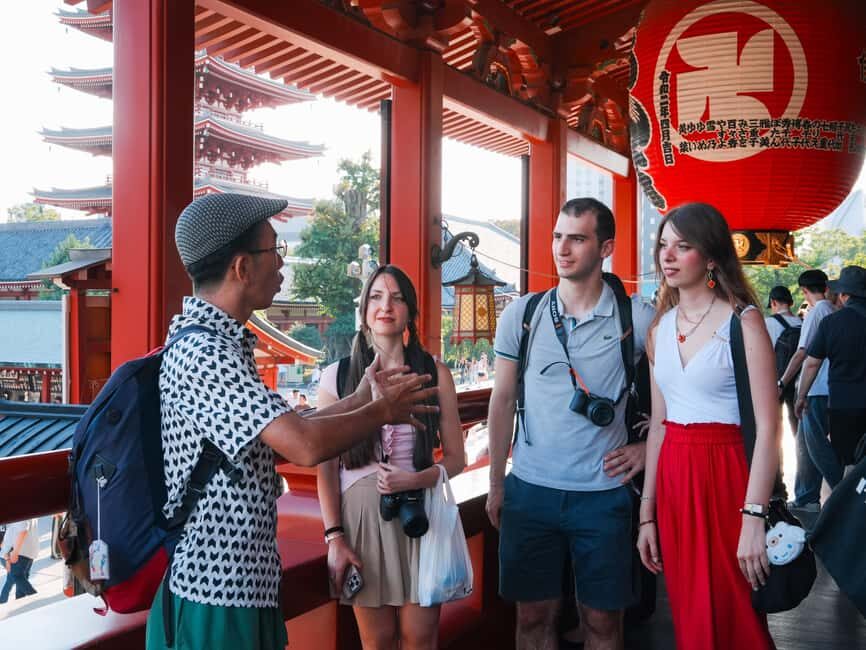
The itinerary is strong on paper, but what you’re really buying is the guide’s ability to make the day click. The guide quality shows up repeatedly in praise for people who used guides such as Naoko, Chie, and Fuji.
Here’s what stands out from those guide styles:
- They’re praised for smart history and culture explanations that stay understandable.
- They answer questions instead of brushing them off.
- One guide was noted for making the day fun for kids, with lots of facts presented in an engaging way.
- Another guide was praised specifically for helping you get around to make the most of time.
If you like asking why something was built or how daily life connected to politics, you’ll probably enjoy this structure. When the guide’s English is strong, you’ll spend less energy translating in your head and more energy actually noticing details.
Price and value: what the $111.03 really covers
The tour price is listed at $111.03 per person and includes guide fare. It’s also advertised with mobile ticket and group discounts, and the average booking window is about 56 days in advance, which hints that planning early can help you lock your slot.
The big value question is: what do you get beyond “a guide walked with you”?
You get a tight one-day framework connecting four distinct Kyoto themes: Buddhism, food culture, shogun power, and imperial history—plus street atmosphere. If your Kyoto time is limited, that “all in one loop” benefit is real. Instead of picking sites one by one and then losing time figuring out connections, you’re following a designed route.
Now the extra costs you should plan for:
- ¥1,300 admission fee for Nijo Castle (not included).
- ¥1,000 public transportation fare (not included).
So your realistic day isn’t just the $111.03. It’s closer to the total of the tour price plus those add-ons. Still, compared to paying for transport and tickets while also managing your own route, it can work out as a decent convenience value—especially if you want a private group experience.
Walking reality: moderate fitness, lots of steps
The tour notes quite a bit of walking and asks for moderate physical fitness. That doesn’t mean it’s an athletic challenge, but it does mean your shoes matter and your pacing matters.
This is also where the order of stops helps. You’ll start with a temple, shift to a lively market, then move into longer attention mode at the castle and palace. But you’re still moving most of the day, so plan breaks mentally instead of expecting long sits down.
Practical comfort checklist:
- Wear shoes you trust for long walking.
- If you’re prone to fatigue, consider eating a solid breakfast before the 9:00 am start.
- Carry a light layer. Morning to midday in Kyoto can feel different depending on season.
Weather matters: the tour needs good conditions
The experience states it requires good weather. If it’s canceled due to poor weather, you’ll be offered a different date or a full refund. In Kyoto, weather swings can happen, so I treat this as a reminder to dress for the conditions you’ll actually see on the day.
If your travel dates are tight and weather is unpredictable, you’ll feel better if you book with flexibility.
Who this tour fits best (and who should skip it)
This is a good fit if you:
- Want a first-timer Kyoto day that covers temple, market, shogun residence, and imperial grounds.
- Enjoy architecture and how power shaped space.
- Prefer learning with a guide rather than wandering and guessing.
- Are traveling with kids and want a guide who can keep explanations lively.
It may be less ideal if you:
- Hate walking and want a more stop-and-rest style day.
- Want deep time inside one site only. This is built for breadth, not slow museum-level study.
The tone of the tour is structured, but not stiff. It’s the kind of day where you can end up with better context for what you’ll see on your own later.
Should you book the Kyoto Imperial Palace and Nijo Castle tour?
If you have one day (or a short window) and want Kyoto to make sense, I think this is a smart booking. The mix of Higashi Hongan-ji, Nishiki Market, Nijo Castle, and the Kyoto Imperial Palace gives you a balanced “how people lived and how rulers ruled” picture, with time to shop and snack along the way.
You just need to go in knowing two things: it’s a walking day, and you should budget for Nijo Castle admission (¥1,300) plus transport (¥1,000). If that works for your plan, the private-group setup and consistently praised guides like Naoko, Chie, and Fuji can make the day feel smooth and worth it.
FAQ
What stops are included on the Kyoto Imperial Palace and Nijo Castle walking tour?
The tour includes Higashi Hongan-ji Temple, Nishiki Market Shopping District, Nijo Castle, and the Kyoto Imperial Palace.
How long is the tour, and when does it start?
It runs for about 7 hours and starts at 9:00 am.
Where do we meet and where does the tour end?
You meet at Hotel Granvia Kyoto, JR Kyoto Station Central Entrance. The tour ends back at the same meeting point.
Is this tour private?
Yes. It’s listed as private, meaning only your group participates.
Are admission tickets included?
Guide fare is included, but admission tickets are not included for Nijo Castle. Higashi Hongan-ji and the Kyoto Imperial Palace are listed as free, and Nishiki Market has free entry.
What is the cancellation policy?
You can cancel for a full refund up to 24 hours before the experience’s start time. If the tour is canceled due to poor weather, you’ll be offered another date or a full refund.