REVIEW · KYOTO
Kyoto: Japanese Koto Musical Instrument Class
Book on GetYourGuide →Operated by Gojo Paradiso · Bookable on GetYourGuide
Koto lessons in Kyoto feel almost unreal. In a calm space at Gojo Paradiso along the Takase River, I enjoyed the rare chance to go from listening to actually playing the Japanese instrument in one session. I love that the class starts with a live performance, then quickly turns into hands-on guidance that makes the first notes feel doable.
Two things really made this worthwhile: the teacher’s clear, patient approach (including English support) and the fact that you learn one famous piece right away, Sakura Sakura, instead of just watching. One consideration: this experience is not suitable for children under 10, so plan for an adult or older kid if you’re traveling with family.
In This Review
- Key Takeaways Before You Go
- Gojo Paradiso and the Quiet Setup for Learning Koto
- First You Listen: How the Lesson Starts with a Live Performance
- Your First Notes on Sakura Sakura
- Trying More Songs and Building Confidence in 90 Minutes
- What Makes the Teaching Feel Special (Natsuko’s Patience)
- Price and Logistics: Is $32 Worth It?
- Getting There from Central Kyoto Without Stress
- What You Really Take Home: A Living Connection to Japanese Music
- Who Should Book This Koto Lesson in Kyoto
- Should You Book the Kyoto Koto Class at Gojo Paradiso?
- FAQ
- What’s the duration of the Kyoto Koto Musical Instrument Class?
- How much does the experience cost?
- Do I need prior experience to play the koto?
- Where do I meet for the lesson?
- What songs will I learn?
- Is the class suitable for children?
- Can I reserve if my plans are not final?
Key Takeaways Before You Go
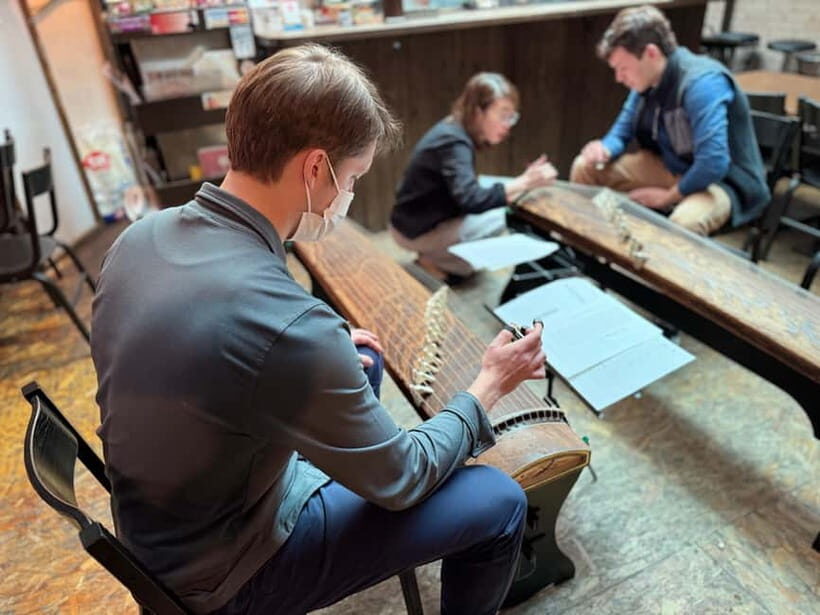
- Gojo Paradiso setting: a peaceful spot along the Takase River on Kiyamachi Street
- Live start: you begin with a performance, then you learn by doing
- Sakura Sakura lesson: a recognizable melody, taught in a beginner-friendly way
- Small group format: limited to 10 participants, so you’re not lost in the crowd
- You leave with practice momentum: once you play the basics, you can try other songs too
- Photos and videos allowed: capture the moment without rushing
Gojo Paradiso and the Quiet Setup for Learning Koto
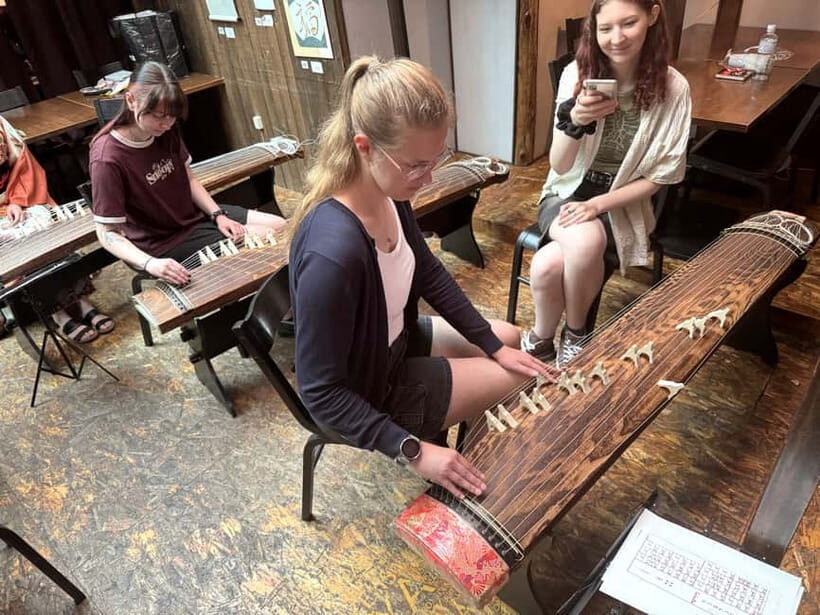
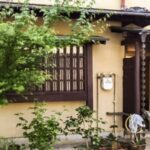
Kyoto has a way of slowing you down, and this class leans into that. The meeting point is Gojo Paradiso, right along the Takase River on Kiyamachi Street. It’s an easy walk from Keihan Kiyomizu Gojo Station (about 5 minutes) and Keihan Shichijo Station (about 10 minutes). If you’re arriving on foot, the river path vibe helps you get your bearings fast.
Inside, the environment matters. This isn’t a loud, showroom-style workshop. It’s a setting where you can actually hear what you’re making, even when you’re still fumbling. That matters for koto because the sound is delicate, and you’ll notice how small adjustments change the tone.
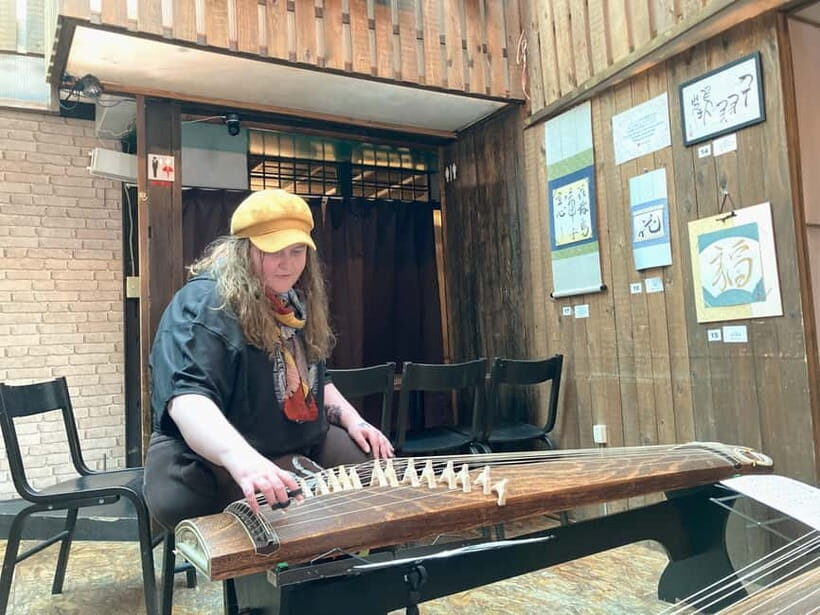
This is also a small-group experience, capped at 10 people. In practice, that means more individual attention and fewer “wait your turn” moments. You won’t need to be an advanced musician, but you will benefit from having a focused room and a teacher who can correct your hand position without making you feel rushed.
A few more Kyoto tours and experiences worth a look

First You Listen: How the Lesson Starts with a Live Performance
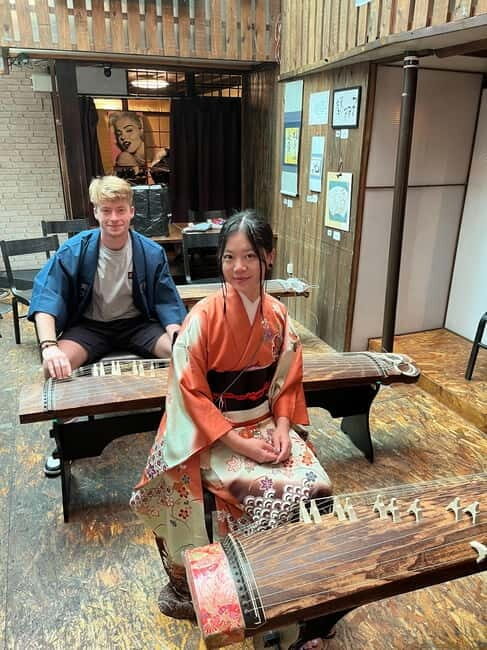
The class begins with you listening to a live koto performance. That’s not just a warm-up. It’s the fastest way to understand what you’re aiming for.
When you hear koto played live first, you pick up the feel of the music: how notes overlap, how the melody moves, and how the instrument produces a different kind of sustain than most Western instruments. You’re also paying attention to rhythm and spacing, which makes the later step—trying the same music yourself—way easier.
Then the lesson flips from listening to doing. The shift is key for beginners. Instead of starting with complicated technique, you get a clear target you can imitate: a real song, played correctly, right in front of you.
Your First Notes on Sakura Sakura
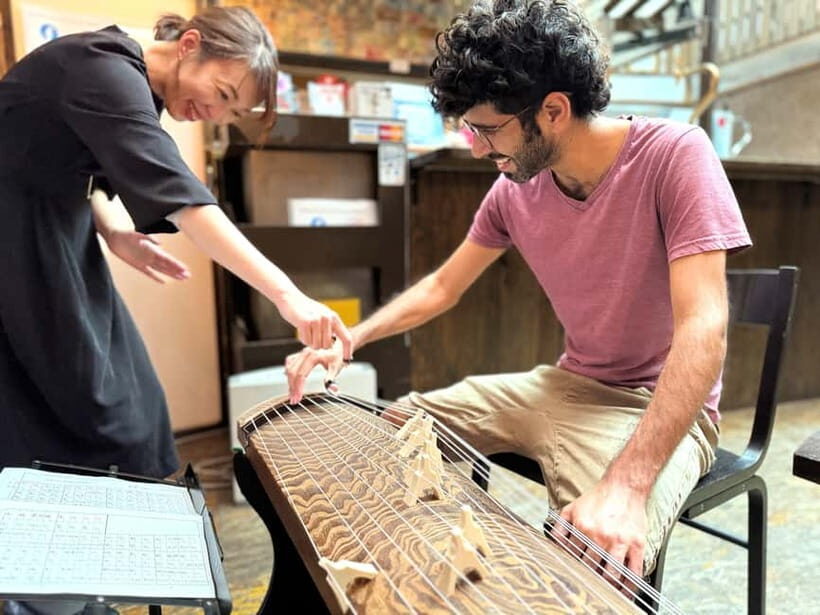
Once you’re ready, you’ll learn to play the famous Japanese folk song Sakura Sakura. This is a smart choice for a first lesson because the melody is familiar enough to follow, but still reveals the character of koto.
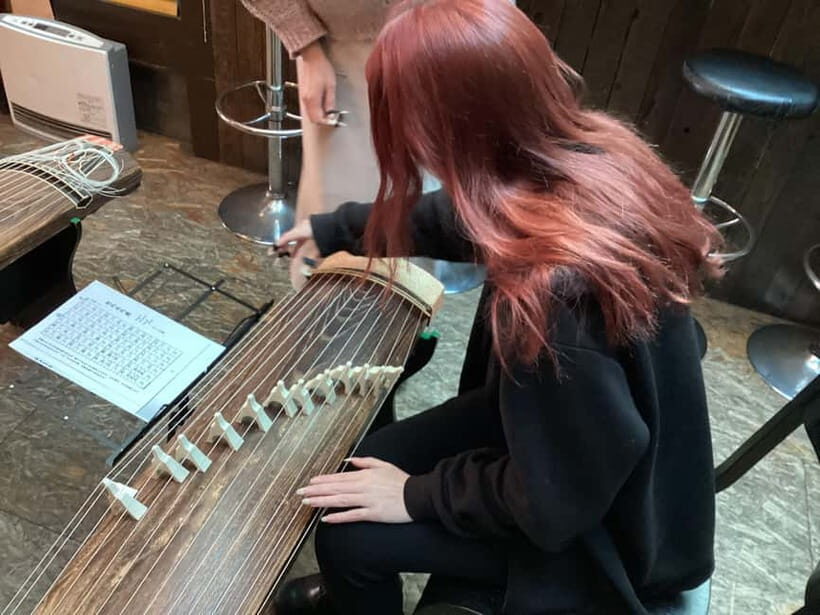
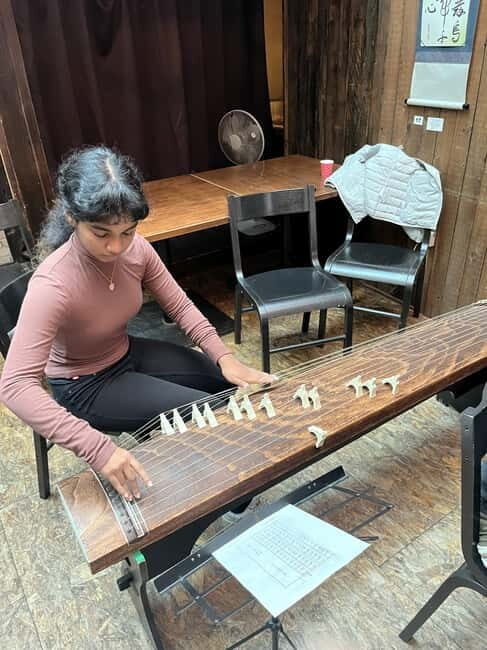
What I like about this part is the structure. You’re not expected to instantly “perform.” You start by learning how to set your hands and how to pluck/produce notes on the strings. The instructor guides you step-by-step, and you build your version of the song note by note.
The lesson is beginner-friendly and requires no prior experience. That matters because a lot of music workshops quietly assume you already know instrument basics. Here, you’re given the instrument and materials, so you can focus on the process, not on figuring out what something is supposed to do.
Also, you’ll likely notice something quickly: koto playing isn’t about force. It’s about control. The sound changes with your touch, and the teacher’s corrections help you get closer with fewer attempts. That’s why a small group format helps so much—you can get the right adjustment faster.
Trying More Songs and Building Confidence in 90 Minutes
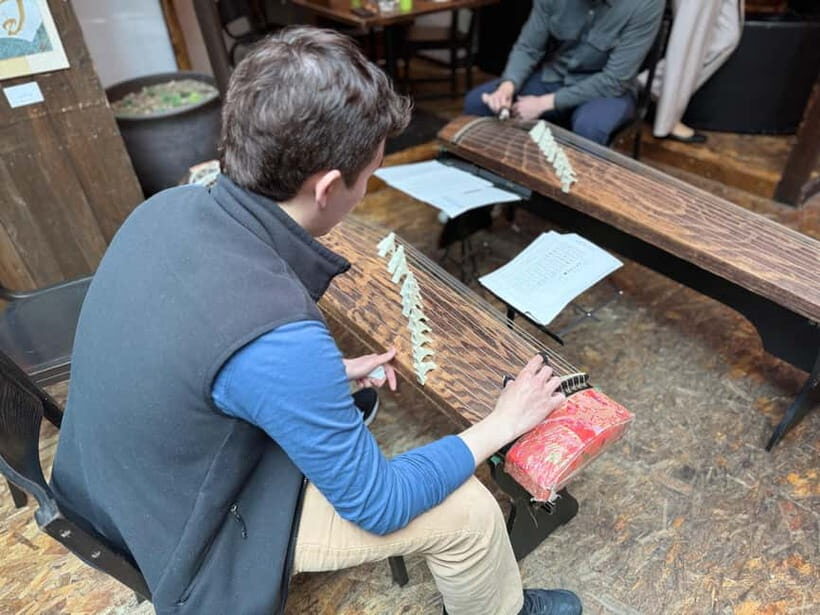
A 90-minute class can sound short, but koto lessons like this usually work best when they give you momentum. After you learn Sakura Sakura to a level you can play confidently, you get a chance to try other songs as well.
This is where the experience shifts from “first lesson” to “I can actually do this.” Once you understand the basics of how to handle the instrument and how to follow the structure of the music, trying another song becomes less like a new mountain and more like a repeatable skill.
For me, the value isn’t only in the songs themselves. It’s the feeling that you can take a Japanese tradition and make it with your own hands. Even if you don’t become a performer in one sitting, you finish with a practical understanding of how koto works and what practice would improve next.
And yes, you can document it. Photos and videos are part of the experience, so you can keep a reminder of that first playable moment. Just remember: focus first, record second. The best souvenir is the sound in your head after the lesson ends.
What Makes the Teaching Feel Special (Natsuko’s Patience)
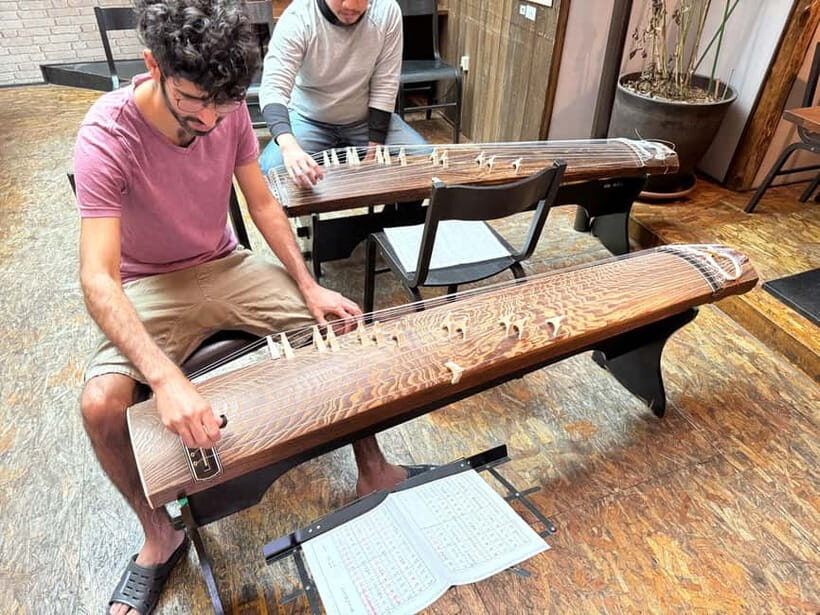
The biggest difference between a good workshop and a great one is the teacher. In this class, you get instruction in English and Japanese, and the vibe I picked up is calm, direct, and encouraging.
One name you’ll hear connected to the class is Natsuko. People consistently highlight her friendliness and patience, plus her ability to explain clearly without making beginners feel behind. That combination is exactly what you want for a first instrument session.
Another thing I like: you’re not treated like a random participant who needs to “get through the activity.” The instructor’s goal seems to be helping you produce the right sound and understand the basics, even if your timing isn’t perfect at first.
If you’re the type who learns best by correction—someone adjusts your hands, you try again, then it clicks—this lesson format fits. And if you’re nervous about playing in front of others, the small group size helps you feel less on display.



Price and Logistics: Is $32 Worth It?
At $32 per person for 90 minutes, this isn’t a cheap add-on, but it’s also not overpriced for what you get. Here’s why the value stacks up:
- You pay for a skilled instructor’s time in a small group.
- Koto and all necessary materials are included, so you’re not paying for rentals or extras.
- The lesson is hands-on, not passive. You’ll play, not just observe.
- You leave with a tangible memory: recorded and photographed playing, plus the actual experience of producing music.
In other words, you’re paying for instruction and for access to an instrument you can’t easily try on your own in Kyoto. That’s a real cost savings, even if you’re not buying a ticket to a major venue.
The only “cost” you should consider is your attention span. Ninety minutes is enough time to learn, but you’ll get more out of it if you arrive ready to focus and not in a rush to sprint to your next stop. If you treat it like a quick detour, you’ll miss the best part.
Getting There from Central Kyoto Without Stress
If you’re planning your day, treat the meeting point like a mini destination. Gojo Paradiso is along Kiyamachi Street, near the Takase River, and it’s walkable from two common Keihan stations.
A practical approach:
- Arrive early so you can settle in without feeling hurried.
- If you’re coming from Keihan Kiyomizu Gojo Station, give yourself around 5 minutes on foot.
- If you’re coming from Keihan Shichijo Station, plan on about 10 minutes.
Also, this activity requires reservation at least one day in advance. So don’t leave it as a last-minute “maybe.” Once you’ve picked a day you’re free, book it and let the rest of your itinerary breathe.
What You Really Take Home: A Living Connection to Japanese Music
This is one of those Kyoto experiences that doesn’t just put you in the presence of tradition—it gives you a way to interact with it.
When you play Sakura Sakura on the koto, you’re not only learning a song. You’re learning how the instrument shapes melody, timing, and expression. You can feel how Japanese folk music carries emotion differently when produced through plucked strings and a tuned wooden body.
And because the class encourages you to try additional songs after the basics, you end with more than one memory. You leave thinking about koto as a system: a method you can keep practicing when you’re back home.
That’s why the small-group attention and the live start matter so much. You’re building a bridge between sound you hear and sound you can make.
Who Should Book This Koto Lesson in Kyoto
This Kyoto Japanese Koto musical instrument class is a great fit if you:
- Want a hands-on cultural activity, not a lecture
- Enjoy music and want to learn something you can’t easily try elsewhere
- Are a beginner who wants clear guidance and real instrument access
- Prefer smaller group experiences with room to ask questions
You should also consider it if you’re traveling with someone who isn’t a hardcore music fan. Even people with no instrument background often find the lesson surprisingly achievable once they hear the live performance first and then receive step-by-step help.
One clear limitation: it is not suitable for children under 10. If you’re traveling as a family, plan accordingly.
Wheelchair accessibility is listed, so if you use mobility equipment, it’s worth considering this as a destination-friendly activity.
Should You Book the Kyoto Koto Class at Gojo Paradiso?
I’d book it if you want a Kyoto activity that’s both calming and genuinely hands-on. The biggest reasons are the combination of live performance at the start, the quick jump into Sakura Sakura, and a teacher known for patience and friendly instruction, including English support.
Book it especially if you’re the kind of traveler who likes to do one meaningful thing in a day and then spend the rest of your time wandering. This class gives you a strong cultural memory without turning your day into a checklist.
Skip it only if you’re looking for a long, in-depth conservatory-style course. This is 90 minutes. It’s designed to get you playing and understanding the basics, not to turn you into a touring musician by the end of the session.
FAQ
What’s the duration of the Kyoto Koto Musical Instrument Class?
The class lasts 90 minutes.
How much does the experience cost?
The price is $32 per person.
Do I need prior experience to play the koto?
No. The lesson is beginner-friendly and everything needed is provided.
Where do I meet for the lesson?
You meet at Gojo Paradiso, located along the Takase River on Kiyamachi Street. It’s about a 5-minute walk from Keihan Kiyomizu Gojo Station and about a 10-minute walk from Keihan Shichijo Station.
What songs will I learn?
You’ll learn to play the Japanese folk song Sakura Sakura, and after you’ve mastered it you can try other songs.
Is the class suitable for children?
It is not suitable for children under 10 years old.
Can I reserve if my plans are not final?
Yes. You can reserve now and pay later, and you can cancel up to 24 hours in advance for a full refund.