REVIEW · KYOTO
Kyoto Lazy Bird Walking Tour
Book on Viator →Operated by KAMNAVI Tours · Bookable on Viator
Kyoto feels less hectic after noon. This afternoon Kyoto tour is built for travelers who want big sights without the early-morning scramble, with a clear route through Arashiyama, Kinkaku-ji, and Fushimi Inari.
I really like that the day is guided end-to-end, so you can stop second-guessing directions and just enjoy the places. With this private setup, your guide handles the navigating and timing, and the whole thing flows more like a plan than an experiment.
One thing to factor in: the tour price is only the guide fare. You’ll still pay for public transport and Kinkaku-ji Temple admission, and the experience runs best in good weather.
In This Review
- Key things I’d pay attention to
- An afternoon start that makes Kyoto easier to manage
- The value of a private guide (and why it shows in the details)
- Stop 1: Arashiyama Bamboo Grove at a calm, scenic pace
- Stop 2: Kinkaku-ji (Golden Pavilion) and how to see it well
- Stop 3: Fushimi Inari-taisha’s torii tunnel (without the wrong pace)
- Price and logistics: what you’re really paying
- Where you’ll start, meet, and end (and why that matters)
- Who this tour fits best (and who might want something else)
- How the time blocks feel in real life
- Weather and comfort: the small planning that protects your day
- Should you book the Kyoto Lazy Bird Walking Tour?
- FAQ
- What time does the Kyoto Lazy Bird tour start?
- How long is the tour?
- Where does the tour begin and end?
- What stops are included on the tour?
- Is the tour price all-inclusive?
- How much are the extra costs for transport and Kinkaku-ji?
- Are admission tickets included for all stops?
- Is this a private tour?
- What ticket format do I receive?
- What happens if the weather is bad?
Key things I’d pay attention to
- Afternoon start (12:45pm) that helps with jet lag and keeps the day from feeling rushed
- Three major sights in one stretch: Arashiyama, Golden Pavilion at Kinkaku-ji, and Fushimi Inari
- Private group only means your schedule is tighter and more personal than group buses
- Guide-led navigating so you don’t lose time hunting for entrances and routes
- Most tickets and entry differ by stop, with Kinkaku-ji admission not included
- Weather matters, so plan to dress for changing conditions
An afternoon start that makes Kyoto easier to manage
Kyoto can be beautiful, but the logistics can be draining. This tour’s big advantage is the start time: 12:45pm. That’s late enough that morning crowds and commuter stress don’t hit you as hard, and it’s a lifesaver if you’re coming off a long flight.
You also get a smart pacing pattern. The tour runs about 5 hours 45 minutes, with roughly an hour at each main stop. That doesn’t sound long, but it’s enough time to see what you came for, take photos, and still have enough energy left to enjoy the surrounding streets afterward on your own.
Another practical win: it meets at Kyoto Station, and it returns there. That matters because Kyoto’s subway/bus maze can eat time fast. Starting and ending at a major hub keeps your day simple.
You can also read our reviews of more walking tours in Kyoto



The value of a private guide (and why it shows in the details)
What you’re really buying here isn’t just sightseeing. You’re buying relief from decision fatigue.
With a private tour, you get one guide for your group, and that usually means fewer delays and less wandering. It also means your guide can steer you toward the right parts of each site, based on what you’ll most enjoy in the time you have.
In past experiences with this operator, guides have been praised for things like warm, calm communication, and being organized about getting trains and moving through tight spots. Some guides have even communicated ahead of time (for example, via WhatsApp) to confirm meeting points and keep everyone on schedule. That kind of prep is small, but it’s the difference between a smooth afternoon and a stressful one.
One more thing I like: the tour is set up as a walking experience with sensible time blocks. You’re not just dropped at a landmark and told to explore on your own. You’re guided through, with context that helps the places feel less random.
Stop 1: Arashiyama Bamboo Grove at a calm, scenic pace
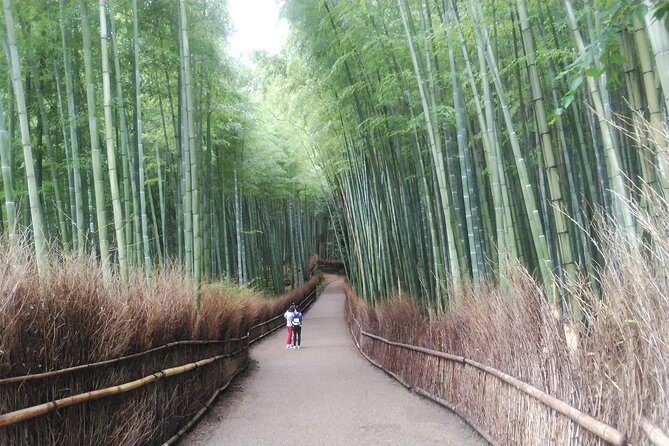
Arashiyama Bamboo Grove is one of those Kyoto places that can look like a postcard or feel like a theme park, depending on timing and how you move through it. An afternoon slot helps. You’re more likely to find moments of quiet as sunlight filters through the bamboo and the leaves make that soft rustling sound.
Here’s what to expect when you arrive: you’ll walk into that distinctive green corridor where the stalks rise like columns. The lighting is a big deal in this grove. If clouds roll in, the scene turns more moody. If the sun breaks through, you’ll see the “slanted” light effect people come for.
Good to know: Arashiyama’s admission is listed as free for this tour. That’s helpful because it keeps your out-of-pocket costs predictable.
What you should do when you’re there
- Keep your camera ready but don’t stare only downward at the bamboo. Try widening your view so you catch the depth between the stalks.
- If it’s crowded, ask your guide to point out the calmer lanes. The point isn’t to “escape” people entirely, but to keep your photos from turning into a crowd montage.
Potential drawback at this stop
- Bamboo groves can feel repetitive if you rush. Give yourself time to slow down, look up, then step aside for a different angle.
Stop 2: Kinkaku-ji (Golden Pavilion) and how to see it well
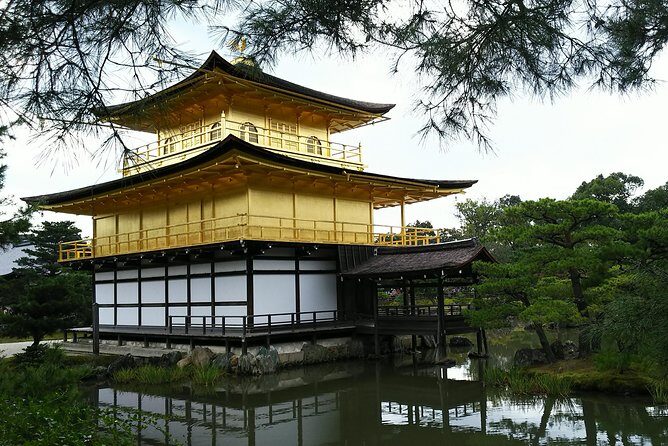
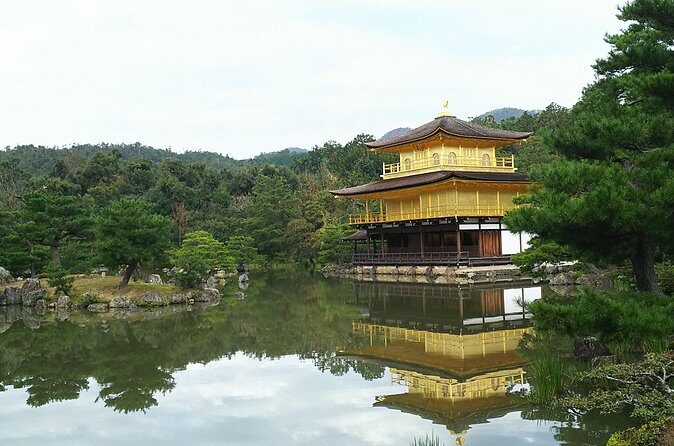
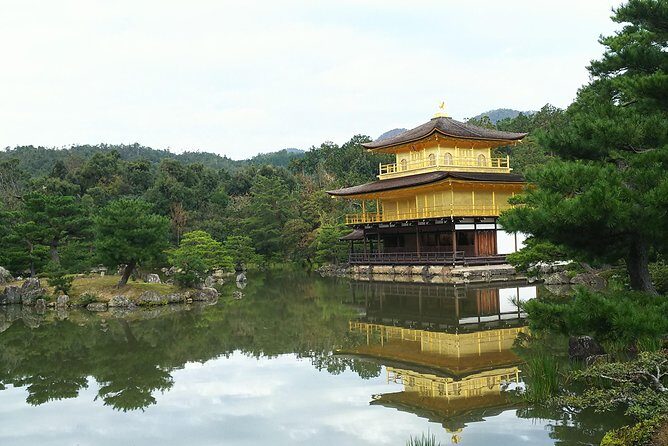
Kinkaku-ji Temple is the UNESCO World Heritage Site most people put on their Kyoto list for a reason: the Golden Pavilion is instantly recognizable, and it looks especially striking against the garden backdrop.
This is also the kind of place where context matters. Knowing what you’re looking at changes the experience. In this temple, the Golden Pavilion is tied to Japan’s samurai era culture, which helps you connect the aesthetics to the bigger story of power, faith, and artistry.
Admission note: Kinkaku-ji entry is not included in the tour price. Plan on paying the listed temple admission (¥500 per person). It’s not expensive compared to the cost of missing it entirely, but it’s a real add-on you should budget.
How long you’ll be there
- About 1 hour at Kinkaku-ji.
That’s enough time to get a clear view of the pavilion and take photos from the most important viewing areas. It’s not enough to treat this like a full temple day with every side path. If that’s your style, you might want to extend later on your own.
A few practical tips
- If it’s raining, the gold highlights can look even more dramatic. Bring something that lets you keep your pace without soaking your camera.
- Wear shoes you can walk in comfortably. You’ll be moving through temple grounds and viewpoints.
Stop 3: Fushimi Inari-taisha’s torii tunnel (without the wrong pace)

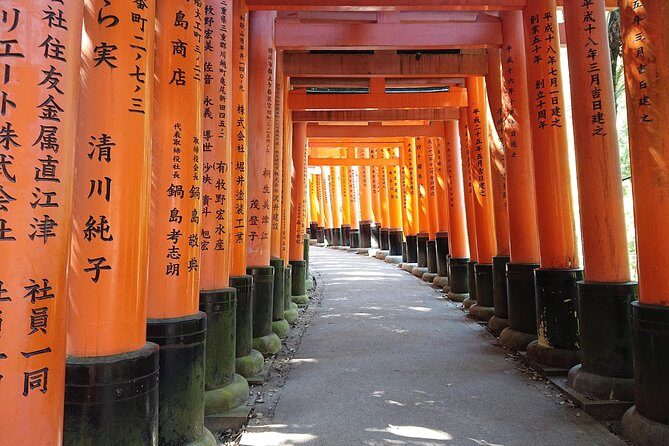
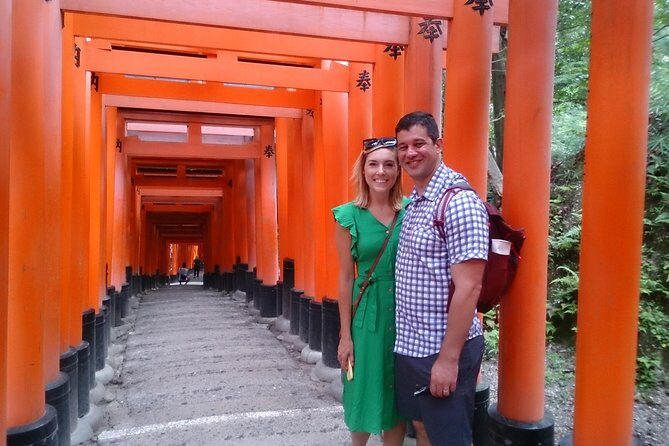
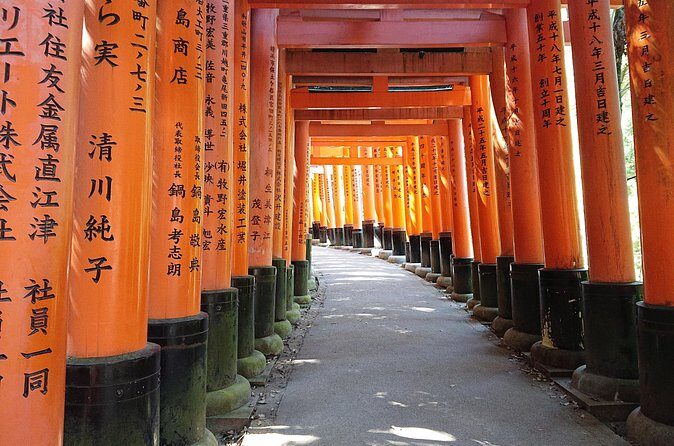
Fushimi Inari-taisha Shrine is famous for its tunnel of vermillion torii gates. The effect is immediate: rows and rows of bright gates stretching into the distance, with paths branching off as you move deeper.
This stop is also well suited to an afternoon tour. You’ll still see plenty of visitors, but you’re less likely to start the day in “everyone is rushing” mode. That makes it easier to enjoy the rhythm of walking gate to gate and pausing where the view feels right.
Admission note: Fushimi Inari’s entry is listed as free for this tour, which keeps the cost lower than some other major Kyoto sights.
How to use your one hour here
Don’t try to conquer every path. In 60 minutes, focus on getting the tunnel experience and one or two viewpoints where the repetition of torii creates that strong sense of depth.
What to watch for
- The tunnel effect changes as you move. Your best angle might be closer to the main corridor, not at the far edge. If you’re not sure, ask your guide where they think you’ll get the best mix of atmosphere and crowd control.

Price and logistics: what you’re really paying
Let’s talk money in a way that helps you plan.
The tour price is $111.05 per person, and it’s for the guide fare. On top of that, the data lists two key extras:
- Public transport fare: ¥1,220 per person
- Kinkaku-ji admission: ¥500 per person
So the true cost is the guide price plus transit plus that one temple fee. If you’re comparing tours, make sure you’re comparing like-for-like. Some Kyoto half-day tours look similar on paper, but they quietly add entrances and transportation.
Is it good value? For the right traveler, yes:
- You’re bundling three top attractions in one afternoon.
- You’re paying for someone to manage navigation and timing, which can save real time, not just “reduce effort.”
- You avoid the common “half-day tour trap” where you spend half your time getting lost or waiting at stops.
One more budgeting point: this experience tends to be booked ahead (on average, about 106 days). That suggests demand is strong and slots may go fast during peak weeks. If your travel dates are fixed, I’d lock it in sooner rather than later.
Where you’ll start, meet, and end (and why that matters)
Meeting point is Kyoto Station, and the tour ends back at the meeting point. That reduces stress on your planning because you’re not guessing how to get back from Arashiyama, from the temple complex area, or from the shrine area late in the day.
This setup is also close to public transportation, which helps if you want to add dinner plans after the tour.
You’ll receive confirmation at booking, and you’ll use a mobile ticket. That’s convenient if you prefer keeping everything on your phone instead of managing printed passes.
Who this tour fits best (and who might want something else)
This tour is a strong match if:
- You’re trying to see major Kyoto highlights in a short window without turning the day into a scavenger hunt.
- You’re traveling with jet lag and want an afternoon start instead of 7 or 8am chaos.
- You like the idea of a private guide who can keep you moving and help you understand what you’re seeing.
- You care about photo moments. In guide feedback connected to this experience style, people have specifically mentioned being pointed to good photo spots.
It might be less ideal if:
- You want a slower, deeper temple experience where you wander without a fixed time plan.
- You’d rather avoid walking. This is a walking-focused tour, and the total time includes movement between stops.
Also, it’s described as suitable for many travelers, with support for limited eye sight and limited mobility. It’s also noted that animals or pets are allowed. If that matters to you, you’ll likely find this fits better than some rigid tours.
How the time blocks feel in real life
On paper, each stop is about an hour. In practice, one hour is enough to:
- arrive,
- get the essential views,
- take photos,
- and learn enough context to make the place click.
The “lazy bird” concept works because the tour isn’t trying to squeeze in five or six sites. You get fewer locations, but you spend your time where it counts.
And with a private guide, the schedule can feel less mechanical. Your guide can adjust the pace depending on weather, your group’s speed, and where lines or crowds build.
Weather and comfort: the small planning that protects your day
This experience requires good weather. If weather turns and it has to be canceled, you’ll be offered a different date or a full refund.
That’s the big planning lesson. Bring layers. Even in Kyoto, afternoons can change quickly, and rain can shift the comfort level. The tour guidance recommends comfortable clothes and shoes for walking. I agree with that wholeheartedly here, because you’ll be on your feet for multiple segments.
If it’s chilly, you’ll appreciate a coat you can move in easily. If it’s rainy, consider a light rain cover for your bag.
Should you book the Kyoto Lazy Bird Walking Tour?
If you want Kyoto’s three biggest “wow” stops without a complicated DIY day plan, I’d book it. The afternoon timing is the headline benefit, and the private guide value shows in how the day is structured around not getting lost and keeping the experience enjoyable.
I’d think twice if you’re chasing a long, wandering day at just one temple, or if you dislike paying add-ons like public transport and Kinkaku-ji admission. But for most people doing Kyoto for the first time, this hits the sweet spot: major sights, sensible timing, and a guide to keep you moving.
FAQ
What time does the Kyoto Lazy Bird tour start?
It starts at 12:45 pm.
How long is the tour?
The duration is about 5 hours 45 minutes.
Where does the tour begin and end?
It begins at Kyoto Station and ends back at the meeting point (Kyoto Station).
What stops are included on the tour?
You visit Arashiyama Bamboo Grove, Kinkaku-ji Temple, and Fushimi Inari-taisha Shrine.
Is the tour price all-inclusive?
No. The tour includes the guide fare. Food and drink are not included, and there are separate charges for public transportation and Kinkaku-ji admission.
How much are the extra costs for transport and Kinkaku-ji?
Public transportation fare is listed as ¥1,220 per person, and Kinkaku-ji Temple admission is ¥500 per person (not included in the tour price).
Are admission tickets included for all stops?
Arashiyama Bamboo Grove and Fushimi Inari-taisha Shrine are listed with free admission for this experience. Kinkaku-ji admission is not included.
Is this a private tour?
Yes. It’s described as a private tour/activity, meaning only your group participates.
What ticket format do I receive?
You’ll receive a mobile ticket.
What happens if the weather is bad?
The experience requires good weather. If it’s canceled due to poor weather, you’ll be offered a different date or a full refund.