REVIEW · KYOTO
Kyoto: Maiko Happy Hour at a Historic Machiya
Book on GetYourGuide →Operated by Tondaya, Co., Ltd. · Bookable on GetYourGuide
A maiko show in a townhouse feels unreal. You’ll step into a 140-year-old machiya and spend two hours with Kyoto arts, from tea to dance. I love the chance to see how a nationally recognized historic home is preserved, and I also love that the tea ceremony with Uji matcha is hosted right by a real maiko experience.
One thing to plan around: this is premium-priced, and like any live performance, translation support can make or break your understanding—especially if you rely fully on English.
In This Review
- Key highlights worth knowing
- Inside Tondaya: Kyoto’s 140-Year-Old Machiya Tour
- Tea ceremony with a maiko: Uji matcha and Kyoto sweets
- Buyō dance performance: classical music, refined movement
- Maiko party games and Q&A: what you can actually ask
- Rare photo time: why this moment feels special
- Price and timing: is $709 for 2 hours worth it?
- Logistics that matter: socks, meeting point, and winter dates
- Maiko vs geiko: what if your first choice isn’t available?
- Who should book this Kyoto maiko happy hour?
- Should you book Kyoto Maiko Happy Hour at a Historic Machiya?
- FAQ
- How long is the Kyoto Maiko Happy Hour experience?
- Where is the meeting point?
- What’s included in the ticket price?
- Is alcohol included?
- Do I need to wear socks?
- How many people do I need to book?
- Can the performer be a geiko instead of a maiko?
- What’s the situation with dates around late December to early January?
Key highlights worth knowing
- Tondaya machiya tour inside a 140-year-old, culturally significant townhouse
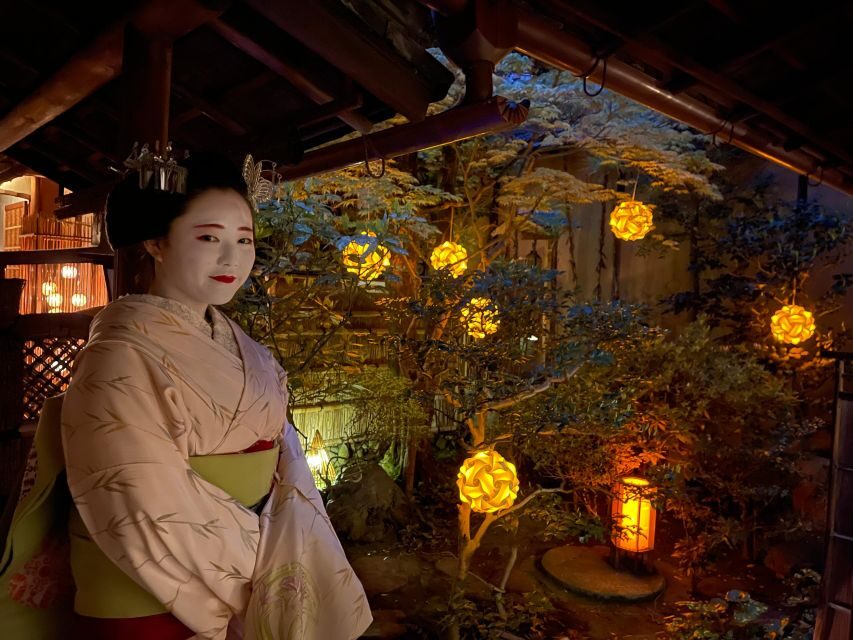
- Uji matcha tea ceremony served by an authentic maiko, with Japanese sweets
- Buyō dance performance with classical music in a traditional setting
- Maiko party games + Q&A, a rare peek at maiko culture
- Photo time with the maiko, which is normally not allowed
- Socks-only rule (no stockings), plus arrival-on-time matters
Inside Tondaya: Kyoto’s 140-Year-Old Machiya Tour
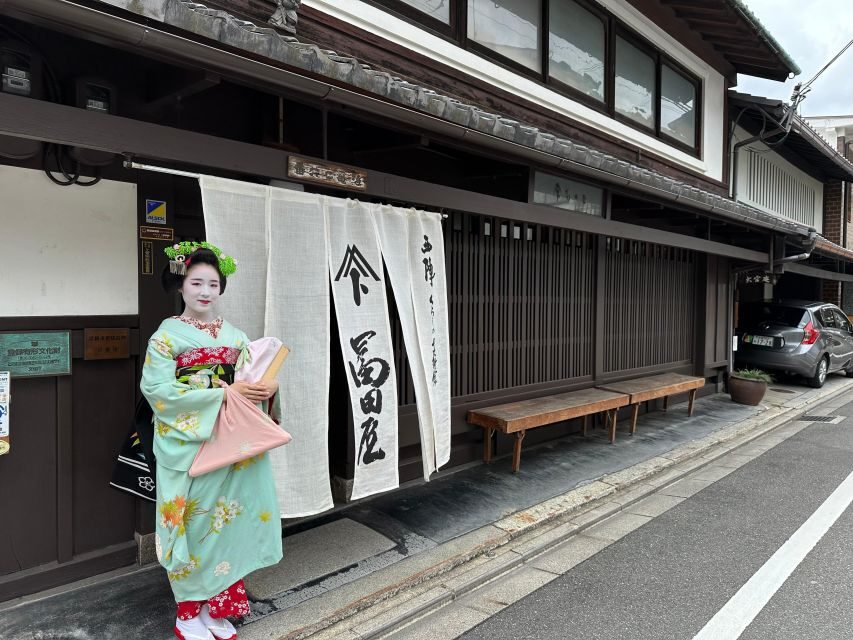
Your experience starts at Tondaya-Nishijin Japanese Cultural Experience Museum, where you meet before entering the townhouse. The setting matters here. This is Tondaya, a machiya that’s about 140 years old, and it’s designated a culturally significant landmark by Kyoto City Government. In other words, you’re not just visiting a pretty house. You’re walking through a piece of Kyoto that’s been protected and maintained.
Expect a guided walkthrough first. The staff take you through the spaces and point out historically valuable artifacts and the stories attached to them. I like this part because it gives you a mental map before the performance. You start to understand why the house feels the way it does—wood, rooms that guide your movement, and a scale that makes everything feel personal instead of staged at you.
One practical note: the program expects you to show up on time. If you’re late, you can throw off the flow for everyone, and this kind of cultural performance is very schedule-driven. Also, you’ll need to wear socks. This is specifically called out—no stockings—so plan your outfit to match.
You can also read our reviews of more historical tours in Kyoto

Tea ceremony with a maiko: Uji matcha and Kyoto sweets
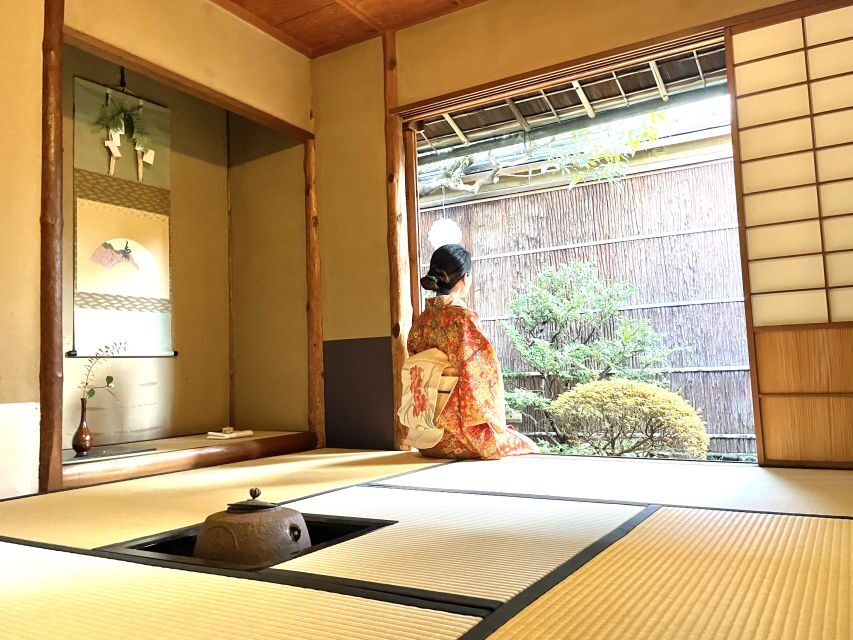
After the machiya tour, you meet the centerpiece of the night: an authentic maiko. She hosts a traditional tea ceremony where you’ll be served Uji matcha and Japanese sweets. That combo is important. Uji matcha is one of those Kyoto-area classics tied to ceremony and craft, and the sweets help make the tea moment feel complete rather than rushed.
I like the pacing of this segment because it slows the whole experience down. The tea ceremony is not just about drinking. It’s about attention—how you hold your cup, the rhythm of the room, and the quiet dignity of the ritual. Even if your Japanese is limited, the ceremony format tends to be easy to follow once you’re in the space.
Do be realistic about what you’re signing up for: this isn’t a full, multi-course tea practice that lasts hours. It’s a short, high-impact ceremony inside the broader “happy hour” format. If you want a long, step-by-step tea lesson, you might feel you’re getting the spotlight version rather than the training version. If you want a taste of Kyoto etiquette hosted by a maiko, this hits the mark.
Buyō dance performance: classical music, refined movement
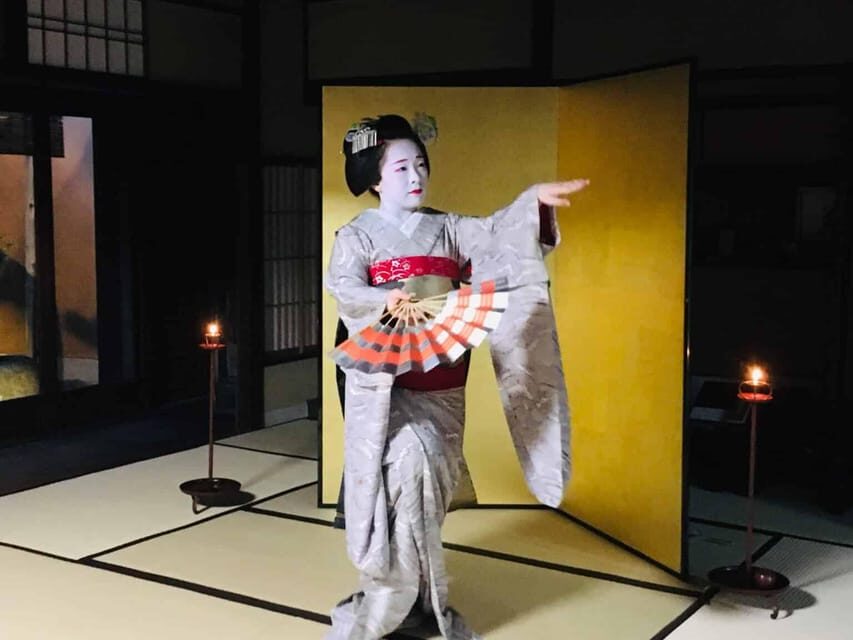
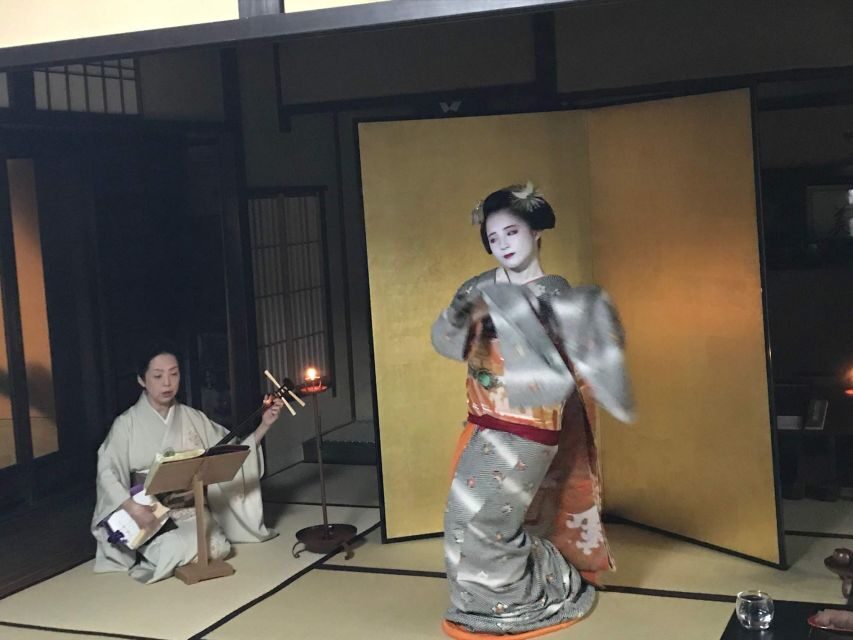
Next comes buyō, a refined traditional Japanese dance performed with classical music. This is the moment where the machiya backdrop really matters. In a normal theater, dance can feel abstract. In a traditional townhouse, you’re closer to the performance energy—close enough to notice the control in the movement and the way music carries through wood and space.
Buyō has a style and precision that reads well even when you don’t catch every word of explanation. If you’re someone who enjoys visual craft—costume detail, posture, timing—this is where you’ll probably feel the most “I get it” connection. The dance is designed to communicate through movement, and the setting supports that.
Also, don’t expect this to be casual background entertainment. The event frames the performance as part of maiko tradition and Kyoto arts. It’s polite, structured, and meant to be watched.
Maiko party games and Q&A: what you can actually ask
After the dance, you shift from watching to participating. You’ll have time to try traditional maiko party games. Each game is explained, then you play together with the maiko. This is a key value driver of the experience. It turns the evening from spectator mode into shared fun.
The Q&A piece is also a big deal. You’ll be able to ask questions about maiko culture during the games segment. This is where you can ask the stuff that doesn’t fit on a museum placard: etiquette, training culture, or what people think is myth versus reality. I’ve found that these kinds of moments are most meaningful when you come with 2–3 focused questions rather than a full list—then you get clearer answers and the conversation stays warm.
A helpful tip: if you care about understanding every detail, consider that interpretation support may be needed. The event states that not all staff speak English, and they’ll do their best to arrange an interpreter. A translation device may be used when necessary. In real life, that can mean the quality varies day to day. If you’re comfortable with some parts being more conceptual than word-for-word, you’ll enjoy the flow more.
Rare photo time: why this moment feels special
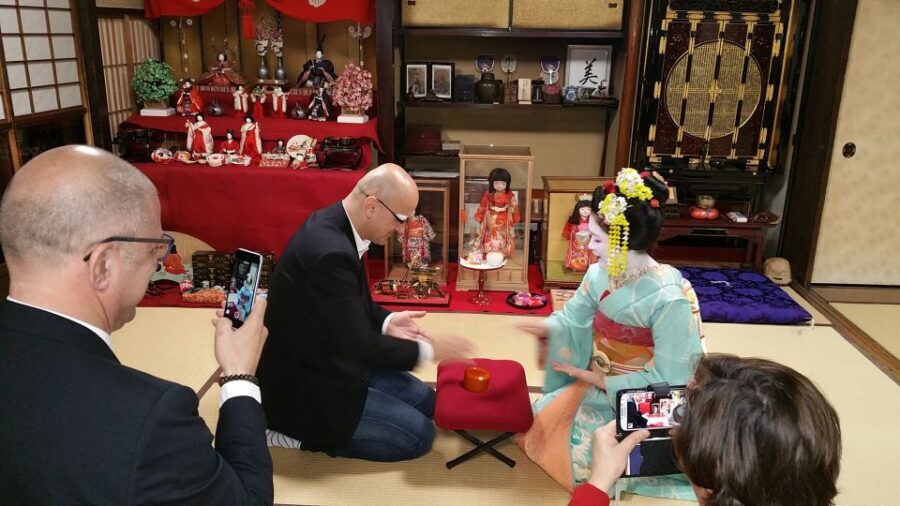
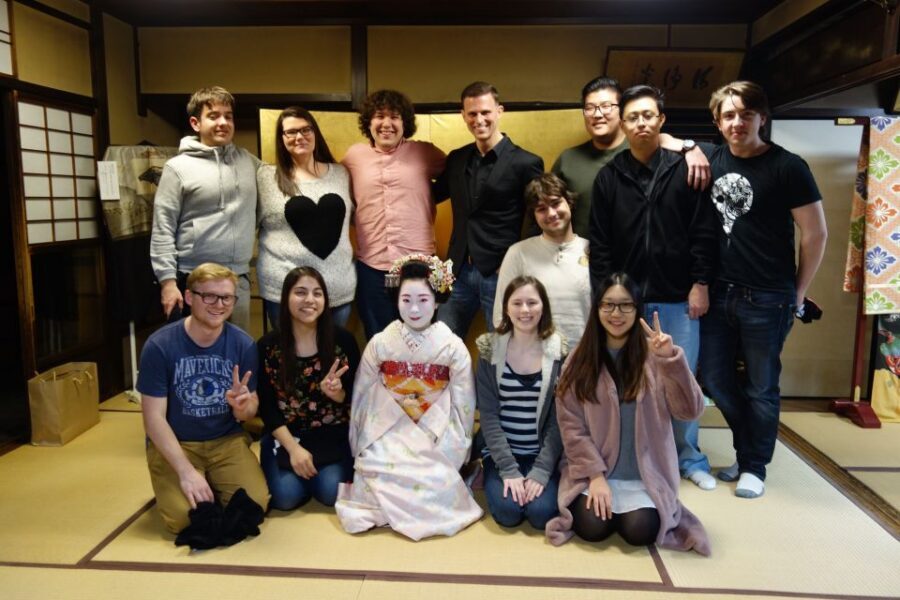
At the end, there’s time for commemorative photos with the maiko. This is highlighted as especially rare because maiko are not normally permitted to take photographs with the public. That one rule alone changes how you should think about this segment. It’s not a random “and now photos” stop. It’s a brief, limited opportunity.
If you want good photos, treat it like a mini-session:
- Arrive ready—hair and clothing settled.
- Have your camera settings handled before the maiko steps in.
- Take a range of shots quickly: one close, one full-body, one with a smile that feels natural.
The event encourages you to take as many photos as you like during the photo time, and that makes sense given the rarity. Even if you aren’t a photographer, the photo moment is often the memory people hold onto later, because you truly don’t see this access in everyday Kyoto.




Price and timing: is $709 for 2 hours worth it?
Let’s talk money plainly. The listed price is $709 per person for a 2-hour experience. That’s steep, no sugarcoating.
So where does the value come from?
First, you’re paying for access. Meeting an authentic maiko, participating in maiko games, getting a tea ceremony hosted by her, and getting photo time—these are not standard tourist activities you can recreate on your own.
Second, you’re paying for place. The Tondaya machiya tour matters. It’s a historic townhouse tied to Kyoto’s living traditions, and the event is built around that setting.
Third, you’re paying for cultural programming density. In two hours, you get:
- machiya guided tour
- maiko-hosted tea ceremony with Uji matcha and sweets
- buyō dance performance with classical music
- party games
- Q&A time
- photo time
If you look at it as a multi-activity evening with rare access, the price starts to make some sense. If you’re expecting a long, fully detailed class with unlimited instruction, or if translation support ends up being limited, you may feel it’s overpriced for what you personally understand.
In fact, the experience includes an explicit note: there may be interpretation support, and translation quality can vary. I’d treat that as part of the value equation. If your main goal is cultural insight through conversation, plan your questions and be patient with explanation.
Logistics that matter: socks, meeting point, and winter dates
This experience has a few rules that are easy to overlook until the day of.
You’ll need to wear socks. Don’t show up in stockings; the event asks you to refrain from them. This isn’t just picky dress code—traditional indoor settings often require socks for comfort and cleanliness.
Your meeting point is Tondaya-Nishijin Japanese Cultural Experience Museum. Build in a little time to arrive, settle your shoes/socks situation, and get oriented. Once you start, the event is structured.
Seasonal timing matters too:
- Tondaya is closed Dec 31 to Jan 1.
- You can’t reserve a maiko appointment from Dec 29 to Jan 10.
Because maiko require advance reservation, the schedule gets tight around those dates.
One more timing-related detail: the experience lists that reservations must be made for a minimum of two participants. If you’re traveling solo, you’ll need a partner or group to make the booking work.
Maiko vs geiko: what if your first choice isn’t available?
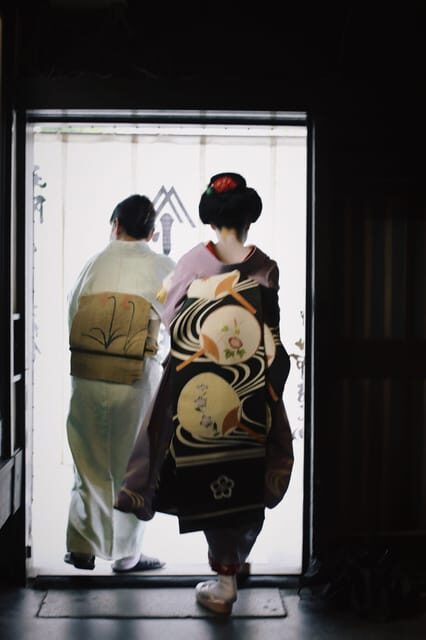
This is one of those lines you should read carefully. The event notes that depending on availability, a geiko may be arranged instead of a maiko. Preferences can’t be accepted.
That doesn’t mean the experience is bad—it means you should adjust expectations. If your heart is set on meeting a maiko specifically, check your travel dates and plan as early as possible. Also remember the event emphasizes that maiko access is especially rare, so availability tends to be a real constraint, not just a marketing term.
Who should book this Kyoto maiko happy hour?
This is a strong match if you:
- want a rare, structured encounter with a maiko in Kyoto
- enjoy traditional arts like tea ceremony and buyō dance
- like learning etiquette through direct interaction (games + Q&A)
- care about atmosphere—being in a preserved machiya is not an afterthought
You might think twice if you:
- are budget-focused and uncomfortable with premium pricing for two hours
- rely heavily on smooth English narration and prefer nonstop explanation
- need wheelchair accessibility, since it’s listed as not suitable for wheelchair users
Should you book Kyoto Maiko Happy Hour at a Historic Machiya?
My take: book it if you want a high-access Kyoto cultural night that’s built around a historic home and an authentic maiko-centered program. The combination of Tondaya’s machiya tour, Uji matcha tea hosted by a maiko, buyō dance, interactive party games, and the rare photo time is exactly the kind of “Kyoto only” experience that’s hard to replicate independently.
Don’t book it on autopilot if you’re very sensitive to translation quality or if you expect a long, detailed lesson format for the price. If you go in with the right expectations—two hours, performance plus participation, and some interpretation support when needed—you’ll likely feel you got what you paid for: access, craft, and atmosphere.
FAQ
How long is the Kyoto Maiko Happy Hour experience?
The experience lasts 2 hours.
Where is the meeting point?
Meet at Tondaya-Nishijin Japanese Cultural Experience Museum.
What’s included in the ticket price?
It includes a guided tour of the machiya, maiko dance performance, party games, a tea ceremony, photography opportunities, and a lesson on Kyoto/maiko culture.
Is alcohol included?
No. Alcoholic drinks are not included.
Do I need to wear socks?
Yes. You must wear socks, and you should avoid stockings.
How many people do I need to book?
Reservations must be made for a minimum of two participants.
Can the performer be a geiko instead of a maiko?
Yes. Depending on availability, a geiko may be arranged instead of a maiko, and preferences can’t be accepted.
What’s the situation with dates around late December to early January?
Tondaya is closed December 31st to January 1st, and you cannot reserve a maiko appointment during December 29th to January 10th.