REVIEW · KYOTO
Kyoto: Mindfulness Origami Workshop, Limited 6/8–6/10
Book on GetYourGuide →Operated by Gojo Paradiso · Bookable on GetYourGuide
A quiet hour can still feel creative. In Kyoto at Gojo Paradiso, you fold paper into traditional shapes while practicing mindfulness origami. I especially liked the clear, patient instruction (the kind that keeps you moving when a fold goes wrong) and the small group feel, capped at 10 people. One consideration: it’s a short workshop, so if you’re hunting for a deep, multi-hour craft session, this may feel brief.
The setting helps, too. You meet along the Takase River on Kiyamachi Street, and the class runs for 1 hour, which makes it easy to slot between temple visits. If you’re traveling with kids, you’ll likely appreciate that it’s fun, hands-on, and beginner-friendly without turning into a lecture.
In This Review
- Key Things You’ll Notice Right Away
- A Calm Hour Beside the Takase River
- Price and Value: What $29 Really Buys
- Finding Gojo Paradiso on Kiyamachi Street
- The 1-Hour Flow: How the Workshop Runs
- What You Learn: Cranes, Basic Folds, and Clear Guidance
- Mindfulness Origami: Folding as a Focus Practice
- Choosing Your Paper: Colored Tones or Traditional Patterns
- Small Group, Big Help: Why 10 People Matters
- Included Photo and Take-Home Creations
- Who This Workshop Is Best For in Kyoto
- Quick Practical Tips Before You Go
- Should You Book It?
- FAQ
- How long is the Kyoto Mindfulness Origami Workshop?
- How much does the workshop cost?
- Where is Gojo Paradiso located?
- Is the workshop offered in English?
- How many people are in the group?
- What kinds of origami designs will I learn?
- Do I get supplies to use during the class?
- Can I choose my paper?
- What do I take home?
- Is there a refund if I cancel?
Key Things You’ll Notice Right Away
- Mindfulness-first folding: you slow down and focus on the rhythm of each crease
- Crane-style basics: you learn foundational folds and classic designs like cranes
- Small group guidance: limited to 10 participants, with help for when you get stuck
- Choose your paper look: colored paper in bright tones or traditional Japanese-designed paper
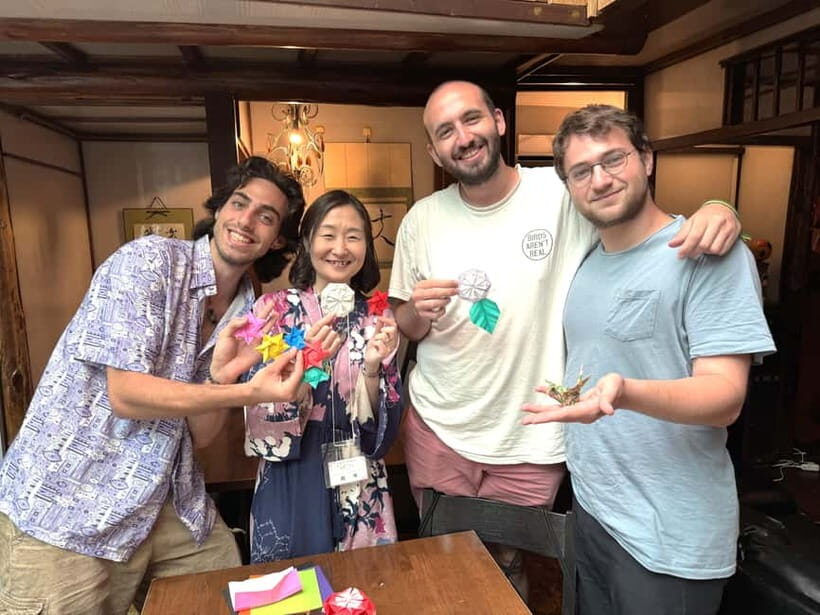
- Take-home souvenir + group photo: you leave with creations and a commemorative photo
A Calm Hour Beside the Takase River
Kyoto has plenty of places that can feel loud in your head, even when they’re quiet in real life. This workshop is built around doing something small and exact—folding paper—and turning that into a simple focus practice.
You’ll be at Gojo Paradiso along the Takase River on Kiyamachi Street. It’s about a 5-minute walk from Keihan Kiyomizu Gojo Station and roughly a 10-minute walk from Keihan Shichijo Station, so you’re not stuck on the far edge of the city.
Even before you fold anything, the vibe is already doing part of the work. The river-side location keeps things grounded, and the one-hour length helps you keep your expectations realistic.
A few more Kyoto tours and experiences worth a look


Price and Value: What $29 Really Buys
At $29 per person for a 1-hour class, you’re paying for three things: guided instruction, materials during the workshop, and an experience that feels personal rather than rushed.
The supplies are provided for you to use in class, so you’re not paying extra for paper, tools, or a starter kit. You also get to make multiple creations during the session, and you leave with at least one finished origami piece as a souvenir.
There’s also the included group photo, which turns your learning into something you can remember later. For many people, that photo is the difference between a craft you barely recall and a craft you actually keep thinking about.
If you’re trying to maximize value in Kyoto, this is a good pick because it’s short, not exhausting, and easy to fit around other plans. It’s not trying to be a full-day cultural program.
Finding Gojo Paradiso on Kiyamachi Street
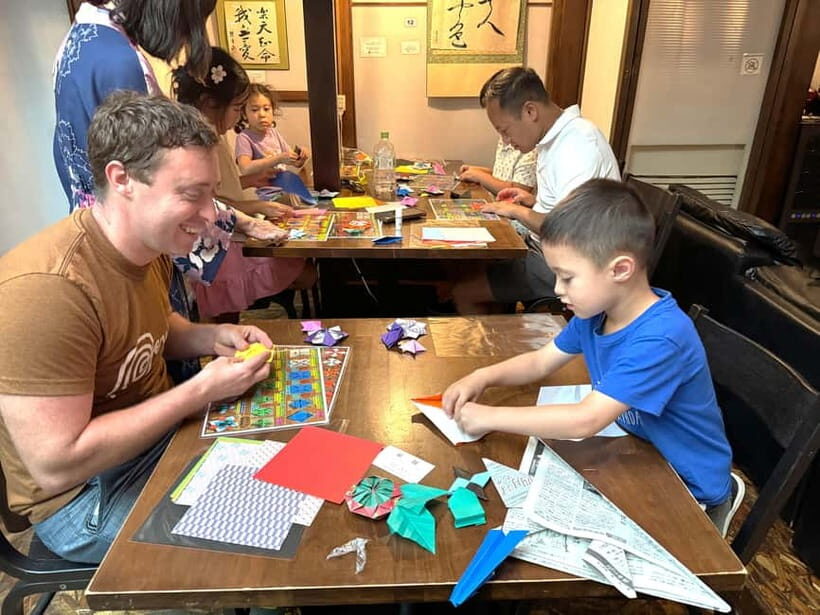
The practical side matters in Kyoto, and this location is easy to reach. You’ll find Gojo Paradiso on Kiyamachi Street along the Takase River.
Use Keihan Kiyomizu Gojo Station if you want the simplest route. From there, it’s a quick walk—about 5 minutes. If you’re coming from Keihan Shichijo Station, plan on roughly 10 minutes.
I like that the walking distance is short enough that you won’t arrive stressed or sweaty. That matters for a class where the goal is calm focus.
When you arrive, your first job is to get comfortable with the idea that you don’t need to be “good at crafts.” The workshop is designed for everyone, including kids and adults.
The 1-Hour Flow: How the Workshop Runs
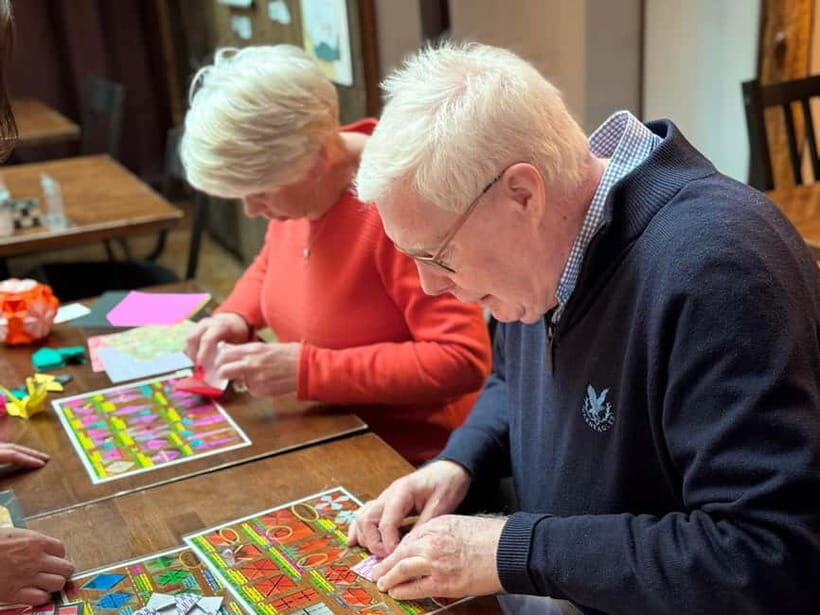
You can think of the session as a steady progression from basics to calm practice to finished pieces.
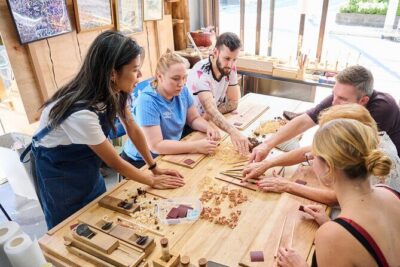
First comes the setup and instruction: you learn basic origami techniques and start working with simple folds. The workshop focuses on traditional designs, including cranes, so you get a recognizable result rather than only abstract shapes.
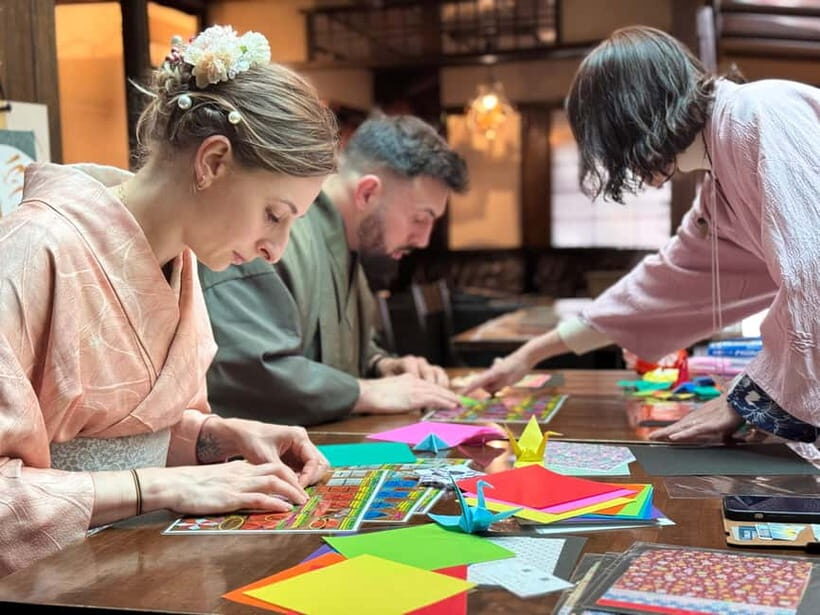
Next is the mindfulness part. Instead of rushing to finish, you’re encouraged to pay attention to the rhythm of folding and the concentration that comes from it. The idea is that the process is the point, not perfection.
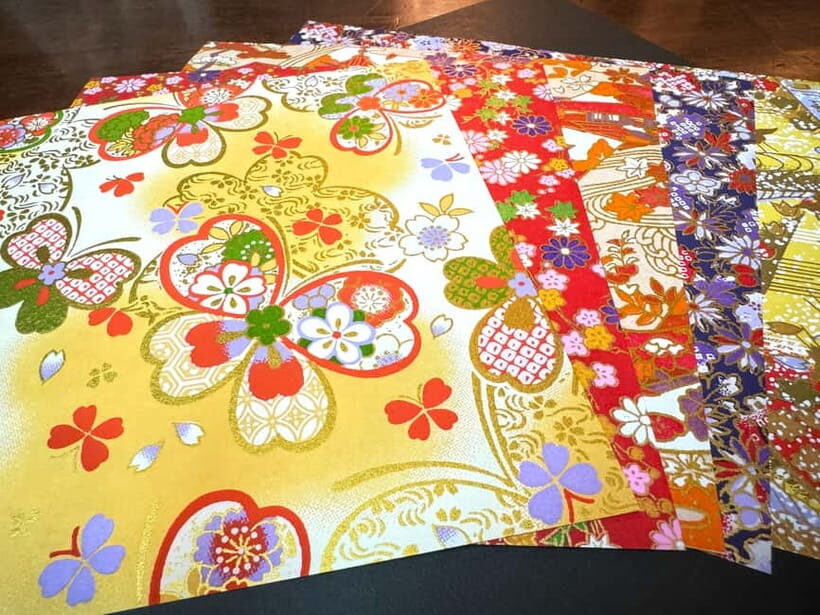
Then you add your own style through your choice of paper. You’ll be able to pick colored paper in bright tones or traditional Japanese-designed paper. That choice matters more than you might expect, because it changes how your finished crane or shape looks and feels.
Finally, you cap it off with a commemorative group photo and take-home creations. Even within one hour, the structure helps you leave with something done—not just one half-finished attempt.
What You Learn: Cranes, Basic Folds, and Clear Guidance
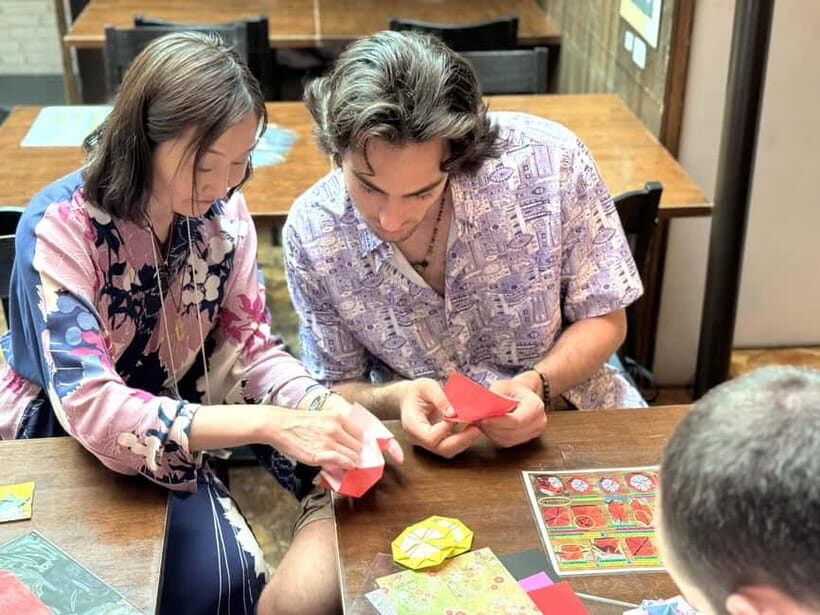
The best thing about this workshop is the way it teaches the fundamentals without making you feel behind.
You’ll learn traditional origami folding techniques, with cranes mentioned as a key design you’ll work on. That’s a smart choice for a beginner-friendly class because cranes are iconic, but the process is still approachable when broken into steps.
From the experience feedback, the instruction quality stands out. People describe the instructor as kind and sweet, with explanations that are clear and patient. They also mention getting help when they got stuck on a specific step, which is exactly what you want in a short class.
This is one of those rare craft experiences where you can be clumsy at first and still feel supported. If you’re the type who freezes when something is confusing, the pacing and guidance are likely to feel reassuring.




Mindfulness Origami: Folding as a Focus Practice
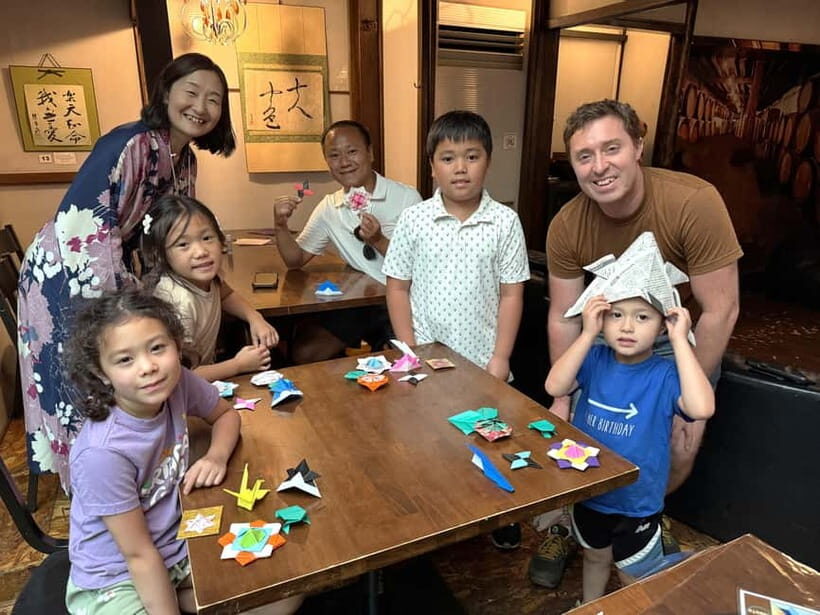
Origami is often sold as art. Here, it’s also treated like a practice for the mind.
The workshop’s mindfulness approach centers on concentration and calming your thoughts through repetitive movement. You focus on each crease and the steady rhythm of folding, which naturally pulls attention away from stress and into the present moment.
You don’t need any special background to get something out of this. The point is simple: keep your mind on your hands, and you’ll notice the calmer, clearer feeling that comes with it.
I like that it’s framed as process-focused rather than perfection-focused. That makes a big difference if you’re traveling and already carrying a packed itinerary. You’re not here to be a master folder. You’re here to slow down for a moment.
If you’ve ever tried to meditate and found it too hard to stay still, this is a gentler alternative. Your hands give you something to do, and your attention has a job.
Choosing Your Paper: Colored Tones or Traditional Patterns
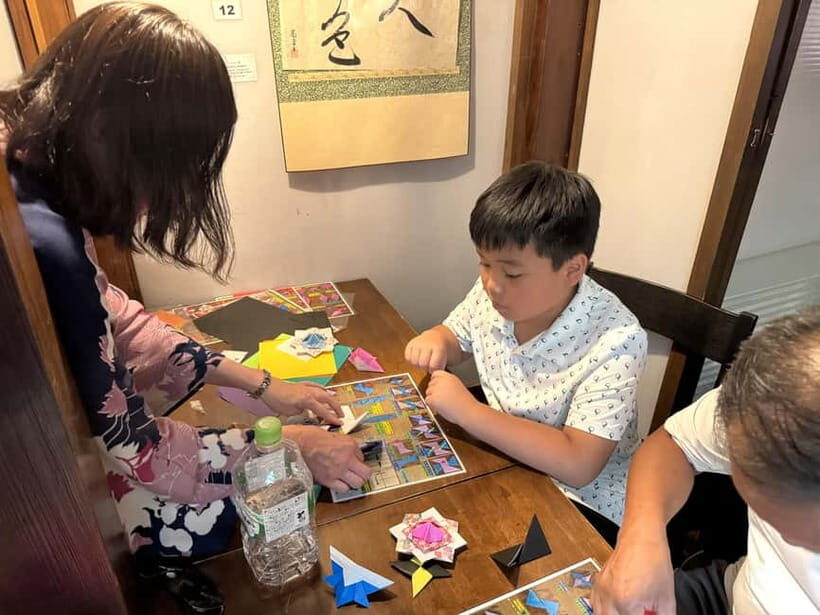
You’ll have a paper choice during the class, and it affects both your enjoyment and your results.
You can pick from colored paper in bright tones or traditional Japanese-designed paper. That means you can aim for playful and colorful or more understated and traditional.
This is a small option, but it’s a big deal for travel memories. A souvenir that looks like you chose it is easier to keep on a shelf without feeling like it was just random tourist craft.
If you’re bringing kids, brighter paper tends to make the whole session more fun. If you’re an aesthetics person, traditional Japanese-designed paper may feel more connected to the culture you’re seeing around Kyoto.
Either way, the paper choice helps you leave with something that feels personal.
Small Group, Big Help: Why 10 People Matters
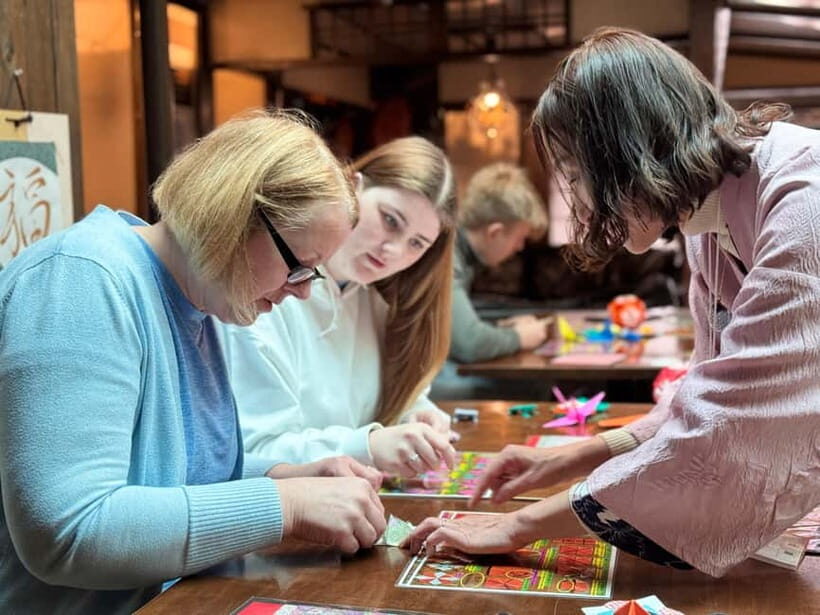
With a maximum of 10 participants, the workshop avoids the usual problem of group classes where you get ignored if you miss a step.
A smaller group also makes the teaching style more interactive. You’re more likely to get individual clarification and quick corrections when your fold isn’t cooperating.
Based on feedback, the instructor consistently helps when learners hit a stuck point. That’s the difference between leaving with a finished crane and leaving with a pile of paper that never quite became what you expected.
If you’re traveling as a family, that group size is also helpful. Kids often need small, frequent reminders, and you’re more likely to get them in a class like this than in a large workshop.
Included Photo and Take-Home Creations

This workshop doesn’t end when the final fold is done. You also get a commemorative group photo, which gives your experience a clean memory anchor.
The best part: you also take home your creations. That turns the workshop into something you can display later, not just something you did while passing through Kyoto.
For many people, having a physical souvenir matters more than another photo on a phone. A folded piece of paper is small, easy to transport, and tied to what you learned with your hands.
And because the workshop gives you traditional designs to practice, your take-home items feel culturally connected rather than generic.
Who This Workshop Is Best For in Kyoto
This is one of those Kyoto activities that works across ages and moods.
It’s a great fit if:
- you want a break from temples and crowds without losing a cultural thread
- you like calm, hands-on activities
- you’re traveling with children and want something structured but not overwhelming
- you’re a beginner who still wants real results
It’s also good if you’ve done crafts before but want a more relaxing, mindfulness-centered approach. The short duration keeps it light, and the format helps you get traction fast.
If your idea of a workshop is hours of advanced techniques, you might find the one-hour length limiting. But if you want a guided, satisfying start, this hits the mark.
Quick Practical Tips Before You Go
Here’s how to get the most out of your hour so you don’t end up rushing through the calm part.
- Treat it like a meditation session with paper, not like a race to finish.
- Watch the instructor’s first demonstration closely. Your later folds depend on early alignment.
- If you get stuck, ask for help right away. The class is designed for step-by-step coaching.
- Bring your curiosity more than your perfectionism. Even simple cranes become satisfying once you follow the rhythm.
Also, it helps to plan your walk to the venue so you arrive with time to settle. The session is short, and calm starts when you stop sprinting.
Should You Book It?
I’d book this workshop if you want a meaningful Kyoto experience that doesn’t steal your whole day. The combination of mindfulness-focused folding, traditional designs like cranes, and a small group with patient instruction is a strong value.
It’s especially worth it if you like the idea of leaving with something you made yourself—plus a commemorative photo. For $29, you’re getting materials, guidance, and a finished souvenir, all in a manageable one-hour slot.
Skip it only if you’re looking for advanced origami instruction or a longer craft session with lots more designs. The beauty here is the short, calming structure.
If you want something different from the typical Kyoto sightseeing loop—something quiet, hands-on, and genuinely enjoyable—this is an easy yes.
FAQ
How long is the Kyoto Mindfulness Origami Workshop?
The workshop duration is 1 hour.
How much does the workshop cost?
It costs $29 per person.
Where is Gojo Paradiso located?
Gojo Paradiso is on Kiyamachi Street along the Takase River. It is about 5 minutes on foot from Keihan Kiyomizu Gojo Station and about 10 minutes from Keihan Shichijo Station.
Is the workshop offered in English?
Yes. The instructor provides instruction in English and Japanese.
How many people are in the group?
The group is limited to 10 participants.
What kinds of origami designs will I learn?
The workshop includes basic origami techniques and traditional designs such as cranes.
Do I get supplies to use during the class?
Yes. Origami supplies are included for use during the workshop.
Can I choose my paper?
Yes. You can choose from colored paper in bright tones or traditional Japanese-designed paper.
What do I take home?
You will leave with your completed origami creations as a souvenir.
Is there a refund if I cancel?
Yes. Free cancellation is available up to 24 hours in advance for a full refund.