REVIEW · KYOTO
Kyoto night walk tour (Gion district)
Book on Viator →Operated by Hero Tour Japan · Bookable on Viator
Kyoto after dark can feel like a different city. This private Gion walk turns the area’s famous lanes into something calmer and more personal, with stops at Yasaka Shrine and the Yasakanoto pagoda (plus photo moments along the way). I especially like the quiet, respectful pacing—you’ll learn what to notice without rushing—and the fact that your guide is set up to take great pictures as you go.
One thing to consider: you’re walking for about 1.5 hours in the dark, so comfortable shoes matter, and Kiyomizu-dera’s entrance isn’t included.
In This Review
- Key reasons to do this Gion night walk
- Why Gion at night feels calmer than daytime
- Meeting by Minamiza Kabuki and getting oriented fast
- Stop 1: Yasaka Shrine at night, where the free entry actually matters
- The stone-wall lanes: the tour’s quiet rules (and why they’re good)
- Yasakanoto pagoda: history first, then photos where they count
- Walking the famous slope in Yasaka
- Kiyomizu-dera at night: possible illumination, and one cost you should plan for
- How much is a $35 night walk in Gion really worth?
- What the guide experience adds (beyond facts and photos)
- Logistics that matter: mobile ticket, transit access, and weather
- Who should book this Gion night walk?
- Should you book this Gion night tour?
- FAQ
- How long is the Kyoto night walk tour in Gion?
- How much does the tour cost?
- Where do we meet for the tour?
- What are the main stops during the walk?
- Is admission included for all temples and shrines?
- Is this tour private?
- Do I need a mobile ticket?
- What happens if the weather is poor?
Key reasons to do this Gion night walk
- Private group, 90 minutes: only your party, so you can ask questions as you walk.
- Photo-friendly stops: Yasakanoto and other corners are timed for pictures.
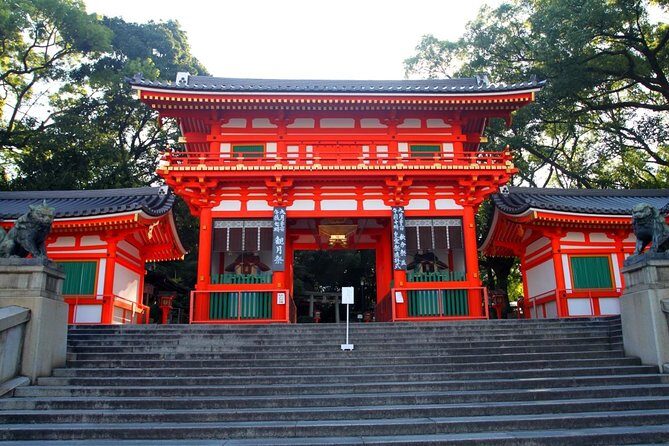
- Yasaka Shrine at night: free entry with local context right where it counts.
- Silent stone-wall lane section: a built-in moment to slow down and keep quiet.
- Possible Kiyomizu-dera illumination: depending on season, the lights can make the climb worth it.
- Easy start point near Minamiza Kabuki: straightforward meeting spot in Higashiyama.
Why Gion at night feels calmer than daytime
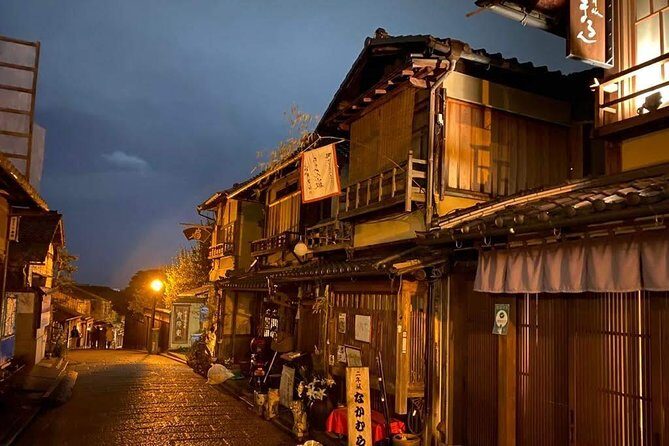
Gion is busy at most hours, but night changes the rules. Streetlights soften the crowds, storefronts glow, and the alleys start to feel like real neighborhoods instead of a photo set. This walk leans into that shift by keeping the rhythm light and the moments focused.
You’re not doing a checklist of ten major monuments. You’re learning how to move through the area like a local—especially in the narrower lanes where noise doesn’t belong. That’s a small thing, but it makes a big difference in how the streets feel around you.
You can also read our reviews of more walking tours in Kyoto

Meeting by Minamiza Kabuki and getting oriented fast
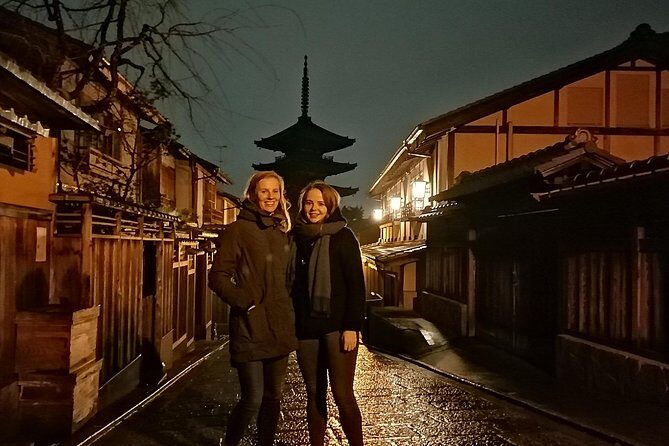
You meet in front of the Minamiza Kabuki theatre area (the pickup point is listed as 194 Kawabatachō, Higashiyama Ward, Kyoto). From there, the tour flows through the historic pass in Gion with local context as you go.
I like this kind of start for two reasons. First, it’s in the heart of Higashiyama, so you can connect other plans afterward. Second, you get quick orientation—where to look for traditional features, how the streets braid together, and which corners are best at night. If it’s your first evening in Kyoto, this helps you stop feeling like you’re wandering.
Stop 1: Yasaka Shrine at night, where the free entry actually matters
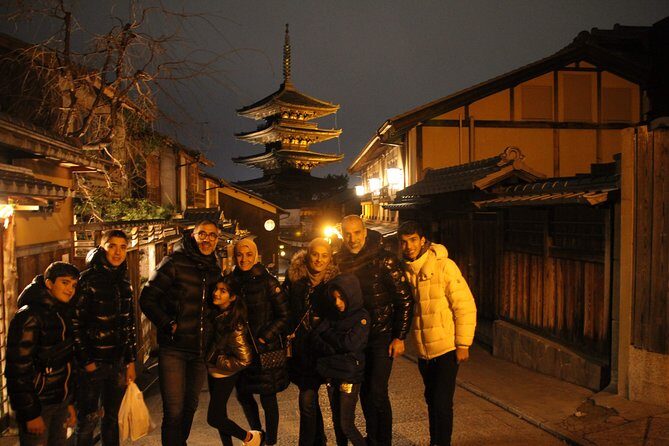
The first main stop is Yasaka Shrine, with a brief history using local detail. Entry for this stop is free, so you’re not stuck deciding whether it’s “worth paying for” before you even feel the atmosphere.
At night, Yasaka Shrine has a steadier mood. The lighting makes details stand out—stone, lantern-style glow, and the feeling that you’re arriving at a place that’s been used for centuries, not just photographed for minutes. Your guide’s role here is practical: you’re not just looking, you’re understanding what you’re seeing and why people still treat it as meaningful.
Time on this stop is about 15 minutes, so it’s enough to orient and soak in the vibe without turning into a long temple errand.
The stone-wall lanes: the tour’s quiet rules (and why they’re good)
Between bigger landmarks, you’ll move through a stone wall district section where your guide asks everyone to keep silence. This isn’t a random “be respectful” note—it’s built into the flow.
Here’s what I like about that approach: it forces you to slow down and watch how the neighborhood sounds (or doesn’t). In a place like this, voices can carry. When everyone quiets down, you notice texture, narrow spacing, and the way the street bends. It also feels more authentic, because it mirrors how people behave where they live and work.
If you’re the type who talks while walking, plan to switch gears. Think of this segment as your calm reset button.
Yasakanoto pagoda: history first, then photos where they count
Next comes Yasakanoto, where you’ll hear the history of the pagoda before heading into a photo moment. Entry here is free, and the time is about 20 minutes.
This stop works because the story comes before the camera. When you know what the pagoda represents and how it fits the area, the photo becomes more than a background. The guide also helps with positioning for pictures in front of the pagoda—exactly the kind of thing that’s hard to do when you’re just trying to find the shot yourself in a crowded city.
I also like that the pace stays relaxed. You’re given time to take photos, but you’re not left standing around wondering if you’re doing it wrong.
You can also read our reviews of more evening experiences in Kyoto


Walking the famous slope in Yasaka
After the pagoda, you’ll walk through the famous slope area in Yasaka. This part is about movement and atmosphere more than formal sightseeing.
Night suits slopes in a way daytime doesn’t. Light reflects off surfaces, silhouettes build as you round corners, and the street feels more “cinematic” without needing a filter. It’s also a good stretch to refocus after the shrine and pagoda moments. By the time you get here, you’ve learned how to look. Now you just enjoy walking.
Kiyomizu-dera at night: possible illumination, and one cost you should plan for
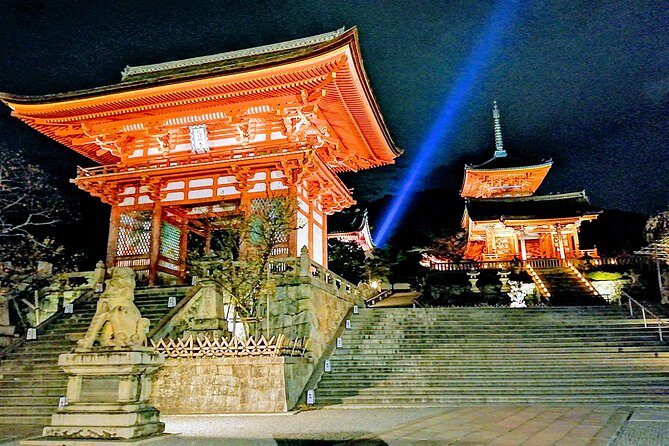
The final major stop is Kiyomizu-dera Temple, with a chance to see illumination depending on the season. Time here is about 10 minutes, and admission isn’t included.
This is the one part of the tour where you should be ready for a potential extra expense. Since the temple ticket isn’t bundled, you’ll want to plan ahead so you’re not caught deciding at the gate. If you do pay for entry, you’ll be rewarded with a temple view that can feel very different after dark—especially if lighting is happening.
Even if the lights aren’t on at that moment, Kiyomizu-dera still has weight. The quick timing keeps this stop from ballooning, and it leaves you with energy for whatever you do next after the tour ends.
How much is a $35 night walk in Gion really worth?
At $35 per person for about 1.5 hours, this can feel like a bargain or a splurge depending on what you want from Kyoto.
Here’s what makes it good value:
- You’re paying for local guidance that helps you understand what you’re looking at (shrines, pagoda context, and the quiet-lane etiquette).
- You get photo help built into the experience, which matters because good night photos in Japan are tricky without the right spot.
- The tour is private, meaning it’s only your group. That usually makes the time feel more efficient than a larger group walk.
What could make it less appealing:
- If you don’t care about photos or context, you might feel the value is tied mainly to your guide’s storytelling and picture-taking.
- You still have temple entry to consider at Kiyomizu-dera.
For me, the sweet spot is this: if you want your first night in Gion to feel like you have a plan, not just a wander, this price-to-time ratio works.
What the guide experience adds (beyond facts and photos)
A big reason this tour gets strong word-of-mouth is how personal it feels. Your guide isn’t just listing dates; they’re shaping the walk so you see the area the way it’s meant to be seen—quiet alleys, correct etiquette, and photo timing.
You’ll also get practical help for the “after tour” phase. The tour wraps back at the meeting point, but many groups finish the evening with the guide’s guidance on where to eat next. That’s helpful if you’re tired, hungry, and still trying to figure out which streets will take you to something good without stress.
And if you’re traveling as a family or solo, this private setup tends to feel easier. You can move at a comfortable speed, and questions don’t get lost in a crowd.
Logistics that matter: mobile ticket, transit access, and weather
This experience uses a mobile ticket, which is convenient in Kyoto where paper tickets can become one more thing to manage at night. It’s also listed as being near public transportation, so you’re not reliant on a complicated route just to start.
One practical note: it requires good weather. If conditions aren’t right, you’ll be offered a different date or a full refund. In practice, that means you should pack for Kyoto evenings—bring a light layer and keep an eye on the forecast.
Also, service animals are allowed, and most people can participate, which helps if your group has specific needs.
Who should book this Gion night walk?
This tour is a strong fit if:
- It’s your first night in Kyoto and you want fast orientation in a historic area.
- You care about culture details and want the “why,” not just the “where.”
- You want night photos without standing around trying to guess the best angle.
- You like a private experience where you can ask questions and keep a calmer pace.
It’s less ideal if:
- You want to move completely independently with no guidance.
- You’re not interested in shrine/pagoda context and prefer a bigger “see everything” route.
Should you book this Gion night tour?
I’d book it if you want Gion to feel real on your first evening—quiet lanes, meaningful stops, and photo help that makes your night feel like something you’ll actually remember. The private format and the short, focused stops make it efficient. And if the Kiyomizu-dera lights are on, the payoff can be special.
Skip it only if you know you dislike walking at night or you’re not interested in the cultural framing and photo moments. Otherwise, this is an easy way to turn Kyoto’s evening glow into a story you understand.
FAQ
How long is the Kyoto night walk tour in Gion?
It lasts about 1 hour 30 minutes.
How much does the tour cost?
The price is $35.00 per person.
Where do we meet for the tour?
Meeting is at 194 Kawabatachō, Higashiyama Ward, Kyoto, 605-0075, Japan, in front of the Minamiza Kabuki theatre.
What are the main stops during the walk?
The walk includes Yasaka Shrine, a quiet stone-wall district segment, Yasakanoto, a slope in the Yasaka area, and Kiyomizu-dera Temple.
Is admission included for all temples and shrines?
Yasaka Shrine and Yasakanoto are free. Kiyomizu-dera Temple admission is not included.
Is this tour private?
Yes. It’s a private tour/activity, and only your group participates.
Do I need a mobile ticket?
Yes. You receive a mobile ticket.
What happens if the weather is poor?
The tour requires good weather. If it’s canceled due to poor weather, you’ll be offered a different date or a full refund.