REVIEW · TOKYO
Mt. Fuji and Hakone Private Tour with English Speaking Guide
Book on Viator →Operated by Azu International Tours · Bookable on Viator
A day trip like this only works because you skip the hardest part: Tokyo logistics. You get a private round-trip ride plus the freedom to shape the day around your priorities, while still hitting the big hits around Mt. Fuji and Hakone.
What I like most is the comfort and control. You’re in an air-conditioned vehicle, you avoid transfers, and the schedule can flex with time, energy, and weather.
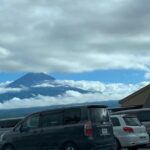
One thing to consider up front: the day is weather-dependent. If clouds roll in, Mt. Fuji may be harder to see, and the itinerary can end up feeling more like scenic stops than the classic summit views.
In This Review
- Key things to know before you go
- Private transport from Tokyo means you actually enjoy the day
- The guide factor (and what to confirm)
- Stop 1: Arakurayama Sengen Park for the classic Fuji look
- Stop 2: Lake Kawaguchiko and the ropeway viewpoint for wide-angle views
- A practical pace note
- Stop 3: Oishi Park for seasonal color and an easy, pretty walk
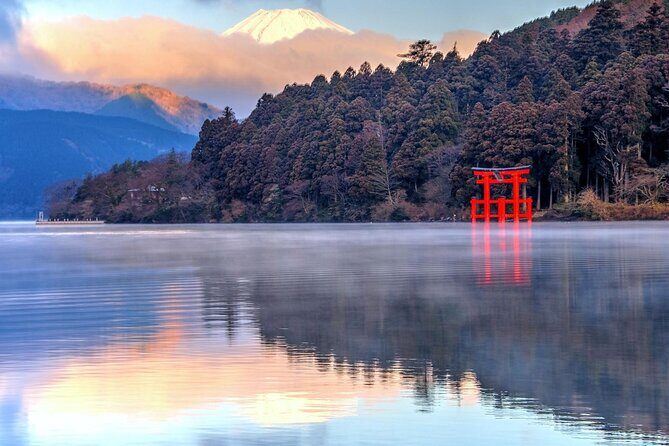
- Stop 4: Hakone Shrine on Lake Ashi for a red-gate pause
- Stop 5: Lake Ashinoko sightseeing cruise for the water-level Hakone views
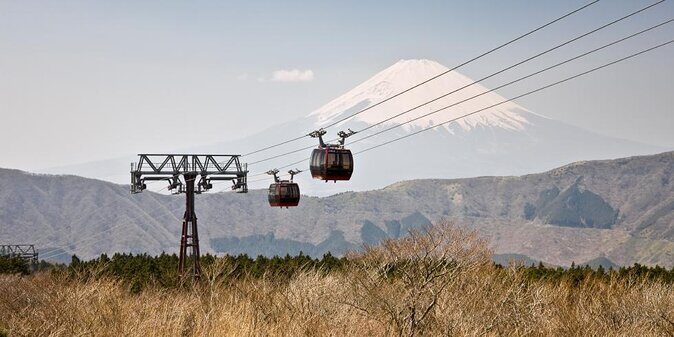
- Stop 6: Hakone Ropeway for the volcanic views at Owakudani
- Stop 7: Owakudani Valley for sulfur-smoke atmosphere and black eggs
- Price and what you’re really paying for
- Where extra costs can pop up
- Weather and traffic: the two things that can change your day
- Who this tour is best for (and who might prefer something else)
- Should you book this Mt. Fuji and Hakone private day trip?
- FAQ
- Is pickup included?
- How many people can you book for?
- How long is the tour?
- What language support do you get?
- Are entrance fees included?
- Will I definitely see Mt. Fuji?
- Can I cancel for free?
Key things to know before you go
- Private transport from Tokyo: round-trip pickup service that cuts the stress and time cost of public transit.
- English-speaking driver/guide: built in for communication, and it can make shrine and viewpoint stops much more meaningful.
- Included transport costs: parking fees, gas/petrol, and highway/tolls are handled, so you’re less likely to get surprise extras.
- Mixture of free and paid attractions: some stops are free (parks/shrines), while things like ropeways and cruises are not included.
- A full day, not a quick loop: expect a lot of driving between viewpoints, so plan your pace and photos accordingly.
- Hakone volcanic views are the payoff: Owakudani’s smoke and sulfur-area atmosphere is the most distinct experience in the Hakone portion.
Private transport from Tokyo means you actually enjoy the day
This tour is built for people who want the countryside without the commuter grind. From the moment you’re picked up, the big advantage is simple: you’re not wrestling train changes, station navigation, and last-minute bus timing. It’s a private vehicle with parking and tolls included, which matters because the places you want to see aren’t all close together.
The other practical win is customization. The core route is set, but the day is described as flexible depending on your needs and time. In real terms, that’s your chance to ask for more time at the best photo spots, adjust around crowds, or shift the order if weather changes what you can see.
You can also read our reviews of more guided tours in Tokyo
The guide factor (and what to confirm)
The tour listing emphasizes an English-speaking driver, and many guide experiences in the feedback stand out for being attentive and proactive with photo timing. Still, a small number of comments mention having a driver who felt more like a driver than an interpretive guide. If your goal is lots of history and context (shrines, volcanic geology, local customs), it’s smart to message ahead and request the level of guiding you want.
Stop 1: Arakurayama Sengen Park for the classic Fuji look
Arakurayama Sengen Park is the kind of place you recognize instantly when you’ve seen photos online: a hillside viewpoint where Mt. Fuji can appear behind the pagoda. The timing here is short—about 45 minutes—but it’s long enough to get your bearings, walk to the best vantage points, and take a second round if the clouds shift.
What makes this stop work on a private tour is that you can treat it like a “conditions checkpoint.” If Fuji is visible, you can stay with it and get multiple angles. If Fuji is hiding, you can spend less time chasing the skyline and move on with your day plan.
Tip I’d follow: dress for wind. Viewpoints on clear days can still feel chilly, and you’ll be standing still for photos.
Stop 2: Lake Kawaguchiko and the ropeway viewpoint for wide-angle views
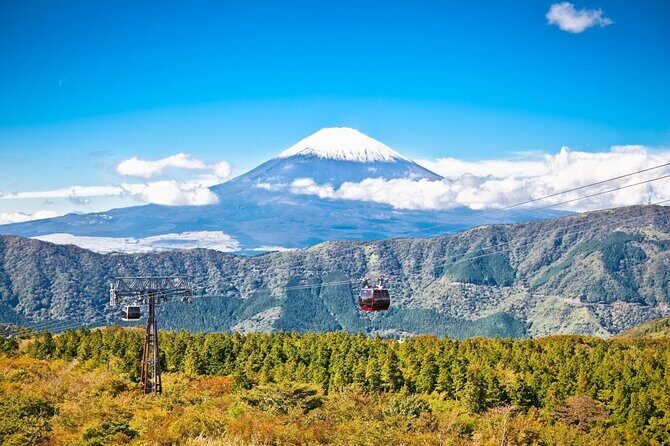
Lake Kawaguchiko is one of the most popular bases for Mt. Fuji views, and this portion gives you a chance to see Fuji reflected on the water (when the sky cooperates). You’ll have about 2 hours, with the listing pointing to a Panoramic Ropeway up to a mountain observation area (ropeway admission is not included).
Here’s why I like the ropeway idea on a private day: you’re not just watching the lake from ground level. You’re getting a higher perspective that can help if the shoreline view isn’t as dramatic as you hoped.
What to budget: the ropeway ticket is separate. So even though you’ve got lots of transport costs covered, you’ll still want a little extra cash or a card ready for these paid rides.
A practical pace note
Two hours at Kawaguchiko sounds generous, but travel time and photo time can eat it. If you’re sensitive to rushing, focus on one main viewing plan: ropeway + lake walk, or ropeway + quick scenic loop, rather than trying to do everything.
You can also read our reviews of more private tours in Tokyo


Stop 3: Oishi Park for seasonal color and an easy, pretty walk
Oishi Park is where the trip slows down. You get about 30 minutes, and it’s a straightforward win for anyone who likes soft scenery: a 350-meter walking path with planted flowers and seasonal changes.
Depending on the month, you might see pink carpet-like moss phlox (early April to late May), lavender blooms (late June to late July), or red kokia shrub colors (mid to late October). That seasonal switch is the point here. Instead of only chasing Fuji, you’re collecting a second kind of beauty—color at the shoreline edge.
Also, the park connects to an area where you can enjoy fruit-jam making or cherry/blueberry picking, plus a café option like blueberry ice cream. Those specific activities are not listed as included, but they’re part of the atmosphere of the spot.
My advice: if you’re not doing the picking or the jam, you’ll still enjoy Oishi Park because it’s not a long, exhausting stop. It’s a good “reset” before you head into Hakone.
Stop 4: Hakone Shrine on Lake Ashi for a red-gate pause
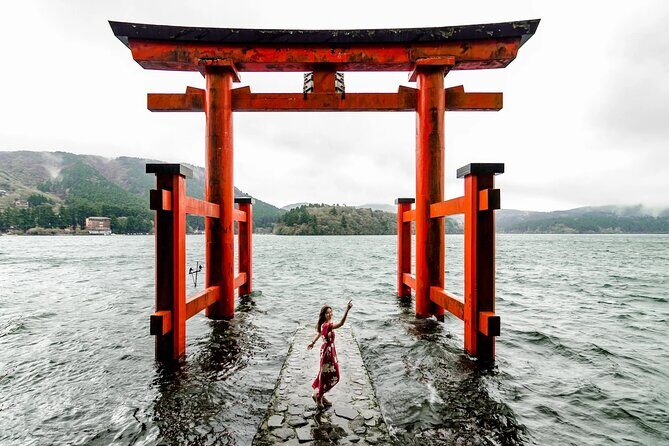
Next you shift from lakeside Fuji views to Hakone’s shrine atmosphere. The stop focuses on Hakone Shrine / Kuzuryu Shrine with time around 30 minutes.
This is where you get that iconic Shinto imagery: the red torii gate by Ashi-no-ko (Lake Ashi). The shrine’s stated age is dating back to 757, which gives the place a grounded sense of long-term tradition. Even if you’re not a shrine expert, the setting is the appeal—quiet water, a strong visual focal point, and an easy place to take photos without sprinting.
Good to know: admission here is listed as free, so you’re paying mainly in time, not tickets.
Stop 5: Lake Ashinoko sightseeing cruise for the water-level Hakone views
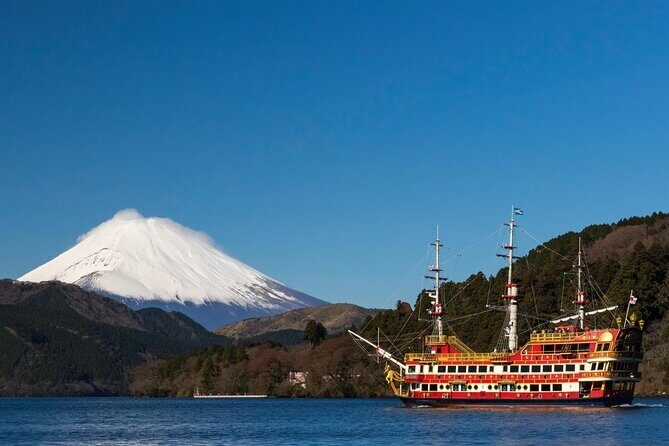
Lake Ashinoko is a major highlight because it changes the angle. You’ll do an approximate 25–40 minute cruise from Togendai-ko to Hakone-machi-ko (or Moto-Hakone-ko), with an hour allotted for the overall lake portion including getting aboard and time around the landing areas. The sightseeing ship is described as having a playful pirate theme with different design ships, and the ship experience is part of the fun for adults and kids.
This is one of the best “value-per-minute” moments of the day because you’re resting your legs while still moving through a scenic area. On a private day, it also reduces friction: you don’t need to coordinate public schedules or hunt for the right pier.
Budget note: the cruise admission is not included, so factor that in.
Stop 6: Hakone Ropeway for the volcanic views at Owakudani
Then you go up. The Hakone Ropeway is where the day starts feeling unmistakably Hakone. You’ll have about 1 hour, and the stop is aimed at views over Owakudani, described as Hell Valley because of the volcanic smoke.
A ropeway works especially well for visitors because it compresses the experience. You can see the dramatic valley and then connect those views to what you’ll learn and smell at Owakudani.
From the route details, you’re traveling between Sounzan and Owakudani, with an additional viewpoint possibility on the way to Togendai. The listing also notes the chance to see Mt. Fuji and Lake Ashi from the ropeway route in clear conditions.
Practical reality: if clouds are low, visibility can fade quickly. Still, the ropeway is worth it because the volcanic scene doesn’t just depend on perfect Fuji views.
Stop 7: Owakudani Valley for sulfur-smoke atmosphere and black eggs
Owakudani is the kind of place you don’t forget. The description centers on active volcanic features, sulfur smells, and the area’s nickname Jigokudani (Hell Valley). You’re there for about 1 hour, giving you enough time to look around at the steaming ground and to take photos without feeling glued to a single viewpoint.
The listing also notes the local specialty: black eggs, where shells turn black due to a chemical reaction with geothermal energy and volcanic gas. Even if you don’t buy one, you’ll notice the egg tradition has become part of the visitor experience in this area.
My advice: plan to move slowly at Owakudani. The air can be strong, and the terrain is atmospheric, not effortless.
Price and what you’re really paying for
The price is $579 per group (up to 3), for an approximate 10-hour private day. That sounds steep if you’re comparing it to a cheap bus and a crowded rail line. But compare it to the real cost of private transport plus a driver/guide for a route that links multiple regions: the value is the reduced friction.
Here’s what’s included:
- Air-conditioned vehicle
- Private transportation
- Parking fees
- Gas/petrol
- Highway/tolls
- English speaking driver
And not included:
- Entrance tickets/fees for certain attractions
- Food and beverage
Where extra costs can pop up
From the itinerary details, you should expect to pay separately for:
- Panoramic Ropeway (Kawaguchiko)
- Lake Ashinoko cruise
- Hakone Ropeway
- Owakudani access tied to the Hakone transit flow (the itinerary marks these as not included)
Meanwhile, some of your time is in free spots:
- Arakurayama Sengen Park
- Oishi Park
- Hakone Shrine / Kuzuryu Shrine
So the spending splits across the day: you’ll pay for the “vertical” and “water” rides, while the parks/shrines are mainly time-based.
My budgeting tip: bring snacks and water. Food isn’t included, and the schedule can be tight depending on traffic and weather.
Weather and traffic: the two things that can change your day
This tour is built around major view targets. That means two variables matter most: weather (cloud cover over Fuji) and time lost in roads.
The good news is the experience is designed to be flexible. If Fuji visibility changes, your guide can often shift how you spend time—more minutes where the light is good, less time where the sky is blank.
The less fun truth is traffic can be brutal between Tokyo and the Mt. Fuji region, especially on weekends. Some feedback mentions that a plan can shrink when driving takes longer than expected, leaving less time for each stop. That’s not unusual for the area; it’s just something to accept with a full-day itinerary.
What I’d do:
- If you can, choose a weekday.
- Keep your must-dos to one or two “non-negotiables,” like ropeway time and one Fuji photo stop.
- Ask your guide to confirm the plan for the day’s weather and what time you’ll likely arrive at the key viewpoints.
Who this tour is best for (and who might prefer something else)
This is a strong pick if you:
- Want privacy and a calm pace compared with public transit
- Prefer having an English-speaking driver help you communicate and navigate stops
- Like a “greatest hits” route that mixes Fuji viewpoints and Hakone’s volcanic scenery
- Travel with parents or anyone who benefits from fewer transfers
It might be less ideal if you:
- Want a very deep, lecture-style guide for every minute (a few experiences describe more driving service than guided commentary)
- Hate the idea of paying extra for ropeways and cruises after booking
- Are extremely sensitive to schedule compression from weather and traffic
Still, if you show up ready to adapt, the day can be a winner. Many of the standout experiences in the feedback emphasize guides who helped passengers spot the best photo timing and kept the day running smoothly even when conditions were imperfect.
Should you book this Mt. Fuji and Hakone private day trip?
I’d book it if your top priority is a stress-free day linking Fuji and Hakone with private transport, included tolls/parking, and an English-speaking driver/guide to steer the day. The route makes sense: Fuji viewpoints early and mid-day, then shrine, lake, ropeways, and the volcanic core of Hakone.
I would think twice if you’re hoping for guaranteed summit photos regardless of clouds, or if you need long, unhurried time at every stop. This itinerary is packed by design, and the area’s roads and weather can tighten the schedule.
If you do book, go in with a smart mindset: treat Mt. Fuji as the star that might appear in full costume, but be ready to enjoy the supporting cast—lake angles, shrine gates, and the unmistakable smoke-and-sulfur world of Owakudani.
FAQ
Is pickup included?
The tour notes that pickup is offered, and it includes private transportation from Tokyo and back.
How many people can you book for?
The price is per group for up to 3 travelers.
How long is the tour?
The duration is listed as 10 hours (approx.).
What language support do you get?
An English speaking driver is included.
Are entrance fees included?
No. The listing says entrance passes or fees are not included. Some stops are free, while others like ropeways and the cruise are not included.
Will I definitely see Mt. Fuji?
This experience is described as requiring good weather. If it’s canceled due to poor weather, you’ll be offered a different date or a full refund.
Can I cancel for free?
Yes. You can cancel up to 24 hours in advance for a full refund.