REVIEW · TOKYO
Mt. Fuji to Lake Kawaguchi, Lake Yamanaka and Onsen Day Tour
Book on Viator →Operated by TREVOPEDIA · Bookable on Viator
Mt. Fuji in one long day. This tour is built for fast access to big views, with stops timed to hit the Fuji Five Lakes zone and a guided route that saves you from figuring out trains and transfers. I love the air-conditioned comfort for the drive and the guide commentary that helps you read what you’re seeing.
I especially like the way you can check off the two most popular Fuji-lake areas in a single outing: Lake Kawaguchi for classic scenery and Lake Yamanaka for a calmer feel. It’s also a smart deal that several sights come with admission included, so you’re not constantly stopping to buy tickets.
One possible drawback: the hot spring part can be tricky if you have tattoos. The tour notes recommend using skin-color stickers for small tattoos, but larger tattoos may prevent entry, and the bath admission is extra.
In This Review
- Quick take
- Mt. Fuji 5th Station: a high-altitude taste with included admission
- Arakurayama Sengen Park: Fujiyoshida’s Fuji photo angle
- Lake Kawaguchi and Oishi Park: the Fuji reflection circuit
- Shibazakura festival and the Lake Kawaguchi Momiji corridor: seasonal meaning, optional extra costs
- Lake Yamanaka and the Swan Lake boat option: calmer Fuji angles to keep the day from repeating
- Awara Onsen hot spring break: relaxing time with tattoo entry rules to plan for
- Arakurayama Sengen area again: finishing with another Fuji-facing viewpoint
- 10 to 11 hours of real-world logistics: comfort, limits, and what you control
- Price and value of a $115 Mt. Fuji day tour with mostly included admissions
- Who should book this tour, and who might want a different plan
- Should you book Mt. Fuji to Lake Kawaguchi, Lake Yamanaka and Onsen Day Tour?
- FAQ
- How long is the day tour?
- What’s included in the tour price?
- Is the hot spring admission included?
- Are there extra costs for seasonal attractions or activities?
- Does the tour allow guests with tattoos to enter the hot spring?
- What happens if the weather is bad?
- Can I cancel for a full refund?
Quick take
- Mt. Fuji 5th Station stop gives you a real sense of altitude without committing to a full climb
- Arakurayama Sengen Park is the postcard-view payoff over Fujiyoshida
- Lake Kawaguchi + Oishi Park focuses on the best angles for Fuji views and seasonal photo ops
- Seasonal add-ons like shibazakura (pink moss phlox) may cost extra depending on timing
- Lake Yamanaka keeps the day from feeling repetitive, with room for gentler pacing
- Awara Onsen break is built in, but plan for tattoo entry rules and extra bath ticket cost
Mt. Fuji 5th Station: a high-altitude taste with included admission
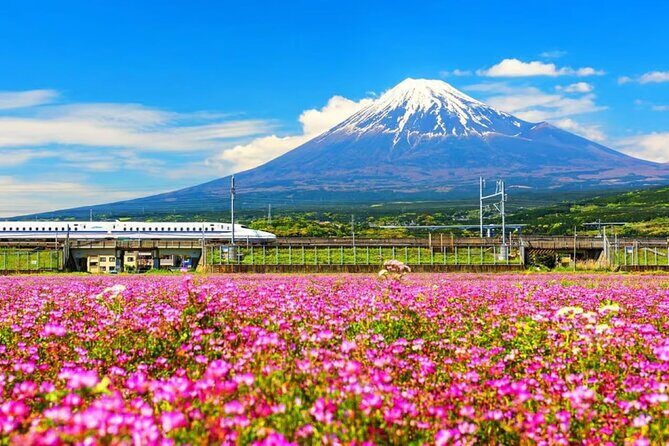
If you want Mt. Fuji to feel like more than a distant image from Tokyo, the Mt. Fuji 5th Station is the move. You’ll stop around 2,300 meters (about 7,546 feet), which is high enough that the air and the views make it feel like you’re truly near the mountain, even though you’re not doing an all-day hike.
This stop also works well for different walking levels. You’re not committing to the full climbing experience, but you still get that “this is the real thing” perspective—wide skies, strong light, and the kind of layered scenery that helps you understand why people talk about Fuji like it’s a living presence.
Practical note: this tour is weather dependent. With good visibility, the 5th Station can feel like a summit-adjacent moment. When clouds roll in, the best you can do is still enjoy the setting and let the guide keep you moving to places that often have more forgiving viewpoints.
A few more Tokyo tours and experiences worth a look
Arakurayama Sengen Park: Fujiyoshida’s Fuji photo angle
After you leave the altitude feel behind, you pivot into classic Fuji “framed view” territory with Arakurayama Sengen Park. This is where you get panoramic sightlines of Mount Fuji, especially from the Arakura Shrine area.
The value here isn’t just the view—it’s the context. When you’re standing there, you can start linking what you’ve seen at higher elevations to the lake regions below. It’s also a great early anchor for the day, because it sets expectations: Fuji is the star, but each location gives you a different composition.
Timing matters, too. You’ll spend around an hour here, long enough to walk around at a comfortable pace, take photos, and still have energy for the next stops. If you’re the type who wants variety, this is the bridge between “Fuji on the mountain” and “Fuji reflected in water.”
Lake Kawaguchi and Oishi Park: the Fuji reflection circuit
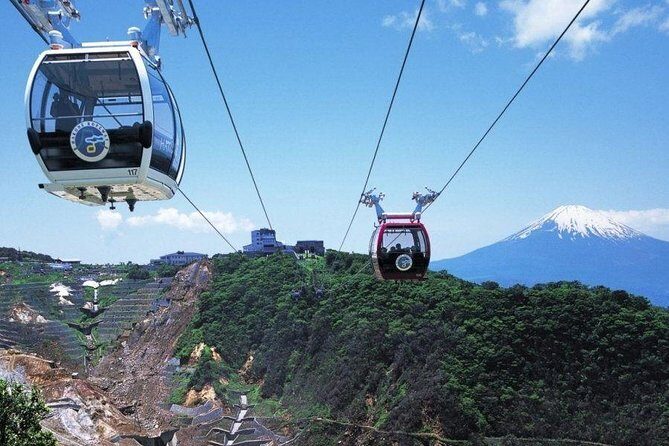
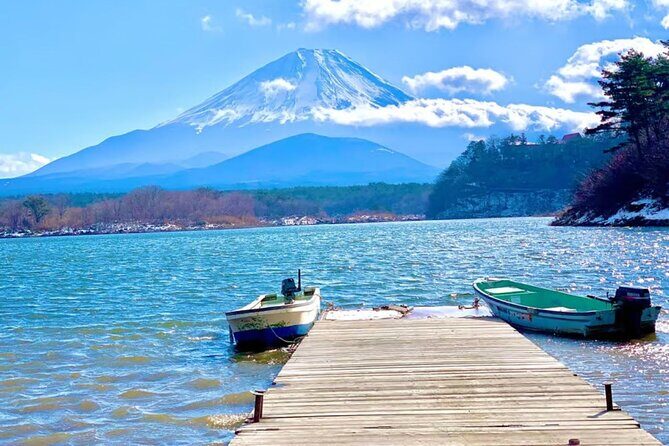
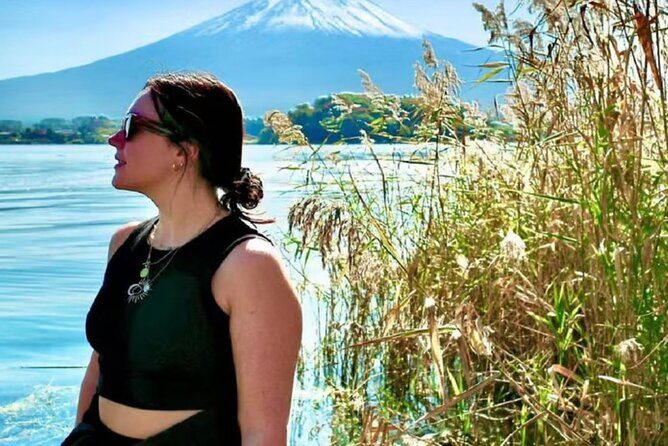
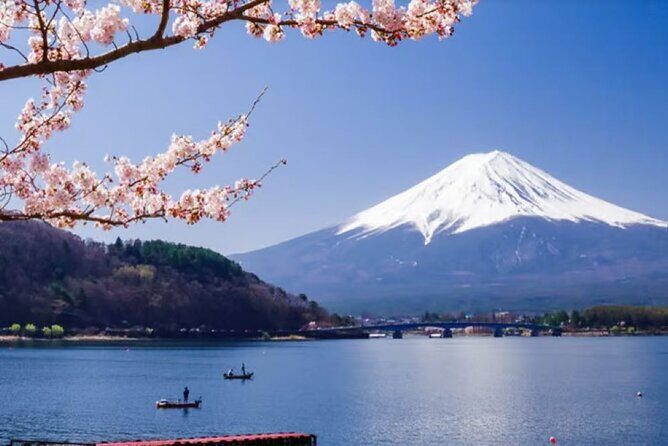
Now for the big payoff: Lake Kawaguchi. This is one of the Fuji Five Lakes (Fujigoko), sitting at the northern base of Mount Fuji. In plain terms, it’s popular because it’s one of the most reliable places in the area to see Fuji with open water in the foreground.
You’ll spend about 2.5 hours at Lake Kawaguchi, which is enough time to do more than a quick photo stop. The longer stretch means you can find a viewpoint that matches your style—standing still for the classic shot, or wandering a bit if the light changes. When the weather cooperates, this is exactly where Fuji views start feeling iconic instead of merely scenic.
Then you head to Oishi Park, along the lake’s northern shore, known for some of the best angles. Oishi Park is especially famous for seasonal flowers (the tour includes a stop that ties into shibazakura festival timing), but even if it’s not peak bloom, the park layout gives you multiple ways to frame Fuji.
This part of the day is also where I’d pay attention to the “small details” that make photos look better in real life:
- Positioning matters more than people think. Try a few spots before you assume the first view is the best.
- Light changes fast near the lakes. If you’re patient for 10–15 minutes, you often get a cleaner, sharper look.
Admission for Oishi Park is included, which keeps costs simpler while you’re focused on walking and viewing.
Shibazakura festival and the Lake Kawaguchi Momiji corridor: seasonal meaning, optional extra costs
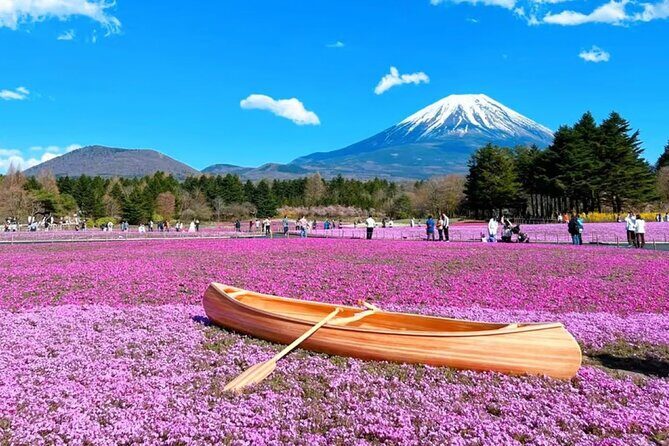
This tour is built around seasons. Depending on timing, you may see the Fuji Shibazakura Festival region (pink moss phlox fields). That specific stop is optional and not included in the price, so plan for an extra ticket cost if it’s on schedule when you travel.
Later, you may also visit the Lake Kawaguchi Maple Corridor—often referred to as the Momiji Corridor—known for Japanese maple color changes in autumn. This is an included stop, and it’s a nice change of pace: after hours of lake staring, you shift to trees, paths, and a different kind of Fuji framing.
The practical takeaway: don’t treat these as guaranteed “must-see” sights. The tour notes that seasonal visiting dates can vary each year. If you’re traveling in a shoulder season, you’ll still get lake views and shrine/park viewpoints, but the flower or foliage intensity might be lower than peak weeks.
Also: I like that the tour doesn’t force every seasonal stop. One is optional (the shibazakura festival), which means you can decide whether it’s worth the extra fee for that day’s blooming conditions.
Lake Yamanaka and the Swan Lake boat option: calmer Fuji angles to keep the day from repeating
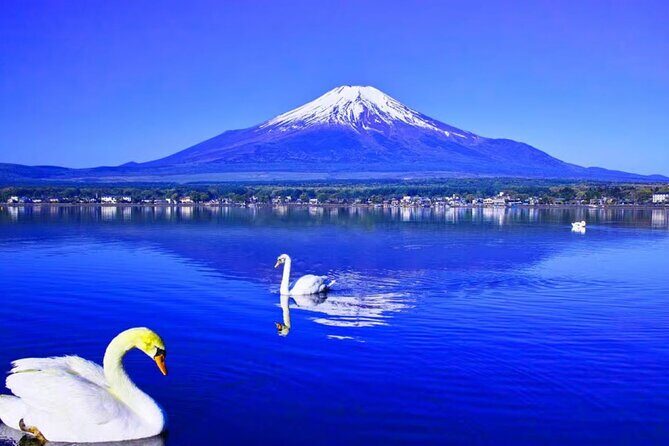
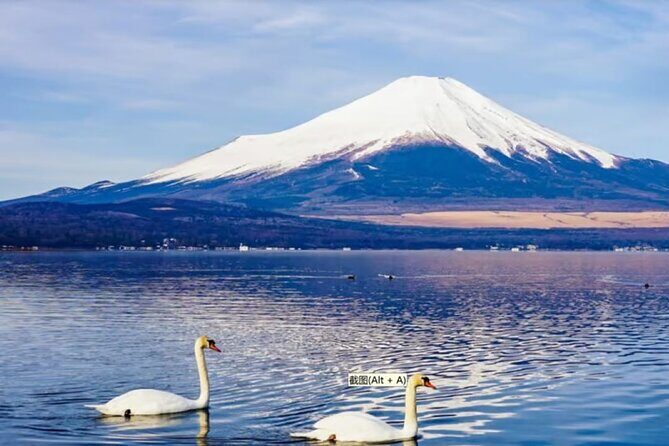
After the busy, classic Fuji-lake circuit of Kawaguchi, Lake Yamanaka gives you a different mood. Lake Yamanaka is the largest of the Fuji Five Lakes and sits east of Mount Fuji. The big win here is variety: you’re not just repeating the same scenery again and again.
You’ll spend around 1 hour 10 minutes at Lake Yamanaka. That might not sound like much, but in a 10–11 hour day that includes driving, it’s a reasonable block. It’s long enough to get a feel for the lake and find a viewpoint that’s not just the loudest tourist spot.
There’s also an optional short ride on the Lake Yamanakako Pleasure Boat called Swan Lake. The boat portion is about 20 minutes and not included. If you like the idea of seeing the Fuji view from the waterline, it can add a “different angle” moment without turning the day into a full excursion.
My advice: if weather is uncertain, use your judgment. If the sky looks promising, the boat can be worth it because it changes the composition. If conditions are cloudy or windy, you might prefer to skip and save energy for the end of the day.





Awara Onsen hot spring break: relaxing time with tattoo entry rules to plan for
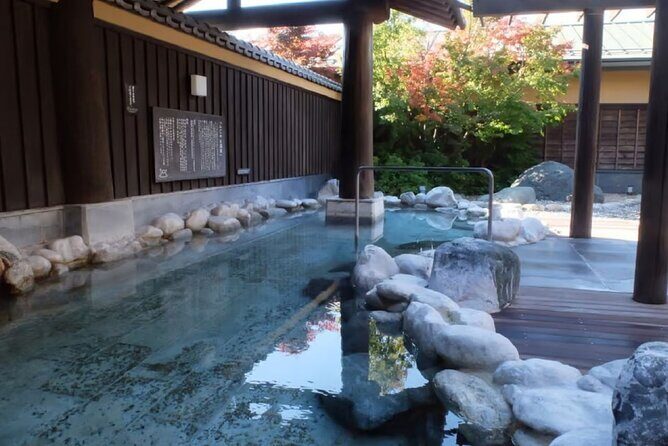
By the time you reach the hot spring stop, you’re usually ready to sit down and reset. The tour includes a hot spring break at the Awara Onsen area. Even though the scheduled stop is part of the route, the bath admission is extra (the tour notes about 1,000–1,600 JPY).
Here’s the key practical detail: the tour explicitly warns about tattoos. For small tattoos, they recommend using skin-color stickers to cover them so you can enter. If the tattoo is large, entry may not be possible.
This is also one reason I’d mentally prepare for a second-best plan. In Japan, hot spring rules can be strict, and it’s not the kind of problem you want to discover after you’ve already paid for the onsen ticket. If you have tattoos, consider stickers ahead of time, and if you’re traveling with a group, ask how the process works for your situation before you go in.
When it works, an onsen stop is a great contrast to all the walking and photo time. You get that simple reward: warmth in your body, calmer breathing, and a chance to enjoy the day without chasing another viewpoint.
Arakurayama Sengen area again: finishing with another Fuji-facing viewpoint
Late in the day, you return to the Arakurayama Sengen area (the plan includes another visit tied to the park/shrine viewpoint). This isn’t “wasted time” if you treat it as a second chance.
Why a second visit makes sense: light changes. Morning and late afternoon can produce noticeably different clarity, and Fuji views often look better when the sky clears a bit. If the earlier view was partially blocked, the second chance can feel worth it.
You’ll spend a longer stretch here—about 2 hours—so you can slow down. It also gives you flexibility to revisit the area at a calmer pace, rather than rushing through everything the first time.
10 to 11 hours of real-world logistics: comfort, limits, and what you control
This is a full day out of Tokyo. Expect total duration including transportation time to run about 10–11 hours. You’ll ride in an air-conditioned vehicle, which matters on hot or muggy days and keeps the day from feeling like a punishment.
Group size is capped at a maximum of 40 travelers. That’s large enough to find energy in the group vibe, but small enough that the tour usually stays organized at stops.
Pickup and drop-off are from designated areas, and the tour offers a mobile ticket. That reduces friction on arrival, since you’re not dealing with paper exchanges.
One more practical thing: the tour requires good weather. If conditions are poor, you’ll be offered a different date or a full refund. That’s comforting, but it also means you shouldn’t plan this day as your only Fuji option unless you’re okay with the possibility of weather changes.
Price and value of a $115 Mt. Fuji day tour with mostly included admissions
At about $115 per person, this isn’t a budget “quick tour,” but it can be a strong value if you compare it to what it would cost you in time and transportation headaches.
What you’re paying for includes:
- driver and guide service fees
- air-conditioned transport
- pickup and drop-off from designated meeting points
On top of that, several key sights have admission included—like the Mt. Fuji 5th Station stop and multiple parks/areas tied to Arakurayama Sengen and the lake viewpoints. Lake Kawaguchi itself is listed as free for admission, which helps.
What costs extra:
- the hot spring/bath admission is not included (about 1,000–1,600 JPY)
- the shibazakura festival stop (if it lines up) is not included
- food and drinks are not included
- the Swan Lake boat option is not included
So how do you judge the value? I look at two things:
1) Would I pay to avoid logistics? If you want Fuji without stitching together trains, buses, and timing, the guided route has real worth.
2) Do I like a structured day? If you like checkpoints and being told where to go for the best chances, this format fits. If you prefer total freedom, you might feel boxed in.
One detail I found especially reassuring from guide feedback: the guide approach is geared toward planning and keeping the day smooth. For example, a guide named Belle has been described as highly enthusiastic and careful about planning. Another guide named Laner has been noted for being attentive and patient. Even if you don’t get those exact names, that kind of energy is what you should hope for in a tight schedule like this.
Who should book this tour, and who might want a different plan
I’d say this tour is a great fit if:
- you want big Fuji views but don’t want a logistics day
- you like being guided through multiple viewpoints instead of hunting for them
- you’re okay with a long day and a lot of “moving through”
You might choose something else if:
- you need a slow-paced trip with lots of free time in one place
- you have tattoos and aren’t comfortable with the potential hot spring entry outcome
- you’re traveling during a period where weather is often shaky and Fuji visibility is a high priority
Because the tour is weather dependent, it’s also smart to keep expectations grounded. Even in the best setup, Fuji can hide. The tour’s structure helps you still enjoy the lakes and parks when conditions aren’t perfect.
Should you book Mt. Fuji to Lake Kawaguchi, Lake Yamanaka and Onsen Day Tour?
Yes—if you want a simple, guided Fuji day with comfort and multiple “signature” photo angles. I like that the day is structured to hit both Lake Kawaguchi and Lake Yamanaka, plus a hot spring reset, without asking you to solve the region’s transport puzzle.
I’d decide based on two practical questions:
- Can you handle a full 10–11 hour schedule with stops that move you along?
- Are you ready for possible extra costs (onsen admission, optional festival/boat) and the onsen tattoo entry rules?
If your answers are yes, this is a strong value way to get the Fuji highlights efficiently from Tokyo.
FAQ
How long is the day tour?
It runs about 10 to 11 hours total, including transportation time.
What’s included in the tour price?
The tour includes driver and guide service fees, air-conditioned transportation, and pickup/drop-off from designated areas. Some site admissions are listed as included, but food, drinks, and certain optional activities are not.
Is the hot spring admission included?
The hot spring/bath admission is not included. The tour notes an additional onsen ticket cost of about 1,000–1,600 JPY.
Are there extra costs for seasonal attractions or activities?
Yes. The Fuji Shibazakura Festival is not included (about 1,300 JPY), and the Swan Lake pleasure boat at Lake Yamanakako is also not included.
Does the tour allow guests with tattoos to enter the hot spring?
For small tattoos, the tour recommends using skin-color stickers to cover them so you can enter. If the tattoo is large, entry may not be possible.
What happens if the weather is bad?
The tour requires good weather. If it’s canceled due to poor weather, you’ll be offered a different date or a full refund.
Can I cancel for a full refund?
Yes. You can cancel up to 24 hours in advance for a full refund. If you cancel less than 24 hours before the start time, the amount paid is not refunded.