REVIEW · KYOTO
Peaceful Kyoto Walking Tour
Book on GetYourGuide →Operated by Reelu inc · Bookable on GetYourGuide
Kyoto feels quieter on foot. This 4-hour guided walk strings together some of the city’s most calming temple gardens, with breathing room built in between stops. You start at 蹴上駅 (Keage Station) and finish at 東山慈照寺 (Higashiyama Jishō-ji), walking a gentle route that feels made for your morning brain.
I especially like the way the guide turns temple details into something you can actually picture. In past departures, English guides such as Eiko or Ayoko have been praised for clear explanations and for answering questions without rushing you. I also love the rhythm: a real coffee break at Blue Bottle in a 100-year-old townhouse, then time to slow down in zen gardens like the white sand at Ginkaku-ji.
One thing to think about first: it’s a walking tour, and the notes warn it’s not suitable for people with mobility impairments. Also, temple admission fees and drinks are extra, so your final cost is higher than the tour price alone.
In This Review
- Key things that make this tour special
- Why this peaceful Kyoto route works (even if you hate crowds)
- Starting at Keage Station and setting your walking pace
- Nanzen-ji: Sanmon Gate drama, Hojo Garden order, and the Lake Biwa aqueduct
- Blue Bottle Kyoto Cafe in a 100-year-old townhouse
- Eikan-dō Zenrin-ji: Amida Buddha, pond gardens, and room to wander
- Philosopher’s Path: cherry-tree calm and a quiet northward stroll
- Ginkaku-ji (Jishō-ji): white sand, moss, and wabi-sabi restraint
- Price and what it really costs you
- Who this tour suits (and who should skip it)
- What to bring so you can enjoy every stop
- What the guides add that you won’t get on your own
- Should you book this peaceful Kyoto walking tour?
- FAQ
- Where does the tour start and end?
- How long is the tour?
- Is the tour guided, and is English available?
- What’s included in the price?
- What temple admission fees should I expect?
- Is coffee included at Blue Bottle Coffee Kyoto Cafe?
- What if my plans change?
Key things that make this tour special
- Nanzen-ji at the start: Sanmon Gate views, Hojo Garden care, and the Lake Biwa Canal brick aqueduct
- A proper sit-down coffee stop: Blue Bottle Kyoto Cafe in a 100-year-old townhouse, with time to rest your feet
- Temple time that’s not just photo stops: guided time plus free time to wander and take in the gardens
- Philosopher’s Path northward: a quiet canal-side walk associated with philosopher Kitaro Nishida
- Ginkaku-ji’s wabi-sabi feel: white sand (Ginsadan), moss gardens, and the serene study hall
- English guidance: praised for attention and clear, usable explanations in everyday English
Why this peaceful Kyoto route works (even if you hate crowds)
Kyoto can feel like a motion picture set at peak hours: people everywhere, everyone jostling for the same angles. This tour is built for the opposite vibe. You’re not only hitting famous sites; you’re moving through them in a way that keeps the day quiet and readable.
At 4 hours, it’s long enough to get context for what you’re seeing, but short enough that you don’t end up exhausted and cranky. And the schedule matters: you get a guided portion at each temple, then you get your own minutes to look, breathe, and reset your eyes.
The best part is that you get both extremes of Kyoto beauty: the big, architectural presence at Nanzen-ji, and then the smaller, contemplative details at Ginkaku-ji. That mix is a nice antidote to the usual checklist tourism.
You can also read our reviews of more walking tours in Kyoto


Starting at Keage Station and setting your walking pace
The tour begins at 蹴上駅 (Keage Station). If you’re the type who likes to get your bearings early, starting here helps. From the start, you’re heading toward a cluster of temple space where the city noise fades.
The overall walk is described as involving a fair amount of walking. That doesn’t mean it’s a hike, but it does mean you should treat it like a comfortable strolling day with shoes that can handle uneven temple grounds. If you’re hoping for a mostly seated tour, this isn’t that.
Timing-wise, plan on a morning that stays consistent: you’re moving from one anchor temple to the next, and the route is structured so you’re not stuck waiting around. That’s a big value point for a 4-hour experience.
Nanzen-ji: Sanmon Gate drama, Hojo Garden order, and the Lake Biwa aqueduct
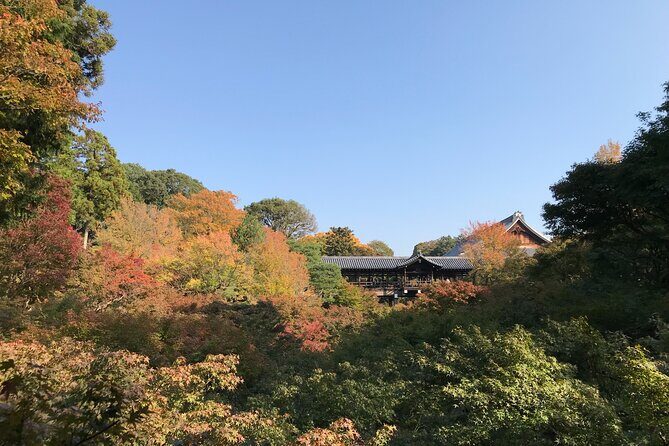
You spend about an hour at Nanzen-ji, one of Kyoto’s landmark Zen temple sites. The first thing you’ll notice is how architectural it feels. The Sanmon Gate is imposing, with that classic Zen-temple sense of scale that makes you slow down without trying.
From there, you move into the parts that feel more human-sized: the Hojo Garden, described as beautifully manicured. Gardens in Kyoto aren’t just pretty; they’re designed to be read. As you walk, you can spot the way paths, plants, and sightlines all guide what your eyes should notice next.
Then comes one of the most striking oddities on the grounds: the brick aqueduct of the Lake Biwa Canal. It’s an industrial-looking element in a space that feels spiritual and quiet. That contrast is part of the appeal. It’s a reminder that Kyoto isn’t a museum box—it’s a living city that has always had practical infrastructure too.
If you only have a limited amount of time in Kyoto, this is a strong first stop because it gives you a “big picture” sense of what Zen aesthetics look like when they’re applied to real buildings and real gardens.
Blue Bottle Kyoto Cafe in a 100-year-old townhouse
Next is Blue Bottle Coffee Kyoto Cafe, in a 100-year-old townhouse. This stop is short, but it’s placed where it does the most good: after you’ve had your temple intensity, you get a chance to sit.
The schedule includes roughly a 25-minute coffee break. The description also calls it a cozy, shorter sit-down moment—either way, the point is the same. You’re not being dragged out for a quick photo and told to move on. You get a break to recharge.
One practical note: coffee and tea are not included in the tour fee. That’s normal for Kyoto day tours, but it’s worth budgeting so you don’t hit a surprise at the counter.
Why this stop feels like good value: it gives you a taste of modern Kyoto without breaking the calm. You’re staying in the same neighborhood mood—quiet streets, thoughtful architecture, and a pause that feels natural rather than forced.
Eikan-dō Zenrin-ji: Amida Buddha, pond gardens, and room to wander
You then head to Eikando (Zenrin-ji). This temple is known for seasonal beauty, especially autumn foliage, but even outside peak color, the gardens and the stillness around the pond keep the mood gentle.
The tour includes guided time focused on highlights such as the Amida Buddha statue and the tranquil pond garden. Even if you’re not a Buddhism specialist, these landmarks are easy to connect to what you saw at Nanzen-ji: the design language of Zen is consistent, even when the layouts change.
You also get about 30 minutes of free time to explore. That’s one of the reasons this tour feels less like a rush. You’re given enough slack to slow down and look properly—especially since garden details can be hard to appreciate when your guide is moving a group quickly.
Timing tip: if you can match your visit to your season—autumn for foliage is the obvious one—you’ll get extra emotional impact from the garden atmosphere. But even in calmer seasons, you’ll still appreciate the quiet.
Admission for Eikando is listed as JPY 600, paid separately from the tour price.

Philosopher’s Path: cherry-tree calm and a quiet northward stroll
After temples, you shift to a lighter kind of sightseeing: walking along the Philosopher’s Path. This is a canal-side route lined with cherry trees and seasonal flowers. It’s also tied to a very specific story—this path is said to have been walked by philosopher Kitaro Nishida as he pondered his thoughts.
That detail matters because it explains the vibe. You’re not just walking alongside water. You’re walking in a place associated with reflection. When the route feels crowded, you can’t really sink into that idea. This tour’s pacing helps you experience it more like a calm walk than a theme-park channel.
The itinerary gives you about 45 minutes here, with some shopping time included. That’s useful because the Philosopher’s Path area has small shops that are more interesting when you’re not stressed.
What to watch for: the path can be visually busy, so it helps to focus. Pick one thing per 10 minutes—trees, water, a garden wall, a side alley—and don’t try to photograph everything. You’ll end up enjoying the walk more.
Ginkaku-ji (Jishō-ji): white sand, moss, and wabi-sabi restraint
You finish at Ginkaku-ji (Jishō-ji), also listed as 東山慈照寺 at the endpoint. This is a UNESCO World Heritage Site, and the tour frames it as the counterpart to Kinkaku-ji—famous for emphasizing wabi-sabi, the beauty of simplicity and imperfection.
The guided portion is where you’ll want to pay attention. You’ll focus on the signature features:
- the white sand garden called Ginsadan
- the moss-covered garden
- the serene study hall
There’s also about 30 minutes to take it in at your own pace. This is the kind of place where looking slowly pays off. Lines, textures, and garden choices feel more meaningful when you’re not sprinting for the next view.
Admission for Ginkaku-ji is listed as JPY 500, and like the other temples, it’s separate from the tour fee.
If you want your Kyoto day to end on the calmer note, this is the correct ending. After walking and coffee and autumn-foliage expectations, the Ginkaku-ji mood is like lowering the volume on the whole day.
Price and what it really costs you
The tour price is $61 per person for about 4 hours with an English guide. That’s a fair rate for a guided route that includes multiple major temple entries and a structured break.
But here’s the math to keep in mind. Temple admissions are extra:
- Nanzen-ji: JPY 600
- Eikando: JPY 600
- Ginkaku-ji: JPY 500
On top of that, drinks are not included. Blue Bottle is part of the experience, but you’ll pay for your coffee or tea separately.
Even with those extras, the value holds because you’re paying for more than access. You’re paying for explanations that help you interpret what you’re seeing—especially in gardens where the “point” isn’t obvious if you’re just taking quick pictures.
Who this tour suits (and who should skip it)
This tour is best for you if you want Kyoto to feel quiet, spiritual, and human-scaled. It’s a great match for:
- first-timers who want a coherent Zen circuit in one morning
- people who enjoy gardens and architecture more than shopping
- visitors who want guided context without feeling rushed
It’s not a good fit if you have mobility limitations that make temple walking difficult. The tour notes say wheelchair accessibility, but they also clearly warn it’s not suitable for people with mobility impairments. If that’s you, I’d strongly suggest asking detailed route questions before booking, rather than assuming.
Also bring comfortable shoes. The tour itself is only 4 hours, but the temples and garden surfaces can be uneven, and you’ll want stable footing.
What to bring so you can enjoy every stop
You don’t need special gear, but you do need basics:
- comfortable shoes
- water
- a camera if you like garden details and gate views
I’d also plan your outfit for layers. Kyoto mornings can shift, and temple shade plus walking can make you feel cooler than you expect.
What the guides add that you won’t get on your own
The biggest difference between a self-guided temple day and this tour is explanation. Guides like Eiko and Ayoko have been praised for clear English, strong experience, and attention to the group’s needs.
You’ll also likely enjoy how the tour connects the dots. For example, Nanzen-ji gives you architectural and garden scale. Then Eikando’s Buddha statue and pond garden shift you to a different kind of stillness. Finally, Ginkaku-ji brings the wabi-sabi theme home with its sand, moss, and restrained design.
That flow is the real value: it makes the day feel like a story instead of three separate stops.
Should you book this peaceful Kyoto walking tour?
Book it if you want Kyoto calm with structure. The 4-hour timing, the English guide, and the mix of Nanzen-ji → Blue Bottle → Eikando → Philosopher’s Path → Ginkaku-ji is built for visitors who like to slow down and understand what they’re seeing.
Skip it if you want a car-heavy, minimal-walking day, or if mobility limitations will make temple grounds uncomfortable. Also budget for extra admissions and coffee/drinks, since the tour fee doesn’t cover those.
If your ideal Kyoto morning is serene, garden-focused, and guided in plain, practical English, this is a strong choice.
FAQ
Where does the tour start and end?
The tour starts at 蹴上駅 (Keage Station) and ends at 東山慈照寺 (Higashiyama Jishō-ji).
How long is the tour?
The tour is 4 hours.
Is the tour guided, and is English available?
Yes. It’s a live guided walking tour in English.
What’s included in the price?
Included are the guided walking tour and an English guide. Coffee/tea are not included.
What temple admission fees should I expect?
Admission fees are listed separately as: Nanzen-ji (JPY 600), Eikando (JPY 600), and Ginkaku-ji (JPY 500).
Is coffee included at Blue Bottle Coffee Kyoto Cafe?
No. The stop is included as part of the schedule, but drinks are not included and must be paid individually.
What if my plans change?
The tour offers free cancellation up to 24 hours in advance for a full refund, and you can reserve now and pay later to keep plans flexible.