REVIEW · KYOTO
Kyoto Guided Walking Tour: Secret Zen Garden and Fushimi Inari
Book on Viator →Operated by Japan Wonder Travel · Bookable on Viator
Morning Kyoto has a secret route. This guided walk strings together Zen quiet and famous Inari views, and I love that you don’t have to guess your way between temples. You also get a small-group feel (max 8), which makes it easier to ask questions and keep moving at a human pace. The main catch is that the route includes moderate uphill walking, so bring comfortable shoes and expect to work a bit.
I especially liked the practical flow: the tour starts in the Tofuku-ji area, then moves through quieter spiritual stops before hitting Fushimi Inari’s iconic torii gates. In past runs, guides such as Kenta and Mika have been praised for clear English explanations and for steering the group away from the heaviest crowd patches, so you get the meaning without constantly fighting people. If you hate hills, or if you want a slow, stroller-friendly day, this one may feel like too much.
By the time you reach Senbon Torii and the main sanctuary (Hon-den), you’ll have already learned how the sites connect—prayer, ritual, and the Zen garden mindset that encourages pause. The tour wraps at the Outer Oratory in Fushimi Inari, which is a handy end point if you plan to continue exploring on your own. Plan on 4 hours rain or shine, but the mobile ticket and guided pacing keep it feeling efficient rather than rushed.
In This Review
- Key highlights worth planning around
- Why this Kyoto walk works: Zen, quiet stops, and Inari in one half-day
- Start at Tofuku-ji with Gaun-kyo Bridge: the scenic warm-up you actually remember
- Komyo-in Temple: the Zen garden moment most people rush past
- Araki Shrine: when the spiritual side is personal
- Fushimi Inari Yotsuji and Kumataka Shrine: quieter viewpoints on the way up
- Okusha Worship Center: ofuda, omamori, and goshuin for the souvenir-minded
- Senbon Torii and the Hon-den Sanctuary: iconic steps, calmer meaning
- Pacing, shoes, and how to handle the uphill parts without losing the day
- Price and value check: what $78.83 buys you in real terms
- Who this Kyoto tour fits best (and who should skip it)
- Should you book this Kyoto Secret Zen Garden and Fushimi Inari Tour?
- FAQ
- How long is the Kyoto Guided Walking Tour?
- What is the price per person?
- How big is the group?
- Where does the tour start and end?
- What time does the tour start?
- Is the tour rain or shine?
- Is there walking involved?
- Are there admission fees at the stops?
- Is there a mobile ticket?
- Can I buy shrine items or stamps on the tour?
- Is free cancellation available?
Key highlights worth planning around
- Secret Zen garden time at Komyo-in: fewer crowds, a proper Zen garden moment, and an admission ticket included
- Fushimi Inari viewpoints beyond the main tunnel: Yotsuji (Four-Way Crossroad) and Kumataka Shrine for quieter scenery
- A guide who helps you stay oriented: you walk temple-to-temple without needing to map every turn
- Prayer spots with real purpose: Araki Shrine focuses on love, strong relationships, and well-being
- You can pick up shrine mementos: Okusha Worship Center is where you can obtain ofuda, omamori, and goshuin stamps
- Small-group cap (8 travelers): makes it feel calm enough for questions and photo stops
Why this Kyoto walk works: Zen, quiet stops, and Inari in one half-day
Kyoto is great at making you feel overwhelmed. You can arrive with a mental list of temples and still lose time figuring out routes, entrances, and what to look at. This tour solves that problem by giving you a planned route and a guide to keep you from wandering into the wrong place—or missing the smaller “why this matters” details.
I also like the balance here. You get the famous part of Fushimi Inari (Senbon Torii) but you don’t start there. Instead, the day builds: Gaun-kyo Bridge and the Tofuku-ji/Komyo-in area set a Zen tone, then you move through prayer and viewpoint stops that feel more personal than the crowd-heavy main path. By the time you reach the iconic torii tunnel, it lands differently because you’ve already been taught how to slow down and observe.
The final drawback to keep in mind: it’s a walking and hiking-style tour with moderate fitness requirements. Even if you’re fine on flat ground, you’ll hit uphill sections around the temples and Inari trails, so plan your energy.
You can also read our reviews of more walking tours in Kyoto


Start at Tofuku-ji with Gaun-kyo Bridge: the scenic warm-up you actually remember
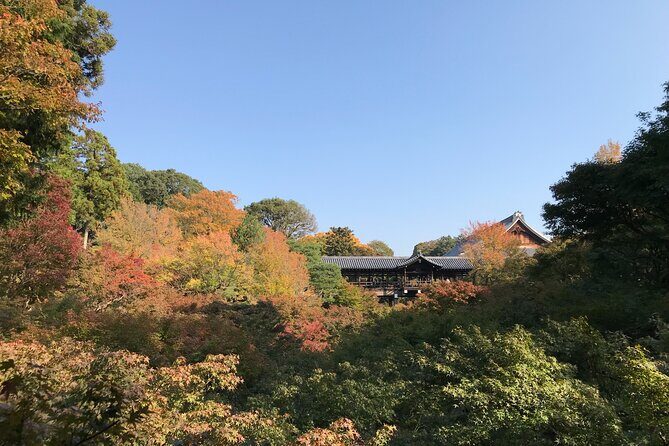
The tour kicks off at a FamilyMart near Nakai Tofukuji, then begins with Gaun-kyo Bridge. This wooden bridge crosses a lush valley and frames views that look down toward Tsutenkyo Bridge and maple trees below. It’s the kind of photo spot that also works as a mental reset—less “tick the box,” more “breathe, look, and orient yourself.”
Why this stop is smart: it gives you a visual reference point before you start walking deeper into temple grounds. Even if you’re not obsessed with architecture or landscaping, you’ll get the shape of the place quickly: water and bridges, layered viewpoints, and that Kyoto rhythm of calm then movement.
Timing is short (about 5 minutes), so don’t expect a long sit-down here. What you should do instead: take a couple of photos, then watch how the view lines up with the area you’ll explore next. That’s what makes the rest of the morning feel connected instead of random.
Komyo-in Temple: the Zen garden moment most people rush past
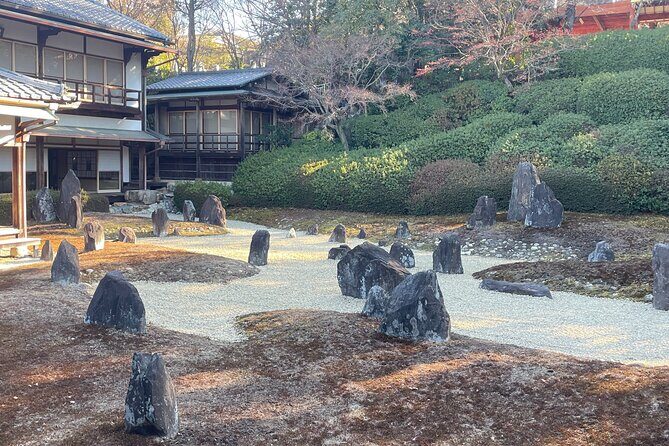
Next comes Komyo-in Temple, a serene retreat known for a Zen garden and a peaceful atmosphere. This is the part the tour highlights as a “secret Zen garden” experience, and it earns that reputation for a simple reason: it’s designed to feel like you’re stepping into a calmer world before you hit the most famous shrine crowds.
The practical value here is big. When a Zen garden is done well, it rewards attention: stone arrangements, the way sight lines guide your gaze, and the quiet feeling that encourages slower breathing. You don’t need to become an expert. You just need time—and a guide who can explain what you’re seeing and why it matters.
Komyo-in’s admission is included, which is helpful for value. It also means you can focus on the experience instead of juggling ticket purchases while your legs are already warming up.
If you’re the type who hates waiting in lines, this stop should suit you. It’s built as a quieter sub-temple visit, so you’re less likely to feel packed in.
Araki Shrine: when the spiritual side is personal
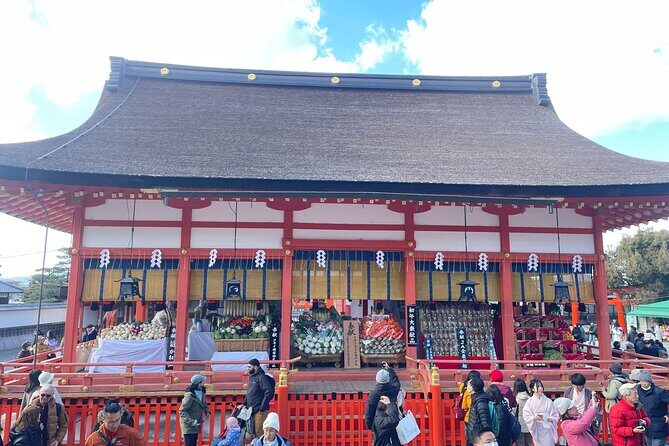
After the garden calm, you shift to Araki Shrine. People come here to pray for love, strong relationships, and general well-being. That’s a key difference from the more tourist-y parts of Kyoto: this stop is tied to everyday hopes.
The tour gives you around 10 minutes here, so think of it as a short chance to observe the ritual and then decide how you want to participate. Even if you don’t plan to pray, you can still learn how the shrine’s atmosphere communicates what people are asking for.
Drawback to consider: if you prefer museums and major architectural sets, a short shrine visit may feel brief. But if you like meaning—why places exist for people—this is one of the most human stops on the route.
Fushimi Inari Yotsuji and Kumataka Shrine: quieter viewpoints on the way up
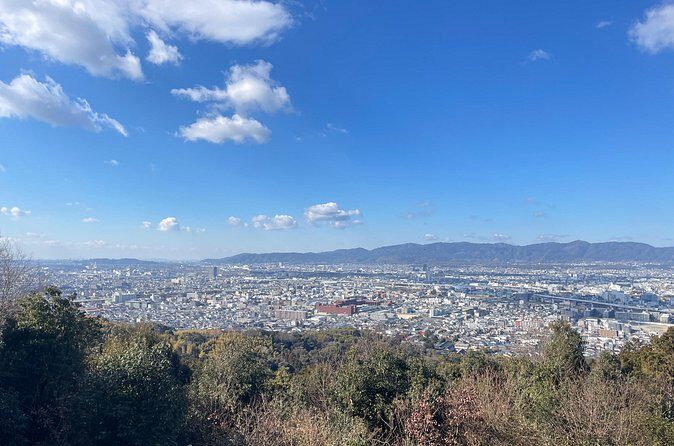
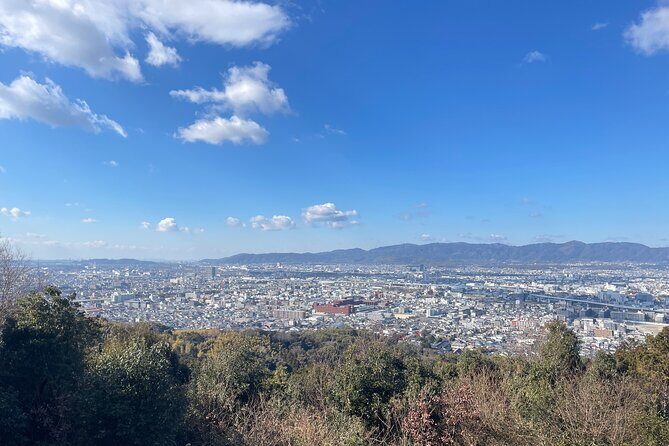
Then you start moving along the Fushimi Inari trail, but the tour doesn’t push you straight into the densest torii sections. You hit Yotsuji first—also known as the Four-Way Crossroad viewpoint. It’s a must-visit perspective where you can take a break and enjoy a scenic panorama. As a strategy, it’s smart: the tour builds up your effort, then gives you a reward view before the big gate tunnel.
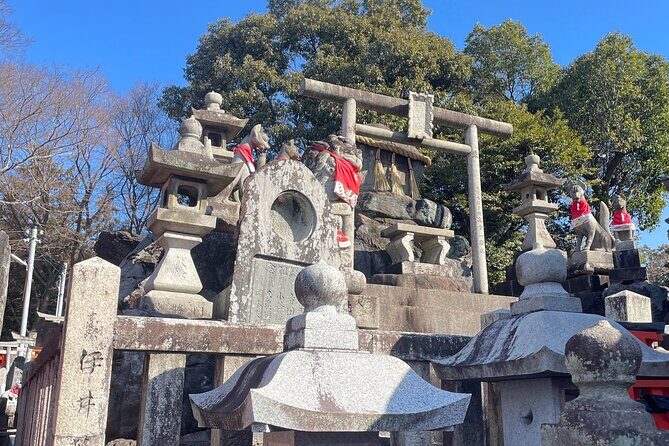
After that comes Kumataka Shrine, described as secluded and mystical, with a belief that it holds strong spiritual energy. You’ll likely notice the difference in atmosphere right away. This is the kind of stop that feels like you escaped the main traffic flow, even though you’re still on the Inari theme.
Why I’d put these stops on your personal plan: they help you experience Fushimi Inari as more than a single photo corridor. You get to see that the shrine system includes secondary shrines and calmer corners where people reflect, not just march through.
The trade-off: you will still be walking. These are not “stand and stare” locations. They’re short, meaningful stops that fit into an active half-day.
You can also read our reviews of more guided tours in Kyoto



Okusha Worship Center: ofuda, omamori, and goshuin for the souvenir-minded
Inside the Fushimi Inari complex, you’ll reach the Okusha Worship Center. This is where visitors can obtain sacred ofuda (amulets), omamori (charms), and goshuin shrine stamps. It’s one of the most practical parts of the tour, especially if you want the real Kyoto-style souvenir that doubles as a keepsake.
If you’ve never done goshuin stamps before, treat this as your “how it works” moment. The guide can help you understand where to go and what to request, which prevents the common frustration of searching through a complex area while your group keeps moving.
Time here is short (about 10 minutes), so come prepared to make decisions quickly. If you’re hoping to browse every charm option, you might want to set that expectation. The value is in getting you to the right place efficiently.
Senbon Torii and the Hon-den Sanctuary: iconic steps, calmer meaning
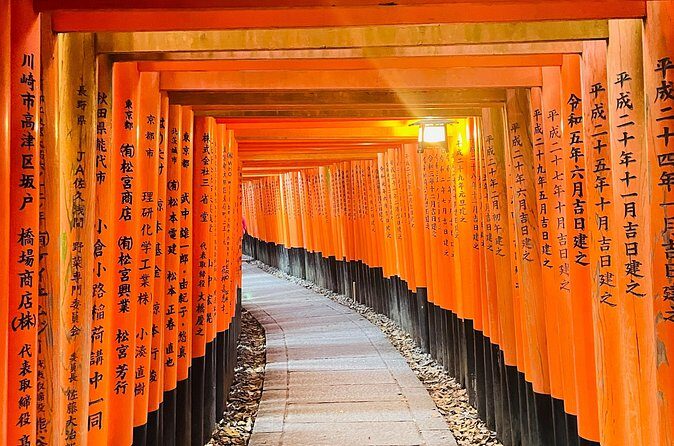
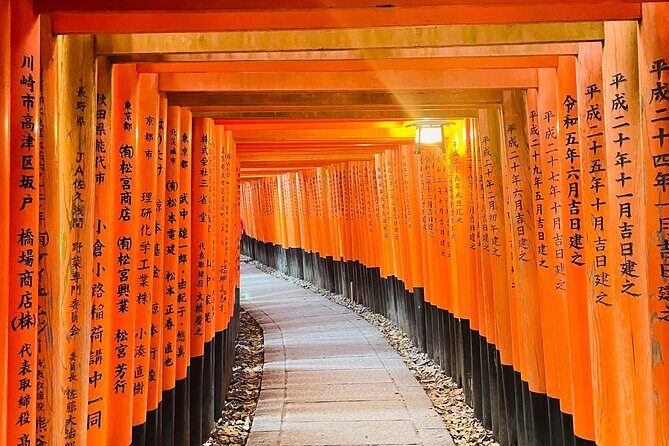
Finally, you reach Senbon Torii—the thousand torii gates that create that tunnel-like experience. This is Kyoto’s famous visual signature for a reason. Even if you’ve seen photos, seeing the scale in person has a way of making your brain go quiet.
What helps on this tour: you arrive with context. Earlier stops cover Zen framing, prayer themes, and quieter shrine points, so the Senbon Torii path feels like part of a larger religious landscape, not just a sightseeing hallway.
After the gates, you end at Fushimi Inari Taisha Hon-den (the main sanctuary). Main shrines often get overshadowed by the gate corridor, but here you get a quieter, more intimate setting. That shift matters. You can step out of the tunnel energy and experience worship space in a calmer mode.
The tour ends at the Outer Oratory in Fushimi Inari Shrine, so you’re right where you’ll likely want to continue on your own—stroll further, grab a snack, or head back to your next Kyoto stop.
Pacing, shoes, and how to handle the uphill parts without losing the day
This tour runs about 4 hours and involves moderate walking and hiking. That means you should treat it like a half-day trek, not a gentle museum stroll.
My best practical advice:
- Wear shoes you trust on uneven stone and uphill steps. If your feet complain, the whole experience gets worse.
- Bring water. Even in mild weather, you’ll expend energy climbing.
- If it’s rainy, assume surfaces get slick. The tour runs rain or shine, so plan for that reality.
The good news is that the guide accompanies you around the temples, so you’re not spending your energy reading signs or trying to match Google Maps to the ground truth. In small groups (max 8), that support feels more personal than a large bus tour.
Also note the start time: 9:00 am. That early start helps you catch the day before the strongest crowd waves hit every single gate and stair section.
Price and value check: what $78.83 buys you in real terms
At $78.83 per person, this isn’t the cheapest Kyoto activity. But it can be good value if you care about three things: navigation, time, and access to meaningful interpretation.
Here’s how the math tends to work in your favor:
- You’re getting a full guided walking route across multiple notable sites in about 4 hours, instead of piecing together a self-guided plan.
- Most major stops listed are admission free, and at least one key Zen garden stop (Komyo-in) includes admission. That helps you avoid extra out-of-pocket costs.
- A small-group format reduces waiting and makes it easier to get answers, which can turn “I saw a temple” into “I understood what I saw.”
If you already have strong confidence navigating Kyoto by yourself and you love independent touring, you might find a self-guided route cheaper. But if you want to maximize your limited time in Kyoto and avoid the stress of figuring it all out, the price starts to look reasonable.
Who this Kyoto tour fits best (and who should skip it)
This tour fits you well if:
- You want Fushimi Inari and a quiet Zen garden in the same morning.
- You’d rather follow a plan than research routes for hours.
- You enjoy asking questions and learning what specific prayer areas and temple spaces mean.
You might prefer a different plan if:
- You can’t handle moderate uphill walking.
- You want long, slow stays at each site without moving on.
- You dislike guided groups and prefer complete independence.
Should you book this Kyoto Secret Zen Garden and Fushimi Inari Tour?
I’d book it if you like a structured half-day that still leaves room for photos and breaks. The mix is smart: Komyo-in and other calmer spiritual stops teach you how to look, then Senbon Torii gives you the iconic payoff with a quieter mindset. With a max of 8 people, it also feels easier to manage than the large “everyone move at once” tours.
Skip it only if the uphill walking is a deal-breaker for you. Otherwise, it’s a practical way to cover a lot of Kyoto’s spiritual highlights without turning your day into a navigation project.
FAQ
How long is the Kyoto Guided Walking Tour?
The tour runs about 4 hours.
What is the price per person?
The price is $78.83 per person.
How big is the group?
The tour has a maximum of 8 travelers.
Where does the tour start and end?
It starts at FamilyMart Nakai Tofukuji (12-chōme-232 Honmachi, Higashiyama Ward) and ends at the Outer Oratory at Fushimi Inari Shrine.
What time does the tour start?
The start time is 9:00 am.
Is the tour rain or shine?
Yes, the tour takes place rain or shine.
Is there walking involved?
Yes. The tour involves a moderate amount of walking and hiking, including uphill sections, so comfortable shoes are important.
Are there admission fees at the stops?
Komyo-in Temple includes admission. Other stops on the route are listed as free.
Is there a mobile ticket?
Yes, the tour uses a mobile ticket.
Can I buy shrine items or stamps on the tour?
Yes. At the Okusha Worship Center of Fushimi Inari Shrine you can obtain ofuda, omamori, and goshuin (shrine stamps).
Is free cancellation available?
Free cancellation is available up to 24 hours in advance for a full refund.