REVIEW · TOKYO
Ramen Making from Scratch with Tokyo Mom(Vegan Option Available)
Book on Viator →Operated by Tokyo Mom's Kitchen · Bookable on Viator
Ramen sounds simple until your hands get involved. In Shinjuku, Aki, a Japanese mom and former backpacker, teaches you how to make ramen and gyoza from scratch using natural, MSG-free ingredients.
I like two things a lot here: you get the hands-on noodle skill (kneading and the whole texture lesson), and you build a Japanese umami broth with real flavor boosters like katsuobushi, kombu, and shiitake mushrooms—no artificial flavors.
One thing to consider: this isn’t a quick bite. At $120 per person for about 2–2.5 hours, you’ll want to plan your day around cooking, and you must get to the venue yourself (transport isn’t provided).
In This Review
- Key things you’ll remember from Aki’s ramen-and-gyoza class
- A Tokyo mom’s kitchen beats the typical ramen show
- Meet Aki (and Kanna), and what their teaching style changes
- Where the class happens: top-floor calm near Shinjuku Gyoenmae
- Making ramen noodles from scratch: the skill you can actually reuse
- The broth lesson: umami you can taste, not MSG you can copy
- Gyoza from scratch: wrap your dumplings with confidence
- What the 2–2.5 hour session feels like hour by hour
- Price and value: where your $120 goes in this hands-on class
- Vegan and other dietary needs: what to ask before you book
- Getting there and planning your day around Shinjuku Gyoen
- Who this ramen-making class is best for
- Should you book Tokyo Mom’s ramen-and-gyoza class?
- FAQ
- How long is the ramen making class?
- What will I make during the class?
- Is there a vegan option?
- Does the class use MSG or artificial flavorings?
- Where is the class located and how do I get there?
- What’s included in the price?
- How many people are in the group?
- Do I need my own ticket or will I receive one electronically?
Key things you’ll remember from Aki’s ramen-and-gyoza class
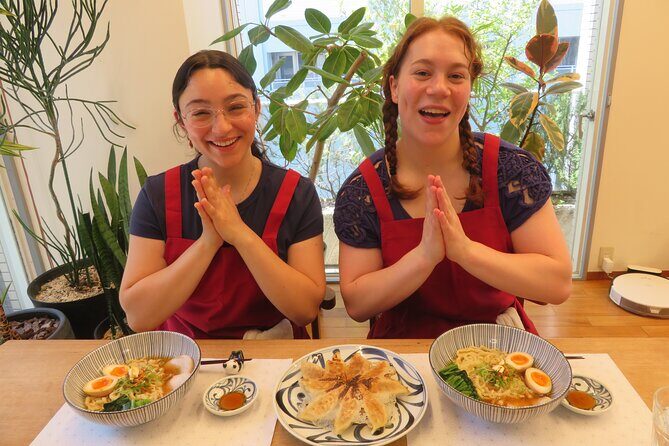
- Small group, big attention: up to 6 people, so you’re not shouting across a room to get help
- MSG-free by design: ramen broth and gyoza are built with natural ingredients, not artificial flavorings
- You learn the “why,” not just the steps: flavor balancing using umami ingredients like kombu, katsuobushi, and shiitake
- A warm family-style kitchen: Aki helps in a patient, welcoming way, including when kids are in the group
- Vegan option is possible: you’ll need to mention vegan (or halal/other needs) when booking, and adjustments depend on ingredients
- Take-home instructions: a digital PDF recipe sheet plus all the ingredients and tools you use in class
A Tokyo mom’s kitchen beats the typical ramen show
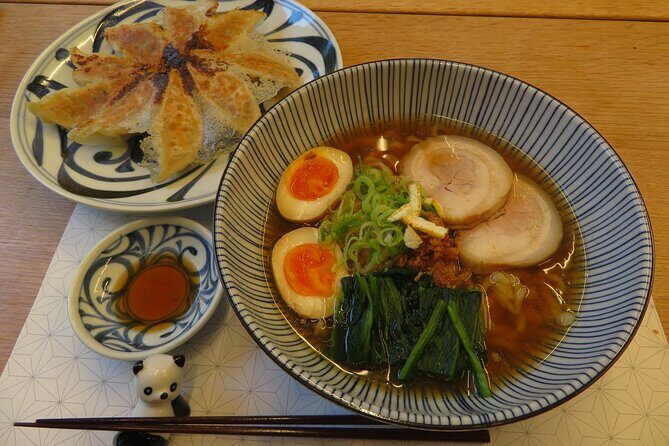
This class works because it feels personal. Aki isn’t running a loud performance for tourists; she’s sharing kitchen knowledge the way a mom would—calm, hands-on, and focused on you getting results.
You also get a specific kind of ramen education: not just how to eat it in Tokyo, but how the flavor gets built. The ingredients list matters here. Instead of chasing artificial shortcuts, Aki guides you through the umami backbone that ramen relies on—kombu and katsuobushi, plus shiitake mushrooms for depth. That’s the part that tends to stick with you long after you leave.
A few more Tokyo tours and experiences worth a look

Meet Aki (and Kanna), and what their teaching style changes
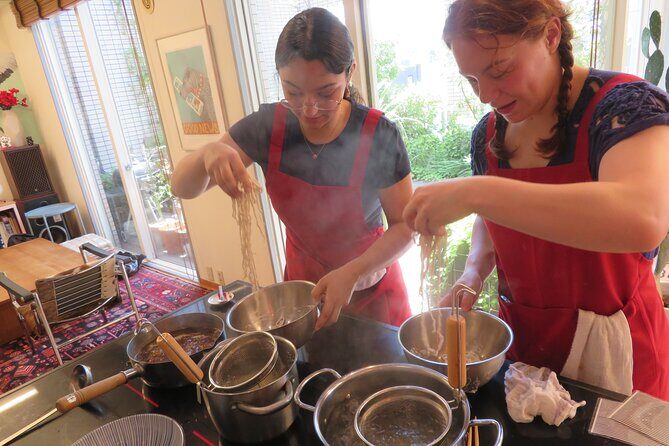
Aki runs the class in English, and the overall vibe is relaxed. I’d expect a lot of showing and checking, especially since the group is capped at 6 travelers. That small size is practical: you can actually ask questions without feeling rushed.
In real life, family groups show up too. The kitchen flow is described as patient, and that’s a big deal if you’re traveling with kids or if you’re the type who needs a moment to catch up. One review highlighted Aki’s kindness with children and the way kids felt comfortable—exactly the kind of detail that tells me this is less intimidating than the average cooking class.
There’s also a helper mentioned in the running of the experience (Kanna). That usually means more hands around when someone needs help with noodles, shaping, or timing.
Where the class happens: top-floor calm near Shinjuku Gyoenmae
Location is a hidden advantage. The kitchen is a 5-minute walk from Shinjuku Gyoenmae Station. That puts you close to the city while still letting you connect the cooking experience with a breather outside.
The space is on the top floor with natural light and a gentle breeze, and it’s described as relaxed and spacious. For a cooking class, that matters more than it sounds. Good airflow and room to move help when you’re kneading dough, using tools, and trying not to fling flour everywhere (it happens).
You’ll meet at: ブライダルユニゾンユニゾン1-chōme-24-7 Shinjuku, Shinjuku City, Tokyo 160-0022, Japan. Plan to arrive a little early so you’re not trying to locate the kitchen while you’re already hungry.
Making ramen noodles from scratch: the skill you can actually reuse
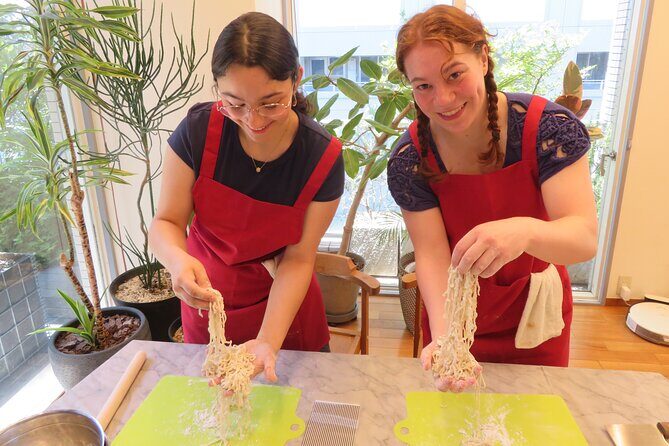
This class isn’t just about assembling ramen. You’ll work the dough and learn what changes when noodles are handled correctly.
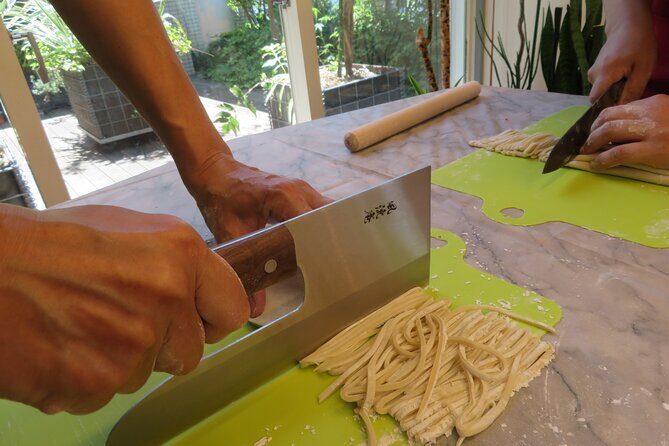
You’ll knead the noodles and craft them from real ingredients. Then, you’ll learn the texture side of ramen—how thickness and handling affect the bite. One standout detail mentioned in the experience is getting to cut noodles by hand with a knife. That’s not something you do in a typical restaurant.
Why this matters for you: ramen is one of those foods where taste is tightly linked to texture. Once you understand how the dough responds to pressure and how the noodles are treated, you stop guessing and start controlling the result at home.
Also, ramen noodles can feel intimidating in videos. Here, you’re learning in a real kitchen with step-by-step guidance, English support, and tools you can use during the session—so your skill grows during the class, not after with a “good luck” recipe at 11:00 pm.
The broth lesson: umami you can taste, not MSG you can copy
The broth is where Aki’s teaching shows its depth. You’ll prepare a rich ramen broth using natural ingredients with no MSG or artificial flavorings.
The core flavors are built from:
- katsuobushi (bonito flakes)
- kombu (kelp)
- shiitake mushrooms
And the standard approach uses chicken and pork to create that deep, satisfying base. If you’re eating meat-free, the class offers a vegan option, but you’ll need to mention dietary needs when booking. Aki says she’ll do her best to adjust ingredients, though not every request can be guaranteed.
The best part, from a practical standpoint, is that you’ll learn flavor balancing—not just repeat someone else’s measurements. That’s what helps if you cook at home later, since broth results vary depending on ingredients, kitchen heat, and how long you simmer.






Gyoza from scratch: wrap your dumplings with confidence
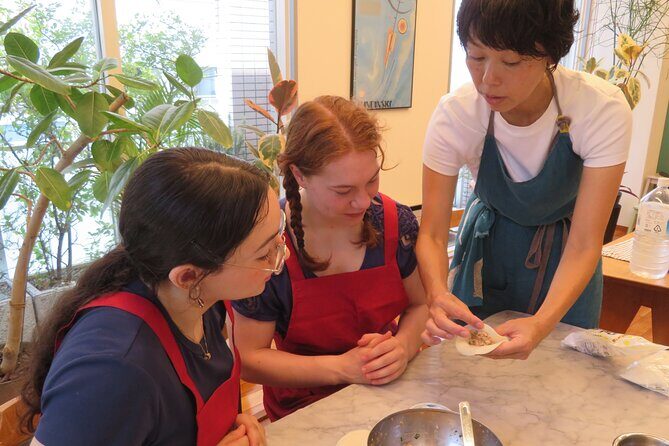
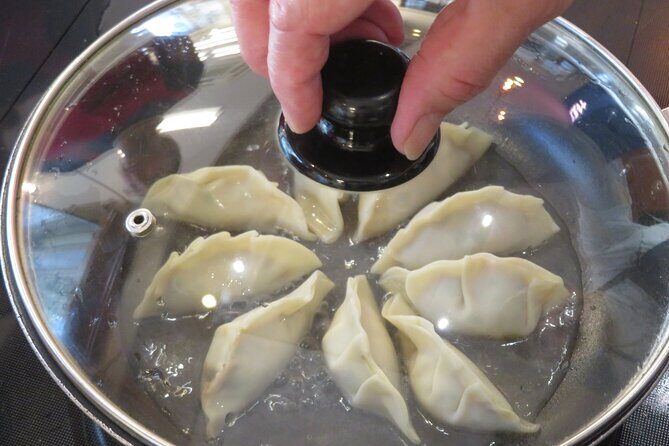
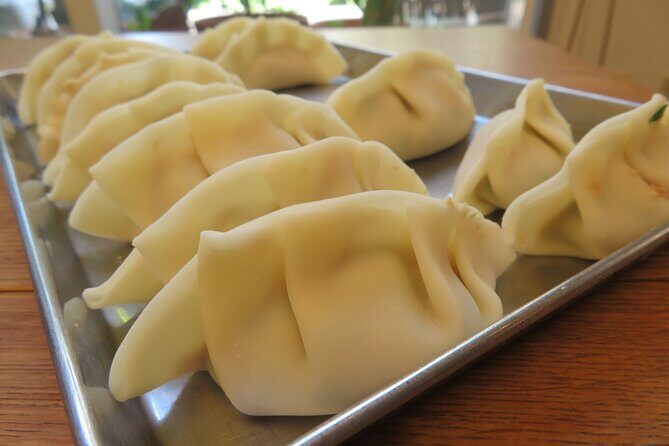
After noodles and broth, you’ll make gyoza together. The key value here is that you’re not eating pre-made dumplings and calling it “authentic Tokyo.” You’re making the dumplings from scratch in the same cooking session.
You’ll have access to kitchen tools and you’ll use an apron provided with the experience. In other words, you can focus on technique rather than shopping for equipment or trying to improvise a workstation.
The class format also helps because you’re not learning gyoza in isolation. You’re pairing dumpling-making with ramen-making, so your brain stays on “how to build a Japanese meal” instead of “how to follow one recipe once.”
At home, gyoza skills tend to pay off fast. They freeze well, they’re forgiving, and once you get the wrapping motion, you’ll find excuses to make them.
What the 2–2.5 hour session feels like hour by hour
The experience runs about 2 hours 30 minutes (approx.), with a hands-on session described as 2–2.5 hours. Here’s the flow you should expect based on what’s emphasized in the class:
- You start by getting set up and learning the process for making ramen and gyoza from scratch.
- You knead and work on noodles, including hands-on steps like cutting.
- You move into broth prep using natural umami ingredients, learning how to balance flavor.
- You wrap and prepare gyoza alongside the ramen work, using tools provided and guidance from Aki.
- You finish by eating what you made, which is the point where the lessons turn into something you can remember.
Because this is a small group class, you can usually move at a comfortable pace instead of being shoved through steps. If you’re visiting with kids, the teaching style is described as patient and supportive, which helps when timing matters.
Price and value: where your $120 goes in this hands-on class
At $120 per person, this isn’t the cheapest food activity in Tokyo. But it can be strong value if you want real cooking skills—not just a meal.
Here’s what your money covers:
- Ingredients for ramen and gyoza (so you don’t pay extra for shopping)
- Full use of kitchen tools and apron rental
- A digital recipe sheet (PDF) you can keep
- An English-speaking Japanese host (Aki) guiding you throughout
That combination is the main value. Restaurant ramen teaches you how to order; this class teaches you how to cook. Plus, you leave with a recipe PDF, which matters because the measurements and steps are hard to recreate from memory.
Also, the class cap of 6 travelers affects value. Smaller groups usually mean more attention and fewer missed steps. In food classes, that’s often the difference between “I made something good” and “I learned something I can repeat.”
Vegan and other dietary needs: what to ask before you book
A vegan option is available, and Aki specifically asks you to mention vegan or halal preferences and food allergies when booking.
The important consideration: she’ll do her best to adjust ingredients, but she notes she may not be able to accommodate all requests. So if you have strict needs, don’t wait. Send the dietary details at booking and ask what the broth and dumpling components will be in your version.
From the class description, the standard broth uses chicken and pork, so your vegan version likely changes the broth base. The exact method isn’t spelled out in the provided details, so treat this as a “confirm the plan” situation, not a guess.
Getting there and planning your day around Shinjuku Gyoen
Transportation isn’t included, so you’ll need to come directly to the venue. The kitchen is near Shinjuku Gyoenmae Station, and the meeting point is in Shinjuku.
Here’s an easy way to plan:
- Before class: grab coffee or a quick snack nearby so you’re comfortable while you cook.
- After class: take advantage of the location. You can relax at Shinjuku Gyoen Park (described as a nearby option) or wander Shinjuku’s shopping and entertainment areas.
Since the class ends back at the meeting point, you can build a simple route: station → class → park or evening plans.
Who this ramen-making class is best for
This is a great fit if you:
- want a practical Tokyo cooking skill you can repeat at home
- enjoy the idea of building umami using real ingredients like kombu, katsuobushi, and shiitake
- like small groups and personalized instruction
- travel with kids and appreciate a patient teaching style
It’s also a good match if you’ve done the main sights already and you want a food experience that’s more hands-on than “look, eat, move on.”
If you’re short on time or you hate cooking workshops (kneading, cutting, shaping), you might find it a bit long. This is for people who want to work with their hands.
Should you book Tokyo Mom’s ramen-and-gyoza class?
Yes, if your goal is skills and ingredient understanding, not just a meal. The combination of from-scratch noodles, an MSG-free broth built with real umami ingredients, and dumpling-making in one session is exactly the kind of value that makes a cooking class worth the money.
I’d especially book it if you like Japanese home-style teaching and want a calm, friendly kitchen setting in Shinjuku.
You might skip it only if your schedule is too tight for a 2–2.5 hour hands-on activity, or if your dietary needs are very complex and you’re not willing to confirm details in advance.
FAQ
How long is the ramen making class?
It runs about 2 hours 30 minutes (approx.), with a hands-on session described as around 2 to 2.5 hours.
What will I make during the class?
You’ll make ramen and gyoza from scratch, including preparing the ramen noodles and broth and crafting the dumplings.
Is there a vegan option?
Yes. Vegan options are available, but you need to mention your dietary needs when booking.
Does the class use MSG or artificial flavorings?
The class description says ramen and gyoza are made with no MSG and no artificial flavorings.
Where is the class located and how do I get there?
The kitchen is about a 5-minute walk from Shinjuku Gyoenmae Station. You’ll need to come directly to the venue, since transportation is not included.
What’s included in the price?
All ingredients for making ramen and gyoza are included, along with full use of kitchen tools and an apron rental. You also get a digital recipe sheet (PDF) and an English-speaking host.
How many people are in the group?
The maximum group size is 6 travelers.
Do I need my own ticket or will I receive one electronically?
You’ll receive a mobile ticket.