REVIEW · TOKYO
Shinjuku Highlights Walking Tour
Book on Viator →Operated by Viyago Japan · Bookable on Viator
Shinjuku can feel like a maze, fast. This walking tour keeps you pointed in the right direction while you sample the neighborhood’s older lanes and its louder nightlife corners, all in a tight 1 to 2 hour loop. You’ll hit Omoide Yokocho first, then shift gears through places like Golden Gai and finish at a calm shrine setting.
I especially like the small group size (max 5). You get real conversation time, not just a headset vibe, and you can ask your guide questions while you’re still standing in front of the sights. I also like that the tour is built around “you won’t get lost” routing through narrow back streets, which is exactly where solo navigation usually turns into wasted time.
One thing to consider: the route goes through Kabukicho, an area closely tied to nightlife. If you’re not comfortable around adult-entertainment energy, you may prefer to keep your distance and stick to the calmer side streets your guide points out.
In This Review
- Key points to know before you go
- Why Shinjuku Needs a Guide: tight alleys and fast context
- Starting at Omoide Yokocho: Showa-era lanes you can actually feel
- Kabukicho: the nightlife district’s lighter and darker signals
- Golden Gai: the subculture corner where stories matter
- Hanazono Shrine finish: a calm reset after the neon blocks
- Price and value: what $39.09 really covers
- Guides make the difference: how Arata-style pacing helps
- Practical walking tips so you enjoy it more
- Who should book this Shinjuku Highlights Walking Tour
- Should you book it?
- FAQ
- FAQ
- How long is the Shinjuku Highlights Walking Tour?
- What does it cost?
- How many people are in the group?
- Is there an admission fee for the stops?
- Where does the tour start?
- Where does the tour end?
- What stops are included?
- How do I get the ticket?
- Who runs the tour?
- What is the cancellation policy?
Key points to know before you go

- Max 5 people means easier questions and a guide who can adapt to your pace
- Mobile ticket makes check-in simple and avoids last-minute paper hunting
- Omoide Yokocho, Golden Gai, Kabukicho cover three very different Shinjuku moods in one walk
- Narrow alley routing helps you avoid the wrong turns that cost time in busy areas
- Free entry for each stop keeps your budget predictable at roughly $39.09 total
- Finish at Hanazono Shrine gives you a natural breather after the nightlife blocks
Why Shinjuku Needs a Guide: tight alleys and fast context
Shinjuku is big, layered, and easy to misread. A lot of the “cool” parts are not on the main streets, and that’s where a guided route pays off. With this tour, you’re not just seeing places—you’re learning what you’re looking at while you’re looking at it.
The format is also practical. It runs about 1 to 2 hours, covers several neighborhoods back-to-back, and uses a mobile ticket so you can stay light and move quickly. The tour is capped at five travelers, which matters in Shinjuku, where crowds and side streets can make group management a headache.
I like that the meeting point is at a very specific, easy-to-find spot: Kitakata Ramen BAN NAI Shinjuku-Omoide yokocho (1-chōme-2-8 Nishishinjuku). That kind of clarity saves stress. The tour ends at Hanazono Shrine (5-chōme-17-3 Shinjuku), so you also get a clean finish point rather than dispersing into the maze.
You can also read our reviews of more walking tours in Tokyo

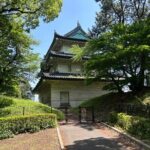

Starting at Omoide Yokocho: Showa-era lanes you can actually feel
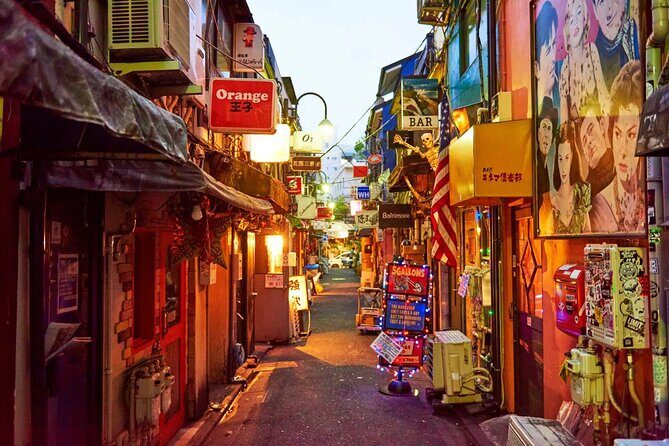
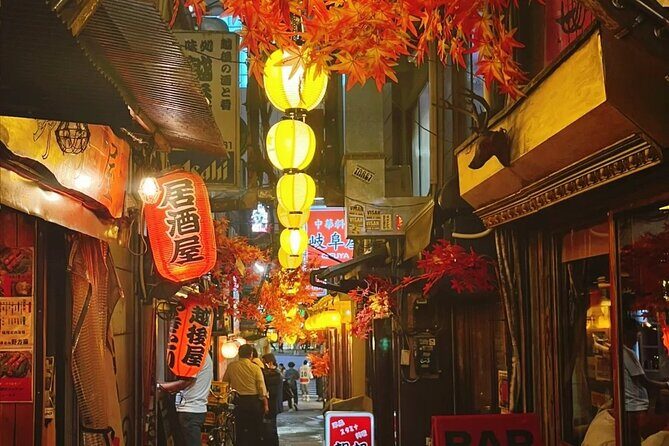
Omoide Yokocho is the opening act for a reason. Your walk begins in a retro alley that preserves the streetscape from roughly 50 to 70 years ago in the Showa era. Even if you’ve seen photos, being there in person helps you understand the scale: it’s compact, character-filled, and built for wandering rather than cruising.
This stop is about 20 minutes, and the focus is more on atmosphere than checklist sightseeing. Your guide helps you read what’s in front of you—why the alley feels nostalgic, why it survived, and how that kind of Tokyo corner shows up again and again in newer neighborhoods. It’s the ideal start because it sets a theme: Shinjuku isn’t only about modern nightlife; it has older layers too.
A useful consideration: Omoide Yokocho is narrow by nature. If you prefer a lot of personal space, you’ll want to follow your guide’s timing and position, since the alley can get busy. The good news is that the whole point of the tour is guided flow, so you’re less likely to get stuck.
Kabukicho: the nightlife district’s lighter and darker signals
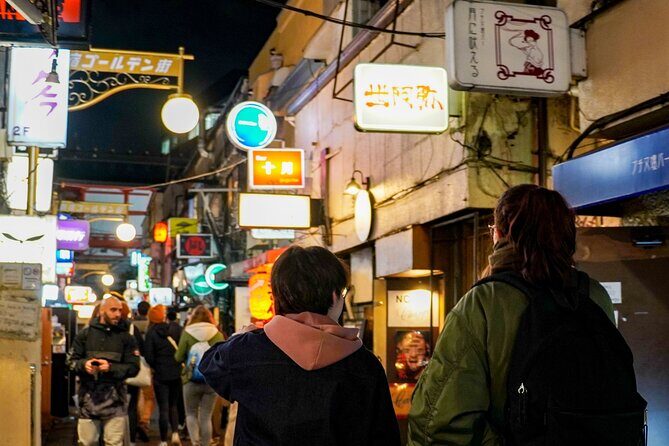
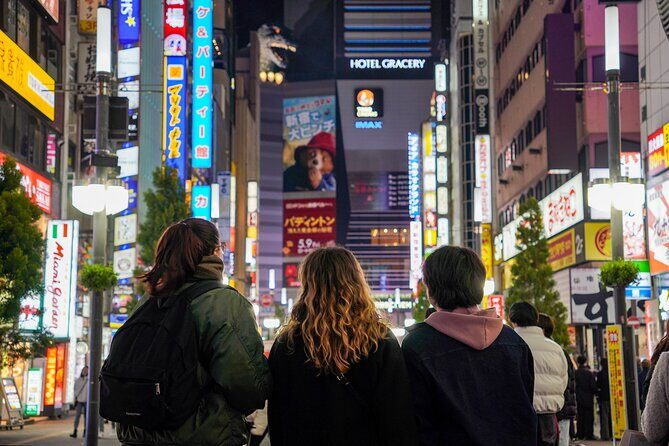
Next comes Kabukicho, one of Tokyo’s most recognizable nightlife zones. In the tour’s framing, it’s not just neon fun; it also shows a darker side of the city. You’ll see the area associated with night entertainment venues like hostess clubs and nightclubs, and your guide gives you the context that helps the scene make more sense.
This part is also about 20 minutes, and it’s a “walk-through with commentary” stop. That matters because if you’re exploring Kabukicho on your own, you can end up either overwhelmed or oddly detached—just looking at signs without understanding the social geography around you. With a guide, you can connect the dots: why certain streets look the way they do, and how the neighborhood functions at different times.
One possible drawback is simple: Kabukicho’s energy isn’t for everyone. If you’re the type who wants Tokyo at its most quiet and pretty, you might find this section too intense. But if you want the real Shinjuku spectrum—where entertainment, commerce, and grit overlap—this stop is exactly what makes the tour feel complete.
Golden Gai: the subculture corner where stories matter
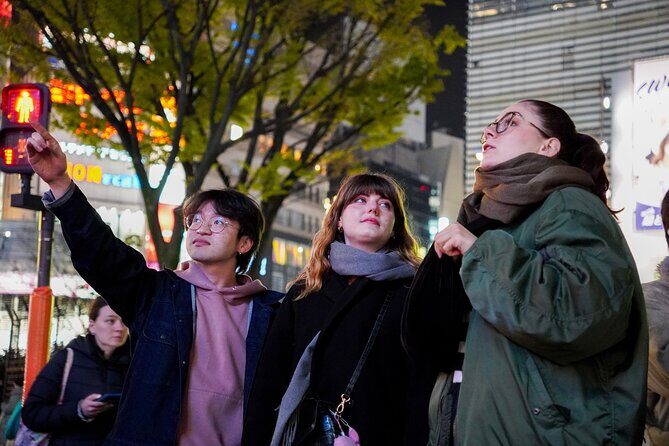
After Kabukicho, the vibe shifts again at Shinjuku Golden Gai. Like Omoide Yokocho, it keeps a retro atmosphere linked to older Tokyo, but it has a different personality: a strong subcultural vibe. It’s been frequented by people like actors and writers, and your guide helps connect that artistic draw to the kinds of places you see.
You spend another about 20 minutes here, so it’s enough time to slow down and take in the details without turning the tour into a long bar crawl. The guide’s role is huge. The same alley structures and doorway density can look random unless someone helps you understand why the place developed the way it did.
If you’re sensitive to nightlife crowds, keep expectations realistic. Golden Gai can feel tight and social. Even if you don’t go inside any venues, you’ll still feel the neighborhood’s intensity from the street. This is one of those areas where having a guide means you can choose how long to linger and where to stand for better views and less frustration.
Hanazono Shrine finish: a calm reset after the neon blocks
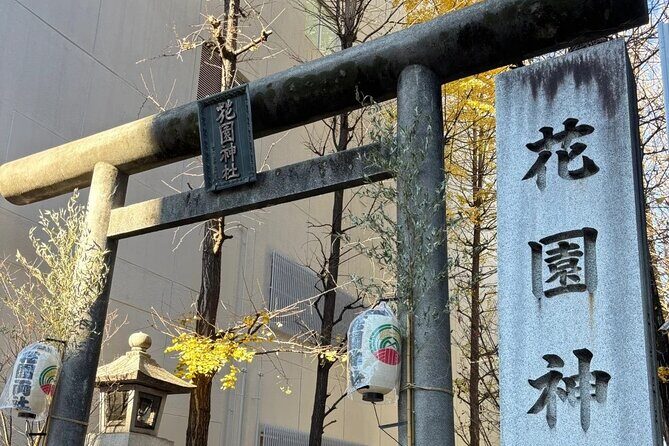
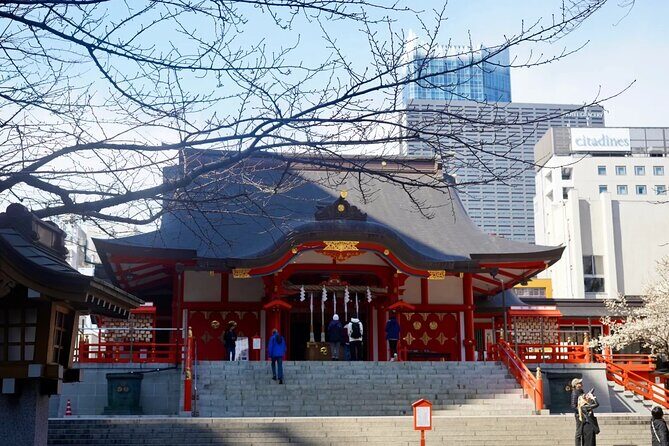
The tour ends at Hanazono Shrine, which is a smart design choice. After the noise and density of Shinjuku’s nightlife zones, you get a traditional Japanese shrine stop with more space and a quieter tempo. The grounds are described as peaceful, surrounded by nature, which gives you a mental breather right when your legs might start to complain.
This is a shorter finish at about 10 minutes, but it works as a “landing pad.” You’re not rushed through in a way that feels pointless; instead, it’s a gentle payoff that balances the earlier parts of the day. I like that it lets you take a photo without thinking about it as a souvenir stop. It’s more like a transition from one mood of Tokyo to another.
If you want to keep momentum after the tour, finishing at a shrine also helps. You’re placed at a meaningful location rather than back at the noisiest crossroads.





Price and value: what $39.09 really covers
At $39.09 per person, this tour sits in the affordable bracket for a guided experience in Tokyo. The big value driver isn’t just the guide—it’s the combination of route efficiency and included stop entry.
Each of the main stops is listed with free admission, and the tour includes the in-person guide. That means your spending stays simple: you’re paying for direction, storytelling, and not wasting time hunting for the right alleys. In a city like Tokyo, that kind of “time saved” can matter more than a cheaper self-guided walk.
The average booking lead time is 53 days, which tells me it’s a popular slot. I’d treat that as a signal to plan ahead if your dates are fixed. You’ll also like that the experience is short enough to fit into a busy schedule, yet long enough to cover multiple Shinjuku identities instead of only one zone.
Guides make the difference: how Arata-style pacing helps
The best part of this tour is the way the guide shapes what you notice. One guide named Arata is specifically mentioned as prompt and genuinely interested in what sites you want to visit. That kind of “tell me your preferences” energy changes how the walk feels because you’re not stuck with a rigid script.
Arata is also described as covering a lot of ground and then making sure you’re at the correct location for your next tour. That’s underrated value in a city where you might chain multiple activities. A good guide doesn’t just get you to the end of the walk; they help you keep your day flowing.
Even if you don’t get the same guide, the pattern from the experience is clear: you should expect conversation, route help through tricky lanes, and historical context that makes the sights feel connected rather than random.
Practical walking tips so you enjoy it more
This tour is designed for walking, but you can make it smoother with a few choices.
- Wear shoes you trust. The route goes through narrow alleyways and busy streets, and you’ll be on your feet for up to 2 hours.
- Bring a little flexibility. The small group size helps with pace, but you’ll still move with the guide’s flow between stops.
- Use the guide’s explanations as a filter. When you hear why a place exists or what it used to represent, you’ll notice far more than if you just look at buildings.
If you’re planning other Shinjuku activities after, the ending at Hanazono Shrine helps. You’re done with the “maze” portion, and you can transition to whatever you have next without backtracking.
Who should book this Shinjuku Highlights Walking Tour
This tour is a strong fit if you’re a first-timer in Shinjuku or if you’ve been there but felt like you only scratched the surface. It’s especially good for people who want both: a taste of older Tokyo atmosphere and a look at today’s nightlife district reality.
It also suits solo travelers who want structure without feeling locked in. With max 5 travelers, you’re unlikely to feel swallowed by a crowd. Couples and small friend groups will also enjoy the ability to ask questions without waiting in line for the guide.
Where it may not fit as well: if you’re specifically trying to avoid nightlife districts, Kabukicho may not be your favorite chapter. You don’t have to change your mind entirely, but you should know what’s on the route before you commit.
Should you book it?
Yes, I think it’s worth booking if you want an efficient, guided Shinjuku sampler that balances old alley texture with modern edge. The free admission stops, the short time window, and the small-group guide attention add up to good value for the money.
Book it especially if you care about context. Shinjuku’s best parts can be hard to appreciate from a distance, and this tour’s whole purpose is to help you understand what you’re seeing while you’re walking past it.
FAQ
FAQ
How long is the Shinjuku Highlights Walking Tour?
The tour duration is listed as about 1 to 2 hours.
What does it cost?
The price is $39.09 per person.
How many people are in the group?
The tour has a maximum of 5 travelers.
Is there an admission fee for the stops?
The tour notes free admission for the listed stops (Omoide Yokocho, Kabukicho, Golden Gai, and Hanazono Shrine).
Where does the tour start?
The meeting point is at Kitakata Ramen BAN NAI Shinjuku-Omoide yokocho, 1-chōme-2-8 Nishishinjuku, Shinjuku City, Tokyo 160-0023.
Where does the tour end?
The tour ends at Hanazono Shrine, 5-chōme-17-3 Shinjuku, Shinjuku City, Tokyo 160-0022.
What stops are included?
The tour includes Omoide Yokocho, Kabukicho, Shinjuku Golden Gai, and Hanazono Shrine Festival.
How do I get the ticket?
The tour uses a mobile ticket.
Who runs the tour?
The experience provider is Viyago Japan, and the tour includes an in-person guide.
What is the cancellation policy?
Free cancellation is offered if you cancel up to 24 hours in advance for a full refund. Changes within 24 hours are not accepted.