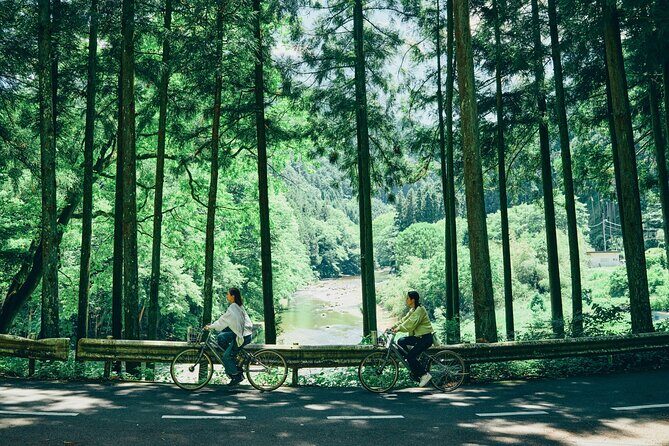
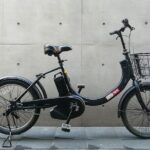
Tokyo looks different from a bicycle at night. In just about two hours, this guided e-bike ride threads together big-name Tokyo sights and calmer streets, with the added ease of an included bike and guide-led commentary. I like that it’s private (just your group) and you can keep a pace that fits you, not the speed of the slowest walker.
Two things I really like: first, you do not have to handle bike logistics because equipment rental is included, plus you get a mini pouch for your phone and keys. Second, the guide (English and Japanese) adds context as you ride past landmark after landmark, so the lights-and-streets tour turns into a quick history lesson without feeling like a lecture.
One consideration: you still need moderate physical fitness because e-bikes help, but you’re still riding and stopping on a schedule. If you’re expecting a totally effortless, sit-down experience, this isn’t that.
In This Review
- Key Things You Should Know Before You Go
- Why a Tokyo Night E-Bike Tour Makes Sense
- Meeting Point at Bell of Peace and Getting Ready for 6:00 pm
- Yoyogi Park, Shibuya Crossing, and Harajuku: The Route’s Big First Act
- Japan National Stadium and Aoyama Cemetery: Two Stops With Different Moods
- Roppongi Hills, Tokyo Tower Close-Up, and the Area’s Luxury Switch
- Imperial Palace at Night: A Quiet Stretch With Meaning
- End at Tokyo Station: Why Finishing Here Is a Real Win
- Price and Value: What $147.80 Really Covers
- How to Get the Most Out of the Two-Hour Ride
- Who This Tour Fits Best
- Should You Book This Tokyo Night E-Bike Tour?
- FAQ
- How long is the Tokyo night e-bike tour?
- What time does the tour start?
- Where does the tour start and end?
- Is the bike rental included?
- What’s included in the tour price besides the bike?
- Is food and drink included?
- Do I need to buy admission tickets for the stops?
- Is this a private tour?
- What fitness level do you need?
- What is the cancellation policy?
Key Things You Should Know Before You Go
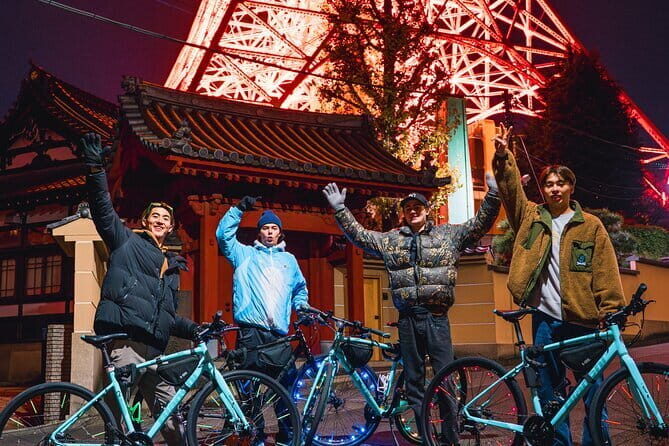
- Bike logistics are handled: equipment rental is included, plus a mini pouch on the bike
- A guide shapes the ride with live commentary in English and Japanese
- You hit multiple Tokyo highlights fast: Shibuya, Harajuku, Roppongi, Tokyo Tower area, Imperial Palace, and Tokyo Station
- Night riding is safer and easier with extras like an included raincoat (on rainy days) and bike insurance
- Private group experience means you’re not squeezed into a large crowd schedule
- It ends conveniently near transit at Tokyo Station, so the post-tour plan is simple
Why a Tokyo Night E-Bike Tour Makes Sense
Tokyo at night is all signals and motion—billboards, crosswalks, traffic choreography, and the constant hum of people heading somewhere. Walking can work, but you burn time in transit and end up doing fewer stops than you hoped. This tour is built for the opposite problem: it uses a short ride time to stack major sights plus in-between streets that you’d never see at the same speed on foot.
What makes the format click is that you’re not just passing famous places. The guide turns the route into a story—what you’re looking at, why it matters, and what to notice as you glide by. I especially like tours where you get practical context while you’re still moving, because it makes the city feel less like a photo album and more like a place with meaning.
And because it’s private, you’re not stuck in a one-size-fits-all rhythm. If your group wants a slower roll through a busy area, the guide can help manage that. If you’re eager to see more, you’re not losing the evening to long regrouping pauses.
You can also read our reviews of more cycling tours in Tokyo
Meeting Point at Bell of Peace and Getting Ready for 6:00 pm
The tour starts at Bell of Peace in Udagawacho, Shibuya (near public transportation). Starting at 6:00 pm is a smart time window: it’s late enough for night energy, but not so late that you’re racing the clock for everything to close.
Before you ride, you’ll have time for the essentials—getting set up with the e-bike and confirming the little extras that matter. You’re provided a bike insurance component, and the tour includes a mini pouch mounted on the bike so you can carry a phone, wallet, and keys without balancing everything in your hands.
One small detail I appreciate: you also get a raincoat on rainy days. Tokyo weather can shift quickly, and having that handled means your evening plan doesn’t fall apart the moment the sky decides to be dramatic.
Yoyogi Park, Shibuya Crossing, and Harajuku: The Route’s Big First Act
The ride begins with Yoyogi Park (close to Harajuku Station). Yoyogi is one of those places that feels like a pressure release after Tokyo’s densest streets. Even if you only stop briefly, the park gives your eyes a breather before the city tightens back around you.
Then you head to Shibuya Crossing, which you can’t really understand until you see it in person with the lights and crowd-control cues happening all at once. The tour stop there is short—about five minutes—but that’s often the right amount of time for this kind of landmark. You want to feel it, see the flow, and then move on before it turns into standing around.
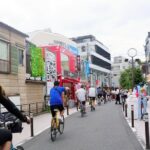
From there, it’s into Harajuku, where you roll past streets lined with a mix of high-end fashion boutiques and vintage shops. The e-bike format helps here because you get both the shopping vibe and the sense of distance. On foot, Harajuku can eat time just finding your next block; on bike, the “what am I seeing?” moment stays constant.
A drawback to keep in mind: these are popular areas, so you’ll likely deal with crowd density and frequent braking zones. The guide helps manage the flow, but if you’re sensitive to tight turns or busy intersections, go in expecting some stop-and-go.
Japan National Stadium and Aoyama Cemetery: Two Stops With Different Moods
After the Harajuku energy, you reach Japan National Stadium for a quick look (about ten minutes). It’s tied to the 2020 Tokyo Games, so even if you’re not a sports person, it’s a useful checkpoint. You’re riding through a part of Tokyo that signals modern events and large-scale crowds—very different from the shopping lanes and neon streets earlier in the ride.
Next comes Aoyama Cemetery, with about ten minutes allocated. This is one of those Tokyo contrasts that feels almost like a secret, even when it’s right there on the map. The cemetery is described as one of Japan’s most prestigious, and cycling through the grounds gives you a calmer visual pace than the downtown stops. It’s a respectful setting and a nice shift after the louder parts of the route.
If you want to take photos, you’ll have a little time to frame shots, but don’t expect this to become a long sightseeing session. The tour is optimized for motion, so bring the mindset of quick observation: look, absorb, and keep rolling.
Roppongi Hills, Tokyo Tower Close-Up, and the Area’s Luxury Switch
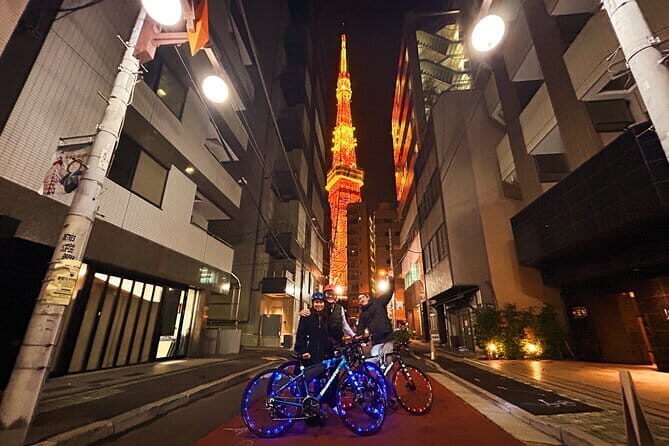
The route continues into Roppongi Hills, stopping for about fifteen minutes. Roppongi changes the tone in a hurry. The area is known for upmarket shops and restaurants, plus art museums and a strong luxury-shopping feel. Even if you don’t plan to spend money there, this stop helps you understand the Tokyo that runs parallel to the street-level fashion scenes you saw earlier.
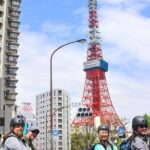
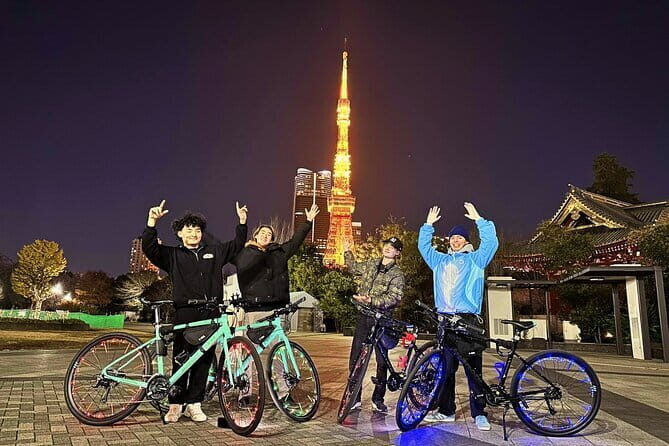
Right after Roppongi, you get a chance for a closer look at Tokyo Tower—the world’s tallest self-supported steel tower, noted as being about three meters taller than the Eiffel Tower model. The tour framing also connects it to Japan’s post-war rebirth and its rise as an economic power. That’s a good example of why a guided night ride works: the tower isn’t just a glowing landmark. It’s part of a larger story about what Tokyo became.
Then, to keep that momentum, the tour shifts to Zojo-ji Temple (about five minutes). Zojo-ji is described as a religious center and the resting place of warlords, and the key idea is scale and importance—especially with Tokyo Tower nearby. In a short stop, you’ll likely see the most iconic temple impressions, and that’s enough to make the area click as a meaningful cultural zone, not just a photo stop.
You can also read our reviews of more city tours in Tokyo



Imperial Palace at Night: A Quiet Stretch With Meaning
One of the tour’s most interesting “reset points” is the Imperial Palace stretch. The ride includes about ten minutes cycling along the palace area, where the Japanese emperor resides.
This is a different kind of sightseeing. Earlier stops focused on spectacle—crosswalks, shopping streets, and a famous tower. Imperial Palace is more about atmosphere and perspective. Even from a bike, you’ll notice how the city’s style shifts: fewer obvious distractions, more formal spatial cues, and a sense that Tokyo can be orderly and ceremonial as well as fast and crowded.
The practical benefit for you is pacing. After Tokyo Tower and temple sights, this becomes a calmer segment where you can just breathe and enjoy the night air while you take in how Tokyo’s center functions.
End at Tokyo Station: Why Finishing Here Is a Real Win
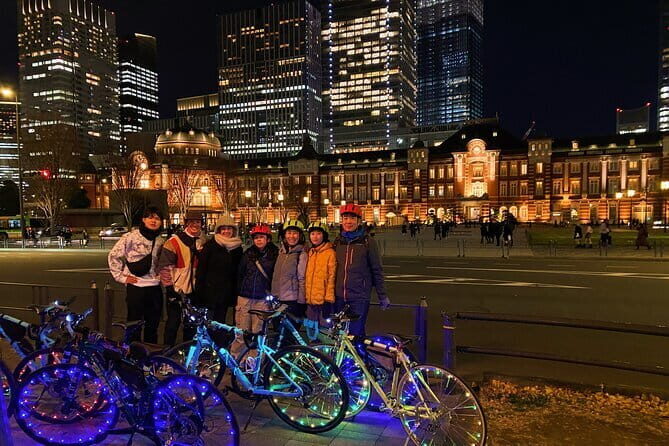
The tour ends at Tokyo Station (about five minutes for the final stop). This matters more than most people think. After two hours of riding and sightseeing, your “what now?” question is the big one. Finishing at Tokyo Station puts you in one of the easiest transit hubs in the city, which makes it simpler to get back to your hotel or hop to your next plan.
Also, Tokyo Station at night has its own glow and sense of arrival. You’ve spent the evening moving through different neighborhoods; ending here gives you a natural bookend.
If you’re building an itinerary around this tour, I recommend planning for a simple next step—dinner nearby, or direct transit back. You’ll be done, you’ll be in the right location, and you won’t have to fight the clock to return.
Price and Value: What $147.80 Really Covers
At $147.80 per person, it’s not a budget activity. But it can still be good value if you compare what’s included and what you’re saving.
You’re getting:
- the e-bike itself (no bike rental puzzle)
- a live in-person guide with English and Japanese commentary
- bike insurance and a raincoat on rainy days
- a mini pouch on the bike for your essentials
- a route that covers a lot of ground in a short window
For me, the best way to judge value is simple: would you spend time and money just to make the route happen on your own? In a city like Tokyo, finding the right bike, figuring out where to lock it, and building an efficient nighttime route can easily turn into half the effort you hoped to avoid. Here, that work is handled for you, and the guide’s commentary adds a layer that you can’t easily replicate just by riding past.
One more value point: it’s a private tour, so if you’re traveling as a pair or small group, the cost often feels more reasonable than a large-group ride. Group discounts are mentioned too, which can help if your group size works in your favor.
How to Get the Most Out of the Two-Hour Ride
A two-hour e-bike tour is short by design. That means each stop is timed, and you’ll get the best experience if you’re ready to move quickly between photo moments and observations.
Here are a few habits that help:
- Wear shoes that you’re comfortable walking in briefly at stops.
- Keep your phone accessible, and rely on the mini pouch so you’re not fumbling with it at intersections.
- Go in expecting some busy areas (Shibuya in particular), not a quiet, empty road.
Also, consider your comfort with moderate physical effort. The e-bike reduces strain, but you still have to stay balanced, start and stop, and keep pace. If you’re coming off jet lag and feel wobbly, take it slowly at the beginning. The guide can help you settle into the ride.
One more tip: because admission is listed as free for the stops, you’re not paying extra ticket costs at each location. That keeps the evening focused on the ride rather than adding surprise expenses.
Who This Tour Fits Best
This is a strong match if you:
- want a nighttime Tokyo experience without doing hours of walking
- like seeing multiple neighborhoods in one evening
- prefer a guide who talks as you ride, not just at a few viewpoints
- want a private format so you can keep a comfortable pace with your group
It’s also a good option for first-timers who want the essentials—Shibuya Crossing, Harajuku, the Tokyo Tower area, Imperial Palace, and Tokyo Station—while still feeling like you experienced Tokyo’s rhythm, not just its postcards.
If you’re a hardcore Tokyo history reader, you might want extra daytime plans too, since this is a compact ride. But for most people, the balance is right: you get key landmarks, plus enough context to make them memorable.
Should You Book This Tokyo Night E-Bike Tour?
I’d book it if your priority is efficiency and atmosphere. You’re getting a guided ride that strings together Tokyo’s most recognizable night scenes—Shibuya Crossing, Harajuku, the Tokyo Tower area—while also including calmer, meaningful stops like Aoyama Cemetery and the Imperial Palace stretch. The included bike setup, raincoat support, and bike insurance remove common trip friction.
You might skip it if you hate crowds or you’re looking for a long, slow, pick-your-own-adventure sightseeing style. This is structured, timed, and designed to keep you moving.
If you do book, aim for a clear evening when possible and treat the ride as a sprint with good storytelling, not a leisurely cruise. It’s one of those Tokyo experiences where the city’s energy actually works in your favor.
FAQ
How long is the Tokyo night e-bike tour?
The tour lasts about 2 hours, with total duration including travel time between stops.
What time does the tour start?
It starts at 6:00 pm.
Where does the tour start and end?
It starts at Bell of Peace, Udagawacho, Shibuya, Tokyo. It ends at Tokyo Station, Chome-9 Marunouchi, Chiyoda City, Tokyo.
Is the bike rental included?
Yes. Use of the bicycle and equipment rental are included.
What’s included in the tour price besides the bike?
Included items are a raincoat on rainy days, bike insurance, a mini pouch on the bike, and an in-person guide (English and Japanese).
Is food and drink included?
No. Food and drink are not included.
Do I need to buy admission tickets for the stops?
Admission tickets are listed as free for the stops shown on the route.
Is this a private tour?
Yes. It’s a private tour/activity, and only your group participates.
What fitness level do you need?
You should have a moderate physical fitness level.
What is the cancellation policy?
Free cancellation is available up to 24 hours in advance for a full refund. If you cancel less than 24 hours before the start time, the amount you paid is not refunded. If it’s canceled due to poor weather, you’ll be offered a different date or a full refund.