REVIEW · TOKYO
Tokyo Vegan Food Tour
Book on Viator →Operated by Tokyo Ramen Tours · Bookable on Viator
Tokyo tastes better plant-based. This 3-hour tour connects Shibuya and Ebisu with classic Japanese flavors done in 100% plant-based form. You’ll also get the real cultural why behind what’s on the table, from ingredient choices to cooking styles.
Two things I really like: you’re not stuck with generic “vegan versions,” you’re tasting recognizable comfort foods like ramen, gyoza, and karaage. And you get a guided walk that helps you figure out where to find vegan options later, not just a one-and-done meal.
One possible drawback: the tour is short, so you’ll sample a variety, but you won’t have time for a long sit-down meal or a second full round at your favorite stop.
In This Review
- Key highlights to expect on this Tokyo vegan food crawl
- Shibuya to Ebisu: how the route helps you understand Tokyo’s vegan scene
- Start at Shibuya’s street scenes and use the tour to get your bearings fast
- Hokkaido-style vegan ramen mini bowls: picking your flavor like a pro
- Savory stops: vegan gyoza and crunchy karaage-style bites
- Sweet sandwiches: fruit freshness plus butter and anko comfort
- The convenience store stop: small tip that pays off on your own
- Price and value: what $101.25 buys you in real Tokyo food time
- Group size, timing, and how to plan your day around it
- Who should book this Tokyo Vegan Food Tour (and who might not)
- Should you book it or skip it?
- FAQ
- How long is the Tokyo Vegan Food Tour?
- Where does the tour start and where does it end?
- What’s included in the price?
- Is private transportation included?
- Is the tour really plant-based?
- How many people are in the group?
- Do I get a mobile ticket?
- What is the cancellation policy?
Key highlights to expect on this Tokyo vegan food crawl
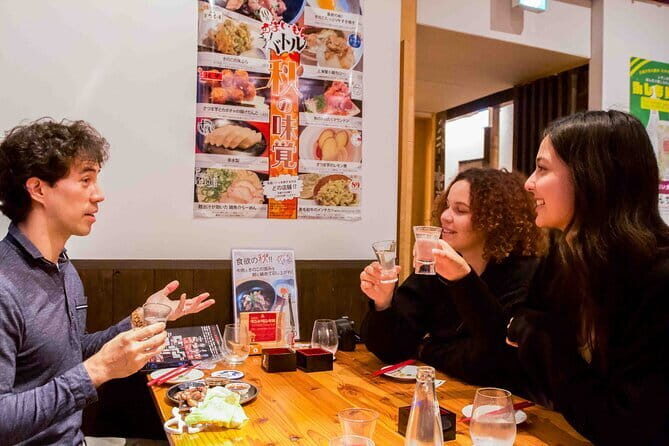
- Shibuya Crossing orientation: You pass iconic street scenes right at the start.
- Hokkaido-style vegan ramen choices: Pick from spicy miso, miso, shoyu, or shio.
- Comfort-food variety, not repeats: gyoza, karaage-style bites, and multiple sandwich styles.
- Sweet stops with fruit and anko: seasonal fruit sandwiches plus butter and anko.
- A convenience store detour: practical guidance for shopping in Tokyo.
- Small group size (max 6): more chance to ask questions and get personal tips.
Shibuya to Ebisu: how the route helps you understand Tokyo’s vegan scene
This tour is built around two neighborhoods that are easy to mix into a first-time Tokyo plan. Shibuya sets the stage with big, recognizable sights, and Ebisu helps you land near a major station at the end. The meeting point is at SHIBU HACHI BOX in Shibuya, and the tour concludes near Ebisu Station, which makes the finish simple if you’re continuing on to dinner or a train connection.
What makes the route feel useful is the pacing: you’re not just “eating and walking.” You’re moving through street life while your guide puts each dish into context—what makes it work in Japan, and how plant-based dining is evolving there. One review mentioned guides sharing cultural food context in a way that made the whole tour click fast, and I agree that this is the difference between sampling snacks and learning how to recreate the experience on your own.
Because the group is capped at 6 travelers, you’re also less likely to feel like you’re part of an assembly line. You’ll probably have more room to ask questions about ingredients and ordering, especially if you’re new to vegan eating in Japan.
You can also read our reviews of more food & drink experiences in Tokyo
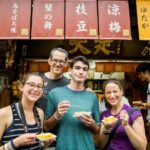

Start at Shibuya’s street scenes and use the tour to get your bearings fast
Your tour begins at SHIBU HACHI BOX near Shibuya, and the guide takes you past iconic Shibuya moments, including the famous crossing. Even if you’ve seen photos of it, seeing it while you’re already in a food-focused mindset helps. You’ll get oriented in a practical way: where people flow, where you can comfortably move on foot, and which streets feel “food-dense.”
That matters because Tokyo navigation can feel like a puzzle when you’re hungry and everything looks similar. A walking tour format solves that quickly. You’re not trying to plan a full day and figure out the right train/bus route between random places. Instead, the guide does the early work: you start in one place, then you follow a food route that gradually builds toward where you’ll end near Ebisu Station.
One more practical point: you’ll want to arrive on time. This kind of tour runs on a tight schedule because food stops depend on prep time and restaurant flow. Since the tour ends near Ebisu Station, being late early can also scramble your finish plans.
Hokkaido-style vegan ramen mini bowls: picking your flavor like a pro
One of the biggest draws here is ramen, but not the same tired version of ramen you might expect. You’ll try mini bowls of Hokkaido-style ramen, with choices that include spicy miso, miso, shoyu, and shio. That variety is a gift because ramen in Japan is often about more than just the noodles—it’s about broth style and balance.
For you, this means you can actually compare ramen directions side by side. Spicy miso tends to hit warm and deep. Shoyu often feels lighter and more savory. Shio leans into salt-forward clarity, while miso can land richer and rounder. Even within plant-based cooking, those differences are meant to feel distinct.
The “mini bowl” format is also smart. It keeps the tour moving, and it prevents the tour from turning into one heavy stop after another. You’ll still feel satisfied, but you won’t be too full to enjoy gyoza, karaage-style bites, and sweet sandwiches later.
If you’re the kind of traveler who likes to order with confidence, this is where you’ll benefit most. Watch how your guide frames the choices. Then, later in the week, you’ll have a better sense of what to look for when a menu offers miso vs shoyu vs shio.
Savory stops: vegan gyoza and crunchy karaage-style bites
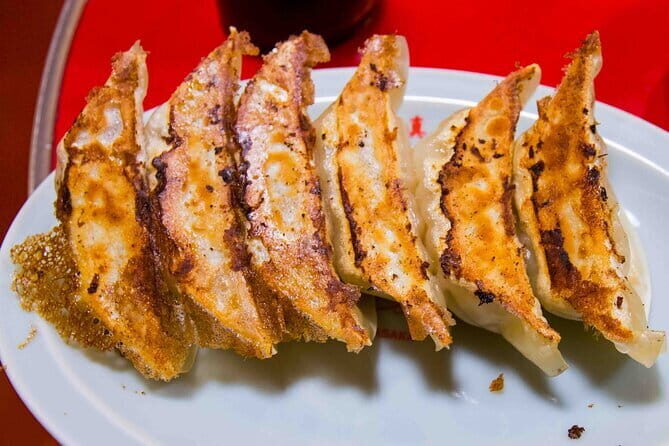
After ramen, you’ll shift to savory street-food energy with vegan gyoza dumplings. Gyoza is one of those foods that instantly translates across diets: crisp edges, juicy filling, and that soy-ginger vibe. Even if you’re not vegan, it’s an easy entry point because you still recognize the shape, the texture, and the overall comfort.
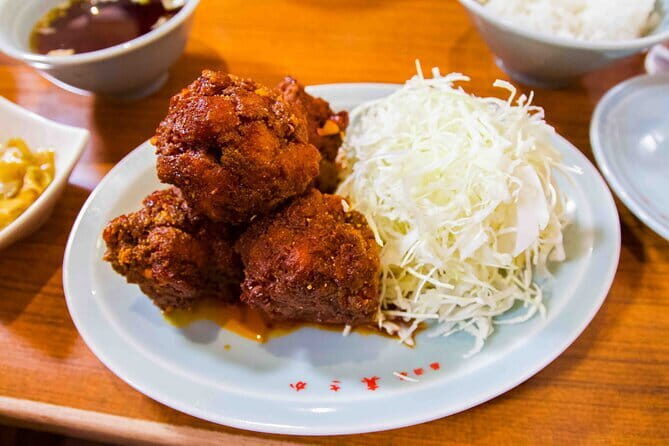
Then comes crunchy vegan karaage—a plant-based twist on Japanese fried chicken. The key here isn’t just that it’s fried. It’s that you’re getting the idea of karaage as a style: bite-sized pieces, a crunchy shell, and flavor that usually sticks to your fingers in the best way. (You’ll want napkins. Tokyo has them, but don’t plan on eating karaage like it’s a salad.)
What I find valuable about these two stops is that they cover two textures you can’t replicate with ramen alone. Ramen teaches broth and noodle rhythm. Gyoza and karaage teach texture and seasoning. Together, they give you a more complete feel for how Japanese plant-based cooking can be both familiar and inventive.
Also, since the tour includes snacks and lunch, these savory bites aren’t just appetizers sprinkled on top. They’re meant to be a real meal progression, so you leave feeling fed instead of “just tasted.”
Sweet sandwiches: fruit freshness plus butter and anko comfort

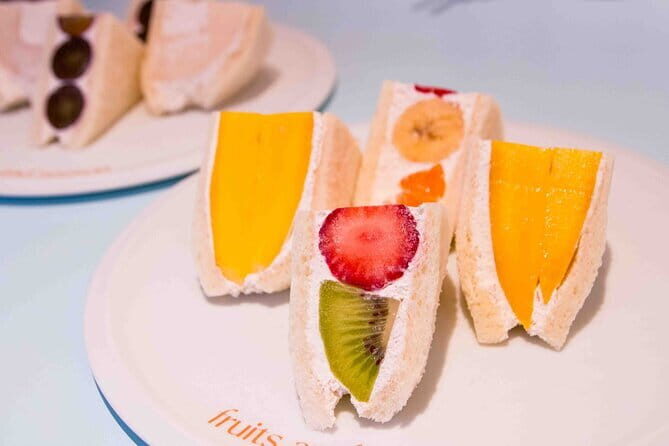
Not every food tour in Japan plans a proper sweet finish, but this one does. You’ll try unique fruit sandwiches made with fresh seasonal fruit, plus butter and anko sandwiches—that sweet bean paste combo that’s practically an edible hug.
The fruit sandwich stop is useful for two reasons. First, it shows that Japanese vegan sweets aren’t only about replacing pastries with substitutes. Seasonal fruit is a core Japanese approach—simple ingredients, careful pairing, and clean flavor. Second, it gives you a palate reset after salty fried and dumpling-heavy stops.
Then the butter and anko sandwich gives you the comfort-food anchor. Anko shows up everywhere in Japan, and even if you’ve never tried it before, this is a low-risk way to taste it in a format that’s easy to understand. The butter element matters too because it softens sweetness and rounds the overall mouthfeel.
If you have a sweet tooth, you’ll likely appreciate that the sweets aren’t an afterthought. They’re part of the structure of the tour, which makes the whole experience feel balanced.
A few more Tokyo tours and experiences worth a look




The convenience store stop: small tip that pays off on your own
One detail that I think makes this tour more than a simple tasting route is the quick stop at a convenience store. You get practical guidance for navigating Tokyo’s vegan scene, which is exactly what you want after you’ve learned what to eat on tour.
Convenience stores in Japan are often the place where plans go from messy to manageable: snacks, drinks, and quick meal options when you’re stuck between neighborhoods. If you learn what to look for—labels, common plant-based clues, and how to ask or interpret—you can turn your next day in Tokyo into an easier one.
I also like that this stop makes the tour feel modern. It’s not just about restaurants. It’s about how everyday Tokyo people handle food on the go—and how vegans can do the same.
Price and value: what $101.25 buys you in real Tokyo food time

At $101.25 per person for about 3 hours, this is in the category of paid food tours that try to deliver real value through volume and guidance. You’re paying for multiple things at once: a guided route, restaurant coordination, and a set of tastings that includes both savory and sweet.
Here’s what’s included:
- Snacks meant to feel like street-style sampling
- Lunch
- One drink of choice, alcoholic or non-alcoholic
And what’s not included:
- Private transportation
So your cost is mostly about the experience itself, not about getting chauffeured around. For many visitors, that’s actually a plus. Tokyo is walkable and train-friendly; you don’t need a private car for a 3-hour eating plan. You just need smart stops and the right explanations to avoid wasting time searching for vegan options.
Also, the tour is commonly booked about 45 days in advance on average. That doesn’t mean it’s impossible to find last-minute space, but it does suggest it can sell out around popular travel dates. If you’re planning a tight itinerary, I’d book earlier rather than hope.
Group size, timing, and how to plan your day around it

This tour runs for about 3 hours and caps at 6 travelers. That combo matters. In a small group, your guide can slow down for questions and still keep everyone moving. In a 3-hour slot, you get enough tastings to feel like you did something meaningful without sacrificing an entire day.
Because the tour ends near Ebisu Station, it fits well with an evening plan on that side of town. You can schedule dinner with confidence, since you won’t be trapped far from transit when the tour wraps.
One scheduling consideration: you’ll want to avoid arriving starving and then planning to eat again immediately after, unless you genuinely love snacks. Between ramen, gyoza, fried-style bites, and sandwiches, you’ll likely be full by the end.
If you’re someone who likes flexibility, keep a slightly open window after the tour. That way you can decide whether you want to snack again, grab a sit-down dinner, or just head back to your hotel without feeling like you missed a meal.
Who should book this Tokyo Vegan Food Tour (and who might not)
This tour is a strong fit if you want a guided path through Japan’s vegan food scene without spending time hunting. It’s also a good choice if you’re not fully vegan. The reviews highlight that non-vegans still enjoyed the experience, mainly because the food is recognizable and satisfying—not a sad imitation.
It’s especially suitable for:
- First-time visitors to Tokyo who want a food-focused Shibuya/Ebisu plan
- People who like structured tastings with explanations
- Vegans (obviously), plus flexitarian eaters curious about how Japan adapts classic dishes
You might consider a different option if:
- You want only one specific type of food (like only ramen or only sweets) and would rather go deep in fewer places
- You’re hoping for long restaurant sit-down time rather than sampling and moving
Should you book it or skip it?
If your goal is to learn how vegan eating works in Tokyo while still leaving full and happy, I’d book this tour. The tastings cover ramen, dumplings, fried-style bites, and sweets, so you get texture variety and flavor variety in one run. The fact that you also get a convenience store stop is the practical bonus—so you can extend what you learned beyond the tour.
If you’re short on time, this is one of the easier ways to do it right. Start in Shibuya, finish near Ebisu, and spend your effort on learning and tasting instead of chasing menus.
Just keep in mind the tour is 3 hours. If you like slow dining and linger forever, you’ll probably want to add your own extra stop after, rather than expecting the tour itself to last all evening.
FAQ
How long is the Tokyo Vegan Food Tour?
It runs for about 3 hours.
Where does the tour start and where does it end?
The tour starts at SHIBU HACHI BOX in Shibuya and ends near Ebisu Station (in Ebisu-minami area of Shibuya).
What’s included in the price?
The tour price includes snacks, lunch, and one drink of choice (alcoholic or non-alcoholic).
Is private transportation included?
No, private transportation is not included.
Is the tour really plant-based?
Yes. The experience is 100% plant-based.
How many people are in the group?
The tour has a maximum of 6 travelers.
Do I get a mobile ticket?
Yes, it uses a mobile ticket.
What is the cancellation policy?
You can cancel for free up to 24 hours in advance for a full refund. If you cancel less than 24 hours before the start time, the amount paid is not refunded.