REVIEW · TOKYO
Tokyo Architecture and Contemporary Art Walking Tour with a local guide
Book on Viator →Operated by アウテック · Bookable on Viator
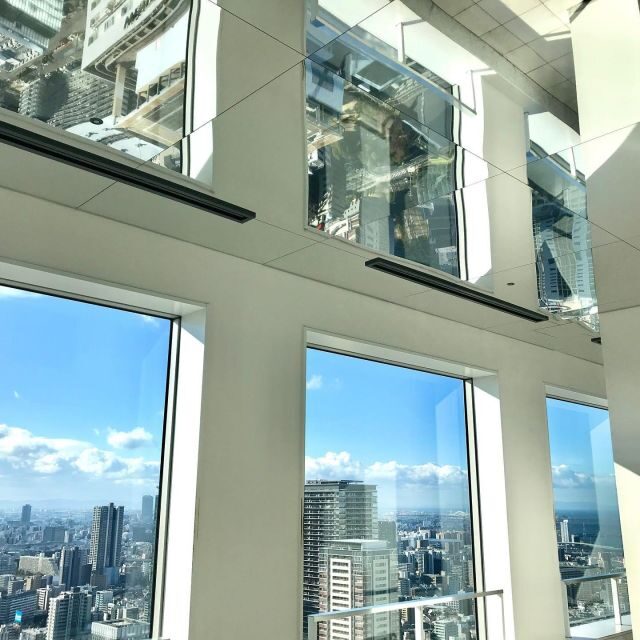
Tokyo is an architecture book with footnotes, and this private walking tour shows you the pages in real time with a local guide. You’ll bounce between major design districts and pop-culture hubs—without feeling trapped in a giant group herd.
I love the attention to architecture and contemporary art while still keeping the day relaxed enough to enjoy the streets. I also love the value math of a group price (up to 9), plus bottled water and free entry at each stop. One thing to consider: you’ll likely spend a noticeable chunk of time transferring by subway, so plan for some underground minutes and bring comfy shoes.
In This Review
- Quick hits before you book
- How the tour keeps Tokyo from feeling like a maze
- Ginza: sleek storefronts and architecture with big names
- Tokyo International Forum: Rafael Viñoly’s postmodern statement
- Roppongi and the art triangle orbit
- Omotesando: Prada with Herzog & de Meuron energy
- Takeshita Street to Shibuya Crossing: youth style and crowd choreography
- Daikanyama and Nakameguro: boutiques and a calmer end to the day
- What to expect on the ground: walking, trains, and underground time
- Why the guide matters more than the checklist
- Price and value for a private group up to 9
- Who this tour suits best (and who should skip it)
- Should you book this Tokyo architecture and contemporary art walking tour?
- FAQ
- How much does the Tokyo Architecture and Contemporary Art Walking Tour cost?
- How long is the tour?
- Is this tour private?
- Do you get pickup, or do I need to meet somewhere specific?
- Are tickets or admissions included for the stops?
- Does the tour provide bottled water?
- What time does the tour run?
Quick hits before you book
- Private pacing with a local guide: You get conversation and direction without the rush of mass tours.
- A design-first route: Ginza, Roppongi, Omotesando, Shibuya, and Daikanyama hit very different architectural moods in one day.
- Free stops throughout: The tour lists free admission tickets for each key area.
- Expect real walking: A full outing can land around 13,000–20,000 steps, depending on your group pace.
- A transit-heavy day: Subways and public trains are part of the flow, so footwear and timing matter.
How the tour keeps Tokyo from feeling like a maze
This isn’t a “stand still and wait for photos” type of day. You meet your guide and then move via public transport, which is the quickest way to connect Tokyo’s neighborhoods without burning your whole schedule in traffic.
Because it’s private, the guide can steer around how your group wants to experience each stop. That matters in Tokyo, where you can go from wide-open views to narrow streets and tight crowds in a matter of blocks.
The tour also builds in small comforts that add up: you get bottled water, and you use a mobile ticket rather than juggling paper.
You can also read our reviews of more walking tours in Tokyo


Ginza: sleek storefronts and architecture with big names
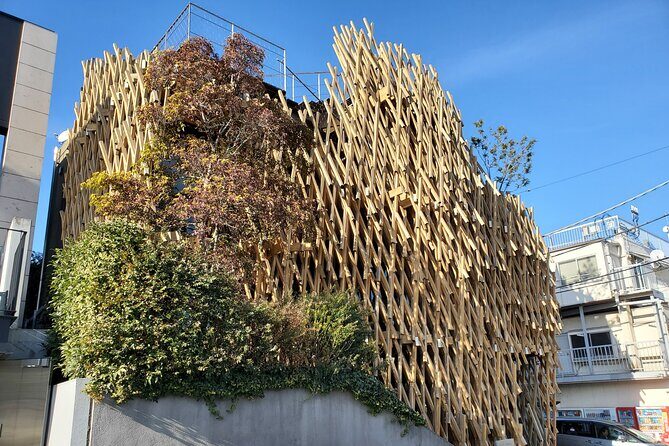
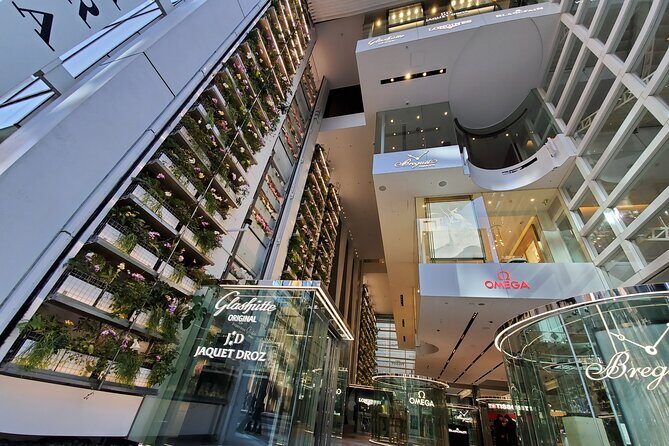
Ginza is Tokyo’s polished poster child: boutique shopping, small galleries, and streets where the buildings do as much talking as the people. You’ll spend about an hour here, which is enough time to notice details without feeling rushed.
Look for how the area mixes high-end retail with modern building design. This part of the city tends to reward slow observation—façades, entrances, and the way buildings line up along the street.
Even if you’re not shopping, Ginza is a smart starting point because it sets expectations for what you’ll see all day: design that’s meant to be noticed.
Tokyo International Forum: Rafael Viñoly’s postmodern statement
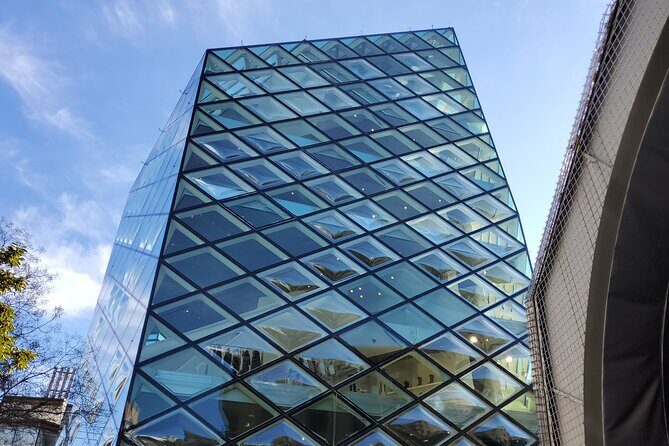
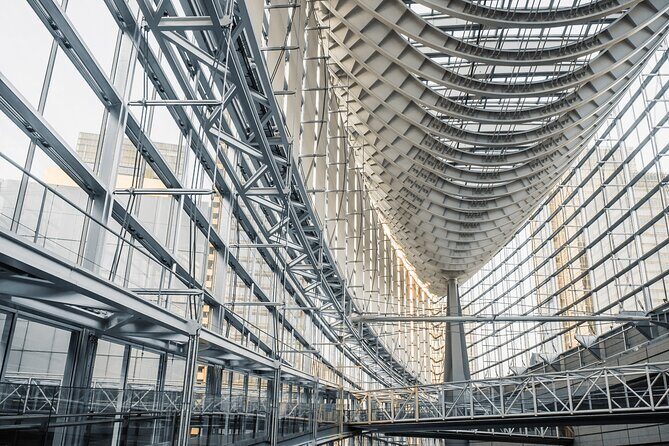
Next comes the Tokyo International Forum, a major convention and art center designed by Uruguay-born American architect Rafael Viñoly. The stop is short—about 15 minutes—but it’s the kind of building you remember because it’s visually bold and urban in scale.
If you like architecture, this is a useful contrast point after Ginza. Instead of a “shopping district building” vibe, you get a large civic-style structure with a postmodern profile.
In practical terms, a quick stop like this works well for an architecture tour. You get the shape, the presence, and the story, then you’re off before the day turns into one long photo sprint.
Roppongi and the art triangle orbit
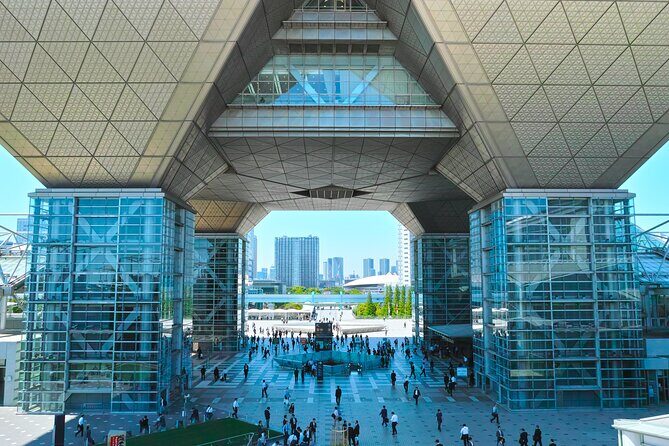
Roppongi is where contemporary art stops being a “nice idea” and starts being a calendar plan. You’ll spend around an hour in the area, focusing on the so-called Art Triangle Roppongi—the National Art Center, Mori Art Museum, and Suntory Museum of Art.
What I like about weaving this area into a walking route is that it teaches you how Tokyo concentrates culture. These institutions aren’t scattered randomly; they cluster in a way that makes it easy to plan a day around art without needing a car.
Also, Roppongi gives you a different street texture than Ginza. You’ll see galleries, public spaces, and a more international feel in the architecture and atmosphere—useful context if you’re trying to understand Tokyo as a living design map.
Omotesando: Prada with Herzog & de Meuron energy
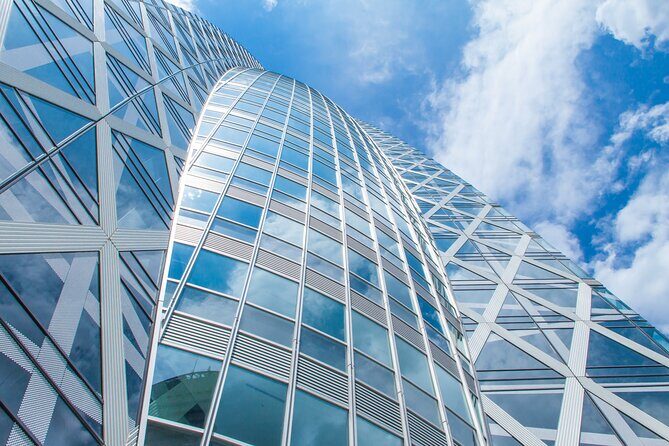
Omotesando is one of Tokyo’s best places to watch architecture meet fashion. You get about an hour here, and the focus is on those striking building designs you only notice when you slow down and look up.
A standout detail in this tour is the mention of the Prada flagship store designed by Herzog & de Meuron. Even if you don’t go inside, that design connection gives you a framework for what to pay attention to: material choices, façade rhythm, and how the building face shapes the street experience.
Omotesando is also a good location to reset your brain between louder neighborhoods. It’s visually intense, but it doesn’t require you to deal with the same kind of crowd compression you’ll hit later.
You can also read our reviews of more guided tours in Tokyo




Takeshita Street to Shibuya Crossing: youth style and crowd choreography
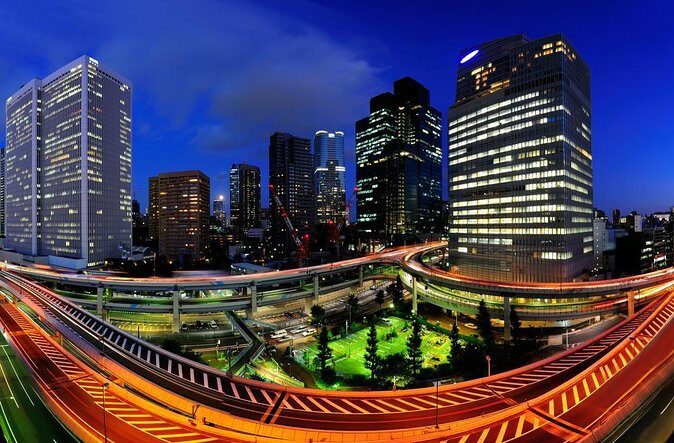
Then the tour shifts gears. Takeshita Street (Harajuku) is about youth culture—unique fashion trends and loud, playful design. You’ll have roughly an hour here, which is enough to sense the vibe and do a quick browse if you want it, without getting swallowed whole by the side streets.
After that, you land at Shibuya crossing, which is famous for being the busiest intersection in the world. You’ll spend about 30 minutes here, and it’s the kind of moment that’s hard to explain until you’re standing in the flow of it.
Here’s the architecture lesson hidden inside the chaos: Japan designs systems for people, not just buildings. In Tokyo, movement is part of the urban design. Shibuya is a real-time example of that.
If you’re thinking about timing, I’d keep your expectations flexible. This area can be intense. But the short stop length helps. You get the big moment and then you move on before it becomes exhausting.
Daikanyama and Nakameguro: boutiques and a calmer end to the day
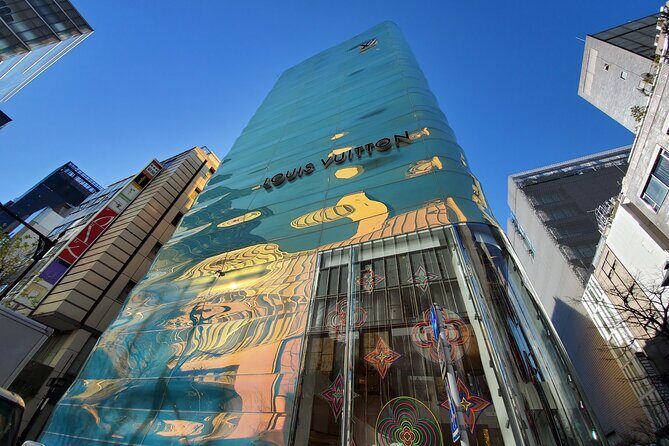
After Shibuya, Daikanyama feels like a breath. You’ll spend about an hour here, and the tour also connects you with the Nakameguro area, known for boutiques and cafes with a different, less hectic pace than the most famous parts of Tokyo.
This is a great way to finish an architecture tour because it lets you shift from crowd energy to human-scale street life. It also gives your feet a chance to recover while your eyes keep noticing the neighborhood design.
The area is associated with Tsutaya books and the surrounding style of shopping culture, which fits well with a day that started in Ginza and moved through more iconic landmarks.
What to expect on the ground: walking, trains, and underground time
This tour is built as a loop of neighborhoods, so you should plan for a lot of motion even when the walking feels lighter between stops.
I’d treat 6 to 8 hours as a serious day. One example from the experience notes that the route can add up to around 13,000–20,000 steps, depending on how often you pause to look, detour, or take extra photos.
The other reality check is transit. You’ll use public transport, and you may spend a good chunk of your time on trains and subway transfers—one person even called out how much time was spent underground moving between sites. That doesn’t ruin the day, but it is a consideration.
Practical advice:
- Wear shoes you can walk in for hours. Tokyo is not a sit-down city on tour days.
- If you hate stairs and long station corridors, give yourself a little extra patience. A guide can help with the route choices.
- If you get to your day tired, prioritize exterior views first. That’s where the architecture payoff is strongest.
Why the guide matters more than the checklist
A long day with lots of neighborhoods lives or dies by the guide’s energy and pacing. The strong theme here is that guides are highly responsive and able to explain what you’re seeing in clear, helpful ways.
Names that come up include Richie, Riley, and Masa—all praised for solid English and for keeping the itinerary moving with good planning. One guide style emphasized building a schedule that works even when conditions change, and another included offering perspectives from both the outside and inside of building spaces.
That guide skill makes a difference with architecture tours, because the goal isn’t just to point at impressive buildings. It’s to understand why they look the way they do and how they fit into Tokyo’s urban rhythm.
Also, because it’s private, your guide can accommodate small requests—things like where you’d rather spend a few extra minutes or what pace feels right for your group.
Price and value for a private group up to 9
The price is $424.58 per group (up to 9 people). That’s not cheap if you’re traveling solo, but it can be very reasonable if you’re splitting the cost.
Here’s the value math:
- If you fill it with 9 people, you’re effectively around $47 per person.
- With 4 people, it’s closer to $106 per person.
- With 2 people, it’s about $212 per person.
So this tour shines when you’re a small group of friends, a family with older kids who walk well, or a couple who doesn’t mind paying for a private guide.
Another value factor: the tour lists admission as free at each stop. You’re paying for guidance, time, and smart routing, not for a pile of ticket costs.
Who this tour suits best (and who should skip it)
This works best for you if you:
- Care about architecture and design, not just famous sights.
- Want a single day that mixes major landmarks with style districts.
- Enjoy walking but still want someone to make the logistics painless.
It may not be ideal if you:
- Want a deep museum schedule with long exhibit hours. The route is designed more for neighborhoods and key building moments across the day.
- Prefer very quiet, low-crowd sightseeing all the way through. Shibuya and Takeshita Street bring crowd intensity.
The good news is the tour structure helps. With stops sized in chunks (like 15 minutes at Tokyo International Forum and 30 at Shibuya), you get variety without being trapped in one place all afternoon.
Should you book this Tokyo architecture and contemporary art walking tour?
If you like Tokyo at the design level—buildings, neighborhoods, and how the city moves—then yes, I’d book it. The private format and the focus on architecture plus contemporary art make it feel like Tokyo with context, not just Tokyo with photos.
Book it especially if you can split the group price to make it land in a comfortable range. And if you do, prep for walking and transit: good shoes, a patient attitude for subway corridors, and a mindset of looking up as much as you look ahead.
If your travel style is all about slowing down and understanding what you’re seeing, this tour is a strong match. It’s also a smart way to cover a lot of the city’s design identity in one go—without spending your day guessing routes on your own.
FAQ
How much does the Tokyo Architecture and Contemporary Art Walking Tour cost?
It costs $424.58 per group, up to 9 people.
How long is the tour?
The tour lasts about 6 to 8 hours.
Is this tour private?
Yes. It’s a private tour/activity, and only your group will participate.
Do you get pickup, or do I need to meet somewhere specific?
Pickup is offered, and you’ll meet your guide outside your hotel.
Are tickets or admissions included for the stops?
The listed stops show admission tickets as free.
Does the tour provide bottled water?
Yes. Bottled water is provided.
What time does the tour run?
It runs Monday to Sunday from 8:30 AM to 3:00 PM during the listed operating date ranges.