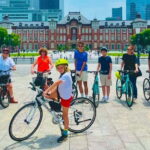
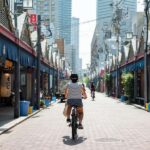
Tokyo feels faster on a bicycle. This small-group ride turns Shibuya from a blur into backstreets you can actually see. You follow your guide through famous stops and quieter corners, with time for questions and local recommendations.
I especially like the easy, central start (Umayamichi Park near Yoyogi) and the calm pace that still lets you cover serious ground. One consideration: this is for people comfortable on pavements and busy road crossings, not for nervous first-timers or anyone who wants a fully stress-free commute.
In This Review
- Key things that make this tour worth your time
- Why cycling Shibuya beats walking (or just riding transit)
- Meeting point near Yoyogi and Shinjuku: start without stress
- What route you’ll actually pedal: Shibuya to Harajuku to Aoyama
- Stop-by-stop: what each highlight feels like
- Yoyogi Park: the release valve before the crowds
- Shibuya Crossing: see it from a moving, human scale
- Hachiko: the familiar face with better context
- Shibuya Cat Street: fashion street energy without the subway scramble
- Aoyama Street: a calmer rhythm with striking city details
- Aoyama Cemetery: quiet contrast that makes the day feel real
- Japan National Stadium area: big Tokyo energy, seen at bike speed
- Pace and road reality: what the experience expects of you
- Guide impact: Taichi’s style makes the ride feel easy
- The safety factor: what the tour does to help you feel secure
- Weather and timing: light rain can happen, but planning still matters
- Price and value: is $64.73 per person a good deal?
- Who should book this (and who should skip it)
- Should you book this Shibuya and Hidden Tokyo bike tour?
- FAQ
- How long is the Tokyo Bike Tour: Shibuya & Hidden Tokyo?
- What does the tour cost?
- How large is the group?
- Where do I meet the guide?
- Where does the tour end?
- What stops are included on the ride?
- What bike and fitness requirements should I know?
- Is there an age limit?
- Can I join if I’m traveling in light rain?
- What is the cancellation window for a full refund?
Key things that make this tour worth your time
- Small group up to 6 people for a more relaxed ride and real Q&A time
- Stops you’ll recognize fast (Shibuya Crossing, Hachiko) plus less-touristy streets
- A guide who rides and thinks like a cyclist, helping you feel safe in traffic
- A pace around 15 km/h so you get movement without feeling rushed
- Local tips along the way, including places to eat and simple Japanese phrases
Why cycling Shibuya beats walking (or just riding transit)
Shibuya can look intense from the sidewalk—crowds, crossings, and the constant sense that you should be somewhere else. On a bike, the whole neighborhood changes. Roads feel more navigable, and you get that steady forward motion that makes it easier to notice details: shopfront rhythms, side-street neighborhoods, and the little public spaces you’d never find on foot.
This tour is built around that advantage. You get to cover a lot more area than walking would allow, but you’re still moving slowly enough to take in what’s around you. And unlike a typical hop-on hop-off style day, you’re not stuck with only the headline sights.
You can also read our reviews of more cycling tours in Tokyo
Meeting point near Yoyogi and Shinjuku: start without stress
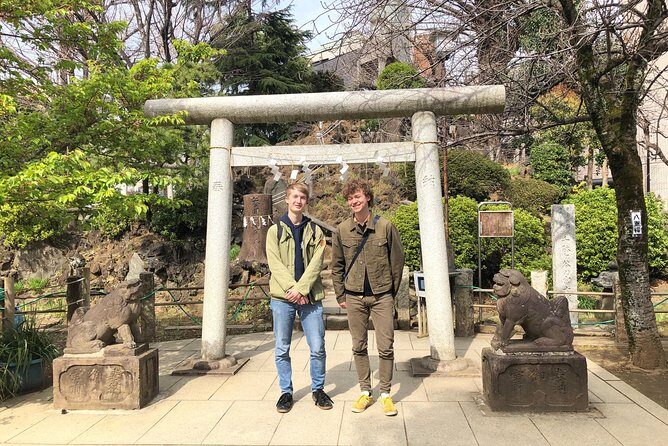
Your ride begins at Umayamichi Park, 5-chōme-24-11, Sendagaya, Shibuya. The area is set up to make joining simple: it’s about a 10-minute walk from Shinjuku Station and only around a 1-minute walk from Yoyogi Station.
That matters more than it sounds. If you’ve ever started a tour in Tokyo and spent your first 20 minutes figuring out where you are, you know how quickly the day can sour. Here, you can arrive early, reset, and be ready to roll.
The tour ends back at the meeting point. So you don’t have to scramble for directions or worry about getting yourself across the city at the end of a bike ride.
What route you’ll actually pedal: Shibuya to Harajuku to Aoyama
The ride is designed as a loop through Shibuya and the neighboring areas that people often bundle together as Harajuku/Aoyama. You’ll cover a mix of:
- major icons (the kind you can’t avoid in Tokyo)
- residential and quieter streets
- parks and open spaces
- a contrast between busy districts and calmer corners
Because you’re not relying on public transport for each transfer, you save time and keep your momentum. And because the group is limited to a maximum of 6 travelers, the ride doesn’t feel like a parade.
Stop-by-stop: what each highlight feels like
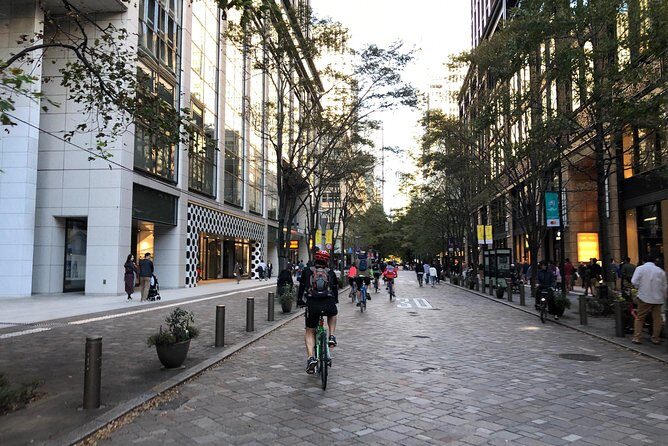
Yoyogi Park: the release valve before the crowds
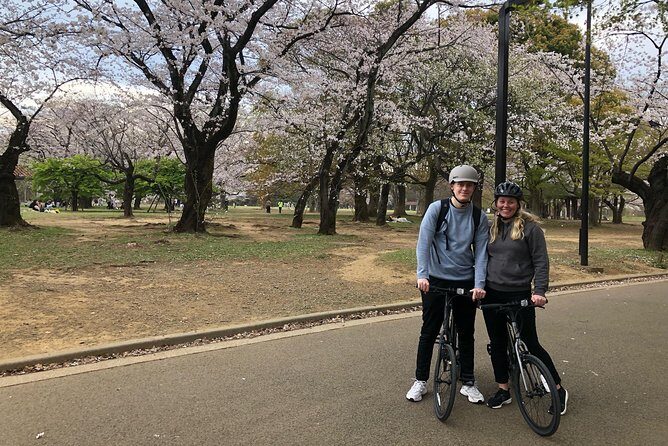
Yoyogi Park is a smart first stop. It’s a break from the city’s pressure and gives you time to settle into the bike routine. Think of it as your warm-up scene: greenery, open space, and a different tempo than the shopping streets.
If you’re not used to cycling in Tokyo, this is also where you’ll likely get your first real sense of how your guide is planning the route around space and traffic flow.





Shibuya Crossing: see it from a moving, human scale
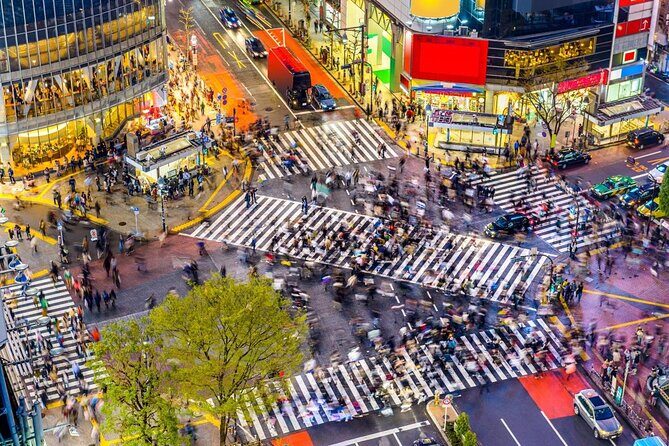
Next comes the big one: Shibuya Crossing. This is where Tokyo’s energy is most visible—people crossing from every direction and the city acting like a living machine.
What’s useful here is not only the landmark itself, but the guidance around it. Your guide leads the way, so you’re not trying to interpret lanes, timing, and crowd movement while also figuring out where to look.
Hachiko: the familiar face with better context
Hachiko is easy to spot once you’re there, but the value of this stop is how it fits into the larger neighborhood story. From a bike route perspective, it’s a pivot point. You see how the landmark connects to the surrounding streets and how people move between a major hub and nearby districts.
Also, if you’ve never seen Hachiko in person, this is one of those moments where photos don’t fully capture the human scale.
Shibuya Cat Street: fashion street energy without the subway scramble
Cat Street is where Shibuya shifts from landmark tourism into a more street-level feel. This stretch gives you that fashion-and-youth vibe, but because you’re traveling by bike, you can actually connect the dots between blocks.
Instead of hopping in and out of trains or walking long distances between spots, you glide through the area and notice more of how the neighborhood works day-to-day.
Aoyama Street: a calmer rhythm with striking city details
Aoyama Street brings a different texture. It’s still urban and active, but the vibe feels more polished and spacious than Shibuya’s most chaotic angles.
On a bike, that change in streetscape is obvious. You don’t just see another viewpoint—you feel the shift in how Tokyo is arranged.
Aoyama Cemetery: quiet contrast that makes the day feel real
This is one of the best “breathers” on the route: Aoyama Cemetery. It’s the kind of stop that’s easy to skip if you’re only chasing famous names.
The value is contrast. After busy intersections and shopping streets, the cemetery gives you a calmer, more reflective moment. It also helps you understand that Tokyo isn’t only neon and crowds—people live, commute, pray, and maintain quiet spaces right inside the city’s density.
Japan National Stadium area: big Tokyo energy, seen at bike speed
The ride finishes with the Japan National Stadium area. Even if you’re not there for an event, it’s a powerful Tokyo landmark. Seeing it from the street gives you scale without needing to squeeze your way through crowds inside a venue.
It also makes a good final visual note: after all the neighborhood wandering, you land back on a large, iconic Tokyo structure before returning to the start.
Pace and road reality: what the experience expects of you
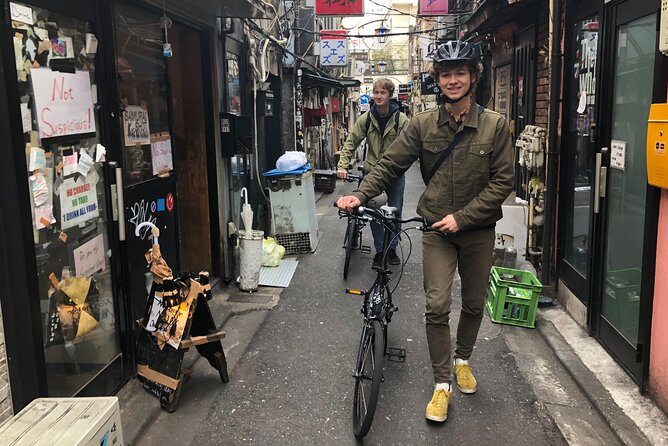
This tour runs on an active but manageable pace—about 15 km/h. The group rides together, and the goal is to feel relaxed, not rushed.
Here’s the practical part: you must be comfortable riding on pavements, handling cross traffic lights confidently, and weaving through crowded or tight spaces. The tour is described as smooth and safe with an experienced guide, but it’s still real street riding.
Also note the bike is non-electric. That’s part of the charm, and it’s also why the ride can feel so freeing compared to riding a car or taking transit.
Your bike will fit heights between 155 cm and 195 cm, and there’s a weight limit of no more than 120 kg. Minimum age is 13 years.
If you’re comfortable on standard bicycles and you can handle stops and starts, you’ll likely enjoy this. If you prefer walking-only days, skip this and save your energy for Tokyo’s great public transit and neighborhoods on foot.
Guide impact: Taichi’s style makes the ride feel easy
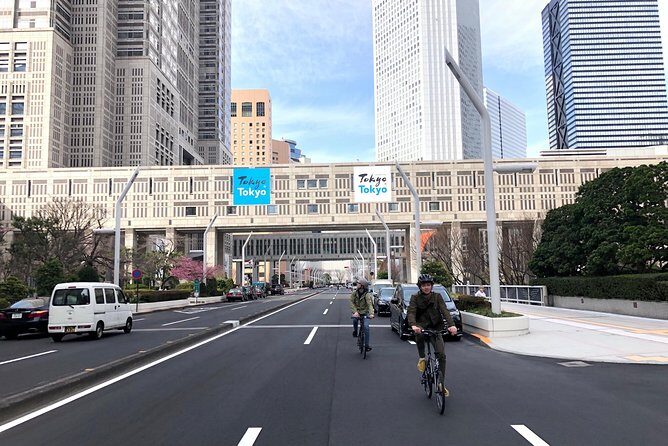
The biggest difference between a good bike tour and a great one is how the guide manages anxiety, pace, and attention. In this case, your guide is based in Shibuya and is also an avid cyclist, which shows in how confidently they pick routes through busy areas.
Many participants highlight that Taichi is calm, friendly, and very good at explaining what you’re seeing. You’ll also get practical local advice—where to eat and drink beyond the most obvious picks—and help with simple Japanese phrases. That kind of added value matters because it turns your tour into a launchpad for the rest of your stay.
One more smart detail: when the group is small, the guide can tailor stops to your specific situation, like adjusting timing around areas you may already have visited. With a maximum of 6 travelers, there’s room to keep things flexible.
The safety factor: what the tour does to help you feel secure
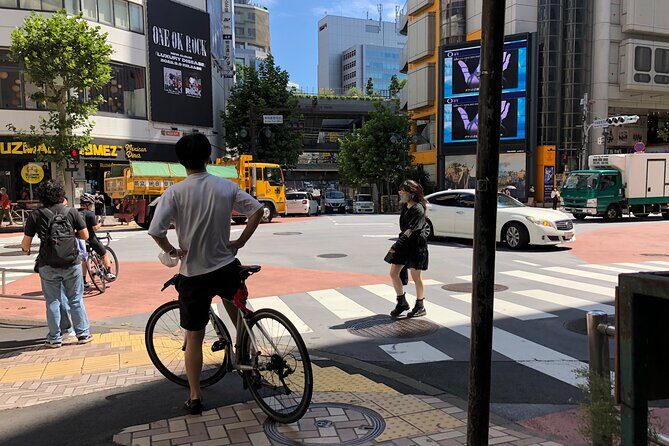
Cycling through Tokyo sounds scary on paper. The tour’s approach tries to make it feel normal in practice:
- you ride as a group with clear guidance
- your guide leads, so you’re not navigating under pressure
- the pace stays steady and manageable
- you’re expected to follow Japanese traffic rules and the guide’s instructions
From the way the tour is framed, it’s designed for people who can handle city cycling basics. If you know you can’t ride confidently in crowded spaces, that mismatch is where frustration can happen.
The good news: the ride is described as smooth, and participants repeatedly bring up the feeling of safety during the trip.
Weather and timing: light rain can happen, but planning still matters
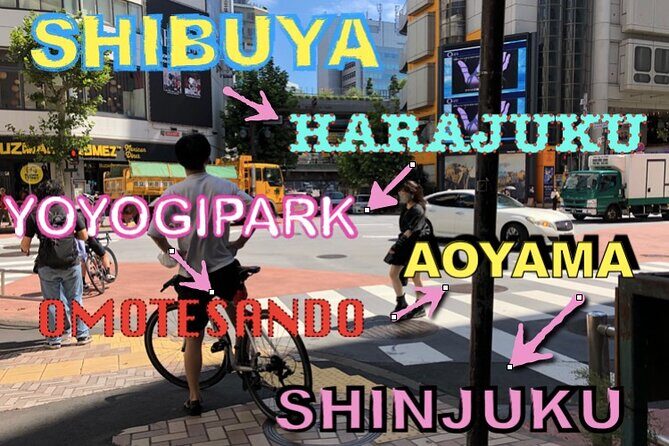
The tour proceeds in light rain, but it can be canceled due to sudden weather changes. The experience requires good weather, so if your schedule is tight, keep your expectations flexible.
If it’s a hot day, this is still often a good option because Tokyo is relatively flat compared to many cities—plus you feel the movement as wind while you ride. Still, bring common sense: stay hydrated and wear breathable clothes.
Price and value: is $64.73 per person a good deal?
At $64.73 per person for about 3 hours, this isn’t the cheapest way to see Tokyo. But it’s also not trying to be.
You’re paying for:
- a small group (max 6)
- active bike time that covers ground faster than walking
- a guide who handles route decisions in busy areas
- local context at each stop, not just a checklist of sights
The ride can cover roughly 9–10 miles of ground over the session, which is a meaningful amount for a city tour. If you’re only staying a short time in Tokyo and want an efficient way to orient yourself in Shibuya’s neighborhoods, this price can make sense.
If you’re a solo traveler with limited time, the value improves even more because you’re not paying for a big bus experience. It’s also often easiest to do this earlier in your visit, when you still need help understanding where things are and what style of neighborhood you enjoy.
Who should book this (and who should skip it)
This tour is a great fit if:
- you want a first-hand sense of Shibuya, Harajuku, and Aoyama without nonstop train transfers
- you’re comfortable riding a regular bike (non-electric)
- you like getting local recommendations while you travel
- you enjoy a mix of iconic stops and quieter streets
You might want to skip it if:
- you’re not confident cycling through traffic lights or crowded areas
- you want a fully relaxed, no-stress sightseeing day where you never have to consider road movement
- you fall outside the bike/fitness limits (height 155–195 cm, weight max 120 kg, age 13+)
Should you book this Shibuya and Hidden Tokyo bike tour?
If your main goal is to see Shibuya beyond the big photo moments, I’d book it. The route mixes the obvious with the calmer, off-the-beaten-path feeling streets, and the guide’s handling of busy areas is what makes the difference.
My quick decision checklist:
- If you can ride confidently in city conditions, you’ll get real value from the time.
- If you want local tips you can use later in your Tokyo days, this style of tour pays off.
- If the idea of cycling in crowds makes you tense, switch to a walking tour or a transit-based day until you feel more comfortable.
FAQ
How long is the Tokyo Bike Tour: Shibuya & Hidden Tokyo?
It runs for about 3 hours.
What does the tour cost?
The price is $64.73 per person.
How large is the group?
The tour has a maximum of 6 travelers.
Where do I meet the guide?
Meet at Umayamichi Park, 5-chōme-24-11 Sendagaya, Shibuya, Tokyo 151-0051, Japan.
Where does the tour end?
It ends back at the meeting point.
What stops are included on the ride?
Stops include Yoyogi Park, Shibuya Crossing, Hachiko, Shibuya Cat Street, Aoyama Street, Aoyama Cemetery, and the Japan National Stadium area.
What bike and fitness requirements should I know?
Bikes fit heights between 155 cm and 195 cm. Participants should be comfortable riding on pavements, handling cross traffic lights confidently, and cycling through crowded or tight spaces. You must also follow Japanese traffic rules and the guide’s instructions.
Is there an age limit?
Yes, the tour is for participants age 13 years or older.
Can I join if I’m traveling in light rain?
The tour proceeds in light rain, but it may be canceled due to sudden weather changes.
What is the cancellation window for a full refund?
You can cancel up to 24 hours in advance for a full refund. Changes within 24 hours aren’t accepted, and refunds won’t be issued if you cancel less than 24 hours before the start time.