REVIEW · TOKYO
Tokyo: Calligraphy Workshop & Original T-Shirt Creation
Book on GetYourGuide →Operated by Local Guide Stars · Bookable on GetYourGuide
Tokyo’s busiest block becomes quiet fast. In this Shinjuku workshop, you sit down with a professional calligrapher and learn real brush skills instead of doing a quick craft. I especially love the ink-making part, where you grind an inkstick into ink and suddenly feel your pace slow.
Two other things I really liked: the small group setup (limited to 10) and the guided English help from hosts like Hiromi and Mayuko-san, who made the lesson feel easy to follow even when the strokes got tricky. One possible drawback: the base class price covers the instruction and supplies, but the original T-shirt is optional and not included in the workshop price—so your souvenir budget may go up if you want it.
You’ll start at a FamilyMart near Okubo Station and spend about two calm hours creating something you can take home—kanji that starts as your own name. It’s a satisfying mix of culture, skill, and mindfulness, with tools that feel authentically Japanese.
In This Review
- Key highlights you’ll care about
- Finding The Workshop Near Okubo Station
- Traditional Workwear And The Instant Shift to Calm
- Grinding Inkstick Basics You’ll Actually Use
- Turning Your Name Into Kanji (And Learning the Logic)
- The Final Piece: T-Shirt Calligraphy or Keepsake Paper
- English Hosting That Makes the Craft Click
- Tools, Teaching Pace, and Why Small Groups Matter
- Duration And Scheduling: 2 Hours That Don’t Drag
- Price and Value: What $30 Really Buys
- Who This Workshop Fits Best
- What To Bring (And What Not To Stress)
- Should You Book This Tokyo Calligraphy Workshop?
Key highlights you’ll care about
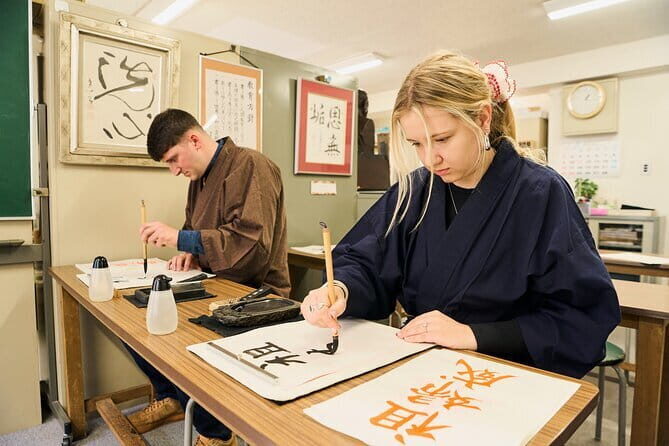
- Grinding ink the traditional way with an inkstick to start your session
- Turning your name into kanji and learning how characters connect
- Writing with real tools in a lesson led by a professional calligrapher
- English guidance in a small group (up to 10 participants)
- Optional T-shirt calligraphy if you want a wearable souvenir
Finding The Workshop Near Okubo Station
This class is in Shinjuku, close enough to your day’s sightseeing that it won’t feel like a separate mission. You meet at FamilyMart Okubo Station South Exit Store (ファミリーマート 大久保駅南口店), at 1-23-21 Hyakunincho, Shinjuku-ku, Tokyo.
The good news: you’re not hunting down a random studio. There’s a guide holding a sign that says Local Guide Stars, which makes the start time feel straightforward.
What I’d do to make this smoother: arrive a few minutes early and double-check your direction toward the south exit. Japan’s station exits can be confusing when you’re in a hurry, and you’ll want a calm start—this workshop works best when you’re not rushing.
A few more Tokyo tours and experiences worth a look


Traditional Workwear And The Instant Shift to Calm
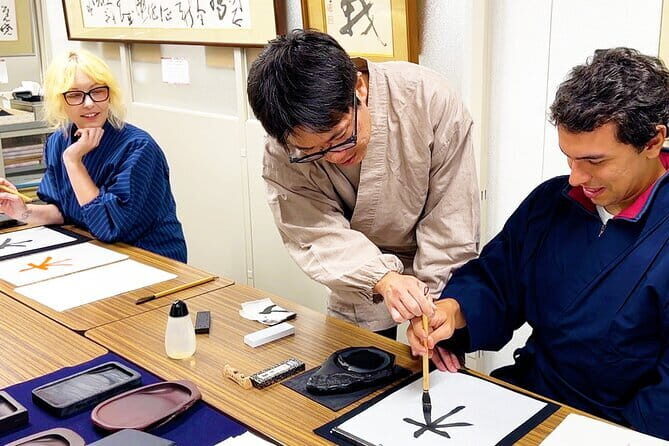
Once the group meets, you change into traditional Japanese workwear. That sounds small, but it matters. Clothing like this nudges you out of tourist mode and into “I’m learning a craft” mode fast.
Then comes one of the most memorable parts: you grind a solid inkstick to make authentic ink. This step turns the session into more than calligraphy instructions. You’re doing a simple physical action that feels meditative, and it also gives you ink you can actually work with at the table.
From there, you practice basic brush techniques first. You’re not thrown directly into your final piece, which helps if you’re brand-new. Even in reviews from people traveling with kids and total beginners, the structure stays supportive: you learn fundamentals, then your name becomes the focus.
Grinding Inkstick Basics You’ll Actually Use
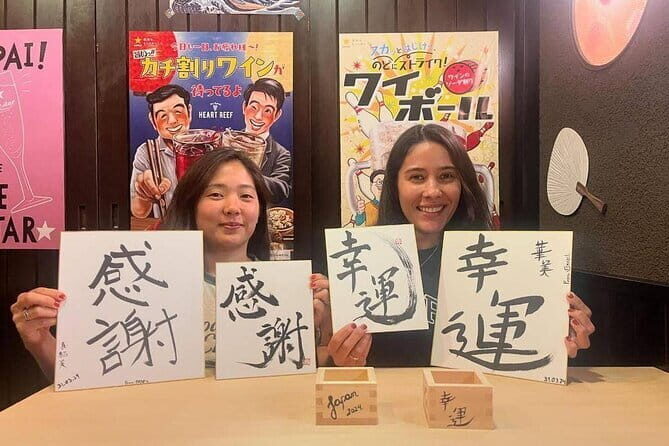
If you’ve never worked with brush and ink, this is where you gain a sense of control. The ink’s thickness and the brush’s feel matter. When your strokes start to behave, you’ll notice why traditional calligraphy has such a reputation for calm focus.
In class, you’ll learn how to prepare your ink and how to handle the brush for basic movements. You also get a chance to practice before attempting the final kanji. That sequencing is a big deal for first-timers. It turns calligraphy from intimidating to doable, because you’re building muscle memory rather than guessing.
And yes, the ink process can get a little messy in a fun way. That’s part of the authenticity. If you’re planning to wear something you hate afterward, plan to change back right after class.
Turning Your Name Into Kanji (And Learning the Logic)
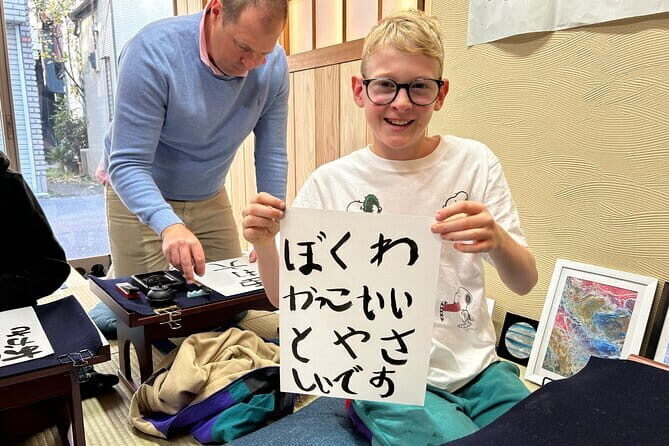
This workshop is built around a specific goal: transforming your name into kanji. That’s a more interesting souvenir idea than writing your name in a phonetic alphabet, because kanji reflects meaning and form.
You’ll learn how Japanese characters evolved over time and how that affects how you write. You’ll also practice:
- the order of writing strokes
- positioning of characters side-by-side
One of the best takeaways from multiple experiences is that teachers don’t just show you what looks pretty. They teach the “how” behind it—stroke sequence and placement—so you understand why your letters look right (or wrong) and how to fix them.
A nice detail: you often get to choose kanji options related to your name. In reviews, people talked about picking their own kanji characters, which can make the whole experience feel personal rather than generic.
The Final Piece: T-Shirt Calligraphy or Keepsake Paper
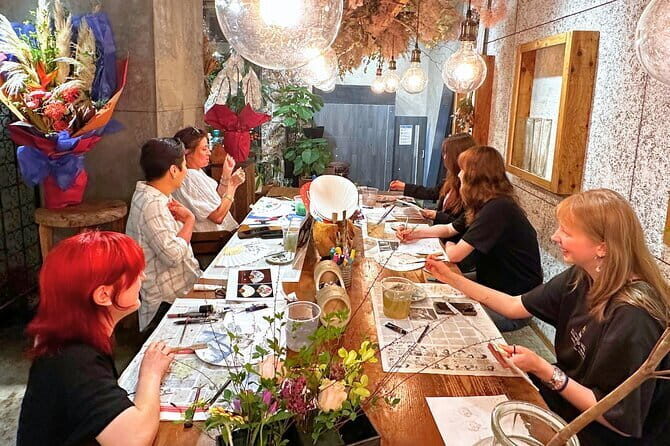
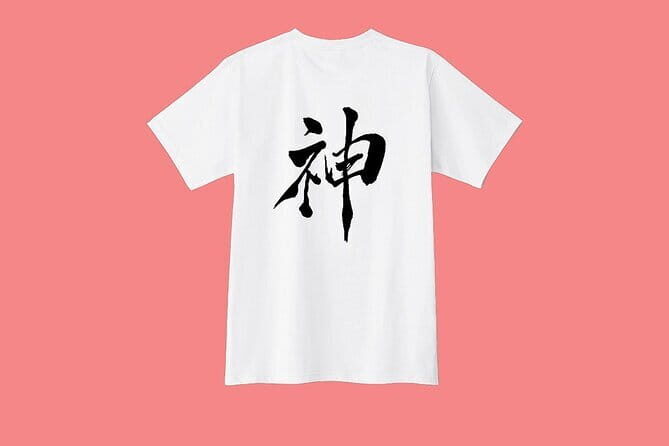
The final part is where you turn practice into a finished souvenir. The class includes guided time to write your kanji directly on a T-shirt, and you can also design an original piece (optional).
But here’s the honest value note: the original T-shirts are not included in the price. The class can still produce a takeaway even if you don’t buy the shirt—some sessions include a teacher-written version of each person’s name on paper, which gives you a keepsake without making the T-shirt purchase necessary.
If you do choose the T-shirt, consider it your “fun souvenir” upgrade. It will be a wearable reminder of the skill you just learned, but it’s also the part that can feel pricey compared with the base class cost. If you’re on a tighter budget, ask in advance how take-home artwork works if you skip the shirt.





English Hosting That Makes the Craft Click
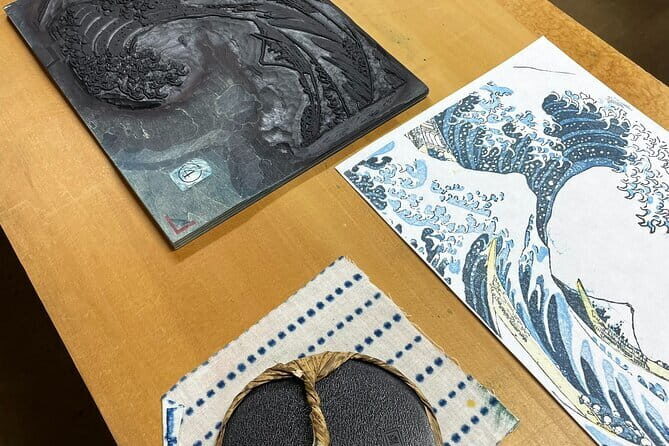
This workshop is guided in English with an expert host. In real terms, that means you’re not left translating instructions to yourself while the brush work gets technical.
Across different sessions, hosts such as Hiromi, Mayuko-san, Nono, and others have been praised for clear English and patience. One review even mentioned that the translator’s English felt native-like—so the barrier to entry seems low.
What I’d watch for: calligraphy has its own visual rules, and you’ll improve fastest when you can hear the stroke-order advice and positioning tips clearly. The English layer here is there for a reason. It keeps you from practicing the wrong motion for 30 minutes and then realizing you should have started differently.
Tools, Teaching Pace, and Why Small Groups Matter

You’ll use authentic professional tools during the class. That’s another reason this feels different from a “make a thing and go” souvenir activity.
Because the group is limited to 10 participants, the teacher can give feedback to individuals. That’s reflected in the way many people described being corrected on brush strokes and taught how to improve. One review noted how helpful the instructors were with stroke details for beginners, which is exactly what you want if you don’t have a background in writing systems.
The pace is also designed to feel manageable. The session blends hands-on practice with short explanations, and you’ll cycle between doing and adjusting. If you’re the type who likes structure (not just free art time), you’ll probably appreciate how the lesson builds step-by-step.
Duration And Scheduling: 2 Hours That Don’t Drag
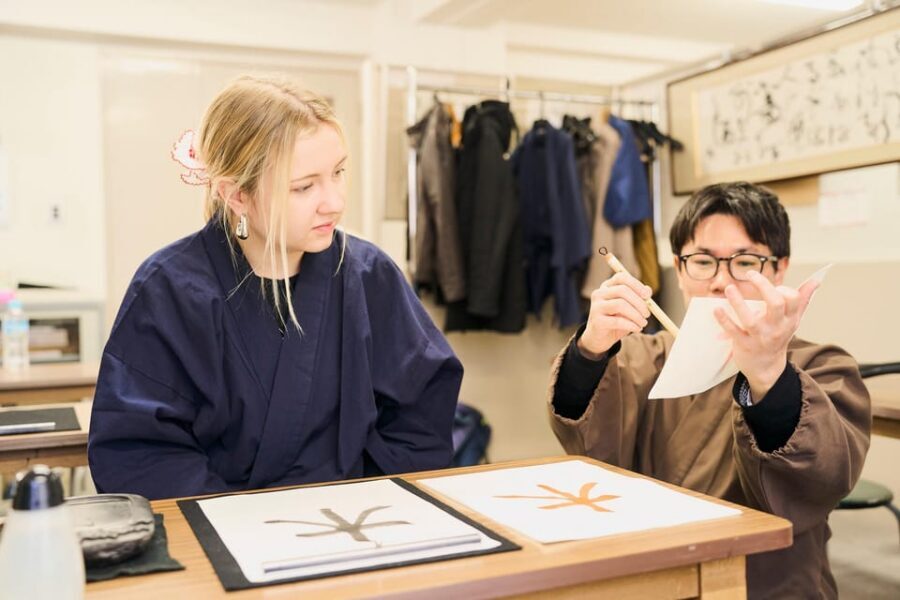
The workshop lasts about two hours. In Tokyo, that’s a smart length. It’s long enough to go from ink prep to a meaningful final piece, but not so long that you feel cooked by the time you’re done.
Because you’ll spend part of the time writing and part of the time learning, it’s ideal for a midday reset or an early afternoon activity when you want to break the Tokyo day into calmer blocks. Several people described it as meditative—especially compared to the constant movement outside.
Price and Value: What $30 Really Buys
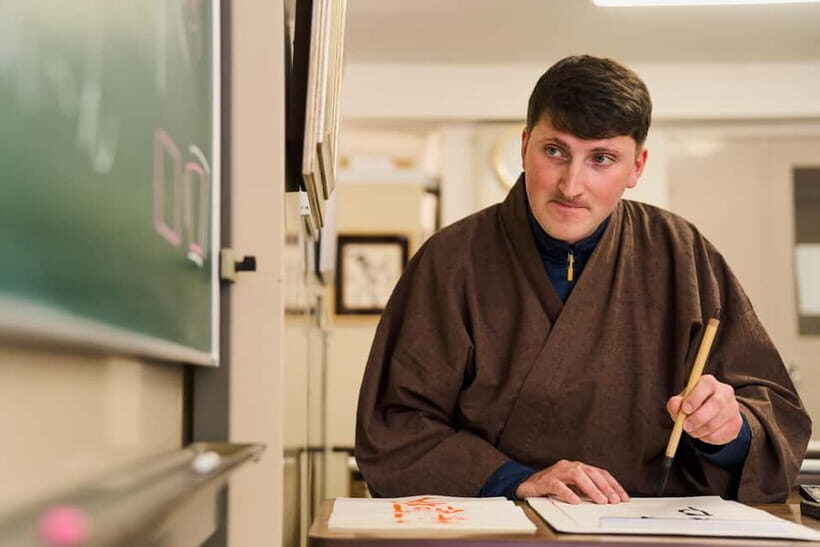
The price is listed at $30 per person. For two hours, that buys more than a quick craft. You’re paying for:
- instruction from a professional calligrapher
- English hosting and guidance
- calligraphy supplies used during the class
- a take-home artwork outcome
Then there’s the optional upcharge: original T-shirts. Since those aren’t included in the base price, you should treat this class as a $30 foundation plus the choice to upgrade your souvenir.
Is it worth it? For me, the value comes from authenticity and feedback. If you’ve ever tried making “calligraphy” with the wrong ink or without stroke guidance, you know how quickly it turns frustrating. Here, you get the tools and coaching that help you leave with something that feels genuinely made, not accidentally scribbled.
Who This Workshop Fits Best
This experience works well for a broad range of people.
It’s a great match if:
- you want a hands-on cultural activity in Tokyo
- you enjoy writing, art, or learning a language-related skill
- you like calm activities that break up city chaos
It’s also family-friendly in spirit. One review mentioned the workshop can be enjoyable even for children, and the class style seems patient enough for beginners.
You might want to consider skipping the T-shirt upgrade if:
- you’re traveling on a strict souvenir budget
- you’d rather keep things light and easy to carry
- you prefer a paper keepsake rather than a wearable item
What To Bring (And What Not To Stress)
The workshop includes supplies, and you’ll change into workwear on site, so you don’t need to bring specialty art gear. What you should do is show up ready to follow instructions and slow down.
Wear comfortable shoes and plan to take your time with the brush work. Calligraphy rewards patience more than speed. If your first strokes look uneven, that’s normal. The session is built around learning the logic of brush movement and stroke order.
Also, think about what you’ll do with the finished piece after class. If you choose the T-shirt route, you may be wearing something that’s still part of the memorable moment, so be ready for a quick post-class moment to enjoy your result rather than immediately hopping to your next stop.
Should You Book This Tokyo Calligraphy Workshop?
Yes, if you want a genuinely Japanese, calm, hands-on experience that leaves you with a real souvenir. The mix of ink-making, kanji tied to your name, and English support in a small group makes it easy to recommend to beginners and art-curious travelers alike.
Book it especially if you like activities where the outcome matters and the teaching is structured. If you’re price-sensitive, decide early whether you want the T-shirt upgrade. Either way, the base experience still gives you a lasting keepsake path—just with different formats.
If your Tokyo schedule has 2 quiet hours and you want something meaningful beyond photos, this is a strong choice.