REVIEW · TOKYO
Tokyo Cherry Blossoms blooming spots E-bike Tour, 3hrs
Book on Viator →Operated by Cycling Holiday Tokyo · Bookable on Viator
Pedal past Tokyo’s sakura without hunting. This 3-hour e-bike cherry blossom tour loops through spots like Chidorigafuchi and Yasukuni Shrine, including paths that regular traffic can’t reach. It’s a practical way to see spring bloom up close without burning half your day on trains.
I especially love the small group size (max 6), which keeps the pace relaxed and makes it easier to stop for photos. I also like that the guide builds in short, well-timed breaks so you don’t just zoom by—get off, look around, and ask questions.
One consideration: cherry blossoms don’t always hit peak on your exact day. If bloom is late, the feel can change from wow-at-every-turn to more of a still-beautiful but slightly gentler spring walk.
In This Review
- Key points at a glance
- Why an e-bike sakura ride beats trying to do it solo
- Getting oriented at Cycling Holiday Tokyo in Kanda
- E-bike basics: quick lessons and real control
- What to bring for comfort
- The route in plain language: Chidorigafuchi to Kensei Kinenkan
- Stop 1: Chidorigafuchi (10 minutes)
- Stop 2: Yasukuni Shrine (15 minutes)
- Stop 3: Sotobori Park moat views (10 minutes)
- Stop 4: Hibiya Park (5 minutes)
- Stop 5: Kensei Kinenkan (10 minutes)
- What the guides add: stories, context, and photo help
- Weather and bloom timing: the one variable you can’t control
- Value check: is $64.57 for 3 hours worth it?
- Who this tour fits best (and who it doesn’t)
- Fitness level reality
- Should you book this Tokyo cherry blossom e-bike tour?
- FAQ
- How long is the Tokyo Cherry Blossoms blooming spots E-bike Tour?
- How much does the tour cost?
- Where do I meet and where does the tour end?
- What’s included in the price?
- What’s not included?
- Which cherry blossom spots are part of the itinerary?
- Who can join the tour?
- What happens if weather is bad?
Key points at a glance
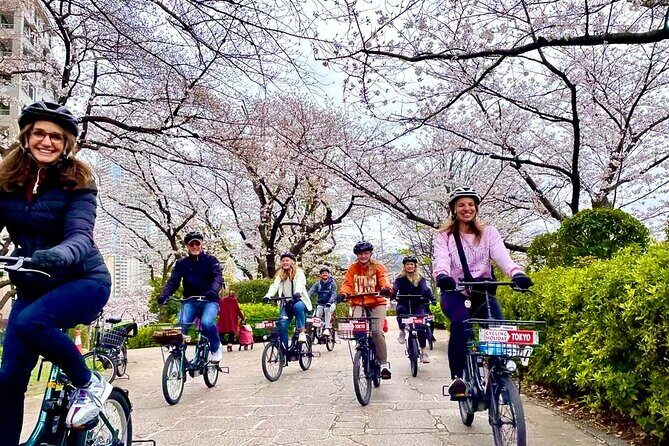
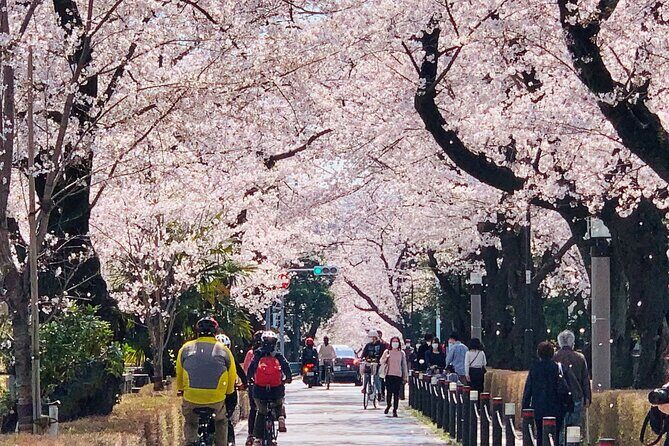
- Car-free feeling on two wheels: follow scenic routes where cars typically can’t go.
- Max 6 people: easier navigation and more personal time with the guide.
- Scheduled photo stops: short, focused breaks at major blossom areas.
- Classic spring landmarks: Chidorigafuchi, Yasukuni Shrine, Sotobori Park, Hibiya Park, Kensei Kinenkan.
- E-bike assist helps everyone keep up: you can cover more ground without feeling wiped out.
- Helmet, insurance, and luggage storage included: fewer things to worry about.
Why an e-bike sakura ride beats trying to do it solo
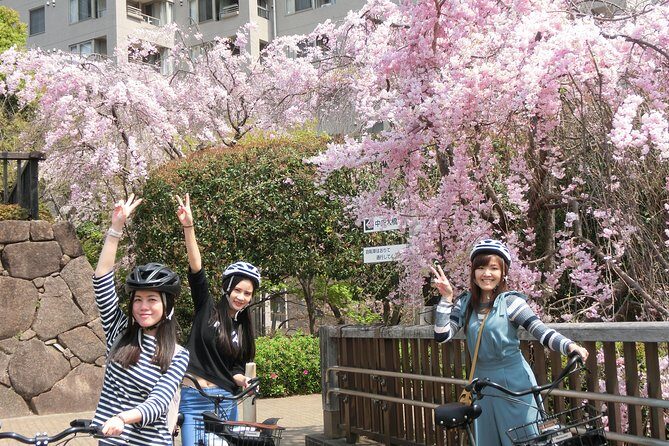
Tokyo cherry blossoms are famous for a reason, but doing it on your own can turn into a scramble. You’re chasing bloom timing, crowds, and the simple problem of distance. An e-bike changes the equation fast: you cover ground, then slow down when the view is worth it.
This tour is built around that idea—spring bloom plus efficient routing. You glide along scenic paths lined with cherry trees, and you still get moments to step off and actually take in the setting.
Also, you’re not limited to the exact same few “postcard spots.” The route combines riverside-looking areas, shrine grounds, moat edges, and city parks so you see how sakura shows up in different parts of Tokyo.
You can also read our reviews of more cycling tours in Tokyo
Getting oriented at Cycling Holiday Tokyo in Kanda
The ride starts and ends at Cycling Holiday Tokyo, near Kanda Station, at 3-chōme-8-6 Uchikanda. The base is a handy place to regroup before you roll out, and it’s convenient for the JR Yamanote Line and Tokyo Metro.
You’ll get a mobile ticket, plus you can leave your luggage with the team during the tour (just keep valuables on you). That matters in spring, because you might be carrying extra layers, a small bag for camera gear, and—if you’re sensible—something to keep warm.
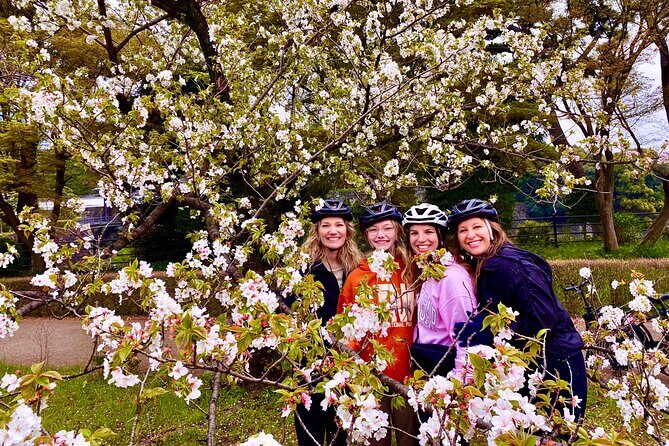
Group size is capped at 6, which also changes how the tour feels. Instead of threading through crowds like everyone else, you move as a unit and your guide can manage the rhythm without constant waiting.
E-bike basics: quick lessons and real control
If you can ride a bicycle, you’re good. There’s a clear requirement here: if you can’t ride, you can’t join. The tour also sets a minimum height of 147 cm and a minimum age of 12, which is another way of saying the bike setup is for confident riders, not for “stand on the pedals once” beginners.
That said, the electric assist is the practical win. You’re not trying to conquer Tokyo hills with cranky legs. The assist helps you keep a steady pace so you can focus on watching branches, taking pictures, and listening.
Helmet rental is included, and insurance is part of the package too. That’s not just legal comfort—it also lets you spend your attention on the experience instead of worry.
What to bring for comfort
The tour notes a few seasonal tips: in warmer months, bring towels and sunscreen; in colder months, bring warm clothes and gloves. Rain gear isn’t included, so if your dates can get stormy, plan accordingly.
And yes, bring sunglasses if it’s bright. Sakura season can mean crisp air and sharp light, and it’s a lot easier to shoot photos when your eyes aren’t squinting every few seconds.
The route in plain language: Chidorigafuchi to Kensei Kinenkan
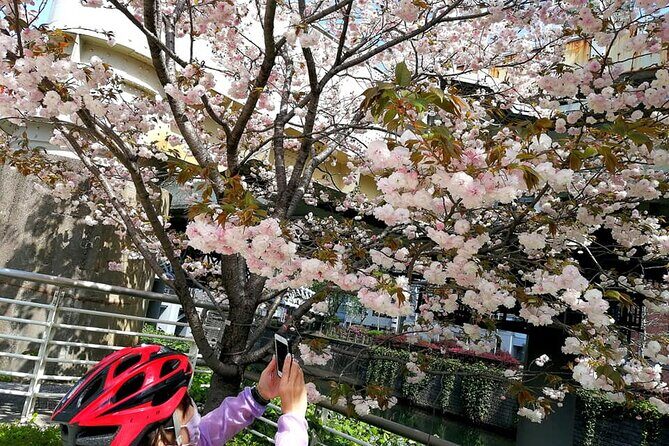
This is a tight 3-hour loop with short stops that add up. The timing is short on purpose. You’re meant to see several areas, not one single place for an entire afternoon.
Here’s what each stop is like and why it’s worth your time.
A few more Tokyo tours and experiences worth a look
Stop 1: Chidorigafuchi (10 minutes)
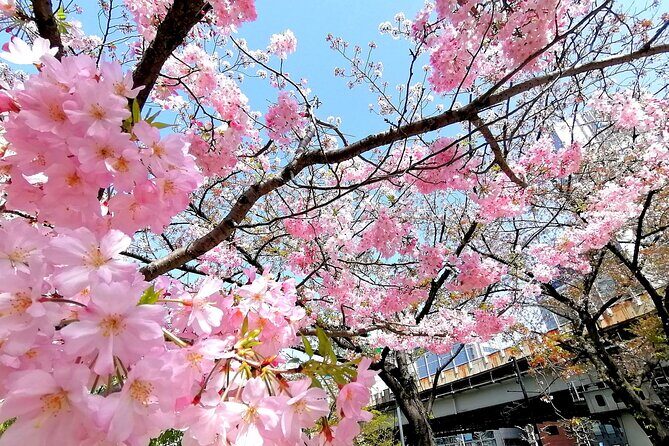
You start at Chidorigafuchi, riding past cherry trees from the e-bike. This is one of those spots where the setting looks great even while moving slowly, because the trees create a strong visual line.
Why it works: you get an immediate “we’re here” moment without wasting time hunting for the best angles. The 10-minute stop is short enough to keep momentum, but long enough for a few photos and a quick look around.
Potential downside: if you want long wandering time, 10 minutes is not that. Think quick snapshots and first impressions, then you’ll slow down more later.
Stop 2: Yasukuni Shrine (15 minutes)
Next comes Yasukuni Shrine. Here, you get off the bike and take in the blossoms in the park area. Shrines in Tokyo have a different energy than city parks—more structured, more reflective, less chaotic.
Why it works: you’re not only photographing trees, you’re stepping into a space that feels distinctly Japanese. The switch from rolling on the bike to walking for a bit helps you reset and actually notice details.
Possible consideration: shrine grounds can be lively depending on the day. Your guide’s timing helps, but keep your expectations flexible about how calm it feels.
Stop 3: Sotobori Park moat views (10 minutes)
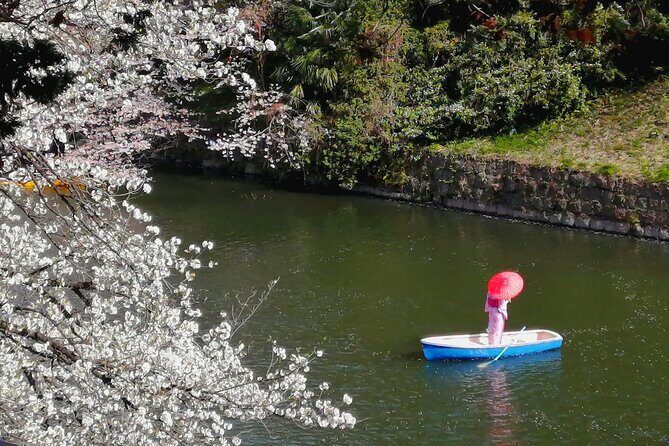
Sotobori Park is where the tour leans into scenery you might not stumble on by accident. You can see cherry trees along the outer moat area while cycling nearby.
Why it works: moats and water-adjacent edges change how sakura looks. You often get more layered views—trees plus reflections or at least a sense of depth—even if you’re just passing by at a careful pace.
Potential downside: because this is partly a ride-by view, you’ll want to be ready to grab photos quickly. Don’t expect a long photo session here unless the flow allows it.
Stop 4: Hibiya Park (5 minutes)
Hibiya Park is a quick pass. You stay on the e-bike and look at cherry blossoms in the park area.
Why it works: this stop is like a breath between heavier stops. It keeps the route moving while still squeezing in another major sakura setting.
Possible consideration: 5 minutes can feel like a tease if you’re the type who loves lingering. If you want a long park day, you’ll probably pair this with another stop on your own later.
Stop 5: Kensei Kinenkan (10 minutes)
Finally, you get off the bike at Kensei Kinenkan for another short blossom break in the park setting.
Why it works: it’s a clean ending note—enough time to enjoy the blossoms without feeling rushed, with the guide still close to answer questions.
This stop rounds out the tour’s idea: you see sakura in multiple Tokyo moods—river/edge views, shrine calm, moat scenery, and big-city parks.
What the guides add: stories, context, and photo help
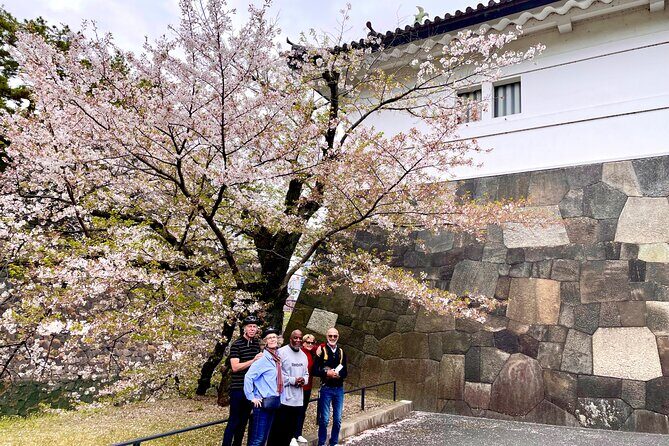
The real secret sauce here is the guide. You’re not just riding between pretty spots—you’re getting context for what you’re seeing and why it matters.
Different guides have different styles, but you’ll hear the kind of background that makes blossoms feel more than decoration. Names that come up with this operation include Jenny, Take, Kay, Kenta, Yoshihisa (Yoppi), Takako, and Yoshiko. The common theme is clear: they help you understand Tokyo while you ride, and they encourage questions when you’re looking at a shrine, park, or historical landmark.
Another practical win from the guide experience: they’re thinking about the photos. In a small group, that can mean choosing streets where you get a better angle, timing stops so you aren’t constantly fighting the crowd, and nudging you toward details that are easy to miss when you’re on your own.
If your Japanese is limited, that’s still fine. You’re not relying on signs. The guide fills in the gaps in plain, practical ways.
Weather and bloom timing: the one variable you can’t control
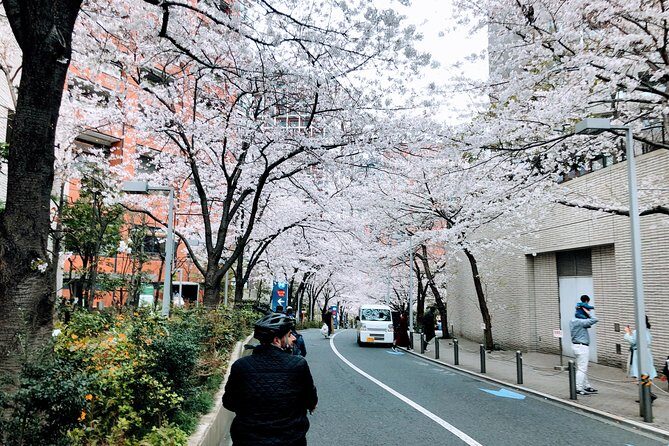
Sakura timing is the big wildcard. The tour depends on good weather, and blossom peak depends on the season’s exact rhythm. That means you might see trees in full bloom or you might catch them just starting.
The tour team’s approach is to keep the experience moving and adjust when needed. I’ve seen examples of the route being modified when blossoms weren’t at peak, shifting toward another bike option so you still get a great Tokyo day instead of a letdown.
How to plan around this: keep your dates flexible if you can. And if you’re traveling specifically for peak sakura, give yourself at least one extra day in the area so you can chase bloom on your own too.
Value check: is $64.57 for 3 hours worth it?
At $64.57 per person for about 3 hours, this tour isn’t trying to be a bargain-basement deal. It’s priced like an experience: e-bike rental, helmet rental, a certified guide, and insurance are included.
For me, the value comes from the mix of time saved and what you gain by not thinking. You’re getting:
- a ready-to-go bike and helmet
- guided routing through multiple blossom areas
- short guided stops so you see more than one spot
If you tried to recreate this alone, you’d spend time arranging bike rental, mapping routes, and figuring out where to stop for photos. You could save money, sure. But you’ll probably spend energy doing the work the guide is already doing for you.
Also, small group size matters for value. A max of 6 means less friction on narrow paths and more room to breathe at each stop.
Who this tour fits best (and who it doesn’t)
This is a strong match if you:
- want a 3-hour structure during cherry blossom season (not a DIY guessing game)
- like moving around but still want real stops for photos
- appreciate history and context while you sightseeing
It’s less ideal if:
- you can’t ride a bicycle comfortably (the tour explicitly requires bicycle riding ability)
- you’re looking for a long, slow, full-day wandering experience
- you want every stop to be 30+ minutes. Here, stops are short, and the win is the overall loop.
Fitness level reality
The electric assist makes it easier for many people to keep a steady pace. You’re still actively riding, but you’re not doing a workout-first plan. If you can handle a bike ride, you can likely handle this.
Just plan for cold or warm spring conditions. Bring layers or gloves if winter dates hit, and bring sunscreen/towel if it’s a hotter spring day.
Should you book this Tokyo cherry blossom e-bike tour?
Book it if you want the best blend of speed and experience: multiple cherry blossom areas, a guide who adds context, and a small-group ride that keeps you from wasting your day. The route choices make sense—Chidorigafuchi to Yasukuni, then Sotobori and Hibiya, finishing with Kensei Kinenkan—so you don’t just see one version of sakura.
Skip it or reconsider if your priority is staying put for long photo sessions, or if you’re not confident on a bicycle. Also, if you’re traveling at the edge of peak bloom, know that sakura timing is a gamble, even with good planning.
If you want spring bloom without the logistical headache, this is one of the easiest ways to do it.
FAQ
How long is the Tokyo Cherry Blossoms blooming spots E-bike Tour?
It runs for about 3 hours.
How much does the tour cost?
The price is $64.57 per person.
Where do I meet and where does the tour end?
The tour starts at Cycling Holiday Tokyo, 3-chōme-8-6 Uchikanda, Chiyoda City, Tokyo 101-0047, Japan, near Kanda Station. The tour ends back at the meeting point.
What’s included in the price?
Included are the rental e-bike, rental helmet, a guide, insurance, and the option to leave your luggage (except valuables) with the team during the tour.
What’s not included?
Food and drinks are not included, and rain gear is not included.
Which cherry blossom spots are part of the itinerary?
The tour includes Chidorigafuchi, Yasukuni Shrine, Sotobori Park, Hibiya Park, and Kensei Kinenkan.
Who can join the tour?
Most travelers can participate, but you must be able to ride a bicycle. The minimum age is 12 years, and the minimum height is 147 cm.
What happens if weather is bad?
The experience requires good weather. If it’s canceled due to poor weather, you’ll be offered a different date or a full refund.