REVIEW · KYOTO
Kyoto 5-Star Geisha Night Walk: Small-Group Authentic Experience
Book on Viator →Operated by TripTomo · Bookable on Viator
Kyoto changes after dark. This small-group Kyoto geisha night walk takes you through Gion, shrines, and classic alleyways when the daytime crowds thin out.
I especially love the intimate size (max 8) and the way guide Richard turns street corners, temples, and traditional entertainment into clear stories you can actually use while you’re walking. It’s also built around the classic Kyoto rhythm—long enough to feel like a real evening, not a rushed drive-by.
One consideration: this is a 3.5-hour walking tour with steps and uneven paths, so it’s not a good match if you have mobility limits.
In This Review
- Key things I’d circle on your map
- A 5:20 pm start that makes Gion feel human
- Meeting at the Disney Store, ending by Sanjō Ōhashi
- What the $98 really buys: small group + lots of stops
- Richard’s guide style: clear, practical, and interactive
- Kabuki theater stop: traditional entertainment before you hit Gion
- Hanamikoji Street and the geisha lanes: what you’re really looking for
- Temple time at night: Yasui-Konpiragu, Hōkan-ji, and Yasaka Shrine
- Ninenzaka and Nene-no-Michi: lantern alleys and the included snack
- The picturesque streets you might miss on your own
- Pontocho after dark: lively alley energy, still close to tradition
- Who should book this, and who should skip it
- Quick booking decision: should you do it?
- FAQ
- How much does the Kyoto geisha night walk cost?
- How long is the tour?
- What time does it start?
- Where do we meet and where does it end?
- Is there a snack included?
- How big is the group?
- What if the weather is bad or I need to cancel?
- Is it stroller-friendly or suitable for limited mobility?
Key things I’d circle on your map
- Small group (up to 8) keeps the pace human and the questions coming
- Richard’s storytelling makes Gion, Shinto, and Zen easier to understand
- Multiple night-photo stops (including Hōkan-ji and the lantern alleys) instead of one quick viewpoint
- Geisha district context as you pass living quarters and working houses
- Included snack break at Nene-no-Michi to keep your energy steady
- Gion to Pontocho flow so you end near the lively alley life without feeling stranded
A 5:20 pm start that makes Gion feel human
The big win here is the timing. Starting at 5:20 pm, you catch that sweet spot when Gion’s streets begin to cool down and the mood shifts toward evening. You still get the charm—lantern light, wooden facades, the slow presence of people moving through the district—but you avoid the worst of the daytime crush.
This matters because Gion isn’t just a “look at buildings” area. It’s a living neighborhood. When you walk it at the right hour, you notice the details: the quiet transitions between main streets and side alleys, how the district opens up near temples, and how the mood changes with each turn.
And yes, you’re in Kyoto—so it still won’t be empty. But the difference between packed daytime sidewalks and a calmer evening walk is huge.
You can also read our reviews of more walking tours in Kyoto


Meeting at the Disney Store, ending by Sanjō Ōhashi
Logistics are refreshingly straightforward. You meet at the Disney Store Kyoto Shijo-Kawaramachi (on the 1st and 2nd floor) in Shimogyo Ward. The tour ends at the Sanjō Ōhashi Bridge, at the north end of Pontocho alley (Nakagyo Ward).
That end point is smart. Pontocho is where Kyoto’s night life and old-school atmosphere mix. So once you finish, you’re already placed in an area where you can keep exploring, grab dinner, or just wander without backtracking.
You’ll have a mobile ticket, which is one less thing to manage on your phone while you’re dealing with night photos, trains, and street snacks.
What the $98 really buys: small group + lots of stops
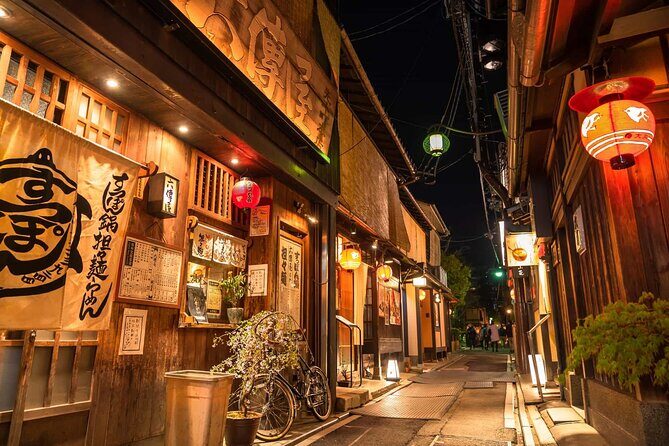
At $98 per person for about 3 hours 30 minutes, this isn’t a cheap “stand in front of a building” activity. You’re paying for three things that add real value in Kyoto:
First, you’re getting a maximum of 8 people. That size keeps it personal. You’re not shouting over 30 other walkers, and the guide can actually answer your questions.
Second, you’re paying for a guide who connects the dots. Instead of facts that bounce off your brain, you get context—how geisha arts connect to training, how shrines connect to Shinto practice, and why Zen thinking shows up in Japanese temple culture.
Third, the schedule packs in meaningful stops—Gion streets, multiple shrines/temples, and Pontocho—so the time feels like an evening in Kyoto, not a quick checklist.
Add an included Kyoto-style snack, and you’ll likely feel more comfortable during the walk than you would on a tour where you’re rationing snacks until the end.
Richard’s guide style: clear, practical, and interactive
The standout from the experience is the guide, Richard. People consistently praise his clear English, his story-first approach, and the depth he brings without making it feel like a lecture.
What I like about this style is that it changes how you look at everything. After a few stops, you start reading details you’d normally miss: why a shrine space feels different from a temple space, how training traditions shaped the arts, and what the geisha district layout is doing for the neighborhood.
Richard also handles questions well. If you want food or gift recommendations afterward, you’re in a good position to ask—especially since the tour ends near Pontocho, where you’ll likely want options.
Kabuki theater stop: traditional entertainment before you hit Gion
You begin with a stop connected to traditional Japanese entertainment: the guide makes a point of explaining interesting details about Kabuki theater.
This is a smart setup, even if you’ve never visited a theater. Kabuki isn’t just “another old thing.” It’s part of the broader world of Japanese performance arts—costume, stage craft, and the discipline behind the scenes. Understanding that background makes what you learn later about geisha arts feel less like random trivia and more like a connected culture.
Consider this your cultural warm-up before you enter the geisha district.
You can also read our reviews of more evening experiences in Kyoto


Hanamikoji Street and the geisha lanes: what you’re really looking for
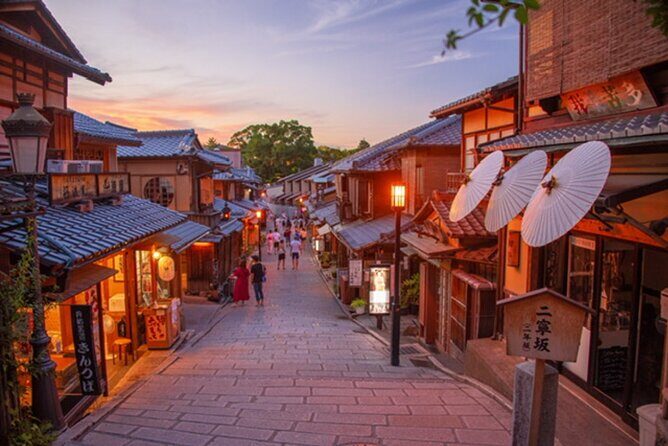
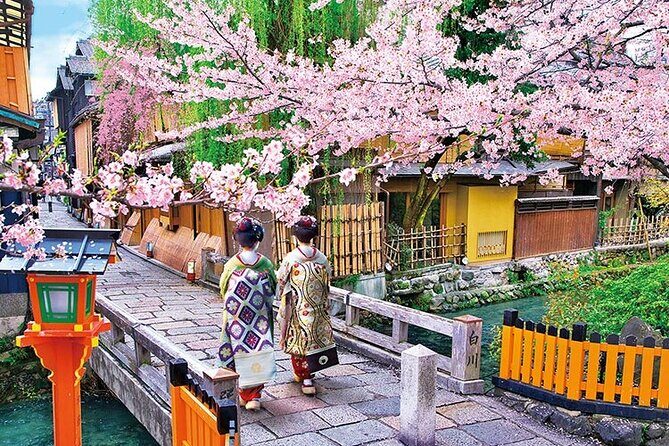
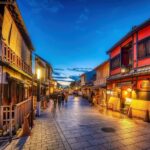
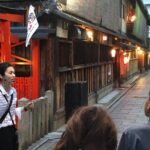
The heart of the tour is Gion—especially Hanamikoji Street and the side alleys off it. You’ll walk through the geisha district streets while the guide explains geisha arts and traditions in detail, including passing by areas associated with geisha living quarters and working houses.
Now, a quick reality check that helps: this is not a “guaranteed encounter” type of tour. But it’s the right setting for noticing how the district functions after dark. In evening light, you’ll often see signs of movement—people heading to engagements, curtains drawn, trainees or performers getting ready to go out—so keep your eyes open.
One detail that adds meaning: you’ll pass by Gion Corner, where geisha study and train. Even just seeing that place helps you understand that geisha culture isn’t only about what happens on the street. There’s structure behind it—practice, training, and refinement over time.
If you care about cultural nuance, this is the part that tends to feel most rewarding. You stop treating Gion like a backdrop and start understanding it as a system—art, tradition, neighborhoods, and ritual all woven together.
Temple time at night: Yasui-Konpiragu, Hōkan-ji, and Yasaka Shrine
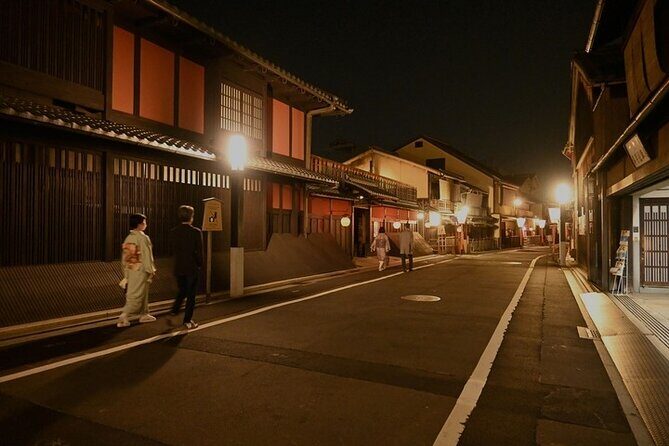
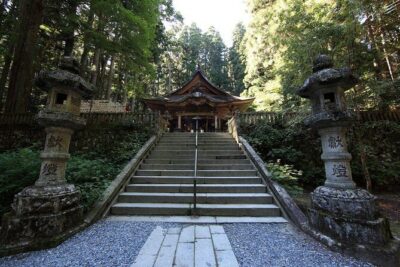
After the Gion streets, the route turns toward sacred spaces. You’ll start at Yasui-Konpiragu, a Shinto shrine stop where the guide shares ancient Shinto traditions as you explore the area.
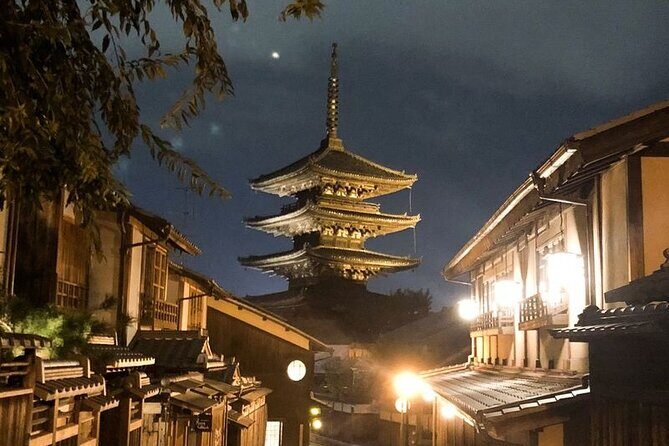
Then comes Hōkan-ji Temple, specifically the Yasaka Pagoda area. This is one of the best photo moments on the walk. At night, the pagoda setting feels especially dramatic because you’re watching the architecture framed by lantern light and the darker background of the temple grounds.
Next, you walk by an area connected to Zen insights—described as one of the oldest temple experiences in Kyoto—where the guide brings in context about Zen and what that mindset tends to mean in Japanese religious spaces.
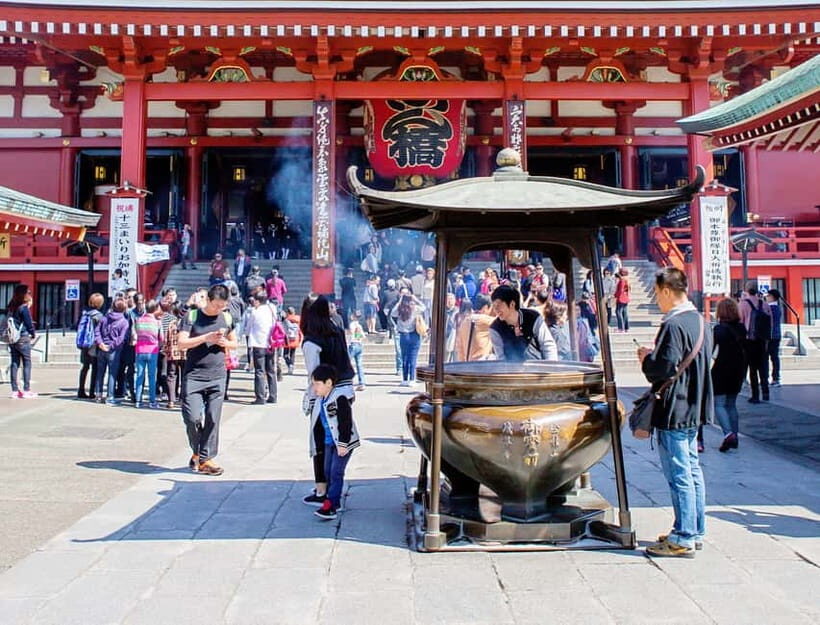
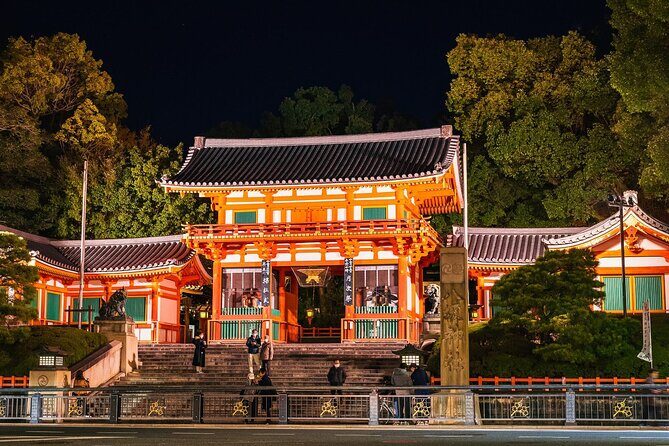
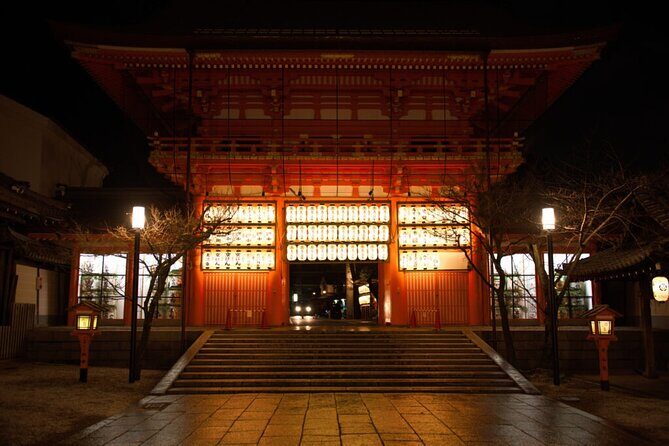
Finally, there’s Yasaka Shrine, held up as one of Japan’s top shrines. You’ll spend time there as the guide points out important features and explains what you’re seeing, not just where you’re standing.
If you’re wondering why this matters on a geisha-focused walk: shrines and temple culture shape the broader Kyoto worldview. Geisha arts and the district you’re walking through didn’t grow in a vacuum. They’re part of a city where ritual, aesthetics, and discipline show up everywhere.
Ninenzaka and Nene-no-Michi: lantern alleys and the included snack
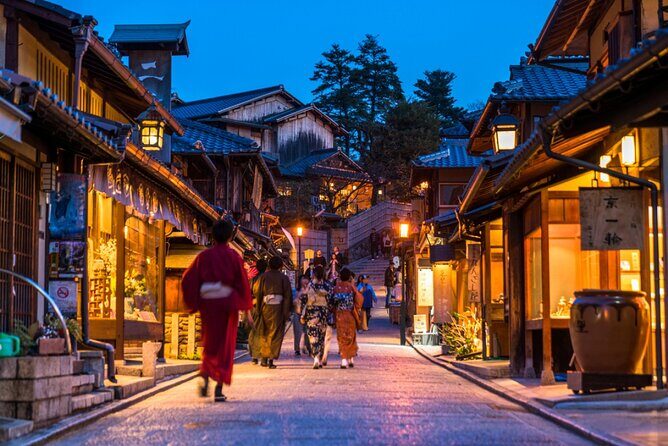
You’ll get a classic Kyoto scenery stop at Ninenzaka, a magical alleyway especially beautiful at night. This is the kind of place where your camera suddenly works better—because the streets naturally frame architecture and you can slow down to take photos without feeling like you’re stopping in the middle of a highway.
Then comes Nene-no-Michi, your included break and snack stop. The tour provides a refreshing Kyoto snack here, timed so you can reset before the final stretch.
Small note that I appreciate on walking tours: the snack break makes the second half feel easier. Instead of “power through and hope you eat later,” you get a real moment to sit, taste something local, and regroup.
The picturesque streets you might miss on your own
Between the major stops, the guide takes you through a couple of memorable transition areas: a picturesque spot you can’t miss while exploring the geisha districts, plus a lesser-known geisha street.
These are the parts that usually separate an average walking tour from one that feels worth the price. When you’re shown the route by someone who knows how neighborhoods work, you spend less time guessing and more time noticing.
Even if you’ve mapped Gion before, this kind of guided path is what helps you see it as a lived-in place rather than a theme park.
Pontocho after dark: lively alley energy, still close to tradition
The tour ends in Pontocho District, where the streets are narrow and the nightlife energy is right there. You’ll explore a mix of geisha houses, bars, and evening activity.
What I like about ending here is the contrast. Earlier in the walk, you’re in Gion’s geisha district lanes and shrine/temple spaces with a quieter tone. Ending in Pontocho gives you an easy next step—wander, grab dinner, or just soak up the atmosphere while you’re still warmed up from the stories you heard.
If you’re planning your evening, this is where I’d map your next meal. You’re already in the zone.
Who should book this, and who should skip it
This works best if you:
- Want Gion at night without feeling like you’re trapped in a daytime crowd
- Enjoy walking with a guide who explains cultural context clearly in English
- Like night photos at shrines/temples and want more than one quick stop
- Prefer small-group travel (max 8) over big tours
Skip or reconsider if:
- You have walking issues. The tour is not suitable for anyone with walking limitations, and there are steps and unpaved rocky paths that need careful maneuvering.
- You’re looking for a high-speed itinerary. This is slower by design, because the stories and stop times are part of the value.
Also, since it depends on good weather, plan with flexibility. If the tour is affected by weather, you’ll be offered a different date or a full refund.
Quick booking decision: should you do it?
If you’re spending any meaningful time in Kyoto and you want a night plan that’s more than “walk around until you find food,” I think this is a smart pick. The small group, the ending location near Pontocho, and Richard’s storytelling are the trifecta.
Book it if you want to understand what you’re seeing in Gion—geisha training context, shrine/Zen thinking, and why Kyoto’s evening atmosphere matters. Consider passing if mobility is an issue, or if you’d rather do a purely self-guided photo walk with no guided cultural explanations.
FAQ
How much does the Kyoto geisha night walk cost?
The tour costs $98.00 per person.
How long is the tour?
The duration is about 3 hours 30 minutes.
What time does it start?
The start time is 5:20 pm.
Where do we meet and where does it end?
You meet at the Disney Store Kyoto Shijo-Kawaramachi (1F/2F). The tour ends at Sanjō Ōhashi Bridge, at the northern end of Pontocho alley.
Is there a snack included?
Yes. The tour includes a refreshing Kyoto snack during a break.
How big is the group?
This experience has a maximum group size of 8 travelers.
What if the weather is bad or I need to cancel?
The tour requires good weather. If it’s canceled due to poor weather, you’ll be offered a different date or a full refund. If you cancel up to 24 hours in advance, you get a full refund; within 24 hours, the amount paid is not refunded.
Is it stroller-friendly or suitable for limited mobility?
It’s not suitable for anyone having walking issues. For strollers, there are some steps and unpaved rocky paths that you’ll need to maneuver.