REVIEW · TOKYO
Tokyo: Guided Walking Tour of Tsukiji Market with Lunch
Book on GetYourGuide →Operated by True Japan Tour · Bookable on GetYourGuide
Tsukiji feels like Tokyo on hard mode. This guided walk pairs temple architecture with 9 local tastings, so you’re eating while learning how the market and food culture connect. I especially like the seafood-and-beef mix (including grilled skewers and wagyu-style bites) and the way the tour explains the cultural side, not just what’s on a menu. One possible drawback: you’re sampling, not feasting, so if you expect a full, sushi-heavy meal, you might find the portions on the lighter side.
You start at Tsukiji Hongwanji Temple, then move into the Tsukiji Outer Market where wholesalers and stall workers keep the place moving. With a live English guide and a group capped at 10, the pace stays manageable, but you’ll want comfortable shoes because you’re walking through a busy food zone for 165 minutes.
In This Review
- Key things I’d circle before you book
- Tsukiji Hongwanji Temple: your calm, ancient start
- Entering Tsukiji Outer Market: where the work is the show
- The 9 tastings: what you’ll actually eat (and plan for)
- Temple culture meets market food: the “why” behind the bites
- How the tour moves: pacing for 10 people in 165 minutes
- Price and value: is $113 fair for 9 tastings?
- Who should book this Tsukiji walking tour
- Should you book it? My decision checklist
- FAQ
- FAQ
- Where is the meeting point?
- How long is the tour?
- How many tastings are included?
- What kinds of food are included in the tastings?
- Is the tour guided in English?
- What group size is this tour?
- Is the tour wheelchair accessible?
- How do I get there from Tsukiji Station?
- What should I bring?
- Can I cancel for a refund?
Key things I’d circle before you book
- Tsukiji Hongwanji Temple first: ancient Buddhist-inspired exterior views set the tone for the culture portion
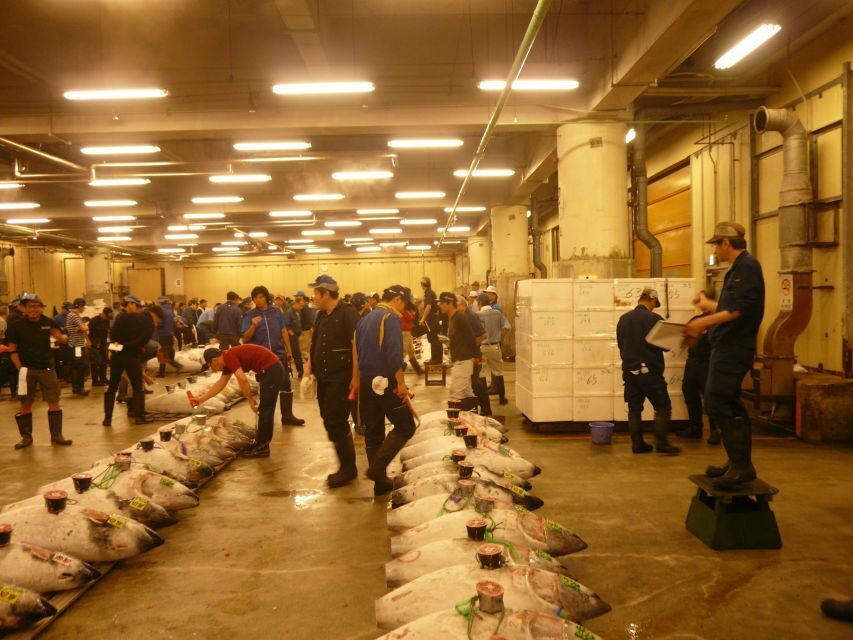
- Market action up close: you’ll see expert wholesalers busy at work and get a real sense of how the supply chain moves
- 9 tastings that cover more than fish: grilled seafood or beef skewers, Japanese omelette, tuna sushi, dashi, tea, and more
- Small group energy (max 10): fewer people means you can navigate and queue without feeling like a parade
- Guides who handle the logistics: some groups have assistants who help with organization (like wipes/boxes) and lining up
- A compact route: the area you cover stays focused, so you trade distance for food and explanation
Tsukiji Hongwanji Temple: your calm, ancient start
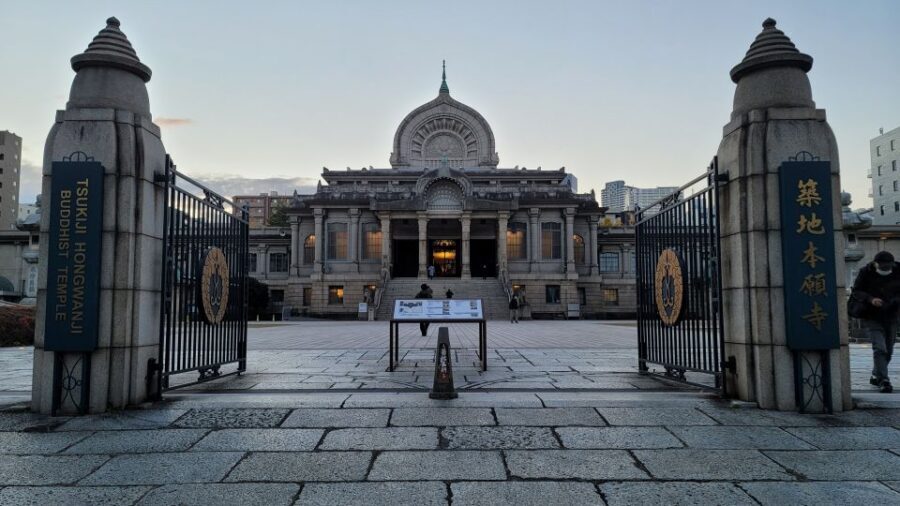
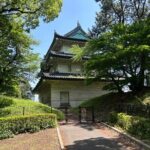
Your tour kicks off at the main gate of Tsukiji Hongwanji Temple. Even from the exterior, it’s a visual reset from the noise and motion of the market world. The temple’s look is described as ancient and Indian-inspired in style, tied to Buddhist influence, and I love that the tour begins here because it gives you a lens before you start sampling.
Practical tip: the easiest approach is from Tsukiji Station (Hibiya Line). Take Exit A1, turn left, and walk about 50 meters to the temple entrance. If you’re even slightly early, you’ll have a moment to orient yourself and avoid that last-minute scramble that Tokyo stations love to cause.
Why this first stop matters: when food tours jump straight into eating, you miss how Japan often frames food through ritual, community, and place. Starting at a temple gate makes the later “why” explanations land better—especially when the guide connects Japanese culture and religion to what you’re tasting.
You can also read our reviews of more walking tours in Tokyo
Entering Tsukiji Outer Market: where the work is the show
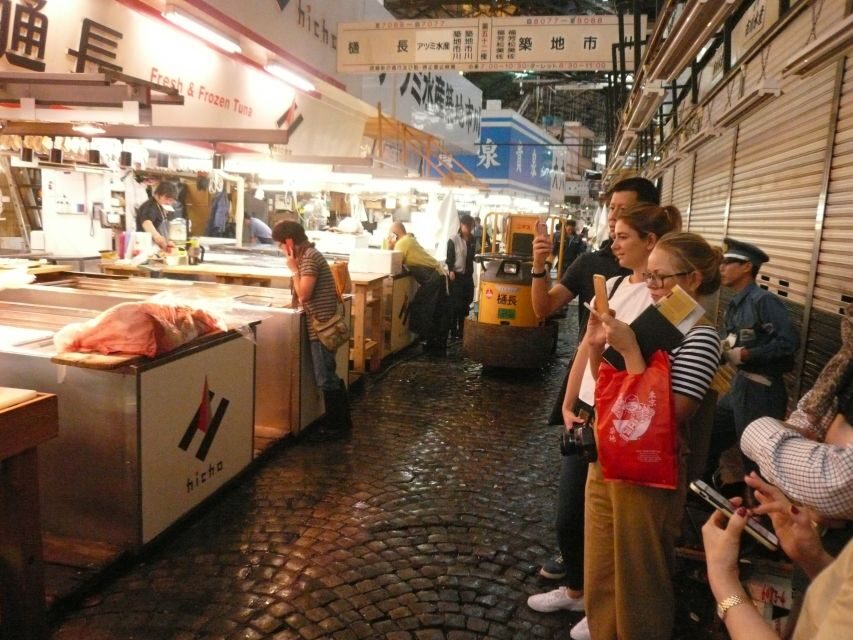
Once you’re through the temple area and heading into Tsukiji, the atmosphere shifts fast. The Outer Market is one of the world’s large wholesale fish market hubs, and what I like is that you’re not just browsing—you’re watching a system in motion.
You’ll pass restaurants, shops, stalls, and other businesses, and the highlight is seeing wholesalers busy at work. It’s the kind of place where products and people move constantly, so having a guide matters. Without one, it’s easy to get lost in the crowds or chase the loudest stall instead of the most interesting one.
What you should keep your eyes open for:
- How workers manage flow through aisles and storefronts
- The variety of unusual products on display (this is a working market, not a souvenir wall)
- The way quick orders turn into food you’re about to taste
And here’s a small reality check: the market can feel intense. You’re walking through a dense food area, so plan your energy. I’d treat this like a guided “watch-and-eat” walk: look first, taste second, and don’t rush your camera shots. You’ll have enough moments to see the action.
The 9 tastings: what you’ll actually eat (and plan for)
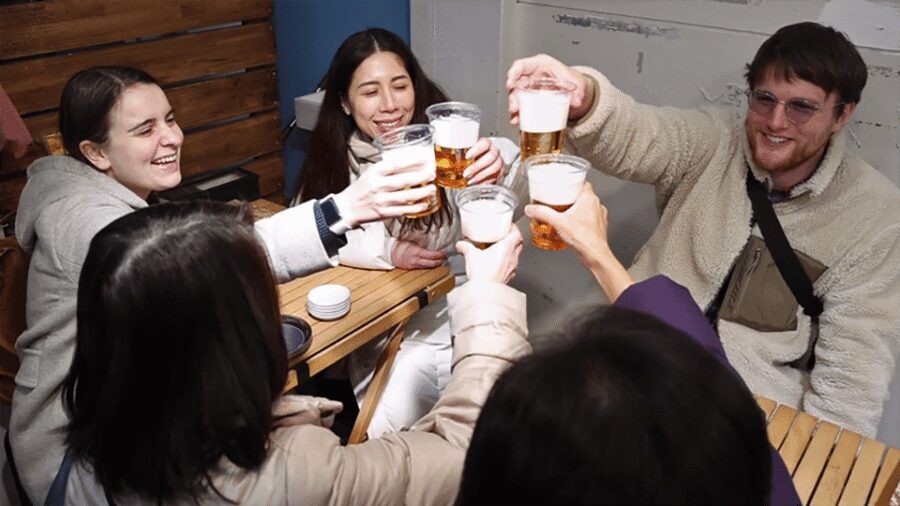
This is a structured food walk with 9 tastings included. You’re not left wondering what’s next. The tastings are described as a mix of grilled and fried bites plus classic Japanese staples, and they’re spaced through the route so you’re eating as you go rather than stopping every five minutes.
Here’s what’s included in the set:
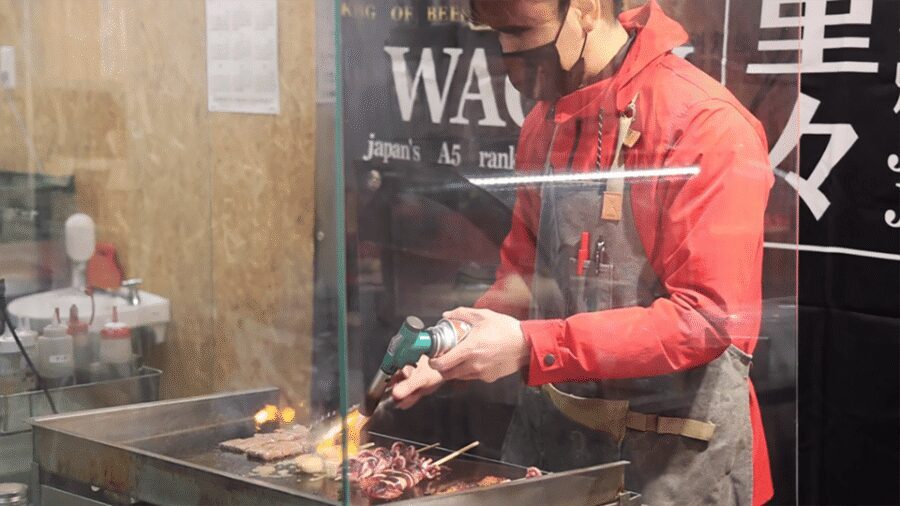
- Grilled seafood or beef skewers (this is where you get the grilled, savory punch)
- Wagyu-style beef as part of the meaty tastings
- A Japanese-style omelette
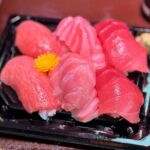
- Tuna sushi
- Fried fish paste skewers
- Filled rice balls (onigiri-style)
- Dessert
- A drink
- A sample of Japanese tea
- Plus a sample of dashi soup stock
That’s a lot, and yet it’s still sampler-size. I like that mix because it prevents one-note eating. You get grilled flavors, egg comfort, sea-forward bites, and a hot-ish broth moment with dashi that helps reset your palate.
One consideration: the experience is very much about variety and market authenticity. If you mainly want a big, premium sushi experience, keep expectations aligned. Some food tours hit a high bar for every bite; this one is more like a guided sampler where a few items may feel closer to casual street-food comfort than fine-dining perfection. If you’re the type who judges sushi by the last detail, you might want to save room for one extra meal after the tour.
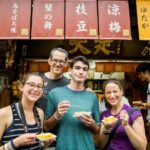
Logistics can make a big difference in a market setting. In past groups, guides such as Tomoko and Yumiko (with assistants like Sachiko) were described as helpful with organization—like providing food boxes and cleaning wipes—and even queueing for you while you browse. Even if your guide isn’t the same person, that style of support is exactly what makes a food-walk feel smooth instead of chaotic.
Temple culture meets market food: the “why” behind the bites
One of the best parts of this tour is the explanation thread: Japanese culture and religion are connected to cuisine, and the guide uses that idea to frame what you see and eat. Starting at Tsukiji Hongwanji Temple isn’t just a pretty opening act; it gives context for the tour’s cultural storytelling.
You’ll hear how the area and its food traditions relate to wider Japanese cultural practices. I also like that the guide connects the dots between the market as a working place and food as something people share, trade, and honor. That’s more meaningful than simply naming dishes.
If you’re into history or cultural anthropology, you’ll likely appreciate the way guides use the surroundings as teaching tools. If you’re not, you’ll still benefit because it turns random stalls into something with purpose—who makes what, why certain items are common, and how food fits the rhythm of daily life.
And yes, you’ll also get the human side. The market is full of workers who know their job. Watching them at work while you learn about what’s being sold makes the tastings feel earned.
How the tour moves: pacing for 10 people in 165 minutes
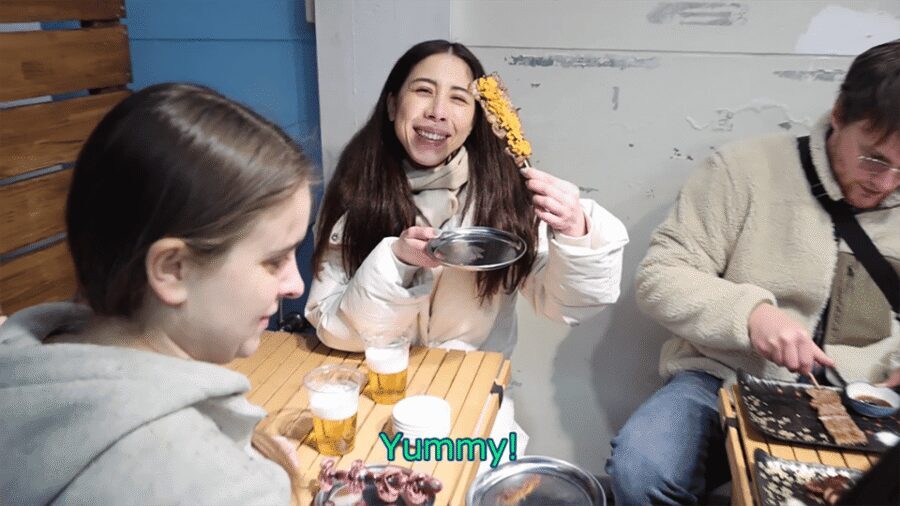
The tour lasts 165 minutes, and the group is limited to 10 participants. That small size is more than a comfort perk. In a dense market, it’s the difference between a guide herding you through tight lanes and a guide having time to actually talk.
The route is also described as fairly focused. That’s good news if you want to maximize food and explanation without turning your legs into luggage. It can also mean you’re not crossing the entire market like a marathon map. So if your fantasy is wandering every nook and cranny on your own while eating whenever you feel like it, this guided format may feel more “guided sampler” than “full roam.”
English narration is live, and the tour is wheelchair accessible. Since the starting point and early movement in a market can be fast, my practical advice is simple: get to the meeting gate on time, stay close at the beginning, and ask the guide to repeat anything you missed. In a food environment, it’s easier to understand by listening early and tasting later.
You can also read our reviews of more guided tours in Tokyo


Price and value: is $113 fair for 9 tastings?
The price is $113 per person, and it includes:
- A guide
- Tasting of 9 local specialties
When I evaluate value, I focus less on the dollar number and more on what you buy with that number. Here, you’re paying for:
- Time with a guide who knows where to go in a working wholesale market
- A pre-selected set of tastings (including tea and dashi), so you don’t have to guess
- Reduced hassle with queues and stall navigation—especially in a crowded area
If you’re the kind of traveler who loves food but hates planning, this is where the cost can feel justified. Without a guide, you might end up spending similar money on fewer items, or you might miss the more interesting shops because you’re busy coping with signs, menus, and crowds.
The one place value can disappoint is the mismatch between “tasting” and “meal.” Since the tour is 165 minutes and includes 9 samples, you’ll likely need a follow-up snack or a proper meal afterward if you want a full-food day. Think of this as a smart sampler that teaches you how to eat Tsukiji, not as the end of your dining story.
Who should book this Tsukiji walking tour
This tour fits best if you want a guided, food-focused introduction to Tsukiji Outer Market without having to plan every stop. I’d especially recommend it for:
- First-time visitors who want context before they start eating
- People who enjoy seafood and beef flavors and want a mix of grilled, fried, egg, and soup bites
- Anyone who likes small-group tours (10 people max) in crowded areas
- Food lovers who also care about culture—because the tour connects temple and cuisine themes
It’s also a good match if you want the “working market” feel: seeing wholesalers busy at work and moving through real food lanes rather than a staged market experience.
Should you book it? My decision checklist
Book this tour if:
- You like the idea of a guided sampler with 9 included tastings
- You want the Tsukiji Hongwanji Temple exterior start and the culture explanations
- You prefer a small group and a set pace over freestyle wandering
Consider skipping (or adding extra eating on your own) if:
- You’re expecting a heavy meal with multiple full-size sushi servings
- You want to explore a bigger area without staying on someone else’s route
- You’re extremely picky about the exact style of sushi or rice-ball fillings and need everything to be perfect
If you’re on the fence, I’d think of it like this: the tour is strongest as a structured “taste + learn” walk. It’s not trying to replace dinner. It’s trying to teach your palate how to read Tsukiji.
FAQ
FAQ
Where is the meeting point?
Meet in front of Tsukiji Hongwanji Temple.
How long is the tour?
The duration is 165 minutes.
How many tastings are included?
You get tastings of 9 local specialties.
What kinds of food are included in the tastings?
The included tastings include grilled seafood or beef skewers, a Japanese-style omelette, tuna sushi, fried fish paste skewers, filled rice balls, dessert, a drink, Japanese tea, and a sample of dashi soup stock.
Is the tour guided in English?
Yes, the live tour guide speaks English.
What group size is this tour?
It’s a small group limited to 10 participants.
Is the tour wheelchair accessible?
Yes, it is wheelchair accessible.
How do I get there from Tsukiji Station?
From Tsukiji Station on the Hibiya Line, take Exit A1 and turn left. The temple entrance is about 50 meters from the station.
What should I bring?
Wear comfortable shoes.
Can I cancel for a refund?
Yes. Free cancellation is available up to 24 hours in advance for a full refund.