REVIEW · TOKYO
Tokyo Oldtown: Historic Landmarks Go Kart Tour (100 Minutes)
Book on GetYourGuide →Operated by Kartzilla Discovery Japan (Kartzilla Go Kart, Tokyo) · Bookable on GetYourGuide
Tokyo from a go-kart feels like a cheat code. You get a driver-seat view of classic spots, with a live guide narrating what you’re passing and why it mattered. I especially like the comfort-focused karts and the relaxed, beginner-friendly pace. The one real catch: you need the right driving documents before you roll.
This is built for people who want Tokyo at street speed, not just from a bus window. The route centers on Asakusa and Tokyo’s older cultural neighborhoods, while also hitting major landmarks like Tokyo Station, the Imperial Palace area, Akihabara, Ueno, and Ryogoku. The possible drawback is the checklist: no hotel pickup, no locker space, and you’ll want to travel light.
In This Review
- Quick Take: the parts you’ll remember
- Getting to the start near Tokyo Skytree: what’s easy and what to plan
- Comfort-focused karts: stability that matters more than speed
- Road-safety briefing and live guidance: how they keep it smooth
- The old town heart: Asakusa from the driver’s seat
- Beyond the postcard stops: Tokyo Station, Imperial Palace area, and why it works
- Tokyo Station
- Tokyo Imperial Palace area
- Ueno, Akihabara, and Ryogoku: mixing old districts with modern Tokyo energy
- Ryogoku Kokugikan
- Ueno
- Akihabara
- The Japanese Sword Museum area: context without a time-sink
- Insta360 option and free photos: capture the ride, minus the hassle
- Included value in a $90, 100-minute kart experience
- Who should do this tour (and who should skip it)
- Guides and the tone of the experience: clear, friendly, and safety-first
- Should you book the Tokyo Oldtown Go Kart Tour?
- FAQ
- How long is the Tokyo Oldtown go-kart tour?
- Where does the tour start?
- Do I need a driver’s license to participate?
- What ID documents might be required for foreign nationals?
- Can I record the tour with a camera?
- Is the go-kart experience suitable for beginners?
- What’s included in the price?
- Is there hotel pickup?
- Are backpacks and lockers available?
Quick Take: the parts you’ll remember
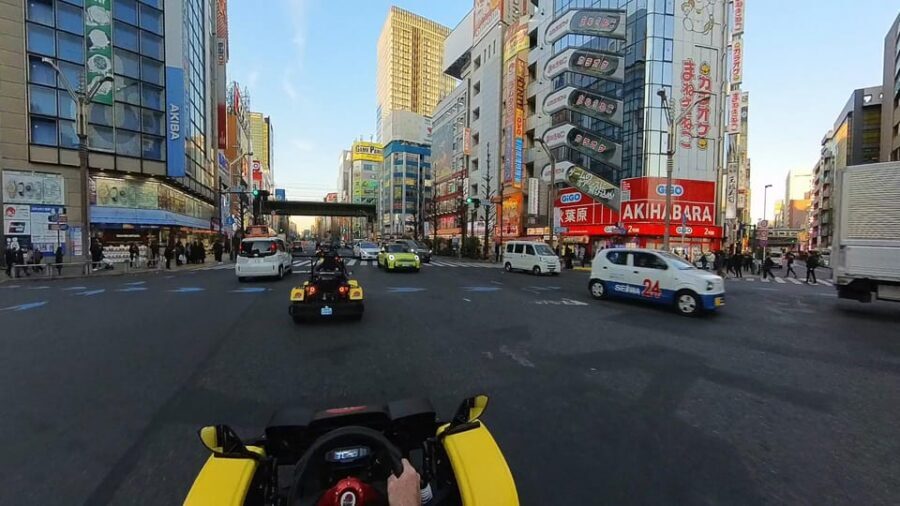
- Comfort-first street-legal karts with suspension, hydraulic brakes, and stable handling
- Live guide storytelling with real-time safety via 2-way radio
- Asakusa-focused old town route built around culture at street level
- Insta360 option + free photos, with micro-SD required to save your video
- Small group size (10 max), so instructions stay clear and you’re not stuck behind crowds
Getting to the start near Tokyo Skytree: what’s easy and what to plan
Your tour begins at the Kartzilla go-kart facility, near Tokyo Skytree, and it’s under a 8–10 minute walk from Yotsugi Station (Keisei Line). That’s a big deal because you’re not dealing with long transfers or complicated city logistics. If you’ve ever shown up early to a meeting point that’s impossible to find, you’ll appreciate that the building is marked with clear signage and you can call if you get stuck.
You’ll want to plan your arrival so you’re not rushing. This is a driving activity, so you’ll need time for the road-safety briefing and to get matched with your kart.
What to bring is straightforward: a passport and your driver’s license. If you’re an overseas visitor, you may also need an International Driving Permit (IDP). More on that later.
One more practical note: locker space isn’t included, and backpacks aren’t allowed. So come with minimal items. If you’re tempted to bring a huge day bag, don’t. Think compact crossbody or small essentials that fit within your comfort level for carrying during the check-in process.
You can also read our reviews of more historical tours in Tokyo
Comfort-focused karts: stability that matters more than speed
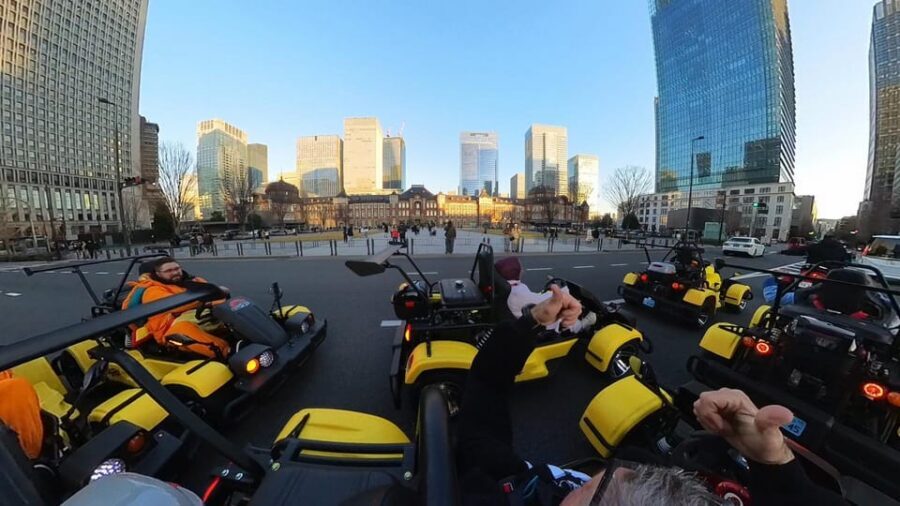
This isn’t a racing tour. It’s a guided city drive, and the karts are engineered for confidence. That shows up in details that actually affect your ride:
- Advanced suspension for a smoother feel over Tokyo streets
- Hydraulic brakes for more predictable stopping
- Reinforced frames designed to accommodate big and tall riders
- Stable handling that helps first-timers stay calm
I like that they’re selling comfort in a practical way, not just as a marketing line. In a city, your “skill level” is often less about how fast you can react and more about how steady the vehicle feels when you’re learning traffic flow.
Also, the tour is always led by an experienced Kartzilla guide, and you receive instructions before you start. That reduces the mental load. You’re not trying to figure out your route while you’re learning how to drive a kart in real traffic patterns.
Who’s this best for? If you’re a first-time driver and you want something fun that doesn’t turn stressful, this fits well. If you’ve got a history of avoiding activities with strict equipment rules, the included setup here is one of the friendlier parts of the experience.
Road-safety briefing and live guidance: how they keep it smooth
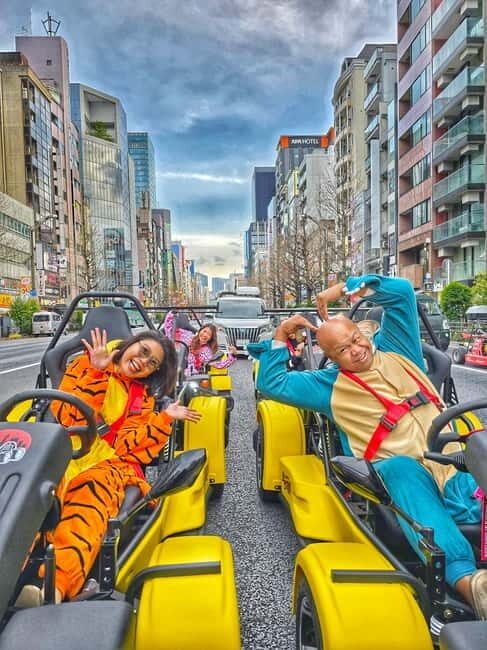
Right after check-in, you’ll get a clear road-safety briefing and driving instructions. Then the tour guide stays with you the whole time, using a 2-way radio system for real-time guidance.
This matters for two reasons:
- It keeps the ride orderly. You’re not guessing what everyone else is doing at intersections or turns.
- It lowers anxiety. You can focus on enjoying Tokyo instead of constantly scanning for rules.
One of the reasons people love these tours is how calm the structure feels. Even if you’re nervous about driving, the guide communication turns the experience into a guided flow rather than a DIY scooter chaos situation.
You’ll also hear live storytelling while you’re moving. That means you’re not just traveling between stops—you’re building context for what you’re seeing as the city rolls past your windshield.
The old town heart: Asakusa from the driver’s seat
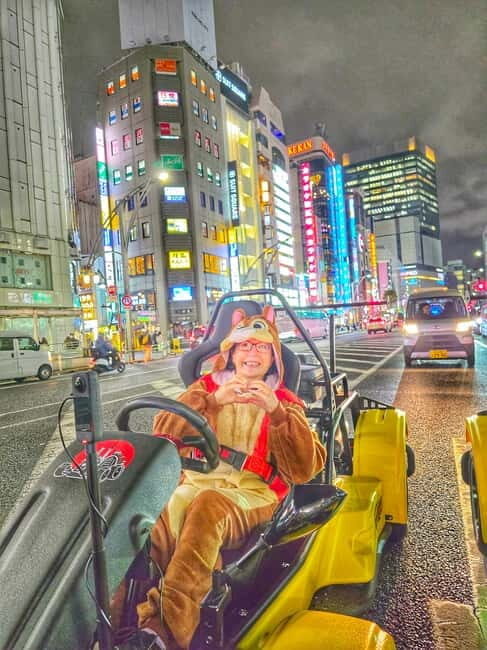
Asakusa is the emotional center of this route. You’re guided through the kind of streets where you can still feel Tokyo’s older rhythms, not just the landmark-photo circuit. This area is known for Senso-ji, one of Tokyo’s most significant Buddhist temples, and the surrounding neighborhoods that mix tradition with everyday local life.
From the kart, the experience is different than walking. You get a street-level view at a pace that’s fast enough to cover ground, but slow enough that you notice storefronts, architecture, and street details. You’re also getting a “from-here-to-there” sense of the neighborhood layout, which you won’t get from standing in one spot.
Potential consideration: Asakusa is popular. You’re driving through a historic area, so you’ll want to keep your eyes up and your focus steady, especially around turns and pedestrian-heavy stretches. The guide support helps, but your best experience still comes from staying attentive.
If you want a Tokyo story that’s about the city’s roots, this is where the tour starts to earn its name old town.
Beyond the postcard stops: Tokyo Station, Imperial Palace area, and why it works
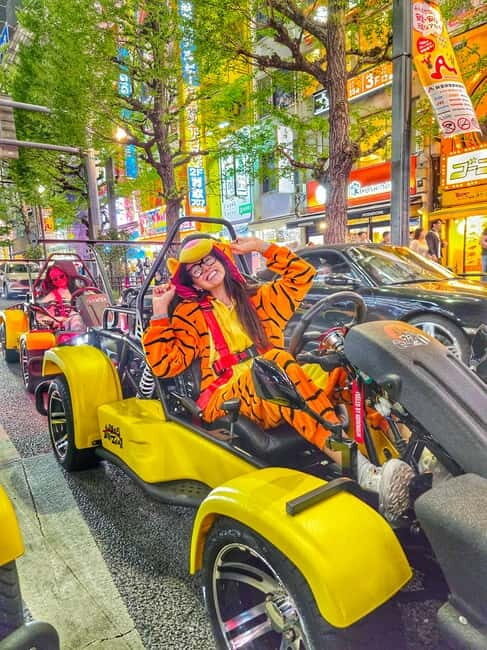
This isn’t a route built only around famous icons. But it does include the big markers that help you orient yourself in Tokyo.






Tokyo Station
Tokyo Station is one of those places you can recognize instantly, even if you’re not sure what you’ll see inside. Passing it on the kart gives you a fast way to connect trains, streets, and city scale. You get the sense of Tokyo’s infrastructure power without sitting through a long transit leg.
Tokyo Imperial Palace area
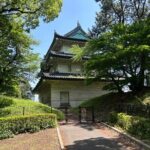
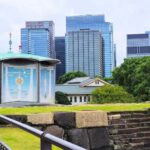
The Imperial Palace area gives a different tempo—more ceremonial and formal in tone. Even from the outside, it helps balance the tour. You’ve got historic temple streets on one side and an imperial center presence on the other, and your guide stitches the meaning into the drive.
Why I think this pairing works: it keeps the story moving. You’re not bouncing between random locations—you’re seeing Tokyo’s public face and its older cultural spine in the same loop.
Ueno, Akihabara, and Ryogoku: mixing old districts with modern Tokyo energy
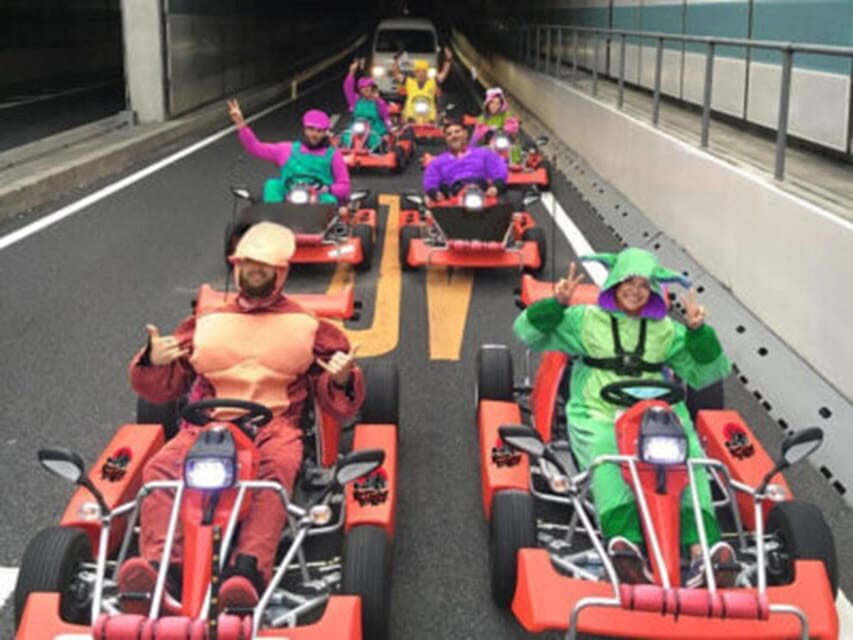
The route also threads through districts that feel like opposites—then shows how Tokyo manages to keep both.
Ryogoku Kokugikan
Ryogoku Kokugikan is linked with sumo culture. Even if you’re not going to a match, the area carries that identity. From the kart, the guide can connect what you see on the streets to the tradition behind the name.
Ueno
Ueno has a strong “cultural district” feel. You’re not just passing through; you’re receiving guided context while you move. That turns the drive into a fast geography lesson: where Tokyo’s education, parks, museums, and local life overlap.
Akihabara
Akihabara brings the modern edge—tech and pop culture energy. The value here is contrast. You’ll leave historic streets and then glide into a district that feels like the future. For first-timers, it helps you understand Tokyo as layers, not one style of city.
One practical thought: these areas are active. You’ll want to keep your driving smooth and follow the guide instructions. That’s how the experience stays fun and not stressful.
The Japanese Sword Museum area: context without a time-sink
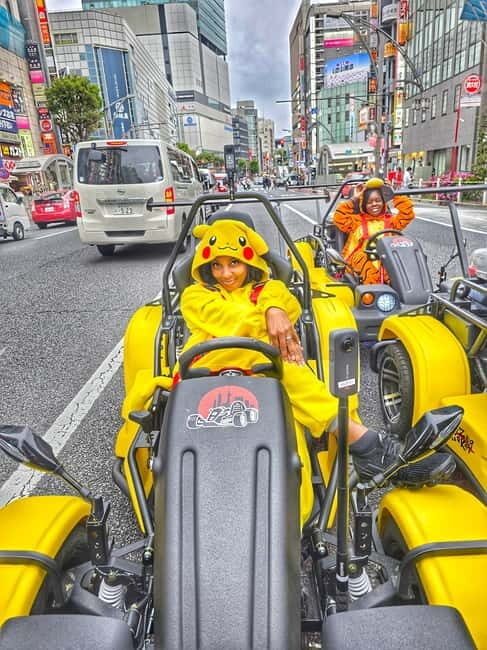
The itinerary includes the Japanese Sword Museum area. Even if you don’t have time for extra attractions beyond this tour, this stop gives you a cultural topic that fits the whole theme: Tokyo’s historical foundation.
What you’ll appreciate is that the guide can explain significance in motion. It’s a way to add meaning without turning your day into a schedule puzzle.
If you’re the type who likes to read signage closely, you might want to slow down your attention in this segment and let the guide’s story catch up with the visuals.
Insta360 option and free photos: capture the ride, minus the hassle
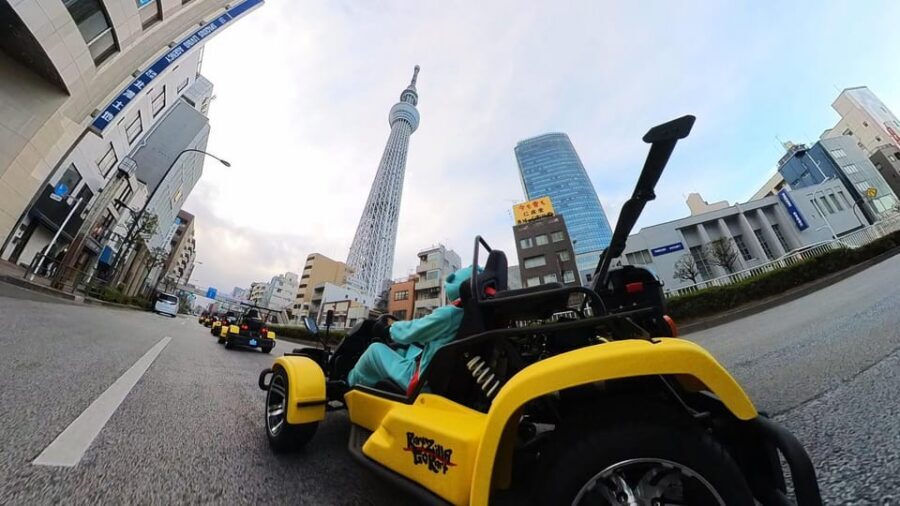
This is one of the most “hands-free” features on the tour. Each kart offers an optional on-board Insta360 camera so you can record your entire journey from the driver’s seat without holding a phone.
The tour also includes videos and photos of your experience, but there’s a cost to save the footage properly: you must purchase a micro-SD card. The equipment is free; the storage isn’t.
This setup is worth it if you:
- want video proof of the route and landmarks
- prefer not to juggle a camera while learning to drive
- want a simple way to keep memories without setting up shots repeatedly
If you hate tech friction, just remember the micro-SD part before you arrive. Waiting until the day of check-in can turn into wasted time.
Included value in a $90, 100-minute kart experience
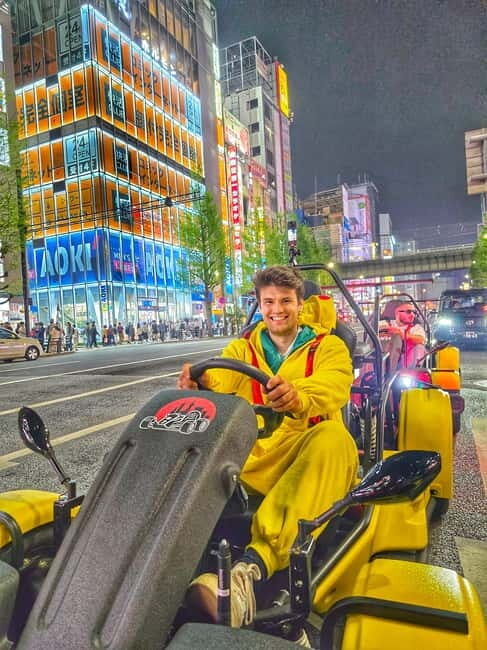
At $90 per person for 100 minutes, you’re paying for a package, not just a vehicle rental. Here’s what you’re actually getting:
- The go-kart experience itself
- Fuel
- A tour guide
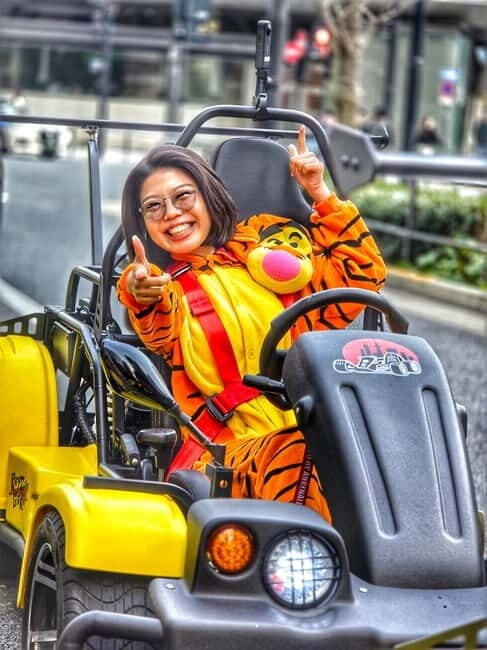
- A costume (included)
- Videos and photos (equipment is free; micro-SD is required)
- Accident insurance
- Drinks
For me, the biggest value points are the safety structure and the guide. Driving a vehicle in traffic is one thing. Doing it with live storytelling and real-time radio communication is another.
Also, this tour is small: limited to 10 participants. That usually translates into better instruction clarity and fewer bottlenecks when you’re moving through busy areas.
What’s not included is important for value math: there’s no hotel pickup, meals aren’t included, and there’s no locker space. If you’re coming from elsewhere in Tokyo, you’ll need to plan your own way to the meeting point near Yotsugi Station.
Who should do this tour (and who should skip it)
This tour is designed for adults and for people who can handle driving rules. The activity isn’t suitable for:
- children under 18
- wheelchair users
- visually impaired people
- people over 95
- drivers under 18
It’s also built around required licensing. You’ll need a valid license, and international visitors generally need an IDP that’s recognized for Japan.
I’d recommend it if you:
- want a fun, low-pressure way to cover Tokyo’s highlights
- like guided explanations as you pass real neighborhoods
- want comfort in a driving activity (especially if you’re bigger/taller)
- prefer small groups with clear guidance
I’d pass if you:
- can’t meet the document requirements
- don’t want to travel with a light bag
- prefer purely walking tours or purely historical museum time
Guides and the tone of the experience: clear, friendly, and safety-first
The guide experience seems to be a major reason people rate this so highly. You’ll likely get clear driving instructions and cultural storytelling in English, German, or Persian. In past experiences, names like Travis, Satar, and Hiro have shown up alongside praise for being helpful and guiding confidently.
The practical takeaway: you’re not alone in traffic. The combination of pre-briefing, radio communication, and constant guide leadership is what keeps the tour relaxed.
One of the best signs is when guests mention that they felt safe the entire time. That aligns with how this tour is structured: instructions first, then guided movement, then storytelling while you ride.
Should you book the Tokyo Oldtown Go Kart Tour?
Book it if you want Tokyo with motion and meaning. This is one of the rare activities where you can drive a real city route, get live context, and still feel comfortable doing it—especially if you’re nervous about driving. The Asakusa focus gives it cultural weight, and the mix with Tokyo Station, Imperial Palace area, Akihabara, and Ueno makes it easy to see Tokyo as layers.
Skip it if you’re not comfortable with the licensing rules or you need more space for belongings. Also, be ready to buy a micro-SD card if you want the Insta360 option to save properly.
If you’re planning a short Tokyo trip and you want one activity that does both fun driving and guided landmark context, this one is a strong contender.
FAQ
How long is the Tokyo Oldtown go-kart tour?
The tour duration is 100 minutes.
Where does the tour start?
It starts at the Kartzilla Go Kart Tokyo facility, which is under 8–10 minutes walk from Yotsugi Station.
Do I need a driver’s license to participate?
Yes. You must have a valid driver’s license for the tour, and international visitors may also need an International Driving Permit (IDP) depending on your situation.
What ID documents might be required for foreign nationals?
For overseas nationals not resident in Japan, you need your passport, a valid local driver’s license, and an International Driving Permit (IDP) issued by a signatory to the 1949 Geneva Convention.
Can I record the tour with a camera?
Yes. There is an optional on-board Insta360 camera. Equipment is free, but you must purchase a micro-SD card.
Is the go-kart experience suitable for beginners?
The tour is designed for a relaxed, beginner-friendly pace with clear road-safety instructions and a guide who leads you at all times.
What’s included in the price?
Included items are the go-kart, fuel, tour guide, costume, videos and photos (equipment included, micro-SD not included), accident insurance, and drinks.
Is there hotel pickup?
No. Pick-up from your hotel is not included.
Are backpacks and lockers available?
Backpacks are not allowed, and locker space is not included.