REVIEW · TOKYO
Tokyo: Private Tsukiji Fish Market Tour with 3 Food Stops
Book on Viator →Operated by Trip Port · Bookable on Viator
Tsukiji teaches you to eat with your eyes. This private 2-hour walk pairs a local guide with three included street-food stops, then adds a fast stop at Namiyoke Inari Shrine and Tsukiji Hongwanji Temple so the area feels bigger than seafood.
I especially like how the guide connects what you’re seeing—stalls, traditions, and daily rhythm—to the food choices you make. My guide (Cass) was praised for turning market and shrine history into simple, practical stories you can actually remember.
I also like the pacing: you get enough time in the market to watch how people shop and snack, and you still slow down at the shrine and temple to notice how prayer and food culture share the same streets. One possible drawback: 2 hours is quick, so if you’re hoping for a long list of tastes or a deep shopping spree, you’ll want to plan extra time on your own.
In This Review
- Key Highlights You Should Know
- Tsukiji Is the Perfect Place to Learn Tokyo Food Culture
- Starting at Lawson Tsukiji 4 Chome: Easy Meeting, No Headache
- Stop 1: Tsukiji Fish Market for the Real Market Atmosphere
- Namiyoke Inari Shrine: Lion Heads and the Shinto Safety Net
- Stop 3: Three Included Foods You’ll Actually Want to Try
- Stop 4: Tsukiji Hongwanji Temple and Its Indian-Inspired Architecture
- Private Tour Value: Why 2 Hours Feels Like More
- Price Check: Does $52.12 Make Sense for What You Get?
- Practical Tips to Plan Your Tsukiji Walk
- Who This Tour Fits Best
- Should You Book This Tsukiji Private Tour?
- FAQ
- What is the duration of the Tsukiji private tour?
- What does the tour price include?
- Are entrance tickets included?
- What is the meeting point?
- Is this tour private?
- Do I get a mobile ticket?
- Can I get a full refund if I cancel?
Key Highlights You Should Know
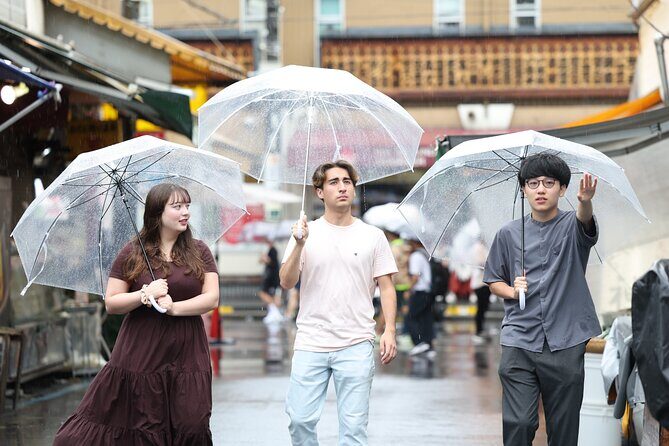
- Private guide focus: only your group, with a human who can point out what matters and where to stand
- 3 included food stops: you’re not guessing what’s worth your money in a tourist-heavy area
- Namiyoke Inari Shrine: lion-head protection tied to Tsukiji’s everyday life since the Edo period
- Tsukiji Hongwanji Temple: Indian-inspired architectural details in a neighborhood you’ll otherwise experience as street-level food
- Photos after the tour: you get images sent to you without trying to film while walking
Tsukiji Is the Perfect Place to Learn Tokyo Food Culture
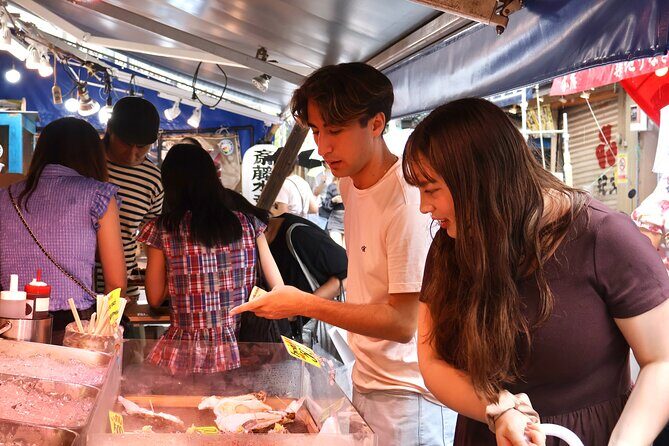
Tsukiji works because it’s not just a market. It’s a whole system: where ingredients come from, how people move through stalls, and how eating is treated as part of everyday life rather than a special event. On this private tour, you’re walking with someone who frames that system for you, so you don’t just collect photos.
A smart part of the concept is the pairing of food and faith. You start in the fish market world, then you step into Shinto and Buddhist spaces—Namiyoke Inari Shrine and Tsukiji Hongwanji Temple. That contrast helps you understand why Tsukiji’s culture feels grounded, almost routine, even while it’s famous.
You’ll spend about two hours total, with separate time blocks for the fish market, the shrine, more market time for food, and the temple. That structure matters. It keeps the tour from turning into one long crowd crush where you forget what you’re seeing.
You can also read our reviews of more food & drink experiences in Tokyo

Starting at Lawson Tsukiji 4 Chome: Easy Meeting, No Headache
The tour meets at LAWSON Tsukiji 4 Chome Store (4-chōme-8-1 Tsukiji, Chuo City). That’s about as simple as it gets in Tokyo: a recognizable landmark and a convenience store name you can find on a map fast.
Bring your mobile ticket and arrive a little early so you can settle before you start walking. This is a private tour, so your group won’t be mixed in with others on the move. In practice, that means fewer navigation headaches and more time spent looking at what your guide points out.
Also, the meeting point is near public transportation, so you’re not locked into a taxi plan. If you’re pairing this with other plans in the area, it’s easier to build a smooth morning or afternoon.
Stop 1: Tsukiji Fish Market for the Real Market Atmosphere
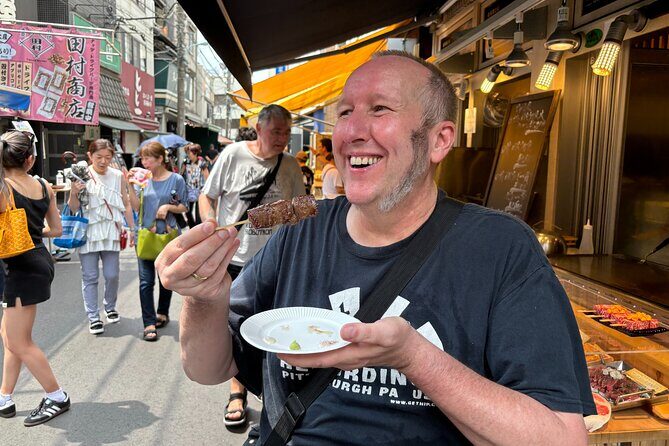
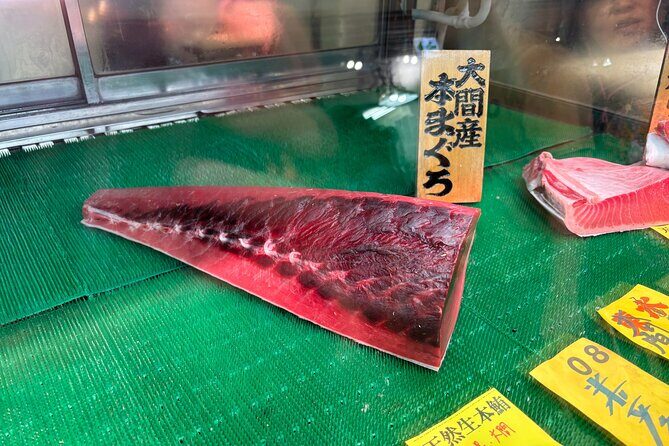
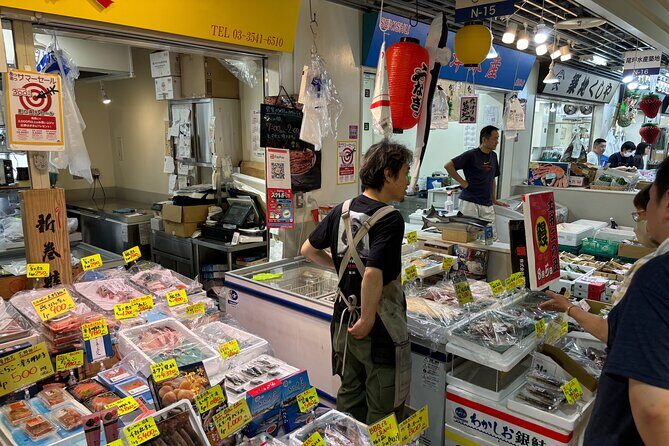
Your first stop is Tsukiji Fish Market, about 30 minutes. You’ll move through lively stalls with fresh seafood, produce, and traditional ingredients. Even if you only have a short window, this first market portion is useful because it sets your baseline.
Here’s what I’d focus on during this time:
- Watch the rhythm of the stalls: where people gather, how they decide what to buy, and what types of ingredients are most common.
- Pay attention to what your guide emphasizes as everyday staples versus tourist-friendly items.
- If you’re a first-time visitor, use these 30 minutes to get your bearings. Later, during the food stops, you’ll feel less lost.
There’s no paid admission mentioned for this first market segment. So you’re mostly paying for guide time and the included experience flow, not for entry fees. That’s a good sign for value.
One consideration: fish markets can be tight and crowded depending on the hour. Comfortable shoes matter more than fancy outfits here. Plan to stand, lean slightly, and move with the group.
Namiyoke Inari Shrine: Lion Heads and the Shinto Safety Net
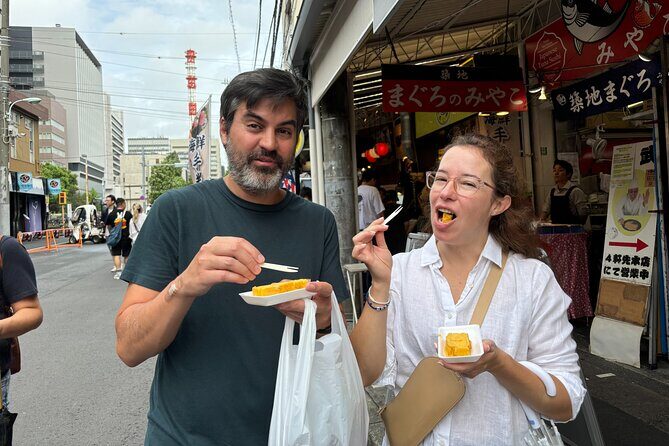
Next up is Namiyoke Inari Shrine, roughly 15 minutes, with admission included. This stop is short, but it adds meaning fast.
Namiyoke Inari is known for protecting Tsukiji since the Edo period, and it’s especially associated with the lion heads you’ll see around the shrine. Locals pray there for safety and good fortune, which fits the market context perfectly. You’re in a place where people handle goods, crowds, and daily logistics—so the spiritual message isn’t abstract. It’s practical.
This is a nice break from the market’s physical intensity. You’ll likely slow down your pace, look more carefully, and notice details you’d otherwise rush past. For many people, it’s also the moment when Tsukiji stops feeling like just a food stop and starts feeling like a neighborhood with traditions.
The drawback to be aware of: the time here is limited by design. If you want a long sit-and-stare at the shrine, you’ll need extra time on your own after the tour ends.
Stop 3: Three Included Foods You’ll Actually Want to Try
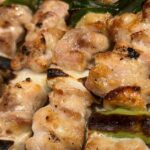
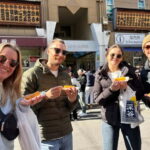
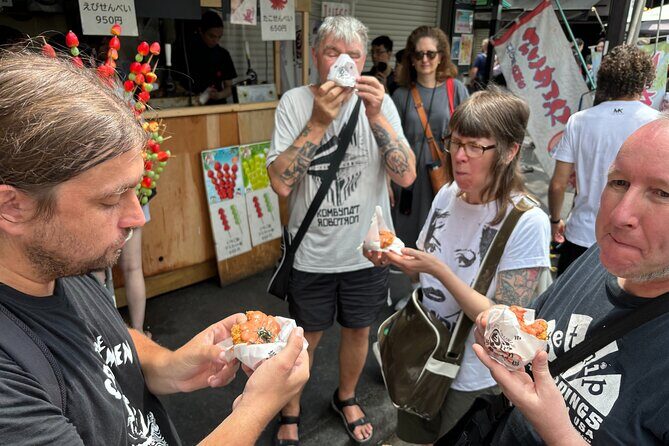
The third stop returns to Tsukiji Fish Market for about 45 minutes, and this is where the tour delivers its main payoff: three must-try foods included.
Your guide chooses local favorites from street food stalls, which is exactly what you want in a place like Tsukiji. Without local guidance, it’s easy to get pulled toward items that look good but don’t represent what locals prioritize. With a guide, you can focus on the flavors that match the area’s habits.
A few practical ways to get the most from the included food time:
- Eat at a comfortable pace and keep moving. You’re sampling, not touring a restaurant tasting menu.
- Ask quick questions as you go. Your guide can tell you what you’re eating and how locals think about it.
- Don’t overpack your schedule before the tour if you want to finish all three bites feeling good rather than stuffed.
One important limitation: the exact foods aren’t listed in the tour details you provided. That’s not necessarily a bad thing. It means you’re meant to be guided to what’s being served and recommended in the moment. Still, if you have strong dietary restrictions, you’ll want to be careful and communicate needs ahead of time.
This market-food segment is also admission included in the tour plan, meaning you’re not worrying about extra costs to eat.
A few more Tokyo tours and experiences worth a look


Stop 4: Tsukiji Hongwanji Temple and Its Indian-Inspired Architecture
To balance the seafood-and-snacks feel, the tour then visits Tsukiji Hongwanji Temple for about 20 minutes. Admission isn’t listed as required here, and the focus is on the temple’s visual and cultural message.
The standout detail: Hongwanji features Indian-inspired architecture. That fact alone makes the stop more than a photo break. You’ll see how Buddhism traveled and transformed as it reached Japan, and how religious ideas adapted to local culture.
This is also where the tour’s spiritual contrast really lands. Shinto is often associated with local protection, festivals, and specific shrines like Namiyoke Inari. Buddhist spaces like Hongwanji bring a different kind of reflection and tradition. By the end, the whole Tsukiji area feels more layered than a single-purpose attraction.
A consideration here is time. Twenty minutes is enough to see key features and listen to a guide explain what you’re looking at, but it’s not enough to satisfy deep curiosity. If architecture is your thing, arrive with open curiosity and let the guide point out the most important details.
Private Tour Value: Why 2 Hours Feels Like More
This is a private walking tour, meaning only your group participates. That changes the experience in small but meaningful ways.
In a crowded market area, your best advantage is movement with intention. A group tour might shuffle everyone together and keep you moving fast. A private setup lets your guide slow down when you need a moment, answer questions right then, and take you where the stalls and streets make sense for your pace.
It also helps with timing across stops. You’re not just moving from point A to point B. You’re moving through a sequence where each location supports the next: market atmosphere, shrine protection, food tasting, then temple contrast.
If you like guided explanations but don’t want to spend the whole day in a formal group setting, this format fits well. Two hours is short enough to handle even when you’re jet-lagged, yet long enough to feel like you learned something rather than just ate three bites.
Price Check: Does $52.12 Make Sense for What You Get?
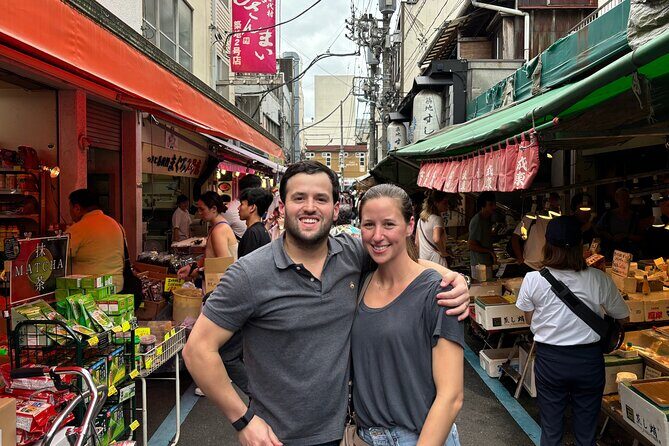
At $52.12 per person, the biggest value question is what’s included versus what you would otherwise pay on your own.
Here’s what your money covers:
- Expert guidance from a local guide for about two hours of walking
- Tsukiji market time plus Namiyoke Inari and Tsukiji Hongwanji
- 3 must-try foods included
- Photos taken during the tour and sent afterward
If you were doing this independently, you’d still need to solve three problems: where to eat, what to order, and how to understand what you’re seeing. The tour removes those guesswork steps, and that’s often worth more than the cost difference between guided and unguided.
Also, the guide’s role isn’t only pointing. Good guides help you avoid common mistakes like standing in the wrong place, ordering the wrong thing, or missing the small tradition details that explain the big picture.
One small caution: you’re paying for included foods, not unlimited eating. If you want lots of extra snacks beyond the three bites, you’ll likely add more spending during free time.
Practical Tips to Plan Your Tsukiji Walk
Even with a guide, you can make the experience smoother with a few smart choices.
Wear shoes that handle standing and walking on uneven surfaces. Bring a small bag you can manage in crowded lanes. And keep your phone ready for photos because you’ll get tour photos afterward, but you’ll still want your own shots of stalls, shrine details, and the temple architecture.
If you’re traveling during a busier period, expect to navigate crowds. Your private guide helps, but you still won’t have empty streets in a place this famous.
One more practical angle: a standout review mentioned practical advice for a tourist area, including notes tied to BCP culture. That kind of guidance can be surprisingly useful in Japan, where local preparedness and everyday rules shape how people behave. Listen when your guide offers those quick reminders—they’re meant to keep you comfortable in a dense, public environment.
Who This Tour Fits Best
This is a strong match if you:
- Want food plus culture in a short time
- Prefer a guide who explains what you’re seeing, not just where to walk
- Like spiritual contrast and quick stops that add meaning without eating up the whole day
- Value included street-food choices rather than gambling on random stalls
It’s also a good fit for a first visit to Tsukiji because the tour gives you orientation and a structure. If you’re already a market expert and just want to eat as much as possible, you might find the time allocation limiting.
And if you’re traveling with kids, the tour notes food and drinks for infants (1–3 years old) aren’t included, so you’ll want to plan for that directly.
Should You Book This Tsukiji Private Tour?
I think you should book it if you want an organized way to experience Tsukiji without wasting your limited time on indecision. The private format, the included three food stops, and the pair of spiritual sites make it more than a basic market walk.
I’d skip it if your main goal is maximum food quantity or long shopping time. Two hours is designed for learning and sampling, not for turning the market into a full-day binge.
If you’re on the fence, one more detail nudges the decision: the average booking window is about 38 days in advance. That tells you this tour style is popular, likely because it solves the guesswork fast. If your dates are fixed, reserve early so you can keep your Tokyo plans flexible.
FAQ
What is the duration of the Tsukiji private tour?
The tour lasts about 2 hours.
What does the tour price include?
It includes expert guidance, the walking tour at Tsukiji Fish Market, Namiyoke Inari Shrine, and Tsukiji Hongwanji Temple, plus three must-try foods and photos taken during the tour.
Are entrance tickets included?
For Tsukiji Fish Market stop 1 and Tsukiji Hongwanji Temple stop 4, the itinerary lists admission ticket free. Namiyoke Inari Shrine admission is included, and Tsukiji Fish Market stop 3 also lists admission ticket included.
What is the meeting point?
The tour meets at LAWSON Tsukiji 4 Chome Store (4-chōme-8-1 Tsukiji, Chuo City, Tokyo 104-0045).
Is this tour private?
Yes. It’s a private tour/activity, and only your group participates.
Do I get a mobile ticket?
Yes. The tour features a mobile ticket.
Can I get a full refund if I cancel?
You can cancel for a full refund up to 24 hours before the experience’s start time. If you cancel less than 24 hours before, the amount paid is not refunded.