REVIEW · TOKYO
Tokyo: Rice Ball Making Class by an Expert
Book on Viator →Operated by Tokyo Rental Bicycle · Bookable on Viator
Making onigiri and riding Tokyo in one morning is a smart combo. This 3-hour class mixes hands-on cooking with a guided bike route that threads together neighborhoods, shrines, a fish market stop, and classic views near Tokyo Tower. I like that the experience is built around food you make yourself, not just watch, and then you get to eat it where the city slows down.
What I really like: you get to learn the basics of onigiri making from an expert and try your own rice balls right away. Another big plus is the way the ride connects very different parts of Tokyo without feeling like you’re power-walking from place to place—this is a smooth, guided way to see more in less time.
One thing to consider: this runs best with good weather, and it’s aimed at people with moderate physical fitness since you’ll be biking through city streets.
In This Review
- Key things to know before you go
- Where it starts: onigiri lessons at AMAZAKE CAFE KomeDreaming
- The garden picnic at Hamarikyu Wharf: where your work becomes lunch
- Italy in Tokyo for 10 minutes: the “Italian Town” bike pass
- Shrines and street texture: Sumiyoshi Jinja and Tsukishima Monja Street
- Tsukiji Fish Market in a tight window: a real Tokyo food-world stop
- Finishing with Tokyo Tower views at Zojo-ji Temple
- How much value $39.19 really gives you
- The bike-and-food pacing: what the 3 hours feels like
- Weather and fitness: the only real constraints
- Who should book this onigiri-and-bike class
- Should you book this?
- FAQ
- How long is the Tokyo rice ball making and bike tour?
- What time does the tour start?
- Where do I meet the guide?
- Is the bike included?
- Do I get to make and eat onigiri?
- What’s included in the price?
- What is not included?
- Is admission included for Hamarikyu Gardens?
- Is there a limit on group size?
- Can I cancel for a full refund?
Key things to know before you go
- Expert-led onigiri class with ingredients included, plus you’ll eat what you make
- Small group size (max 6), which keeps the class feeling calm and personal
- Hamarikyo Gardens entrance included, so the garden picnic is part of the core plan
- A short, varied bike route: Italian Town, shrines, Tsukishima street scenes, and Tsukiji
- Tokyo Tower finishes at Zojo-ji Temple, with the view worked in naturally at the end
- Mobile ticket and near-public-transport meeting point, making logistics easier
Where it starts: onigiri lessons at AMAZAKE CAFE KomeDreaming
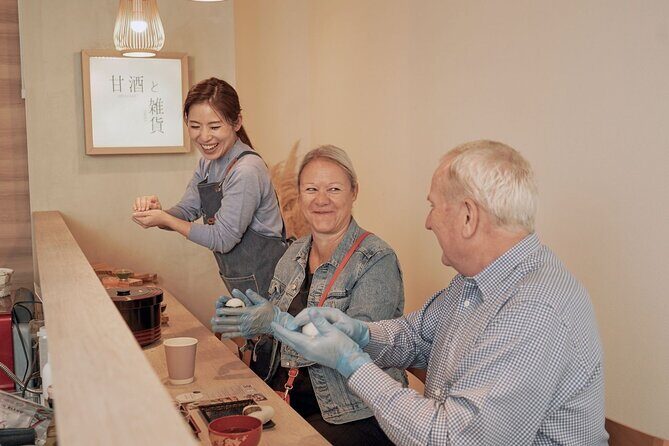
The tour begins at AMAZAKE CAFE KomeDreaming -Japanese Gift & Souvenirs- in Minato City (Shibakoen area), with a 11:00 am start. This is a good setup for two reasons. First, it keeps the day anchored near Tokyo’s central sightseeing zone. Second, it gets you into the onigiri mindset immediately—before you’re out biking, you already know what you’re making and why it matters.
During the first stop (about 30 minutes), you’ll learn how to make handmade onigiri with an expert and you’ll use included ingredients. The class format is meant to be practical and step-by-step. One highlight from the experience is how clearly the host explains what to do, which makes a big difference when you’re trying something with rice, timing, and technique.
Practical note: since the meeting point is the same place the tour starts and ends, you don’t have to stress about juggling multiple transfers. You just show up, do the class, then cycle with the group.
A few more Tokyo tours and experiences worth a look

The garden picnic at Hamarikyu Wharf: where your work becomes lunch
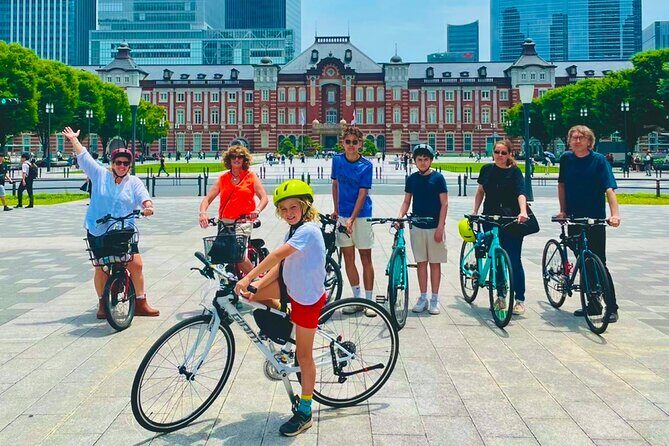
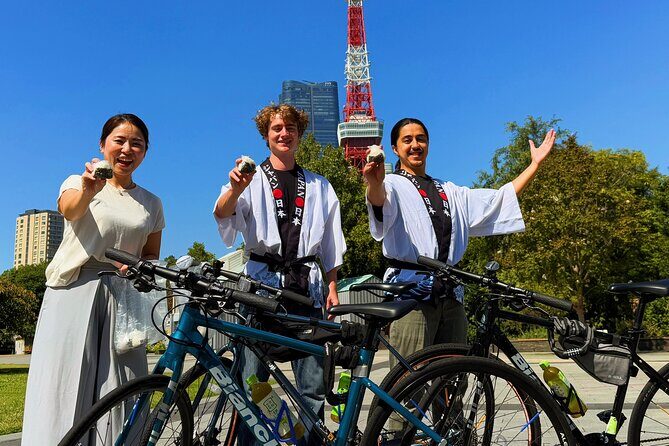
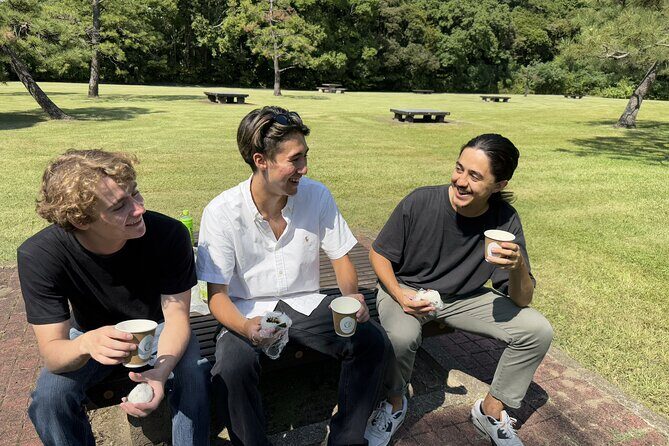
The next leg is a short bike ride to Hamarikyu Wharf, followed by time at Hamarikyu Gardens. This is the moment the tour turns from workshop to break-with-a-view. The plan is about 30 minutes total here, including the garden entrance (which is included) and time to enjoy your handmade onigiri.
This stop is valuable for one simple reason: it’s a built-in reward that feels very Japanese. Onigiri is easy to eat, easy to share, and it works perfectly as a picnic food. Instead of grabbing a quick bite and rushing out, you slow down in a traditional garden setting, eat what you made, and then hop back on your bike.
What can be a drawback? If you’re expecting a long, sit-stay picnic, you’ll want to manage expectations. The timing is designed to keep the whole tour around 3 hours, so you’ll get a satisfying garden break without it turning into half a day.
Italy in Tokyo for 10 minutes: the “Italian Town” bike pass
After the garden, the itinerary keeps moving—because this tour is about momentum. One quick stop is Italian Town, where you’ll cycle through for about 10 minutes. Admission is free here, so you’re not paying for a ticketed attraction at this point; you’re paying for the route experience and the guided pacing.
Why this works: it gives you a playful contrast. You’ll get to see Tokyo’s neighborhood variety in a small, digestible chunk. And cycling helps you cover distance without feeling like you’re doing museum-style sightseeing back-to-back.
A consideration: because it’s a short pass-through, you shouldn’t treat it like a full exploration of a single district. Think of it as a color stop—something fun to look at as you transition toward more traditional sights.
Shrines and street texture: Sumiyoshi Jinja and Tsukishima Monja Street
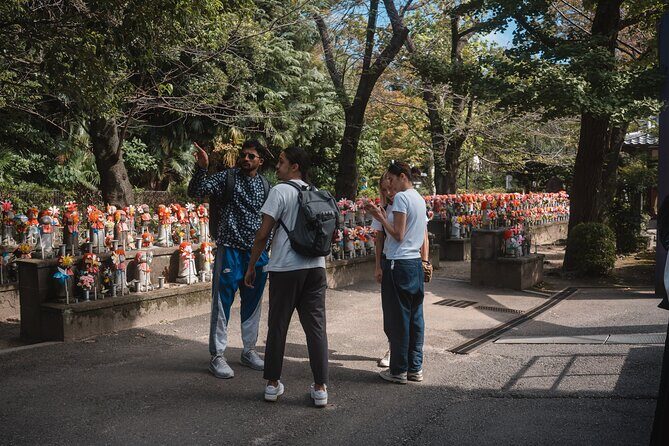
Two of the next stops lean more local and everyday:
- Sumiyoshi Jinja (about 10 minutes) to visit a traditional shrine area
- Tsukishima Monja Street (about 10 minutes) to cycle through a classic street scene
Both stops are listed as free admission, which makes sense because the emphasis is on being there, not ticket-hopping. You get quick glimpses of how neighborhoods look and feel beyond the big famous landmarks.
I like this pacing because it balances the day. You’ve had a food workshop, you’ve had a quiet garden lunch, and now you get texture—small shrine atmosphere and street life. It also helps you avoid the common Tokyo trap: chasing only the most famous icons and missing the in-between scenes that make the city feel lived in.
Possible drawback: these are short stops. If you want deep time at shrines, you might enjoy exploring later on your own after the tour ends.
Tsukiji Fish Market in a tight window: a real Tokyo food-world stop
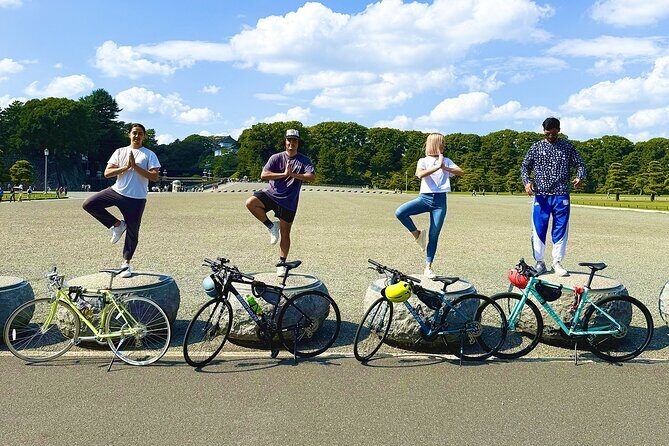
Then comes Tsukiji Fish Market for about 15 minutes. Admission is free. This is one of the places that can feel overwhelming if you show up without a plan, so the short guided timing can be a real advantage.
The tour gives you a taste of the market atmosphere without forcing you into a long wandering session. That matters if you’re the type of person who wants to see the place, understand what you’re looking at, and then move on—rather than getting stuck navigating lines and crowds for hours.
The only caution I’d give: 15 minutes is not enough to “do Tsukiji.” It’s a look-in stop. If you want more time, plan a second visit later—this bike tour works best as an appetizer to bigger city food exploration.





Finishing with Tokyo Tower views at Zojo-ji Temple
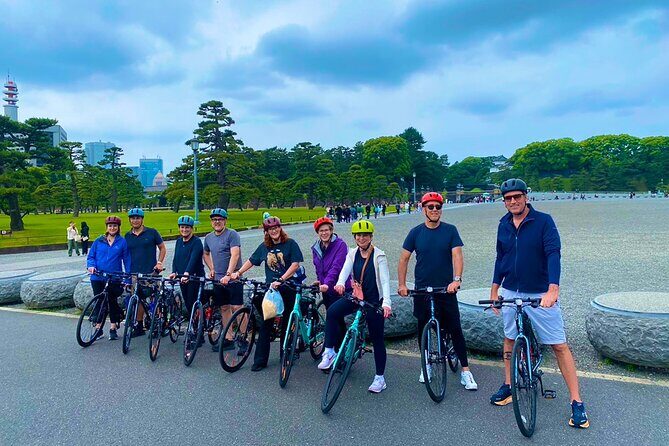
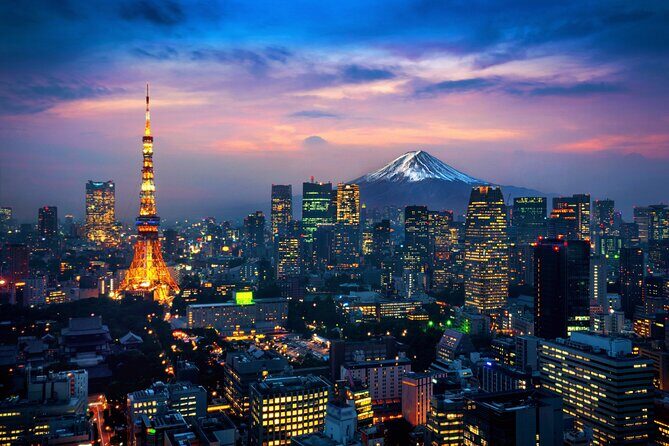
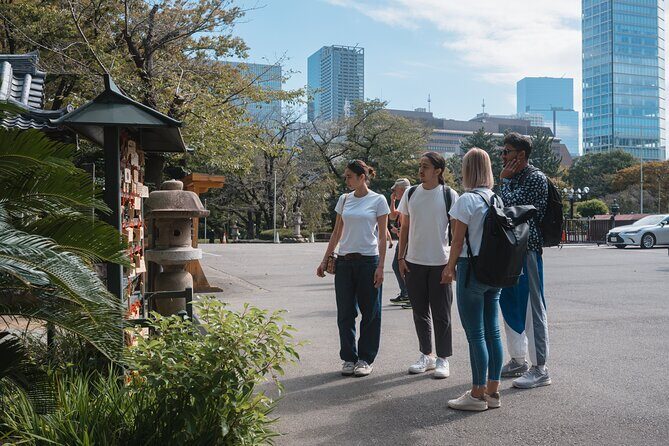
The route cycles toward the iconic Tokyo Tower, and then the final sight stop is Zojo-ji Temple (about 15 minutes) with Tokyo Tower in the background. Admission is listed as free here, and the timing is designed to give you a satisfying, photo-friendly ending without turning the last part into a long slog.
I like closing with this combo because it feels cinematic but not forced. You’re not standing around waiting for a particular angle; you’re moving through the city and arriving at the view naturally as part of the ride.
If you’re sensitive to walking distances, this ending is helpful. The tour is structured around biking, and the temple portion is time-boxed.
How much value $39.19 really gives you
At $39.19 per person, this is one of those deals that feels reasonable once you add up what’s included. You get:
- an onigiri making class with expert instruction
- onigiri ingredients
- a local bike tour guide
- the bike
- entrance to Hamarikyu Gardens
So you’re not just paying for a food experience or just for a bike ride. You’re paying for both, plus the garden entrance that anchors the picnic. That structure helps a lot if you’re trying to squeeze useful experiences into limited time.
Also, the maximum group size (6 travelers) matters for value. A smaller group usually means you get more attention in the class and a better-feeling ride. You can relax, ask questions, and actually follow along without the tour turning into a stampede.
One more practical value point: this starts at 11:00 am and runs about 3 hours, so it’s easy to slot into your day. Even if you’re doing other Tokyo sightseeing later, you’ll still feel like you got a meaningful “Tokyo morning” out of it.
The bike-and-food pacing: what the 3 hours feels like
This tour is built as a rhythm: make, eat, then ride, with short stops that keep things moving. Here’s the emotional math of it:
- The first 30 minutes teach you the food skill.
- The garden break turns the food into lunch, not a souvenir.
- The next stops are quick, so you keep momentum.
- Tsukiji gets a taste window.
- Zojo-ji gives you a memorable ending view with Tokyo Tower.
I think this pacing is especially good for people who want variety but don’t want their itinerary to feel like a checklist. It’s also a solid option if you’re traveling solo—small group + guided instruction makes it easier to fit in and enjoy the ride without needing a friend to translate.
The only real mismatch would be if you want long, slow exploration at just one place. This is not designed for that. It’s designed to connect many micro-experiences into one coherent morning.
Weather and fitness: the only real constraints
The tour explicitly requires good weather. If it’s canceled due to poor weather, you’ll be offered a different date or a full refund. That’s important in Tokyo because plans can change quickly when rain shows up.
Fitness-wise, you’ll want moderate physical fitness. The tour provides the bike, but you still need to be comfortable riding and stopping/starting as the guide moves the group between sights.
Also, bring your expectation level: it’s a guided route with short stops. If you’re someone who gets stressed in city traffic, keep that in mind when deciding.
Who should book this onigiri-and-bike class
This is a great fit if you want:
- a hands-on Japanese food experience, not just a tasting
- a short, guided way to cover multiple neighborhoods
- a picnic lunch setting that’s part of the itinerary
- a small-group activity where you can actually ask questions
It may be less ideal if you:
- want a longer museum-style deep dive
- need a mostly non-bike itinerary
- are planning for very wet weather days and can’t reschedule
Should you book this?
If your goal is a fun, practical Tokyo morning where you learn something, eat something you made, and still see real sights, I’d book it. The biggest strengths are the expert-led onigiri class and the way the day uses biking to link neighborhoods with minimal fuss.
If you’re picky about long time at specific attractions, you might feel the stops are brief. But as a value-priced mix of food + city exploring, this one makes a lot of sense—especially if you like calm moments (the garden picnic) paired with quick, local-feeling sightseeing.
FAQ
How long is the Tokyo rice ball making and bike tour?
The tour lasts about 3 hours.
What time does the tour start?
The start time is 11:00 am.
Where do I meet the guide?
You meet at AMAZAKE CAFE KomeDreaming -Japanese Gift & Souvenirs-Japan, 105-0011 Tokyo, Minato City, Shibakōen, 1-chōme714 KSひかりビル. The tour ends back at the same meeting point.
Is the bike included?
Yes. The tour includes the bike and a local bike tour guide.
Do I get to make and eat onigiri?
Yes. You’ll learn and make hand made onigiri with an expert, and you’ll enjoy the handmade onigiri during the garden picnic.
What’s included in the price?
The price includes the onigiri making class with an expert, onigiri ingredients, the bike and local guide, and the entrance fee for Hamarikyu Gardens.
What is not included?
Extra snacks and drinks at the shop, and tips and gratitudes are not included.
Is admission included for Hamarikyu Gardens?
Yes. Entrance to Hamarikyu Gardens is included.
Is there a limit on group size?
Yes. The maximum group size is 6 travelers.
Can I cancel for a full refund?
Yes. You can cancel for a full refund if you cancel at least 24 hours in advance of the start time. If weather causes cancellation, you’ll be offered a different date or a full refund.