REVIEW · TOKYO
Tokyo’s Kitchen: Tsukiji Market Food & Culture Walk
Book on GetYourGuide →Operated by Intrepid Urban Adventures - Japan · Bookable on GetYourGuide
Tokyo feels like it runs on breakfast. Tsukiji’s Outer Market is the main engine, and this six-person walk turns the chaos into something you can actually enjoy and understand. I love how the guide keeps things easy to follow, and you’ll also come away with the “why” behind sushi, not just the “what.” A big part of the charm is the culture layer, including links to Buddhist beliefs and Shinto spirit—so the food doesn’t feel random.
One thing to plan for: this is still an outdoor market morning. The floors can be wet, and most tastings are in small portions—great for sampling, but not ideal if you were hoping for a full, sit-down meal or lots of behind-the-scenes access.
In This Review
- Key things that make this Tsukiji walk worth your morning
- Entering Tokyo’s Kitchen: Tsukiji Outer Market with a human guide
- Small group rhythm: what six guests changes in Tsukiji
- The meeting point and Kabuki Inari Shrine: starting with the right Tokyo mood
- Tsukiji Outer Market tastings: how to eat smart (and not explode)
- What you’ll likely taste
- How to pace yourself
- Dietary needs: possible accommodations, with real-world limits
- Sushi history in the middle of the action (not in a classroom)
- Namiyoke Inari Jinja: the shrine stop that makes the morning click
- The Tokyo value equation: why $80 can make sense here
- Weather and shoes: the practical stuff that saves your morning
- Who should book this Tsukiji food and culture walk
- Final verdict: should you book Tokyo’s Kitchen: Tsukiji Market Food & Culture Walk?
- FAQ
- How long is the Tokyo’s Kitchen: Tsukiji Market Food & Culture Walk?
- Where do I meet the guide?
- What’s included in the price?
- Is the tour good for kids?
- Can the tour accommodate vegetarian or vegan diets?
- Are alcoholic drinks included, and are there age rules?
Key things that make this Tsukiji walk worth your morning
- Six people, not sixty: you get real attention and fast translation when you hit questions.
- Street-level food, plus meaning: sushi and snacks come with stories about craft and daily life.
- Two shrine visits that actually fit the food theme: simple gestures, respect rituals, and calm moments.
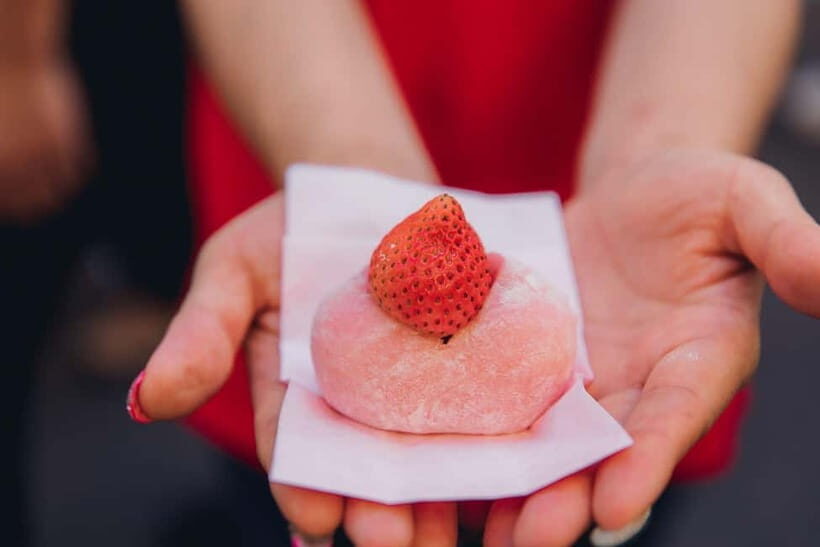
- Fresh tastes across styles: sushi, seasonal Wagashi, plus Japanese snacks and warm drinks.
- Guides with strong market connections: names you may see include Mikki, Oku, Mihori, Shinto/Shino, Yumi, Kyou, and Meg.
Entering Tokyo’s Kitchen: Tsukiji Outer Market with a human guide
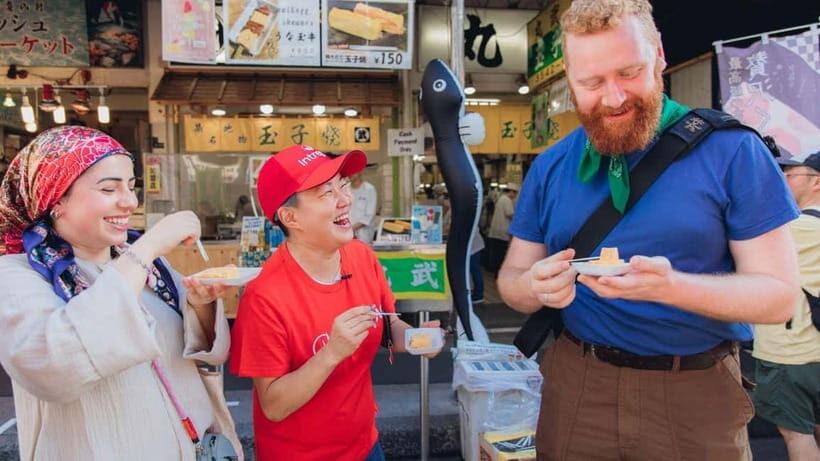
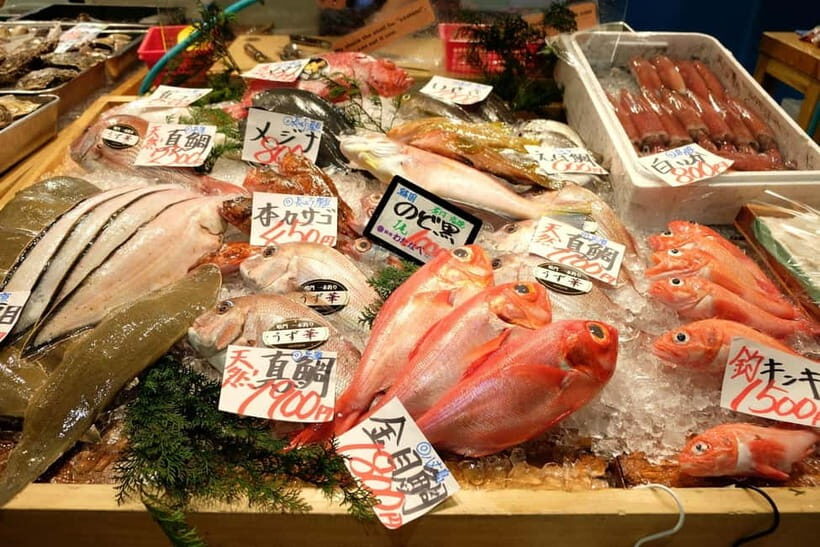
Tsukiji is famous for a reason, and it can also feel like information overload. You walk in and see seafood laid out like art, vendors calling out, lines forming fast, and menus that don’t match what you expected. What I like about this experience is that it treats Tsukiji as a place you learn how to read, not just a place you photograph.
With a small group, the guide becomes your decoder. You’re not stuck asking random strangers what something is, and you’re not guessing which stalls are selling the good stuff versus the “tourist souvenir” version. Instead, you get to enjoy the market’s energy while staying oriented.
And it’s not just a food crawl. You’ll also hear how Tsukiji’s food culture connects to spiritual ideas—Buddhist beliefs and Shinto spirit—and how that shows up in everyday rituals. That angle makes the morning feel smarter, not just busier.
You can also read our reviews of more walking tours in Tokyo


Small group rhythm: what six guests changes in Tsukiji
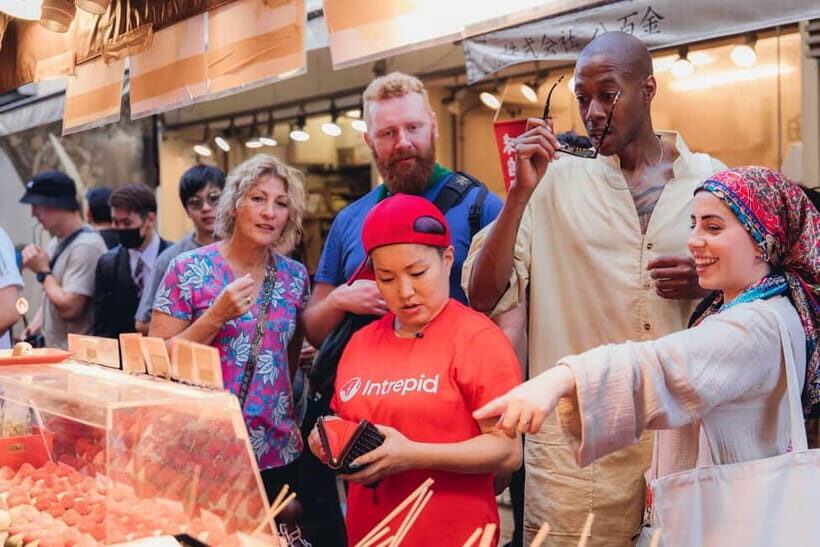
A market this busy punishes slow decision-making. When you have a bigger group, you spend time waiting, turning, and repeating yourself. When you have six guests, you move like a small pack with a plan.
That matters because Tsukiji rewards attention. You’ll be tasting multiple items—fresh sushi, snacks, and seasonal Wagashi—and you need a guide who can get you to the right stalls at the right moments. The guide also helps you navigate the social side: vendors often greet the guide by name, and you get pulled into that friendly flow instead of hovering awkwardly.
This is also why the tour works well as a first activity in Tokyo. You start your day understanding what you’re seeing, so your next market stop won’t feel like you’re walking through a maze.
The meeting point and Kabuki Inari Shrine: starting with the right Tokyo mood
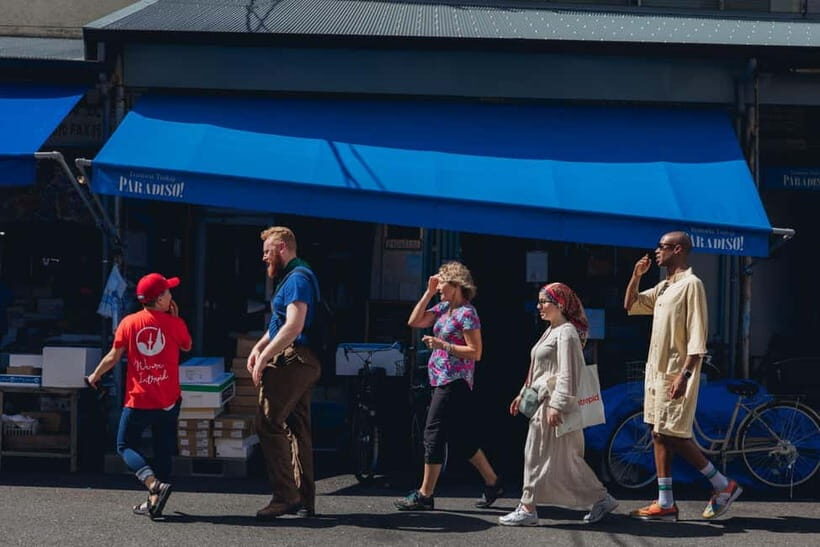
You meet at Higashi-ginza Station (Exit 3), top of the escalator on street level, by Kabukiza Theatre near a little shrine and Torii gate. It’s an easy setup if you arrive early, and it gets you into the area without wrestling with complicated directions.
Then you head to Kabuki Inari Shrine. This stop matters because it frames the rest of the morning. In many places in Japan, food markets aren’t treated as separate from spirituality. They’re part of daily life—something you respect, something you approach with correct manners.
So you’re not just rushing to eat. You’re learning how to slow down for a moment, and that sets the tone for the shrine gestures you’ll practice again later.
Tsukiji Outer Market tastings: how to eat smart (and not explode)
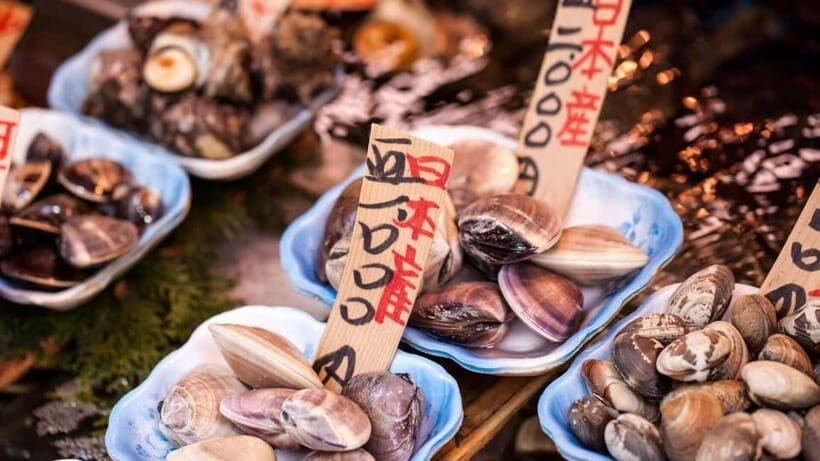
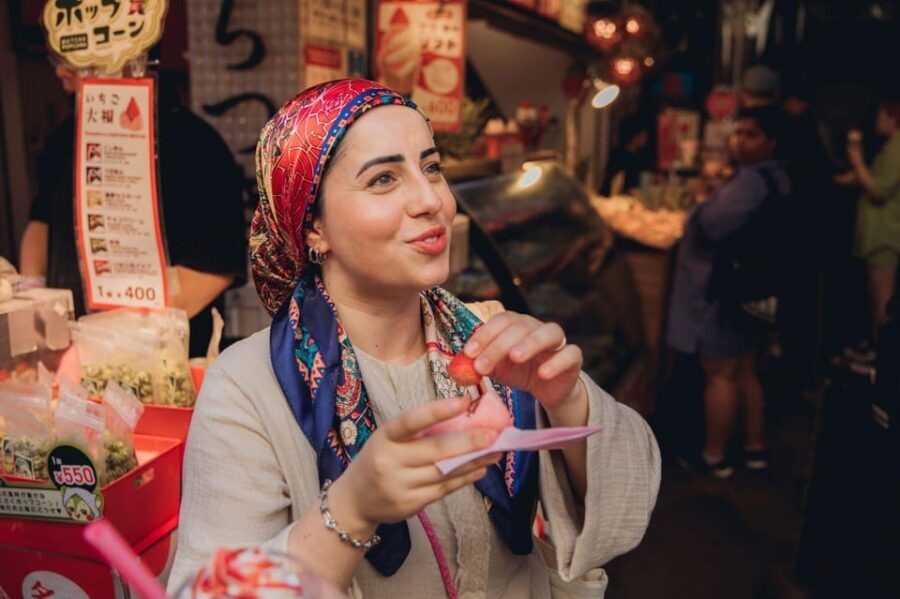
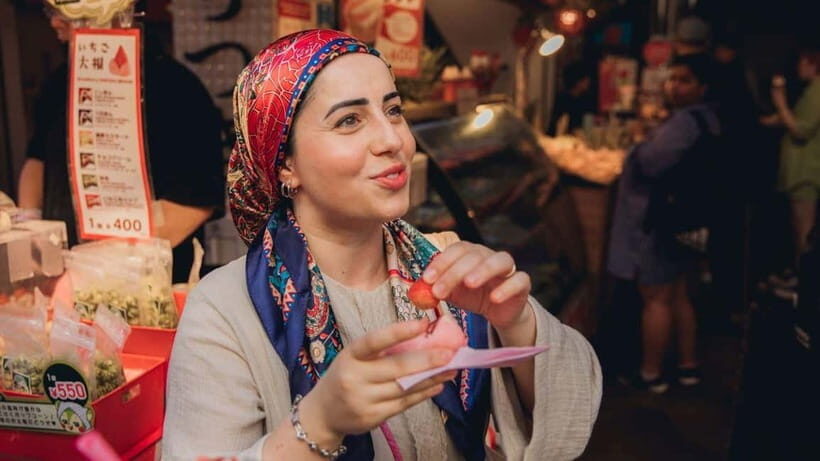
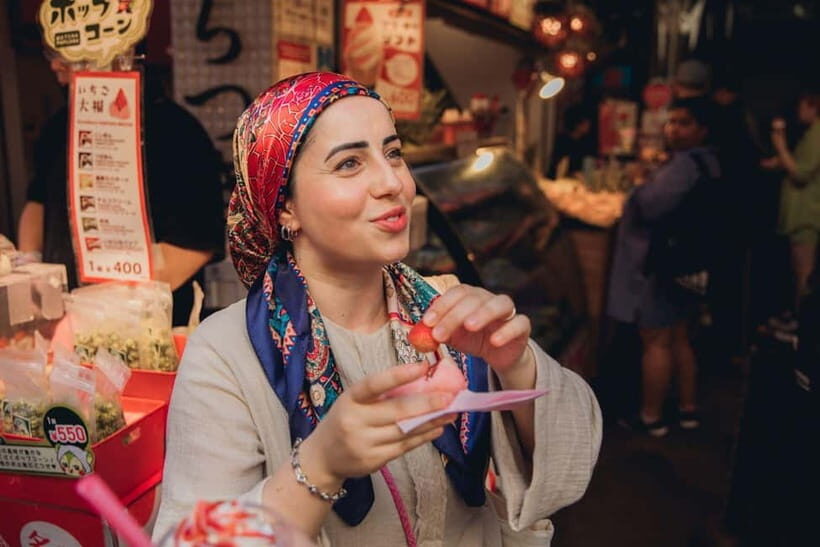
This is the core of the walk: time in Tsukiji Outer Market, guided through colorful stalls with fresh seafood, sizzling street snacks, and handmade sweets. You’ll get multiple tastings, not one single “big moment.”
What you’ll likely taste
The tour includes tastings such as:
- fresh sushi
- Japanese snacks
- seasonal Wagashi
- and cultural pairings like Japanese drinks
From past groups led by guides such as Oku, Mihori, and Shinto/Shino, the tasting variety can include items like sashimi, tamagoyaki, matcha, dashi, soy-based bites, mochi, Kobe beef skewers, and even shots of sake. Some groups have also tried pepper cola tea, and there are moments where you might get interactive touches like grinding wasabi.
You can also read our reviews of more food & drink experiences in Tokyo



How to pace yourself
Here’s the practical advice: don’t show up starving, but do come hungry enough to enjoy everything in small portions. Several guides kept the experience “unhurried,” and the tastings are designed for sampling, not stuffing. If you arrive with a full breakfast already in you, you may feel stuffed before you’ve even hit the sweets.
Also, come expecting lines. Even when you’re moving with your guide, certain stalls get busy. That’s normal Tsukiji life, and the smart part of the tour is that you’re not alone in it.
Dietary needs: possible accommodations, with real-world limits
Vegetarian and vegan options are available in general, but market choices can be limited because you’re working with what’s in front of you. If you have strong dietary needs, tell the operator ahead of time so the guide can plan where to take you. You’ll get the best experience when the plan matches your needs.
Sushi history in the middle of the action (not in a classroom)
One of the most useful parts of the tour is how the guide connects what you’re eating to what the market used to be, and what it is now.
You’ll hear sushi history in plain terms—how sushi developed, how fish traditions shaped the craft, and how Tsukiji’s identity evolved over time. A key update in the story is the change after the famous tuna auction moved from Tsukiji to Toyosu. That matters because Tsukiji still carries the old-world market energy, even when certain functions shifted.
This is also where the spiritual context earns its keep. You’ll learn about Buddhist & Shinto roots tied to market culture and food rituals. It’s not just trivia. It gives you a lens for why people behave the way they do at shrines and around vendors—small gestures, respect, and the idea that daily work connects to something larger.
When the guide explains this while you’re actually tasting, the information sticks. You’re not memorizing history. You’re recognizing it in the scene.
Namiyoke Inari Jinja: the shrine stop that makes the morning click
After the market, you visit Namiyoke Inari Jinja. This isn’t a random detour. The tour uses the shrine as a quiet punctuation mark, tying together the food and the cultural etiquette you’ve been learning.
At shrines in Japan, the actions are simple, but they carry meaning—how you approach, what you do with your hands, and how you show respect. You’ll get an explanation of the gestures locals use, so you’re not copying blindly. It’s one of those moments where the noise drops, and you get to feel how this area blends work, food, and belief.
It also helps to break up your morning. Tsukiji is intense. A calm stop keeps the whole experience from turning into one long sprint.
The Tokyo value equation: why $80 can make sense here
At $80 per person for about 3 hours, the value depends on what you want from Tsukiji.
If you come alone, you can absolutely wander the Outer Market. But you’ll be missing two big things this walk focuses on:
1) guided interpretation, so you understand what you’re eating and why it matters
2) a structured path that gets you to multiple tastings without wasting time
The tour includes the guided walking experience plus multiple tastings (fresh sushi, snacks, and Wagashi), and you also get the shrine visit with cultural explanation. That’s a lot more than “a guide who points.” You’re paying for translation, context, and access to a smooth food route in a market that’s otherwise easy to misread.
Small group size (limited to six) also adds value. With less crowding, you get more interaction and fewer bottlenecks around popular stalls.
If you only want to snack casually and you don’t care about sushi history or shrine etiquette, you may find a self-guided wander cheaper. But if you want to learn how to experience Tsukiji properly, the price starts to look fair.
Weather and shoes: the practical stuff that saves your morning
Tsukiji is an outdoor market vibe. It can be wet, and that affects your comfort fast. The tour recommends closed-toe shoes because market floors can be wet, and you’ll be moving a lot. I agree with that advice strongly. Sneakers are the safest bet, especially on mornings when it’s damp or windy.
Also think about timing and energy. This tour is morning-focused, and once you’re in the thick of it, you’ll keep walking. Bring water if you personally prefer it, but the tour includes multiple tastings, so you don’t need to overpack food.
One more reality check: market mornings can include weather surprises. In past experiences, rain and wind made people feel less prepared. If the forecast looks shaky, wear a light layer you can manage while walking.
Who should book this Tsukiji food and culture walk
This tour is a great match if you:
- want Tsukiji to feel understandable, not overwhelming
- love food but also like culture explanations that connect to what you taste
- enjoy small-group experiences where your guide can answer questions
- want a morning plan that ends with a calm shrine moment, not just more crowds
It’s also solid if you’re celebrating your first days in Tokyo. You’ll leave with a better “read” of markets and how Japanese food culture is practiced day to day.
You might choose another option if:
- you’re specifically hunting lots of behind-the-scenes working-market access beyond what a walking market tour provides
- you need a large, sit-down meal instead of tasting-size portions
- you’re sensitive to crowded outdoor conditions
Final verdict: should you book Tokyo’s Kitchen: Tsukiji Market Food & Culture Walk?
If you want Tsukiji without the confusion, I’d book it. The combination of market tastings, a small group, and meaningful context around sushi history and Buddhist/Shinto connections is exactly the kind of “value per hour” that makes an $80 morning feel justified. Plus, you get shrine etiquette you can actually use later in Tokyo.
Just go in with the right mindset: wear solid shoes, arrive ready to sample (not to eat a full breakfast worth of calories), and expect a busy outdoor market morning. Do that, and you’ll come away understanding Tokyo’s kitchen instead of just tasting it.
FAQ
How long is the Tokyo’s Kitchen: Tsukiji Market Food & Culture Walk?
It lasts 3 hours.
Where do I meet the guide?
You meet at Higashi-ginza Station, Exit 3 (Tokyo Metro Hibiya Line and Toei Asakusa Line). Meet at street level at the top of the escalator, in front of Kabukiza Theatre on the Harumi Street side, by the little shrine and Torii gate.
What’s included in the price?
The tour includes a guided walk of Tsukiji Outer Market, an English-speaking local guide, multiple tastings (fresh sushi, Japanese snacks, and Wagashi), and a visit to a nearby historic shrine with cultural explanations.
Is the tour good for kids?
Yes. Children aged 5 and under join free. If you’re bringing a child under 6, you should let the operator know when you book.
Can the tour accommodate vegetarian or vegan diets?
They can accommodate dietary restrictions where possible, and vegetarian and vegan options are available, though choices may be limited due to the market. Let them know ahead of time.
Are alcoholic drinks included, and are there age rules?
The tour may include alcoholic drinks, and the rule is that guests must be 20 or older to enjoy alcohol in Japan. Guests under 20 will be offered non-alcoholic alternatives.