REVIEW · HIROSHIMA
Hiroshima History Tour : A-Bomb Dome, Peace Memorial & City
Book on Viator →Operated by Local Gem Tour Hiroshima · Bookable on Viator
Hiroshima asks for real attention. This private, Japanese-local led walk through Hiroshima pairs personal family memories with the big landmarks of the Peace Memorial area and the Atomic Bomb Dome.
I love how the first stop starts with skip-line entry to the Peace Memorial Museum, so you can actually spend time inside rather than waiting. I also like that the pace and details are customizable, meaning you can linger where you care most.
One possible drawback: it’s a walking tour, so wear comfortable shoes, and keep in mind it needs good weather to run smoothly.
In This Review
- Quick takeaways
- How This Private Hiroshima Walking Tour Works (3–4 Hours)
- Peace Memorial Museum: The Skip-Line Start That Matters
- Peace Memorial Park: Monuments, Memory, and Breathing Room
- Children’s Peace Monument and the Origami Cranes of Sadako
- Atomic Bomb Dome and Hypocenter Monument: Understanding the Layout
- Hiroshima Castle Photo Stops and Optional Museum Time
- Shukkeien Garden Admission and the Calm After the Storm
- Local Guides With Family Ties: What You Hear That Facts Miss
- Price and Value at $105.42: What You Get for Your Yen
- Practical Tips: Shoes, Walking Pace, and Lunch Timing
- Who This Tour Fits Best in Hiroshima
- Should You Book This Hiroshima History Tour?
- FAQ
- How long is the Hiroshima History Tour?
- Is this tour private or shared with other people?
- What is included in the $105.42 per person price?
- What costs extra during the tour?
- Do I get skip-line entry to the Peace Memorial Museum?
- Can I customize the route to my interests?
- What languages does the guide speak?
- Is pickup offered, and do I need to pay for transportation?
- How much walking should I expect?
- What happens if weather is bad, or if I feel sick?
Quick takeaways
- Guides with deep family ties to Hiroshima bring stories that feel human, not rehearsed.
- Skip-line Peace Memorial Museum gets you moving quickly into the exhibits.
- A balanced route mixes heavy reflection with calmer stops like Shukkeien Garden.
- Atomic Bomb Dome + Hypocenter areas are explained with the city layout in mind.
- Photo data is included, so you can travel lighter and worry less about capturing everything.
How This Private Hiroshima Walking Tour Works (3–4 Hours)
This is a private walking tour, so it’s just your group, not a big mixed crowd. The time is roughly 3 hours, sometimes stretching toward 3 to 4 hours depending on how you pace things and how much your guide lets you go at your own speed.
What makes it work is the structure: you start with the museum, then move through the Peace Memorial Park area, then shift to key outdoor landmarks, and finish with a classic garden stop. Along the way, your guide keeps the conversation grounded in everyday Hiroshima life, family memory, and quiet perspective. You’re not just ticking off sites.
One practical note: you’re covering multiple parts of the city on foot. Even if some stops are short, the total walking adds up. I’d treat this as a shoes-and-water kind of outing, not a casual stroll.
You can also read our reviews of more city tours in Hiroshima
Peace Memorial Museum: The Skip-Line Start That Matters
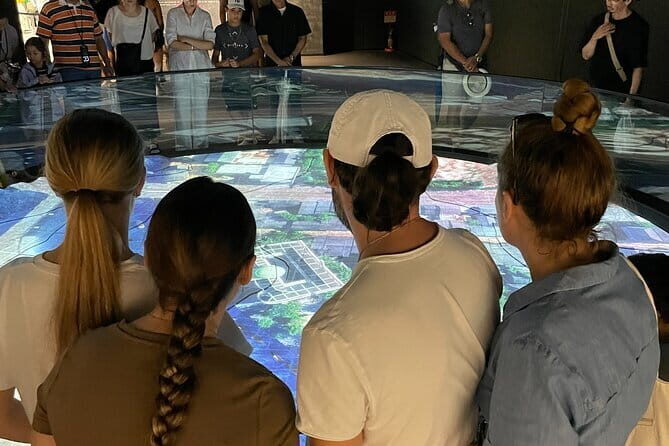
Your first real immersion point is the Hiroshima Peace Memorial Museum, where admission is included and you get skip-line entry. The museum is the kind of place where arriving on time matters because you’ll want uninterrupted attention once you’re inside.
Inside, you’ll see the story through a mix of exhibits, survivor artwork, and factual data. That combination is the point: facts give shape, but the survivor paintings and perspective give the weight. If you’ve ever wished a museum felt less like information and more like understanding, this one is built for that.
Typical timing is about 1 hour, which is enough to see the main sections without turning it into a blur. If you find yourself wanting more time, a flexible guide can help you adjust the pace across the route.
The one caution I’d flag: this is emotionally intense. If you’re sensitive to heavy material, plan your energy. Also, if you’re traveling with kids, the museum can be tough, but the tour later includes the Children’s Peace Monument in a more age-touching way.
Peace Memorial Park: Monuments, Memory, and Breathing Room
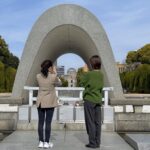
After the museum, the tour moves into Peace Memorial Park for a free stop of about 20 minutes. This is a different mood. You’re not reading panels the whole time; you’re walking among monuments and letting the space do its job.
The park is described as beautiful and as a symbol of recovery, and that shows up in the details: clean sightlines, cared-for grounds, and monuments that guide your attention. What makes it more than scenery is how your guide frames what you’re seeing in lived memory terms.
Here’s the practical value: by doing the park right after the museum, you start connecting the exhibits you saw with the monuments in front of you. The tour keeps that flow instead of dropping you into a random walk where everything feels unrelated.
This is also where you can often ask questions without rushing. If you want to slow down at a specific monument, this is usually the best place to do it.
Children’s Peace Monument and the Origami Cranes of Sadako
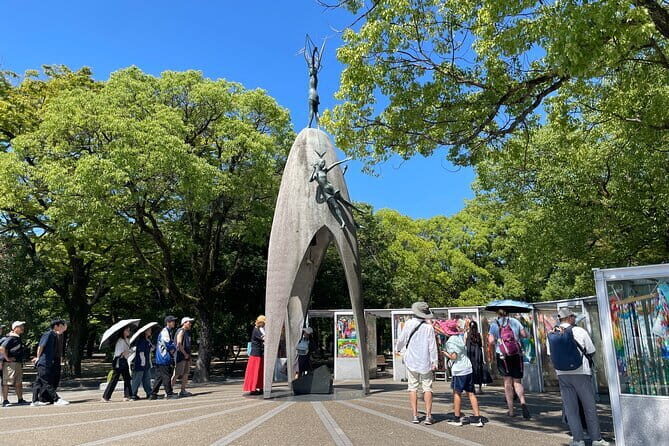
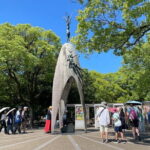
Next up is the Children’s Peace Monument, a short stop about 5 minutes. It centers on the famous story of Sadako, with origami cranes as a visual thread.
Even though this part is brief, it’s a meaningful shift. The message feels different: less about the mechanics of what happened and more about what young people carried forward after tragedy. The cranes are simple, but the symbolism lands because they’re tied to a personal story rather than only to dates and numbers.
If you have kids with you, this can be the stop that makes the day feel more approachable. If you’re an adult traveling alone, it can still work as a grounding point when the rest of the day is heavy.
Atomic Bomb Dome and Hypocenter Monument: Understanding the Layout
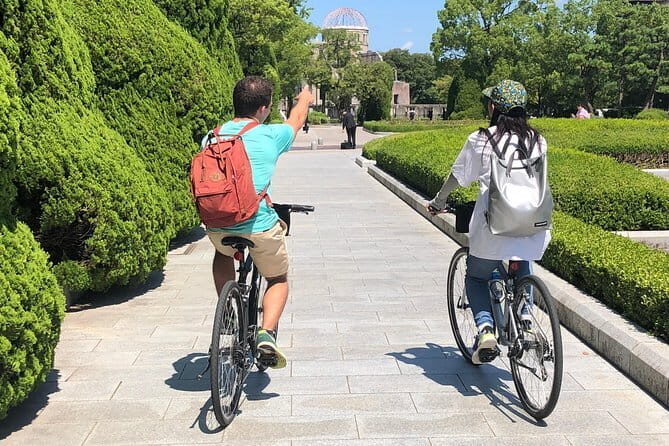
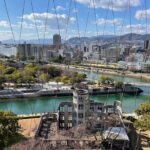
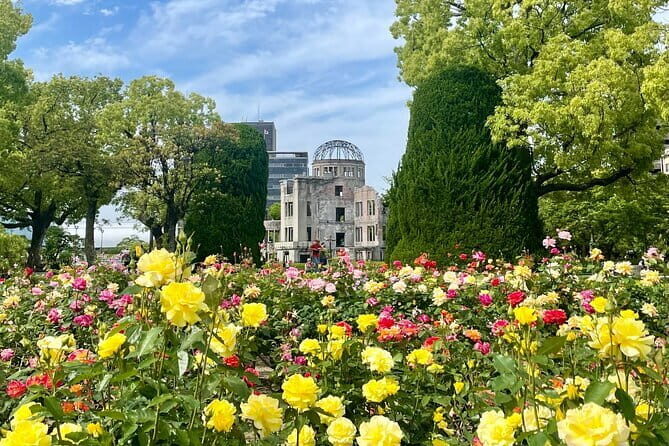
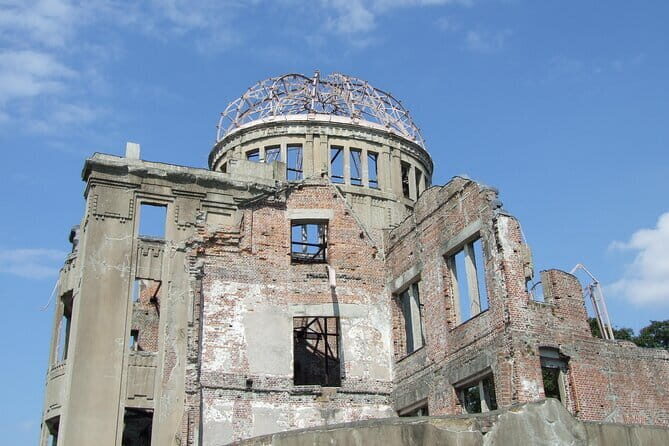
Then comes the landmark part: the Atomic Bomb Dome and the hypocenter monument.
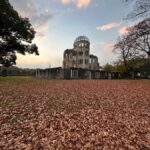
At the Dome, you get about 20 minutes, and admission isn’t needed. The building is a UNESCO World Heritage Site, and it’s striking because it retains its original appearance, described as being almost directly below the hypocenter. In other words, you’re looking at the after-effect of a location, not just a preserved building.
Your guide’s job here is to help you see the Dome as part of Hiroshima’s geography. The goal isn’t dramatic tourism. It’s getting your brain to connect where you’re standing with what your guide is explaining.
Close by is the hypocenter monument, about 10 minutes. The tour notes it’s right above Shima hospital, where the bomb exploded. Standing in that area is the kind of moment where words get tricky. A local guide can help you picture the scale of what happened without turning it into a spectacle.
Practical tip: these are photo-friendly areas, but don’t let photos replace attention. If you can, pause and take one slow look, then move on when you’re ready.
You can also read our reviews of more historical tours in Hiroshima

Hiroshima Castle Photo Stops and Optional Museum Time
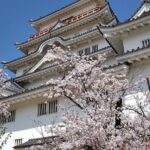
Next you’ll head to Hiroshima Castle for about 15 minutes. Here’s the twist: it’s a replica because the original was destroyed by the atomic bomb.
In most cases, this is a photo stop from the outside. But the tour also says you can choose to enter the museum inside, and that internal museum admission is not included. So you’re free to keep it quick if you’re museum’d out, or add more if you want that extra layer of local history.
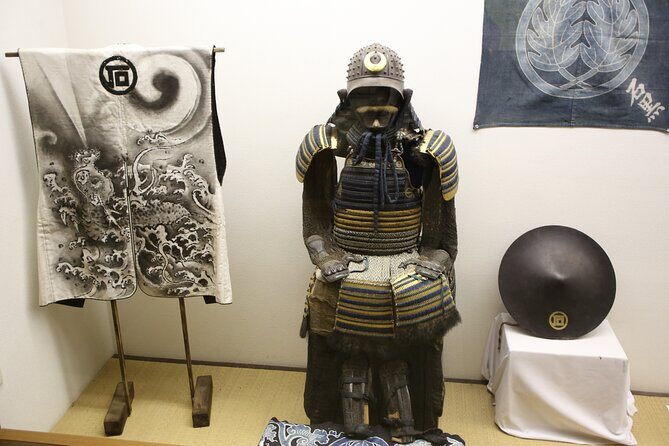
Is it worth your time? That depends on what you want your day to do. If your main goal is the Peace Memorial story, I’d see the castle as a short reset: a look at another era of Hiroshima. If you’re especially into samurai-era architecture and museum exhibits, the optional interior visit could be a good add-on.
Shukkeien Garden Admission and the Calm After the Storm
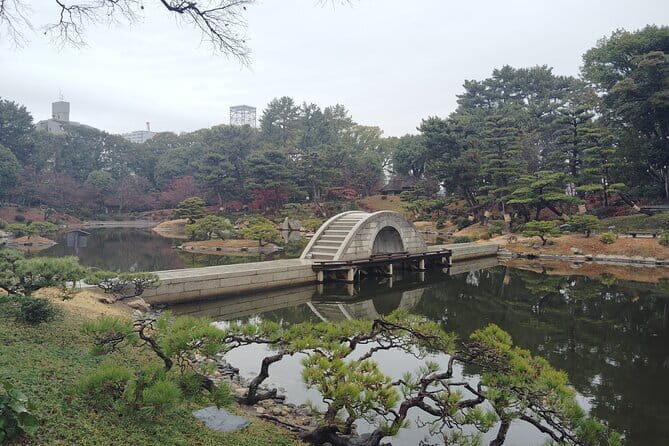
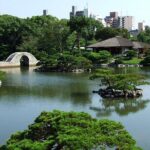
The final stretch is Shukkeien, one of Japan’s oldest gardens, created in 1620. Admission is included, and the tour typically allows about 45 minutes here, which is long enough to actually breathe and not just pass through.
You’ll see the garden’s classic elements: a pond, trees, and the gentle undulations that make the scenery feel like it’s slowly shifting as you walk. The tour highlights that it was originally associated with a samurai who settled in the area, which helps you connect the calm here with a long timeline of Hiroshima life beyond the 1945 story.
One of the best value parts of finishing here is tonal contrast. After the Dome and hypocenter, your brain needs a softer landing. Shukkeien does that in a respectful, quiet way.
Also, one guide experience shared a seasonal highlight: the guide took guests to Shukkeien for the autumn momiji festival, and it was right at the end of the event. You can’t bank on festival timing, but if your dates line up with seasonal displays, this is where those moments pay off.
Local Guides With Family Ties: What You Hear That Facts Miss
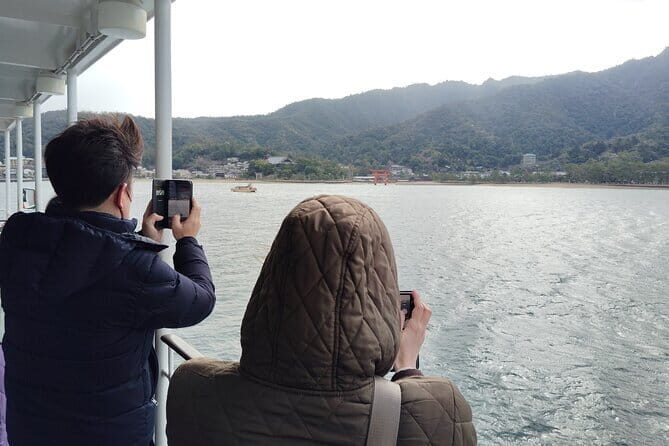
The guides are the real engine of this tour.
The tour description explains that some guides are second-generation atomic bomb survivors, while others were born and raised in Hiroshima or have family members affected by the bombing. That matters because you’re not just receiving a timeline. You’re hearing perspective passed down through families and everyday life.
In real-world use, you’ll likely meet guides such as Yuka, Masa, Yuta, or Ally. Across these guide styles, the common thread is warmth and clear communication. People also describe the history as feeling more human because the guide folds in personal or family-connected context.
English-language delivery is included, and your tour includes guide (English, Japanese). The useful part for you is not only that someone can translate words, but that the guide can also translate meaning. You’ll get explanations you can actually carry with you after the tour ends.
And yes, it’s thoughtful conversation. You’re not stuck with a rigid script. You can ask where your attention goes, and the route is described as flexible and customizable to match it.
Price and Value at $105.42: What You Get for Your Yen
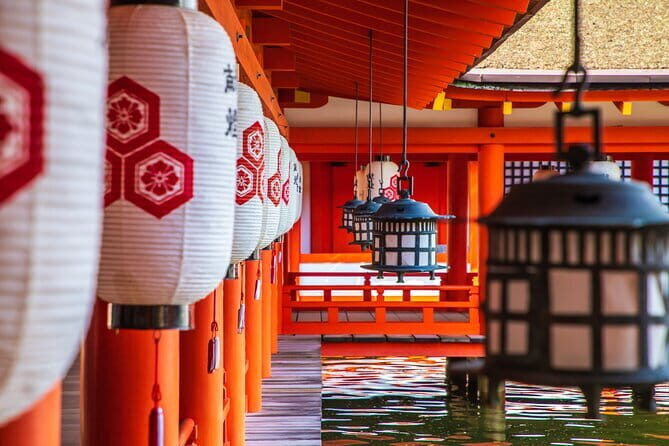
At $105.42 per person, this tour sits in the mid-range for a private Hiroshima experience. The question is: what are you buying, and what does it save you?
Here’s what’s included:
- Peace Memorial Museum admission, with skip-line
- Shukkeien Garden admission
- Photo data of the tour
- A local guide in English and Japanese
- A route that covers multiple major sites in about 3 hours
What’s not included:
- Lunch
- Tips
- Public transportation (listed as ¥240 per person)
- Hiroshima Castle museum interior (optional; not included)
- Private transportation (not included)
So is it worth it? I think it is if you value (1) getting the museum time without line friction and (2) having a guide who can explain why each place matters. If you were to self-tour, you’d still need to buy museum and garden tickets, plus you’d be doing the hardest thinking yourself at the hardest sites.
The other value lever is privacy. Even if the price seems “higher than a bus tour,” you’re paying for the ability to ask questions, adjust the pace, and avoid feeling rushed at places that deserve a slower rhythm.
If you’re traveling as a small group, the tour also lists group discounts, which can make the per-person math work even better.
Practical Tips: Shoes, Walking Pace, and Lunch Timing
A few things will make your day smoother.
First, assume you’ll walk a lot. Even if each stop isn’t long, you’re moving between them. Bring comfortable shoes and plan to stay light if you can.
Second, plan your lunch either before or after. Lunch isn’t included, and the tour time is designed around the sites. If you want to add food, you’ll probably need to either eat nearby fast or accept that it may slightly reshape timing.
Third, think about what you want from Hiroshima on this day. If you want the full museum depth, give the museum room to breathe. If you’d rather see more outdoor areas and then decompress at Shukkeien, you can ask your guide to keep stops tighter.
Finally, bring patience for weather. The experience notes it requires good weather, and if it can’t run, it’s set up for an alternative date or full refund. That means your planning should keep some flexibility.
Who This Tour Fits Best in Hiroshima
This tour is ideal if you:
- Want a local guide with real family connection to the city’s story
- Prefer learning through conversation rather than reading alone
- Care about seeing the key sites in a logical order, without spending your day figuring out logistics
- Like a balanced itinerary that includes both reflection and calm
It’s also a good fit for couples and families, since the route includes moments suited for different ages, especially the Children’s Peace Monument and cranes.
Where it may not fit as well:
- If you need minimal walking, or you want long museum sessions in a strict solo way
- If you don’t want emotionally heavy content in one concentrated block
- If you’re hoping the castle visit includes the interior museum (that part costs extra if you choose it)
Should You Book This Hiroshima History Tour?
Book it if you want the Peace Memorial sites explained by people who carry Hiroshima in their family stories. The skip-line museum entry, included Shukkeien admission, and included photo data make the price feel less like a markup and more like a package that removes hassle at the hardest part of the day.
Skip it or consider alternatives if you’re looking for purely factual sightseeing with minimal emotion, or if you want the freedom to roam without a guide shaping the experience.
If you book, do yourself a favor: come with comfortable shoes, a little extra patience for the emotional weight, and at least one question you want to ask your guide. That’s where tours like this turn from places visited into meaning carried home.
FAQ
How long is the Hiroshima History Tour?
It runs for about 3 hours (approx.), with a private walking route that may stretch closer to 3 to 4 hours depending on your pace.
Is this tour private or shared with other people?
It’s private. Only your group participates.
What is included in the $105.42 per person price?
The price includes the Peace Memorial Museum entry fee (with skip line) and Shukkeien Garden entry, plus your guide and photo data of the tour.
What costs extra during the tour?
Lunch is not included. Tips are not included. Public transportation is listed as ¥240 per person. Hiroshima Castle museum entry is optional and not included.
Do I get skip-line entry to the Peace Memorial Museum?
Yes. Peace Memorial Museum entry is included, and it lists skip line.
Can I customize the route to my interests?
Yes. The tour is flexible and customizable in advance, and it’s described as adjustable to your pace and interests.
What languages does the guide speak?
The tour includes a guide in English and Japanese.
Is pickup offered, and do I need to pay for transportation?
Pickup is offered. Private transportation is not included, and public transportation is listed at ¥240 per person.
How much walking should I expect?
This is a walking tour with multiple city stops. You should expect to walk between sites and bring comfortable shoes. Most people can participate.
What happens if weather is bad, or if I feel sick?
The experience requires good weather. If it’s canceled due to poor weather, you’ll be offered a different date or a full refund. The instructions also say not to participate if you have cold symptoms.