REVIEW · KYOTO
Kyoto: Fushimi Inari Night Walking Tour with Guide
Book on GetYourGuide →Operated by Trip with Goku · Bookable on GetYourGuide
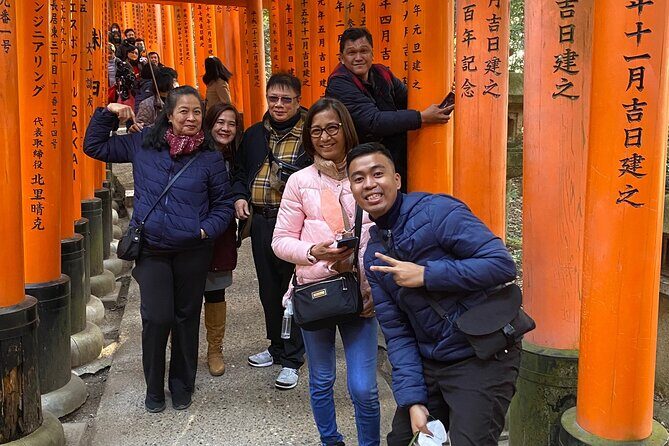
Torii gates glow before the crowds. A Fushimi Inari night tour gives you the shrine’s most famous red arches in softer light, plus real context from a local guide. I like how the experience feels calm and conversational, not just a checklist of photo stops.
Two things I really like: the lantern-lit atmosphere that makes the torii feel almost otherworldly, and the guide-led explanations that turn the place from pretty scenery into something you understand. You’ll get time to ask questions and shape the pace around what you care about.
One consideration: this tour focuses on the lower and middle sections of Fushimi Inari, not the full mountain route—so if your dream is a long climb to the top, you’ll need a different plan.
In This Review
- Key highlights worth planning around
- Meeting at JR Inari Station: Fast start, easy handoff
- Why a night walk at Fushimi Inari feels different
- Walking the Senbon Torii in the lower and middle sections
- What your guide explains about Shinto, rituals, and shrine meaning
- Small-group pacing and conversation time you can actually use
- Price and value: what $38 buys you at night
- What to bring, plus pacing tips that keep the night enjoyable
- How the tour wraps: back to Inari Station with next-step ideas
- Should you book the Kyoto Fushimi Inari night walking tour?
- FAQ
- FAQ
- Where is the meeting point for the tour?
- How long is the Fushimi Inari night tour?
- Is the tour offered in English?
- Which parts of Fushimi Inari does the tour cover?
- How big is the group?
- What should I bring?
- Is there free cancellation if my plans change?
- Do I pay everything when I book?
Key highlights worth planning around
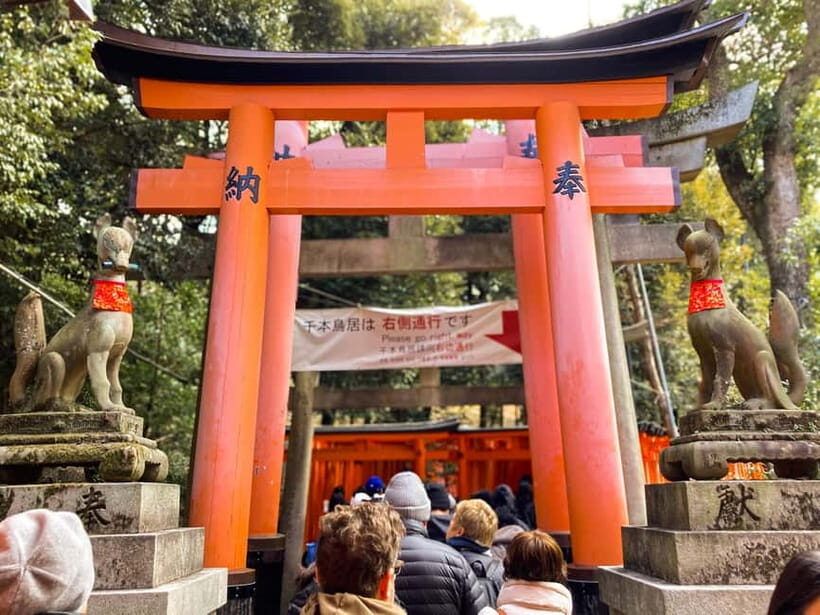
- Lantern and evening light make the torii look different than daytime visits
- Small group (10 max) means you can actually talk with your guide
- Guided route away from crowds keeps things quieter and easier to enjoy
- Shinto shrine meanings explained as you walk, not as a lecture
- Photography and quiet pauses built in at key spots
Meeting at JR Inari Station: Fast start, easy handoff
The tour begins at JR Inari Station, right at the ticket gate. That’s a big deal at busy sightseeing sites: you don’t want to spend your precious time hunting for a meeting point. Because there’s only one ticket gate, you can find your guide quickly and get moving while the area still feels relaxed.
You’ll be walking soon after you meet, so I suggest you show up with your comfortable shoes on and phone ready. You’ll likely want photos, and the charged smartphone part matters more than it sounds—night lighting is beautiful, and you’ll want to capture torii colors and shadows before they fade.
One more practical note: the tour asks you to have WhatsApp or SMS available so your guide can reach you before the start. That’s not “extra,” it’s helpful. In a dense station area, a quick message can save confusion.
You can also read our reviews of more walking tours in Kyoto



Why a night walk at Fushimi Inari feels different
Fushimi Inari is famous enough that many visits feel like a commute through crowds. Going after twilight changes the whole mood. As evening settles, the torii gates and shrine buildings soften in the light from lanterns, and the atmosphere turns quiet in a way daytime often doesn’t.
I like this timing because it gives you two benefits at once: you get those photo-friendly views without the same crush, and you get a chance to experience the site as a living place of worship, not only a sightseeing stop.
This tour also works with the reality of the season. Sunset is around 6:00 PM in this season, so evening timing naturally lines up with when light starts to turn flattering and crowds thin out. If you’re traveling in winter, there’s also a daytime option, since nights can get longer and colder.
The result is simple: you spend less effort fighting crowds and more effort looking closely—at the gate spacing, the paths that curve around shrines, and the way people move through the space at night.
Walking the Senbon Torii in the lower and middle sections
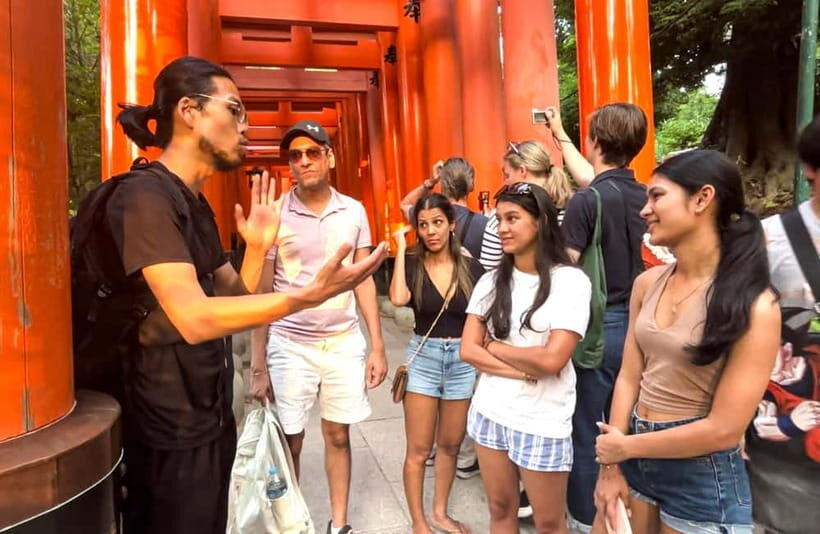
This experience is not the full climb of the mountain routes. Instead, you’ll focus on the lower and middle sections of Fushimi Inari, which is great if your time in Kyoto is limited or if you want a meaningful walk without turning it into an all-day hike.
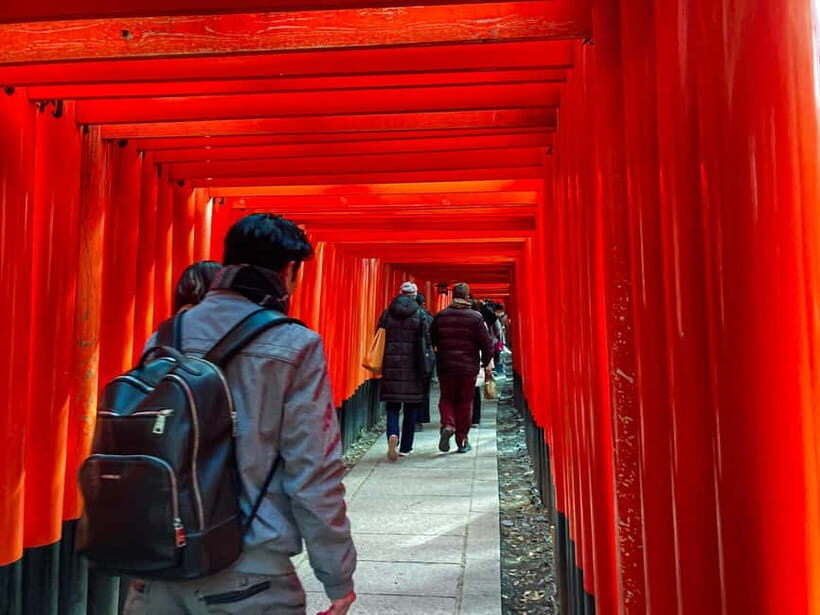
In this area, the torii path becomes the main character. You’ll move through part of the Senbon Torii—those thousands of vermillion gates that stack into perspective. At night, the spacing looks deeper, shadows stretch across steps, and the lantern light makes the red tones feel richer.
You should also expect more “sequence” in your walk. The route isn’t just point-to-point. Your guide will interpret what you’re seeing as you pass: why the gates are positioned the way they are, how different structures relate to shrine practice, and what to notice as you change elevation on the way up.
One practical upside: focusing on the lower and middle sections makes the pacing more comfortable for a wide range of visitors. You’re still walking outdoors, so comfortable shoes remain non-negotiable, but you’re not committing to the steepest or longest parts of the site.
If your goal is maximum distance and a full mountain-style hike, this tour may feel short. But if your goal is to experience the magic of Fushimi Inari in a calm, guided way, this coverage is a smart match.
What your guide explains about Shinto, rituals, and shrine meaning
A good night tour here shouldn’t just show you torii gates. It should help you understand why the place matters. That’s where this tour earns its value.
Your guide is a local professional trained in tourism and Japanese culture, with specific expertise in religious traditions—Shinto shrines, Buddhist temples, and historical customs. During the walk, the explanations connect architecture to meaning: what symbols represent, how shrine rituals work, and how visitors should think about the space.
I especially like that the tour doesn’t treat religion like trivia. It frames Shinto practice in a way that helps you read what’s in front of you: structures, pathways, and the overall rhythm of the site.
This matters because Fushimi Inari can feel confusing if you only know it as a photo location. A guide helps you notice patterns you’d otherwise miss—like how the torii path functions as both a visual journey and a spiritual one for worshippers.
You’ll also get commentary on Japanese customs and cultural differences from a global perspective. That’s helpful if you’re the type who likes to understand what you’re seeing beyond the obvious, and it makes the walk feel like a conversation rather than a scripted route.
And yes, the tour includes a Q&A session. If you’re curious about anything you notice—ritual objects, how people behave at shrines, why certain spaces are arranged the way they are—this is where your questions get answered in context.
Small-group pacing and conversation time you can actually use
This is a small-group experience, limited to 10 participants. That number affects the whole vibe. In a smaller group, you can hear your guide, ask questions without feeling rushed, and pause for photos without holding up a huge line.
You can also expect a more personal rhythm. The tour is conducted in English by default, but guides may be available in French, Spanish, Russian, and Portuguese depending on availability. If you care about language, it’s worth arranging ahead rather than assuming English will be your only option.
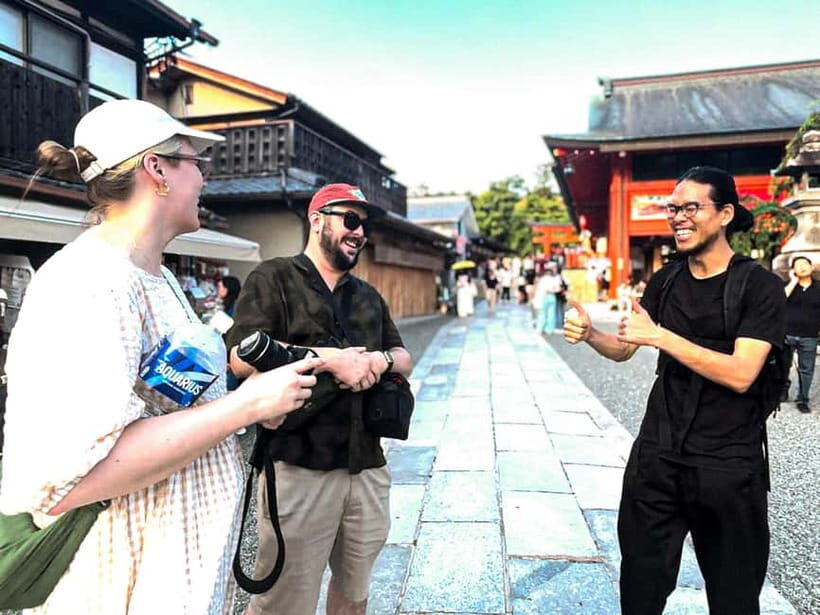
One standout theme from past groups: guides like Goku and Kate (names you may encounter) tend to talk with you, not just at you. In particular, the goal is to make cultural explanations accessible, even when concepts are unfamiliar. If you’re traveling solo, that conversation-first approach can make the tour feel far more like a friendly guide walk than a tour you “attend.”
You also get guidance through quieter scenic routes away from crowds. That helps with both comfort and attention. When the group isn’t squeezed into the same bottleneck spaces, you can focus on the torii path and the way the shrine lights change your perception.
Built into the plan is free time for quiet reflection or photography at key spots. I like that balance: explanation time plus unstructured moments so the place can land on you.
You can also read our reviews of more guided tours in Kyoto




Price and value: what $38 buys you at night
At $38 per person for a 2-hour small-group night tour, you’re paying for three things that add up fast in Japan:
1) A trained local guide who can interpret what you’re seeing
2) A night timing strategy that reduces crowd pressure
3) A structured route that keeps you from wasting time figuring things out on your own
If you’re comfortable doing self-guided shrine visits, you could technically walk there independently. But you’d miss the symbolism-to-architecture explanations, the cultural context for rituals, and the practical tips your guide provides about how to move through the site.
This price also makes sense for small-group dynamics. With a limit of 10 people, you’re less likely to feel like you’re just being transported from torii to torii. You can ask questions and stay part of the conversation.
For me, the best value here is not the torii gates themselves—they’re free. The value is the way the evening experience becomes readable: you learn what to notice, when to pause, and how to understand the shrine as a sacred space.
What to bring, plus pacing tips that keep the night enjoyable
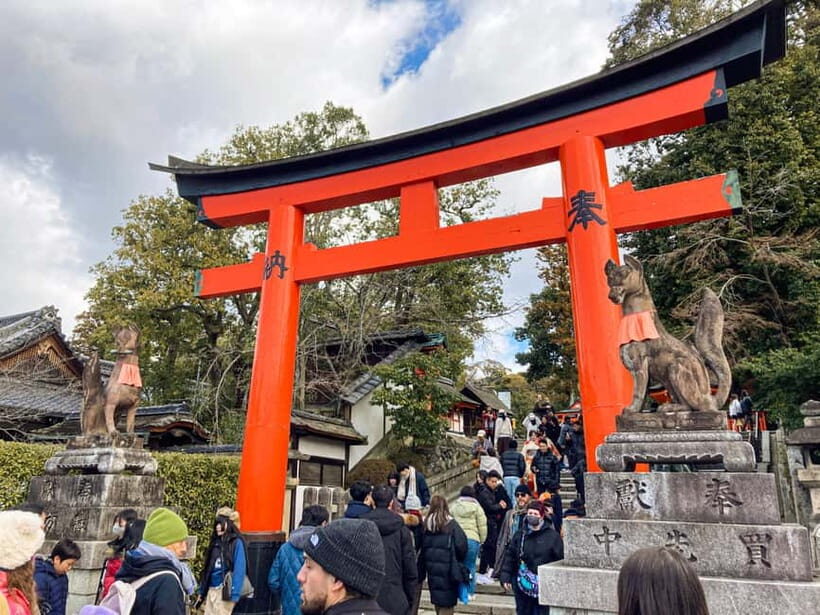
You only need a couple things, and they’re the essentials:
- Comfortable shoes (night steps can be uneven, and you’ll be on your feet)
- A charged smartphone (photos, timing, and staying in sync with your guide)
That’s it. The simplicity is refreshing. Still, I recommend you also dress for evening walking. The tour is outdoors and depends on twilight (with sunset around 6:00 PM in this season), so plan for cooler temperatures as the night progresses.
If you’re worried about stamina, remember the focus on the lower and middle sections. You’ll get a satisfying torii experience without the most intense extended hiking route.
Also, if you’re the type who likes to stop often for photos, you’ll appreciate that free time is built into the tour. You’re not forced to keep moving the whole time.
How the tour wraps: back to Inari Station with next-step ideas
You’ll return to Inari Station after the guided portion. This matters because it prevents the “now what?” feeling. Instead of leaving the shrine and guessing how to connect to the rest of your Kyoto plan, you finish with your bearings already sorted at a major transit stop.
Your guide may also offer recommendations after the tour—food, transport, and nearby sights. That’s practical in the evening, when you don’t want to gamble on the wrong direction and lose time.
Should you book the Kyoto Fushimi Inari night walking tour?
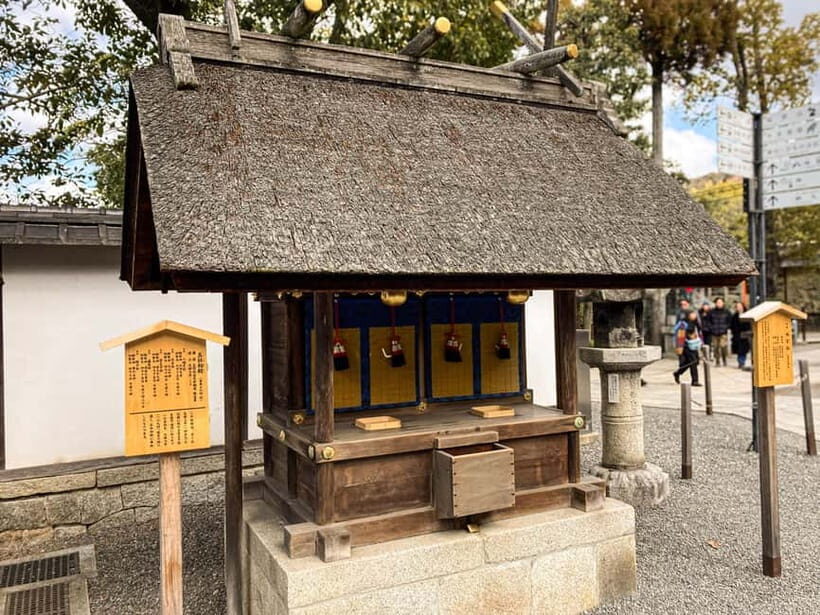
Book this tour if you want:
- The torii atmosphere with less crowd friction
- A local English-speaking guide who explains shrine meaning, Shinto practice, and Japanese customs
- A short, structured evening walk that still feels rewarding
Skip it or consider a different option if:
- You want the full mountain hike and maximum elevation, since this one focuses on the lower and middle sections
- You prefer totally self-directed time with no guided context
If you’re in Kyoto for a tight schedule and want one “most iconic” experience that feels personal, this is a strong pick—especially because you’re paying for interpretation and timing, not just entry into a famous place.
FAQ
FAQ
Where is the meeting point for the tour?
Meet your guide at the ticket gate at JR Inari Station. There is only one ticket gate at the station, so it’s easy to find.
How long is the Fushimi Inari night tour?
The tour lasts about 2 hours, with 1.5 hours of guided time at Fushimi Inari Taisha.
Is the tour offered in English?
English is the default language. Depending on availability, guides may also lead the tour in French, Spanish, Russian, Portuguese, or other requested languages.
Which parts of Fushimi Inari does the tour cover?
The tour focuses on the lower and middle sections of Fushimi Inari, not the entire mountain route.
How big is the group?
It’s a small-group tour limited to 10 participants.
What should I bring?
Bring comfortable shoes and a charged smartphone.
Is there free cancellation if my plans change?
Yes. You can cancel up to 24 hours in advance for a full refund.
Do I pay everything when I book?
You can reserve now and pay later, with the option to book your spot and pay nothing today.