REVIEW · KYOTO
Kyoto Late Bird Walking Tour
Book on Viator →Operated by KAMNAVI Tours · Bookable on Viator
Kyoto at golden time has a special calm. This late-afternoon Kyoto Late Bird Walking Tour strings together Fushimi Inari-taisha and Gion in one smooth half day, with guide commentary that helps you read what you’re seeing. I especially like the private format for just your group and the practical “don’t get lost” support that makes Kyoto feel less like a maze. The vibe is also easy to like: you get landmark time without rushing every minute.
One thing to consider: the tour price is clear, but public transportation fare is extra (¥850 per person). Also, it’s not stroller accessible, so plan accordingly if mobility is a concern.
In This Review
- Key things that make this tour worth your time
- A 2:00 pm Kyoto plan that avoids the full-day grind
- Meeting at Kyoto Station and traveling the smart way
- Stop 1: Fushimi Inari-taisha and the torii-gate tunnel
- Stop 2: Yasakanoto, pagoda views, and quick evening photos
- Stop 3: Yasaka Shrine and why Gion matters
- Stop 4: Gion on foot, with a real chance to see geisha or maiko
- The guide makes the difference: names that came up and why
- Price and value: what you pay for, and what’s extra
- Timing tips so your afternoon feels smooth
- Who this tour is best for (and who should skip it)
- Should you book the Kyoto Late Bird Walking Tour?
- FAQ
- What time does the Kyoto Late Bird Walking Tour start?
- How long is the tour?
- Where do I meet the guide?
- What sights are included on the walk?
- Is admission included for the stops?
- What does the tour price include, and what costs extra?
- Is this a private tour?
- What if the weather is bad?
- Is it stroller accessible?
Key things that make this tour worth your time
- Late start (2:00 pm) for a calmer rhythm while still covering major Kyoto must-sees
- Guided commentary that helps you understand each place as you walk
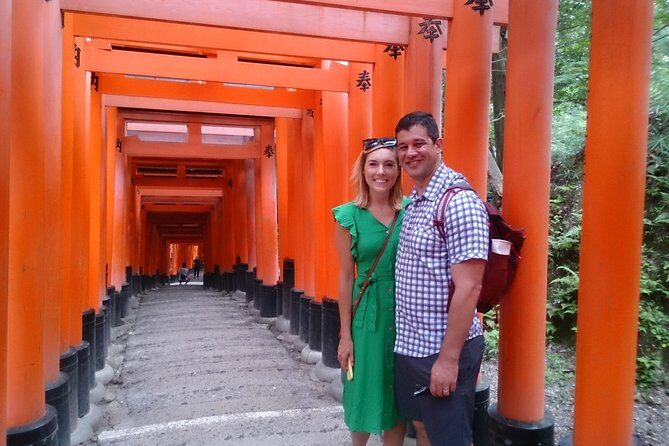
- Fushimi Inari-taisha (1 hour) with iconic torii gates and plenty of time to take it in
- Yasaka area stops (Yasakanoto and Yasaka Shrine) where views and meaning meet
- Gion district walking (50 minutes) with a chance to spot geisha or maiko
- Private tour for your group, so the pace and questions are yours
A 2:00 pm Kyoto plan that avoids the full-day grind
Kyoto can feel like two cities: the part you see on a map, and the part you actually navigate on foot and by train. What I like about this Late Bird tour is the timing. Starting at 2:00 pm gives you a break from the busiest morning energy, while still leaving enough time to hit the big stops that most first-timers want.
The itinerary is built for flow. You’re not doing a “hop, sprint, repeat” circuit. Instead, you walk sections and spend time where it matters—Fushimi Inari-taisha for about an hour, then shorter but focused stops around Yasaka, and finally Gion for a classic Kyoto evening feel.
And the private format matters more than it sounds. You’re not squeezed into a one-size-fits-all group. If your group wants to linger for photos, ask questions, or move slower, you have that flexibility.
You can also read our reviews of more walking tours in Kyoto


Meeting at Kyoto Station and traveling the smart way
The tour begins and ends at Kyoto Station, so you don’t have to guess where you’ll start in some far corner of the city. That’s a big deal in Kyoto, where timing and orientation can make or break an afternoon plan.
From Kyoto Station, you’ll use public transportation to reach your next stops. One practical tip from real tour experience: bring a loaded IC card. It makes the train part easier and faster, and you don’t lose tour time fiddling with tickets.
The tour is also set up to be smooth for different needs. It’s listed as accessible for people with limited eye sight and limited mobility, and pets are allowed. On the other hand, it’s not stroller accessible, so if you’re traveling with a stroller, this might not be the right fit.
Stop 1: Fushimi Inari-taisha and the torii-gate tunnel
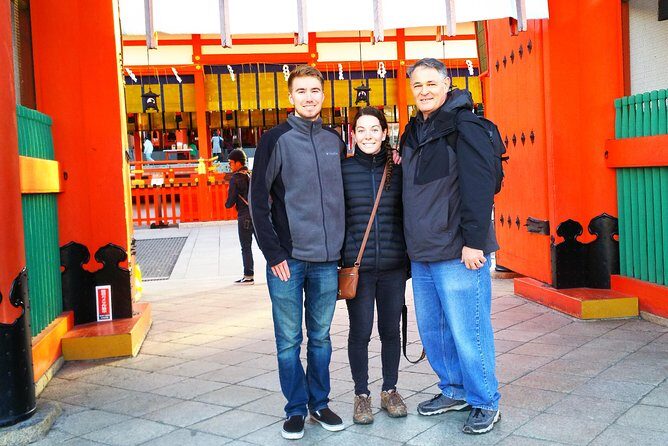
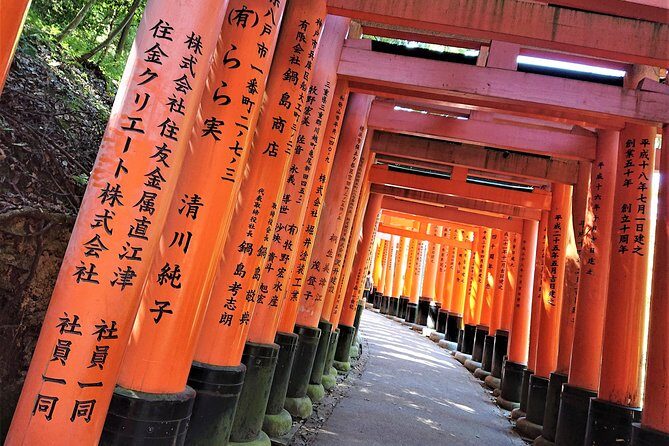
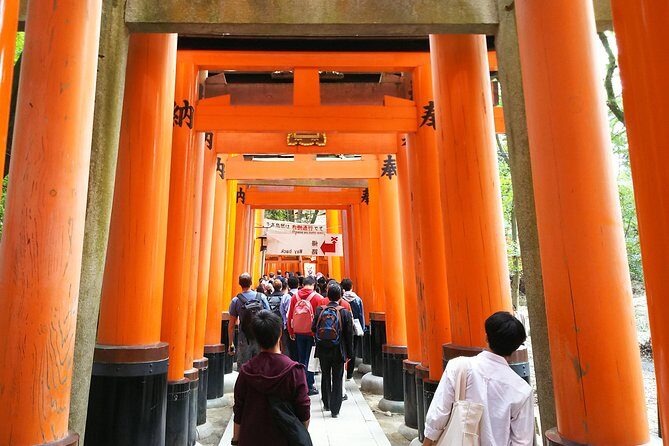
Fushimi Inari-taisha is one of those places that looks like a postcard and then becomes even more real once you’re inside it. This tour gives you about 1 hour at the shrine—long enough to walk past a good stretch of the famous vermilion torii gates and still have time to reset your bearings.
The big draw here is visual rhythm. The torii gates form a tunnel effect that pulls you forward, and the longer you spend there, the more you notice that the whole site works like a layered path. The shrine is free to enter on this tour, which helps you keep the afternoon budget under control.
A timing note: because the tour starts in the afternoon, the lighting and crowd levels can be different than early-morning visits. You may find it easier to move slowly and take photos without constantly stepping around people.
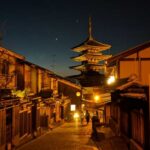
Stop 2: Yasakanoto, pagoda views, and quick evening photos
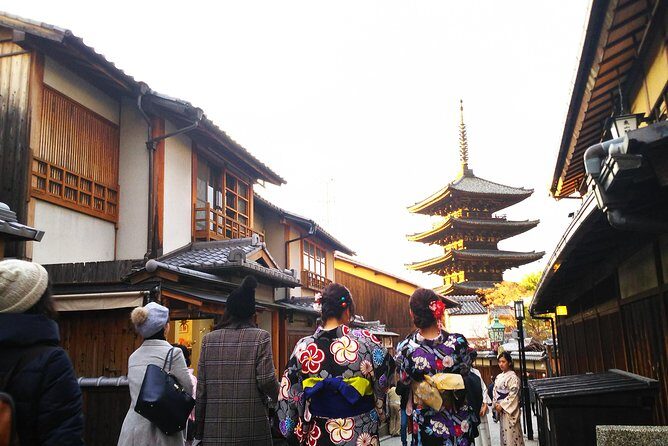
Next up is Yasakanoto, with around 30 minutes on the clock and free admission. This stop is valuable because it’s not just a single photo spot. It’s a viewpoint moment—your guide helps you understand what you’re looking at and gives you the context to make the time count.
The pagoda area is especially popular for photography in the evening. So even if you’re not chasing photos, this stop is still worth it for the perspective it gives you on Kyoto.
One practical expectation: this is a shorter stop. Don’t plan on finishing your “deep Kyoto research” here. Instead, think of it as a visual waypoint—where you refresh your sense of direction before the next shrine and Gion.
Stop 3: Yasaka Shrine and why Gion matters
From Yasakanoto, you’ll head to Yasaka Shrine, with about 20 minutes there and free admission. Yasaka Shrine is tightly linked to the history of the Gion district—so it’s a smart use of time. The tour helps you connect the dots so you’re not just seeing famous buildings, you’re seeing the reason they’re famous.
Here’s what’s useful to know as you arrive: the shrine was once called Gion Shrine, and the name Gion is connected to it. There’s also mention of deities enshrined there, including a god of beauty. If you’ve ever wondered why parts of Kyoto feel like they were designed around arts and tradition, this is part of the answer.
As a short stop, it works best if you keep your questions ready. A guide can help you spot what to pay attention to—especially in a place like Kyoto where there’s often more symbolism than signage.

Stop 4: Gion on foot, with a real chance to see geisha or maiko
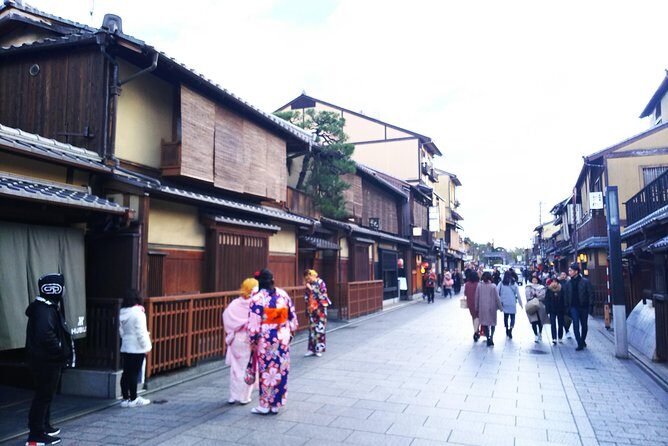
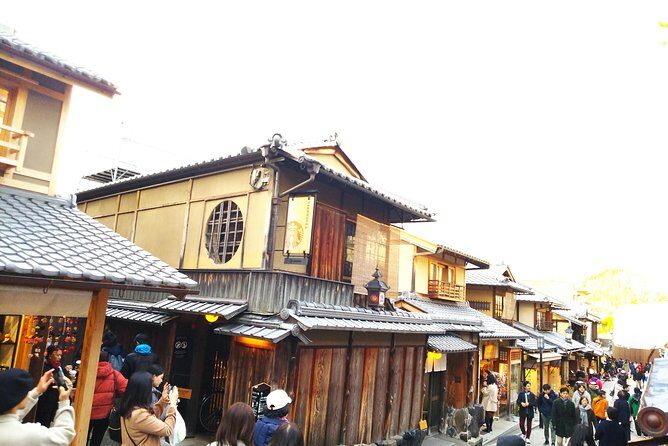
Finally, you reach Gion for about 50 minutes. This is where the tour leans into atmosphere. The walking here is the point: old-style streets and preserved houses help you picture how the district developed, rather than treating it like a single monument you check off.
This is also the stop with the most “maybe” factor. The tour is designed for you to look for geisha walking through the district, and it also mentions the possibility of encountering maiko (apprentices). You’re not guaranteed a sighting, but the guide’s knowledge of what to look for can increase your odds.
Two helpful reminders for how to approach this part:
- You’re walking, so comfortable shoes matter.
- This is a famous area, so expect crowds at times. The private format helps because your group isn’t constantly being redirected with a large herd.
If you’re hoping to understand the culture behind the glamour, Gion is where the afternoon becomes more than sightseeing. It becomes a feeling of Kyoto that’s hard to replicate from photos.
The guide makes the difference: names that came up and why
In a tour like this, the guide doesn’t just translate. They turn scattered sights into a coherent story you can actually remember later. In the tour experiences connected to this walk, several guide names stand out: Kaz, Saori, Mitsue, and Meg.
What stood out across these guide encounters was not just knowledge, but timing and communication. One guide (Kaz) was noted for waiting patiently when a guest arrived late at Kyoto Station, and that kind of calm reliability makes an afternoon feel safe and organized. Another (Saori) was praised for enthusiasm and excellent English and Japanese, plus for being a great conversationalist. That matters because Kyoto can be easier to enjoy when you’re not only taking in sights, but also connecting them to stories.
Mitsue was described as welcoming with a relaxed walking pace, and also taking the group to a shrine that guests otherwise might not have discovered. Meg was praised for professionalism and on-time meeting at the station, with a big smile and a lot of knowledge throughout.
One extra detail that can make this tour more fun: a stop connected to Yasui Konpira-gu came up in guide experiences, including a guide translating a paper wish and making it feel genuinely amusing. If your route includes that area, it’s one of those small moments that turns sightseeing into something you’ll talk about later.
Price and value: what you pay for, and what’s extra
The cost is $86.49 per person for roughly 4 hours. That number feels easier to evaluate when you look at what’s included:
Included:
- Guide fee
Not included:
- Public transportation fare (¥850 per person)
- Food & drink
On top of that, entry is listed as free for the main stops on the schedule. So your biggest unavoidable add-on is the transit fare.
Is it good value? For the type of traveler who wants less mental load and more understanding, yes. You’re paying for:
- a guide to connect the sights (especially the shrine-history-to-Gion link),
- a pacing plan that keeps you from getting lost,
- and the private setup that keeps your group together instead of being absorbed into a bigger group schedule.
If you’re a strong independent walker who enjoys designing your own Kyoto route, you could DIY this and spend less. But if you want Kyoto to feel organized and meaningful without constant map-checking, the guide time is doing real work.
Timing tips so your afternoon feels smooth
This tour runs about 4 hours and starts at 2:00 pm, meeting at Kyoto Station and ending back there. That structure helps you plan dinner without stress.
Because Fushimi Inari and Gion are both best experienced at walking speed, build in a simple mindset: don’t treat it like a checklist. Treat it like an afternoon walk with major stops. You’ll get more out of it if you give each place a chance to sink in.
Also, check the weather. The experience is described as requiring good weather, and if it’s canceled due to poor conditions, you’ll be offered another date or a full refund.
For cancellation, free cancellation is available up to 24 hours in advance. That’s useful if Kyoto weather changes quickly and you want flexibility.
Who this tour is best for (and who should skip it)
This Kyoto Late Bird Walking Tour fits best if you want:
- an afternoon plan that hits Fushimi Inari-taisha and Gion in one go,
- guided commentary to help you understand what you’re seeing,
- a private group experience that can stay relaxed,
- and a route that returns you to Kyoto Station at the end.
It may not be the best match if:
- you need stroller access (it’s listed as not stroller accessible),
- you want zero transit planning (there is an added public transportation fare),
- or you’re the type who prefers long solo wandering with no schedule at all.
If you’re visiting Kyoto for the first time and want a guided “major sights” arc without spending the whole day out, this tour is a solid fit.
Should you book the Kyoto Late Bird Walking Tour?
I’d book it if you like your Kyoto experiences guided, organized, and grounded in real context—especially when the afternoon timing helps you dodge some of the hardest crowd hours. The main value is the combination of Fushimi Inari + Yasaka + Gion in a single half-day walk, plus guide commentary that helps you connect the dots between shrines and the district they helped shape.
I’d think twice if you’re very sensitive to extra costs beyond the tour ticket, since ¥850 per person transit is not included. And if you’re traveling with a stroller, you’ll want to choose a different option.
FAQ
What time does the Kyoto Late Bird Walking Tour start?
It starts at 2:00 pm.
How long is the tour?
The tour runs for about 4 hours.
Where do I meet the guide?
The meeting point is Kyoto Station. The tour ends back at the same meeting point.
What sights are included on the walk?
The scheduled stops are Fushimi Inari-taisha Shrine, Yasakanoto (pagoda area), Yasaka Shrine, and the Gion district.
Is admission included for the stops?
Admission is listed as free for the main stops on the schedule.
What does the tour price include, and what costs extra?
The guide fee is included. Public transportation fare (¥850 per person) is not included, and food & drink are also not included.
Is this a private tour?
Yes. It’s a private tour/activity, and only your group participates.
What if the weather is bad?
The experience requires good weather. If it’s canceled due to poor weather, you’ll be offered a different date or a full refund.
Is it stroller accessible?
No, it is not stroller accessible.