REVIEW · KYOTO
Kyoto: Nijo Castle and Kyoto Imperial Palace Guided Tour
Book on GetYourGuide →Operated by Trip with Goku · Bookable on GetYourGuide
Kyoto’s throne and power rooms, on foot. In this small-group tour, I like how you connect Nijo Castle (built by Tokugawa Ieyasu) with the Kyoto Imperial Palace gardens, all in about three hours. One thing to consider: Imperial Palace access can be limited, so you may end up seeing mostly exteriors depending on what’s open.
What makes the experience feel worth the time is the way the guide links buildings to politics and design. You’ll get context for the era behind Nijo Castle’s authority, then shift to the imperial setting, where seasonal garden beauty is the point. The group stays under 9 people, so it’s easier to ask questions and get your bearings as you move between sites.
In This Review
- Key things I’d expect from the Nijo Castle + Imperial Palace tour
- A 3-hour Kyoto history walk: Nijo Castle meets the Imperial Palace
- Nijo Castle and Tokugawa Ieyasu: power you can read in the details
- Kyoto Imperial Palace gardens: seasonal beauty and courtly scale
- The walking time and meeting point: how to plan your Kyoto day
- What your guide really does (and why it changes everything)
- Price and value: is $63 worth it?
- What to bring (and what to avoid)
- Who this Kyoto tour suits best
- Should you book this Nijo Castle and Imperial Palace guided tour?
- FAQ
- Where is the meeting point?
- How long is the tour?
- Is this a small group tour?
- What languages are offered for the live guide?
- Which places will we visit?
- Are admission tickets included?
- What should I bring?
- Are shorts allowed?
- Is the tour suitable for pregnant women?
- Can I cancel or pay later?
Key things I’d expect from the Nijo Castle + Imperial Palace tour
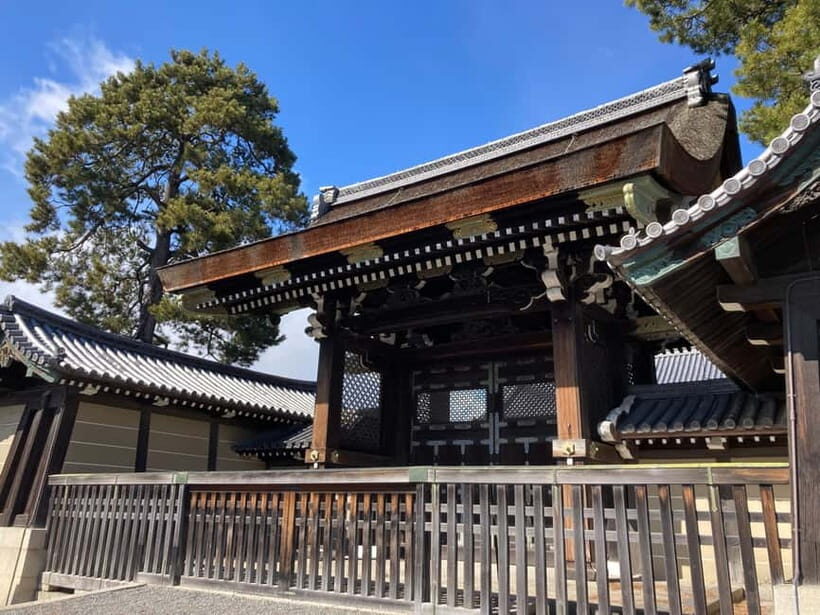
- A true guided walking format that uses the time between landmarks instead of rushing past it
- Tokugawa Ieyasu context tied directly to what you’re looking at inside Nijo Castle sights
- Nijo Castle highlights including Ninomaru Palace and an art gallery stop
- Kyoto Imperial Palace gardens designed for seasonal changes, with a cherry-blossom moment in the mix
- Small group energy (up to 9) where guides like Kayo, Nene, Taku, and Goku are praised for clear, engaging explanations
A 3-hour Kyoto history walk: Nijo Castle meets the Imperial Palace
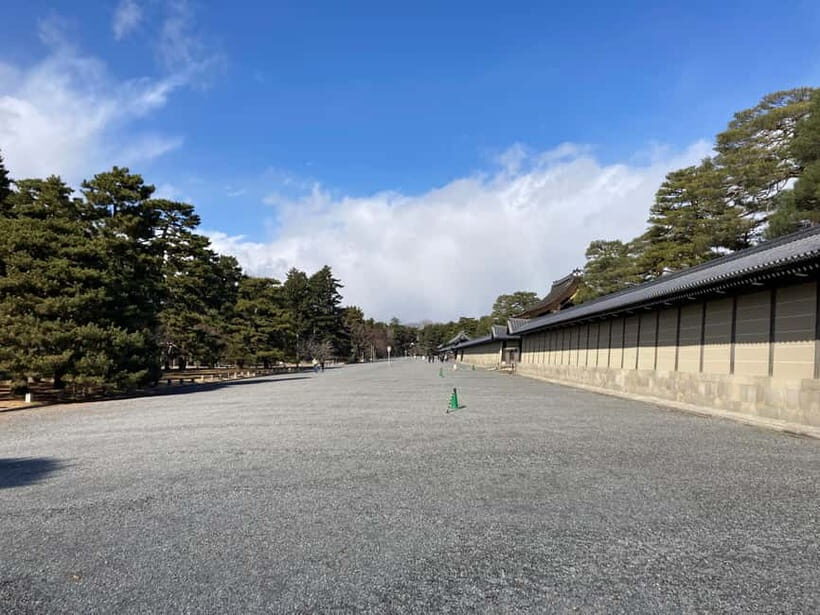
This is a compact Kyoto highlights tour with a real goal: show you how power shifted in Japan, from shogunate authority to imperial court life. The whole experience runs about 3 hours, which is perfect if you want more than “see a big place” but you don’t have a full day to spare.
The route starts at the Nakadachiuri Gate of the Kyoto Imperial Palace. Before you go in, the operator contacts you so you can identify your guide by what they look like and what they’re wearing. That small detail matters in Kyoto, where entrances can look similar and you don’t want to waste time hunting.
The tour’s pace is built for walking. Expect a steady flow between sites and some time outdoors where the gardens matter. The experience also tends to work well for mixed interests: people focused on architecture and politics get substance, and people who just want great photos still have moments to enjoy.
You can also read our reviews of more guided tours in Kyoto

Nijo Castle and Tokugawa Ieyasu: power you can read in the details
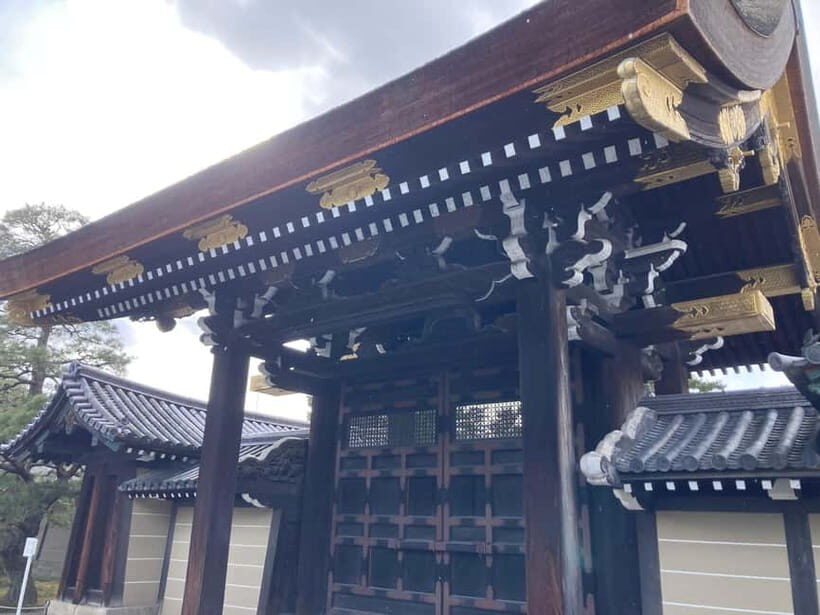
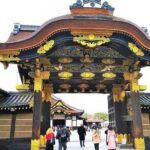
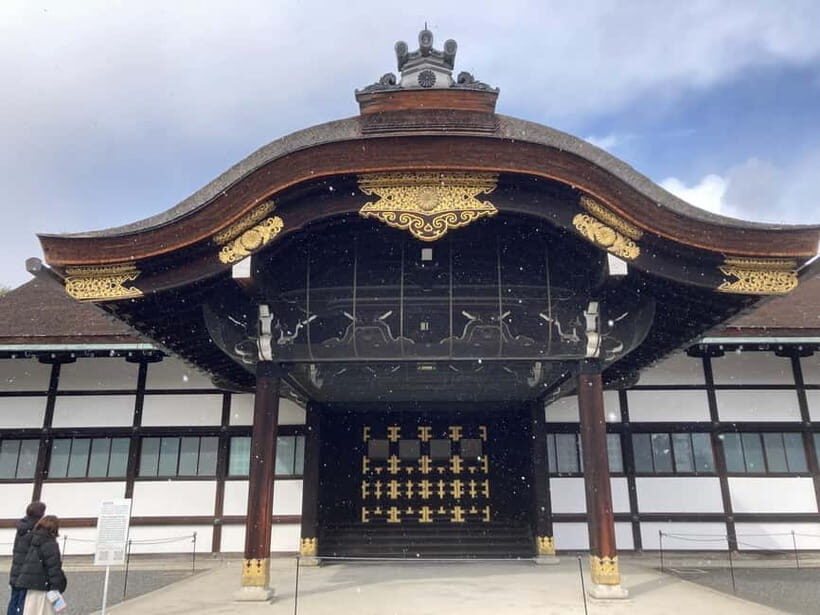
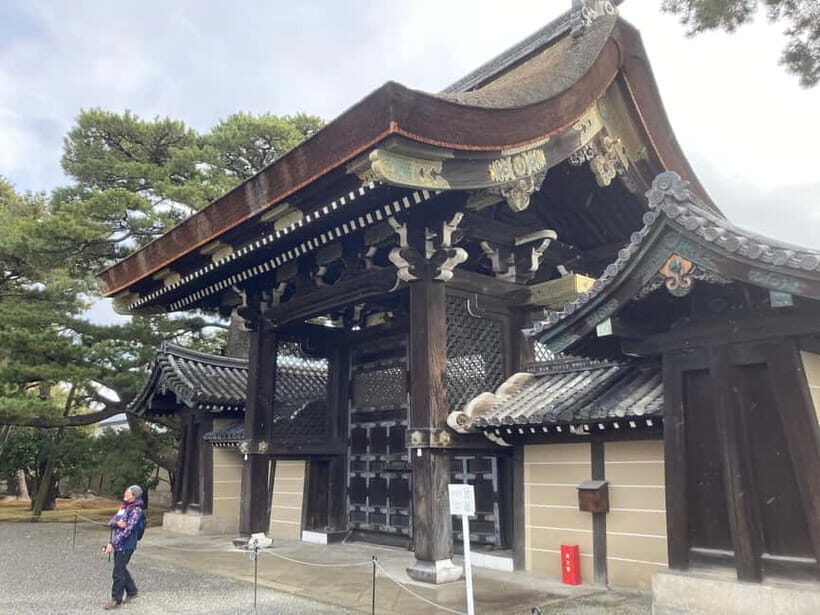
Nijo Castle isn’t just a pretty old building. It’s a statement—made by the Tokugawa power center to project authority, status, and control. On this tour, you’ll get that message explained as you move through the most important areas.
Built by Tokugawa Ieyasu, Nijo Castle is presented as a place where luxury and precision function like political messaging. The guide talks through the lavish interiors and intricate details, helping you understand why so much effort went into the way spaces look and feel. You’re not just hearing facts—you’re learning how to interpret what you see.
A key included stop is Ninomaru Palace, which fits the “power in architecture” theme. It’s the kind of place where details can feel overwhelming if you’re on your own. With a guide, you get a framework: what matters, what to notice first, and how the style connects to the political climate of the time.
There’s also an art gallery component included. Even if art galleries aren’t usually your priority, this helps break the walking rhythm and gives another angle on the era—style and taste as part of the official image.
Kyoto Imperial Palace gardens: seasonal beauty and courtly scale
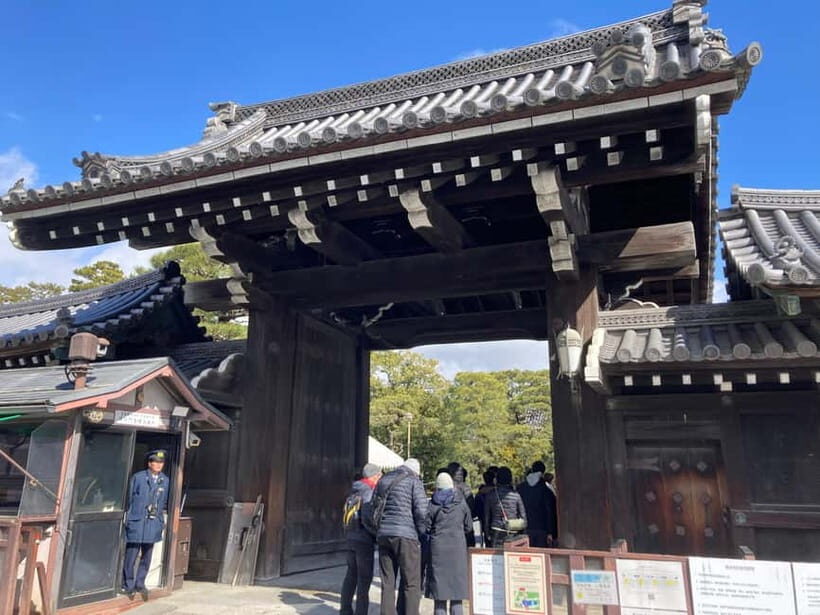
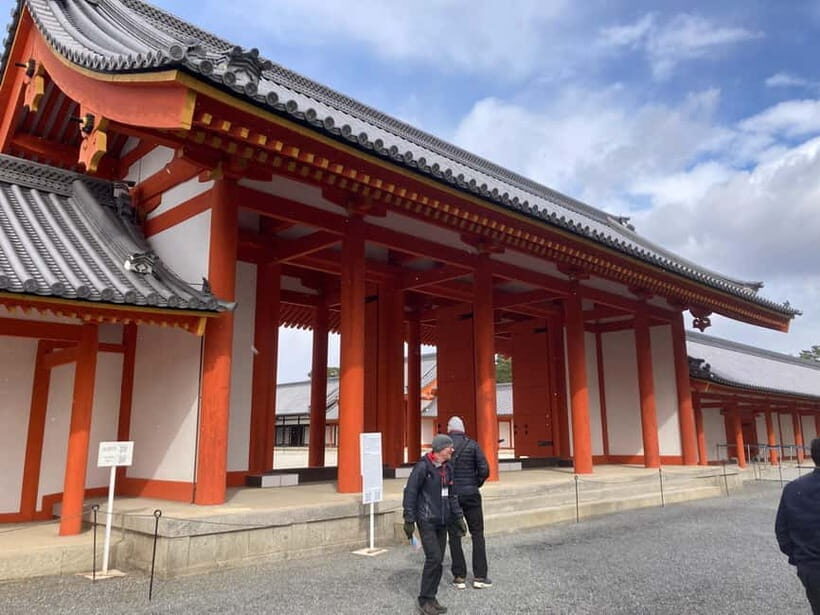
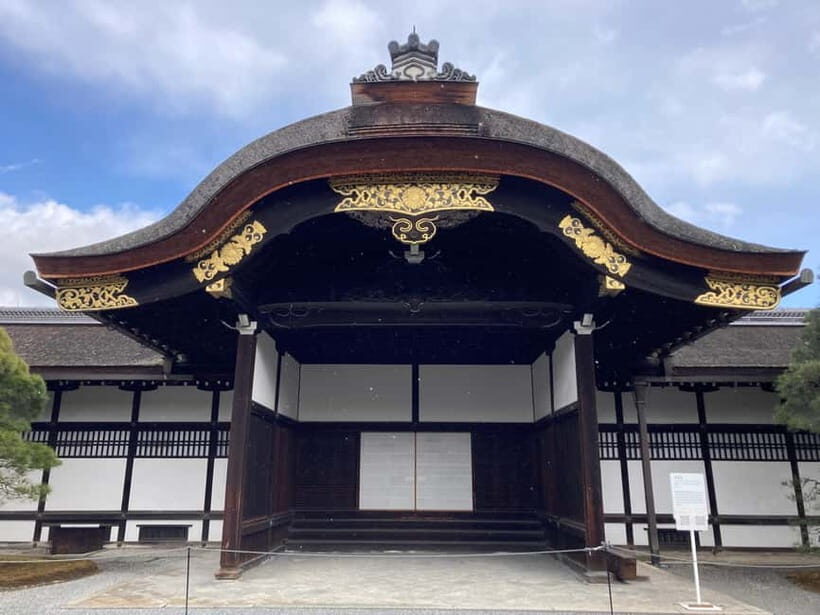
Then you switch worlds. If Nijo Castle is about shogunate authority, the Kyoto Imperial Palace is about the imperial residence and the cultural weight of the court.
The tour focuses on grand architecture and the palace’s gardens, especially their seasonal beauty. If you’re traveling around cherry blossom season, you’ll be looking for that seasonal rhythm in the grounds, not just the idea of it. You might even hear about a cherry blossom spot that’s famous locally—useful because you’ll know what to aim for when you’re walking.
One practical note: the palace visit may not always include full interior access. Some groups have had an experience that leaned toward exterior viewing. That doesn’t make the visit a waste, but it does change expectations. If seeing interiors is your top priority, go in with the mindset that the value here often comes from the grounds, the scale, and the architectural setting.
Also, the guide explains how garden design works with the seasons. That’s helpful because Japanese gardens aren’t just scenery. They’re meant to be experienced in time—what you see and how you see it changes.
The walking time and meeting point: how to plan your Kyoto day
The tour meets at the Nakadachiuri Gate of the Kyoto Imperial Palace, so build in a little time before the start to get oriented and meet your guide. If you arrive early, you can walk the area calmly and avoid the stress of showing up late.
You’ll be walking between the palace area and Nijo Castle. In many cases, that walk is around 20 minutes, which is enough time to stretch your legs but not enough to treat it like a separate sightseeing detour. The guide typically keeps the momentum going by turning travel time into learning time—history, architecture, and how Western and Japanese culture can compare when you ask the right questions.
Since the tour is limited to 9 participants, you’re less likely to feel swallowed by a big crowd. Still, it’s not a long-distance trek. It’s a comfortable city-walking experience designed to connect two major landmarks into one story.
Weather matters. Kyoto can be rainy, cold, or hot depending on the month. Bring what you need so you can stay comfortable for outdoor garden moments. And since the tour is strict about clothing, you’ll want to plan carefully.
What your guide really does (and why it changes everything)
This tour is all about the guide. The best part isn’t only the places—it’s the explanations that make the places legible.
Guides such as Kayo, Nene, Taku, and Goku are repeatedly praised for clarity and engagement. They connect what you’re seeing to the political climate of the time, not just random trivia. You’ll hear about Japan’s former capital and how power played out through architecture and design choices.
You can also expect a “question-friendly” approach. People report that guides answer everything from history details to culture comparisons. If you’re a solo traveler, that help can also include practical support like taking photos for you so you’re not stuck asking strangers.
Language options are broad too. The tour runs with a live guide in English, French, Spanish, Japanese, Portuguese, and Russian, which is a big deal if you want to follow the explanations without straining.

Price and value: is $63 worth it?
At about $63 per person for a 3-hour guided walking tour, the value is strongest when you care about more than just photos.
Here’s what you’re paying for:
- A professional guide who connects the two sites into one political and architectural story
- Included admission tickets for Nijo Castle, Ninomaru Palace, and the art gallery
- A small-group format that keeps the pace human (up to 9 people)
If you were to DIY it, you could still see Nijo Castle and the Imperial Palace on your own. The question is what you’d miss: guidance on what matters, context for the political climate, and help interpreting details you might otherwise rush past.
The other value piece is time efficiency. Kyoto is big, and moving between areas can eat half a day. This tour gives you a focused hit of both major landmarks without turning it into a logistical headache.
What to bring (and what to avoid)
You’ll want to bring:
- Camera
- Cash
Cash is often useful in Japan for small purchases when machines are out of order or for places that don’t take cards. It doesn’t replace common payment methods, but it’s a safe backup.
Clothing note: shorts aren’t allowed. Plan for covered legs or longer bottoms. It’s one of those rules that can feel minor until you get there, so handle it before you leave your hotel.
Who this Kyoto tour suits best
This is a good fit if you want:
- A guided history and architecture experience, not just a sightseeing checklist
- A small group with time to ask questions
- The pairing of Nijo Castle (power and authority) with Kyoto Imperial Palace (imperial culture and gardens)
It may not be ideal if you’re sensitive to walking or need special accommodations. The tour is also not suitable for pregnant women, so check alternatives if that applies to your group.
If you love garden scenes and seasonal atmosphere, the Imperial Palace gardens are a major reason to book. If you’re more into political storytelling and decorative design, Nijo Castle is where you’ll feel the payoff.
Should you book this Nijo Castle and Imperial Palace guided tour?
Yes—if you want Kyoto’s big names explained in plain language. I’d book it when:
- You want context for Tokugawa Ieyasu and shogunate power, tied to what you’re physically seeing
- You care about the why behind palace and garden design
- You prefer a small group where your questions won’t get lost
I’d hesitate only if your priority is maximum interior access at the Imperial Palace. Some experiences can lean toward exterior viewing. If interiors are your non-negotiable, plan for that possibility and treat the gardens and architecture as the main draw.
If you’re trying to decide how to spend a few hours in Kyoto, this tour is a smart combo: two landmarks, one coherent story, and a guide who helps you notice what you’d miss alone.
FAQ
Where is the meeting point?
You meet at the Nakadachiuri Gate of the Kyoto Imperial Palace.
How long is the tour?
The tour lasts 3 hours.
Is this a small group tour?
Yes. The group size is limited to 9 participants.
What languages are offered for the live guide?
The live guide is available in English, French, Spanish, Japanese, Portuguese, and Russian.
Which places will we visit?
You’ll explore Nijo Castle and the Kyoto Imperial Palace.
Are admission tickets included?
Yes. Admission tickets are included for Nijo Castle, Ninomaru Palace, and the Art Gallery.
What should I bring?
Bring a camera and cash.
Are shorts allowed?
No. Shorts are not allowed.
Is the tour suitable for pregnant women?
No. It is not suitable for pregnant women.
Can I cancel or pay later?
Yes. You can reserve now and pay later, and you can cancel up to 24 hours in advance for a full refund.