REVIEW · KYOTO
Kyoto Philosophy Walk with Philosopher (Private/6.5 hour)
Book on Viator →Operated by Hiroki · Bookable on Viator
Kyoto can feel like a thinking place, too. This private 6.5-hour walk uses philosophy and conversation to turn famous temple sights into real ideas you can carry home. You’ll follow a nationally licensed guide, Hiroki, who’s also trained as a philosophy researcher, so the day isn’t just looking—it’s asking why.
Two things I really like: you get dialogue-based guiding (not a lecture), and the route mixes major Kyoto sites with quieter stops that fit the themes being discussed. One practical consideration: lunch and temple admissions are on you, and you’ll also pay for public transport plus walk about a mile, including at least one two-story building with stairs only.
In This Review
- Key highlights at a glance
- Why a philosophy guide changes Kyoto’s feel
- The 6.5-hour structure: how the day stays paced
- Stop-by-stop: turning temple stops into real ideas
- Higashi Hongan-ji and the Pure Land question
- Yoshida Shrine and what Shintoism means
- Ginkakuji and the Zen idea of simplicity
- Philosopher’s Walk and modern thinkers versus the West
- Nanzenji Suirokaku and the built question of protection
- Sanmon Gate and the theory of enlightenment
- Konchi-in and what an authentic Zen garden looks like
- Price and value: what you pay for with a private philosophy walk
- What to expect from Hiroki’s guiding style
- Who this tour suits best (and who should skip it)
- Should you book it?
- FAQ
- How long is the Kyoto Philosophy Walk with Philosopher?
- Is this tour private?
- What’s included in the price?
- What extra costs should I budget for during the tour?
- Are temple entrance fees free on every stop?
- Where do I meet the guide?
- How much walking is involved?
- Are there stairs or accessibility concerns?
- Does the tour end at the same place?
- Is there a cancellation option?
Key highlights at a glance
- Philosophy researcher guide (Hiroki): Zen, Pure Land, Shinto, and modern thought come with context and questions
- Private experience: only your group, with time for back-and-forth conversation
- Philosopher’s Walk, explained: modern Japanese thinkers versus the Western tradition
- Cash-friendly temple fees: budget ¥1,600 for entrances when required
- You get a walking-and-transit rhythm: about one mile on foot, plus time for public transport and backstreets
Why a philosophy guide changes Kyoto’s feel
Most Kyoto tours treat temples like photo backdrops. This one treats them like clues. Instead of rushing from stop to stop, you slow down and ask specific questions along the way, so the buildings and gardens start to make sense in your head, not just on your camera roll.
I like that the guiding style is built for thinking, not just learning facts. You’re guided to consider ideas such as Pure Land belief, Shintoism, Zen views of simplicity, and Buddhist explanations of enlightenment—then you talk through what those ideas might mean in daily life and in modern thinking.
The payoff is subtle but real: you leave with vocabulary for what you saw. Kyoto isn’t only pretty here. It’s legible.
You can also read our reviews of more walking tours in Kyoto



The 6.5-hour structure: how the day stays paced
The tour runs about 6 hours 30 minutes starting at 9:00 am and ending back at the meeting point near the Bus Ticket Centre / Information Centre (902 Higashishiokōjichō, Shimogyo Ward).
To keep it from feeling like a long grind, the timing is split in a smart way. You’ll have about one hour for lunch, then about 1 hour 45 minutes for backstreet walking between spots and getting around by public transportation. That matters because Kyoto’s quiet lanes can be part of the experience—if you have time to actually move through them.
Also plan for comfort and movement. The walk is about one mile, and the itinerary includes a two-story building with stairs only. The tour notes that most people can participate, but if stairs make your day harder, build in extra buffer and take your time.
Stop-by-stop: turning temple stops into real ideas
This route is built around questions you can’t help answering once you’re there. Each stop connects to a concept in Japanese religious and philosophical life—so you’re not collecting stops; you’re building a chain of meaning.
Higashi Hongan-ji and the Pure Land question
You start at Higashi Hongan-ji Temple (about a 30-minute visit, with admission listed as free). The focus question is about the Pure Land—one of the major ideas in Japanese Buddhism.
Pure Land is often treated like a label by tourists, but in a philosophy-guided setting it becomes something more practical: a way of thinking about faith, practice, and hope. When you’re walking through a major temple space, the idea stops feeling abstract. You can look at the scale and seriousness of the place and connect it to the belief system behind it.
Why this stop works early: it gives you a religious foundation before you move into shrine and Zen territory. If you want your day to feel coherent, this start is a smart anchor.
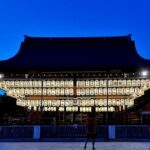
Yoshida Shrine and what Shintoism means
Next up is Yoshida Shrine for about 30 minutes (admission listed as free). The guiding question here is simply: What is Shintoism?
The tour frames it as a philosophy you can feel—Japanese pantheism, where the sacred connects to the world around you. At a shrine, that matters. You’re not just reading about religion; you’re standing inside a place where reverence is shaped by the environment and ritual life.
Yoshida Shrine is described as one of Kyoto’s oldest shrines, and historically it was also a site with government sanction until about 150 years ago. That’s a useful detail because it shows Shinto wasn’t always just local tradition—it had public importance too. It helps you understand why shrines can feel both intimate and official.
You can also read our reviews of more private tours in Kyoto



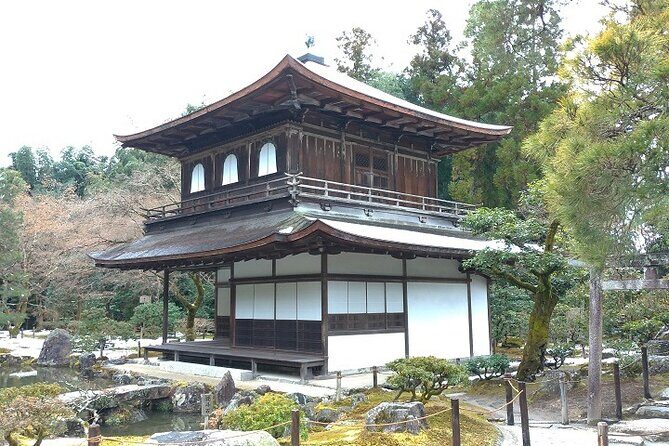
Ginkakuji and the Zen idea of simplicity
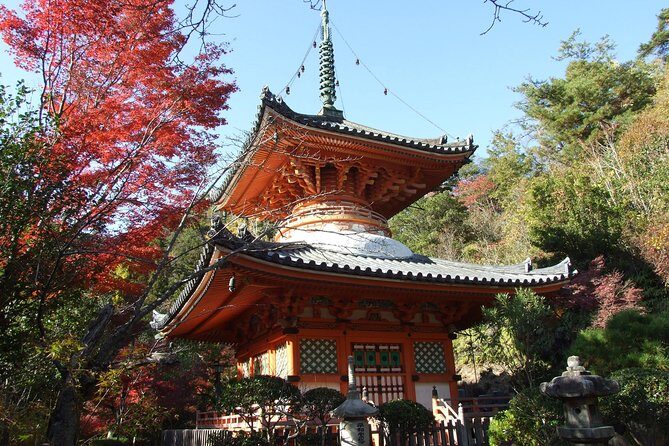
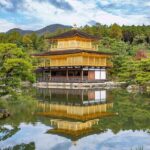
Then you head to Ginkakuji (the Temple of the Silver Pavilion) for about 45 minutes. Admission is listed as not included, so this is one of those points where you’ll likely pay extra on the day (the tour notes ¥1,600 per person in cash for entrance fees when needed).
The question tied to this stop is about Zen and the idea that simple is the best. In Kyoto, simplicity can be misleading. It’s not empty. It’s controlled—spacing, materials, and attention.
This stop helps you see Zen as a design principle, not only a spiritual concept. Even if you’re not deeply into religion, you can still appreciate how the theme of simplicity shows up in the way the place is arranged and viewed.
One practical note: this is a longer temple stop than the first two, so it’s a good time to slow down, not just take a quick look.
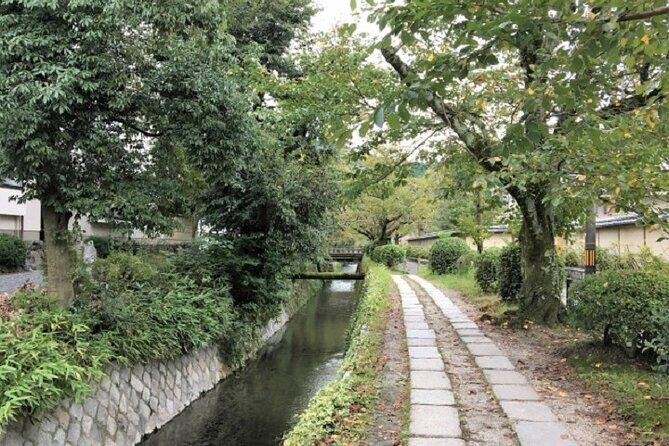
Philosopher’s Walk and modern thinkers versus the West
The biggest “Kyoto mood” moment comes with the Philosopher’s Walk (about 1 hour, with admission listed as free). This is where the tour turns toward modern philosophy and asks how Japanese philosophers tackled the Western tradition.
This is the part I’d recommend most strongly if you’re the type who likes ideas more than objects. You’re not only walking a famous path; you’re being guided to compare traditions and ask what translation, adaptation, and modernization do to thought.
It’s also where conversation tends to take off. One of the strongest pieces of feedback about this tour is that the philosophical discussions feel like real dialogue, with room for different viewpoints. If you like to talk and think at the same time, this is the stretch of the day that makes it worth the price.
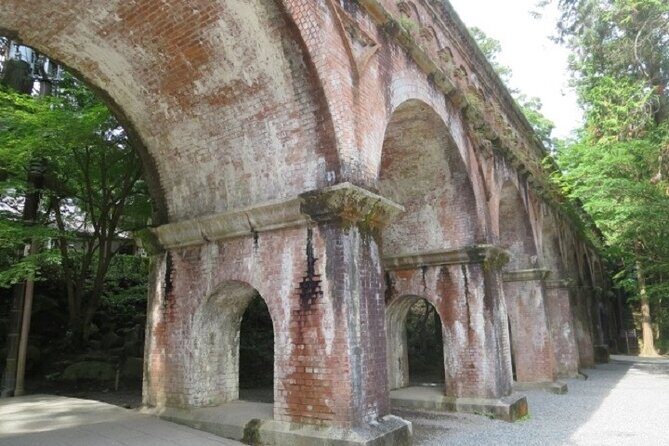
Nanzenji Suirokaku and the built question of protection
After that, you visit Nanzenji Suirokaku (Suirokaku Aqueduct) for around 15 minutes (admission listed as free). The guiding theme is the idea of an ideal approach to protecting the setting around sacred spaces.
You might not expect an aqueduct on a Zen-and-shrines day, but that’s part of the point. The tour frames it as a Western-style brick structure connected to the temple complex. That mix is a clue to how Kyoto’s religious spaces have absorbed outside influences while still serving local meaning.
This is a short stop, so treat it like a pause for context. It’s less about wandering and more about connecting architecture to the idea of stewardship and how places are preserved.
Sanmon Gate and the theory of enlightenment
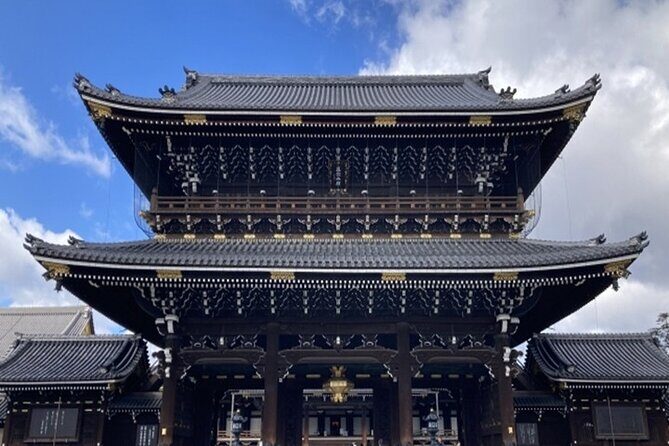
Then comes the Sanmon Gate area (about 15 minutes). This stop is tied to a Buddhist idea of enlightenment in three steps, presented through the meaning of the gate’s symbolism. Admission is listed as not included, so again, this fits the theme of things where you should be ready with cash if fees apply.
Gates are easy to overlook on tours because they look like “just entrances.” Here, you’re asked to look at the structure as a conceptual statement—how liberation is imagined, broken into stages, and represented in built form.
Konchi-in and what an authentic Zen garden looks like
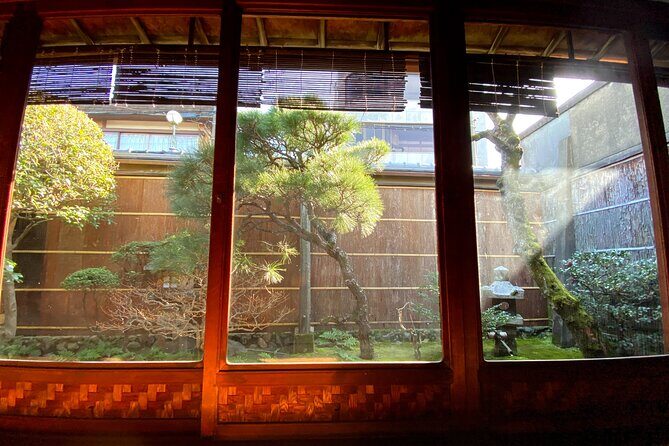
Your final stop is Konchi-in (about 30 minutes). The focus here is what an authentic Zen garden looks like, and how it supports Zen practice and perception.
Admission is listed as not included. Like the other paid-entry spots, it’s wise to keep the cash ready and not scramble at the entrance.
This is where your “look differently” skill comes together. By the time you reach Konchi-in, you’ve already talked about Pure Land belief, Shinto sacredness, Zen simplicity, and enlightenment steps. That makes the garden feel less like scenery and more like an instruction.
In a tour like this, gardens are never only about plants. They’re about how you train your attention.
Price and value: what you pay for with a private philosophy walk
At $230 per person for a private 6.5-hour experience, this isn’t a budget choice. But it can still feel like strong value for the right traveler.
Here’s why. First, it’s private, so your time isn’t shared or cut down because someone else is slow or fast. Second, the guide is trained in both guiding and philosophy research, which changes the nature of the service you’re buying: it’s not “temple hosting,” it’s guided thinking. Third, the route is designed for the themes, including the quieter angles that typical crowd routes often skip.
What you still need to budget on your own is straightforward:
- Lunch (not included)
- Temple entrance fees when required: the tour asks you to prepare ¥1,600 per person in cash
- Public transportation: ¥750 per person
So the real cost isn’t just the $230. It’s that plus the on-the-day items. If you prefer a single-ticket, one-price tour, this might feel a bit more work. If you’re fine with budgeting a few lines of costs and you want a more tailored experience, it’s easier to justify.
One extra sign of value: the experience is described as often booked about 43 days in advance, which usually means there’s demand for this style of guiding. If you care about a specific date, don’t wait.
What to expect from Hiroki’s guiding style
The name you’ll see is Hiroki. Multiple positive notes point to the same strengths: strong time management, flexibility, and genuine kindness, with the guide making room for meaningful philosophical conversation.
I also like the way this tour handles “hidden Kyoto.” It’s not just the famous path; it includes smaller, less obvious areas that fit the theme. In practice, that means your day doesn’t feel like a checkbox list of postcards.
And because the tour is built around questions at each stop, you’re not stuck passively listening. You’ll get prompts that make you look again, then you can respond in your own way—casual, curious, skeptical, or deeply interested. That matters because philosophy is only useful when it meets your questions, not only the guide’s.
Who this tour suits best (and who should skip it)
This tour is ideal if you want Kyoto to feel like more than sightseeing. It’s especially good for you if:
- You like asking why traditions work the way they do
- You enjoy comparing Japanese religious ideas and modern thought with Western philosophy
- You want a private guide and don’t mind paying for that attention
- You’re comfortable walking about one mile and handling stairs in at least one two-story building
It may be less ideal if:
- You want a mainly visual, minimal-thinking tour with low extra costs
- You don’t want to pay for temple entries in cash and handle transport separately
- Stairs are a big issue for your day, since part of the itinerary involves a two-story building with stairs only
Should you book it?
Book Kyoto Philosophy Walk with Philosopher if you’re craving a Kyoto experience that turns into ideas you can keep using. The private format plus a philosophy researcher guide is the core reason to choose it, and the day’s themed stops make the conversation feel grounded, not abstract.
Don’t book it if you mainly want effortless logistics and a mostly photo-based route. The entrance fees (cash), public transport cost, and stair element mean it’s not the simplest “drop in and wander” choice.
If you’re on the fence, think about this: do you want Kyoto explained, or do you want Kyoto questioned? This tour is built for the second type of traveler.
FAQ
How long is the Kyoto Philosophy Walk with Philosopher?
It runs for about 6 hours 30 minutes, starting at 9:00 am.
Is this tour private?
Yes. It’s listed as private, meaning only your group will participate.
What’s included in the price?
The guide fee is included, and the tour notes features like a mobile ticket. Group discounts are also listed, depending on how you book.
What extra costs should I budget for during the tour?
You’ll pay for lunch, temple entrance fees when required (prepare cash of ¥1,600 per person), and public transportation (¥750 per person).
Are temple entrance fees free on every stop?
Not all stops are free. Some temples are listed as free, and others are listed as not included, so you should expect to pay at least some admissions.
Where do I meet the guide?
The meeting point is the Bus Ticket Centre / Information Centre at 902 Higashishiokōjichō, Shimogyo Ward, Kyoto 600-8216, Japan.
How much walking is involved?
The itinerary includes walking on the path for about one mile.
Are there stairs or accessibility concerns?
Yes. The tour includes a two-story building with only stairs. The tour notes that most travelers can participate, but you should plan for the stairs.
Does the tour end at the same place?
Yes. The activity ends back at the meeting point.
Is there a cancellation option?
Free cancellation is offered up to 24 hours before the experience’s start time for a full refund.