Tea time in a secret Kyoto townhouse. This private tea ceremony swaps Kyoto crowds for an intimate setup at a hidden townhouse, with focused attention for your group and time to take photos. You’ll start with short matcha footage, then move into a step-by-step ceremony where you actually learn what’s happening, not just watch it from the sidelines.
I like that you get hands-on matcha (including stone-milling matcha powder) and the chance to make and taste what you brew. I also like the kid-friendly private format, where families can go at a calmer pace. One possible drawback: it’s only about 45 minutes, so if you want a slow, long, multi-course tea experience, this one may feel brief.
In This Review
- Key takeaways before you book
- What this private Kyoto tea ceremony really feels like
- The matcha film start: why a short video helps you enjoy the rest
- Stone-milling matcha powder: the step that changes everything
- The tea ceremony demonstration: learn the flow, not the performance
- Hands-on tea making, tasting, and making a latte
- Timing and pacing: 45 minutes sounds short, but it’s built that way
- Where to meet in Kyoto (and why exact location matters)
- Who this experience is best for
- Price and value: $51.24 for a private 45-minute lesson
- What to do before and after the ceremony
- Cancellation and flexibility, kept simple
- Should you book this private tea ceremony?
- FAQ
- Is this experience private or shared?
- How long does the tea ceremony last?
- Where do I meet for the ceremony in Kyoto?
- What’s included in the ceremony?
- Are children welcome?
- Do I need to print tickets?
- Who provides the experience?
- How much does it cost?
- How do I receive confirmation?
- What is the cancellation policy?
Key takeaways before you book
- Private, just your group: no rotating seats, no waiting for other people to catch up.
- Stone-milling matcha powder: you’ll see and do the grind step that many ceremonies skip.
- A short matcha film first: it gives you context before the hands-on part.
- You’ll make and taste tea: not only watch a demonstration.
- Photo time built in: you’re not rushed out the second the lesson ends.
- Family-friendly townhouse setting: kids are welcome, and the pace can feel more relaxed.
What this private Kyoto tea ceremony really feels like
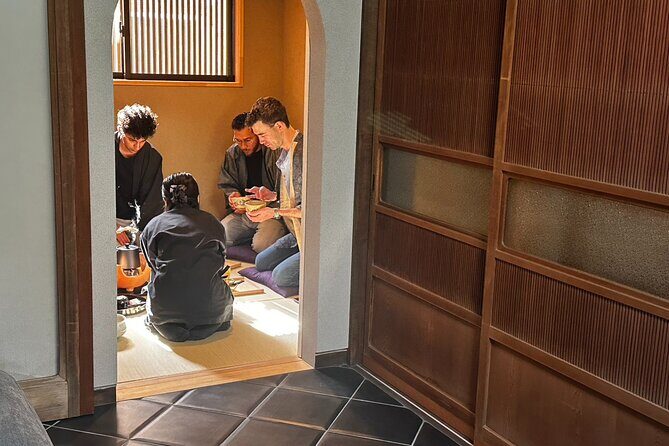
Kyoto is famous for tea ceremonies, but many experiences feel like a performance you’re scheduled to watch. This one is different because it’s built around your group. You’re not competing for attention with strangers, and the host can slow down if a child needs a moment or you want to repeat a step.
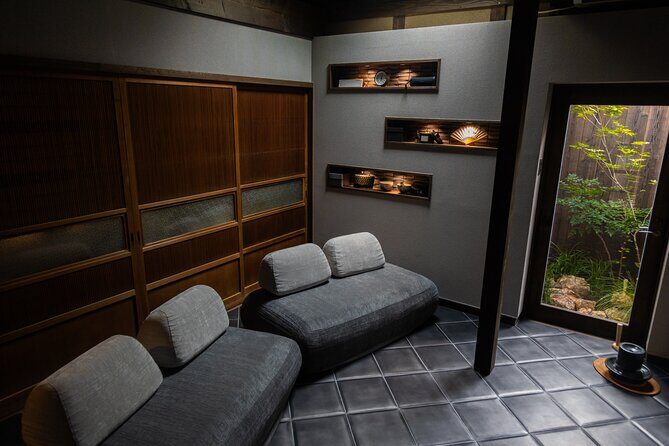
The setting helps. It’s in a tucked-away townhouse (not a big room full of people), so the mood tends to feel quieter and more personal. Add in a short film about matcha right at the start, and you’re already on the same page before you get your hands on anything.
And yes, you do get time to capture photos. That matters in Kyoto, where the best “I did it” moments usually happen when you’re not being herded.
You can also read our reviews of more private tours in Kyoto



The matcha film start: why a short video helps you enjoy the rest
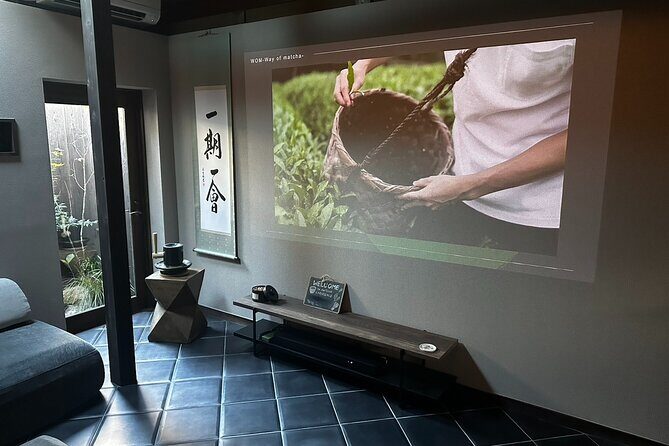
Your ceremony kicks off with footage about tea plantations. Then you move into the matcha lesson. That “watch first, do next” rhythm is smart. Matcha can feel abstract if you’re new to it—powder, whisking, foam, tea flavor—so a quick intro gives your brain a map.
In practical terms, this means you’re less likely to treat the ceremony like a ritual with mysterious rules. Instead, you can listen for details that actually matter, like texture, timing, and how the preparation changes the drink.
You’re also more ready for the hands-on segment. That’s where the experience becomes memorable, not just pretty.
Stone-milling matcha powder: the step that changes everything
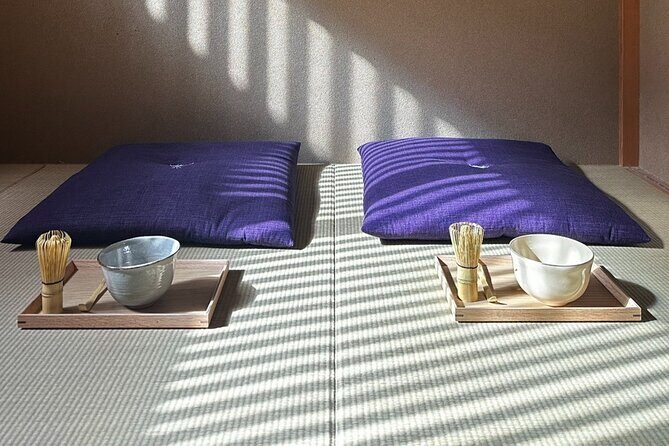
One of the standout parts is making matcha powder with stone-milling. Even if you’ve tried store-bought matcha before, the milling step brings a sensory layer you can’t fake. You’re learning the idea that matcha isn’t only a flavor—it’s a process.
This matters for two reasons:
- It teaches technique, not just tradition. You’ll understand the steps well enough to attempt them later at home.
- It helps you notice quality. The moment you grind, you start paying attention to consistency and how it behaves when whisked.
Stone-milling isn’t just a cool “wow” moment. It’s the bridge between ceremonial practice and real-life cooking skills—because it shows you what contributes to the final cup.
The tea ceremony demonstration: learn the flow, not the performance
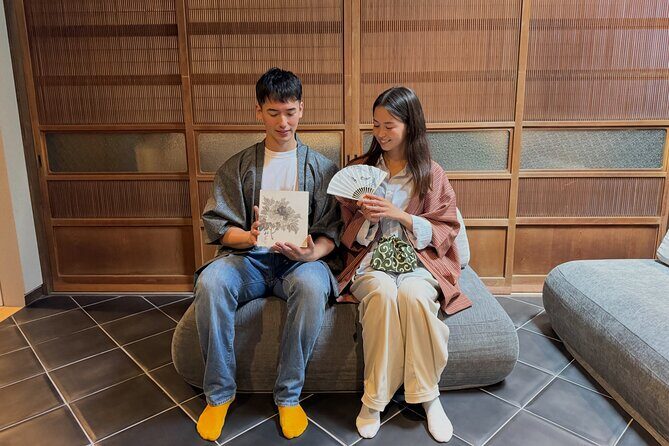
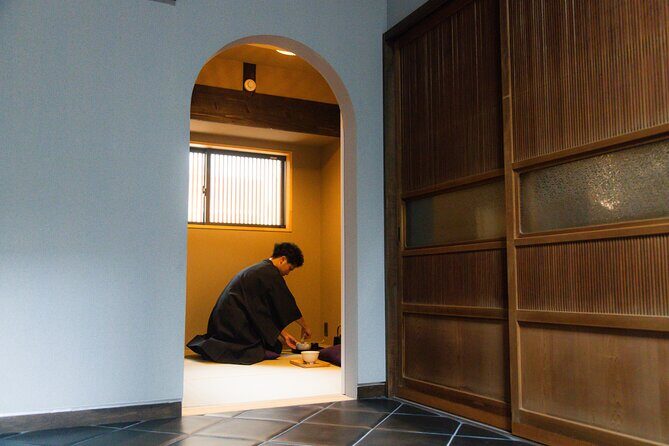
After the preparation lesson, you’ll see a tea ceremony demonstration that follows a step-by-step approach. This is where the host’s care shows. In the feedback you’ll find praise for the host’s politeness, friendliness, and careful explanations—especially from Yuki.
If you’re the type who likes to understand what you’re doing (not just copy motions), you’ll appreciate this portion. The goal isn’t to confuse you with ceremony jargon. It’s to help you get the sequence right: what happens first, what changes next, and how the final tea should look and feel.
Also, since it’s private, you don’t have to worry about missing a step while someone else asks questions. The pacing can match your group.
Hands-on tea making, tasting, and making a latte
Now comes the part most people remember later: you make your own cup. The experience includes hands-on tea making and tasting, and it also mentions making a latte.
That combination is practical. Traditional tea ceremonies can be intimidating if you only want one style of drink. Here, you get the chance to learn matcha preparation and then turn it into a more casual format that kids (and adults) often enjoy.
A good way to think about this segment is: you’re getting two outcomes from one lesson. You learn how to prepare matcha as intended, and you also learn how to adapt it into something friendlier to modern tastes.
When the tasting happens, pay attention to differences in flavor and texture. Even if your cup isn’t perfect the first time, you’ll understand what you’d adjust next time—powder amount, whisking style, or serving approach.





Timing and pacing: 45 minutes sounds short, but it’s built that way
The experience is about 45 minutes. That’s a useful length in Kyoto—especially if you’re traveling with children or juggling a day with temples nearby.
Here’s the trade-off: it’s not an all-afternoon tea education program. It’s a focused snapshot: film context, stone-milling and preparation, a demonstration, then your hands-on tea making and tasting (plus the latte-making element).
If you’re traveling in a packed itinerary, this timing is a plus. If you’re a tea fanatic craving hours of deep technique, you might want a longer format elsewhere.
Where to meet in Kyoto (and why exact location matters)
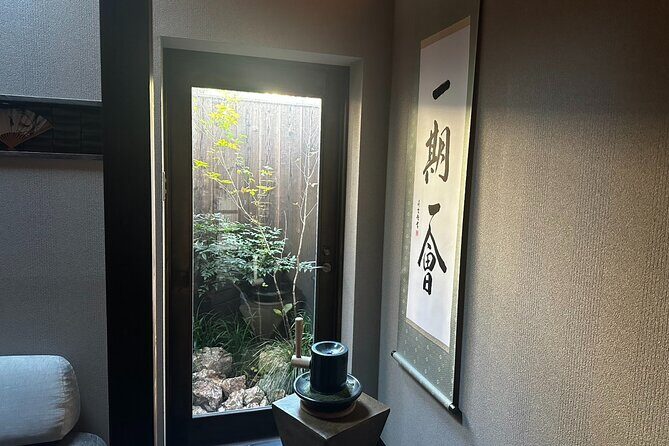
You’ll start at:
WOM-Way of Matcha – kyoto863-41 Jurakuchō, Kamigyo Ward, Kyoto, 602-8156, Japan
The activity ends back at the meeting point.
Because it’s a townhouse, your arrival timing matters. Kyoto is famous for narrow streets and easy-to-miss entrances. Plan to be there a few minutes early so you don’t feel rushed. Also, having the exact start address helps you avoid the usual Kyoto scavenger hunt.
You’ll use a mobile ticket. It’s one less paper thing to keep track of while you’re walking around.
Who this experience is best for
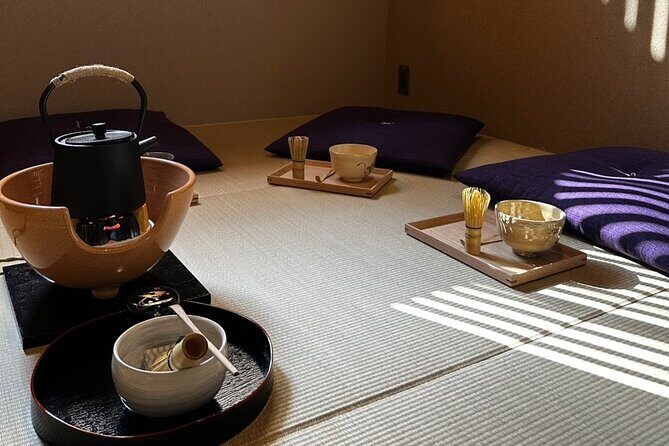
This is the kind of tea ceremony that fits a wide range of people, but it shines for specific groups:
- Families with children: kids are explicitly welcome, and the private setting helps everyone stay comfortable.
- People who hate crowded group tours: you’ll have your own space and your own pace.
- Beginners who want real technique: the focus on stone-milling and step-by-step preparation makes it practical.
- Photo-minded visitors: there’s time to take pictures without feeling like it’s a five-second photo op.
If you’re traveling solo, it still works well because the experience is private and tailored to your session. If you’re traveling with a big group, you’ll want to check how many people typically fit comfortably—your data doesn’t specify group size, only that it’s private for your group.
Price and value: $51.24 for a private 45-minute lesson
At $51.24 per person, this is not the cheapest tea experience in Kyoto. But the value comes from what you’re buying:
- You’re paying for privacy (only your group).
- You’re paying for hands-on participation, including stone-milling matcha powder.
- You’re getting a step-by-step guided session plus time for photos.
In other words, you’re not just paying for the tea. You’re paying for access to preparation technique and attention. If you compared this to a crowded group ceremony where you mostly watch and wait, the private format can feel like a fair trade.
For families, this also helps. Kids can often disrupt group experiences, and a private setting can reduce stress on everyone.
Also, it’s worth noting the overall rating: it shows a strong track record, with a 4.9 rating across 20 entries. That’s a good sign that the host experience and instruction style land well.
What to do before and after the ceremony
You don’t need a special plan, but a little prep makes it smoother:
- Arrive early so you can settle before the session starts. In a townhouse setting, you don’t want to scramble at the door.
- Come ready to participate. You’ll be making and tasting, and it’s easier if everyone in your group is comfortable getting involved.
- Plan a calm activity right after. You’ll likely leave feeling relaxed and pleasantly tea-focused, not hyped for another high-intensity stop.
Afterwards, if you want to recreate the experience at home, focus on one thing: the preparation method you practiced (especially whisking and the basic flow from powder to drink). The point of the lesson is not to copy a perfect-looking ceremony. It’s to understand enough to make your own cup with confidence.
Cancellation and flexibility, kept simple
If plans shift, you can cancel for a full refund up to 24 hours in advance of the start time. That’s a helpful cushion for Kyoto days when weather or train delays happen. If you cancel later than that window, the amount isn’t refunded.
Should you book this private tea ceremony?
Book it if you want a matcha experience that feels personal, structured, and hands-on. The private townhouse setting, the stone-milling step, and the chance to make and taste your own tea (plus a latte) make this more than a quick cultural stop.
Skip it—or consider a different option—if you’re chasing a long, deeply ceremonial multi-hour event. This is designed as a focused 45-minute session. It’s built for families, busy itineraries, and people who learn best by doing.
If you’re visiting Kyoto and want to trade crowd energy for calm technique, this is a strong choice.
FAQ
Is this experience private or shared?
It’s a private experience. Only your group will participate.
How long does the tea ceremony last?
The duration is about 45 minutes (approximately).
Where do I meet for the ceremony in Kyoto?
Start at WOM-Way of Matcha, kyoto863-41 Jurakuchō, Kamigyo Ward, Kyoto 602-8156, Japan. The activity ends back at the meeting point.
What’s included in the ceremony?
You’ll watch footage about tea plantations, learn about matcha preparation (including stone-milling), see a demonstration, and then make and taste your own tea. The session also includes making a latte.
Are children welcome?
Yes. The experience is family-friendly, and children are welcome.
Do I need to print tickets?
No. It’s a mobile ticket.
Who provides the experience?
The provider is OHINERI.
How much does it cost?
The price is $51.24 per person.
How do I receive confirmation?
Confirmation is received at the time of booking.
What is the cancellation policy?
You can cancel up to 24 hours in advance for a full refund. Changes within 24 hours of the start time aren’t accepted, and cancellations within that window aren’t refunded.