Gold and shoguns, on two wheels. This Kyoto Shogun Cycling Tour strings together three major Ashikaga and Tokugawa-era landmarks in a way that feels easier than walking—the route is easy downhill and designed for most people. I also like that temple and castle admissions are included, so you’re not burning time hunting ticket counters.
The pacing also works well because you ride, stop, and explore with a guide rather than self-navigating. When you’re with guides like Seiya, Makoto, Nozomi, or Yutaka Kaneda (names that show up in past outings), the trip tends to run with clear English and real context—not just names on signs.
One thing to keep in mind: you’re still cycling on city roads. If you’re nervous about riding unassisted or you’re bringing kids, this tour has clear height and age rules, so plan ahead rather than assuming it’ll feel like a park stroll.
In This Review
- Key highlights you’ll feel fast
- The “easy downhill” part that really matters in Kyoto
- Your route starts at Wara Tenjin and ends near Kyoto Station
- Stop 1: Kinkakuji (Golden Pavilion) and the first-hour payoff
- Stop 2: Toji-in Temple, Wabi-Sabi calm, and a tea-house moment
- Stop 3: Nijo Castle and the political power of the Tokugawa era
- The guide is the whole game: Seiya, Makoto, Nozomi and more
- Bikes, helmets, rainwear: you can travel light
- Why the included admissions and tickets add value
- Who this Kyoto Shogun ride is best for
- Small-group rules that affect your booking decision
- Quick practical tips before you go
- Should you book the Kyoto Shogun Cycling Tour?
- FAQ
- How long is the Kyoto Shogun Cycling Tour?
- Is this tour private?
- Where do we meet and where does the tour end?
- What’s included in the price?
- Does the tour operate in rain?
- Are admission tickets included for the temples and castle?
- What age and height are required for children?
- Can I cancel and get a refund?
Key highlights you’ll feel fast
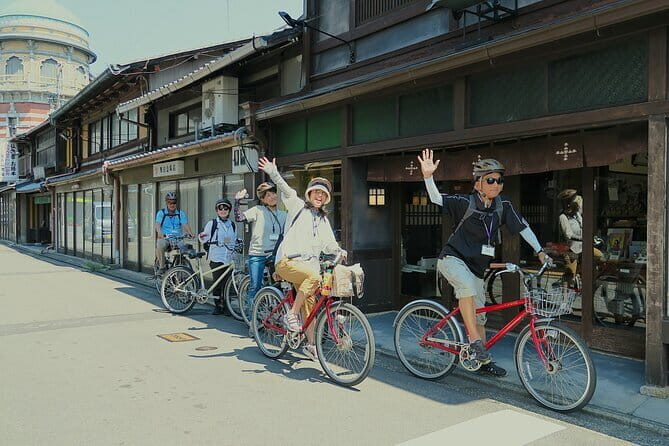
- Kinkakuji first: Golden Pavilion Temple gardens are handled at the start, when crowds are often easier to manage.
- Toji-in’s calm: You get time inside a quieter temple space, plus views tied to Wabi-Sabi-style simplicity.
- Nijo Castle’s shogun story: Ornamental buildings and 400 years of political drama land in one stop.
- Small private-group energy: You ride with only your group, with a guide pacing built around you (not a big bus).
- Rain planning that doesn’t ruin the day: Ponchos are provided, and there’s a walking option if weather gets rough.
- English-forward guidance: Past rides highlight guides who make the history understandable and the ride fun for kids, too.
The “easy downhill” part that really matters in Kyoto
Kyoto can be a workout—stairs, crowds, long transfers, and the walking weight adds up quickly. This tour is built around a smoother flow: you’re cycling through central areas rather than doing back-and-forth on foot. The promise of an easy downhill route is a big deal because it keeps your energy for the stops, not for fighting hills.
It also helps that the tour runs about 3 hours 30 minutes total. That’s long enough to see real landmarks—Golden Pavilion, Toji-in, and Nijo Castle—but short enough that it doesn’t swallow your whole day. If you’re trying to build an efficient Kyoto morning (or afternoon), this timing is practical.
Finally, you get a mobile ticket, which cuts down on the “wait in line” feeling. You can focus on arriving, meeting your group, and rolling out.
You can also read our reviews of more cycling tours in Kyoto
Your route starts at Wara Tenjin and ends near Kyoto Station
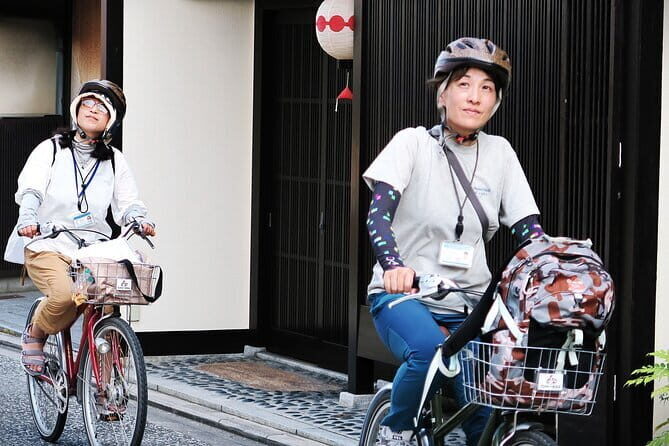
The tour begins at Wara Tenjin mae Kinugasa Oharaicho, Kita Ward and finishes at the Kyoto Station Cycle Terminal. That matters more than it sounds.
Starting in the north part of Kyoto and ending near Kyoto Station gives you an easy exit strategy at the end. If you have dinner plans, a train connection, or you want to drop off luggage and move on, ending by Kyoto Station cycle facilities is a clean way to wrap up.
You don’t have to solve the puzzle of how to get back to transit after a few hours of cycling. You just bike, visit, and then roll right back into the part of Kyoto with more transport options.
Stop 1: Kinkakuji (Golden Pavilion) and the first-hour payoff
Your first major stop is Kinkakuji Temple, the Golden Pavilion. You’ll visit with your guide and walk through the gardens surrounding the temple buildings. The big value here is that Kinkakuji isn’t just a quick photo stop. You get time to move through the garden areas and understand what you’re looking at.
Kinkakuji’s meaning is tied to the Ashikaga Shoguns, and the tour frames it as more than an aesthetic landmark. The golden exterior and polished feel are tied to power, status, and government—not just decoration. That context helps your photos make more sense later.
One practical note: the included time is about 1 hour at this stop. If you like lingering, you’ll still have enough time to see what you came for without the day getting crowded or rushed. If you’re someone who likes just the highlights, 60 minutes is about right for Kinkakuji without turning it into a slow grind.
Stop 2: Toji-in Temple, Wabi-Sabi calm, and a tea-house moment
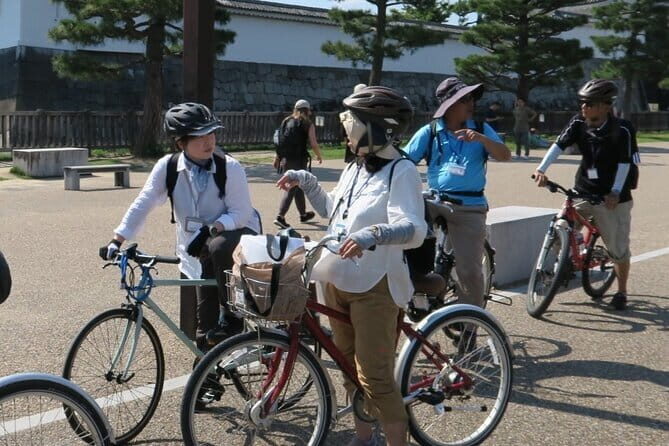
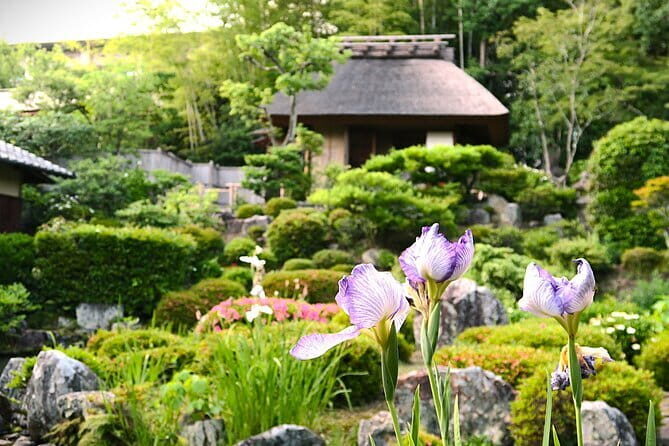
Next up is Toji-in Temple, known for its garden and a quaint tea house. This stop leans into the quieter side of Kyoto—less showy, more reflective. The tour also specifically calls out Wabi-Sabi, a form of Zen minimalism, which is a useful idea to bring into your visit.
In practical terms, that means you’ll get less of the “look how grand this is” feeling and more of a “notice the details and the restraint” mindset. You’re given time to see the interior spaces too, and the guide takes you through quiet, historic temple rooms.
The value of this stop is balance. After Kinkakuji, Toji-in lets you shift gears. You can slow down, sit with the atmosphere, and let the day reset a bit.
It also helps that this portion is about 1 hour. That’s long enough for the guide to explain what matters and for you to take your time—not only pass through.
Stop 3: Nijo Castle and the political power of the Tokugawa era
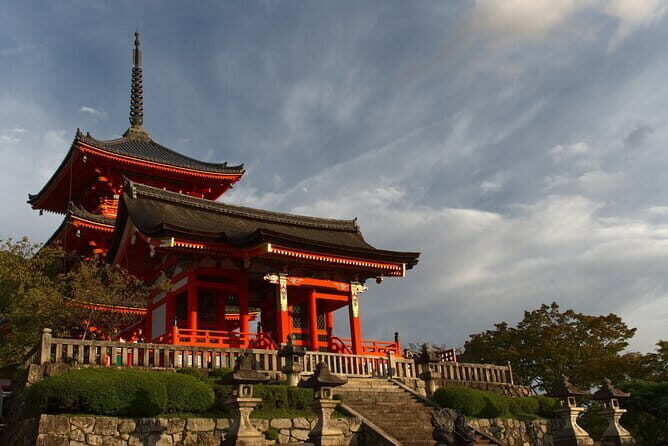
The final stop is Nijo Castle, a fortress-like complex tied to the Tokugawa Shogunate and the last Shoguns in Kyoto. If Kinkakuji gave you visual power and Toji-in gave you quiet taste, Nijo Castle brings the politics back in a big way.
You’ll explore the grounds with your guide for about 1 hour 30 minutes. That extra time matters because castles aren’t just buildings. They’re systems—security, symbolism, and control. The tour also highlights ornamental carvings and magnificent buildings, and those details help you see the “theater” of authority rather than only the architecture.
Nijo Castle is also framed as a sign of the beginning of the end of the Shogun era. That’s a great way to visit because it stops the experience from feeling like a static museum. You’re not just looking at stone and wood; you’re watching history shift roles and power.
And yes, it’s a natural finish. You’ve already used your legs earlier for gardens and a quieter temple. By the end, you’re ready for a more structured, “walk the grounds, read the story” kind of stop.



The guide is the whole game: Seiya, Makoto, Nozomi and more
This kind of cycling tour works only if the guide keeps the story moving and makes the ride feel smooth. Based on past experiences tied to this operator, guides named Seiya, Makoto, Yanai-San, Yutaka Kaneda, Yasunobu Yagyu, Kaz, JJ, and Nozomi are praised for making the experience easy to follow—especially in English.
What I’d focus on if you’re booking: choose this tour when you want more than a checklist. The best outcomes come when your guide can explain why each place matters and how it connects to the Shogun story across Kyoto—Ashikaga to Tokugawa.
Also, one review mentions how well a guide handled a 12-year-old, including humor and pacing. That’s a good sign if you’re traveling with kids or if you simply don’t want an adult-only lecture vibe.
Bikes, helmets, rainwear: you can travel light
Included with the tour:
- bicycle use
- helmet
- rainwear
That’s not a small detail. In Japan, rainy days and sudden temperature changes can derail plans if you’re unprepared. Here, you’re handed gear, so you don’t have to pack extra layers just to be safe.
The tour also says it operates in rain. You get a choice:
- continue on bikes using the rain poncho (free of charge), or
- switch to a walking tour using public transportation (bus or metro), included in the tour fee
That choice is huge. It means the tour isn’t automatically ruined by weather, and you can match the plan to your comfort level. If the roads feel slick to you, don’t force it—use the walking option.
Bring practical stuff: water, sun protection if it’s clear, and shoes that you’re comfortable wearing on temple grounds.
Why the included admissions and tickets add value
At $153.50 per person for roughly 3 hours 30 minutes, the headline price can look mid-range. But when you break it down, it looks smarter.
You’re getting:
- a bicycle and helmet
- rainwear
- guide-led visits across three major sites
- admission tickets included for all stops
Three included admission tickets alone often add up fast when you’re paying separately at different locations. Add transportation time saved by cycling and the fact that you’re not building your own route, and the value starts to make sense—especially if you’d otherwise spend part of your day figuring out logistics.
Also, this is a private tour/activity for your group. That helps value if you can travel as a pair or a small group rather than needing a solo booking.
Who this Kyoto Shogun ride is best for
This tour is built for “most travelers,” and it’s described as easy downhill. That usually makes it a good fit if you:
- want a faster way to cover top Kyoto sights
- like history framed in a story (Ashikaga to Tokugawa)
- prefer guided stops over self-guided wandering
- want a manageable time block for your day
It’s also a nice option if you’re traveling with kids, because the experience has examples of guides entertaining and explaining in kid-friendly ways. Still, the rules are real: children must be at least 10 years old, 145 cm or above, and able to ride safely on the road unassisted.
If you’re an absolute beginner on bikes, or if you’re uncomfortable with road cycling at all, you may want to think twice and consider whether the walking fallback in rain is something you’d use even in perfect weather.
Small-group rules that affect your booking decision
This is private, but it isn’t meant for solo travelers. The tour accepts groups of 2 to 6 guests per guide, with an extra guide possible for 7 to 12.
So if you’re traveling alone, you’ll need to pair up with at least one other person to fit the minimum. That’s a key planning detail. It can also affect timing: availability depends on group size and scheduling.
Quick practical tips before you go
- Wear clothes that handle both cycling and temple walking.
- Plan for rain gear to be used; it’s built into the plan, not an exception.
- Give yourself extra buffer time to meet at the start point.
- If you want photos, bring your phone/camera in a way that doesn’t become a juggling act while cycling.
Should you book the Kyoto Shogun Cycling Tour?
If your Kyoto day needs a smart mix of iconic sights and story-driven history, this is an easy yes. The combination of Kinkakuji + Toji-in + Nijo Castle gives you a strong Ashikaga-to-Tokugawa arc in a format that’s less tiring than walking.
I’d book this tour if you like guided explanations, you want included admissions, and you’re comfortable cycling in a city setting. I’d think twice if you’re a solo traveler, or if road cycling makes you tense—because this isn’t a pedal-and-leisure-at-a-kid-park style outing.
FAQ
How long is the Kyoto Shogun Cycling Tour?
The tour runs for about 3 hours 30 minutes, with roughly 1 hour at Kinkakuji, 1 hour at Toji-in, and 1 hour 30 minutes at Nijo Castle.
Is this tour private?
Yes. It’s a private tour/activity, and only your group participates. There’s also a minimum of 2 guests and a maximum of 6 guests per guide.
Where do we meet and where does the tour end?
You start at Wara Tenjin mae Kinugasa Oharaicho in Kyoto’s Kita Ward. The tour ends at the Kyoto Station Cycle Terminal near Kyoto Station.
What’s included in the price?
Included are bicycle use, helmet, rainwear, admission tickets at each stop, and the guide-led experience. Matcha service is not included.
Does the tour operate in rain?
Yes, the tour operates in rain. You can either continue by bike with the provided rain poncho, or switch to a walking tour using public transportation (bus or metro), with the walking option included.
Are admission tickets included for the temples and castle?
Yes. Admission tickets are included for Kinkakuji Temple, Toji-in Temple, and Nijo Castle.
What age and height are required for children?
Children must be at least 10 years old and 145 cm or above, and they must be able to ride a bicycle safely on the road unassisted.
Can I cancel and get a refund?
The experience is non-refundable and cannot be changed. If you cancel, the amount you paid is not refunded.