REVIEW · TOKYO
Tokyo: Sumo Keiko Training Tour with Audio Guide & Photo
Book on GetYourGuide →Operated by NexSpark Co., Ltd. · Bookable on GetYourGuide
Sumo feels huge from a TV screen, but keiko is different up close. At Nakamura-beya in Ryogoku, I love the real training atmosphere and how quickly you start seeing the craft, not just the spectacle. The photo with the wrestlers also turns the whole thing from sightseeing into a real memory, fast. One thing to plan for: you’ll need to follow strict practice rules, including no flash and no sunglasses.
You’ll also sit for about 1.5 hours on cushions (with a limited number of bench chairs for visitors with disabilities). If you’re worried about late arrivals, build in buffer time, because arriving late shortens your viewing time.
In This Review
- Key Highlights Worth Your Time
- Ryogoku Sumo Stable: Where Keiko Happens Near the Arena
- The 10-Language Audio Guide: Turn Watching Into Understanding
- What You Actually Watch During Keiko Training
- Seating, Comfort, and the Rules That Keep Things Smooth
- The Photo Moment With Sumo Wrestlers
- Timing: Getting the Most From a 40–90 Minute Visit
- After the Session: Walk to the Sumo Museum and the Waterfront
- Price and Value: Is $85 Worth It?
- Who This Tour Fits Best
- Should You Book This Tour?
- FAQ
- Where is the meeting point for the Nakamura-beya Sumo Keiko training tour?
- How long is the tour?
- What languages are available for the audio guide and the live guide?
- Is photography allowed?
- Do I need to bring earphones for the audio guide?
- Is there an age limit?
Key Highlights Worth Your Time
- Keiko at Nakamura-beya, just steps from Ryogoku Kokugikan
- Audio guide in 10 languages with earphone guidance
- Air-conditioned comfort plus free Wi‑Fi and charging stations
- Photo opportunity with sumo wrestlers and no-flash rules
- Practice etiquette matters: quiet viewing, no speaking during training
Ryogoku Sumo Stable: Where Keiko Happens Near the Arena
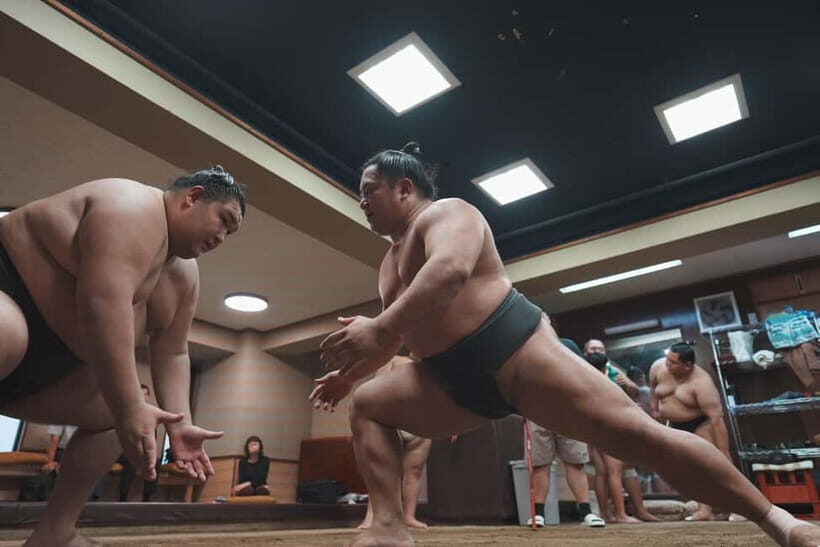
This tour is centered on Nakamura-beya Sumo Stable, in the Ryogoku area—Tokyo’s sumo zone. The location is practical: you meet just about 2 minutes from JR Ryogoku Station, and you’re also next to Ryogoku Kokugikan (the National Sumo Arena). That means less scrambling, more time soaking in the vibe.
The best part of choosing this area is that it’s not a random attraction. You’re showing up where training actually happens, which changes what you notice. Instead of only thinking about the wrestlers as athletes, you start thinking about them as craftsmen repeating technique, timing, and footwork.
You can also read our reviews of more guided tours in Tokyo

The 10-Language Audio Guide: Turn Watching Into Understanding
The audio guide is a big value piece here. You get explanations that cover sumo basics like history, ranks, and training techniques, and it’s available in 10 languages—Chinese, English, French, German, Hindi, Italian, Japanese, Korean, Polish, and Spanish.
There’s one practical detail you should not ignore: you’ll use your phone with earphones. If you bring your own earphones, you’re set; if not, the tour can lend you a pair. This small step matters because it keeps you focused during practice, without awkward pauses or trying to read while you’re looking at what’s happening in front of you.
Also, the live guide speaks English, Japanese, and Korean. That’s helpful if you want someone to clarify what you’re seeing right after a drill or explain terms that come up during the audio track.
What You Actually Watch During Keiko Training
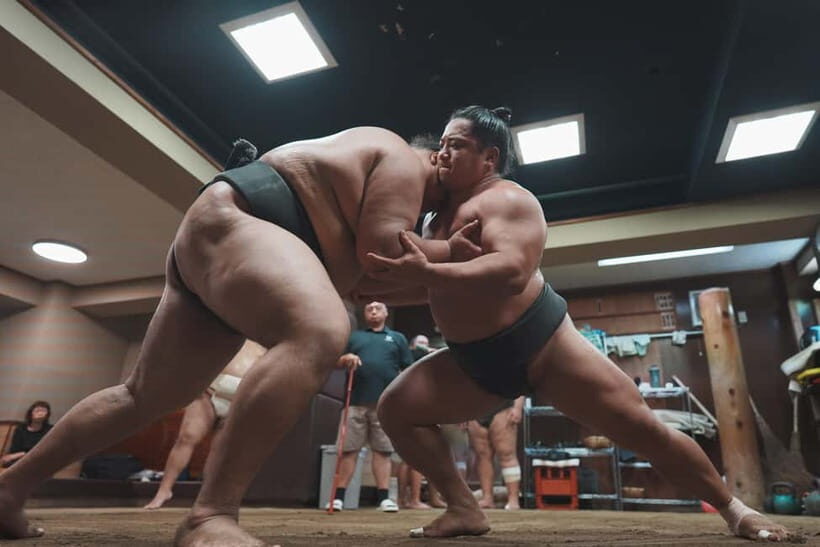
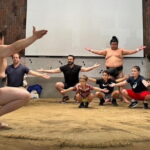
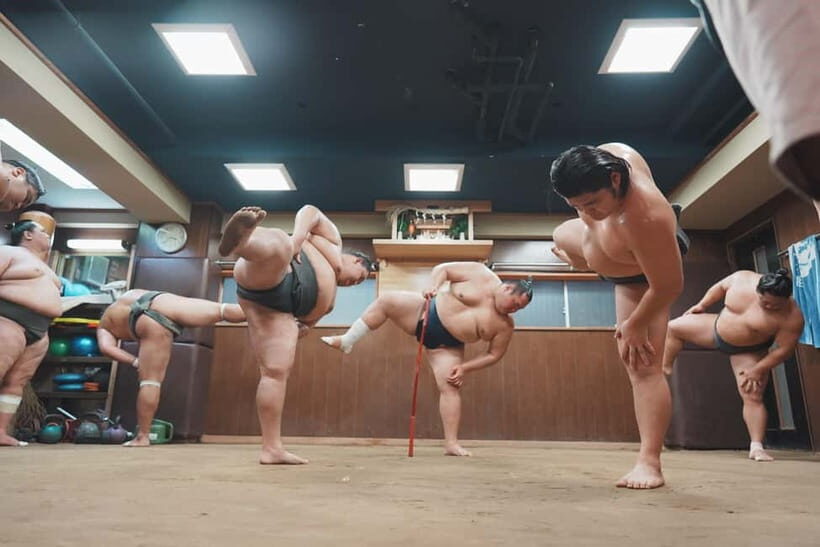
Keiko is training practice—same world, different mood than a tournament. In this session, you’ll watch professional sumo wrestlers work through drills and routines that build muscle memory and refine technique. This is where sumo gets educational in the most down-to-earth way.
Up close, you start noticing details that don’t show up well on TV: the rhythm of movement, the way wrestlers reset and recommit, and the steady focus between bursts of action. If you already know sumo basics, you’ll still get something out of it because keiko shows the discipline behind the performances.
A key etiquette point for your experience: you should watch quietly and avoid speaking during the practice. That matters for two reasons. First, it keeps the session respectful. Second, it helps you hear instructions and follow the audio guide without distraction.
Seating, Comfort, and the Rules That Keep Things Smooth
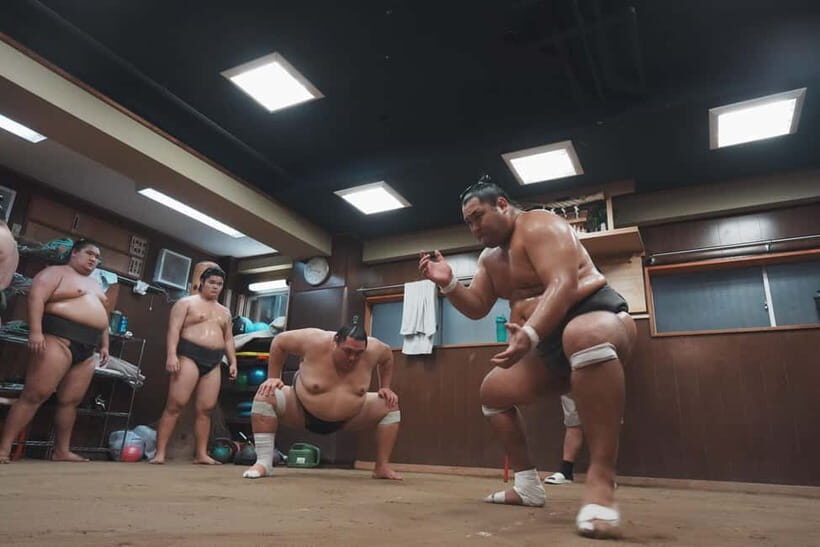
This venue is set up to be comfortable, which is a real advantage in Tokyo. Expect air conditioning, free Wi‑Fi, and charging stations, so you’re not stuck overheating or hunting for power while you wait for the training to start.
Seating is a second thing to consider before you go. Bench chair use is limited, with priority for visitors with disabilities. If you’re not in that category, you sit on cushions for about 1.5 hours—so wear something you can sit comfortably in.
Then there are the rules that affect photos and comfort:
- No sunglasses
- No flash photography
- No bare feet
Photography is allowed, but you’ll want to keep your camera settings ready since flash is off-limits. If you’re a photographer, treat this like a low-light indoor environment: bring a steady hand and plan for natural lighting without flash.
One more timing tip: use the restroom before you join. Once the session is underway, you’ll have less flexibility, and late arrivals shorten your viewing time with no extensions.
The Photo Moment With Sumo Wrestlers
The photo is included, which is a big deal for value. You’re not just watching training; you’re getting a keepsake that matches the intensity of what you just saw.
Expect the photo to be handled as part of the session flow rather than a casual meet-and-greet. The strict practice rules around quiet behavior and flash photography are there to protect training focus, so act accordingly. If you want the photo to go smoothly, be ready when it’s your turn and follow staff instructions quickly.
This photo component is also why this tour is worth the money for many first-timers. It turns a short visit into an experience you can point to later: you were there during keiko, in the stable, not just outside the arena.
A few more Tokyo tours and experiences worth a look






Timing: Getting the Most From a 40–90 Minute Visit
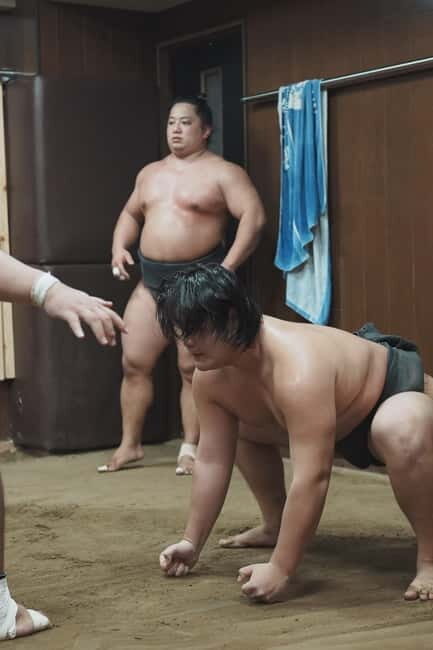
The duration range is 40 to 90 minutes depending on the starting time available. The viewing portion is about 1.5 hours, and late arrivals shorten your time.
So the best strategy is simple: don’t treat this like a casual wander. You’re meeting near Ryogoku Kokugikan, which makes it easy to get there early, and you’ll feel grateful when you can sit down, connect to Wi‑Fi if needed, and settle in before the training begins.
If you’re traveling with kids, note the minimum age is 6 years old. Younger children are not suitable for this experience, mainly because it’s a quiet, rules-based training setting.
After the Session: Walk to the Sumo Museum and the Waterfront
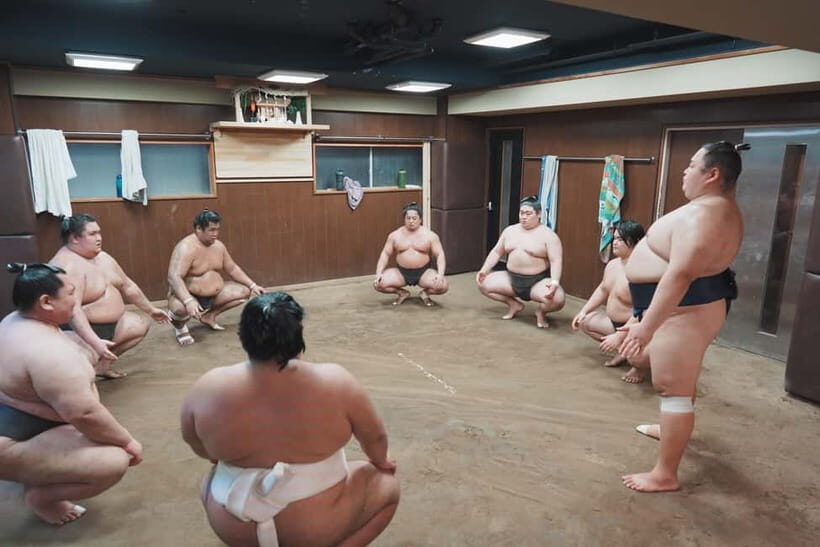
One advantage of this tour is that it doesn’t trap you in a single bubble. After the training, you can explore nearby attractions on foot.
Ryogoku Kokugikan is right there, so you can connect your keiko watching with the wider sumo setting. From this area, you can also walk toward the Tokyo waterfront, which gives you an easy change of pace right after you’ve watched intense training.
This “watch first, then roam” rhythm is great because it helps you process what you saw. You’re not rushing immediately into crowds; you’re extending the theme at a comfortable walking pace.
Price and Value: Is $85 Worth It?
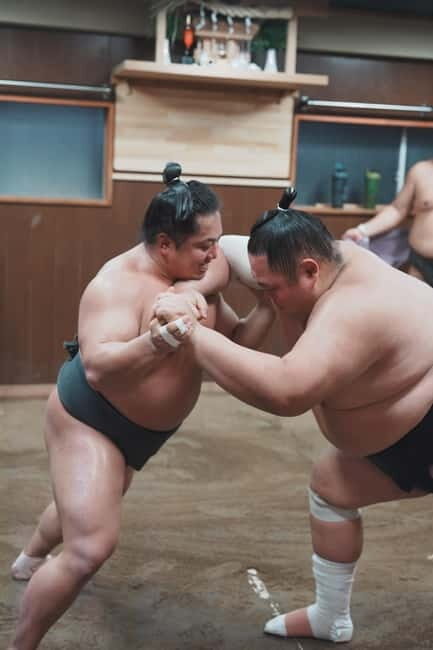
At $85 per person for a 40–90 minute tour, the key question is what you’re buying besides access. You’re paying for three things that are hard to recreate on your own:
1) entry to a live training session environment at a real stable
2) an audio guide in 10 languages that turns observing into understanding
3) a photo with the wrestlers plus a training explanation pamphlet
If you’ve ever tried to “just watch” sumo-related stuff without context, you know the difference. This adds structure, translation, and pacing. You’re not only there to look; you’re there to learn what you’re seeing while it’s happening.
Could you find sumo content in Tokyo for less? Probably. But if you want the feel of keiko and the satisfaction of leaving with clearer context and a photo memory, the cost starts to make sense quickly.
Who This Tour Fits Best
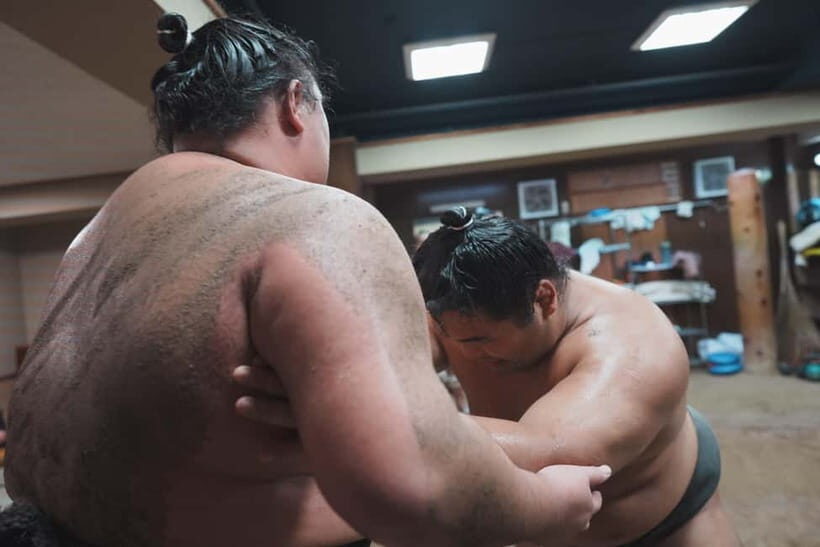
This experience is best for people who want more than a quick look at sumo. I think you’ll enjoy it if you care about how sports work—training routines, ranks, and technique—and you like seeing athletes as disciplined professionals.
It also fits well if you:
- want a short plan that’s easy to reach from JR Ryogoku Station
- prefer a comfortable indoor setting with air conditioning
- like guided interpretation through audio and a live staff guide
It’s less ideal if you dislike rules or quiet environments. The training requires you to stay respectful and refrain from speaking, and you’ll also need to follow the photo and clothing restrictions.
Should You Book This Tour?
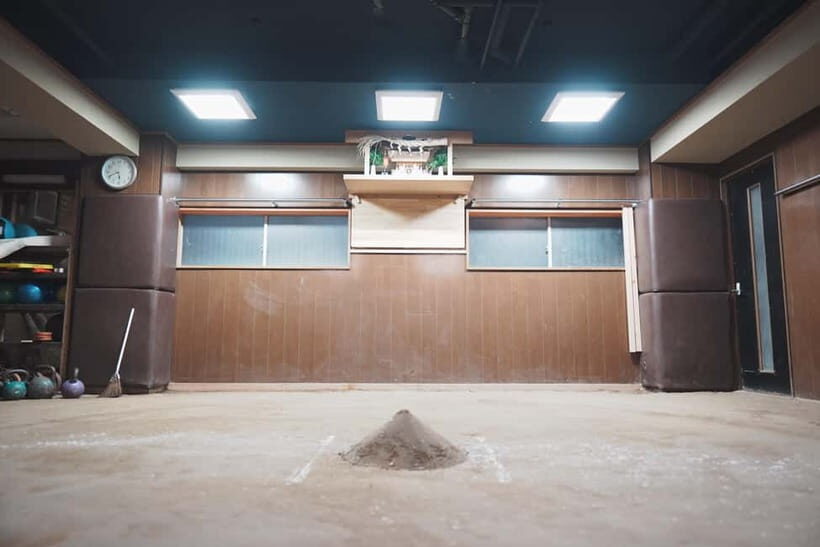
Yes, I’d book it if you want to experience sumo as training, not just entertainment. The combination of close-up keiko, a 10-language audio guide, and the included photo is strong value for the price.
Skip or reconsider if you’re sensitive to sitting for around 1.5 hours, if you’re coming without earphones (not a dealbreaker, but it affects flow), or if you think you might arrive late. Plan to be on time, keep quiet during practice, and you’ll get the most out of it.
FAQ
Where is the meeting point for the Nakamura-beya Sumo Keiko training tour?
You meet at Nakamura-beya Sumo Stable, about 2 minutes from JR Ryogoku Station, and it’s next to Ryogoku Kokugikan National Sumo Arena.
How long is the tour?
The duration is listed as 40 to 90 minutes, depending on the starting time available, with a training viewing period of about 1.5 hours.
What languages are available for the audio guide and the live guide?
The audio guide is available in 10 languages: Chinese, English, French, German, Hindi, Italian, Japanese, Korean, Polish, and Spanish. The live guide speaks English, Japanese, and Korean.
Is photography allowed?
Yes, photography is available, but flash photography is not allowed.
Do I need to bring earphones for the audio guide?
You should bring your own earphones to listen to the audio guide on your phone. If you do not have earphones, the tour can lend you a pair.
Is there an age limit?
Yes. The minimum age is 6 years old, and children under 6 are not suitable.