REVIEW · TOKYO
Tokyo Self-Guided Audio Tour
Book on Viator →Operated by Uvamai Niche Tourism · Bookable on Viator
Tokyo, but with your own tempo. I like this self-guided audio format because it lets you spend real time at the places you care about, instead of being rushed along. I also like that you do not need to be online to use the tour once you have access, so you can focus on the city instead of Wi-Fi.
The main thing to watch: it is a map-click experience, not GPS autopilot. If you want the commentary to perfectly track where you are at every second, you may find it less smooth than other guided tools.
In This Review
- Key points worth knowing before you pick up your phone
- Price and what you actually get for $9
- How the audio links and interactive map work in real life
- Building your Tokyo route: history, faith, and modern design
- Stop 1: Tokyo Central Railway Station and the city’s modernization story
- Stops 2 and 3: Imperial East Gardens and Chidorigafuchi’s feudal moat
- Stops 4 and 5: Yasukuni-jinja’s controversy and Shinjuku Gyoen’s style mix
- Stops 6 and 7: Tokyo Metropolitan Government Buildings, then Meiji Jingu’s forest calm
- Stops 8 and 9: Shibuya Crossing energy and the National Art Center’s changing shows
- Stops 10 and 11: Mori Art Museum in Roppongi and Tokyo Tower’s Eiffel influence
- Stops 12 and 13: Zojoji Temple beside Tokyo Tower, then Hama Rikyu Gardens
- Stop 14 and 15: Rainbow Bridge and Odaiba’s fortress-to-leisure story
- Stops 16 to 18: Tokyo Skytree, Senso-ji, and Asakusa’s old-town feel
- Stops 19 to 21: three museum styles, one museum day plan
- Stop 22: Ueno Park’s public-space history and cherry blossom season
- Should you book this Tokyo self-guided audio tour?
- FAQ
- How much does the Tokyo self-guided audio tour cost?
- How long is the tour?
- How many attractions are included?
- Do I need the internet to listen to the audio?
- What do I receive after booking?
- Is transportation included?
- Are entry fees included?
- Where do I start and where do I end?
- How long are the access links valid?
- Is the tour refundable if I cancel?
Key points worth knowing before you pick up your phone
- Start and stop when you want so you can linger at shrines or speed through skylines
- No-online approach after you get your access links
- One playlist plus a point-by-point map for 22 attractions
- Budget control since some stops are admission-free while others are not included
- Time is built in at about 10 minutes per stop which works well if you respect the pacing
Price and what you actually get for $9
At $9 per person, this is one of the cheaper ways to add structure to a Tokyo day. You are not buying a guide in the literal sense—you are buying audio explanations and a route plan that covers a lot of Tokyo styles, from imperial sites to modern towers.
The tour runs about 4 hours, with 22 stops designed for roughly 10 minutes each. That pacing is handy if you like your sightseeing organized, but it also means you should plan to slow down at your favorites and accept that other stops will become quick hits.
One smart detail: you get private access links that stay valid up to 6 days. That is useful if your day gets swallowed by jet lag, rain, or a food line that defeats all logic.
You can also read our reviews of more guided tours in Tokyo


How the audio links and interactive map work in real life
Before you go, you receive two links by email: one for the audio guide and one for an interactive Google My Maps route. The audio content is accessible through a SoundCloud web link, and each map point is tied to an attraction’s audio.
This setup is simple when you treat it like a checklist:
- Open the map link and tap the stop you are standing at
- Press play for that location’s audio
- Move on when you want
Do not underestimate this part. Since it is not location tracking-by-default, you will get the best experience when you use the map points to stay oriented and confirm you are at the right place before you listen.
If you want to do it in phases (for example, two museum-heavy hours on one day), the tour is designed for flexible exploration. Just keep in mind that the links are valid for a limited window.
Building your Tokyo route: history, faith, and modern design
This route makes a clean loop through three big Tokyo themes: Edo-era remnants and imperial history, major shrines and iconic neighborhoods, and then the skyline-and-museum side of the city. That structure is why this tour feels like more than a random grab bag.
You start with transportation heritage, move into imperial grounds and moats, then pivot into shrines, city views, and the art circuit. The closer you get to the late stops, the more the tour becomes about modern Tokyo landmarks—towers, bridges, futuristic districts, and world-class museum buildings.
If you like variety, you are going to have fun. If you want total depth at one single neighborhood for half a day, you may wish this were shorter or customized. Still, it is a solid way to get your bearings fast.
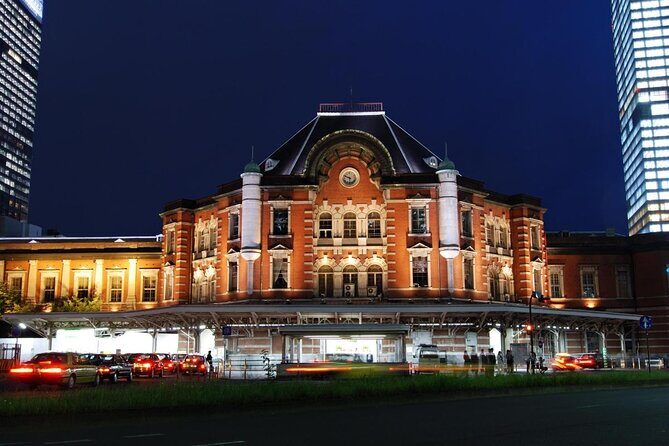
Stop 1: Tokyo Central Railway Station and the city’s modernization story
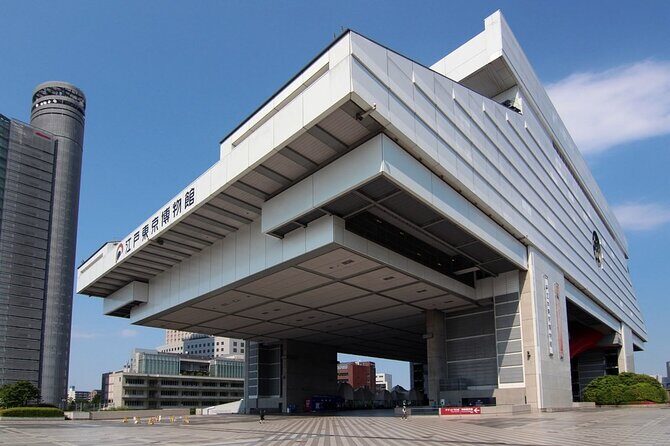
You begin at Tokyo Central Railway Station, described as the historic hub of Tokyo’s rail network. The audio focuses on why the architecture matters and how rail helped Japan modernize.
Even if you only spend about 10 minutes here, it sets a useful tone: Tokyo is not just temples and towers. It is also infrastructure, planning, and design decisions that shape daily life.
Admission is free at this stop, so it is low-cost and easy to start. The practical win: you are at a natural transit anchor, which helps you navigate onward.
Stops 2 and 3: Imperial East Gardens and Chidorigafuchi’s feudal moat
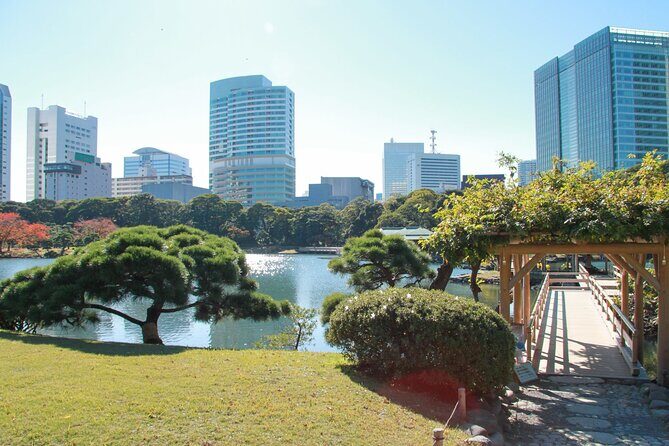
Next comes the East Gardens of the Imperial Palace, once part of Edo Castle. This is the quiet, garden-and-history portion of the route, with landscaped grounds tied to imperial narrative.
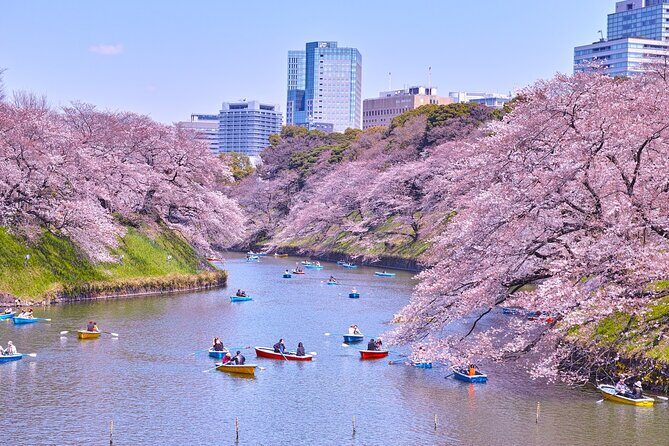
Then you head to Chidorigafuchi, a scenic moat area known for cherry blossoms in spring. The audio also explains its role in feudal Japan’s defenses, which is a neat reminder that moats were not just pretty water features.
Both stops are designed for quick listening windows, so do not expect long wandering. Use the time to pick up the big idea: Tokyo’s calm spots often have military and administrative roots underneath.
A few more Tokyo tours and experiences worth a look



Stops 4 and 5: Yasukuni-jinja’s controversy and Shinjuku Gyoen’s style mix
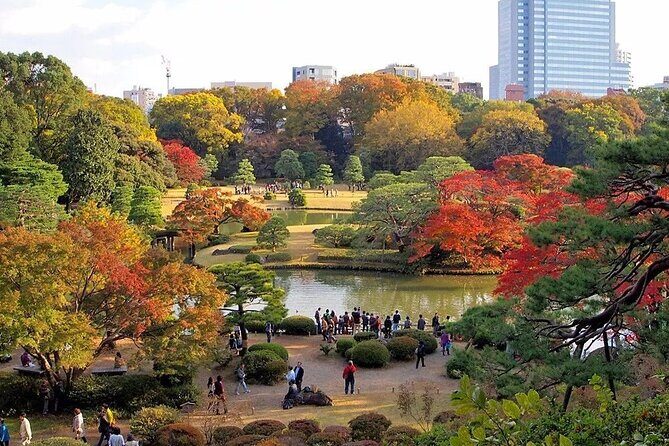
Yasukuni-jinja Shrine is dedicated to Japan’s war dead, and the audio calls out its complex, controversial history and cultural significance. That matters because this is not a standard postcard shrine stop; it is a place where Japan’s memory and politics intersect.
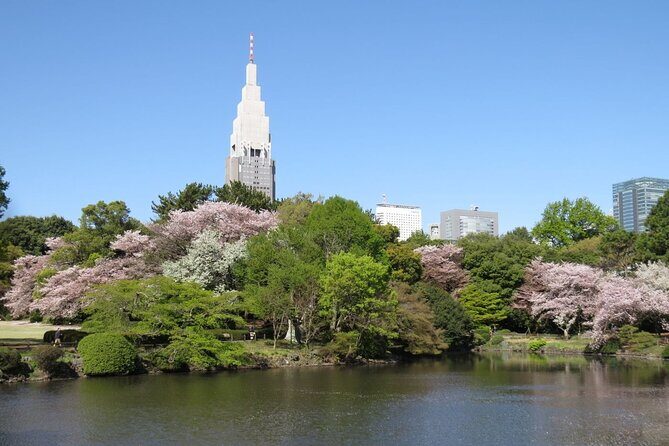
After that, Shinjuku Gyoen National Garden shifts the tone. The garden is described as a blend of Japanese, French, and English garden styles, with imperial roots and a postwar transformation. That mix is a strong reason to include this stop: the route shows Tokyo not just as one cultural layer, but several at once.
Both places are designed to fit about 10 minutes, and neither requires paid admission as part of the tour package notes for this point set (Shinjuku Gyoen is marked as not included, so you may have to pay entry there if required). Build that into your budget so time and money do not get out of sync.
Stops 6 and 7: Tokyo Metropolitan Government Buildings, then Meiji Jingu’s forest calm
Tokyo Metropolitan Government Buildings is a practical detour for panoramic city views. The audio connects those views to how Tokyo is governed and to modern architecture—two things visitors often skip while chasing photos.
Then you jump to Meiji Jingu Shrine, where the focus is Shinto tradition and imperial history. The grounds are described as forested, with dedication to Emperor Meiji and Empress Shoken, and that forest framing is a big part of why this stop works.
If you want one quiet-to-spectacular contrast in your day, this is it. It also gives you a balance between civic Tokyo and spiritual Tokyo without turning the route into a single-type marathon.
Stops 8 and 9: Shibuya Crossing energy and the National Art Center’s changing shows
Shibuya Crossing is famous for energy, and this tour uses that idea to explain how the area evolved from residential district to fashion hub. The takeaway here is the neighborhood shift—how a city changes its identity over time.
Then you move to the National Art Center, Tokyo, described as a unique empty museum because it hosts diverse temporary exhibitions. That description matters: instead of a single permanent collection, you are going to experience whatever show is on during your visit.
Admission at the National Art Center is listed as free in the tour notes, but as always, check the specific show situation when you arrive. The tour’s value is the design and cultural context around the exhibitions, not a promise of a specific permanent collection.
Stops 10 and 11: Mori Art Museum in Roppongi and Tokyo Tower’s Eiffel influence
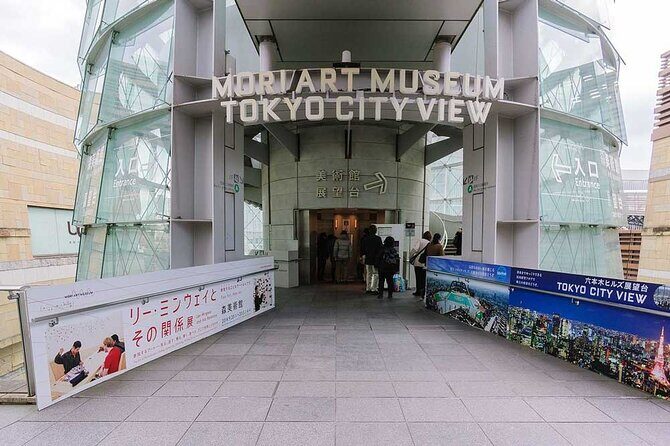
Mori Art Museum is placed in Roppongi Hills and described as a sky-high contemporary art museum. The audio connects it to Tokyo’s art scene and includes the promise of city views, which is what you want from this kind of stop.
Tokyo Tower is next, with its inspiration drawn from the Eiffel Tower. The audio also focuses on its construction and significance in post-war Japan. That is a nice bridge between international influence and local symbolism.
Some of these stops are marked not included for admission, so treat these as budget-flex points. If you care most about the art and views, you may decide to allocate extra money here and keep other stops purely free.
Stops 12 and 13: Zojoji Temple beside Tokyo Tower, then Hama Rikyu Gardens
Zojoji Temple is described as an ancient Buddhist temple placed right beside Tokyo Tower. The audio ties it to the Tokugawa shogunate, which gives you a grounded, historical counterpoint to the modern skyline.
Then it is on to Hama Rikyu Gardens, once a feudal lord’s residence and later adapted through centuries of Tokyo’s development. This is another “layers over time” stop, but calmer than the rush around major streets.
Again, some garden entry is marked not included. This tour is at its best when you treat paid-entry stops as optional upgrades, not surprise gotchas.
Stop 14 and 15: Rainbow Bridge and Odaiba’s fortress-to-leisure story
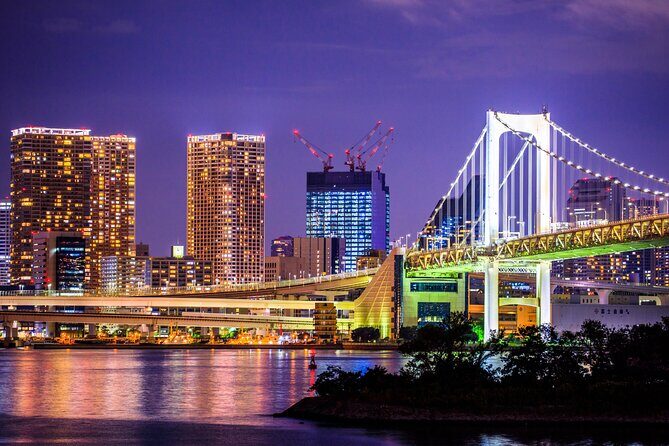
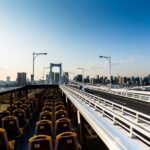
Rainbow Bridge spans Tokyo Bay, and the audio explains its construction and nightly illumination. Even without getting dramatic, the point here is to understand how Tokyo turned water edges into something engineered and lit for public experience.
Odaiba then shifts you into a futuristic entertainment district built on artificial islands. The audio says it developed from fortress to leisure destination, which is exactly the kind of transformation Tokyo loves to show: defense becomes leisure, and the city repurposes space.
If you visit at night, Rainbow Bridge’s nightly illumination can help you make the most of the time. If you visit earlier, you still get the construction story—just expect a different vibe.
Stops 16 to 18: Tokyo Skytree, Senso-ji, and Asakusa’s old-town feel
Tokyo Skytree is described as the world’s tallest tower, with design inspired by traditional Japanese aesthetics. The audio framing makes it about cultural inspiration as much as height.
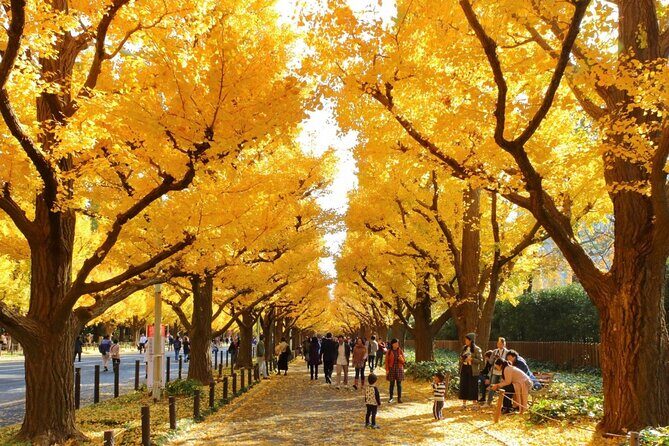
Senso-ji Temple follows as Tokyo’s oldest temple, with a founding legend and importance in Edo period life. Then Asakusa closes this classic-era stretch, with the note that old Tokyo atmosphere still lingers and the area’s evolution from entertainment district to cultural center.
This section is ideal if you want a shift from engineered modern Tokyo back into historic identity. Even if you only spend 10 minutes per stop, the audio themes help you connect the dots so you are not just collecting landmarks.
Stops 19 to 21: three museum styles, one museum day plan
Tokyo National Museum is described as Japan’s oldest and largest museum, with a vast collection of Japanese art and antiquities. That is a strong anchor if you love objects and eras more than modern design.
The National Museum of Nature and Science focuses on Japan’s natural world and technological advancements. So it is less about art and more about how the country thinks about science, industry, and the world around it.
Then National Museum of Western Art adds the international angle, including Western masterpieces in a Le Corbusier-designed building and its UNESCO World Heritage status.
These three are a natural fit if you like museums, and they give you variety even within one ticketed block of your day. The tour notes mark these as not included, so be ready for entry costs depending on what you choose to visit.
Stop 22: Ueno Park’s public-space history and cherry blossom season
Ueno Park is described as Tokyo’s most popular public park, with history and museums, plus special note of cherry blossom season. If you time it right, this is the emotional reset after museum buildings and tower views.
Even outside peak season, it is a good way to end the route because it is public space rather than a single building. You finish with room to breathe and roam without needing a specific ticket to enjoy the atmosphere.
Should you book this Tokyo self-guided audio tour?
I would book this if you want an organized framework for a Tokyo day and you like choosing your pace. The $9 price is hard to beat for a route that covers 22 major sights, mixes history with modern icons, and gives you a map-driven way to play the right audio at the right stop.
I would skip it (or at least be cautious) if you expect hands-off GPS guidance. The biggest risk here is frustration: the audio experience depends on you matching where you are to the map points, and the tour’s structure is built for you to drive the experience.
If you are the kind of traveler who likes to plan lightly, stand in front of a place, press play, and move on, this can be a fun way to see a lot of Tokyo without feeling trapped in a big group.
FAQ
How much does the Tokyo self-guided audio tour cost?
It costs $9.00 per person.
How long is the tour?
The duration is about 4 hours.
How many attractions are included?
The route covers 22 attractions.
Do I need the internet to listen to the audio?
The tour is described as not needing to be online to use the audio tour.
What do I receive after booking?
You receive a confirmation and, before your starting time on your travel date, an email with two links: one for the audio guide and one for an interactive map.
Is transportation included?
No. Transportation (pick-up and drop-off) is not included.
Are entry fees included?
Entry fees are not included. The tour notes show which stops are marked free and which ones are marked not included.
Where do I start and where do I end?
Because it is self-guided, you can choose your own start and end point in Tokyo.
How long are the access links valid?
The private access links are valid up to 6 days.
Is the tour refundable if I cancel?
No. It is non-refundable and cannot be changed for any reason.