REVIEW · TOKYO
Mochi Sweets Making Class in Tokyo
Book on Viator →Operated by ankotopia WAGASHI School · Bookable on Viator
Mochi class in Tokyo feels like home cooking. In Satoko San’s Mochi Sweets Making Class, you’ll learn the hands-on mochi process and shape multiple Japanese sweets, then taste what you make with tea. You’ll also leave with downloadable recipes so you can repeat the magic after the trip.
I also like the mix of practical cooking and cultural context: you get explanations of mochi’s place in Japanese tradition and real ways to eat it. The main thing to think about is that this class takes place in a private residence with two short hair cats in the bedroom during lessons, so strong cat allergies are a concern.
The timing is friendly too. It runs about 1 hour 30 minutes, and the neighborhood is quiet—about 15 minutes by train or car from central Tokyo—so you can add a shrine stop or a famous public bath before or after.
In This Review
- Key Things That Make This Mochi Class Worth Your Time
- Where This Mochi Class Fits in Tokyo (And How to Plan Around It)
- Inside the Home Kitchen: What’s Included and What to Expect
- Learning the Mochi Base: The Skill You’re Really Buying
- Daifuku, Dango, Warabi-Mochi, Isobe-Mochi: A Menu With Real Variety
- Strawberry Daifuku (With Seasonal Fruit Swaps)
- Several Flavors of Dango on Skewers
- Warabi-Mochi
- Isobe-Mochi
- The Cultural Layer: How Mochi Connects to Japanese Celebrations
- Tasting Your Mochi With Tea (Then Packing It to Go)
- Vegan-Friendly and Vegetarian-Friendly: How the Menu Handles Diets
- Price and Value: Is $75.12 Really Fair?
- Transportation and Neighborhood Reality (So You Don’t Waste Time)
- Who This Mochi Class Suits Best (And Who Might Hesitate)
- Should You Book This Mochi Sweets Making Class in Tokyo?
- FAQ
- How long is the Mochi Sweets Making Class?
- Do I need to bring ingredients or cooking tools?
- What mochi sweets will I learn to make?
- Is the class vegetarian or vegan friendly?
- Will I get a chance to taste what I make?
- Is this class private, and are there any allergy considerations?
Key Things That Make This Mochi Class Worth Your Time
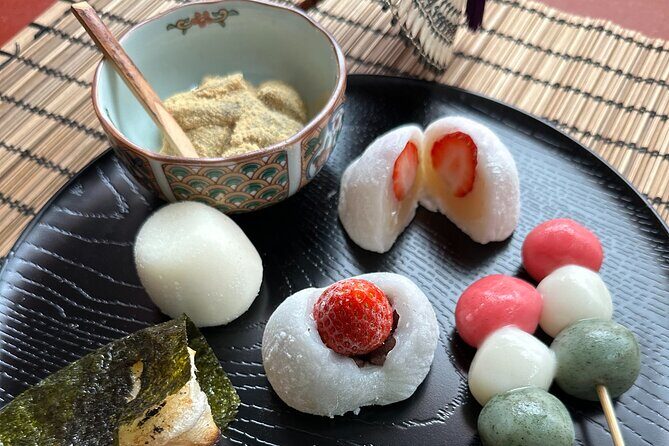
- Multiple mochi styles, not just one: daifuku, dango, warabi-mochi, and isobe-mochi all make it onto the menu.
- Recipe downloads that travel well: you can download an easy base mochi recipe, plus the mochi-ice cream recipe.
- Plant-based friendly by design: the menu uses plant-based products, with vegan options available for vegetarians.
- Tea tasting as payoff: you’ll enjoy your creations with Japanese green tea or hojicha.
- Photos and videos included: portrait photos and videos get taken during the class for your memories.
- A calm residential Tokyo experience: you’re close enough to the city, but the setting feels relaxed and local.
Where This Mochi Class Fits in Tokyo (And How to Plan Around It)
This is a Tokyo cooking class that avoids the usual tourist-trap vibe. The meeting point is in Kitaminemachi, Ota City, and the instruction space is a private residence. You’re not stuck in a studio. Instead, you’re in a quieter neighborhood setting, about 15 minutes from central Tokyo by train or car.
That matters because it changes how you pace the day. If you schedule this class midday, you’ll likely want something light afterward—then you’re close to local shops, supermarkets, cafes, a shrine, and even a famous public bath. If you do it earlier, you can use the after-time to wander at an easy tempo instead of racing across the city.
The class itself runs about 1 hour 30 minutes. That’s long enough to actually learn and form mochi, but short enough that you don’t feel like your whole day got consumed by sticky dough (even if, yes, the dough is the star).
A few more Tokyo tours and experiences worth a look


Inside the Home Kitchen: What’s Included and What to Expect
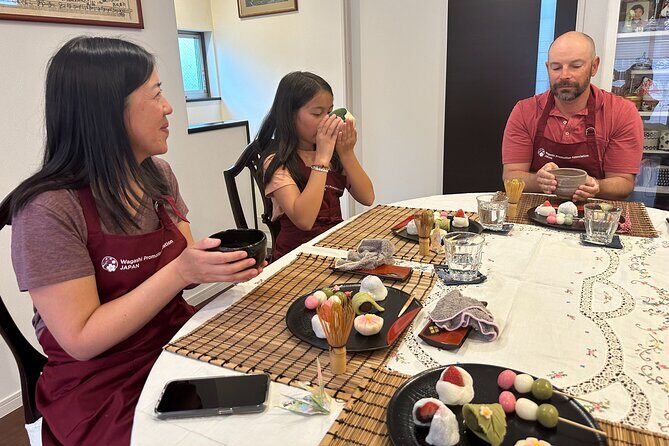
You don’t need to bring anything. The lesson provides what you need to cook and shape the sweets. Included are the apron, hand towel, special tools for Wagashi making, drinking water, and a special takeaway box.
The setup is “private residence” style, which affects the feel of the class. The atmosphere is described as cozy and relaxed, and the host keeps things step-by-step so you can work at your own pace. That’s a big deal if you’re new to Japanese sweets—mochi looks simple, but getting the texture right takes practice.
One note that’s not small: there are two short hair cats that stay in the bedroom during the lesson. If you have even moderate sensitivity to cats, I’d treat that as a serious consideration and ask the host ahead of time if possible.
Also, this is set up for your group only. It’s described as a private tour/activity, meaning you’re not learning alongside strangers from different schedules. If you’re traveling as a solo person, this still works. The class is also described as family friendly, which makes it a solid pick when you want something hands-on rather than just watching a demo.
Learning the Mochi Base: The Skill You’re Really Buying
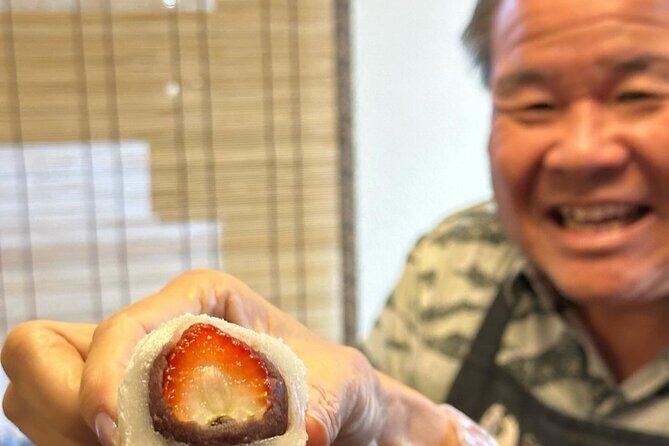
The core cooking skill is learning how to make mochi using glutinous rice flour. That sounds technical, but in practice the class is built to be straightforward: you follow an easy recipe, you work through the steps, and you end up with dough you can shape.
Why this is valuable: once you understand the basic mochi-making method, the rest of the sweets become variations. Instead of taking a one-off class for one dessert, you get a reusable technique that you can bring home.
You also get the promise that the recipe is simple enough to recreate for family and friends after you return. Since ingredients are described as easily available in your own country and the lesson uses plant-based products, the “repeat at home” part is not just marketing—it’s part of the point.
Pro tip for your real-life kitchen: plan to move slowly the first time you try it at home. Mochi is less about speed and more about texture control. This class is where you build that muscle memory while everything is guided.
Daifuku, Dango, Warabi-Mochi, Isobe-Mochi: A Menu With Real Variety
One of the most praised parts of this experience is that it’s not limited to a single mochi shape. You learn multiple types, which makes the class feel like a full sweet journey rather than a quick craft session.
Here’s what’s on the menu:
Strawberry Daifuku (With Seasonal Fruit Swaps)
You’ll learn how to make strawberry daifuku. If strawberries are out of season, the class uses other fruits like pineapple or kiwi. That means you still get the same idea—fruit-filled mochi—without the experience feeling forced to match a specific ingredient schedule.
A few more Tokyo tours and experiences worth a look




Several Flavors of Dango on Skewers
You’ll also make dango, described as mochi balls on skewers, in several flavors. Skewered sweets are great for learning because they push you to shape consistent pieces and handle them cleanly.
Warabi-Mochi
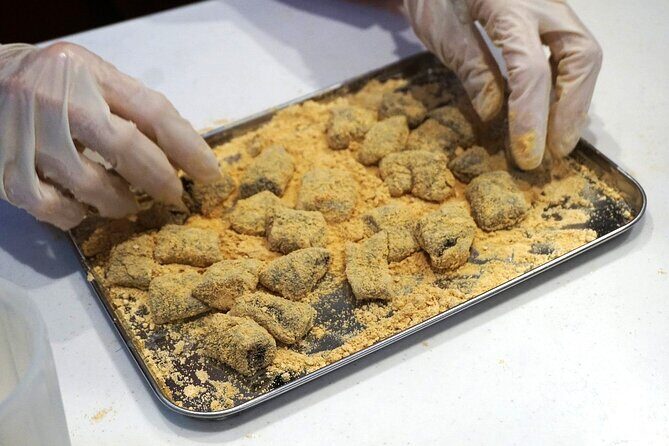
You’ll make warabi-mochi. The class format focuses on teaching the method, so don’t worry if the name sounds intimidating. You’re guided through what to do, in the order you need to do it.
Isobe-Mochi
Next comes isobe-mochi. Again, the value here is not knowing everything up front. The class goal is to teach you so you can replicate it later.
And there’s an extra home-cook bonus: you can download the mochi-ice cream recipe too. That makes this class useful even after the event ends, because you’re not just getting a one-night souvenir—you’re getting recipes that extend the experience.
The Cultural Layer: How Mochi Connects to Japanese Celebrations
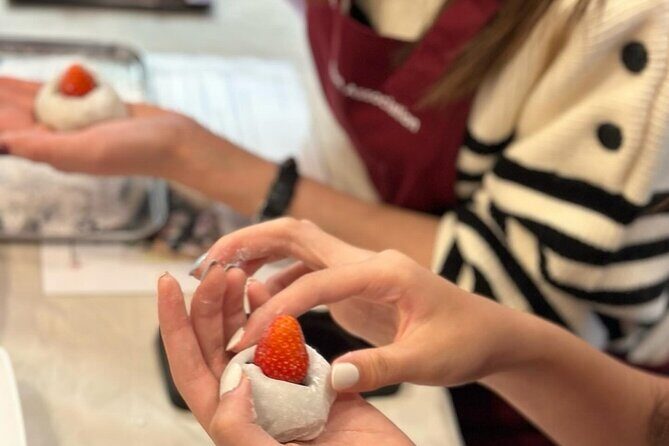
This lesson does more than teach technique. It also introduces the history of mochi and how it relates to Japanese tradition. You’ll also learn various ways to eat mochi, which helps you understand why mochi is so common during celebrations and seasonal moments.
For you, that cultural context changes the take-home value. It’s easier to care about what you’re making when you understand how it fits into everyday life and festive food culture. And because you’re learning multiple mochi types, you’re also learning how the same base ingredient concept shows up in different forms.
Past students specifically praised the host for explaining the cultural significance clearly while keeping the class fun and upbeat. If you’re the type who likes your souvenirs edible and meaningful, this part is a strong match.
Tasting Your Mochi With Tea (Then Packing It to Go)
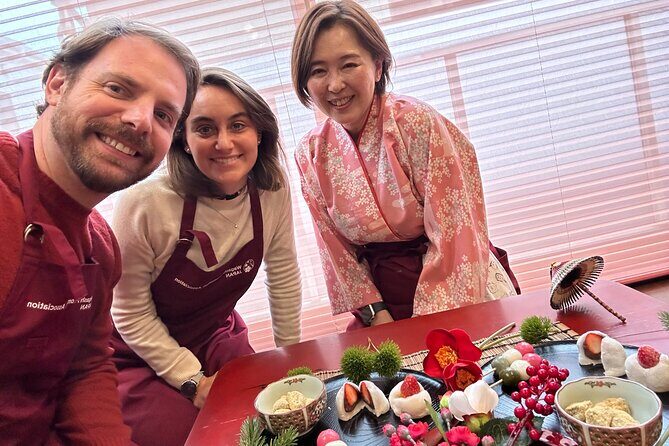
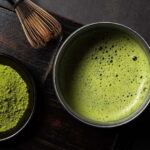
The payoff is immediate. After the making part, you taste your creations. Tastings include mochi-ice cream as well, paired with Japanese green tea or hojicha (roasted green tea).
That tea choice is practical, too. Green tea tends to feel fresh and light, while hojicha can be more mellow and comforting. Either way, it gives your sweets a proper “Japanese dessert” finish instead of eating everything plain.
After tasting, you can take your creations in a special box. That matters if you’re planning to keep exploring after the class. It’s a lot easier to enjoy the rest of the day if your sweets are already packed securely.
Another memory booster: portrait photos and videos are taken during the class. If you like to document experiences beyond food pics, this is a nice touch that doesn’t require you to run around with your camera mid-sticky-dough.
Vegan-Friendly and Vegetarian-Friendly: How the Menu Handles Diets
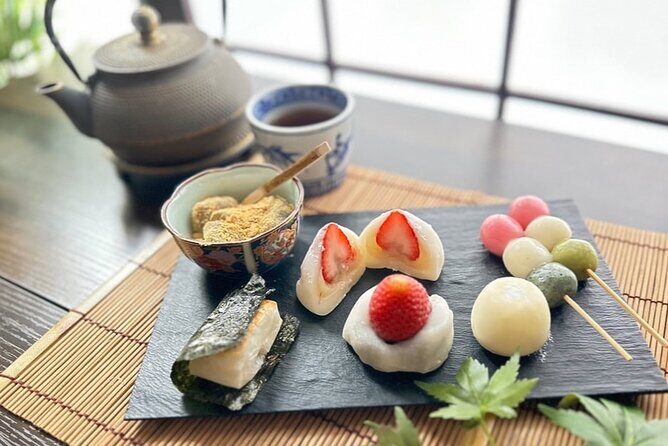
This class is described as plant-based, and it says it’s appropriate for vegetarians with vegan options available. That’s the kind of detail that helps you feel safe booking a food experience in Japan.
Here’s how to think about it: if you’re vegetarian or vegan (or just trying to avoid certain ingredients), the class being designed around plant-based products means you’re less likely to end up with a “modified version” that doesn’t really feel like the real thing. You still learn the sweets and the process.
If you have strong dietary needs, I’d still double-check expectations at booking time. But based on the description, the class is built with flexibility in mind.
Price and Value: Is $75.12 Really Fair?
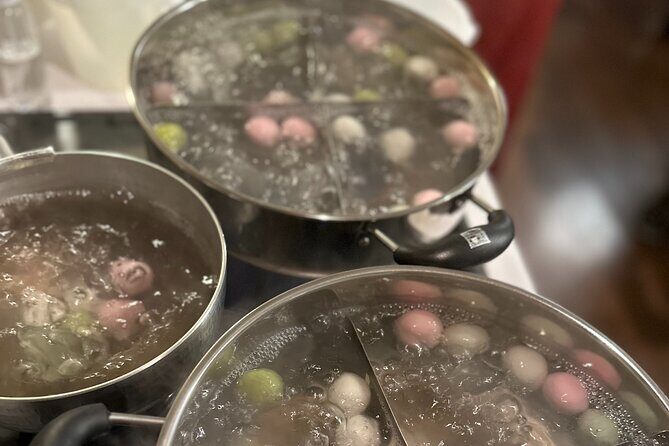
At $75.12 per person, this isn’t a “grab a snack and watch a demo” activity. You’re paying for guided hands-on instruction in a private residence, plus ingredients, tools, a takeaway box, and the expectation that you’ll make multiple mochi sweets.
Where the value gets real is the workload. You’re not just doing one dessert. You learn several types—daifuku, dango, warabi-mochi, and isobe-mochi—and you also get recipe downloads (including mochi-ice cream). On top of that, the class includes tasting with tea and photo/video coverage.
Group value can be even better. The listing notes group discounts, and it also says that during off-peak season, if your group is more than 3 people, the lesson becomes private with no extra cost. Since the class is described as private for your group, it’s a strong pick if you’re traveling with friends or family and want everyone to get hands-on time.
One more practical factor: it’s booked about 42 days in advance on average. That suggests it’s a popular option, so if you’re serious, don’t wait until the last minute.
Transportation and Neighborhood Reality (So You Don’t Waste Time)
Private transportation isn’t included. That means you’ll want to plan on using public transport or a taxi/rideshare as needed. The meeting point is near public transportation, and the residence is about 15 minutes from central Tokyo by train or car, so you’re not signing up for a long commute.
This also affects your day planning. Because you’ll be in a more local area than the main tourist hubs, you can time the class so you land in a “normal Tokyo” rhythm. Do the class, then visit shops, cafes, a shrine, or that public bath nearby while everything is still fresh and close.
Who This Mochi Class Suits Best (And Who Might Hesitate)
This class is a great fit if you:
- Want a hands-on wagashi-style cooking experience with a private feel
- Love mochi or want to learn the base technique that leads to multiple sweets
- Prefer classes that include tasting, takeaway, and photo/video memories
- Are vegetarian, and especially if you want plant-based instruction with vegan options
You might hesitate if:
- You have a strong cat allergy, since two short hair cats are present in the residence (in the bedroom during the lesson)
- You’re looking for a purely public, hotel-based activity. This is a private home setting, so the vibe is domestic rather than “event venue.”
Should You Book This Mochi Sweets Making Class in Tokyo?
If your goal is to learn how Japanese mochi sweets are made—not just eat them—this class is a smart booking. You get multiple types of sweets, a mochi base technique using glutinous rice flour, cultural context, and recipe downloads you can actually use later.
For value, it punches above its price. You’re paying for guided steps, included tools and takeaway packaging, tea tastings, and the kind of “you can repeat this” knowledge that many food tours don’t deliver.
Just be honest about the cat situation, and plan your transport so the 15-minute neighborhood commute doesn’t steal time from your Tokyo day. If you do that, you’ll likely walk away with a new skill, a box of sweets, and a calmer view of Tokyo life than you’d get from rushing between landmarks.
FAQ
How long is the Mochi Sweets Making Class?
The class runs about 1 hour 30 minutes.
Do I need to bring ingredients or cooking tools?
No. Everything is provided at the lesson, and the class also includes items like an apron and hand towel.
What mochi sweets will I learn to make?
You’ll learn how to make mochi with glutinous rice flour, plus strawberry daifuku (with other fruits if strawberries are out of season), several flavors of dango on skewers, warabi-mochi, and isobe-mochi.
Is the class vegetarian or vegan friendly?
The menu is made from plant-based products and is appropriate for vegetarians, with vegan options available.
Will I get a chance to taste what I make?
Yes. After the lesson, you taste your creations with Japanese green tea or hojicha. You can also take items with you in a special box.
Is this class private, and are there any allergy considerations?
It’s a private tour/activity for your group only. The residence has two short hair cats that stay in the bedroom during the lesson, so it’s not recommended for people with strong cat allergies.